


Virginia Names Metopi Pharmaceuticals’ Novel Inhaler Apparatus as June 2026 Patent of the Month
The state of Virginia has officially designated US Patent No. 12,616,803 as its prestigious Patent of the Month for June 2026. Granted to Virginia-based biomedical pioneer Metopi Pharmaceuticals, Inc., this pioneering patent details a novel “Apparatus for dispensing inhalant medicament” that stands to revolutionize portable respiratory care. The newly patented device focuses on overcoming the mechanical and operational hurdles associated with traditional rescue inhalers, ensuring swift and foolproof medication delivery when patients need it most.
Developed under the guidance of visionary inventor Miles Lanham, the breakthrough technology addresses a long-standing issue in pulmonary medicine: the high rate of user error and device mismanagement during acute respiratory distress. By replacing cumbersome, multi-piece setups with an elegant, unified closure system, Metopi Pharmaceuticals, Inc. has successfully established a new benchmark for patient-centric medical design. This critical development highlights the state of Virginia’s rapidly growing reputation as a premier national hub for biomedical engineering and life science innovation.
Unpacking the Innovation: Why It Stands Out
Traditional inhalers often rely on detached caps or separate protective covers that must be manually removed before the mouthpiece can be utilized. In an emergency scenario such as an acute asthma attack or a COPD flare-up, a patient may experience panic, muscle weakness, or compromised coordination, making these multi-step processes inherently dangerous. Metopi’s invention solves this crisis through a brilliant mechanical linkage system. The apparatus features a protective outer cover and an internal mouthpiece embedded with a specialized system of curved grooves and tracking pegs. As the patient pulls the cover open, the pegs engage seamlessly with the customized grooves, automatically guiding and pivoting the mouthpiece into its ideal deployment position without any extra manual steps.
Furthermore, the curved geometry of the tracking tracks is meticulously engineered to prevent mechanical jamming while providing tactile, smooth feedback to the user. This configuration can be seamlessly adapted across a wide spectrum of delivery formats, including pressurized metered-dose inhalers, dry powder inhalers, soft mist inhalers, and breath-actuated devices. By creating a universal mechanical solution that protects the mouthpiece from external contaminants while simplifying the deployment sequence, the patent introduces a highly versatile platform that substantially lowers the threshold for effective emergency drug administration.
Securing the June 2026 Virginia Patent of the Month Award
The Virginia Department of Economic Development and life science coalitions selected this patent for the June 2026 honor due to its immense potential to lower emergency healthcare costs and improve patient outcomes. Improper inhaler technique and delayed administration remain primary drivers behind preventable emergency room visits for respiratory patients nationwide. By celebrating a homegrown Virginia company like Metopi, the award emphasizes the commercial viability and public health significance of local biomedical research, particularly those emerging from the state’s leading academic and research corridors.
U.S. R&D Tax Credit Eligibility for Practical Applications
The practical engineering and manufacturing applications of Metopi’s patented inhaler apparatus are perfectly positioned to satisfy the four-part test required for the United States Research and Development (R&D) Tax Credit under IRC Section 41. First, the project fulfills the permitted purpose requirement through the intentional creation of an improved medical device that enhances operational reliability and patient safety during critical health events. Second, the development process required the systematic elimination of technical uncertainty, specifically concerning the precise structural tolerances, curved geometry profiles, and component configurations necessary to ensure seamless peg-to-groove engagement without mechanical binding. Third, the company engaged in a thorough process of experimentation to discover the ideal design parameters, which involved iterative computer-aided design simulations, mechanical fatigue testing, and rapid prototyping of various mechanical linkages. Finally, because the foundational research relies heavily on the hard sciences of mechanical engineering, biomedical design, and materials science, the associated expenditures, such as direct engineering wages, component supplies, and contract testing fees, can be leveraged to claim substantial federal tax credits.
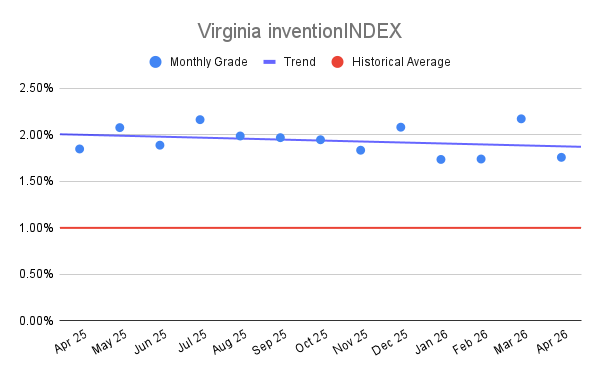 Virginia inventionINDEX April 2026:<
