Patent Title: Optimized order fulfillment from multiple sources
Patent Number: 12675769
Company: DoorDash, Inc.
Inventors: Aman Dhesi, Christopher Hollindale
The modern logistics landscape demands unprecedented speed and efficiency when coordinating complex deliveries. Addressing these rigorous demands, DoorDash, Inc. has engineered an advanced system designed to streamline how customer requests are matched with available suppliers. Their newly patented method for optimized order fulfillment leverages sophisticated algorithms to allocate user orders across multiple third-party merchants intelligently. By employing a dynamic fulfillment engine, the system ensures seamless coordination, minimizing delays and maximizing overall network efficiency.
Why This Invention is Innovative
This patent introduces a robust fulfillment engine that applies linear programming and machine learning to evaluate a multitude of merchant and client attributes simultaneously. Rather than relying on simple proximity-based assignments, the optimizer processes complex data sets to determine the most efficient allocation of orders across numerous available sources. What truly sets this technology apart is its adaptive learning capability. The system is designed to automatically update and refine future order routing in response to continuous client feedback. This creates a self-optimizing network capable of managing volatile demand, reducing idle times, and dynamically balancing loads among diverse vendors without manual intervention.
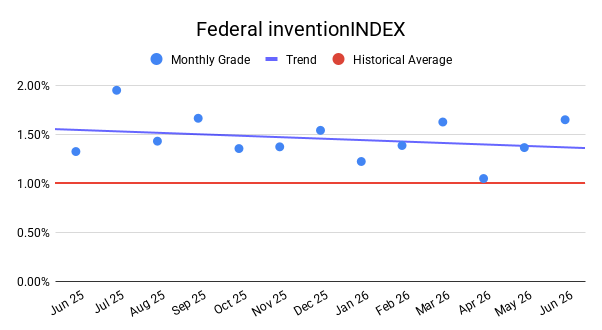
August 2026 Patent of the Month for the Lean-Manufacturing-Logistics Industry
Granted in July 2026, this system has been rightfully awarded the Patent of the Month for the lean-manufacturing-logistics industry for August 2026. Lean logistics focuses heavily on eliminating waste, reducing wait times, and optimizing resource allocation. The innovative fulfillment engine developed by DoorDash embodies these exact principles by transforming fragmented supply chains into a highly synchronized operation. As global delivery networks face intense pressure to reduce costs and carbon footprints while accelerating fulfillment speeds, a machine learning approach to routing becomes indispensable. Recognizing this patent highlights the industry shift toward data-driven automation and emphasizes how algorithmic improvement represents the future of lean distribution.
Practical Applications and R&D Tax Credit Eligibility in the USA
The practical applications of this patent involve extensive software engineering and algorithmic modeling, making the underlying development activities highly eligible for the Research and Development (R&D) Tax Credit in the United States. To qualify for this federal tax incentive, a project must pass a four-part test: the work must be technological in nature, have a permitted purpose, aim to eliminate technical uncertainty, and involve a systematic process of experimentation. Developing a fulfillment engine that uses machine learning to optimize logistics requires teams to evaluate multiple predictive models, write code to integrate diverse merchant attributes, and resolve complex routing uncertainties under real-world constraints. By carefully documenting the iterative testing of these algorithms and the scientific methods used to overcome software hurdles, companies building proprietary supply chain systems can successfully claim the R&D tax credit to offset their innovation costs.