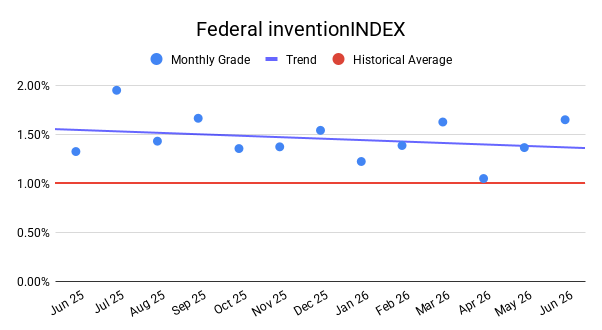
The field of robotics has witnessed a monumental leap forward this month, with the Robotics, Computer Technology and Engineering industries awarding its prestigious July 2026 Patent of the Month to Figure AI Inc. for their groundbreaking invention detailed in US Patent 12649246. Titled “Humanoid robot with an ankle region,” this patent introduces an extraordinarily advanced lower-body architecture designed to replicate the intricate biomechanics of a human foot and ankle.
The patented technology centers around highly sophisticated left and right ankle assemblies that independently control the pitch and roll movements of the robot’s feet. By utilizing a specialized foot-roll actuator assembly coupled with a foot-flexion actuator, the robot can finely tune its roll movement relative to both the shin and the flexion mechanisms. This precise orchestration of components allows the robot to seamlessly adapt to uneven terrain, maintain superior balance during dynamic tasks, and transition smoothly between walking, standing, and lifting heavy payloads without tipping over.
Why This Invention is So Innovative
What makes this ankle region design truly innovative is how it solves one of the oldest challenges in bipedal robotics: reliable dynamic balancing. Historically, humanoid robots have struggled to manage unpredictable surfaces because rigid ankle joints fail to distribute weight effectively. Figure AI Inc. has engineered a biomechanically accurate solution that decouples pitch and roll while maintaining high torque and rapid response times. This dual-actuation approach minimizes the computational lag normally required to correct balance, resulting in a humanoid robot that moves with fluid, human-like agility. This breakthrough in mobility engineering is exactly why the Robotics, Computer Technology and Engineering industries recognized it as the top patent for July 2026, as it fundamentally accelerates the safe integration of humanoid robots into homes and industrial workplaces.
R&D Tax Credit Eligibility in the USA
The practical applications stemming from this patent present substantial opportunities for companies to qualify for the Research and Development (R&D) tax credit in the USA. To integrate this advanced ankle technology into commercially viable robots, engineers must engage in systematic experimentation to resolve ongoing technical uncertainties. For example, developing custom control algorithms that synchronize the foot-roll and foot-flexion actuators in real time constitutes qualifying software development. Additionally, iterative physical testing to optimize the weight-to-strength ratio of the ankle materials or designing custom sensor fusion arrays to provide terrain feedback directly to the lower region actuators would strongly support a claim. As long as the research activities are fundamentally grounded in the hard sciences and involve a process of experimentation to improve performance, reliability, or quality, the costs associated with these engineering efforts can generate significant R&D tax savings.