


This comprehensive study details the application of localized and federal Research and Development (R&D) tax credit incentives in North Little Rock, Arkansas. It explores the city’s macroeconomic shift from an agricultural distribution center to a sophisticated hub of advanced manufacturing, aerospace, healthcare, and software development. The study outlines the strict statutory frameworks of both the US Federal R&D Tax Credit (IRC Section 41) and Arkansas State R&D Tax Credit programs. Through exhaustive case studies covering heavy rail (Union Pacific), steel fabrication (Lexicon Inc.), cosmetics manufacturing (L’Oréal USA), heavy machinery (Caterpillar Inc.), and telecommunications software (First Orion), it demonstrates how complex engineering and process improvements satisfy stringent qualification tests. Finally, it addresses the legal complexities of claiming these credits amidst intensifying IRS scrutiny and evolving administrative tax appeals.
The Macroeconomic History and Industrial Development of North Little Rock
To comprehensively understand the specific application of localized and federal taxation incentives in North Little Rock, it is necessary to first analyze the macroeconomic history that forged the city’s complex industrial base. Situated on the northern bank of the Arkansas River directly opposite the state capital of Little Rock, the geographic location of North Little Rock positioned it from its earliest days as a natural nexus for overland transportation and riverine commerce. The Arkansas River Valley, prior to European exploration and settlement, was inhabited by the Quapaw people, a Dhegiha-Siouan-speaking tribe that resided primarily along the river systems until their forced removal in 1824. Following European settlement, the regional economy was initially dominated by the raw extraction, processing, and transportation of agricultural commodities, specifically focusing on the cotton trade, cattle ranching, and timber harvesting. The geographic advantages of the region, providing direct access to the highly fertile Delta lands stretching to the east and the navigable river route flowing down toward the Mississippi River, established the settlement as a vital agricultural distribution center.
However, the definitive catalyst that transformed North Little Rock from an agricultural outpost into an industrial powerhouse was the arrival and subsequent dominance of the national railroad industry in the late nineteenth century. Following the engineering and construction of major rail bridges spanning the Arkansas River, the city rapidly evolved into a central transportation hub. This extensive and growing rail infrastructure magnetically attracted heavy industry, steel fabrication, and vast mechanical maintenance operations to the area, laying the foundational groundwork for what would become a generational, highly skilled blue-collar manufacturing workforce. Concurrently, the strategic inland location of the city led to the establishment of a significant military presence in the 1890s, culminating in the construction of Camp Robinson. During both World War I and World War II, Camp Robinson served as a massive training installation for military recruits, injecting unprecedented federal capital, logistical infrastructure, and personnel into the local North Little Rock economy.
As the twentieth century progressed, local civic and business leaders actively sought to diversify the city’s economic base beyond its traditional reliance on rail and raw agricultural distribution. In the late twentieth and early twenty-first centuries, aggressive public-private partnerships and strategic economic development initiatives led to the revitalization of the downtown Argenta Historic District. Established in 1993, the Argenta district became an award-winning national model for the revitalization of distressed urban communities, successfully transitioning abandoned industrial spaces, dilapidated warehouses, and older commercial storefronts into modern commercial real estate, vibrant art venues, and state-of-the-art technology incubators. Achievements in historic preservation and targeted economic reinvestment helped the city become recognized nationally, significantly diminishing localized crime and booming with private investment.
Simultaneously, the city and the broader Metro Little Rock Alliance aggressively leveraged the region’s unmatched geographic and infrastructural advantages to attract massive global corporations. North Little Rock sits at the critical nexus of Interstate 40 and Interstate 30, possesses extensive river barge access via the highly developed Port of Little Rock, and maintains immediate proximity to the Bill and Hillary Clinton National Airport. The continued expansion of the Port of Little Rock was particularly vital; historical milestones such as the 2002 funding from the federal Economic Development Administration to build a slackwater harbor provided direct, year-round river access regardless of the Arkansas River’s fluctuating conditions. Subsequent investments, including a $10 million citywide sales tax set aside in 2011 for the Little Rock Port Authority to expand its footprint, allowed the region to compete globally for massive industrial prospects. This modern, tri-modal transportation corridor enabled the highly efficient and swift delivery of manufactured goods and raw materials, prompting heavy, sustained investments from global logistics, heavy manufacturing, and consumer goods conglomerates. Today, North Little Rock’s multifaceted economy is characterized by a highly sophisticated blend of advanced manufacturing, aerospace technology, healthcare, complex finance, and cutting-edge software development, all built securely upon the enduring legacy of its historical transportation and industrial infrastructure.
Statutory Framework of the United States Federal Research and Development Tax Credit
The United States federal Research and Development tax credit, formally codified under Section 41 of the Internal Revenue Code (IRC), is a pivotal federal incentive originally enacted by Congress to stimulate domestic technological innovation, encourage corporate investment in experimental sciences, and aggressively combat the offshore migration of highly skilled technical jobs. The credit operates by providing a direct, dollar-for-dollar reduction in a taxpayer’s overall federal income tax liability for qualified research expenses (QREs) incurred during the taxable year in carrying on a trade or business. Generally, the amount of the qualified research activities credit is determined through a statutory formula that takes 20 percent of the amount by which the taxpayer’s qualified research expenses for the taxable year exceed a historically calculated base amount. For these specific purposes, the term “qualified research expenses” means the sum of all amounts paid or incurred by the taxpayer during the tax year for “in-house research expenses” (which primarily include the W-2 taxable wages of employees directly performing, supervising, or supporting the research, as well as the cost of supplies used in the research) and “contract research expenses” (typically calculated at 65 percent of amounts paid to third-party contractors performing qualified research on the taxpayer’s behalf).
To definitively qualify for the federal R&D tax credit, a taxpayer’s underlying activities must stringently and cumulatively satisfy a definitive four-part statutory test established by IRC Section 41(d). The failure to meet even a single prong of this test renders the activity entirely ineligible for the federal tax credit.
The first core requirement is the Section 174 Test, more commonly referred to within the tax and legal community as the Permitted Purpose Test. The research activity must be undertaken for the fundamental purpose of discovering information intended to be useful in the development of a new or improved business component of the taxpayer. A “business component” is broadly and statutorily defined to encompass any product, process, computer software, technique, formula, or invention that the taxpayer intends to hold for sale, lease, or license, or to use internally within its own trade or business. Crucially, the objective of the research activity must be to materially improve the business component’s core function, physical performance, long-term reliability, or overall quality. Activities undertaken merely for aesthetic enhancements, seasonal stylistic updates, or superficial cosmetic design changes are explicitly and categorically excluded from qualifying for the credit.
The second requirement is the Elimination of Uncertainty Test. At the immediate outset of the research endeavor, the taxpayer must face genuine technological uncertainty regarding the fundamental capability or the specific method of developing or improving the business component, or the appropriate ultimate design of the business component. Under the Treasury Regulations, uncertainty exists if the information available to the taxpayer does not establish the capability or method for developing or improving the business component, or the appropriate design of the component. The Internal Revenue Service (IRS) and the United States federal courts have repeatedly and emphatically stressed that the uncertainty faced by the taxpayer must be strictly technological in nature, requiring an active, scientific investigative process to resolve, rather than mere financial, market, or scheduling uncertainty.
The third requirement is the Process of Experimentation Test. The taxpayer must actively engage in a structured and systematic process specifically designed to evaluate one or more alternatives to achieve a result where the capability or the method of achieving that result, or the appropriate design of that result, is uncertain as of the beginning of the taxpayer’s research activities. This rigorous process must fundamentally rely on the scientific method. It inherently involves a multi-step procedure: identifying the specific technological uncertainty, formulating one or more hypotheses designed to eliminate that uncertainty, designing and actively conducting scientific testing or complex computational modeling, and critically analyzing the resulting data to draw technical conclusions. Continuous refinement, trial and error, and iterative development are the defining hallmarks of this required process. If the initial design or formulated hypothesis succeeds immediately without the need for alternative evaluation, the IRS frequently argues that the activity fails this specific prong, asserting that true experimentation was never required.
The fourth requirement is the Technological in Nature Test. To be considered “qualified research,” the activity must be undertaken for the purpose of discovering information that is technological in nature. Information is deemed technological in nature only if the process of experimentation used to discover such information fundamentally relies on the established principles of the physical or biological sciences, engineering, or computer science. Activities relying on the softer disciplines, such as economics, social sciences, arts, humanities, or business management principles, are statutorily excluded from consideration. Notably, the taxpayer is not required to discover groundbreaking scientific principles that expand the global boundaries of human knowledge; rather, the acquired technological information must simply be newly applied to the taxpayer’s own specific business component to resolve their localized uncertainty.
Furthermore, the Internal Revenue Code explicitly outlines certain categories of research activities that are statutorily excluded from the definition of qualified research, regardless of whether they pass the four-part test. These strict exclusions include any research conducted after the beginning of commercial production of a business component, meaning the component is already being mass-produced and sold. Similarly excluded is the adaptation of an existing business component to a particular customer’s distinct requirement or need, as well as the outright duplication or reverse engineering of an existing business component. Routine surveys, market studies, routine data collection, routine quality control testing, and research conducted in foreign jurisdictions outside the geographic boundaries of the United States are also unequivocally excluded from the credit calculation.
Additionally, IRC Section 41(d)(4)(H) governs the highly scrutinized funded research exclusion, which dictates that any research funded by any grant, contract, or otherwise by another person or governmental entity does not constitute qualified research for the purposes of the credit. To successfully claim the credit for contracted research, the taxpayer performing the research must retain substantial rights to the intellectual property and the research results, and they must bear the ultimate economic risk of development failure (meaning their payment must be strictly contingent upon the successful completion of the research objectives). Finally, computer software developed primarily for the taxpayer’s internal use (commonly referred to as Internal Use Software or IUS) is subject to an additional, highly restrictive three-part “high threshold of innovation” test. Under this supplemental test, the internal use software must be highly innovative, its development must entail significant economic risk to the taxpayer, and the software must not be commercially available for use by the taxpayer in the open market.
| Statutory Requirement | Legal Definition and Scope | Practical Application and Documentation |
|---|---|---|
| Permitted Purpose (Business Component) | Must relate to a new or improved product, process, software, technique, formula, or invention intended for sale or internal use. | Project charters, detailed design specifications, and formal product requirement documents explicitly detailing intended functional and technical improvements. |
| Elimination of Uncertainty | Must seek to discover information to eliminate technological uncertainty regarding the capability, method, or optimal design of the component. | Engineering memoranda, technical meeting minutes, or project briefs documenting specific technical hurdles, engineering challenges, or unknown variables at the project’s inception. |
| Process of Experimentation | Must systematically evaluate alternatives to achieve the desired result, fundamentally relying on the scientific method. | Comprehensive test logs, computer simulation results, CAD iterations, physical failed prototypes, and detailed version control histories demonstrating systemic trial and error. |
| Technological in Nature | Must fundamentally rely on the principles of physical/biological sciences, engineering, or computer science. | Technical resumes and academic pedigrees of the personnel involved, academic literature referenced during development, and complex architectural or chemical schematics. |
Statutory Framework of the Arkansas State Research and Development Tax Credit
While the federal statutory framework provides a universal baseline for domestic innovation incentives, the State of Arkansas has cultivated an equally complex, yet distinctly unique, statutory framework to actively promote targeted economic development, technological advancement, and academic collaboration within its borders. Administered jointly by the Arkansas Economic Development Commission (AEDC) and the Arkansas Department of Finance and Administration (DFA), and historically guided by the Arkansas Science and Technology Authority (ASTA), the state offers a highly competitive and deeply nuanced environment for innovation-driven enterprises operating in cities like North Little Rock. Unlike the federal R&D credit, which is generally and universally applicable to all qualifying expenditures reported on a federal tax return, the Arkansas R&D incentives are meticulously segmented into highly specific economic development programs that legally require prior administrative approval and the execution of active financial incentive agreements with the state before any research is conducted.
The baseline state incentive is the Arkansas In-House Research and Development Tax Credit, which serves as a discretionary tax incentive explicitly designed for mature companies performing ongoing in-house research and development within the physical boundaries of the State of Arkansas. Eligible businesses that conduct continuous research qualifying for the federal R&D tax credit guidelines may be granted a state income tax credit equal to 20 percent of the qualified research expenditures (QREs) that exceed a specifically calculated base expenditure amount established in the preceding year. The state adheres closely to federal guidelines for determining QRE eligibility, focusing primarily on in-house expenses encompassing taxable wages paid and the usual fringe benefits specific to the research activities of employees operating within Arkansas. However, a critical distinction from federal law is that the costs of physical supplies, research equipment, and building overhead generally do not qualify for this specific state-level in-house credit calculation. The 20 percent credit can be legally earned for a period of five years following the formal execution of a financial incentive agreement with the AEDC. For newly established in-house research facilities, the statutory base year is set to zero for the first three years, allowing all eligible expenditures to qualify entirely for the credit, before establishing a rolling base in the fourth and fifth years. These powerful credits may be utilized to offset up to 100 percent of a corporate taxpayer’s annual state income tax liability, with any unused credits eligible to be carried forward for nine consecutive tax periods.
Moving beyond the baseline program, the state offers the In-House Research in Area of Strategic Value Tax Credit, a highly specialized incentive designed to foster intense innovation in specific, high-priority economic sectors deemed vital to Arkansas’s future economy. This lucrative program grants an elevated state income tax credit equal to 33 percent of qualified research expenditures. To successfully qualify, the research must be actively conducted in an area of “strategic value,” which the statute defines as research in fields having long-term economic or commercial value to the state, as formally identified and approved by the Board of Directors of the Division of Science and Technology of the AEDC. The AEDC has historically identified and published six targeted business sectors that possess this strategic value: advanced materials and manufacturing systems; agriculture, food, and environmental sciences; biotechnology, bioengineering, and life sciences; information technology; transportation logistics; and bio-based products. While the credit rate is substantially higher at 33 percent, the statutory maximum tax credit that may be claimed by a taxpayer under this specific strategic value program is strictly capped at $50,000 per tax year, reflecting its design to support highly targeted, smaller-scale strategic initiatives.
For younger, rapidly scaling technology startups, the state provides the Targeted Business R&D Tax Credit Incentive Program. This program offers a 33 percent credit on qualified R&D salaries for up to five years to emerging companies that fit within the aforementioned six targeted business sectors. Unlike the standard In-House credit, which only offsets existing state tax liabilities, the targeted business credits possess a highly unique and incredibly valuable monetization feature: they can be legally sold or transferred one time within one year of being issued. This transferability provides critical liquidity and vital working capital to early-stage technology companies that may be heavily investing in R&D but have not yet achieved sufficient commercial profitability to generate state tax liabilities to offset. A business claiming the Targeted Business R&D credit is statutorily prohibited from concurrently claiming the standard 20 percent In-House credit or other targeted job creation tax credits for the exact same expenditures, a provision designed to prevent the double-dipping of state economic incentives.
Finally, the University-Based Research and Development Tax Credit is specifically designed to stimulate the vital transfer of advanced science and technology from the academic sphere directly into private commercial industry. An eligible business that formally contracts with one or more accredited Arkansas colleges or universities to perform applied or basic research that qualifies for federal R&D standards may qualify for a 33 percent income tax credit for those specific qualified research expenditures. Furthermore, Arkansas Code § 26-51-1102 provides additional academic-industrial incentives, including a 33 percent tax credit for cash donations or the outright sale below cost of new, state-of-the-art machinery and equipment to qualified educational institutions for exclusive use in qualified research programs, as well as a 33 percent credit for donations made to directly support an authorized research park authority.
| Arkansas R&D Tax Credit Program | Statutory Credit Rate | Key Program Limitations and Statutory Caps | Core Program Focus and Eligibility Criteria |
|---|---|---|---|
| In-House Research and Development | 20% | Offsets up to 100% of state tax liability; 9-year carryforward. Cannot be combined with the Targeted Business credit. | Intended for mature companies performing ongoing R&D. Strict adherence to federal eligibility. Rolling base calculation applies. |
| Research in Area of Strategic Value | 33% | Strictly capped at $50,000 per taxpayer per tax year. | Research must strictly align with AEDC-approved fields having recognized long-term economic value. |
| Targeted Business R&D Credit | 33% | Can be legally sold or transferred one time within one year of issuance. | Geographically restricted to emerging firms operating within six specific high-tech or scientific sectors. |
| University-Based R&D | 33% | Qualified expenditures must directly fund research programs at accredited AR educational institutions. | Explicitly encourages academic-industry partnerships and rapid technology transfer. |
Exhaustive Industry Case Studies in North Little Rock: Complex R&D Tax Credit Eligibility Analysis
The dynamic economic evolution of North Little Rock has successfully created highly specialized and technologically advanced industrial clusters. The following five comprehensive case studies deeply analyze unique, legacy, and emerging industries operating within the city limits. Each study details their specific historical development in the region and outlines exactly how their highly complex engineering and software operations satisfy the stringent requirements of both the United States federal and Arkansas state R&D tax credit laws.
Case Study: Advanced Rail Transportation and Logistics Maintenance (Union Pacific)
The heavy rail transportation industry represents the absolute historical bedrock of North Little Rock’s economic existence. As early national rail networks expanded aggressively across the United States in the late nineteenth century, North Little Rock’s geographic position adjacent to the Arkansas River bridges made it a critical, unavoidable junction, culminating in the establishment of massive rail yards and vital maintenance facilities. Today, Union Pacific, one of the nation’s premier Class I freight railroads, operates a truly massive logistical and mechanical footprint in the city, anchored primarily by the Downing B. Jenks Locomotive Shop. Originally designed and built 80 years ago specifically to service steam locomotives, the facility was completely demolished and replaced in 1984 with an ultra-modern mechanical complex large enough to fully enclose five football fields. Functioning as the central headquarters for Union Pacific’s locomotive repair and overhaul in the state of Arkansas, the Jenks Shop handles the complete mechanical maintenance, complex technological retrofitting, and highly specialized aesthetic production of the railroad’s massive operational fleet.
From a strict R&D tax credit perspective, the engineering and materials science activities conducted daily at the Jenks Shop extend far beyond routine mechanical maintenance or standard repair. Union Pacific engages in highly complex mechanical and chemical engineering processes, particularly focusing on the development and application of specialized industrial protective coatings and custom structural modifications. For instance, the creation of unique commemorative locomotives, such as the UP No. 1979 (the “We Are ONE” locomotive) or the No. 4141 honoring President George H.W. Bush, requires specialized mechanical carmen to solve extraordinarily complex spatial and materials engineering problems. They must accurately translate intricate two-dimensional schematic designs onto massive, three-dimensional, irregularly shaped locomotive bodies riddled with grilles, vents, and access panels. This involves rigorous, deep sandblasting processes that remove surface imperfections, iterative structural bodywork, and the highly experimental application of multi-layered protective clear coats. These experimental paints and coatings are specifically designed and tested to withstand extreme aerodynamic friction, immense physical vibrations, and massive weather and temperature variations encountered across Union Pacific’s vast 23-state operational network. Furthermore, the integration of remote-controlled locomotives in the North Little Rock hump yard involves the ongoing testing of new routing algorithms and automated telemetry software designed to improve yard efficiency and safety.
Under the strict scrutiny of the federal Section 41 four-part test, these complex mechanical and chemical activities firmly constitute qualified research. The permitted purpose is the fundamental improvement of the performance, durability, and reliability of the locomotive’s exterior protective shell and structural integrity (which constitutes the defined business component). Technological uncertainty clearly exists regarding the exact chemical adhesion properties, curing times, and sheer-stress resistance of new industrial paint formulations when subjected to the intense vibrations of heavy freight operations. The process of experimentation involves the systematic, iterative application, physical testing, and subsequent modification of curing processes and structural body preparations. These activities rely firmly on established principles of materials science and mechanical engineering.
Under Arkansas state tax law, these engineering activities would be highly eligible for the standard In-House Research and Development Tax Credit (20%). Given Union Pacific’s prominent status as a mature, multi-billion-dollar corporation, the costs associated with the taxable wages of the mechanical engineers, software systems developers, and specialized carmen engaged directly in the iterative design and physical testing of these locomotive systems would legally qualify as QREs. Additionally, the state’s formal recognition of “Transportation Logistics” as an explicitly defined area of Strategic Value means that specific, highly targeted research projects—such as those aimed at developing next-generation logistical routing algorithms or advanced autonomous yard telemetry—could potentially qualify for the elevated 33% Strategic Value credit, subject to prior AEDC approval and the strict $50,000 annual statutory cap.
Case Study: Complex Industrial Steel Fabrication and Construction Management (Lexicon Inc.)
The heavy industrial construction and complex steel fabrication sector in North Little Rock developed almost entirely symbiotically with the heavy transportation and agricultural industries that required massive infrastructure. Lexicon Inc. perfectly exemplifies this regional industrial evolution. Founded in 1968 as Schueck Steel by visionary Tom Schueck in a modestly converted residential garage with a mere $800 in capital, the company rapidly capitalized on its proximity to the Arkansas River navigation system and ongoing regional federal infrastructure projects. A pivotal, transformative moment in the company’s growth trajectory occurred in 1986 when they competitively secured the massive contract to erect the structural steel for the very first Nucor-Yamato steel mill in neighboring Mississippi County, a project that permanently propelled Lexicon into the elite tier of the national heavy industrial construction space. Today, headquartered near the Port of Little Rock, Lexicon operates as a multi-faceted $1 billion enterprise containing specialized divisions like Prospect Steel and Lexicon Construction Management, routinely managing engineering mega-projects such as advanced green steel mills and multi-million square foot, hyper-scale data centers.
Lexicon’s Prospect Steel division operates as a recognized world leader in the deployment of advanced robotic technologies for heavy structural steel fabrication. Operating four distinct robotic assembly lines equipped with 11 specialized, multi-axis welding robots, the company processes in excess of 100,000 tons of structural steel annually from its central location. The core R&D activities involve the highly complex integration of Building Information Modeling (BIM) software with automated robotic fitting and welding control systems. This process requires continuous, intense software and mechanical engineering iteration to accurately translate virtual 3D architectural models into precise, microscopic mechanical instructions for massive robotic arms handling extraordinarily heavy-gauge steel beams. Furthermore, Prospect Steel develops advanced metallurgical processes and operates under a highly restrictive ASIC Certified Quality System that includes a Sophisticated Paint Endorsement. This requires the continuous experimental testing of advanced industrial chemical coatings and the development of fracture-critical welding techniques designed for highly volatile environmental conditions, such as chemical plants or seismic zones.
Federally, Lexicon’s advanced engineering, software integration, and structural design activities firmly and unequivocally align with the Section 41 definition of qualified research. The recent Harper Tax Court memorandum (decided in May 2023) is highly and specifically relevant to Lexicon’s operations. In the Harper case, the IRS aggressively attempted to deny R&D credits to a construction and design-build firm, arguing that architectural blueprints and structural engineering designs did not constitute a valid “business component” under the tax code. The United States Tax Court decisively and repeatedly rejected the IRS’s narrow argument, legally affirming that the highly technical work product involved in designing bespoke buildings and complex industrial structures perfectly satisfies the business component test. In their daily operations, Lexicon’s engineers face immense technological uncertainty regarding the ultimate structural integrity, maximum load-bearing capacities, thermal expansion properties, and optimal robotic weld sequencing of complex industrial facilities. Their engineers systematically evaluate alternative structural designs, complex weld parameters, and shifting material tolerances, satisfying the process of experimentation test through the rigorous application of mechanical, civil, and software engineering.
In Arkansas, Lexicon’s dedicated engineering, BIM coordination, and robotics programming divisions would strongly qualify for the In-House Research and Development Tax Credit. The highly compensated wages of the civil engineers, 3D spatial coordinators, and robotic programmers engaged in designing entirely new fabrication methods or engineering custom structural solutions constitute explicitly eligible QREs under state law. Furthermore, if Lexicon actively engages in collaborative research with local Arkansas universities—perhaps to develop entirely new robotic welding algorithms utilizing artificial intelligence or to test highly experimental metallurgy applications—they could successfully leverage the 33% University-Based Research and Development credit to heavily offset those specific collaborative costs.
Case Study: Advanced Cosmetics Chemistry and Consumer Goods Manufacturing (L’Oréal USA)
North Little Rock’s unexpected but highly successful emergence as a premier national hub for advanced consumer goods manufacturing is heavily and intrinsically linked to its central geographic location and robust, multi-modal distribution infrastructure. In 1975, the original Maybelline makeup manufacturing plant was established in the city, drawn by the highly dependable, blue-collar manufacturing workforce and the unparalleled logistical ability to rapidly distribute finished consumer products across the rapidly growing Sunbelt and the densely populated Midwest. Over five decades of operation, and following the corporate acquisition by the global beauty conglomerate L’Oréal, the North Little Rock site has undergone seven massive major expansions. Today, it has grown into an astonishing 800,000-square-foot mega-facility that stands proudly as L’Oréal Groupe’s highest-volume color cosmetic production site globally, a critical engine responsible for producing half of all mascaras sold in the United States.
The L’Oréal North Little Rock plant operates as a sophisticated center of advanced industrial chemistry and highly automated manufacturing engineering. Innovation at the plant is aggressively spearheaded by highly specialized scientific units, such as the Advanced Color and Technical Agility Squad (ACTAS). This elite team of chemical color experts conducts rigorous, continuous R&D to meticulously match, physically test, and chemically stabilize new product shades and complex formulations across incredibly diverse brand portfolios. The facility heavily utilizes a collaborative “lab to line” approach, wherein pilot manufacturing engineers and industrial chemists work synchronously to scale highly experimental cosmetic formulas from minute, unstable laboratory batches to massive, thousands-of-gallons automated mass-manufacturing runs without losing structural integrity or colorfastness. Furthermore, the plant engineers actively design advanced sustainable manufacturing processes, developing highly complex closed-loop water recycling systems and zero-landfill waste recovery operations, tasks that fundamentally alter and challenge the thermodynamics and fluid dynamics of the traditional production line.
Under federal tax law, the continuous development of new cosmetic chemical formulations and the deeply associated engineering of the manufacturing processes perfectly illustrate the Section 41 requirements. The qualified business components are both the new cosmetic products themselves (e.g., a fundamentally new liquid lipstick formula requiring different suspension polymers) and the automated manufacturing process designed to create it. The ACTAS team and the industrial chemists face massive technological uncertainty regarding the chemical stability, sheer stress tolerance during pumping, and eventual colorfastness of new chemical compounds when exposed to the brutal thermal and kinetic realities of industrial-scale mixing equipment. The process of experimentation rigorously involves the scientific method: formulating base chemical compounds, subjecting them to extreme thermal and mechanical stress tests, analyzing the resulting chemical degradation using spectroscopy, and iteratively adjusting the exact ratios of emulsifiers or pigments. This work fundamentally relies on the biological and physical sciences (specifically, advanced industrial chemistry and fluid mechanics).
Under Arkansas law, L’Oréal stands as an archetypal corporate candidate for the state’s lucrative R&D incentives. While they likely utilize the standard 20% In-House R&D credit to offset the salaries of their large teams of chemical engineers and quality control scientists, their specific sustainability and formulation activities also perfectly align with the AEDC’s statutory definition of an “Area of Strategic Value”. Specifically, their highly advanced engineering work falls squarely under the targeted sectors of “Advanced materials and manufacturing systems” and “Bio-based products.” By consciously aligning their sustainability engineering and formulation research with the stated strategic economic goals of the state of Arkansas, L’Oréal could qualify for the highly lucrative 33% Strategic Value credit for specific, isolated engineering projects, further lowering the effective operational cost of maintaining and continually expanding their flagship global manufacturing hub within the state.
Case Study: Heavy Machinery Engineering and Equipment Manufacturing (Caterpillar Inc.)
The heavy machinery and earth-moving equipment sector located operations in North Little Rock specifically to exploit the region’s unmatched tri-modal transportation capabilities (the confluence of river barge, heavy rail, and interstate highway systems), which are absolutely essential for moving massively heavy finished goods. In 2009, Caterpillar Inc., the undisputed global leader in the manufacture of construction and mining equipment, strategically invested $140 million to construct a state-of-the-art, 700,000-square-foot heavy manufacturing plant in North Little Rock, completely taking over and redeveloping the former Deluxe Video commercial building site. Production operations officially began in 2010 with a singular focus on the complex assembly of heavy motor graders. By 2017, the plant’s sophisticated engineering capabilities had expanded significantly to include the highly complex assembly of medium wheel loaders. To date, this vital facility has engineered and produced over 15,000 massive heavy machines for global export.
Caterpillar’s North Little Rock facility is deeply, inherently engaged in continuous product and process manufacturing innovation. The mass manufacturing of multi-ton motor graders requires incredibly exact metallurgical fabrication, the microscopic precision machining of massive drivetrain components, and highly complex, high-pressure hydraulic assembly. Caterpillar operates globally with a strict corporate mandate of “sustainable innovation,” constantly seeking new engineering methods to make heavy equipment demonstrably safer, cleaner, and smarter. R&D activities at the North Little Rock plant level focus intensely on the engineering of the manufacturing process itself—designing entirely new robotic welding jigs to handle shifting steel tolerances, completely optimizing the factory workflow layout utilizing advanced simulations to reduce assembly bottlenecks, and testing highly experimental new industrial paint and coating applications for extreme corrosion resistance on earth-moving equipment subjected to brutal mining environments. Furthermore, as Caterpillar aggressively integrates more semi-autonomous and remote-control capabilities into its modern machinery, the engineers at the North Little Rock plant must constantly iterate on the complex mechanical and electrical integration of these sophisticated sensory systems and wire harnesses into the physical, vibrating chassis of the wheel loaders.
The federal R&D tax credit is highly and directly applicable to these complex process engineering activities. Under the stringent IRC Section 41 definitions, improving a manufacturing process is legally recognized as a valid business component. Caterpillar’s industrial and mechanical engineers face intense capability and method uncertainty when attempting to integrate a completely new automated assembly step for a high-pressure hydraulic system without causing line delays. To resolve this, they must systematically and scientifically evaluate different physical tooling designs, test alternate assembly sequences, and determine exact torque specifications, utilizing core mechanical engineering principles, until the new assembly process achieves the required, highly strict quality and throughput metrics.
For the state of Arkansas, Caterpillar’s localized engineering activities qualify for the 20% In-House Research and Development Tax Credit. The substantial wages of their on-site manufacturing engineers, the quality assurance technicians rigorously testing new assembly methodologies, and the line supervisors directly managing the experimental prototype runs are all legally eligible QREs. The state’s strict statutory requirement that the company must first be accepted into the Federal R&D program ensures that all the rigorous scientific documentation standards are fully met before the discretionary state credit is ever approved by the AEDC.
Case Study: Advanced Telecommunications Technology and Software Development (First Orion)
While North Little Rock is historically rooted in heavy industry and rail, its modern economy has successfully and rapidly transitioned to include advanced technology and complex software development. This shift was heavily influenced by the broader Central Arkansas tech ecosystem originally spawned by the data-brokerage giant Acxiom. First Orion, a highly innovative technology firm founded in Little Rock by Acxiom’s former CEO Charles Morgan, provides incredibly sophisticated software solutions for telecommunications call protection and branded communication. In 2019, First Orion made a highly strategic decision to relocate its global headquarters to the rapidly revitalizing Argenta district of North Little Rock. They served as the anchor corporate tenant in a massive multi-million-dollar real estate development explicitly designed to completely transform the historic area into a prominent, modern technology hub.
First Orion’s core business model relies entirely on relentless, highly complex software research and development. The company continuously develops highly sophisticated, proprietary algorithms specifically designed to hunt, identify, and block malicious scam and spoof calls, requiring their systems to process billions of distinct telecommunications signals in real-time. Their extensive R&D activities include the ongoing development of the SENTRY spoof protection solution, the INFORM branded calling software, and the PROTECT+ advanced risk detection technology. Designing and deploying these systems requires the creation of incredibly complex machine learning models, the deep engineering of ultra-low-latency network protocols designed to intercept and analyze live calls in mere milliseconds, and the development of highly secure, infinitely scalable database architectures capable of managing massive volumes of global telecommunications traffic without failure.
Federal eligibility for First Orion’s activities hinges critically on the highly complex rules governing computer software under Section 41. Fortunately, because First Orion develops advanced software that is ultimately sold, leased, or licensed to massive third parties (such as major telecom carriers like T-Mobile and large commercial businesses), it generally avoids the highly restrictive and punitive Internal Use Software (IUS) rules. The qualified business components are the algorithms themselves and the underlying software platforms. The company faces immense, constant technological uncertainty regarding whether a newly developed machine learning model can accurately differentiate between a legitimate, automated business call and a highly sophisticated fraudulent spoofed call without causing unacceptable network latency or generating catastrophic false positives. The rigorous process of experimentation involves writing highly complex code, compiling it, testing it against vast, ever-changing global datasets, analyzing the statistical error rates, and continuously refining the algorithms to eliminate the uncertainty. This process clearly and unequivocally relies on the foundational principles of computer science.
In Arkansas, First Orion represents the absolute ideal candidate for the Targeted Business R&D Tax Credit Incentive Program. “Information Technology” is explicitly listed as one of the six designated strategic sectors. Because First Orion is a rapidly scaling, emerging technology company, they can leverage the incredibly powerful 33% credit rate against the highly compensated salaries of their software developers, data scientists, and systems architects located in North Little Rock. Critically, as an officially designated “targeted business,” they possess the unique, highly valuable statutory ability to monetize this credit by legally selling it within one year of issuance. This specific provision provides vital, immediate capital that the company can seamlessly reinvest into further software engineering and top-tier talent acquisition, ensuring their continued rapid growth in the North Little Rock market.
Detailed Legal Analysis: Navigating Complex Federal and State Administrative Controversies
Claiming Research and Development tax credits is not merely a scientific exercise; it requires successfully navigating an incredibly complex, highly adversarial, and frequently litigated administrative environment. Both the Internal Revenue Service (IRS) at the federal level and the Arkansas Department of Finance and Administration (DFA) at the state level demand extraordinarily rigorous substantiation. Furthermore, recent consequential case law has fundamentally shifted exactly how corporate taxpayers must legally document and defend their R&D claims.
Federal Administrative Guidance and Shifting Case Law
At the federal level, the IRS has significantly, and aggressively, increased its audit scrutiny on R&D credit claims across all industries. The highly controversial issuance of the 2021 IRS Chief Counsel Advice (CCA) memorandum resulted in severe new strict requirements for all refund claims. This binding administrative guidance mandates that taxpayers must, at a minimum, provide a highly detailed, written narrative that specifically identifies all business components to which the claim relates, identifies all specific research activities performed for each individual component, names all individuals who performed each activity, and specifically identifies the exact technological information each individual sought to discover. The absolute failure to provide this exhaustive documentation upfront, at the time the amended return is filed, results in the immediate, summary rejection of the claim by the IRS without any substantive review.
Recent critical case law strongly emphasizes the absolute necessity of understanding statutory exclusions, particularly for large contractors and heavy fabrication firms like those prevalent in the North Little Rock industrial base. The Harper decision (United States Tax Court, May 2023) provided a massive, precedent-setting victory for the entire construction and design-build industry. The IRS had historically and aggressively argued that design-build construction drawings, architectural schematics, and structural engineering plans did not meet the definition of a valid business component, claiming they were not “products” in the traditional manufacturing sense. The Tax Court decisively and comprehensively rejected this IRS assertion, legally validating that the highly technical work product involved in designing bespoke structures entirely constitutes qualified research. This critical ruling legally protects engineering and fabrication firms like Lexicon when they expend massive engineering hours designing customized, highly engineered industrial facilities or specialized steel structures.
Conversely, the strict application of the Funded Research Exclusion under IRC Section 41(d)(4)(H) remains a highly perilous area of tax law for any firm performing contract research. Under Treasury Regulations Section 1.41-4A(d), research is automatically considered funded (and thus legally ineligible for the credit) if the taxpayer’s compensation is not strictly contingent on the success of the research, or if the taxpayer does not retain substantial, exploitable rights to the results of the research. The recent, highly watched cases of Perficient Inc. (Tax Ct. 2022) and Grigsby (M.D. La. 2022) sharply highlight the immense complexity of this specific exclusion. In these decisions, the federal courts heavily and meticulously scrutinized the specific contractual language drafted between the service provider and the client to determine exactly which party bore the ultimate economic risk of failure. If a North Little Rock engineering firm operates under a strict firm-fixed-price contract where they must financially absorb all the costs of redesigns or design failures, they bear the economic risk and may claim the credit. However, if they are paid on an hourly, time-and-materials basis regardless of whether the ultimate project succeeds or fails, the IRS will legally deem the research “funded” and completely deny the credit, regardless of how scientifically complex the work actually was.
Arkansas Administrative Guidance and the Independent Tax Appeals Commission
The administration of the Arkansas state R&D tax credit is equally complex, but it operates through a distinctly different, highly formalized procedural framework. The Arkansas DFA handles the rigorous financial auditing of the credits and the ultimate processing of the tax returns, while the AEDC and the Division of Science and Technology separately manage the technical scientific qualification and the drafting of the binding incentive agreements. A fundamental, non-negotiable stricture of Arkansas state tax law is that state credits are largely discretionary and strictly prospective. Taxpayers must formally apply and enter into a binding financial incentive agreement with the AEDC before they can legally claim the lucrative multi-year benefits.
If a severe legal dispute arises regarding a state tax assessment or the outright denial of an R&D credit, Arkansas taxpayers must now navigate a newly reformed, independent appellate structure. Historically, administrative tax hearings were held internally within the DFA’s own Office of Hearings and Appeals, raising concerns among corporate taxpayers regarding administrative bias. However, the Arkansas legislature passed Act 586 of 2021, which formally abolished this internal office and completely transferred its judicial functions to the newly created, highly independent Arkansas Tax Appeals Commission, which officially began operations in 2023. This independent commission, composed of politically appointed, experienced administrative law judges, provides a much more neutral, judicial forum for corporate taxpayers to aggressively challenge DFA audit findings regarding QRE eligibility, base calculations, or rigid statutory interpretations.
When actively litigating state tax disputes, Arkansas appellate courts consistently emphasize extremely strict statutory construction over equitable arguments. In the highly significant, recent Arkansas Supreme Court decision Hudson v. Murphy Oil USA, Inc. (2024 Ark. 179), the DFA aggressively attempted to deny a massive $4 million tax refund based on broad arguments of interstate fairness regarding the complex apportionment of nonbusiness interest expenses related to a corporate spinoff. The Arkansas Supreme Court ruled decisively and forcefully for the corporate taxpayer, holding that the court’s sole constitutional duty is to strictly apply the plain, written language of Arkansas state law, completely irrespective of how the tax items might be treated, or what the ultimate tax implications might be, in other state jurisdictions. This powerful legal precedent is absolutely critical for the massive, multi-state corporations operating heavily in North Little Rock (such as Union Pacific, Caterpillar, or L’Oréal). It firmly establishes that as long as the corporate taxpayer strictly and textually meets the specific written requirements of the Arkansas Consolidated Incentive Act, the DFA cannot legally deny R&D credits based on vague equitable arguments or concerns regarding the taxpayer’s credit utilization in adjoining states. Furthermore, a review of recent DFA administrative decisions highlights the absolute, unforgiving necessity of retaining perfect contemporaneous documentation; the failure to timely file the specific annual returns or the failure to produce the initial, signed AEDC certification certificates inevitably and automatically results in the complete denial of the credit, entirely regardless of the underlying validity, complexity, or economic value of the scientific research actually performed.
Final Thoughts
The modern industrial ecosystem of North Little Rock, Arkansas, presents a fascinating, highly lucrative convergence of historical transportation infrastructure and cutting-edge technological advancement. From the legacy, heavy rail yards of Union Pacific to the advanced robotic steel fabrication lines of Lexicon, and from the high-volume, exact-tolerance chemical engineering of L’Oréal’s cosmetic manufacturing to the highly complex algorithmic software development occurring at First Orion, the city actively hosts incredibly diverse corporate activities that fundamentally and daily rely on the rigorous application of the physical sciences, mechanical engineering, and computer science. By meticulously documenting their systematic processes of experimentation and strictly, legally adhering to the labyrinthine procedural and contractual requirements of both the Internal Revenue Service and the Arkansas Economic Development Commission, these corporations can successfully leverage the United States federal and Arkansas state Research and Development tax credits to massively offset the incredibly high costs of domestic innovation. However, as administrative scrutiny rapidly intensifies at both the federal and state levels, maintaining rigorous, contemporaneous technical documentation alongside carefully structured, legally reviewed commercial contracts remains the absolute paramount requirement for securing and defending these vital corporate economic incentives.
The information in this study is current as of the date of publication, and is provided for information purposes only. Although we do our absolute best in our attempts to avoid errors, we cannot guarantee that errors are not present in this study. Please contact a Swanson Reed member of staff, or seek independent legal advice to further understand how this information applies to your circumstances.











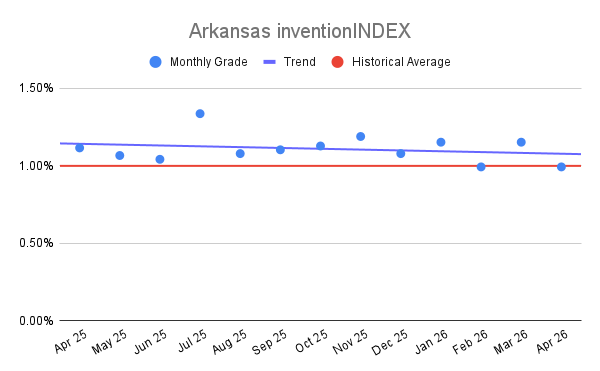 Arkansas inventionINDEX April 2026:<
