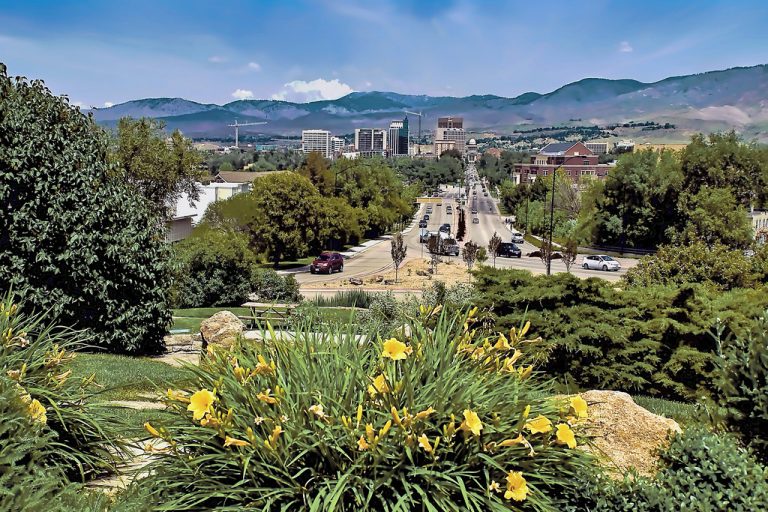
What is the Boise R&D Tax Credit Study?
This study provides an exhaustive analysis of the United States federal and Idaho state financial incentives designed to stimulate domestic innovation. It details the strict compliance requirements, the four-part test for qualified research, and specific industry case studies highlighting how technology-driven companies in Boise—ranging from semiconductor fabrication and AgTech to aerospace and software development—can leverage these highly lucrative tax credits to fund their technological advancements while navigating complex IRS and Idaho State Tax Commission audits.
The Statutory Foundation of the United States Federal R&D Tax Credit
The United States federal government offers highly lucrative, yet immensely compliance-intensive, financial incentives designed to stimulate domestic innovation, prevent the offshoring of highly technical jobs, and maintain the nation’s competitive advantage in global markets. The Research and Development (R&D) Tax Credit, originally enacted as a temporary measure in 1981 and made permanent by the Protecting Americans from Tax Hikes (PATH) Act of 2015, relies on a complex statutory framework defined primarily by Internal Revenue Code (IRC) Section 41 and IRC Section 174. Navigating this system requires an exhaustive understanding of statutory definitions, administrative guidance from the Internal Revenue Service (IRS), and binding judicial precedent.
The federal R&D tax credit is fundamentally a wage-driven, incremental credit. It is designed to reward taxpayers that systematically increase their investment in domestic research activities over a established historical baseline metric. However, the definition of what constitutes qualifying research is narrowly tailored and rigorously enforced.
The Conjunctive Four-Part Test for Qualified Research
Under IRC § 41(d), an activity must satisfy a rigorous, conjunctive Four-Part Test to be legally deemed “Qualified Research.” A failure to satisfy any single prong of this test immediately disqualifies the activity and all of its associated financial expenses from being claimed toward the credit.
The first prong is the Section 174 Test, which mandates that the expenditures must be eligible for treatment as research or experimental expenditures under IRC § 174. The research must be undertaken for the express purpose of discovering information that eliminates uncertainty concerning the development or improvement of a product or process. Uncertainty is legally defined as existing if the information available to the taxpayer does not establish the capability of developing the component, the method for developing the component, or the appropriate design of the business component. As affirmed in the United States Tax Court case Max v. Commissioner of Internal Revenue, T.C. Memo. 2021-37, technical uncertainty can exist even if the taxpayer knows that the ultimate goal is technically achievable, provided they are uncertain of the precise method or the appropriate design required to successfully reach that goal.
The second prong is the Technological in Nature Test. To satisfy this requirement, the process of experimentation used by the taxpayer to discover the necessary information must fundamentally rely on the principles of the hard sciences. The statute explicitly limits these to the physical sciences, biological sciences, engineering, or computer science. Research based on soft sciences, such as psychology or economics, as well as market research, routine quality control testing, and aesthetic design modifications, are explicitly excluded from eligibility.
The third prong is the Business Component Test. The taxpayer must demonstrate an explicit intent to apply the newly discovered technological information toward the development of a new or improved business component. A “business component” is statutorily defined as any product, process, computer software, technique, formula, or invention that is held for sale, lease, license, or is used in the taxpayer’s own trade or business. Furthermore, the application of this test is subject to the “shrinking-back rule.” Under Treasury Regulation section 1.174-2(a)(5), if a business component fails the necessary tests as an overarching whole, the taxpayer is permitted, and indeed required, to apply the tests to a specific subcomponent of the product that does involve technological uncertainty.
The fourth and final prong is the Process of Experimentation Test. Substantially all of the research activities—which the IRS administratively defines as 80% or more of the overall effort—must constitute elements of a rigorous process of experimentation. This requires the taxpayer to formulate a scientific hypothesis, design a methodology to test the hypothesis, conduct the physical or simulated tests (such as computational modeling, simulation, or systematic trial and error), and analyze the resulting data to either refine the hypothesis or conclude the component’s development lifecycle.
Qualified Research Expenses (QREs)
If a specific project successfully satisfies all elements of the Four-Part Test, the taxpayer may capture the associated financial costs as Qualified Research Expenses (QREs) under IRC § 41(b). QREs are strictly limited by statute to three distinct categories:
| Expense Category | Statutory Definition and Limitations (IRC § 41(b)) |
|---|---|
| Wages | W-2 taxable wages paid to employees who are physically engaging in direct research, directly supervising the research, or directly supporting the qualified research activities. Overhead wages, executive compensation not tied to direct supervision, and non-taxable benefits are excluded. |
| Supplies | The cost of tangible property that is directly used or consumed in the physical conduct of the qualified research. This explicitly excludes land, improvements to land, and depreciable property such as machinery or laboratory equipment, which must be capitalized over their useful life. |
| Contract Research | Statutorily limited to 65% of any amount paid or incurred by the taxpayer to a third party (other than an employee) for qualified research performed on the taxpayer’s behalf. To qualify, the taxpayer must retain substantial rights to the research results and must bear the economic risk of development failure (typically demonstrated through fixed-price contracts rather than time-and-materials contracts). |
The Transformative Impact of the Tax Cuts and Jobs Act on Section 174
A monumental and highly disruptive shift in United States R&D tax law occurred following the passage of the Tax Cuts and Jobs Act (TCJA). Prior to the 2022 tax year, taxpayers were legally permitted to immediately expense their R&D expenditures in the same year they were incurred, providing immediate and robust cash flow benefits. However, for tax years beginning on or after January 1, 2022, IRC § 174(a)(1) was amended to mandate that domestic R&D expenditures must be capitalized and amortized over a mandatory five-year period, while foreign research expenditures must be amortized over a fifteen-year period.
This legislative change represents a critical compliance intersection for modern taxpayers. If a taxpayer fails to properly capitalize and amortize these expenses on their federal return as mandated by the amended IRC § 174, those exact same expenditures are fundamentally and legally ineligible for the IRC § 41 R&D tax credit, regardless of their underlying technical merit. This financial and accounting compliance requirement acts as a non-negotiable prerequisite to evaluating the technical nature of the research activity itself.
United States Judicial Precedent and Administrative Substantiation Standards
The Internal Revenue Service and the United States Tax Court consistently demand robust, contemporaneous documentation linking specific financial expenses to specific, technologically qualified projects. The era of relying on high-level, generalized project summaries generated retroactively by third-party consultants has ended.
In the landmark case Siemer Milling Company v. Commissioner (T.C. Memo 2019-37), the United States Tax Court ruled entirely in favor of the IRS Commissioner, disallowing over $235,000 in R&D credits claimed by a commercial flour manufacturer for the 2010, 2011, and 2012 tax years. The disallowance was predicated entirely on the taxpayer’s failure to retain and provide supporting documentation demonstrating how the company’s daily activities met the four tests necessary to constitute qualified research. Siemer Milling claimed that expenses related to the development of new flour products and enhancements to its production line qualified for the credit. However, the Tax Court found that the taxpayer simply provided conclusory statements asserting their involvement in new product development. The court decisively ruled that merely reciting the steps undertaken during a manufacturing process is wholly insufficient evidence to conclude that the company had undertaken a methodical plan involving a series of trials to test a scientific hypothesis.
Similarly, in Union Carbide Corp. v. Commissioner (No. 11-2552), the Second Circuit Court of Appeals affirmed the Tax Court’s restrictive decision regarding the qualification of supply costs utilized during process research activities. The court drew a strict dichotomy between product research and process research. It ruled that materials used in mass production processes that are being incrementally improved do not qualify as R&D supplies unless those materials are uniquely consumed in the actual experimentation itself, rather than in standard commercial production runs that yield saleable goods. This ruling severely limits the ability of large-scale manufacturers to claim massive supply costs when experimenting on live production lines.
In response to widespread audit disputes, the IRS has aggressively escalated its initial filing documentation requirements. For research credit refund claims postmarked after June 18, 2024, taxpayers are subject to a transition period extending through January 10, 2027, wherein they must explicitly identify all business components to which the credit relates, describe the specific research activities performed for each component, and report the exact wage, supply, and contract research expenses tied to each component. Furthermore, the IRS has mandated that Section G of Form 6765 (Business Component Information), which was historically optional, will transition to a mandatory requirement for tax years beginning after December 31, 2024. This forces taxpayers to systematically report their R&D at a highly granular project level immediately upon filing, rather than waiting for an audit inquiry.
The Idaho State R&D Tax Credit (Idaho Code § 63-3029G)
The State of Idaho recognizes the immense economic multiplier effect of localized technological advancement. To incentivize businesses to localize their highly compensated, technical operations within the state, the Idaho legislature established its own localized incentive under Idaho Code § 63-3029G. The Idaho R&D Tax Credit is built upon a foundation of direct federal conformity, but it introduces strict geographical and mathematical modifications that drastically alter the compliance and calculation landscape for businesses operating in Boise.
Federal Conformity and the Strict Geographic Sourcing Mandate
Idaho law dictates that the terms “qualified research expenses,” “qualified research,” “basic research payments,” and “basic research” must be defined exactly as specified in Internal Revenue Code Section 41. Therefore, if an engineering activity fails the federal Four-Part Test, it automatically and inextricably fails the Idaho state test.
However, the critical, defining divergence of the Idaho credit is spatial. Idaho Code § 63-3029G mandates that all qualified research activities, associated QREs, and gross receipts used in the mathematical calculation of the credit must be exclusively sourced from physical operations within the borders of Idaho. For example, if a multinational software firm headquartered in Boise develops a new artificial intelligence algorithm, but utilizes system architects located in California and server infrastructure hosted in Texas, only the W-2 wages paid to the personnel physically performing the coding and testing within Idaho’s borders qualify for the state credit. This geographic limitation significantly impacts compliance for multi-state businesses, requiring them to implement sophisticated payroll and expense tracking systems capable of isolating Idaho-specific research costs.
Calculating the Idaho Credit: The Base Amount and the 50% Rule
Unlike the federal R&D credit, which offers taxpayers the strategic choice between utilizing the Regular Research Credit (RRC) methodology or the Alternative Simplified Credit (ASC) calculation, Idaho law strictly prohibits the use of the ASC calculation. Taxpayers must compute the Idaho credit using the standard federal regular method formula, strictly adapted to utilize only Idaho-sourced data.
The Idaho credit provides a nonrefundable 5% offset on incremental QREs that exceed a statutorily defined base amount. The calculation mechanics are highly structured:
| Step | Calculation Action Required by Idaho State Tax Commission |
|---|---|
| Identify Idaho QREs | Aggregate all qualifying wages, supplies, and eligible 65% contract research expenses physically incurred within the state of Idaho during the current tax year. |
| Identify Idaho Gross Receipts | Identify the Idaho-sourced gross receipts for the four taxable years preceding the credit year. This must include only those gross receipts directly attributable to Idaho utilizing multistate corporation apportionment rules, net of all returns and allowances. Calculate the average annual gross receipts over this four-year period. |
| Apply Fixed-Base Percentage | Apply the taxpayer’s fixed-base percentage. This is the historical ratio of QREs to gross receipts during a specific historical base period. Start-up companies may elect to use federal start-up rules utilizing Idaho data, which statically caps the percentage at 16% for the initial years. Once this start-up election is made on Form 67, it is legally irrevocable. |
| Calculate Base Amount | Multiply the fixed-base percentage by the average annual Idaho gross receipts. This yields the preliminary base amount. |
| Apply the 50% Rule | The statute dictates a mathematical floor: The final calculated base amount can never be less than 50% of the current year’s Idaho QREs. If the preliminary base amount is lower, it must be artificially raised to the 50% floor, effectively limiting the maximum achievable credit. |
| Determine Excess and Credit | Subtract the finalized base amount from the current year QREs to determine the “excess QREs.” Multiply these excess QREs by the 5% statutory credit rate to yield the final generated Idaho R&D tax credit. |
Utilization, Carryforwards, and Strict Credit Ordering
The Idaho R&D credit is strictly classified as nonrefundable. This means it can only reduce an entity’s Idaho income tax liability down to zero and cannot result in a direct cash payment or refund check from the Idaho State Tax Commission. To mitigate the harshness of this constraint for companies in heavy investment phases with low current tax liabilities, Idaho permits any unused credits to be carried forward for application in future tax years for a maximum of 14 consecutive years.
Taxpayers must also carefully navigate Idaho’s statutory credit ordering rules, which are rigidly enforced. The Idaho research credit can only be applied against the remaining Idaho income tax liability after all other preferential tax credits have been fully utilized. Specifically, taxpayers must apply credits in the following sequential order before utilizing the R&D credit: (1) Credit for income tax paid to other states, (2) Part-year resident Food Tax Credit, (3) Credit for contributions to Idaho educational entities, (4) the Idaho Investment Tax Credit, and (5) Credit for contributions to Idaho youth and rehabilitation facilities.
Furthermore, if a C-corporation is part of a combined unitary group, the law permits a unique advantage: the corporation may elect to share its earned but unused Idaho research credit with other members of its unitary group. However, this sharing is strictly conditional. The generating corporation must first claim the Idaho research credit to the absolute maximum extent allowable against its own individual Idaho income tax liability before it is legally permitted to share any remaining excess credit with affiliates. Corporations engaging in this practice must provide the state with a highly detailed schedule on Form 67 clearly identifying the shared credit and the precise computation of any associated credit carryovers.
Idaho State Tax Commission (ISTC) Audit Enforcement and Administrative Precedent
The Idaho State Tax Commission (ISTC) vigorously audits R&D credit claims, frequently scrutinizing the quality of contemporaneous documentation and the presence of genuine economic risk. Recent administrative decisions demonstrate a highly aggressive enforcement posture against insufficient substantiation, particularly regarding claims prepared by external consulting firms.
In a recent, highly detailed administrative decision (Docket No. 0-723-166-208) involving a taxpayer claiming credits for software development, the ISTC affirmed that software developed for a company’s own internal use faces a significantly higher legal threshold than commercial software. The development of internal use software (IUS) must involve “significant economic risk,” defined as a scenario where the taxpayer commits substantial financial resources with a substantial uncertainty that those resources will ever be recovered within a reasonable period due to profound technical risk. The Commission explicitly stated that this requires a significantly higher level of uncertainty and technical risk than the standard Section 174 test, making IUS claims exceptionally difficult to sustain under Idaho audit.
In several other recent enforcement actions, the ISTC completely disallowed substantial claims prepared by prominent third-party consulting firms due to fundamentally inadequate substantiation. In Docket 0-239-698-944, a pass-through entity hired a third party to conduct an R&D study and subsequently amended returns for 2016 through 2018 to claim the credit. During the exam, the ISTC requested complete copies of all client contracts and letters of understanding to determine if the research was legally “funded” by the clients (which would eliminate the taxpayer’s economic risk and invalidate the claim). The taxpayer failed to provide the requested contractual documentation, relying only on the consultant’s summary study. The ISTC ruled that the taxpayer’s records were not sufficiently detailed and affirmed the complete disallowance of the credit.
Similarly, in Docket 0-689-955-840, the ISTC audited a taxpayer represented by the firm alliantgroup. In an attempt to substantiate the claim, the representatives provided approximately 425 pages of technical engineering drawings across 20 projects, alongside a spreadsheet detailing supply costs for 167 projects based on job profitability reports. The ISTC deemed this voluminous data dump legally insufficient. The provision of mere technical drawings and raw cost spreadsheets, without corresponding revenue figures to prove economic risk, and more importantly, without contemporaneous documentation clearly mapping specific activities to specific hypotheses and the elimination of technical uncertainty, was deemed fatally flawed. The ISTC fully disallowed the amended claims for 2019 through 2022, reinforcing the precedent that retroactively constructed spreadsheets cannot replace contemporaneous scientific documentation.
| ISTC Docket Number | Primary Legal Issue Addressed | ISTC Ruling and Precedent Established |
|---|---|---|
| Docket 0-723-166-208 | Internal Use Software (IUS) qualification and technical thresholds. | Affirmed that IUS requires a demonstration of “significant economic risk” and a higher threshold of substantial uncertainty regarding resource recovery compared to standard commercial R&D. |
| Docket 0-239-698-944 | Substantiation of economic risk and the funded research exclusion. | Complete disallowance. Established that failure to provide actual client contracts to prove the taxpayer bore the financial risk of failure renders third-party R&D studies invalid. |
| Docket 0-689-955-840 | Adequacy of technical drawings and cost spreadsheets as documentation. | Complete disallowance. Ruled that raw technical drawings and standalone supply cost spreadsheets do not prove a process of experimentation or the elimination of uncertainty without accompanying scientific narrative. |
| Docket 0-077-816-832 | Adaptation vs. Invention; Commercial production exclusion. | Reaffirmed that research conducted after commercial production begins, or research focused merely on adapting an existing component to a specific customer’s need, is statutorily excluded from the credit. |
The Industrial Evolution of Boise: From Resource Extraction to Technological Epicenter
To properly analyze and apply the intricate federal and state tax credit laws, one must accurately contextualize the local industries generating the expenditures. Boise, Idaho’s industrial trajectory was initially dictated by geographic isolation and the exploitation of abundant natural resources. During the late 19th century, the discovery of massive deposits of gold and silver in the Boise Basin and surrounding regions catalyzed rapid infrastructure development and population influx, establishing mining as the region’s first economic driver. Simultaneously, the fertile volcanic soil of the Treasure Valley—subsequently bolstered by massive, federal-scale irrigation initiatives in the early 20th century such as the Minidoka Project—established agriculture and timber as the foundational, stabilizing pillars of the Idaho economy.
However, the modern economic renaissance that profoundly transformed Boise into a high-technology metropolis began in the early 1970s. During this era, geographic isolation, previously viewed as a logistical hindrance, suddenly became a massive strategic corporate asset. Major technology companies in California, seeking vital “breathing room” from the exorbitant real estate costs, restrictive regulations, and cutthroat engineering talent wars of Silicon Valley, looked to the Pacific Northwest for expansion.
Hewlett-Packard made the pivotal first move, purchasing 150 acres of Boise farmland in 1973 to establish a new manufacturing and R&D outpost, fundamentally planting the seed for a hardware revolution in the desert. Just five years later, in 1978, a small group of ambitious engineers founded Micron Technology in the basement of a local Boise dental office. The confluence of a fiercely loyal, highly educated workforce steadily supplied by local institutions like Boise State University, vast tracts of affordable industrial land, and a highly pro-business state regulatory environment established a localized, self-sustaining ecosystem of relentless innovation.
Today, Boise’s economy exhibits a dense, highly complex cluster of interconnected high-tech industries. The massive engineering talent pool originally cultivated by the hardware giants has gradually dispersed and cross-pollinated, seeding a thriving modern software, telecommunications, and FinTech startup culture. Simultaneously, legacy legacy industries like agriculture and aviation have not remained static; they have aggressively modernized, integrating advanced robotics, chemical engineering, and composite materials to remain globally competitive.
Boise Industry Case Studies and Comprehensive R&D Credit Eligibility Analysis
The following five case studies provide a deep, expert analysis of the dominant industries native to the Boise ecosystem. They detail the historical emergence of each sector in the region and provide a rigorous legal analysis of how their specific technological advancements and daily operations satisfy the exacting demands of IRC § 41 and Idaho Code § 63-3029G.
Case Study 1: Semiconductor Fabrication and Advanced Microelectronics (Micron Technology & Hewlett-Packard)
Historical Development in Boise: Boise is recognized globally as a historic and ongoing vanguard of semiconductor memory manufacturing and microelectronics, an industry permanently anchored by the legacy of Hewlett-Packard’s LaserJet division and the colossal presence of Micron Technology. In 1973, HP sought to decentralize its operations and established a manufacturing and R&D division in Boise. This division was tasked with innovating printing technology, ultimately leading to the invention and launch of the revolutionary HP LaserJet printer in 1984, which fundamentally changed global personal computing.
Concurrently, in 1978, four visionary founders—Ward Parkinson, Joe Parkinson, Dennis Wilson, and Doug Pitman—established Micron Technology as a small semiconductor design consulting firm operating out of the basement of a Boise dental office. Driven by the insular, highly focused engineering culture fostered by Idaho’s geography, Micron broke ground on its first fabrication plant in Boise by 1980. Shortly thereafter, they shocked the global tech industry by introducing the world’s smallest 256K Dynamic Random Access Memory (DRAM) chip. Following a successful IPO in 1984 and the strategic acquisition of Texas Instruments’ memory operations in 1998, Micron cemented Boise as a global capital of memory storage. Today, the semiconductor industry contributes approximately $2.5 billion in GDP to Idaho, with an average sector wage of $135,000. In September 2022, Micron committed a historic $15 billion to construct a new, leading-edge memory manufacturing fab directly on its Boise campus, ensuring the industry’s dominance through the next decade.
R&D Tax Credit Eligibility Analysis:
Semiconductor fabrication represents the absolute apex of qualified research; the entire industry is predicated on constantly overcoming the laws of physics. Designing and manufacturing memory chips with nanometer-scale architectures continuously presents profound technical uncertainty, perfectly aligning with the legislative intent of the tax credit.
- Section 174 Test: When Micron engineers design a new, denser 3D NAND flash memory architecture, they face fundamental scientific uncertainties regarding thermal dissipation, quantum tunneling effects at the atomic level, and commercial wafer yield rates. The theoretical capability to stack more transistors on a die may be known in academic circles, but the method of reliably etching those materials using volatile chemicals without destroying the surrounding architecture is highly uncertain and requires continuous discovery.
- Technological in Nature: The research relies exclusively on the most advanced principles of solid-state physics, materials science, electrical engineering, and quantum mechanics.
- Process of Experimentation: Engineers conduct relentless, iterative photolithography trials. They systematically adjust exposure times, experiment with novel chemical etchants, and modulate deposition temperatures in vacuum chambers. They measure electron flow and analyze microscopic failure rates under scanning electron microscopes, iteratively refining the die architecture until acceptable performance and yield thresholds are met.
- Federal and Idaho Sourcing Mechanics: While a semiconductor giant operates globally, the geographic restrictions of Idaho Code § 63-3029G apply strictly. Only the W-2 wages paid to the highly specialized process engineers and cleanroom technicians physically working inside the Boise fabrication facilities qualify for the state credit. Furthermore, under the Union Carbide precedent, the highly expensive raw silicon wafers, specialty inert gases, and photoresists (supplies) completely consumed and destroyed during the trial runs in the Boise fab—materials that never become saleable product—are fully eligible QREs, generating massive potential credits at the 5% state rate.
Case Study 2: Agricultural Technology (AgTech), Food Science, and Processing (The J.R. Simplot Company)
Historical Development in Boise: Boise’s AgTech and food processing industry is inextricably linked to the region’s unique geography and hydrological history. The Snake River Plain provides rich, volcanic, well-drained soil, but it requires water. Massive, early 20th-century federal irrigation systems, such as the Minidoka Project, transformed the arid desert landscape into an agricultural powerhouse capable of sustaining massive crop yields. Against this backdrop of agricultural expansion, a young entrepreneur named J.R. Simplot founded a one-man farming operation near Declo, Idaho in 1929.
The enterprise experienced explosive growth during World War II when the J.R. Simplot Company secured massive military logistics contracts to supply millions of pounds of dehydrated onions and potatoes to U.S. troops deployed overseas. However, the company’s pivotal, world-changing technological breakthrough occurred post-war in 1953. Simplot chemist Ray L. Dunlap engaged in rigorous scientific research to successfully commercialize the frozen french fry. This innovation solved a massive logistical, shipping, and shelf-life problem for the restaurant industry, eventually making Simplot the primary potato supplier to the rapidly expanding McDonald’s corporation by the early 1970s. This scientific breakthrough catalyzed the development of a multi-billion dollar, vertically integrated agribusiness headquartered in Boise that now employs over 15,000 people globally and continues to pioneer food science.
R&D Tax Credit Eligibility Analysis:
Food processing is frequently, and erroneously, viewed by the IRS as routine manufacturing or culinary arts. However, developing new, industrial-scale methods of food preservation, enhancing agricultural yields, and maximizing nutrient retention involves intense, highly structured scientific inquiry that firmly qualifies for the R&D credit.
- Section 174 Test: When food scientists attempt to develop a new, proprietary cryogenic freezing process designed to maintain the cellular integrity and physical texture of a genetically modified potato during prolonged storage, they face immense scientific uncertainty. The uncertainty revolves around complex variables such as core temperature gradients, the prevention of starch retrogradation, and the control of moisture migration during the thawing cycle.
- Technological in Nature: The research heavily and fundamentally relies on the hard sciences of food chemistry, thermodynamics, and agricultural biology, separating it entirely from routine recipe development or taste-testing.
- Process of Experimentation: Food scientists operating in Boise-based laboratories formulate hypotheses regarding optimal blanching times and specific flash-freezing temperatures. They conduct systematic trials on pilot-scale production lines, actively altering variables such as airflow velocity and the exact application rates of cryogenic liquids. The resulting prototype products undergo rigorous chemical, structural, and microscopic analysis to validate the initial hypothesis and finalize the process design.
- Federal vs. State Precedent and Supply Costs: The application of the Union Carbide precedent is critical here. If Simplot utilizes thousands of pounds of raw potatoes during a massive experimental run on a live commercial production line, the cost of those potatoes will face severe IRS scrutiny as QRE supplies if the resulting french fries are subsequently sold to consumers. The IRS views these as standard cost of goods sold. However, if the potatoes are explicitly consumed and structurally destroyed strictly for the purpose of testing the new cryogenic process and are discarded, they legally qualify as experimental supplies. If this experimentation occurs physically within the Boise R&D facilities, the associated food scientist wages and the cost of the destroyed test batches qualify completely for both the federal and the Idaho state research credits.
Case Study 3: Aerospace Engineering, Commercial Aviation, and Defense
Historical Development in Boise: Boise holds a surprisingly central, foundational, yet often overlooked role in the history of global commercial aviation. The city’s vast, uncongested airspace and strategic geographic location between the West Coast and the Rocky Mountains made it an ideal incubator for early flight. In 1926, Walter Varney founded Varney Air Lines, basing his pioneering operations out of Boise. Operating Swallow J-5 biplanes, Varney successfully bid on the USPOD Contract Air Mail (CAM) Route 5, and on April 6, 1926, chief pilot Leon Dewey “Lee” Cuddeback executed the maiden flight from Pasco, Washington, stopping in Boise before delivering the mail to Elko, Nevada.
This historic air freight contract birthed one of the world’s largest airlines. Through a complex series of acquisitions orchestrated by William Boeing, Varney Air Lines became a founding cornerstone of United Airlines. Following the Air Mail scandal of 1930 and the subsequent Air Mail Act of 1934, which forced the breakup of aviation monopolies, Varney’s legacy continued to permeate the industry, eventually linking to the founding of Continental Airlines.
During World War II, Boise’s aviation infrastructure expanded massively when the Army Air Corps leased the municipal airport to create Gowen Field. Over 6,000 men, including actor Jimmy Stewart, were stationed there to train on advanced B-17 Flying Fortress and B-24 Liberator bombers due to the region’s excellent flying weather and massive airspace. Today, Idaho boasts a highly specialized aerospace sector with a massive economic job multiplier of 2.09, driven by advanced companies specializing in military avionics, uncrewed aircraft systems (UAS), and ultra-lightweight composite parts.
R&D Tax Credit Eligibility Analysis:
Aerospace engineering inherently involves extreme life-safety risks and massive capital expenditures, mandating rigorous and highly structured R&D protocols that perfectly match IRS documentation requirements.
- Section 174 Test: When a Boise-based aerospace defense contractor attempts to design a lighter, more durable carbon-fiber composite wing structure for a next-generation military UAS, they face profound technical uncertainty regarding the new material’s tensile strength, the risk of structural delamination under extreme thermal stress at high altitudes, and the precise aerodynamic drag coefficients of the new geometry.
- Technological in Nature: The activities fundamentally and exclusively rely on the principles of aerospace engineering, advanced materials science, and computational fluid dynamics.
- Process of Experimentation: Engineers do not build the aircraft based on guesswork. They utilize highly sophisticated computational fluid dynamics (CFD) software to simulate theoretical airflow. They construct physical scale prototypes utilizing varied, experimental carbon-fiber weave patterns. These prototypes are subjected to physical wind tunnel testing and hydraulic structural stress fractures in Boise laboratories. The resulting telemetry data is iteratively evaluated to arrive at the appropriate, safe design.
- Application of the Shrinking-Back Rule: In aerospace, it is rare to design an entirely new aircraft from scratch. If a company is upgrading an existing UAS, the drone as a whole does not represent a completely new design, and might fail the overall Business Component test. However, the federal “shrinking-back” rule explicitly allows the taxpayer to apply the Four-Part test exclusively to the specific subcomponent that requires intensive testing—in this case, the experimental composite wing. The specialized engineering wages and the highly expensive carbon-fiber prototype materials utilized specifically at the Boise facility would qualify securely for both federal and Idaho R&D credits.
Case Study 4: Geothermal Energy Systems and District Heating Technologies
Historical Development in Boise: Boise is uniquely geographically situated directly on a major fault line at the base of the Boise Front foothills, which provides immediate surface access to abundant, low-temperature geothermal aquifers. The city’s history of innovation in utilizing this resource dates back over a century. In the 1890s, local entrepreneurs realized the potential of the 177-degree Fahrenheit water bubbling up at Kelly Hot Springs. With design assistance from architect John C. Paulson, prominent banker C.W. Moore constructed the magnificent Natatorium Resort in 1892, featuring a massive 65-by-125-foot indoor swimming pool heated entirely by the earth.
However, the true innovation was municipal. Rather than discarding the hot water, Moore piped it to heat his own Victorian mansion and successfully convinced his affluent neighbors along Warm Springs Avenue to connect to the system, creating the nation’s first geothermal heating district. In the 1980s, facing energy crises, the State of Idaho drilled new wells near the Capitol building, expanding the system to heat nine massive buildings in the Capitol Mall complex. Today, the City of Boise operates the largest municipally owned geothermal heating utility in the United States. Utilizing over 20 miles of underground pipeline, the closed-loop system heats over 6 million square feet of downtown commercial space, representing a pioneering, highly efficient model of sustainable urban infrastructure.
R&D Tax Credit Eligibility Analysis:
While drilling for hot water is an ancient practice, designing, expanding, and maintaining a modern, municipal-scale closed-loop injection system requires highly advanced, iterative engineering that generates substantial qualifying research.
- Section 174 Test: Expanding the massive geothermal district to new, unserved sectors of downtown Boise introduces immense technical uncertainty regarding aquifer pressure equilibrium, thermal heat loss across newly extended pipeline distances, and the critical need to mitigate severe mineral scaling (calcification) within the commercial heat exchangers.
- Technological in Nature: The research relies strictly on the applied sciences of thermodynamics, complex hydrogeology, and mechanical engineering.
- Process of Experimentation: To solve chronic pipeline corrosion issues caused by volatile geothermal mineral deposits, municipal engineers may hypothesize that a newly formulated, proprietary polymer pipe lining will resist calcification significantly better than traditional carbon steel. They systematically install test segments of the experimental pipeline in active zones, continuously monitor fluid flow rates, measure thermal retention degradation, and physically analyze mineral buildup over several months to scientifically validate the new material design.
- Contract Research Constraints and Economic Risk: A unique compliance issue arises in municipal projects. If a private engineering firm in Boise is contracted by the City of Boise to develop these new heat exchange algorithms or pipeline materials, the firm must carefully structure the contract to claim the credit. To claim 65% of the contract costs as QREs, the private firm must retain substantial legal rights to the resulting intellectual property and, crucially, must bear the absolute economic risk of failure. If the city pays the firm on a guaranteed time-and-materials basis regardless of success, the IRS and the ISTC will classify it as “funded research,” and the firm cannot claim the credit. The firm must operate under a fixed-price contract to prove economic risk.
Case Study 5: Commercial Software Development, FinTech, and Telecommunications
Historical Development in Boise: The modern iteration of Boise’s technology scene is increasingly defined by agile software development, Software-as-a-Service (SaaS) architecture, and financial technology (FinTech). The massive engineering talent pool originally drawn to the region by hardware pioneers like HP and Micron eventually splintered in the 1990s and 2000s, launching a wave of highly successful, independent digital ventures.
A prime example is Clearwater Analytics, founded in downtown Boise in 2004. Clearwater completely disrupted the traditional financial sector by developing a highly advanced, cloud-based, automated investment accounting and reconciliation system. The system was engineered to handle complex structured products and provide daily, transparent audit trails for massive institutional investors, a capability driven heavily by the complex regulatory demands of European Solvency II standards. Today, the platform reconciles multi-trillion dollar asset portfolios daily for clients like Google and Cisco.
Similarly, Cradlepoint, founded in Boise in 2006, pioneered advanced wireless edge networking solutions utilizing rapidly evolving 3G, 4G LTE, and eventually 5G cellular networks. Cradlepoint’s technology enabled secure, non-stop connectivity for emergency first responders and massive retail point-of-sale systems, achieving such global market dominance that the company was acquired by Swedish telecommunications giant Ericsson for $1.1 billion in late 2020. Despite the massive corporate buyout, CEO George Mulhern noted that Ericsson kept the operations grounded in Boise to leverage the unique, fast-paced agility and disruptive culture of the local engineering workforce.
R&D Tax Credit Eligibility Analysis: Software development represents a highly scrutinized and intensely audited area for R&D tax credits, particularly under the rigid Idaho State Tax Commission audit guidelines. However, the foundational architectural development performed by Boise tech firms solidly qualifies.
- Section 174 Test: When Cradlepoint engineers attempt to develop a fundamentally new algorithm designed to minimize data packet loss and intelligently manage signal attenuation across a congested, commercial 5G wireless network, there is immense uncertainty regarding how the software architecture will dynamically handle shifting bandwidth loads in dense urban environments.
- Technological in Nature: The activity relies entirely on the hard sciences of computer science, complex algorithmic mathematics, and telecommunications engineering.
- Process of Experimentation: Developers do not simply write code and deploy it. They write discrete blocks of experimental code, subject the code to rigorous automated regression testing, simulate massively high-traffic network loads in virtual environments, identify hidden latency bottlenecks, and iteratively rewrite the core architecture until the packet loss is successfully mitigated and performance thresholds are verified.
- Internal Use Software (IUS) vs. Commercial Software Precedent: A massive legal distinction exists under both federal and Idaho precedent. Software developed for external commercial sale or subscription (such as Clearwater’s SaaS platform or Cradlepoint’s router firmware) is evaluated under the standard Four-Part test. However, if a Boise company develops software strictly for its own internal administrative use (e.g., a custom HR portal), it faces an extremely elevated legal threshold. As highlighted in ISTC Docket 0-723-166-208, Internal Use Software must exhibit “significant economic risk” and a highly elevated level of technical risk to qualify. For commercial software developers based in downtown Boise, their massive W-2 salaries are prime, low-risk candidates for the Idaho 5% incremental credit, provided their physical coding activities remain localized within the state.
| Industry Case Study | Core Technological Uncertainty (IRC § 174) | Applied Hard Sciences Utilized | Typical Qualified Research Expenses (QREs) Claimed |
|---|---|---|---|
| Semiconductors | Wafer yield optimization, thermal dynamics at nanometer scale, quantum tunneling mitigation | Solid-state physics, Materials engineering, Quantum mechanics | Process engineer W-2 wages, consumable raw silicon wafers, testing gases, photoresists |
| AgTech & Food Processing | Cellular preservation during flash-freezing, starch retrogradation prevention | Food chemistry, Thermodynamics, Agricultural biology | Food scientist W-2 wages, destroyed agricultural test batches, experimental cryogenic fluids |
| Aerospace Engineering | Composite delamination under thermal stress, precise aerodynamic drag coefficients | Fluid dynamics, Materials science, Aerospace engineering | Engineering W-2 wages, carbon-fiber prototype materials, wind tunnel testing costs |
| Geothermal Energy | Heat exchange efficiency at scale, pipeline mineral scaling mitigation | Hydrogeology, Mechanical engineering, Thermodynamics | Mechanical engineer W-2 wages, test-segment polymer pipeline materials |
| FinTech & SaaS | 5G signal attenuation algorithms, cloud data reconciliation processing speeds | Computer science, Network engineering, Algorithmic mathematics | Software developer W-2 wages, highly specialized cloud testing environment infrastructure costs |
Comprehensive Synthesis of Compliance Imperatives for Boise Enterprises
The intersection of the United States federal R&D tax credit and the localized Idaho State research credit offers a potent, highly lucrative fiscal advantage to technology-driven companies operating in Boise. The city’s unique, century-long industrial heritage—progressing from natural resource extraction and irrigation, to pioneering advanced semiconductor fabrication, and ultimately evolving into a global hub for cloud computing and telecommunications—provides a textbook economic environment for generating incredibly high-value Qualified Research Expenses.
However, as detailed throughout this analysis, the modern legal landscape is fraught with strict, zero-tolerance compliance traps. The most severe federal trap is the Tax Cuts and Jobs Act’s mandate to capitalize and amortize IRC § 174 expenses over five years. This necessitates flawless integration between a company’s tax department and its financial accounting team; a failure to properly amortize the expenses on the tax return legally invalidates the corresponding IRC § 41 tax credit, exposing the firm to massive federal penalties.
At the state level, Idaho’s uncompromising geographic apportionment rules dictate that modern multi-state and multi-national corporations anchored in Boise must rigorously track the exact physical location of their engineering workforce on a daily basis. Furthermore, they must apportion their gross receipts with extreme accuracy to correctly calculate the rigid 50% base limitation floor, preventing the overstatement of the state credit.
Finally, as unequivocally demonstrated by landmark federal rulings like Siemer Milling and numerous recent Idaho State Tax Commission administrative decisions resulting in complete disallowances, the era of relying on generalized project summaries or retroactively generated spreadsheets is permanently over. Taxpayers can no longer rely on third-party consultants to simply estimate costs based on job profitability studies. Boise enterprises must maintain meticulous, contemporaneous scientific documentation that directly maps specific employee time tracking and distinct physical supply costs to precisely defined business components, while clearly and scientifically articulating the specific hypotheses tested and the methodologies utilized to eliminate technical uncertainty.
For the diverse industries anchoring Boise’s rapidly expanding economy, the R&D tax credit remains a critical, indispensable driver of continuous, capital-intensive innovation. By marrying aggressive technological development in the laboratory with meticulous, uncompromising statutory compliance in the accounting department, Boise enterprises can confidently leverage these federal and state incentives to fund the next generation of global industrial breakthroughs.
The information in this study is current as of the date of publication, and is provided for information purposes only. Although we do our absolute best in our attempts to avoid errors, we cannot guarantee that errors are not present in this study. Please contact a Swanson Reed member of staff, or seek independent legal advice to further understand how this information applies to your circumstances.