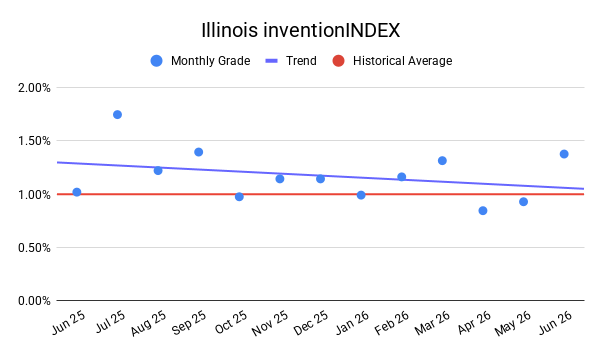
Answer Capsule: This comprehensive study provides an exhaustive analysis of the intersection of United States federal (IRC Section 41 and 174A) and Illinois state (IITA Section 201(k)) Research and Development tax credit requirements within Joliet, Illinois. By examining five diverse industries—Intermodal Logistics, Heavy Machinery and EV Manufacturing, Petrochemical Refining, Specialty Chemicals, and Healthcare Innovation—the study outlines historical economic drivers, strict statutory eligibility, the absolute imperative of contemporaneous documentation, and exact compliance strategies to successfully capture localized R&D incentives.
The Dual-Layered Research and Development Tax Credit Framework
The legislative architectures governing corporate innovation incentives in the United States operate on two concurrent, yet distinct, planes: the federal Internal Revenue Code and specific state-level revenue statutes. For commercial entities operating in the highly industrialized corridor of Joliet, Illinois, the strategic capitalization of these dual incentives requires an intimate understanding of statutory definitions, mechanical calculation methodologies, and rigorous substantiation doctrines established by administrative agencies and the judiciary. The fiscal landscape surrounding innovation investment underwent a massive paradigm shift recently, fundamentally altering the underlying economics of experimental corporate expenditures.
Federal Statutory Authority: IRC Section 41 and Section 174A
At the federal level, the primary incentive to continuously innovate is codified under Internal Revenue Code (IRC) Section 41, which provides a non-refundable tax credit for increasing research activities, functioning in tandem with IRC Section 174, which governs the accounting treatment of research and experimental (R&E) expenditures. To successfully qualify for the Section 41 credit, a taxpayer’s activities must strictly satisfy a rigid four-part test established by Congress and continually refined through decades of judicial precedent.
First, the expenditures must be eligible to be treated as expenses under Section 174, meaning they must be incurred in connection with the taxpayer’s active trade or business and represent research and development costs in the experimental or laboratory sense. Second, the research must be undertaken for the specific purpose of discovering information that is technological in nature, relying intrinsically on the principles of the hard sciences such as engineering, physics, computer science, chemistry, or biology. Third, the application of this discovered technological information must be intended for use in the development of a new or improved business component, which the statute defines as a product, process, computer software, technique, formula, or invention. Finally, substantially all of the activities must constitute elements of a formalized “process of experimentation,” which involves identifying an objective technical uncertainty, identifying multiple alternatives intended to eliminate that uncertainty, and conducting an iterative, systematic process of evaluating those alternatives through modeling, simulation, or physical testing.
A critical evolution in federal tax administration occurred with the enactment of the “One Big Beautiful Bill Act” (OBBBA) in 2025. Prior to this legislation, the Tax Cuts and Jobs Act (TCJA) of 2017 controversially mandated that specified research or experimental expenditures incurred after December 31, 2021, must be capitalized and amortized over a five-year period for domestic research and a fifteen-year period for foreign research. The OBBBA fundamentally altered this restrictive landscape by enacting a new IRC Section 174A, which permanently restored the ability of taxpayers to fully and immediately expense domestic R&E expenditures paid or incurred in taxable years beginning after December 31, 2024. Furthermore, the legislation provided highly favorable retroactive transition rules, allowing taxpayers to deduct unamortized domestic R&E costs from the 2022 through 2024 tax years, providing a massive, immediate liquidity injection for research-intensive manufacturing and technology firms.
Illinois State Statutory Authority: IITA Section 201(k)
Operating in parallel with the federal framework is the Illinois Research and Development Credit, codified under the Illinois Income Tax Act (IITA) Section 201(k) and strictly administered by the Illinois Department of Revenue (IDOR). The state credit aligns closely with the federal definition of “qualifying expenditures” under IRC Section 41 but imposes a severe geographic nexus requirement: the research activities must be physically conducted within the geographic borders of the State of Illinois.
The mechanical calculation of the Illinois R&D credit is purely incremental in nature. Taxpayers are allowed a non-refundable credit equal to 6.5 percent of their qualifying research expenditures that exceed a historically calculated base amount. This base amount is defined as the average of the qualifying Illinois-based R&D expenditures incurred in the three taxable years immediately preceding the current taxable year. If a taxpayer had absolutely no qualifying expenditures in the prior three years, the base amount is effectively zero, allowing the entire current year’s expenditure to be subject to the 6.5 percent calculation. Unused credits generated in a given tax year can be carried forward for up to five taxable years to offset future Illinois income tax liability, providing a runway for firms in temporary net operating loss positions.
Historically, the Illinois R&D credit suffered from immense legislative volatility, frequently expiring and requiring retroactive renewal by the Illinois General Assembly, which severely hampered long-term corporate capital planning and facility investment decisions. However, the passage of Illinois Senate Bill 0252 (SB0252) structurally stabilized the incentive framework. SB0252 officially amended the IITA to eliminate the previous statutory sunset date of January 1, 2032, thereby establishing the 6.5 percent R&D credit on a permanent basis. This legislative permanence, combined with the federal OBBBA immediate expensing provisions, creates an unprecedented, highly stable fiscal environment for corporate innovation.
To legally claim the state credit, corporations, fiduciaries, and exempt organizations must complete Schedule 1299-D (Income Tax Credits) and its corresponding calculation worksheet, Schedule 1299-I. Unitary business groups filing a combined return calculate the credit collectively but must meticulously track the Federal Employer Identification Number (FEIN) of the specific member entity that generated the localized Illinois expenses. Pass-through entities, such as S-corporations and partnerships, utilize Schedule 1299-A and distribute the credits pro-rata to their shareholders or partners via Schedule K-1-P.
| Statutory Attribute | Federal R&D Credit (IRC § 41) | Illinois R&D Credit (IITA § 201(k)) |
|---|---|---|
| Credit Calculation Basis | Regular Credit or Alternative Simplified Credit (ASC) formulas | 6.5% of incremental expenditures over a 3-year average base amount |
| Geographic Requirement | Must be domestic (within the United States territories) | Must be physically conducted within the State of Illinois borders |
| Legislative Status | Permanent (with § 174A expensing made permanent as of 2025) | Permanent (via passage of IL SB0252 removing the 2032 sunset) |
| Utilization Rules | Can offset federal income tax (and payroll tax for qualified startups) | Non-refundable, offsets Illinois state income tax liability only |
| Carryforward Period | Generally 20 years | 5 years |
| Primary Claiming Form | IRS Form 6765 | IDOR Schedule 1299-D (Corporations) or 1299-A (Pass-throughs) |
The Geographic and Economic Evolution of Joliet, Illinois
To understand precisely how five distinct, highly complex industries established a powerful nexus for localized research and development in a single municipality, a rigorous analysis of Joliet’s historical geography and infrastructural development is required. Founded in 1831 by settlers along the Des Plaines River Valley, Joliet was initially characterized by its abundant fertile soil, timbered bluffs, and vast subterranean beds of high-quality dolomite limestone. This massive geological endowment earned the nascent settlement the moniker “Stone City,” as its highly productive quarries provided the foundational building materials for the rapid expansion of the American Midwest, including the construction of the iconic Chicago Water Tower, the Rock Island Arsenal, and the Old State Capitol in Springfield.
However, geology was merely the initial economic catalyst; hydrology and advanced infrastructure ultimately dictated the city’s long-term industrial trajectory. Because the Des Plaines River strategically connected the Great Lakes watershed to the expansive Mississippi River basin, Joliet became the absolute focal point of mid-nineteenth-century transportation engineering. The completion of the Illinois and Michigan (I&M) Canal in 1848 triggered an immediate, unprecedented economic boom, with over $29 million in commercial goods moving through the corridor annually by 1851. This maritime highway was quickly supplemented by an aggressive, heavily capitalized expansion of regional rail infrastructure. By the late 19th and early 20th centuries, the arrival of the Rock Island Railroad, the Chicago and Alton Railroad, and the Michigan Central Railroad created a dense, overlapping network of terrestrial and aquatic freight corridors.
This unparalleled access to raw materials (limestone, coal, fresh water) and multi-modal distribution channels generated an irresistible gravitational pull for heavy industry and capital investment. By the late 19th century, Joliet had rapidly transformed into the largest producer of steel rails in the United States, anchored by the massive Joliet Iron and Steel Company and later the Federal Steel Company. As the 20th century progressed, the city’s infrastructure continuously evolved to include the vital intersections of major interstate highways (I-80 and I-55) and the integration of high-volume transcontinental petrochemical pipelines. Consequently, the regional economic base diversified from raw material extraction and primary metal production into highly specialized, technologically advanced sectors: intermodal logistics, heavy machinery and zero-emission vehicle manufacturing, petrochemical refining, specialty biochemicals, and regional healthcare systems. The specific historical development, inherent technological challenges, and targeted R&D tax credit eligibility of these five industries are detailed in the subsequent exhaustive case studies.
Case Study 1: Intermodal Logistics and Supply Chain Technology
Historical Development in Joliet
Joliet is internationally recognized today as the “Crossroads of Mid-America,” a title entirely solidified by the overwhelming presence of the CenterPoint Intermodal Center. The origins of this logistics dominance stem directly from the decommissioning of the Joliet Army Ammunition Plant—a massive federal munitions installation that operated during mid-century conflicts but ceased active operations in the late 20th century. In 1998, a highly coordinated master-planned redevelopment effort initiated the transformation of thousands of acres of military brownfields into what is now the largest inland port in North America. Utilizing massive public-private partnerships, complex environmental remediation, and $150 million in Tax Increment Financing (TIF) from local municipalities like Elwood, developers successfully constructed a 6,400-acre contiguous logistics hub. This hub features massive, state-of-the-art rail yards operated by the Union Pacific and BNSF Class I railways. Today, this unparalleled infrastructure supports over 40 million square feet of industrial warehousing, effectively bridging the critical gap between trans-Pacific maritime freight arriving via West Coast rail links and domestic long-haul trucking networks servicing the Eastern Seaboard.
R&D Activities and Technical Uncertainties
The sheer, unprecedented volume of cargo moving through the CenterPoint Intermodal Center—managing millions of standard shipping containers annually—creates severe operational bottlenecks and thermodynamic inefficiencies that simply cannot be resolved through manual labor or conventional dispatching. Logistics firms operating within Joliet face critical, highly complex technical uncertainties related to algorithmic routing, yard congestion mitigation, and inter-system data latency.
To optimize these massive operations, firms engage in the extensive, capital-intensive development of custom Yard Management Systems (YMS), artificial intelligence (AI) powered machine vision solutions, and multimodal transport management algorithms. Advanced research activities include the engineering of deep machine learning models that continuously analyze live camera feeds to autonomously locate chassis, trailers, and specific containers within thousands of acres of dynamic, constantly shifting inventory. Additional experimentation involves the development of predictive simulation software that models complex gate choke-points to dynamically reroute autonomous terminal tractors, thereby reducing idle times, minimizing carbon dioxide emissions, and improving the overall sustainability of the freight transfer network.
Tax Law Application and Case Law Analysis
For software development occurring within Joliet’s intermodal logistics sector, establishing irrefutable eligibility under IRC Section 41 requires expertly navigating the highly stringent “Internal Use Software” (IUS) regulations. Software developed primarily for the taxpayer’s internal operations—such as proprietary yard management algorithms or fleet tracking databases—must pass a significantly higher threshold of innovation than commercial software. The taxpayer must demonstrate that the software is highly innovative, that its development involves significant economic risk, and that it is intended to result in a reduction in cost or improvement in speed that is substantial and economically significant.
Under the process of experimentation test, logistics companies must thoroughly, contemporaneously document the iterative coding, simulation, and failure of alternative routing algorithms. The U.S. Tax Court’s recent decision in System Technologies, Inc. v. Commissioner provides vital, controlling jurisprudence for Joliet logistics developers who frequently operate under complex multi-party contractor agreements. The court held that to successfully claim the credit, a taxpayer must explicitly retain substantial rights to the research results and fundamentally bear the financial risk of failure. If a logistics operator pays a third-party software firm to develop a YMS, the exact legal terms of the contract will dictate whether the operator or the contractor can claim the 65% contract research expense inclusion under Section 41(b)(3). Furthermore, to claim the 6.5% Illinois state credit, the software engineers and data scientists actually writing the code must be physically located within the state’s borders, prohibiting the inclusion of wages paid to outsourced offshore development centers.
| Eligibility Pillar (IRC § 41) | Logistics & Intermodal Industry Application (Joliet, IL) |
|---|---|
| Technological in Nature | Utilization of advanced computer science, machine learning, and AI vision systems to parse visual data. |
| Permitted Purpose | Radically improving the speed of chassis retrieval and reducing terminal tractor engine idle times. |
| Technical Uncertainty | Inability of commercial-off-the-shelf software to map dynamic 3D container stacking configurations in real-time. |
| Process of Experimentation | Iterative training of neural networks on historical yard data, followed by aggressive A/B testing of predictive routing logic. |
Case Study 2: Heavy Machinery and Zero-Emission Vehicle Manufacturing
Historical Development in Joliet
Joliet’s manufacturing sector evolved organically and seamlessly from 19th-century agricultural implement production—such as the highly successful corn shellers, plows, and barbed wire built by the Joliet Manufacturing Company—to 20th-century heavy industrial machinery. The immediate availability of locally milled steel and direct access to heavy barge and rail transport attracted corporate titans like Caterpillar Inc. Caterpillar’s massive legacy in the region is defined by decades of absolute global dominance in “yellow iron” earthmoving equipment, massive diesel engines, and complex hydraulic components. The company’s historic acquisitions, such as the Russell Grader Manufacturing Company, allowed it to pioneer the motor grader and effectively build the infrastructure of the 20th century.
Building directly upon this deep-rooted supply chain and highly skilled, multi-generational workforce, Joliet recently became a critical focal point for the decarbonization of heavy transportation. Lion Electric, a pioneer in zero-emission medium and heavy-duty vehicles, inaugurated a massive 900,000-square-foot manufacturing facility in Joliet in 2023. The strategic decision to locate this specific facility—the largest dedicated production site for zero-emission commercial vehicles in the United States—was directly influenced by the region’s established heavy manufacturing supply base, specialized labor pool, and proximity to massive domestic markets. The facility is designed to support an annual production capacity of up to 20,000 electric vehicles, fundamentally reshaping the local industrial ecosystem.
R&D Activities and Technical Uncertainties
The highly complex transition from internal combustion diesel machinery to heavy-duty electric vehicles, alongside the increasing demand for fully autonomous construction equipment, generates profound, unresolved engineering challenges. Companies like Big Sky Engineering, operating within Joliet, focus intensely on custom robot work cells, automated assembly machinery, and advanced material handling systems. The technical uncertainties involve designing multi-axis robotic arms capable of high-tolerance welding on massive commercial chassis, while concurrently managing extreme variant complexity—the necessity to rapidly alter assembly lines for entirely different vehicle configurations without suffering massive operational downtime.
For electric vehicle production specifically, R&D focuses heavily on advanced battery thermal management systems, safely integrating high-voltage arrays into commercial school bus and freight chassis, and optimizing the structural integrity of the vehicle to support extreme, fluctuating payload requirements. Engineering teams conduct extensive computer-aided finite element analysis (FEA) to accurately simulate crash physics, torsional strain, and vibrational stress on battery enclosures before ever fabricating physical prototypes.
Tax Law Application and Case Law Analysis
Heavy machinery and EV manufacturers in Joliet generate massive, highly eligible qualifying expenses related to engineering wages, prototype fabrication, and raw materials consumed during the destructive testing process. Under the newly enacted IRC Section 174A, the physical materials used to build experimental first-article prototypes of electric truck chassis can now be fully and immediately deducted in the year incurred, completely bypassing previous capitalization requirements.
However, manufacturers must be highly cognizant of the “shrinking-back rule” within Section 41. If the overall development of an electric bus does not strictly meet the four-part test (perhaps because general electric buses already exist in the market), the tax analysis shrinks back to the specific sub-components that do possess objective technical uncertainty, such as a novel regenerative braking algorithm or a newly designed liquid thermal cooling loop. As explicitly demonstrated in the 2024 U.S. Tax Court ruling Phoenix Design Group, Inc. v. Commissioner, taxpayers absolutely cannot simply claim that a project was “complex” to justify the credit. The IRS, IDOR, and the courts require rigid, contemporaneous activity-level documentation that maps specific engineering hours to specific design iterations that sought to resolve defined technical uncertainties.
| Eligibility Pillar (IRC § 41) | Heavy Machinery & EV Industry Application (Joliet, IL) |
|---|---|
| Technological in Nature | Strict reliance on mechanical engineering, electrical engineering, and advanced materials science. |
| Permitted Purpose | Developing new high-voltage battery enclosures and highly autonomous robotic welding cells. |
| Technical Uncertainty | Unknowns regarding the thermal dissipation rates of massive battery arrays under heavy commercial payloads. |
| Process of Experimentation | Conducting computer-aided FEA stress simulations followed by destructive physical prototype testing on test tracks. |
Case Study 3: Petrochemical Refining and Emissions Reduction Technologies
Historical Development in Joliet
The ExxonMobil Joliet Refinery, physically situated in Channahon Township immediately adjacent to Joliet, is a monumental testament to infrastructural adaptation and global supply chain integration. Constructed in 1972, it remains one of the newest, most modern refineries built in the United States. Unlike earlier 19th-century industrial sites drawn solely by local raw resources, the refinery was strategically positioned to intersect with newly constructed, high-capacity transcontinental pipelines delivering dense, heavy crude oil directly from Canada. The massive facility was purpose-built from its inception with highly specialized equipment designed exclusively to process these dense, sulfur-heavy crudes into 11 million gallons of gasoline and diesel daily, which are then distributed via the region’s incredibly complex pipeline, rail, and river barge networks.
R&D Activities and Technical Uncertainties
Operating a highly energy-intensive petrochemical facility in an era of increasingly strict environmental regulation and climate scrutiny necessitates relentless, highly funded innovation. The Joliet Refinery is consistently ranked among the most energy-efficient facilities of its size in the nation, driven entirely by advanced technological deployments. The core R&D activities at the site revolve around industrial decarbonization, fluid catalytic cracking optimization, and maximizing thermodynamic efficiency.
Profound technical uncertainties arise when engineering massive systems to capture post-combustion carbon dioxide or when attempting to scale up nascent Direct Air Capture (DAC) technologies to industrial levels. Furthermore, chemical engineers continuously experiment with heat integration algorithms and cogeneration systems that capture ambient heat produced during the refining process and cleanly convert it back into usable electricity or steam. Because crude oil blends constantly fluctuate in their molecular chemical composition, engineers must continuously experiment with entirely new catalyst formulations and reaction temperatures to maximize clean distillate yield while preventing the disastrous fouling or coking of internal distillation columns.
Tax Law Application and Case Law Analysis
Petrochemical R&D claims are historically subject to intense, highly adversarial scrutiny by tax authorities regarding the legal distinction between qualified experimental research and standard process engineering or routine maintenance. Under federal Treasury Regulations, research conducted after the beginning of commercial production is generally excluded from the credit unless it relates directly to a new process improvement rather than mere operational troubleshooting.
To satisfy the incredibly high evidentiary standards of the Illinois Independent Tax Tribunal, as seen in historical cases involving complex pharmaceutical and chemical claims, the taxpayer must provide “consistent and probable evidence identified with its books and records”. Oral testimony from engineers regarding process improvements, without the backing of contemporaneous laboratory logs, simulation data, or thermodynamic models, is entirely insufficient to rebut an IDOR denial. Therefore, engineers optimizing cogeneration units at the Joliet facility must rigorously and thoroughly document the baseline efficiency metrics, the theoretical thermodynamic models proposed to improve those metrics, the pilot testing phases, and the statistical analysis of the final outcomes. The immense costs of renting specialized monitoring equipment, testing experimental catalysts, and the wages of the chemical engineers analyzing the data would all qualify for both the federal Section 41 and Illinois Section 201(k) credits.
| Eligibility Pillar (IRC § 41) | Petrochemical Refining Industry Application (Joliet, IL) |
|---|---|
| Technological in Nature | Deep reliance on advanced chemical engineering, thermodynamics, and computational fluid dynamics. |
| Permitted Purpose | Radically reducing greenhouse gas emissions and improving the yield efficiency of fluid catalytic crackers. |
| Technical Uncertainty | Determining the precise optimal catalyst mixture to process varying grades of Canadian heavy crude without coking. |
| Process of Experimentation | Utilizing scaled-down laboratory distillation columns to test alternative catalyst formulations before full-scale implementation. |
Case Study 4: Specialty Chemicals and Biochemical Synthesis
Historical Development in Joliet
While the massive petrochemical industry focuses on bulk commodity fuels, Joliet is also a highly vital global center for the synthesis of advanced specialty chemicals. Stepan Company, founded in Chicago in 1932 by Alfred C. Stepan Jr. with a meager $500 investment borrowed from his mother, initially operated as a small jobber of cleaning solvents and refrigeration gases. By 1935, the company successfully transitioned to a manufacturing chemist, originally producing sulfated castor oil during the Great Depression to replace foreign imports. Seeking massive expansion space and proximity to both heavy rail and the Des Plaines River for critical cooling water and transport, Stepan opened its massive Millsdale manufacturing plant south of Joliet in 1954. Today, Stepan is a dominant global leader in the complex production of surfactants, polyurethane polyols, and intermediate chemicals that form the foundational basis for thousands of end-use products ranging from household detergents to industrial rigid foam insulation.
R&D Activities and Technical Uncertainties
Specialty chemical formulation is inherently and continuously driven by intense laboratory experimentation. Stepan’s R&D activities at the Millsdale facility involve the precise molecular design of new antimicrobial agents, highly complex emulsion polymerization techniques, and the development of high-purity esters for advanced pharmaceutical applications. A significant area of recent, heavily funded innovation involves the rapid expansion of biodiesel production. Developing advanced transesterification processes that can efficiently convert various, highly variable biological feedstocks into high-grade biodiesel—while completely minimizing waste byproducts—requires solving incredibly complex organic chemistry uncertainties.
Chemists and chemical engineers face persistent technical uncertainties regarding the long-term stability, viscosity, and environmental biodegradability of new surfactant formulations under widely varying temperature and pH conditions. Furthermore, scaling a chemical reaction from a highly controlled laboratory beaker to a massive industrial reactor introduces profound, highly dangerous uncertainties regarding exothermic heat dissipation and fluid sheer stresses that must be meticulously engineered.
Tax Law Application and Case Law Analysis
The R&D tax credit is highly optimized for the specialty chemical sector because a vast majority of the daily operations map perfectly to the IRC Section 41 requirement of discovering technological information. Under Illinois law, the vast amounts of supplies consumed during the research process—such as raw chemical feedstocks, specialized rare reagents, and fragile laboratory glassware—are fully includable as qualifying research expenses (QREs) for the 6.5% state credit, provided they are not capitalized depreciable property.
However, the Illinois Department of Revenue very closely monitors the geographic origin of these activities. A highly common error identified by IDOR auditors is taxpayers incorrectly claiming the Illinois credit for research activities that were actually conducted at out-of-state corporate headquarters or foreign satellite labs. For a massive multinational company like Stepan, only the wages paid to chemists physically working at the Millsdale lab in Joliet, and the physical supplies consumed specifically at that exact geographic location, may be factored into the Illinois base amount and current-year calculations. Federal claims, however, can legally aggregate domestic expenses across all U.S. facilities.
| Eligibility Pillar (IRC § 41) | Specialty Chemicals Industry Application (Joliet, IL) |
|---|---|
| Technological in Nature | Completely grounded in advanced organic chemistry, biochemistry, and polymer science. |
| Permitted Purpose | Developing entirely new, highly biodegradable surfactants and high-yield biodiesel transesterification processes. |
| Technical Uncertainty | Discovering the optimal reaction temperature and catalyst required to stabilize a new polyurethane polyol formulation. |
| Process of Experimentation | Systematic batch testing in laboratory environments, constantly altering reagent ratios and evaluating the resulting viscosity. |
Case Study 5: Healthcare Innovation and Robotic Clinical Research
Historical Development in Joliet
The rapid, aggressive industrialization of Joliet in the late 19th century created an absolute, urgent need for advanced medical infrastructure to treat the rapidly expanding industrial workforce. In 1895, the Will County Union of King’s Daughters and Sons (now the Silver Belles Circle) successfully founded a modest 33-bed hospital, naming it Silver Cross after their organizational emblem, the Maltese cross. Over the subsequent 130 years, Silver Cross Hospital evolved directly in tandem with the region’s explosive growth. By 2012, recognizing the need for advanced capabilities, the institution relocated to an entirely new, state-of-the-art 130-acre campus in New Lenox, immediately bordering Joliet, expanding to 348 private beds and forming clinical partnerships with elite academic medical centers like the University of Chicago Medicine and the Shirley Ryan AbilityLab.
R&D Activities and Technical Uncertainties
Modern, heavily capitalized healthcare systems engage in highly sophisticated R&D that extends far beyond standard basic patient care. Silver Cross is home to the highly acclaimed Midwest Institute for Robotic Surgery, operating one of the absolute highest-volume robotic surgery programs in the entire region, including the recent deployment of the highly advanced da Vinci 5 surgical system. While simply utilizing an FDA-approved robot for a standard, established surgery does not constitute R&D, clinical specialists and surgeons face massive technical uncertainties when actively developing entirely new, minimally invasive surgical protocols for complex pathologies not previously addressed via robotics.
Furthermore, massive regional hospitals engage heavily in highly regulated Phase I, II, and III clinical trials for new pharmaceuticals and complex implantable medical devices. Additional highly eligible R&D activities involve the complex development of Internet of Medical Things (IoMT) software architectures designed to seamlessly integrate real-time biometric telemetry from remote patient wearables directly into the hospital’s massive electronic health record (EHR) mainframe without violating strict HIPAA data latency or cybersecurity standards.
Tax Law Application and Case Law Analysis
The application of the R&D tax credit in a clinical hospital setting requires careful, highly documented demarcation between standard, established medical practice and qualified experimental research. Under IRC Section 41, clinical trials generally satisfy the four-part test perfectly because they are, by definition, systematic investigations designed to evaluate the safety and efficacy of alternatives, thereby eliminating physiological uncertainty. The wages of clinical trial managers, research informatics specialists, and biometrics associates are highly eligible for the credit.
However, recent case law such as Phoenix Design Group forcefully underscores the absolute necessity of explicitly defining the objective technical uncertainty at the very outset of the project. In healthcare software development (e.g., creating telehealth platforms), routine coding or UI/UX cosmetic design is completely disqualified. The uncertainty must relate directly to the underlying computer science, such as algorithmically structuring massive, unstructured physiological datasets for predictive patient analytics.
Additionally, the landmark Illinois Supreme Court decision in Caveney v. Bower provides critical, controlling context for medical practices structured as S-corporations. The court explicitly affirmed that the legislative intent of IITA Section 201(k) legally allows pass-through entities (like the Panduit Corporation in the case) to flow the Illinois R&D tax credit completely through to individual shareholders, making it an incredibly lucrative tax planning tool for independent physician groups or specialty clinics conducting localized clinical research in the Joliet area.
| Eligibility Pillar (IRC § 41) | Healthcare & Clinical Industry Application (Joliet, IL) |
|---|---|
| Technological in Nature | Based fundamentally on medical science, biology, pharmacology, and software engineering. |
| Permitted Purpose | Creating a totally new robotic surgical protocol or a highly secure IoMT data transmission pipeline. |
| Technical Uncertainty | Determining the maximum safe physiological dosage threshold in a Phase II oncology clinical trial. |
| Process of Experimentation | Administering controlled trial variables, monitoring physiological responses, and conducting deep statistical biometrics analysis. |
Detailed Analysis: Substantiation, Contractual Funding, and Nexus Vulnerabilities
The theoretical eligibility of an industry under the federal and state tax code is only the very first phase of successful monetization; the crucial second phase is surviving intense administrative scrutiny. Both the Internal Revenue Service and the Illinois Department of Revenue deploy highly aggressive, sophisticated audit techniques to challenge unsupported claims, making contemporaneous substantiation the single most critical element of corporate tax planning.
The Absolute Imperative of Contemporaneous Documentation
The 2024 U.S. Tax Court ruling in Phoenix Design Group, Inc. v. Commissioner serves as a stark, unavoidable warning to all commercial entities claiming the credit. In this landmark case, the court upheld a complete, devastating denial of the credits and imposed a severe 20 percent accuracy-related penalty because the taxpayer—a mechanical, electrical, plumbing, and fire protection engineering firm—relied entirely on post-hoc estimates and highly inconsistent oral testimony. The court decisively ruled that general project complexity does not equate to technical uncertainty under Section 41(d), and taxpayers must maintain contemporaneous, activity-level documentation that inextricably links specific employee hours to specific experimental activities. For a massive Joliet manufacturer like Caterpillar or Lion Electric, this means aggressively retaining computer-aided design (CAD) version histories, rejected prototype schematics, physical lab testing logs, and specific email correspondences detailing engineering failures.
Navigating the Funded Research Exclusion
A unique, highly dangerous vulnerability for many businesses in Joliet, particularly those operating in the massive logistics and specialized contract engineering sectors, is the “funded research” exclusion. Under IRC Section 41(d)(4)(H), research is completely disqualified if it is funded by any grant, contract, or another person. The Tax Court addressed this specific issue in recent 2025 rulings, including Smith v. Commissioner and System Technologies, Inc. v. Commissioner.
The court deeply analyzes local state law and the specific language of the governing contract to determine two critical factors: exactly who bears the economic risk of failure, and exactly who retains substantial rights to the resulting intellectual property. If a logistics firm operating in the CenterPoint Intermodal Center hires an independent engineering firm to design a custom gantry crane automation system, the engineering firm can only claim the R&D credit if the contract explicitly stipulates they are paid based on a successful outcome (a milestone or fixed-price contract) rather than simply being paid an hourly rate for time and materials. Conversely, if the logistics firm legally retains the IP and pays the engineers regardless of success, the logistics firm claims the expense as a contract research expense (strictly limited to 65% of the total invoice).
Strict Enforcement of the Illinois Geographic Nexus
As previously established, IITA Section 201(k) strictly, without exception, limits the state credit to activities “conducted in this State”. The IDOR administrative tribunals have consistently and aggressively rejected claims where multi-state corporations attempt to simply apportion global R&D costs to Illinois based on generic sales ratios. In cases reviewed by the Illinois Independent Tax Tribunal, such as those relying on the evidentiary standards of Central Furniture Mart, the absolute burden of proof rests entirely on the taxpayer to demonstrate that the specific W-2 wages claimed were paid to specific employees performing qualified services physically located within Illinois.
For example, if ExxonMobil utilizes corporate researchers in Texas to develop a new thermodynamic catalyst, but the actual pilot testing is conducted at the Joliet Refinery, only the wages and physical supplies consumed by the personnel physically standing in Joliet qualify for the Illinois 6.5% incremental calculation. Taxpayers must meticulously segregate complex corporate cost centers by exact geographic location before transferring aggregated amounts to the Schedule 1299-I Research and Development Worksheet.
| Risk Vector | IRS / IDOR Audit Focus | Required Remediation / Documentation Strategy |
|---|---|---|
| Technical Uncertainty | Defining standard, routine engineering vs. true statutory uncertainty. | Maintaining early-stage project charters identifying exactly what was unknown at the project’s inception. |
| Process of Experimentation | Proving alternatives were systematically, scientifically evaluated. | Archiving CAD iterations, failed lab test results, FEA simulations, and massive beta-testing data sets. |
| Funded Research | Determining exactly which contracted party holds the legal right to claim the credit. | Reviewing master service agreements to ensure the taxpayer bears financial risk and retains full IP rights. |
| State Geographic Nexus | Ensuring expenses claimed for the IL credit physically occurred in-state. | Utilizing exact payroll location codes and localized supply invoices to perfectly isolate Joliet-specific expenditures. |
Final Thoughts
The unprecedented convergence of the federal “One Big Beautiful Bill Act” (permanently enacting immediate expensing under Section 174A) and the Illinois General Assembly’s decisive passage of SB0252 (establishing the absolute permanence of the state’s 6.5% incremental credit) has created a structurally sound, highly lucrative fiscal environment for corporate innovation. For the diverse, massive industrial ecosystem of Joliet, Illinois—from the highly complex autonomous routing algorithms governing the massive CenterPoint logistics hubs, to the intricate biochemical syntheses occurring at the Stepan Company, and the advanced decarbonization models deployed at the ExxonMobil refinery—the dual-layered R&D tax credit framework offers massive capital recapture opportunities.
However, the realization of these immense fiscal benefits is entirely contingent upon mastering the complex intersection of statutory eligibility and extremely strict administrative compliance. As controlling jurisprudence like Phoenix Design Group forcefully dictates, the burden of proof remains firmly and unforgivingly on the taxpayer. Commercial entities operating in Joliet must not only engage in the hard sciences to overcome genuine technical uncertainties but must systematically and contemporaneously document that entire pursuit. By perfectly aligning localized engineering, software, and biochemical activities with the precise architecture of IRC Section 41 and IITA Section 201(k), Joliet’s defining industries can significantly underwrite the massive cost of their continued technological evolution.
The information in this study is current as of the date of publication, and is provided for information purposes only. Although we do our absolute best in our attempts to avoid errors, we cannot guarantee that errors are not present in this study. Please contact a Swanson Reed member of staff, or seek independent legal advice to further understand how this information applies to your circumstances.