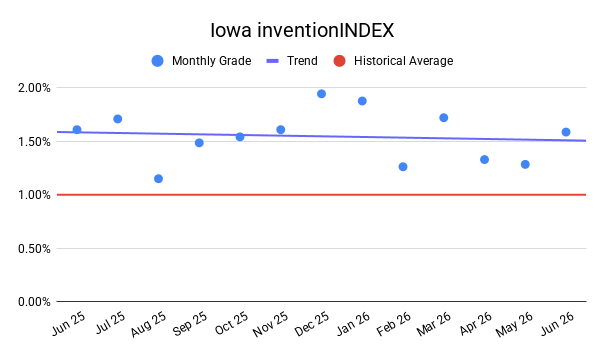
Answer Capsule: This comprehensive study explores the intersection of the United States federal and Iowa state Research and Development (R&D) tax credit frameworks within the industrial ecosystem of Cedar Rapids, Iowa. It delivers detailed analyses across five major sectors: Food Processing, Heavy Manufacturing, Aerospace and Defense, Agriscience, and Education Technology. By breaking down Internal Revenue Code (IRC) Section 41, the Iowa State Research Activities Credit Laws, and recent legislative reforms, this study serves as a complete blueprint for navigating compliance, capitalizing on Qualified Research Expenses (QREs), and maximizing innovation incentives.
Case Study 1: Food Processing and Manufacturing
The City of Cedar Rapids, often referred to as the “City of Five Seasons,” possesses an extraordinarily rich history in the food processing and manufacturing sector, driven primarily by its geographic advantages and access to abundant agricultural resources. The industry’s genesis in the region can be traced back to the mid-nineteenth century when European settlers established water-powered mills along the Cedar River to process local wheat and timber. The arrival of extensive railroad networks in the 1870s transformed Cedar Rapids from a localized milling town into a nationally significant processing hub, enabling massive factories to process raw materials and ship finished goods to eastern markets.
A seminal moment in this industrial development occurred in 1871 with the founding of the Sinclair meatpacking company. The Sinclair facility uniquely capitalized on the local environment by harvesting ice directly from the Cedar River during the winter months to chill massive icehouses, thereby facilitating the unprecedented capability of year-round meatpacking. Following this innovation, John Stuart, his son Robert, and their partner George Douglas established an oatmeal mill in 1873 that would ultimately evolve into the flagship operation of the Quaker Oats Company. The enterprise aggressively innovated not only in milling processes but also in marketing; by 1890, the company operated a special all-Quaker Oats train from Cedar Rapids to Portland, Oregon, delivering the first-ever half-ounce trial-size samples to every mailbox in the destination city. Over the subsequent century, Cedar Rapids attracted operations from global food conglomerates including General Mills, Archer Daniels Midland (ADM), Ingredion, DuPont Industrial Biosciences, and Cargill, transforming the city into one of North America’s leading centers for food ingredient production. Today, the local Quaker Oats plant alone produces approximately 40,000 tons of oat hulls annually, which are increasingly utilized in experimental biomass energy projects.
Modern food processing in Cedar Rapids is a highly technical endeavor that routinely qualifies for the United States federal R&D tax credit under Internal Revenue Code (IRC) Section 41. Eligible research and development activities in this sector include the formulation of new food products to achieve specific analytical requirements, such as precise pH balances, brix levels, acid content, and product viscosity. Food scientists and manufacturing engineers continuously experiment with production process specifications, iterating batching sequences, cooking temperatures, and mixing times to enhance efficiency and reduce organic waste. Furthermore, packaging engineers conduct extensive testing on new eco-friendly, biodegradable, and extended-shelf-life packaging materials to meet evolving consumer demands and stringent health regulations.
Under federal tax law, the wages paid to biologists, chemists, enologists, food technologists, and quality assurance technicians engaged in these evaluative processes constitute Qualified Research Expenses (QREs). Furthermore, the raw ingredients consumed or destroyed during experimental trial runs on the production floor qualify as supply QREs. For state tax purposes, the Iowa Department of Revenue explicitly recognizes manufacturing—defined as activities including the refining, purifying, and combining of different materials—as a qualifying industry for the Iowa Research Activities Credit (RAC). However, food processors in Cedar Rapids must meticulously adhere to the legal precedents established in recent case law, specifically George v. Commissioner. While the Tax Court affirmed that agricultural and food science experimentation qualifies for the credit, it ruled against taxpayers who failed to maintain contemporaneous daily production logs that corroborated their retrospective R&D claims. Consequently, Cedar Rapids food manufacturers must ensure that their daily batch records and quality assurance logs explicitly document the variance, trial-and-error, and specific hypotheses being tested during production runs, rather than merely reflecting standard, routine operations.
Case Study 2: Heavy Manufacturing and Road Construction Equipment
The heavy manufacturing industry in Cedar Rapids, specifically the production of road construction and materials processing equipment, developed as a direct response to a nationwide infrastructure crisis in the early twentieth century. By 1922, the State of Iowa possessed a mere 334 miles of paved roads. As automobiles surged in popularity, the lack of viable infrastructure severely hampered the transportation of goods and people, sparking a nationwide initiative known as the “Good Roads Movement,” championed locally by the ubiquitous slogan, “Get Iowa out of the mud”.
Recognizing a massive commercial opportunity, local entrepreneurs Howard Hall and John Jay established the Iowa Manufacturing Company in 1923. At the time, early road construction equipment was exceedingly cumbersome, expensive, and difficult to transport, often requiring multiple separate machines to grind the aggregate materials consisting of crushed gravel, stone, and sand. Hall and Jay recruited a brilliant young engineer named Guy Frazee, who successfully invented the “One Piece Outfit”. This revolutionary portable aggregate plant consolidated crushing, conveying, and screening into a single, efficient machine that could process stone directly at the construction site, dramatically reducing logistical costs. The company survived the Great Depression by extending remarkably lenient credit terms to its customers, accepting debt-reduction payments as low as fifty dollars to prevent the repossession of critical infrastructure equipment. During World War II, the company pivoted to support the military; following the combat death of a fellow employee, the workforce volunteered their days off to construct the “Spirit of Cedar Rapids,” a specialized rock crusher donated directly to the armed forces for the construction of global landing strips and military supply roads. Through subsequent decades of expansion and corporate acquisitions involving Raytheon and ultimately Terex Corporation, the Cedarapids brand solidified the city’s reputation as a global leader in heavy materials processing machinery.
In the contemporary era, heavy equipment manufacturers in Cedar Rapids engage in profound levels of mechanical engineering and materials science experimentation that fulfill the rigid statutory requirements of IRC Section 41. Qualified R&D activities include the iterative design and prototyping of advanced cone crushers, vibratory screens, and hot mix asphalt plants. Engineering teams routinely utilize computational modeling, such as finite element analysis, to test the stress tolerances and fatigue limits of high-tensile steel components subjected to immense geological pressures. Furthermore, significant experimentation is devoted to developing hybrid hydraulic systems and advanced emission control mechanisms to ensure massive road-building machinery complies with increasingly stringent global environmental regulations.
The costs associated with developing these prototypes, including the specialized steel alloys consumed during destructive testing and the wages of mechanical and hydraulic engineers, represent substantial federal QREs. From a state compliance perspective, heavy equipment production falls squarely within the Iowa Department of Revenue’s authorized manufacturing sector for the RAC. However, this industry frequently operates through highly customized, client-specific manufacturing contracts, exposing businesses to the “funded research” exception outlined in IRC Section 41(d)(4)(H). As demonstrated in the Eighth Circuit Court of Appeals case Meyer, Borgman & Johnson, Inc. v. Commissioner, if a heavy manufacturer designs a custom rock-crushing plant for a mining client under a contract that guarantees payment regardless of the technological success of the experimental design, the IRS will deem the research funded by a third party and disallow the tax credits. Cedar Rapids manufacturers must proactively collaborate with legal counsel to structure their client agreements to ensure the manufacturer explicitly retains substantial rights to the underlying intellectual property and bears the definitive economic risk of failure during the development phase.
Case Study 3: Aerospace, Defense, and Avionics
Cedar Rapids holds a distinguished and globally recognized position within the aerospace, defense, and avionics industry. The origins of this high-technology cluster are rooted in the extraordinary endeavors of Arthur A. Collins, a fifteen-year-old local prodigy who, in 1925, successfully established high-frequency radio communication with the Donald MacMillan scientific expedition ship located in Etah, Greenland. Operating from his family’s attic in Cedar Rapids, Collins was the only person in the United States capable of receiving the expedition’s transmissions at the time. Driven by a profound passion for innovation, he incorporated the Collins Radio Company in 1933.
The company’s technological breakthroughs accelerated rapidly during World War II, during which Collins Radio supplied the United States and British militaries with communication equipment featuring the revolutionary Autotune system. During the post-war era and the height of the Space Race in the 1950s and 1960s, the company supplied critical radio communication equipment, ground systems, and data links for NASA’s Mercury, Gemini, and Apollo missions, meaning every American voice transmission from space during that era relied upon technology engineered in Cedar Rapids. Facing shifting economic tides, the company was acquired by Rockwell International in 1973, subsequently spun off as Rockwell Collins in 2001, and eventually merged with UTC Aerospace Systems to form Collins Aerospace, now a primary subsidiary of the RTX Corporation. This century-long legacy of galactic exploration and defense contracting cultivated a massive local supply chain, transforming Cedar Rapids into a magnet for highly specialized aeronautical, electrical, and systems engineers.
Aerospace and defense contractors in Cedar Rapids perform some of the most advanced technical experimentation in the commercial sector, yielding federal tax credits that frequently equate to six to ten percent of total qualified research expenses. Qualifying R&D activities in this domain include the rigorous evaluation of airframe structures utilizing computational fluid dynamics simulations to optimize wing geometries for enhanced lift and reduced aerodynamic drag. Engineers continuously prototype advanced avionics systems designed to accelerate data processing in tactical aircraft, develop complex encryption protocols to secure military communications against quantum computing threats, and integrate artificial intelligence algorithms into the navigation systems of unmanned aerial vehicles to facilitate real-time obstacle avoidance. Furthermore, the industry tests novel stealth coatings, radar-absorbing composite layups, and thermal management solutions for hypersonic munitions.
The Internal Revenue Code heavily incentivizes these activities, permitting the capitalization and eventual amortization of these vast expenditures under IRC Section 174, while simultaneously allowing the generation of immediate tax offsets under IRC Section 41. Eligible expenses encompass the salaries of aeronautical and systems design engineers, the costs of composite resins and sensor arrays consumed during prototype fabrication, and sixty-five percent of the costs paid to external laboratories for hypersonic wind tunnel testing. In Iowa, the aviation and aerospace industry is explicitly permitted to claim the state RAC.
However, the legal complexities of aerospace R&D require fastidious administrative oversight. The Federal Circuit’s ruling in Lockheed Martin Corp. v. United States established a precarious boundary between experimental pilot models and initial production units. When Cedar Rapids defense contractors build a first-in-class prototype, the expenses qualify for the credit only up to the exact moment the fundamental technological uncertainties are resolved. Once the design is validated, subsequent units manufactured for delivery to the Department of Defense constitute routine production, even if the technology remains classified or highly advanced. Aerospace firms must implement rigorous project accounting software to cleanly delineate the cessation of the experimental phase and the commencement of commercial production to withstand aggressive IRS auditing.
Case Study 4: Agriscience and Bioprocessing
The geographic placement of Cedar Rapids within the heart of the American Midwest—surrounded by arguably the most fertile and productive agricultural land on the planet—has fostered a world-class bioprocessing and agriscience industry. Early industrial efforts focused strictly on the mechanical processing of livestock and grain, but the sector has evolved into a highly sophisticated network of biological engineering and biochemical manufacturing. Currently, the bioprocessing industry in Cedar Rapids processes raw materials valued at approximately two billion dollars annually, demanding the agricultural output of roughly 2.1 million acres of Iowa farmland.
This massive concentration of raw feedstock attracted global market leaders, establishing Cedar Rapids as a premier location for the extraction and manipulation of organic compounds. To sustain this competitive advantage and foster continuous innovation, the City of Cedar Rapids established a unique public-private partnership with Iowa State University (ISU), a globally recognized institution for agricultural engineering and crop utilization research. This collaboration bridges the gap between academic research and commercial manufacturing, supporting a local cluster that employs approximately four thousand individuals in manufacturing activities, boasting a median income that is forty-three percent higher than the citywide average.
Agriscience extends far beyond traditional farming; it is a discipline steeped in genetics, chemistry, and biological engineering. Qualifying R&D activities within the Cedar Rapids bioprocessing cluster include the precision breeding of hybrid soybean and corn strains to enhance nitrogen fixation, increase drought resistance, and develop genetic markers that predict resistance to fungal pathogens. Companies engage in extensive experimentation regarding the manufacturing of yeast and fermentation products, evaluating complex biologicals to optimize extraction yields. Furthermore, agricultural technology firms in the region design and test precision irrigation systems that utilize real-time soil moisture sensors and machine learning algorithms to minimize evaporation losses across uneven topographies, as well as developing RNA interference-based biopesticides to combat soil degradation and rootworms.
The judicial landscape regarding agricultural R&D underwent a massive paradigm shift following the landmark United States Tax Court decisions in JG Boswell Co. v. Commissioner (2022) and George v. Commissioner (2026). Historically, the IRS scrutinized agricultural claims, viewing farming as routine manual labor rather than a scientific endeavor. However, these rulings unequivocally confirmed that innovations in row crop farming and livestock production constitute qualified research under IRC Section 41. In George, the court notably validated the concept of the pilot model in an agricultural setting, ruling that live animals and the experimental feed consumed during trials legally constitute qualified supply costs.
For state compliance, the Iowa legislature proactively amended the state code in 2019 to explicitly include “agriscience” as a qualifying industry for the RAC, separating it from general agricultural production, which remains strictly ineligible. The Iowa Department of Revenue issued administrative guidance confirming that a corporate entity engaged in both agriscience research and agricultural production may claim the credit, provided they maintain robust financial firewalls isolating the experimental costs (e.g., developing new seed genetics) from the costs of routine commercial harvesting. Cedar Rapids agriscience firms must leverage field trials, statistical variance modeling, and controlled greenhouse tests to scientifically prove their processes of experimentation, ensuring all claims are backed by hard biological and chemical sciences.
Case Study 5: Education Technology and Software Engineering
While historically recognized for heavy industry and agriculture, Cedar Rapids and the broader “Creative Corridor” stretching toward Iowa City have emerged as a formidable hub for software engineering and Education Technology (EdTech). This technological evolution is deeply intertwined with Iowa’s longstanding, national reputation for K-12 educational excellence and comprehensive testing programs. The foundation for this industry was laid in 1959 with the establishment of the American College Testing (ACT) program, which positioned the region as an epicenter for educational assessment and psychometrics.
Over the decades, the presence of monumental education companies such as ACT, Pearson, and McGraw Hill Education cultivated a highly educated workforce specialized in curriculum development, skills assessment, and digital content delivery. Capitalizing on this localized talent pool and the research programs pioneered by the state’s public universities, a vibrant startup culture known colloquially as the “Silicon Prairie” began to flourish. By recent estimates, the region supports over twenty-eight dedicated EdTech companies employing thousands of individuals, actively raising tens of millions in venture capital to capture segments of a global EdTech market projected to exceed one hundred and ten billion dollars.
Software engineering and EdTech development inherently involve conquering technical uncertainties, making these firms exceptionally strong candidates for federal R&D tax credits. Qualifying research activities in this sector include the development of sophisticated adaptive learning algorithms that utilize computational psychometrics to dynamically tailor educational content to a student’s real-time performance metrics. Engineers prototype fully hosted application programming interface (API) translation services to seamlessly integrate disparate, legacy learning management systems used by various universities. Furthermore, data scientists conduct extensive experimentation using machine learning models to analyze massive datasets of student testing outcomes, aiming to predict future academic performance and identify optimal intervention strategies.
Under the federal tax code, the salaries of software developers, database architects, and systems engineers attempting to resolve these complex computational challenges are fully eligible as QREs. Additionally, the costs of renting cloud computing infrastructure (such as Amazon Web Services or Microsoft Azure) to host these experimental environments are explicitly permitted under federal law via IRC Section 41(b)(2)(A)(iii).
State-level compliance for EdTech firms in Cedar Rapids, however, presents a labyrinth of aggressive statutory restrictions. While House File 2317 explicitly preserves “software engineering” as an eligible industry for the Iowa RAC, it simultaneously introduced a punitive restriction specifically targeting technology companies: the complete disallowance of computer lease or rental costs. Consequently, the massive cloud hosting fees that form the backbone of modern EdTech software development cannot be claimed on the Iowa state return, substantially diminishing the overall credit yield. Furthermore, software developers must strictly separate their experimental coding hours from routine software maintenance, graphical user interface (GUI) styling, and standard bug fixes, as the latter activities are statutorily excluded from both federal and state definitions of a process of experimentation.
Detailed Analysis of the United States Federal R&D Tax Credit Framework
The United States federal government utilizes the Internal Revenue Code to stimulate domestic innovation, relying primarily on the intricate interplay between IRC Section 41 and IRC Section 174. Understanding the statutory requirements, computational methodologies, and recent legislative shifts affecting these sections is paramount for businesses operating in Cedar Rapids.
Internal Revenue Code Section 41: The Four-Part Test
IRC Section 41 authorizes a general business tax credit for increasing research activities. Unlike a deduction, which merely reduces taxable income, a credit provides a direct, dollar-for-dollar reduction in a company’s federal income tax liability. The traditional credit is calculated as twenty percent of the Qualified Research Expenses (QREs) that exceed a historically determined base amount. Recognizing the complexity of calculating historical base periods, the IRS permits taxpayers to elect the Alternative Simplified Credit (ASC), which yields a fourteen percent credit on QREs exceeding fifty percent of the average QREs from the prior three taxable years.
To qualify for the Section 41 credit, every underlying business activity must pass a rigorous, statutory four-part test defined by the IRS:
| IRS Four-Part Test Criteria | Statutory Requirement and Definition |
|---|---|
| Permitted Purpose | The research must be explicitly intended to develop or improve the functionality, performance, reliability, or quality of a new or existing business component (product, process, software, technique, formula, or invention). Activities related to style, taste, cosmetic, or seasonal design factors are strictly prohibited. |
| Elimination of Uncertainty | At the commencement of the project, the taxpayer must face technological uncertainty regarding the appropriate design of the component, the capability of its development, or the specific method of its development. |
| Process of Experimentation | The taxpayer must identify the uncertainty, formulate hypotheses, identify alternatives, and conduct a systematic process of evaluating those alternatives to achieve the desired result through modeling, simulation, or structured trial and error. |
| Technological in Nature | The entire process of experimentation must fundamentally rely on the principles of the hard sciences, specifically physical science, biological science, computer science, or engineering. |
Federally, the IRS applies an eighty percent “substantially all” rule. If at least eighty percent of the activities associated with a specific business component constitute a valid process of experimentation, the IRS permits the taxpayer to classify one hundred percent of the project’s costs as eligible QREs.
Qualified Research Expenses (QREs) and IRC Section 174 Capitalization
Under IRC Section 41(b), QREs are strictly isolated to specific cost categories incurred during the execution of qualified research. These encompass W-2 taxable wages paid to personnel directly engaging in, supervising, or supporting the research; tangible supplies consumed or destroyed during the experimental process; and sixty-five percent of contract research expenses paid to third-party entities performing research on the taxpayer’s behalf, provided the taxpayer assumes the economic risk.
The landscape of federal R&D taxation was profoundly altered by recent modifications to IRC Section 174, which governs the broader category of Research and Experimental (R&E) expenditures. Historically, taxpayers were permitted to immediately deduct all R&E expenses in the year they were incurred. However, under current law, domestic R&E expenditures must be capitalized and amortized over a mandatory five-year period (fifteen years for foreign research).
This creates a critical compliance matrix for businesses. The definition of an R&E expense under Section 174 is broader than the definition of a QRE under Section 41. All Section 41 QREs must fundamentally meet the criteria of a Section 174 expense, but not all Section 174 expenses qualify for the Section 41 tax credit. For example, the legal and administrative costs of procuring a patent generally qualify for capitalization under Section 174 but are explicitly excluded from being claimed as QREs under Section 41. Consequently, companies must orchestrate highly proactive overhauls of their accounting processes. The IRS has subsequently redesigned Form 6765 to demand unprecedented levels of granular detail, forcing taxpayers to align their Section 174 amortization schedules flawlessly with their Section 41 credit calculations to mitigate severe audit risks.
Detailed Analysis of the Iowa State Research Activities Credit Laws
The State of Iowa has historically offered the Research Activities Credit (RAC), widely considered one of the most lucrative state-level innovation incentives in the United States. However, recent legislative enactments—specifically House File (HF) 2317 and Senate File (SF) 657—have radically dismantled the entitlement nature of the credit, replacing it with stringent industry restrictions, elevated experimental thresholds, and phased-out refundability caps.
Historical Mechanics and the Supplemental Credit
Prior to recent reforms, the Iowa RAC heavily mirrored the federal structure, providing a Regular Method yielding a 6.5 percent credit on excess QREs, and an Alternative Simplified Method yielding a 4.55 percent credit. Iowa Code clarifies that under the Regular Method, the base amount calculation involves multiplying a fixed-base percentage by the taxpayer’s average annual gross receipts for the preceding four years, establishing a statutory floor that ensures the base amount is never less than fifty percent of the current year’s QREs.
A unique feature of the Iowa framework is the Supplemental Research Activities Tax Credit, accessible exclusively to businesses approved under the High-Quality Jobs (HQJ) Program or Enterprise Zone initiatives by the Iowa Economic Development Authority (IEDA). This supplemental tier allows smaller businesses with gross revenues of twenty million dollars or less to claim an additional tax credit of up to ten percent on incremental QREs, while larger enterprises can secure up to a three percent supplemental rate.
The Drastic Reforms of House File 2317
Signed into law in 2022, HF 2317 aggressive curbed the state’s tax expenditures by fracturing the historical alignment between federal and state eligibility. Previously, any business that qualified for the federal IRC Section 41 credit could automatically claim the Iowa RAC. HF 2317 explicitly restricted Iowa RAC eligibility solely to businesses engaged in manufacturing, life sciences, agriscience, software engineering, and aviation and aerospace. This legislative action categorically disqualified immense swaths of the economy, including agricultural production entities, architectural firms, financial institutions, and general construction contractors.
Furthermore, HF 2317 enacted a severe phase-out of the credit’s refundability. Historically, the Iowa RAC was fully refundable, meaning if the generated credit exceeded the company’s state tax liability, the Iowa Department of Revenue issued a direct cash refund for the remainder. The new legislation instituted a five-year degradation of this benefit. In 2023, the refundable portion of excess credits dropped to ninety percent; in 2024, it decreased to eighty percent; and it will incrementally decline to fifty percent by 2027. Crucially, Iowa law forbids taxpayers from carrying forward the unused, non-refundable portion of these credits to future tax years, rendering them permanently lost.
| Iowa RAC Legislative Evolution | Pre-HF 2317 Framework | Post-HF 2317 Framework |
|---|---|---|
| Industry Eligibility | Open to all industries qualifying under federal IRC § 41. | Strictly limited to Manufacturing, Life Sciences, Agriscience, Software, and Aerospace. |
| Refundability | 100% fully refundable for excess credits. | Phased reduction: 90% (2023), 80% (2024), scaling to 50% by 2027. No carryforward allowed. |
| Computer Rental Costs | Eligible as QREs, matching federal statute. | Explicitly disallowed from QRE calculations. |
| Amended Returns | Standard statute of limitations applied. | Must be filed within six months of original return due date, severely limiting retrospective studies. |
The 100% Process of Experimentation Rule and Senate File 657
Perhaps the most legally perilous aspect of claiming the Iowa RAC lies in the state’s deviation from the federal “substantially all” rule. While the IRS allows an entire project’s expenses to qualify if eighty percent of the activities involve a process of experimentation, the Iowa legislature deliberately omitted this safe harbor. Consequently, Iowa tax law dictates a strict standard where one hundred percent of a taxpayer’s claimed research activities must constitute an actual process of experimentation. This divergence demands that Cedar Rapids businesses implement hyper-granular cost accounting systems to surgically extract any routine or non-experimental time from their Iowa QRE calculations, even if those exact same hours were legally claimed on their federal return.
The landscape is poised for another seismic shift under Senate File 657, which mandates the total repeal of the current Iowa RAC effective January 1, 2026. The automatic, tax-return-based credit will be replaced by a newly created, highly competitive grant-style program administered by the IEDA. This impending regime imposes a hard, forty-million-dollar annual state cap, reduces the maximum credit rate to 3.5 percent, and introduces a mandatory pre-certification process requiring formal application and external Certified Public Accountant (CPA) verification.
Federal and State Tax Administration Guidance and Case Law Analysis
The statutory language of R&D tax credits is inherently ambiguous, requiring businesses to rely heavily on judicial interpretations and administrative declaratory orders to ensure compliance. The following cases and administrative procedures outline the boundaries of legal eligibility.
The Economic Risk and Funded Research Exception
Internal Revenue Code Section 41(d)(4)(H) explicitly prohibits taxpayers from claiming credits for research that is “funded by any grant, contract, or otherwise by another person (or governmental entity)”. To survive IRS scrutiny, a taxpayer performing contract research must prove they satisfy a two-pronged test: they must retain substantial rights to the research results, and their payment must be strictly contingent upon the technological success of the research itself (proving economic risk).
The nuances of this exception were litigated in Smith v. Commissioner, where an architectural limited liability partnership claimed credits for innovative designs developed for clients. The IRS moved for summary judgment, arguing the firm’s contracts merely required adherence to general professional standards, insulating the firm from true economic risk. While the Tax Court allowed the Smith case to proceed to trial based on specific contractual ambiguities, a more definitive ruling was handed down in 2024 by the Eighth Circuit Court of Appeals in Meyer, Borgman & Johnson, Inc. v. Commissioner. The structural engineering firm sought $190,000 in credits, arguing their fixed-fee contracts forced them to bear economic risk because they were obligated to design structures meeting specific municipal codes. The appellate court rejected this premise, establishing a critical precedent that standard contractual obligations to deliver a functional design do not equate to payment being contingent on the success of the research methodology. Cedar Rapids manufacturers and defense contractors must ensure their contracts explicitly tie remuneration to the successful resolution of technological uncertainty.
Production versus Experimentation in Aerospace
The boundary separating an experimental prototype from a routine production unit is highly contested, particularly within the aerospace sector. In Lockheed Martin Corp. v. United States, the aerospace conglomerate sued the federal government over the disallowance of $13.6 million in R&D credits related to the development of space rocket launchers and municipal surveillance systems.
The IRS asserted the expenses were not incurred for research, but rather for manufacturing the physical prototypes resulting from completed research—essentially classifying the work as initial production. Lockheed countered that because the designs were entirely new and unproven, the fabrication of the units was inherently experimental. The judicial consensus dictates that a “pilot model” qualifies for the credit only up to the specific point where the fundamental technological uncertainties regarding its design and capability are resolved. Any subsequent fabrication, even of highly advanced, first-in-class units destined for immediate military deployment, is legally categorized as routine production and is disqualified from generating QREs.
Iowa Department of Revenue Declaratory Orders and Audit Defenses
At the state level, the Iowa Department of Revenue (IDOR) wields formidable administrative power over the RAC. Iowa administrative code strictly mandates that an individual or corporate entity must “claim and be allowed” the federal credit by the IRS as an absolute legal prerequisite to claiming the state credit. If the IRS audits a taxpayer, reviews the federal return, and disallows any portion of the Section 41 credit, the taxpayer is legally bound to file an amended Iowa return, attaching the federal revenue agent’s report, to add back the disallowed state credits. Crucially, the IDOR retains autonomous authority to initiate its own examinations, audits, and challenges of an Iowa RAC claim, regardless of whether the IRS chose to audit the federal return or reached a separate settlement.
To navigate ambiguities in HF 2317, taxpayers frequently petition the IDOR for Declaratory Orders. These legally binding rulings clarify how the department will apply tax statutes to highly specific operational circumstances. For instance, IDOR issued a declaratory order specifying that while the installation of new industrial machinery qualifies for sales tax exemptions under the manufacturing umbrella, the installation of used equipment remains fully taxable, demonstrating the department’s rigid adherence to statutory text. Furthermore, case law regarding IDOR proceedings emphasizes the public’s right to transparency. In an Iowa Court of Appeals case involving the ethanol producer POET, the court ruled that because the company received millions in government funds via the RAC, the public possessed a strong interest in understanding the validity of the tax credit utilization, denying the company’s request to keep their tax protest documentation entirely confidential.
The information in this study is current as of the date of publication, and is provided for information purposes only. Although we do our absolute best in our attempts to avoid errors, we cannot guarantee that errors are not present in this study. Please contact a Swanson Reed member of staff, or seek independent legal advice to further understand how this information applies to your circumstances.