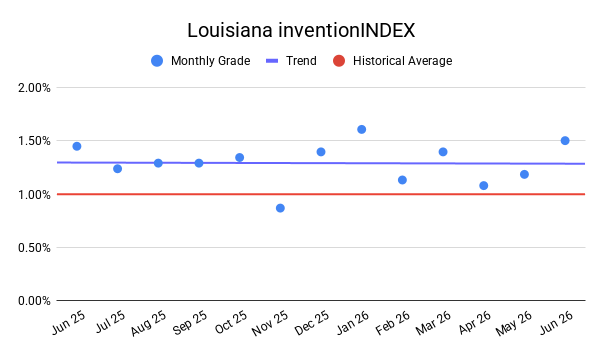
The Macroeconomic Evolution of Baton Rouge
The city of Baton Rouge, situated strategically on a bluff along the Mississippi River Delta, represents a profound convergence of geographic necessity, historical resilience, and strategic infrastructure investment. Historically, the elevated bluff provided a critical business quarter safe from the seasonal flooding that plagued lower-lying settlements, while the deep waters of the Mississippi River allowed for unfettered maritime access to the Gulf of Mexico and, by extension, the global economy. Today, the Port of Greater Baton Rouge operates as the tenth-largest port in the United States by shipped tonnage and serves as the farthest upstream port capable of accommodating massive Panamax vessels.
Ruled by six different sovereign nations throughout its colonial history—the French, Spanish, British, the Republic of West Florida, the Confederate States of America, and the United States—the region developed a deeply multicultural workforce and an adaptive commercial environment. During the post-Civil War era, the local economy was overwhelmingly agrarian, relying heavily on the fertile delta soil for massive sugarcane and cotton yields. However, at the turn of the 20th century, the discovery of oil in the region and the strategic logistical advantage of the riverfront irrevocably transformed Baton Rouge into an industrial and petrochemical powerhouse.
By the 1930s, major civil engineering projects fundamentally reshaped the local topography, draining vast swamps to create protective urban infrastructure and paving the way for the massive institutional expansion of Louisiana State University (LSU). Over the past century, Baton Rouge has aggressively diversified its economic portfolio. While petrochemicals remain an economic engine, the city has evolved into a major nexus for advanced agricultural research, cutting-edge biomedical and clinical health sciences, digital interactive media and software development, and global coastal water management research. This intentional diversification provides a remarkably rich ecosystem for research and development, uniquely positioning local enterprises to capitalize on both federal and state tax incentives designed to underwrite the immense financial risks of disruptive technological innovation.
The United States Federal Research and Development Tax Credit Framework
The foundation of the research and development tax credit in the United States is established under Section 41 of the Internal Revenue Code (IRC). Originally enacted as a temporary measure in 1981 to incentivize domestic innovation, combat economic stagnation, and prevent the offshoring of highly skilled technological development, the federal R&D tax credit provides a valuable dollar-for-dollar reduction in a taxpayer’s federal tax liability for qualified research expenses (QREs). Because tax credits reduce the actual tax owed rather than merely reducing taxable income (as deductions do), they are exponentially more valuable to corporate and individual taxpayers.
However, the statutory language governing the credit is notoriously complex. The Internal Revenue Service (IRS) and the United States Tax Court have consistently noted that Section 41 is one of the most complicated provisions within the entire Internal Revenue Code, requiring the application of strict definitional standards, numerous exclusionary clauses, and significant computational elements that must be applied separately to every single research activity claimed in a given tax year.
The Statutory Framework: The Four-Part Test
To qualify for the federal R&D credit, an activity must satisfy a rigorous, concurrent framework universally known as the “Four-Part Test,” outlined meticulously in IRC § 41(d). Failure to meet even one of these four prongs renders the activity entirely ineligible for the credit. Furthermore, the IRS Audit Techniques Guide mandates that these tests must be applied separately to each discrete business component of the taxpayer, preventing the bundling of non-qualifying activities with legitimate research.
The first prong is the Section 174 Test. Under this requirement, the expenditures must be incurred in connection with the taxpayer’s active trade or business and must represent research and development costs in the experimental or laboratory sense. This explicitly excludes ordinary and necessary business expenses and requires that the activity be aimed at resolving a fundamental technological uncertainty. The legal definition of “research or experimental expenditures” has been heavily litigated. In the seminal case Mayrath v. Commissioner, the Tax Court evaluated whether a taxpayer could deduct a portion of the cost of his personal residence by arguing the construction design was novel and experimental, ultimately establishing boundaries on what constitutes legitimate laboratory or experimental costs.
The second prong is the Discovering Technological Information Test. The research must be explicitly undertaken for the purpose of discovering information that is fundamentally technological in nature. The IRS dictates that the information discovered must rely upon the principles of the hard sciences, specifically the physical sciences, biological sciences, engineering, or computer science. The judicial interpretation of this specific prong has evolved significantly over the decades. In United Stationers Supply Co. v. United States, the Fifth Circuit Court of Appeals narrowed the “discovery test” parameters, ruling that the research must yield technological advancements that expand beyond the current state of knowledge within the relevant field, rather than merely applying existing, well-known knowledge in a novel context.
The third prong is the Business Component Test. The application of the discovered technological information must be intended to be useful in the development of a new or improved business component of the taxpayer. A business component is statutorily defined as a product, process, computer software, technique, formula, or invention that is to be held for sale, lease, or license, or used by the taxpayer in their own trade or business. The taxpayer’s intent must be demonstrably focused on improving the function, performance, reliability, or quality of this component.
The fourth and most heavily scrutinized prong is the Process of Experimentation Test. The statute requires that substantially all (defined by the IRS as 80 percent or more) of the research activities must constitute elements of a process of experimentation for a qualified purpose. This requires a systematic, scientific approach wherein the taxpayer identifies a specific technical uncertainty, identifies one or more alternatives intended to eliminate that uncertainty, and conducts a rigorous process of evaluating the alternatives through modeling, simulation, or systematic trial and error. The legal definition of experimentation was emphasized powerfully in Union Carbide Corp. v. Comm’r. In this case, the Tax Court disallowed the massive costs of production supplies used during routine process testing, drawing a sharp legal distinction between routine quality control testing and a genuine, iterative process of experimentation designed to eliminate uncertainty. Similarly, in Fudim v. Comm’r, the Tax Court denied the taxpayer’s credits entirely due to a fatal lack of substantiation regarding the actual experimental steps undertaken during the prototyping of an invention.
Federal Exclusions and Judicial Limitations
Even if a research activity successfully navigates the Four-Part Test, it may still be disqualified by several statutory exclusions explicitly listed in Section 41(d)(4). Research conducted after the commercial production of a business component has begun, the adaptation of existing business components to a specific customer’s requirement, the duplication of existing business components (reverse engineering), and routine data collection or market research are strictly and categorically prohibited.
A critical exclusion that is frequently and aggressively litigated is the “Funded Research” exclusion. If a taxpayer performs research under a contract with a third party (such as the government or a larger corporation) where the taxpayer does not retain substantial rights to the results of the research, or if the taxpayer does not bear the absolute economic risk of failure, the research is legally considered funded and is wholly ineligible for the tax credit. The landmark judicial precedent for this exclusion was established in Fairchild Industries, Inc. v. United States. The Federal Circuit Court of Appeals ruled that progress payments made to a defense contractor disqualify the credits if the taxpayer bears no ultimate financial risk for the failure of the research. This doctrine was subsequently refined and expanded in Lockheed Martin Corp. v. United States, where the Federal Circuit Court of Appeals ruled that a taxpayer may still legally claim the R&D credit despite operating under lucrative government contracts, provided the taxpayer contractually retains “substantial rights” to use the research outcomes in their own commercial business.
Furthermore, the burden of substantiation remains an extraordinarily severe hurdle for taxpayers claiming the federal credit. Historically, under the Cohan doctrine, courts permitted taxpayers to use reasonable approximations of their expenses if they could definitively prove that the expenses were in fact incurred. However, the judicial tolerance for approximation in R&D claims has vanished. In the critical case of Eustace v. Comm’r, the Tax Court, subsequently affirmed by the Seventh Circuit Court of Appeals, explicitly and forcefully rejected the use of Cohan doctrine approximations for unsubstantiated QREs. The courts established that strict, contemporaneous, and granular documentation—such as timesheets, iteration logs, and testing protocols—is an absolute mandatory prerequisite to claiming the R&D credit. The severity of this requirement is further underscored by United States v. McFerrin, where the Fifth Circuit Court of Appeals upheld severe financial penalties against a taxpayer for the gross overstatement of credits directly resulting from inadequate and reconstructed documentation.
Other notable judicial precedents shaping the federal landscape include Apple Computer, Inc. v. Comm’r, which addressed and validated the eligibility of specific qualified research expenses incurred during complex software development; Norwest Corp. v. Comm’r, which provided critical clarification on how financial institutions must calculate their base period gross receipts for credit computations; and TG Missouri Corp. v. Comm’r, which established parameters allowing credits for foreign R&D expenditures conducted under specific contract research rules, provided the payments were executed at arm’s-length.
| Statutory Test / Exclusion | Federal Definition (IRC § 41) | Establishing Judicial Precedent |
|---|---|---|
| Section 174 Requirement | Costs must be experimental or laboratory sense in connection with an active trade or business. | Mayrath v. Comm’r (novelty in design limits) |
| Technological in Nature | Fundamental reliance on engineering, physics, biology, or advanced computer science. | United Stationers Supply Co. (advancement beyond current knowledge) |
| Business Component Test | Intended for a new/improved product, process, software, formula, or technique. | Apple Computer, Inc. v. Comm’r (software development QREs) |
| Process of Experimentation | Systematic, iterative evaluation of alternatives to eliminate defined technical uncertainty. | Union Carbide Corp. (routine supplies testing disallowed) |
| Funded Research Exclusion | Taxpayer must bear total economic risk and retain substantial, usable rights. | Fairchild Industries & Lockheed Martin Corp. |
| Substantiation Requirement | Contemporaneous documentation is mandatory; approximations are invalid. | Eustace v. Comm’r & United States v. McFerrin |
The Louisiana State Research and Development Tax Credit Framework
While the federal government sets the baseline parameters for R&D incentives, the State of Louisiana offers a highly robust, deeply nuanced, and structurally distinct Research and Development Tax Credit governed by Louisiana Revised Statute (R.S.) 47:6015. The legislative intent underlying R.S. 47:6015 is explicitly detailed as a targeted mechanism for macroeconomic stimulation. The statute aims to promote commercial innovation, aggressively encourage internal business expansion, and strategically facilitate the attraction and retention of high-wage, high-technology employment within Louisiana’s borders, preventing human capital flight to competing technological hubs.
The foundational structure of the Louisiana state credit is inextricably linked to the federal R&D tax credit. Eligibility for the state-level incentive is entirely contingent upon the taxpayer’s research activities meeting the rigorous federal definitional standards for “Qualified Research” under 26 U.S.C. § 41. However, beyond this definitional alignment, Louisiana imposes a labyrinth of strict geographical, administrative, and sectoral limitations that diverge significantly from the federal computational framework.
Tiered Credit Rate Structure and Base Calculations
Unlike the federal R&D credit, which utilizes a flat percentage rate or an alternative simplified calculation method, Louisiana’s legislature designed a tiered statutory strategy that segments and rewards taxpayers based exclusively on their corporate size. This legislative architecture is intentionally designed to mitigate the inherent financial risks associated with early-stage research within the private sector. By establishing a preferential, highly lucrative tier for small businesses, the State of Louisiana formally acknowledges the disproportionately heavy burden that R&D capital expenditures place on smaller firms compared to heavily capitalized, large-scale multinational corporations.
The applicable credit rates and historical base calculations are statutorily determined by the total number of individuals employed by the entity, which must include the aggregate headcount of all affiliated companies. The Louisiana computational tiers are structured as follows:
- Small Businesses (Fewer than 50 Employees): This tier represents the most aggressive incentive. A massive 30% credit rate is applied to the excess of the current year’s Louisiana-based QREs over a historical base amount. For these small entities, the base amount is highly favorable, calculated as only 50% of the average Louisiana QREs incurred over the prior three tax years. If a startup has no prior year QREs, the base is effectively zero, allowing the 30% rate to apply to all current year qualifying expenditures.
- Medium Businesses (50 to 99 Employees): A 10% credit rate is applied to the excess of the current year’s Louisiana QREs over the base amount. Crucially, once a firm crosses the 50-employee threshold, the base amount becomes significantly more restrictive, calculating at 80% (rather than 50%) of the average Louisiana QREs over the prior three tax years.
- Large Businesses (100 or More Employees): The largest corporate entities are restricted to a 5% credit rate, which is applied to the excess of the current year’s Louisiana QREs over the restrictive 80% base amount.
It is imperative to note that only research expenditures incurred physically within the geographical boundaries of the state of Louisiana qualify for this state-level calculation; all out-of-state expenses must be rigorously excluded. Furthermore, to attract federally funded startups, taxpayers who receive a federal Small Business Innovation Research (SBIR) or Small Business Technology Transfer (STTR) grant are allowed a distinct, separate state credit equal to 30% of the actual award received during the tax year. Uniquely, beginning with the 2018 tax year, these specific SBIR/STTR-derived credits are legally transferable and may be sold to another Louisiana taxpayer, providing vital, immediate liquidity to pre-revenue research firms.
| Business Size (Employees) | Credit Rate | Base Amount Calculation | Transferability |
|---|---|---|---|
| Fewer than 50 | 30% | 50% of prior 3-year average LA QREs | Non-transferable (unless SBIR/STTR) |
| 50 to 99 | 10% | 80% of prior 3-year average LA QREs | Non-transferable |
| 100 or more | 5% | 80% of prior 3-year average LA QREs | Non-transferable |
| SBIR / STTR Grantee | 30% of Award | Based entirely on federal grant amount | Fully Transferable to other LA taxpayers |
Administrative Complexity, the LED, and the LDR
The administration of the Louisiana R&D credit is exceptionally complex, eschewing a simple tax return attachment in favor of a rigorous, dual-agency oversight mechanism. A taxpayer must first formally apply to Louisiana Economic Development (LED) to have their expenditures audited and certified before they possess the legal right to claim the credit on a tax return filed with the Louisiana Department of Revenue (LDR).
The LED application process acts as a stringent gatekeeper. The taxpayer must submit an application fee equal to 0.5% of the proposed tax credit, strictly bounded by a minimum fee of $500 and a maximum fee of $15,000. The application must include detailed narratives, a copy of federal Form 6765, and a precise breakdown of Louisiana-only expenses.
For small businesses (fewer than 50 employees) that do not file a federal Form 6765, the state imposes a severe financial and administrative hurdle. R.S. 47:6015 mandates that these entities undergo an independent “expenditure verification report” prepared by a state-assigned certified public accountant (CPA) or tax attorney authorized to practice in Louisiana. The taxpayer must submit massive upfront deposits just to initiate this audit: $7,500 for claims under $1 million, and $15,000 for claims over $1 million. The final cost of the verification report, which can legally reach up to $25,000, is borne entirely by the taxpayer. Furthermore, Louisiana law statutorily requires that at least 10% of all submitted applications undergo a highly detailed desk examination by the LED prior to any certification being issued, highlighting the critical necessity of maintaining robust, Eustace-compliant technical narratives.
Fiscal Constraints: Act 11 and the $12 Million Competitive Cap
Historically, the Louisiana R&D credit functioned as a pure entitlement program; any taxpayer who met the statutory qualifications was guaranteed the credit, with no statewide aggregate limit. However, the program’s immense success in driving economic growth—yielding a measured Economic Return on Investment (ROI) of 29.28% in Fiscal Year 2022—simultaneously created a massive, unconstrained fiscal exposure for the state’s budget.
To aggressively manage this exposure, the Louisiana Legislature enacted profound and sweeping fiscal changes via Act 11 of the 2024 Third Extraordinary Session. Among various reforms, including the implementation of a flat 3% individual income tax rate, Act 11 fundamentally altered the nature of the R&D incentive. As clarified by LDR Revenue Information Bulletin (RIB) 25-012, effective July 1, 2025 (the start of Fiscal Year 2026), the aggregate amount of R&D tax credits allowed is strictly capped at $12 million annually.
The incentive has transitioned from an entitlement to a highly competitive grant. Credits are now awarded on a strict first-come, first-served basis once complete applications are received by the LED. Taxpayers whose claims are disallowed solely due to the exhaustion of the $12 million cap may use the credits on an original return filed in the subsequent fiscal year, receiving priority filing status over new claims.
Sectoral Exclusions: The Patent Rule
To further preserve state capital for genuine technological disruption, Louisiana specifically targets and excludes certain traditional industries from claiming the R&D credit, regardless of their federal eligibility. Known colloquially among tax practitioners as the “Patent Rule,” R.S. 47:6015(B) and its corresponding administrative codes (LAC 61:I.1905) dictate that professional services firms and businesses primarily engaged in custom manufacturing or custom fabricating are entirely and categorically ineligible for the state credit.
There is only one exception to this rule: these restricted businesses may claim the credit if and only if they possess a pending or issued United States patent that is directly and intrinsically related to the qualified research expenditures being claimed. This severe exclusionary rule effectively prevents businesses that provide routine fabrication, standard architectural design, or traditional engineering services from utilizing a credit pool intended to subsidize disruptive, globally scalable technological innovation.
Economic History and Industry Case Studies in Baton Rouge
The unique economic geography of Baton Rouge has fostered a highly diversified industrial base. The following five comprehensive case studies detail how specific industries took root in the capital region, the specific nature of their daily research and development activities, and exactly how those activities theoretically navigate the complex intersection of federal tax law, judicial precedent, and Louisiana’s stringent state requirements.
Case Study 1: The Petrochemical and Advanced Refining Industry
Historical Development and Regional Origin: The absolute bedrock of the modern Baton Rouge economy is the global petrochemical industry. The sector’s genesis occurred in 1909 when Standard Oil (the predecessor to modern ExxonMobil) recognized the unparalleled logistical advantages of the bluffs overlooking the Mississippi River and constructed the first major oil refinery in Louisiana. The location allowed for massive, unhindered maritime transport of both raw crude oil and refined chemical products to global markets, safely elevated above the devastating seasonal floods that routinely destroyed lower delta infrastructure.
Over the subsequent century, this single facility catalyzed an industrial explosion. ExxonMobil’s Baton Rouge complex is now one of the largest, most highly integrated refining and petrochemical complexes in the world, employing over 6,000 workers directly. This anchor attracted an immense ecosystem; today, over 120 distinct petrochemical companies operate in East Baton Rouge Parish alone. The concentration of infrastructure is staggering, evidenced by recent massive capital expenditures, such as ExxonMobil’s $500 million Polypropylene Growth Project, which added 450,000 metric tons of production capacity specifically targeting the creation of advanced, lightweight automotive parts and consumer goods. With an estimated $20 billion in continued capital investments projected over the next half-decade by global entities like Shell, Dow, and Shintech, the sector demands relentless technological iteration to maximize chemical yields, automate refining systems, and maintain strict environmental compliance along the river corridor.
Qualified R&D Activities: The sheer scale, heat, and pressure involved in petrochemical refining in Baton Rouge necessitates continuous, highly specialized engineering improvements. Chemical engineers and testing operators in this sector regularly engage in the design and development of unique onshore rigs, deep-water offshore structure modules, advanced chemical containment systems, and the formulation of new proprietary chemical catalysts used in the cracking process.
A highly significant area of recurring R&D involves turnaround and shutdown services. Refineries cannot simply be unplugged; shutting down a massive chemical reactor to clean, upgrade, or replace internal components without triggering catastrophic pressurization failures, volatile chemical segregation issues, or severe environmental contamination requires months of proprietary, site-specific engineering and logistical modeling. Furthermore, local engineering firms conduct extensive environmental testing and remediation research, analyzing soil samples and river water contamination to engineer novel wastewater treatment solutions that are highly specific to the unique, marshy geography and high water tables of South Louisiana. In conjunction with physical hardware, software engineers develop highly specific code for data acquisition, flow monitoring, and even virtual reality (VR) simulation modules to train operators on new unit processes before live deployment.
Tax Credit Eligibility and Judicial Analysis: Under the federal Four-Part Test, the complex engineering of a new containment system or a proprietary, facility-specific turnaround process clearly satisfies the Section 174 expense requirement and the Business Component test. The activities are deeply technological, relying fundamentally on chemical, mechanical, and industrial engineering principles. The strict process of experimentation test is fulfilled through the extensive use of Computer-Aided Design (CAD) modeling, computational fluid dynamics simulations, generating pilot batches of chemical products, and rigorous, deliberate trial-and-error testing required before safely deploying an experimental process on a live, multi-million-dollar refinery unit.
However, petrochemical companies must remain hyper-vigilant regarding the judicial precedent set in Union Carbide Corp. v. Comm’r. The Tax Court explicitly disallowed the massive costs of supplies that were consumed during what it deemed routine process testing. Therefore, Baton Rouge refiners must mathematically isolate the supplies consumed during true, uncertainty-driven pilot testing from the supplies consumed during standard, routine quality control or operational optimization runs.
For Louisiana state eligibility, the labor costs of the specific process engineers, chemists, pipe designers, and software modelers physically stationed in Baton Rouge directly supervising or performing these experimental tests qualify as state QREs. While massive multinational refiners employing thousands will be constrained to the 5% tier rate, the Baton Rouge ecosystem is filled with smaller, specialized engineering contractors. If a local contractor with 40 employees is hired to design a novel piece of auxiliary equipment for a refinery, they could theoretically claim the highly lucrative 30% small business credit rate. To do so, however, these smaller contractors must aggressively navigate the federal “Funded Research” exclusion. Their contracts must be written to ensure they bear the absolute economic risk if the design fails, and they must legally retain substantial rights to reuse the intellectual property, strictly adhering to the judicial doctrines established in Fairchild Industries and Lockheed Martin.
Case Study 2: Sugarcane Biology and Agricultural Sciences
Historical Development and Regional Origin: While petrochemicals dominate the skyline, agriculture—specifically sugarcane cultivation—has been an integral, foundational pillar of the Baton Rouge regional economy for over two centuries. The industry’s viability was established in 1795 when Etienne de Bore and Antoine Morin successfully granulated sugar from raw cane on a plantation in South Louisiana, sparking an immediate and massive agricultural boom fueled by the incredibly fertile alluvial soils of the Mississippi River Delta.
However, following the economic devastation of the Civil War, the local sugarcane industry faced total collapse. They were confronted by a dual threat: the total loss of their historical labor force and the rapid rise of highly efficient, science-driven beet sugar production dominating Europe. Recognizing that survival required a fundamental shift toward scientific innovation rather than mere agrarian expansion, prominent local planters formed the Louisiana Sugar Planters Association in 1877. In a seminal 1885 address, William Carter Stubbs implored the association to embrace science, leading to the funding and establishment of the Sugar Research Station in the Baton Rouge area. This vital initiative evolved into the LSU Agricultural Experiment Station and the modern-day LSU AgCenter. Today, the regional sugarcane industry is an economic juggernaut, generating approximately $4 billion annually and supporting thousands of rural families, a reality sustained entirely by the continuous, institutionalized genetic research occurring at the Sugar Research Station in nearby St. Gabriel.
Qualified R&D Activities: Modern sugarcane farming in the Baton Rouge region is a highly advanced, heavily scientific endeavor. The primary, critical focus of researchers at the LSU AgCenter and private agricultural biotechnology firms operating in the area is the continuous development of novel, high-yield sugarcane varieties. This is an existential requirement; without a continuous pipeline of new varieties, the industry would stagnate and collapse due to evolving biological threats.
Because sugarcane does not naturally flower reliably in Louisiana’s unpredictable climate, researchers since the 1950s have utilized advanced “photoperiod scheduling”. This involves artificially manipulating light spectrums, humidity, and temperature in highly controlled, massive indoor facilities to artificially induce sugarcane flowering, allowing scientists to selectively cross-breed strains under specific Louisiana conditions. Beyond genetics, entomologists and plant pathologists continually formulate, test, and refine new chemical or biological herbicides and pesticides to manage invasive insect species and resilient weeds without simultaneously harming the delicate crop yield or poisoning the local water table.
Tax Credit Eligibility and Judicial Analysis: Advanced agricultural research of this nature aligns perfectly with the federal definitions of qualified research. The development of a new, freeze-tolerant or disease-resistant sugarcane strain, or a novel agricultural chemical compound, serves directly as a new business component. The research relies absolutely on the hard biological sciences, chemistry, and advanced agronomy, easily satisfying the technological nature requirement.
The process of experimentation is inherently rigorous and systemic. Agricultural scientists do not guess; they plant thousands of slightly varied genetic strains, systematically evaluating the alternative strains over multiple seasons through deliberate, scientifically documented trial and error to identify the specific phenotypic expressions that yield superior sucrose levels and demonstrate heightened freeze tolerance. This systematic elimination of biological uncertainty directly satisfies the federal standard. However, applying the judicial standard from United Stationers Supply Co., the research must be proven to advance the field of agronomy beyond current knowledge, rather than just planting existing seeds in a slightly different soil composition.
Under Louisiana law, the massive capital and operational costs associated with running photoperiod facilities, the complex wages of agronomists, lab supervisors, and environmental engineers, and the tangible supplies consumed during experimental cross-breeding constitute legitimate state QREs. Given the notoriously tight profit margins inherent in commercial farming, specialized seed producers and private agricultural technology firms operating near the Baton Rouge campus can heavily leverage the 30% small business credit rate. This credit provides vital financial runway to offset the massive costs of genetic R&D, provided their tax strategy involves submitting applications swiftly to secure a guaranteed position under the new $12 million state fiscal cap.
Case Study 3: Biomedical, Clinical, and Population Healthcare Research
Historical Development and Regional Origin: The medical, clinical, and healthcare research industry in Baton Rouge has experienced explosive, globally recognized growth, anchored almost entirely by the visionary establishment of the Pennington Biomedical Research Center. The center was born out of the immense philanthropic foresight of C.B. “Doc” and Irene Pennington. Their foundational financial gift provided the physical laboratories and state-of-the-art facilities on the Baton Rouge campus, accompanied by a mandate to recruit world-renowned scientific talent dedicated specifically to nutritional, metabolic, and preventative health research.
Over the past 35 years, Pennington Biomedical has evolved into an international research powerhouse, directly generating over 7,800 scientific publications and bringing $1.32 billion in grant funding into the local economy. This anchor institution catalyzed the formation of the Baton Rouge Health District—a massive, collaborative, place-based healthcare ecosystem that includes Our Lady of the Lake Regional Medical Center, Mary Bird Perkins Cancer Center, Ochsner Health, and Woman’s Hospital. This highly concentrated medical corridor has effectively transformed Baton Rouge into an international, collaborative hub for the deep study of obesity, diabetes, pediatrics, and metabolic health.
Qualified R&D Activities: Biomedical research in the Baton Rouge corridor spans an incredible spectrum, from microscopic molecular laboratories to massive, population-wide data analytics. Researchers are actively involved in the complex development of novel obesity medications, advanced theranostics, and the engineering of new molecules specifically designed to decrease inflammation without simultaneously triggering diabetic responses. Clinical teams routinely conduct vast human trials, optimizing nutritional therapies that have global impact—most notably, Pennington researchers played a key role in designing the DASH diet, consistently ranked as the top heart-healthy diet in America, and they continually lead nutrition optimization research for U.S. Military soldiers in active combat.
Furthermore, local data scientists and bioinformaticians have spent decades analyzing the secondary utility of Electronic Health Records (EHR). Recent breakthrough publications from Baton Rouge researchers focus intensely on developing highly complex predictive analytics and artificial intelligence (AI) tools. These software models are designed to parse 25 years of anonymized, big-data healthcare records, identifying hidden chronic disease trends and establishing predictive population health metrics, all while engineering solutions to strictly adhere to HIPAA data security and privacy masking protocols.
Tax Credit Eligibility and Judicial Analysis: The rigorous development of new pharmaceuticals, specialized metabolic treatments, and predictive AI healthcare algorithms clearly meets the federal Section 174 expense requirement and the Technological in Nature test, relying completely on advanced biology, organic chemistry, and computer science. The process of evaluating different molecular compounds, or training complex AI models through thousands of computational iterations to eliminate false positives in patient data, perfectly fulfills the process of experimentation requirement.
However, entities operating within this specific sector face a massive, unique tax hurdle: they must meticulously segregate their funding sources. Pennington Biomedical operates largely on massive grants, including highly competitive funding from the National Institutes of Health (NIH). Research funded by federal or state grants where the government either retains rights to the IP or absorbs the ultimate financial risk of failure does not qualify for the R&D tax credit, strictly adhering to the “Funded Research” exclusion precedent.
Conversely, private pharmaceutical startups, medical device companies, and health-tech data firms operating within the Baton Rouge Health District that utilize private capital to self-fund their clinical trials or algorithm development can fully claim these massive costs. The highly compensated wages of clinical trial supervisors, AI data scientists, and the immense costs of tangible laboratory supplies consumed during experimentation are fully eligible under both federal law and the Louisiana state credit framework. These private firms must heed the stark warning of Eustace v. Comm’r; approximations of clinical time will be rejected by the LDR. Only strict, contemporaneous logs tracking exact hours spent on specific experimental protocols will survive an audit.
Case Study 4: Software Development and Digital Interactive Media
Historical Development and Regional Origin: Baton Rouge’s sudden emergence as a premier technology, cybersecurity, and software hub is a relatively recent, highly engineered phenomenon, catalyzed by aggressive, targeted public-private partnerships. A transformative watershed moment occurred in 2013 when IBM selected downtown Baton Rouge for the construction of a massive $55 million Services Center. This initiative was heavily subsidized and supported by targeted state investments in LSU’s computer science programs (dubbed the “Geaux Digital Louisiana” initiative) and the rapid development of specialized urban tech infrastructure.
Simultaneously, the city successfully fostered a highly lucrative digital interactive media cluster. This included attracting major operations for global electronic arts companies like EA Sports, which established a massive North American Test Center directly on the LSU campus within the Louisiana Digital Media Center. Today, Baton Rouge boasts a thriving, organic ecosystem of cybersecurity firms, digital media developers, and enterprise IT startups nurtured by incubators like Nexus Louisiana and the Louisiana Technology Park.
Qualified R&D Activities: Firms located within the IBM Services Center, the Water Campus, and the Louisiana Technology Park engage daily in highly complex, deeply technical software engineering. Activities include developing new, highly scalable cloud and data services architectures to handle Big Data requirements, engineering custom cybersecurity protocols to thwart evolving threats, and designing complex, interactive 3D physics engines for commercial video games.
Specific Baton Rouge startups, such as Twistlock and Minimus, focus intensely on advanced cloud security engineering. Other local firms, like Diamond Data Systems, engineer custom data integration platforms for highly secure aerospace, defense manufacturing, and nuclear energy clients. These activities require the continuous, iterative development of novel software architectures to preempt emerging cyber threats and manage unprecedented data loads.
Tax Credit Eligibility and Judicial Analysis: Software development is historically the most heavily scrutinized activity under federal R&D tax laws. To qualify, the development of commercial software must meet the standard Four-Part Test, with the software architecture itself serving as the business component. The seminal case Apple Computer, Inc. v. Comm’r explicitly validated that software development wages can constitute legitimate QREs under the law, provided they meet the experimentation threshold.
However, if a Baton Rouge firm is developing “Internal Use Software” (IUS)—software meant primarily to facilitate the firm’s own back-office functions rather than for commercial sale or external client licensing—it faces a massive hurdle. The IRS mandates that IUS must meet an additional, highly restrictive “High Threshold of Innovation” test. The internal software must be proven to be highly innovative, entail significant economic risk in its development, and must not be commercially available for purchase off-the-shelf.
Because the IRS and LDR heavily target and frequently audit software claims, strict substantiation of the iterative coding process is absolutely mandatory. Firms must maintain contemporaneous tracking of individual developer hours, preserve detailed code repositories (such as GitHub commit histories documenting failed architecture designs), and retain records of sprint planning to prove a genuine, scientific process of experimentation. If mathematically substantiated, the wages of the software developers, cloud systems architects, and QA engineers physically working in Baton Rouge who are directly involved in coding qualify for the credit. Under Louisiana law, small software startups with fewer than 50 employees can utilize the vital 30% credit rate. This provides highly critical runway capital, particularly given the state’s recent legislative allowance for “bonus amortization” under IRC 174, allowing startups to fully expense these R&D labor costs in the current tax year to aggressively reduce their taxable footprint.
Case Study 5: Coastal Water Management and Civil Engineering
Historical Development and Regional Origin: Louisiana’s continuous, existential battle with rapidly shifting coastlines, land loss, and catastrophic river flooding has naturally birthed a highly specialized water management and civil engineering industry centered in Baton Rouge. In the 1930s, during the Great Depression, the Baton Rouge Chamber of Commerce utilized federal relief funds to drain the malaria-infested Old Perkins Swamp, undertaking massive earth-moving projects to engineer the modern City Park Lakes to protect the growing city and university infrastructure.
Decades later, following the unprecedented devastation of Hurricane Katrina, local, state, and academic leaders recognized the absolute necessity of establishing a global, centralized hub dedicated specifically to advanced coastal science and resilience engineering. This realization led directly to the development of The Water Campus, a sprawling 30-acre, $250 million collaborative research park located on the old municipal dock directly along the banks of the Mississippi River. The campus serves as a physical and intellectual bridge between the Louisiana Coastal Protection and Restoration Authority (CPRA), high-level academic researchers, and major private civil engineering firms.
Qualified R&D Activities: Private and public firms operating at The Water Campus engage in monumental, landscape-scale civil and environmental engineering projects. Core R&D activities include the ongoing operation and refinement of the Lower Mississippi River Physical Model—one of the world’s largest movable bed physical models, utilized to dynamically simulate and predict sediment diversion, hydraulic flows, and coastal erosion over decades.
Private environmental engineering firms conduct massive environmental impact studies adhering to EPA guidelines, design cutting-edge, nature-based water treatment solutions (such as engineered, scalable wetlands to naturally filter municipal wastewater), and develop novel structural designs for coastal resilience. Engineers continuously evaluate the efficacy of alternative levee materials and structural designs against the anticipated, highly unpredictable stressors of future climate change and rising sea levels.
Tax Credit Eligibility and Judicial Analysis: Engineering projects directly related to coastal restoration, sediment diversion, and advanced water management inherently rely on the hard physical sciences and structural engineering, easily satisfying the federal technological nature test. Designing a fundamentally novel coastal barrier matrix or engineering a highly improved, scalable wastewater filtration system clearly qualifies as the development of a new business component. The vital process of experimentation is fulfilled through the extensive mathematical modeling, Building Information Modeling (BIM) for sub-system coordination, and the massive physical simulations required to test hydraulic flows and structural integrity before billion-dollar public works construction begins.
However, companies operating within this specific sector face a massive, highly unique legal hurdle under Louisiana state law. Many of the private firms operating on The Water Campus are structured as traditional civil engineering or professional services entities. Under R.S. 47:6015(B), professional services firms and custom fabricators are explicitly, statutorily ineligible for the state R&D credit unless they possess a pending or issued U.S. patent directly related to the specific research.
Therefore, a civil engineering firm on The Water Campus cannot legally claim the lucrative state credit for simply using their expertise to design a custom, site-specific levee for a government contract. To bypass the state’s exclusionary patent rule, they must prove they are developing a proprietary, legally patentable environmental technology—such as a fundamentally novel water distillation mechanism, a unique, patentable permeable concrete compound, or a proprietary mechanical filtration gate. Navigating this specific statutory exclusion requires deep legal collaboration between the firm’s civil engineers and patent attorneys prior to filing the LED application.
| Industry Sector (Baton Rouge) | Key Historical Origin Driver | Primary QRE-Generating R&D Activities | Primary Federal / State Tax Hurdle |
|---|---|---|---|
| Petrochemicals | 1909 Standard Oil Refinery | Containment design, VR simulation, turnaround engineering | Funded Research Exclusion (Fairchild rule) & Supply Disallowance (Union Carbide) |
| Agriculture | 1885 Sugar Research Station | Photoperiod breeding, pathology, sucrose yield optimization | Demonstrating advancement beyond current agronomy knowledge (United Stationers) |
| Biomedical | Doc Pennington Philanthropy | AI health algorithms, metabolic trials, EHR analysis | Legally separating NIH/federal grant-funded R&D from private capital R&D. |
| Software/Digital | 2013 IBM Services Center | Cloud security architecture, 3D physics engines, IT integration | Proving the “High Threshold of Innovation” for Internal Use Software. |
| Water Mgt. | Post-Katrina Coastal Crisis | River hydraulic modeling, LEED design, wastewater filtration | Overcoming the LA “Patent Rule” for custom fabricators/professional services. |
Strategic Tax Administration and Jurisdictional Navigation
The complex intersection of highly scrutinized federal tax law and Louisiana’s highly specific, structurally unique statutory requirements mandates aggressive, highly strategic administrative planning for Baton Rouge enterprises seeking to leverage these vital capital subsidies. The judicial landscape in Louisiana consistently and aggressively demonstrates that technical statutory compliance is strictly enforced by the Louisiana Department of Revenue (LDR) and the Louisiana Board of Tax Appeals (BTA). For instance, in complex cases surrounding pass-through entity taxation, interstate revenue calculations, and state credits—such as Smith v. Robinson and LIPCA, Inc.—the state courts strictly enforce statutory deadlines, mathematical formulas, and rigorous substantiation requirements, showing little leniency for administrative errors.
Aggressive Navigation of the $12 Million Fiscal Cap
The fundamental legislative transition of the Louisiana R&D credit from a guaranteed, open-ended entitlement program to a highly restrictive, $12 million capped program under Act 11 fundamentally alters the economic utility and strategic approach to the incentive. Starting in Fiscal Year 2026, the credit acts functionally as a highly competitive state grant rather than a guaranteed, mathematically assured tax offset.
Because the $12 million in credits are legally allocated on a strict first-come, first-served basis by the LED, corporate taxpayers in Baton Rouge must drastically accelerate their internal accounting and engineering documentation timelines. A mid-sized software firm that finalizes its federal Form 6765 in October on a standard corporate tax extension may devastatingly find that the entire $12 million state allocation has already been exhausted by highly agile, aggressive firms that finalized their audits and filed with the LED in January. Therefore, Baton Rouge technology startups and agricultural research firms relying heavily on the 30% small business rate to fund their ongoing payroll must structure their financial reporting mechanisms to ensure immediate, day-one filing upon the close of their fiscal tax year to secure their position in the queue.
The Financial Burden of Substantiation and Expenditure Verification
Small businesses (those with fewer than 50 employees) face significant, disproportionate front-end financial burdens to claim the state credit. R.S. 47:6015(C) strictly mandates that if a small business does not file a formal federal return to claim the federal R&D credit, they cannot simply claim the state credit; they must legally pay for a state-appointed CPA or tax attorney to generate an independent expenditure verification report.
The state statute explicitly fixes the maximum cost of this mandatory report: up to $15,000 for R&D claims under $1 million, and up to a staggering $25,000 for R&D claims over $1 million, with massive, non-refundable upfront cash deposits required just to initiate the process. Consequently, a Baton Rouge startup must conduct a ruthless, highly accurate cost-benefit analysis before applying. The mathematical increase in liquidity provided by the 30% credit rate must be carefully weighed against the initial 0.5% LED application fee (up to $15,000), the potential $25,000 verification audit cost, and the 10% statutory mathematical probability of being selected for a grueling, detailed LED desk examination.
To survive this intense multi-agency scrutiny and ensure a positive return on investment, firms must proactively adopt contemporaneous, granular documentation practices that easily satisfy the stringent federal legal standards established in Eustace v. Comm’r. Reconstructing R&D hours at the end of the year is legally perilous and practically disastrous. Firms must institutionalize the retention of digital timesheets, software iteration logs, failed engineering schematics, and chemical pilot testing protocols that irrefutably, mathematically document the scientific process of experimentation required by IRC Section 41.
The information in this study is current as of the date of publication, and is provided for information purposes only. Although we do our absolute best in our attempts to avoid errors, we cannot guarantee that errors are not present in this study. Please contact a Swanson Reed member of staff, or seek independent legal advice to further understand how this information applies to your circumstances.