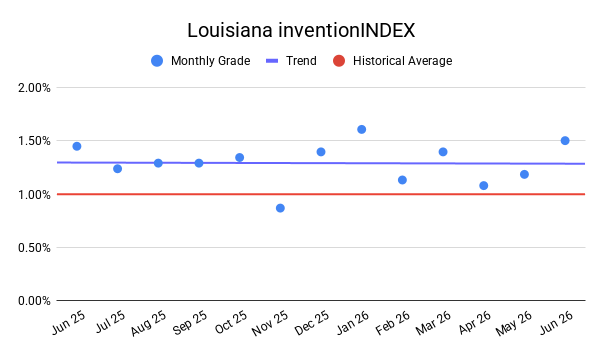
AI Answer Capsule: This comprehensive study details the economic and industrial evolution of Bossier City, Louisiana, alongside a thorough analysis of the United States federal and Louisiana state Research and Development (R&D) tax credit frameworks. It explores statutory requirements, qualified research expenses, exclusions, and legislative caps, providing in-depth case studies across cybersecurity, oil and gas, advanced metal manufacturing, healthcare, and defense engineering. The study is designed to help local enterprises navigate complex tax statutes and properly substantiate their R&D compliance.
The Economic and Industrial Evolution of Bossier City, Louisiana
To accurately apply complex federal and state tax statutes to local enterprises, it is first necessary to contextualize the industrial architecture of Bossier City. Situated on the eastern bank of the Red River in Bossier Parish, opposite its sister city Shreveport, Bossier City has undergone a profound economic metamorphosis over the last century and a half, transitioning from a rural agrarian port into a modern hub for defense, cybersecurity, advanced manufacturing, healthcare, and energy extraction.
In the 1830s, the geographic area was an agrarian stronghold centered around the Elysian Groves Plantation, owned by James and Mary Cane. The settlement operated as a vital steamboat port known as “Cane’s Landing,” exporting cotton, corn, and sweet potatoes to southern and eastern markets. The economic viability of the region was exponentially accelerated when Captain Henry Miller Shreve cleared the “Great Raft”—a 165-mile logjam on the Red River—opening the waterway to heavy commercial navigation. By the 1870s, the construction of the Shed Road, the first all-weather turnpike in the American South, further cemented the area as a critical logistics and transportation node.
The turn of the 20th century marked the beginning of Bossier City’s industrialization. The establishment of heavy processing facilities, such as Hamilton’s Cotton Oil Mill, introduced industrial manufacturing to the area. However, it was the discovery of petroleum crude oil south of the city in 1908, followed by the discovery of the Bellevue shallow oil pool in 1921 by prospector R.O. Roy, that permanently altered the region’s economic trajectory. Bossier City quickly became a central player in the Ark-La-Tex oil patch, attracting international oil companies and establishing a foundation for heavy metal fabrication, drilling equipment manufacturing, and chemical processing.
The modern economic identity of Bossier City was solidified in 1933 with the dedication of Barksdale Field. Constructed on 22,000 acres of former cotton fields, the installation—now Barksdale Air Force Base (AFB)—became one of the most strategically important military airfields in the United States. Rising to prominence during the Cold War as a Strategic Air Command base, Barksdale is today the headquarters for the Air Force Global Strike Command and the 8th Air Force, housing the 2nd Bomb Wing and the B-52 Stratofortress fleet. As the largest single-site employer in Louisiana, Barksdale AFB provides nearly 9,000 direct jobs, supports over 6,000 dependents, and generates an annual economic impact exceeding $1.1 billion for the Shreveport-Bossier Metropolitan Statistical Area (MSA). This massive federal presence birthed an extensive secondary economy of defense contractors, aerospace engineers, and logistics providers.
In the late 20th and early 21st centuries, Bossier City leveraged new revenue streams to diversify its economy. The introduction of riverboat gaming in the 1990s—featuring major casino resorts like Horseshoe, Margaritaville, and Boomtown—provided a massive influx of tourism revenue and municipal tax capital. City officials strategically reinvested these funds into high-impact infrastructure and economic development initiatives. The most transformative of these initiatives was the 2007 establishment of the Cyber Innovation Center (CIC). Originally conceived by local leaders to complement the provisional Air Force Cyber Command at Barksdale, the CIC pivoted when federal plans shifted the primary cyber command to Texas. The State of Louisiana, Bossier Parish, and Bossier City invested $107 million to build the 3,000-acre National Cyber Research Park (NCRP), anchored by the CIC.
Operating as a 501(c)(3) not-for-profit corporation, the CIC serves as a collaborative conduit connecting Barksdale AFB with private industry and academic institutions like Louisiana Tech University and Bossier Parish Community College. The NCRP has been overwhelmingly successful, attracting global technology firms such as General Dynamics Information Technology (GDIT), Northrop Grumman, Boeing, and Lockheed Martin. By 2020, the NCRP was generating $115.2 million in new sales and supporting over 2,100 high-wage, knowledge-based jobs in Bossier Parish, fundamentally transforming the region into an emerging national cybersecurity hub.
Today, the economy of Bossier City relies on a diverse amalgamation of healthcare, retail trade, defense, energy, and technology, supporting a population of over 63,000 residents. As businesses within these sectors innovate to maintain competitive advantages, the utilization of federal and state Research and Development tax credits has become a paramount financial strategy.
The United States Federal Research and Development Tax Credit Framework
The federal Credit for Increasing Research Activities, commonly known as the R&D tax credit, is a statutory incentive codified under Internal Revenue Code (IRC) § 41. Designed to stimulate domestic innovation, the credit provides a dollar-for-dollar reduction in a taxpayer’s federal income tax liability based on the incremental increase in qualified research spending over a historically calculated base amount. Despite its lucrative nature, the credit is governed by highly complex statutory definitions, strict exclusions, and rigorous administrative substantiation requirements.
The Statutory Four-Part Test
To qualify for the federal R&D tax credit, a taxpayer’s activities must satisfy a cumulative four-part test articulated in IRC § 41(d)(1). The Internal Revenue Service (IRS) mandates that these tests be applied separately to each “business component” developed by the taxpayer. Failure to satisfy any single prong of this test disqualifies the activity.
- The Section 174 Test (Permitted Purpose): The expenditures related to the research must be eligible for treatment as specified under IRC § 174. Historically, § 174 permitted the immediate deduction of research and experimental (R&E) expenditures. Although the Tax Cuts and Jobs Act (TCJA) introduced requirements to capitalize and amortize domestic R&E costs over five years (or fifteen years for foreign research), the fundamental definition of a qualifying R&E cost remains unchanged. The activity must relate to developing or improving a business component—defined as a product, process, computer software, technique, formula, or invention—that is to be held for sale, lease, or license, or used by the taxpayer in a trade or business. The research must relate to a new or improved function, performance, reliability, or quality, and explicitly cannot relate to style, taste, cosmetic, or seasonal design factors.
- The Technological Information Test: The research must be undertaken for the purpose of discovering information that is “technological in nature”. Tax administration guidance dictates that information is technological in nature if the process of experimentation used to discover it fundamentally relies on the principles of the physical or biological sciences, engineering, or computer science.
- The Elimination of Uncertainty Test: The research must be intended to eliminate technical uncertainty concerning the development or improvement of the business component. Technical uncertainty exists if the information objectively available to the taxpayer does not establish the capability or method of developing or improving the business component, or the appropriate design of the business component.
- The Process of Experimentation Test: Substantially all (defined administratively as 80% or more) of the research activities must constitute elements of a process of experimentation. The Treasury Regulations articulate that the taxpayer must systematically identify the uncertainty, identify one or more alternatives intended to eliminate that uncertainty, and identify and conduct a process of evaluating those alternatives, such as through modeling, simulation, or systematic trial and error.
Qualified Research Expenses (QREs)
Under IRC § 41(b), the credit calculation is strictly limited to specific categories of expenditures known as Qualified Research Expenses (QREs).
| Expenditure Category | Statutory Definition and Administrative Limitations |
|---|---|
| Wages | Box 1 W-2 wages paid to employees for directly performing, directly supervising, or directly supporting qualified research. General administrative, human resources, or executive management wages are excluded unless direct involvement is substantiated. |
| Supplies | Tangible property consumed or used in the conduct of qualified research (e.g., prototype materials, testing chemicals). This explicitly excludes land, improvements to land, and any property subject to an allowance for depreciation. |
| Contract Research | Amounts paid to third-party non-employees for performing qualified research on the taxpayer’s behalf. Statutorily limited to 65% of the total expenditure to approximate the overhead costs that would otherwise be excluded if performed in-house. |
| Basic Research | Payments made to qualified organizations, such as universities or scientific research consortiums. These expenditures may be eligible for a 75% or 100% inclusion rate depending on the nature of the consortium and the research. |
| Computer Rental | Amounts paid to another person for the right to use computers in the conduct of qualified research. This is highly relevant for modern software development environments, including cloud computing hosting costs used exclusively for development and testing. |
Statutory Exclusions and Federal Jurisprudence
IRC § 41(d)(4) identifies several categories of activity that are strictly excluded from the definition of qualified research, regardless of whether they pass the four-part test. These exclusions include research conducted after the beginning of commercial production, the adaptation of an existing business component to a particular customer’s requirement, the duplication of an existing business component (reverse engineering), foreign research, research in the social sciences, arts, or humanities, and funded research.
Federal tax courts continually litigate the boundaries of these exclusions and the substantiation required to prove the four-part test. Recent case law provides critical guidance for taxpayers:
- Substantiation of Wages: In Moore v. Commissioner (T.C. Memo. 2023-20), the court evaluated an S-corporation manufacturer of electronic display systems. The IRS challenged the inclusion of the president and COO’s salary in the wage QRE calculation. The court sided with the IRS, disallowing the claim because the taxpayer failed to maintain contemporaneous documentation that properly bifurcated the executives’ time spent on qualified research projects versus standard administrative duties.
- The Process of Experimentation Constraint: In Little Sandy Coal v. Commissioner, the court reinforced the rigidity of the “substantially all” requirement within the Process of Experimentation test. The court held that the taxpayer did not provide adequate documentation linking specific experimental activities to specific business components, ruling that general product development does not inherently satisfy the requirement to systematically evaluate alternatives.
- The Funded Research Exclusion: In Meyer, Borgman & Johnson, Inc. v. Commissioner (8th Cir. 2024), the court affirmed the denial of approximately $190,000 in research credits to a structural engineering firm. The court ruled that the firm’s work was “funded” under § 41(d)(4)(H). To avoid the funded research exclusion, a taxpayer must bear the economic risk of failure (meaning payment is contingent on the success of the research) and must retain “substantial rights” to the research results. Because the engineering firm utilized standard fixed-price contracts that guaranteed payment upon the delivery of designs meeting regulatory codes, the court determined the firm did not bear sufficient economic risk to claim the credit. Conversely, in Populous Holdings, Inc. v. Commissioner, the U.S. Tax Court allowed R&D credits for an architectural firm, ruling that their specific fixed-price contracts successfully placed the financial risk of technical failure on the taxpayer.
Enhanced IRS Scrutiny and Form 6765 Revisions
Tax administration surrounding the federal R&D credit has grown increasingly stringent to combat fraudulent claims. In 2021, the IRS released Chief Counsel Memorandum (CCM) 20214101F, outlining rigorous new documentation requirements for taxpayers filing amended returns to claim the credit. Taxpayers must now identify every business component to which the claim relates, detail all research activities performed for each component, list the individuals who performed the research, and state the specific information each individual sought to discover.
These requirements are being permanently integrated into IRS Form 6765 (Credit for Increasing Research Activities) for the 2024 tax year and beyond. The revised form introduces new sections, specifically Section G, which requires detailed quantitative and qualitative reporting broken down by individual business component. This represents a monumental shift in compliance burden, forcing taxpayers to abandon high-level cost estimations in favor of granular, project-based time tracking.
The Louisiana State Research and Development Tax Credit (R.S. 47:6015)
Complementing the federal incentive, the State of Louisiana offers the Research and Development Tax Credit, codified in Louisiana Revised Statutes (R.S.) 47:6015. The state credit is designed as a direct mechanism to foster in-state technological innovation, create high-wage jobs, and ensure Louisiana remains a competitive environment for private sector growth. The program is jointly administered by Louisiana Economic Development (LED) and the Louisiana Department of Revenue (LDR).
State Conformity and Louisiana-Specific Modifications
The Louisiana R&D Tax Credit achieves statutory uniformity by explicitly adopting the federal tax code definition of “qualified research” under IRC § 41. However, Louisiana imposes strict geographic limitations: only research and development activities where the expenditures were incurred physically within the borders of Louisiana qualify for the state tax credit.
To stimulate innovation among small and medium-sized enterprises (SMEs), R.S. 47:6015 utilizes a tiered calculation structure that offers significantly amplified benefits to smaller entities. The credit is calculated as a percentage of the taxpayer’s incremental Louisiana QREs that exceed a historically calculated base amount.
| Employee Count (Louisiana) | Base Amount Calculation | Credit Rate on Incremental Excess |
|---|---|---|
| Fewer than 50 Employees | 50% of the average annual Louisiana QREs during the preceding 3 tax years | 30% |
| 50 to 99 Employees | 80% of the average annual Louisiana QREs during the preceding 3 tax years | 10% |
| 100 or More Employees | 80% of the average annual Louisiana QREs during the preceding 3 tax years | 5% |
Data Source: R.S. 47:6015 and LED Administrative Guidelines
Additionally, taxpayers who receive a federal Small Business Innovation Research (SBIR) or Small Business Technology Transfer (STTR) grant are allowed a separate credit equal to 30% of the award received during the tax year. Notably, the SBIR/STTR credit is the only portion of the Louisiana R&D credit that is fully transferable and can be sold to other Louisiana taxpayers.
The LED Pre-Certification Mandate
Unlike the federal R&D credit, which is claimed directly on the taxpayer’s return, the Louisiana credit is a certified incentive. R.S. 47:6015 requires that all taxpayers seeking the credit must first apply to, and receive certification from, Louisiana Economic Development (LED) before a claim can be filed with the LDR.
The application must be submitted to the LED within one year following December 31 of the year in which the expenditure was incurred. The process requires a statutory application fee equal to 0.5% of the requested tax credit amount (with a minimum fee of $500 and a maximum of $15,000).
For companies with 50 or more employees, the LED application requires the submission of the filed federal Form 6765. For small businesses with fewer than 50 employees that do not file federal Form 6765, the law provides an alternative pathway. The LED will assign an independent, Louisiana-licensed Certified Public Accountant (CPA) or tax attorney to prepare an expenditure verification study (Agreed Upon Procedures study). The taxpayer bears the cost of this study, which is capped at $15,000 for claims under $1 million and $25,000 for claims over $1 million, requiring substantial upfront deposits upon application.
Exclusions: The “Patent Rule” for Custom Manufacturing and Professional Services
Louisiana administrative law introduces a significant barrier to entry designed to prevent the credit from being utilized by businesses providing traditional services or routine manufacturing. Under Louisiana Administrative Code (LAC) Title 13, Part I, Chapter 29, §2903, “Professional Services Firms” and businesses primarily engaged in “Custom Manufacturing and Custom Fabricating” are explicitly deemed ineligible to apply for the credit unless they possess a pending or issued United States patent directly related to the claimed qualified research expenditures.
The LED defines a professional services firm as one primarily engaged in work requiring specialized education and judgment, typically holding NAICS codes beginning with 54 (e.g., architecture, engineering, accounting). Custom manufacturing is defined as the business of assembling or fabricating parts, equipment, or software in response to specific design criteria and delivery schedules provided by a customer. The LED’s rationale is that custom fabricators negate material commercial risk by analyzing design criteria before committing to a fixed-price proposal. Because these industries routinely resolve technical issues without undertaking the high-risk “process of experimentation” intended by the statute, the LED utilizes the existence of a U.S. patent as an objective proxy to prove that true technological innovation occurred.
2024 Legislative Caps and Board of Tax Appeals Jurisprudence
Facing budgetary constraints, the Louisiana Legislature drastically altered the R&D tax credit via Act 11 of the 2024 Third Extraordinary Session. Previously an uncapped program, the state instituted an aggregate annual limit of $12 million per fiscal year, effective July 1, 2025. Credits are now awarded by the LED on a strictly first-come, first-served basis. If a taxpayer’s claim is disallowed because the $12 million cap is exhausted, their claim is granted priority filing status in the subsequent fiscal year. The credit is nonrefundable but permits a five-year carryforward of unused amounts.
The bifurcation of authority between LED (certification) and LDR (taxation and collection) creates unique jurisdictional complexities, as seen in Louisiana Board of Tax Appeals (BTA) jurisprudence. In LIPCA, Inc. v. Secretary, Department of Revenue (BTA Docket No. 9502D), the LED approved LIPCA’s application for a $72,452 R&D tax credit. However, when the taxpayer amended its return to claim the certified credit, the LDR denied the claim during a broader tax amnesty dispute. This case establishes that LED certification is a mandatory prerequisite, but it does not immunize the taxpayer from LDR audit adjustments or claim denials.
Furthermore, procedural deadlines are absolute. In Dragna v. Secretary (BTA Docket No. 9551D), taxpayers awaited LED certification of their 2010 R&D credit before filing their amended tax return. Due to LED processing delays, the certification was not issued until October 2014, and the CPA filed the amended return in June 2015—six months past the three-year prescriptive deadline. The BTA sustained the LDR’s exception of prescription, dismissing the refund claim. The Board ruled that the taxpayer was legally obligated to file a “protective claim for refund” prior to the deadline to suspend prescription while awaiting LED certification.
Bossier City Industry Case Studies: R&D Tax Credit Application
The following five case studies analyze the dominant industrial sectors in Bossier City, detailing their historical development and evaluating how representative activities within these sectors must navigate the legal requirements of IRC § 41 and Louisiana R.S. 47:6015.
Case Study: Cybersecurity and Systems Integration (The CIC Ecosystem)
Industrial Development History: The emergence of the cybersecurity and IT integration industry in Bossier City is the result of deliberate, visionary economic planning. In 2006, the Air Force announced the development of a provisional Air Force Cyber Command at Barksdale AFB. Anticipating a massive influx of defense contractors, Bossier City and the State of Louisiana invested $107 million in 2007 to construct the Cyber Innovation Center (CIC) to serve as a collaborative hub. Although the Air Force ultimately relocated the primary cyber command to Texas, local leaders doubled down, transforming the CIC into the anchor of the 3,000-acre National Cyber Research Park (NCRP).
The strategy was highly successful. In 2014, Computer Sciences Corporation (CSC, which later merged into General Dynamics Information Technology – GDIT) selected the NCRP for a 116,000-square-foot technology center, bringing 800 direct jobs to Bossier City. Today, the CIC acts as a Partnership Intermediary, receiving massive federal grants, including a recent $34 million award from the Cybersecurity and Infrastructure Security Agency (CISA) to develop nationwide cyber curricula. The NCRP ecosystem integrates defense contractors, academic institutions, and commercial software developers into a thriving knowledge-based economy.
R&D Tax Credit Legal Analysis:
Consider a commercial software development firm located within the NCRP that initiates a project to build a novel, AI-driven algorithmic platform designed to detect anomalous data exfiltration attempts across disparate legacy cloud environments.
- Federal Compliance (IRC § 41): The project readily meets the Permitted Purpose test, as it aims to create new software functionality and improve security performance. It is Technological in Nature, relying heavily on computer science and machine learning principles. The Elimination of Uncertainty and Process of Experimentation tests are satisfied through the iterative design, coding, and beta-testing of different machine learning models to optimize the true-positive detection rate while minimizing false-positive alerts. Because the software is developed for commercial sale, it avoids the strict “High Threshold of Innovation” test applied to internal-use software under Prop. Treas. Reg. § 1.41-4(c)(6).
- Federal Substantiation (Form 6765): Following the precedent set in Moore v. Commissioner and the new Section G requirements of Form 6765, the firm cannot simply estimate developer time. They must utilize agile project management tracking (e.g., Jira) to maintain contemporaneous records detailing exactly which software engineers worked on the AI algorithm, the specific uncertainties they sought to resolve in each sprint, and the wages associated solely with that qualified time. Costs for routine software debugging or maintenance must be strictly excluded.
- Louisiana Compliance (R.S. 47:6015): To claim the state credit, the firm must isolate the W-2 wages of the developers physically working in the Bossier City facility. The firm must apply to the LED within the one-year window, paying the 0.5% fee. Because commercial software development typically falls outside the strict definition of “custom manufacturing” (assuming they are building a proprietary platform, not coding a specific app for a single client’s specs), they are not bound by the Louisiana Patent Rule and can proceed directly to LED certification. To ensure funding under the new $12 million cap, the firm must file its application as early as possible in the fiscal year.
Case Study: Oil and Gas Extraction Technologies (The Haynesville Shale)
Industrial Development History: Bossier City’s integration with the energy sector spans over a century. The discovery of crude oil south of the city in 1908, and the subsequent discovery of the incredibly shallow Bellevue oil pool in 1921, established the region as a primary node in the Ark-La-Tex energy corridor. However, the modern energy economy is dominated by natural gas extraction from the Haynesville Shale. Named after a town in neighboring Claiborne Parish, this Jurassic-period rock formation sits 10,500 to 13,000 feet below the surface of northwest Louisiana and East Texas.
For decades, the vast quantities of natural gas trapped within the low-permeability mudstones were considered uneconomic to produce. In 2008, technological breakthroughs in horizontal drilling and hydraulic fracturing rendered the Haynesville Shale economically viable, sparking a massive energy boom. Production from the Haynesville surged, peaking at over 14 billion cubic feet per day in 2023, making it the third-largest natural gas producer in the United States. This boom supports local heavy industrial suppliers, such as Alpine Silica at the Port of Caddo-Bossier, which produces millions of tons of engineered frac sand specifically required for Haynesville well sites.
R&D Tax Credit Legal Analysis:
Assume an independent oil and gas exploration company headquartered in Bossier City seeks to drill a highly complex horizontal well with an unprecedented 15,000-foot lateral reach in an untested, highly pressurized zone of the Haynesville Shale.
- Federal Compliance (IRC § 41): The company engineers new low-rheology cement slurries and tests varying fluid-loss additives to ensure casing integrity under extreme downhole temperatures and pressures. This fulfills the four-part test: the purpose is to improve well casing reliability; it relies on engineering, geology, and chemistry; there is technical uncertainty regarding the slurry curing process at target depth; and the company utilizes laboratory testing of core samples and fluid dynamics simulations as their process of experimentation.
- *Federal Case Law (The Apache Precedent): The tax treatment of oil and gas R&D is currently under intense IRS scrutiny. Mirroring arguments in Apache Corp v. United States, the IRS frequently challenges whether individual oil wells represent unique “business components” or if they are simply routine applications of existing commercial extraction technology. The Bossier City firm must provide engineering schematics proving that this specific 15,000-foot lateral well design presented unique technical uncertainties that could not be resolved using standard industry practices. Furthermore, under the new § 174 guidelines enacted by the TCJA, all experimental drilling costs identified as QREs must be capitalized and amortized over five years, rather than immediately deducted.
- Louisiana Compliance (R.S. 47:6015): The firm must segregate QREs physically incurred within Louisiana (e.g., petroleum engineers stationed in Bossier City, specialized testing supplies consumed at the local lab). The firm can then utilize the state’s tiered calculation to claim up to a 30% credit on the incremental increase of these expenses over their three-year historical base.
Case Study: Advanced Metal Manufacturing (McElroy Metal & Benteler Steel)
Industrial Development History: Bossier City’s strategic location alongside the navigable Red River, intersected by Interstates 20 and 49 and major rail lines, makes it a premier logistics and heavy manufacturing hub. McElroy Metal, founded in Bossier City in 1963 by Thomas E. McElroy Sr., exemplifies this growth. Starting as a small local supplier, McElroy has evolved into a national leader in advanced metal roofing and architectural building components, operating 87 manufacturing and distribution locations across the United States.
The region’s industrial capacity was massively expanded in 2015 when BENTELER Steel/Tube opened a nearly $1 billion seamless steel tube manufacturing facility at the Port of Caddo-Bossier. BENTELER specializes in producing customized tubes for extreme exploration environments. In 2024, the company announced a $21 million expansion to construct a new threading facility, further integrating the supply chain for oil country tubular goods (OCTG) required by the regional energy sector.
R&D Tax Credit Legal Analysis:
Consider a mid-sized Bossier City metal fabrication firm that attempts to develop a new, environmentally sustainable electric arc furnace smelting process that utilizes 100% scrap metal to create seamless steel tubes capable of withstanding dynamic stress in extreme cold-weather environments.
- Federal Compliance (IRC § 41): The federal R&D credit applies equally to process development as it does to product development. The firm is attempting to develop an improved manufacturing process (Permitted Purpose) utilizing metallurgy and thermodynamics (Technological in Nature). The engineering team identifies uncertainty regarding the tensile strength and molecular integrity of the scrap-derived steel. Their process of experimentation involves creating multiple pilot batches in a test furnace, adjusting thermal outputs and alloy compositions, and running destructive stress tests on the prototypes. This activity generates wage and supply QREs.
- Louisiana Compliance (The Patent Rule): Because the firm is engaged in manufacturing, it faces the highest regulatory hurdle in Louisiana tax law: LAC 13:I.2903. If the LDR classifies the firm as a “Custom Manufacturer” or “Custom Fabricator” (i.e., producing specialized steel tubes in response to specific design criteria and delivery schedules provided by oilfield clients), the firm is strictly ineligible for the Louisiana R&D credit. The only way to bypass this statutory exclusion is if the firm possesses a pending or issued United States patent directly related to the novel smelting process or the steel tube itself. The LED enforces this patent requirement to ensure that routine contract fabrication does not drain the highly competitive $12 million fiscal cap. If the firm secures a patent, it may proceed with the LED pre-certification application.
Case Study: Healthcare and Clinical Research (Willis-Knighton Innovation Center)
Industrial Development History: Healthcare and social assistance represent the largest employment sector in Bossier City, employing over 4,400 people. The foundation of this industry was laid in 1924 with the establishment of the Tri-State Sanitarium in nearby Shreveport by Dr. James C. Willis and Dr. Joseph E. Knighton. Over the century, the Willis-Knighton Health System expanded into a regional healthcare titan.
A prime example of healthcare development in Bossier City is the Willis-Knighton Innovation Center. Demonstrating a unique strategy of adaptive reuse, Willis-Knighton purchased the abandoned Bossier Medical Center facility on Airline Drive. By heavily renovating the structure, they created a centralized, 300,000-square-foot hub for advanced medical training, simulation technology, and extensive clinical trial research. This facility now hosts interdisciplinary research projects spanning oncology, cardiology, and pain management, driving medical innovation in Northwest Louisiana.
R&D Tax Credit Legal Analysis:
Assume an independent biomedical research firm operating in conjunction with the Willis-Knighton Innovation Center is conducting a Phase II clinical trial to test a new paresthesia-free neurostimulation device for chronic pain management.
- Federal Compliance (IRC § 41): The clinical testing of a pharmaceutical or medical device prior to its commercial production in the United States is a standard qualifying activity under Treasury Regulations § 1.41-4(c)(2)(iv). The testing is undertaken to eliminate uncertainty regarding dosage parameters, efficacy, and side effects (Process of Experimentation) and relies fundamentally on the biological and medical sciences. The wages of the clinical coordinators and nurses conducting the trial, as well as the supplies consumed during testing, qualify as QREs.
- Federal Exclusions (Funded Research): The most severe tax risk for clinical research firms lies in the “Funded Research” exclusion under IRC § 41(d)(4)(H). If the Bossier City research firm is conducting the trial on behalf of a massive multinational pharmaceutical company, the IRS will scrutinize the contract. To claim the R&D credit, the Bossier firm must bear the economic risk of failure (e.g., payment is contingent on successfully completing research milestones, rather than a guaranteed hourly fee regardless of outcome) and the firm must retain “substantial rights” to the research results. If the multinational sponsor retains all intellectual property and patent rights to the clinical data, the Bossier firm’s activities are deemed funded research and are completely ineligible for the credit.
- Louisiana Compliance (R.S. 47:6015): Assuming the contract is structured to avoid the funded research exclusion, the firm can aggregate the W-2 wages of the personnel physically working at the Bossier City facility. Because clinical research firms do not typically fall under NAICS 54 (Professional Services) or Custom Manufacturing, they generally do not have to satisfy the Louisiana Patent Rule to apply for LED certification.
Case Study: Defense and Aerospace Engineering (Barksdale AFB Contractors)
Industrial Development History: Barksdale Air Force Base is the nucleus of Bossier City’s defense economy. To facilitate rapid technological advancement and bridge the gap between military needs and private sector innovation, the Air Force Global Strike Command established the STRIKEWERX Innovation Hub at the Cyber Innovation Center in Bossier City. Acting as a Partnership Intermediary Agreement (PIA) facilitator—recently backed by a $95.6 million federal grant—STRIKEWERX connects traditional and non-traditional defense contractors with military subject matter experts. Through design sprints and challenge events, local companies rapidly prototype solutions for the Air Force, saving the DoD hundreds of millions of dollars.
R&D Tax Credit Legal Analysis:
A Bossier City aerospace engineering firm contracts with STRIKEWERX to design a novel wearable biometric sensor (similar to the PicoBadge project) to monitor emergency aircrew responses and detect physiological distress in pilots operating legacy bombers.
- Federal Compliance (IRC § 41): The firm designs multiple hardware prototypes, tests different sensor arrays, and writes proprietary firmware to interface with military flight suits. This clearly satisfies the 4-part test. However, because they are an engineering services firm, they face intense IRS scrutiny regarding contract terms.
- Federal Case Law (Contract Scrutiny): Recalling the Meyer, Borgman precedent, the 8th Circuit routinely denies credits to engineering firms if their right to payment is not truly contingent on the success of the research. The Bossier City defense contractor must ensure their contract with STRIKEWERX/DoD is structured such that payment is explicitly contingent on delivering a functional prototype that meets all military specifications, rather than a time-and-materials contract where the firm is paid for hours worked regardless of the sensor’s success. Furthermore, following the Populous Holdings precedent, the firm must prove their contract allows them to retain substantial rights to use the underlying biometric sensor technology in future commercial applications.
- Louisiana Compliance (R.S. 47:6015): Because the business operates as an engineering firm, the LED classifies it under LAC 13:I.2903 as a “Professional Services Firm”. Therefore, exactly like the custom manufacturing scenario, they are strictly barred from the Louisiana R&D credit unless they have filed for or been issued a United States patent for the biometric sensor technology. However, if the firm utilizes a federal Small Business Innovation Research (SBIR) grant to fund this development, Louisiana law provides an alternate, highly lucrative pathway. Taxpayers receiving an SBIR or STTR award are allowed a flat credit equal to 30% of the award amount received during the tax year. Unlike the standard R&D credit, this specific SBIR credit is fully transferable and can be sold to other Louisiana taxpayers via the state tax credit registry.
Final Thoughts
The pursuit of the Research and Development tax credit requires a sophisticated synthesis of scientific engineering documentation, precise tax accounting, and rigorous legal contract structuring. As demonstrated by the industrial ecosystem of Bossier City, Louisiana, eligibility is never guaranteed simply because innovative work is occurring.
Whether an IT firm at the Cyber Innovation Center is meticulously documenting software iterations on Form 6765, an oil company in the Haynesville Shale is navigating the capitalization of drilling expenses under Section 174, or an aerospace contractor at STRIKEWERX is structuring contracts to avoid funded research exclusions, the burden of proof rests entirely on the taxpayer. Furthermore, Louisiana’s unique administrative environment—characterized by the LED pre-certification mandate, the strict patent requirement for custom manufacturers and professional services, and the newly imposed $12 million annual fiscal cap—necessitates proactive and highly detailed tax planning. Businesses operating in Bossier City must align their technological development strategies with these complex legal frameworks to successfully monetize their innovation.
The information in this study is current as of the date of publication, and is provided for information purposes only. Although we do our absolute best in our attempts to avoid errors, we cannot guarantee that errors are not present in this study. Please contact a Swanson Reed member of staff, or seek independent legal advice to further understand how this information applies to your circumstances.