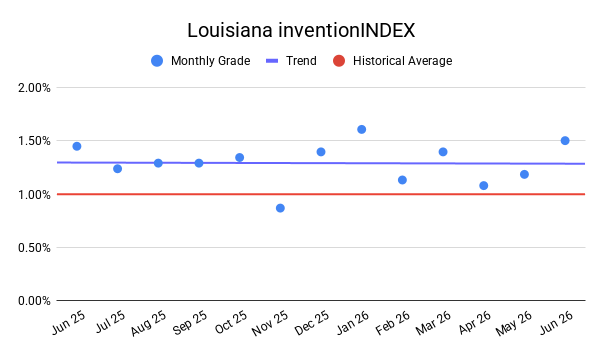
Answer Capsule:This comprehensive study explores the United States federal and Louisiana state Research and Development (R&D) tax credit frameworks, focusing on their application within the industrial landscape of Lake Charles, Louisiana. Through detailed case studies encompassing petrochemical refining, aerospace maintenance, maritime engineering, sustainable forestry, and gaming technology, the study outlines how local industries can leverage these tax incentives. It thoroughly details stringent eligibility criteria—such as the federal four-part test for qualified research and unique state-level mandates—providing actionable insights for businesses to optimize tax compliance and reinvest in regional innovation.
Industry Case Studies and Historical Development in Lake Charles
The industrial ecosystem of Lake Charles, located in Calcasieu Parish in southwest Louisiana, is the product of centuries of geographic advantages, resource extraction, and strategic infrastructure investments. The following case studies detail the historical development of five foundational industries in the region and demonstrate how modern enterprises within these sectors can navigate the complex requirements of both the United States federal R&D tax credit under Internal Revenue Code (IRC) Section 41 and the Louisiana state R&D tax credit under Louisiana Revised Statutes (LA R.S.) 47:6015.
Petrochemical Refining and Liquefied Natural Gas (LNG) Processing
The modern petrochemical dominance of Lake Charles traces its origins to the extreme industrial demands of World War II. In 1941, anticipating the need for massive quantities of aviation fuel and refined petroleum products, the federal government and private enterprise collaborated to construct the massive Cities Service refinery (now operated by Phillips 66) on the banks of the Calcasieu River in Westlake. This facility fundamentally shifted the region’s economy from agriculture toward heavy hydrocarbon processing. Following the oil price shocks of the 1970s and the subsequent industry consolidation, Lake Charles refiners were forced to heavily invest in advanced research to survive fluctuating margins. The most transformative era, however, arrived in the 2010s with the North American shale gas revolution. Breakthroughs in hydraulic fracturing unlocked vast, cheap reserves of natural gas in the Haynesville and Permian basins. Because the United States subsequently possessed the second-lowest feedstock costs globally, Southwest Louisiana became the epicenter of an unprecedented industrial boom. Economists noted that the region was expanding at a staggering 5.1 percent annually, driven by an estimated $108.7 billion in planned industrial construction. A premier example of this is the Sasol Lake Charles Chemicals Project (LCCP), an $8.1 billion investment featuring a world-scale ethane cracker capable of producing 1.5 million tons of ethylene annually, alongside six downstream chemical manufacturing plants. Furthermore, the presence of deepwater access via the Calcasieu Ship Channel allowed the Port of Lake Charles to pivot toward LNG exports, with massive infrastructure investments by companies like Energy Transfer and Woodside Energy Group positioning the region as the top LNG export hub globally.
To remain competitive, a hypothetical petrochemical complex located in Westlake initiates an intensive research project to develop a novel catalytic process designed to increase the yield of high-value Ziegler and Guerbet alcohols from its existing ethylene streams. The engineering team formulates hypotheses regarding catalyst dispersion rates and conducts multiple pilot-scale experimental runs involving varying temperature and pressure thresholds. Under the federal IRC Section 41 framework, this activity qualifies for the R&D tax credit. The research possesses a permitted purpose (developing a new chemical process), relies on the hard science of chemical engineering, seeks to eliminate technical uncertainty regarding optimal catalyst variables, and follows a systematic process of experimentation. However, the company must carefully navigate federal case law, specifically the precedent set by Union Carbide Corp. & Subsidiaries v. Commissioner. During their experimental runs, the engineers process thousands of barrels of raw ethylene feedstocks. While the company attempts to claim these feedstocks as qualified supply expenses, tax counsel advises against it. The Union Carbide ruling explicitly established that supplies used in experimental production runs are not creditable if their primary purpose is standard commercial manufacture and the materials would have been consumed regardless of the research. Consequently, the company limits its federal claim to the wages of the process engineers and the specific costs of the novel experimental catalysts.
At the state level, the company seeks to leverage LA R.S. 47:6015. Because the catalytic research is conducted entirely within the physical boundaries of the Lake Charles complex, the wages paid to the local process engineers qualify as Louisiana-sourced expenditures. The state utilizes a tiered system based on the total number of employees nationwide. As a massive global enterprise employing thousands of individuals, the petrochemical company falls into the lowest percentage tier, qualifying for a 5 percent credit on its incremental research expenditures. To calculate its base amount, the company must average its Louisiana-based qualified research expenses over the preceding three taxable years and multiply that figure by 80 percent. The incremental difference between the current year’s expenditures and this base amount forms the eligible pool for the 5 percent credit. The company must then submit an exhaustive application to the Louisiana Department of Economic Development (LED), complete with federal tax returns and detailed wage documentation, while paying a mandatory $15,000 independent audit fee due to the massive scale of their claim.
Aviation and Aerospace Maintenance, Repair, and Overhaul
The legacy of aviation in Lake Charles is deeply intertwined with national defense and strategic military planning. In the summer of 1941, anticipating entry into World War II, the Calcasieu Parish Police Jury leased the municipal airport to the federal government to establish the Lake Charles Army Flying School. This facility served as a critical advanced training ground for single-engine fighter pilots and medium bomber crews. Following the war, the facility transitioned into a permanent installation, eventually becoming a critical node for the Strategic Air Command (SAC) during the Cold War. The 44th and 68th Bombardment Wings operated out of the base, projecting global nuclear deterrence. In 1958, the installation was officially renamed Chennault Air Force Base in honor of Lieutenant General Claire Chennault, the famed leader of the Flying Tigers. Although the federal government shuttered the base in 1963 due to budget realignments, the massive two-mile-long runway remained. Local leaders systematically transformed the abandoned military infrastructure into the Chennault International Airport and Industrial Airpark. Today, Chennault is a thriving hub for aviation maintenance, repair, and overhaul (MRO), generating over $80 million in annual payroll. The facility has historically hosted major defense contractors such as Northrop Grumman, which maintained the United States Air Force’s E-8C Joint Surveillance Target Attack Radar System (Joint STARS) aircraft fleet at the Lake Charles site for decades, alongside luxury aircraft outfitters like Citadel Completions.
A defense contractor situated at Chennault is contracted to engineer and implement a first-in-class structural integration system, designed to retrofit legacy military airframes with advanced, next-generation phased-array radar systems. The project presents severe technical challenges, as the integration of the massive radar pod threatens to alter the aerodynamic drag coefficients and structural fatigue limits of the aging airframes. The contractor’s engineering team initiates a rigorous R&D phase, utilizing computational fluid dynamics, wind tunnel modeling, and physical stress testing on prototype mounting brackets. Under federal law, this activity firmly satisfies the IRC Section 41 requirements. The contractor relies on the principles of aerospace engineering and material sciences to eliminate technical uncertainty regarding the structural integrity of the retrofit, executing a highly systematic process of experimentation. Furthermore, the contractor ensures that the research contract is structured as a firm-fixed-price agreement rather than a cost-plus agreement. By absorbing the financial risk of failure and retaining substantial rights to the underlying engineering designs, the contractor successfully avoids the federal exclusion for “funded research,” thereby qualifying the wages of its engineers and the costs of the prototype materials as eligible expenses.
Navigating the Louisiana state R&D credit requires careful attention to administrative definitions. LA R.S. 47:6015 mandates that only activities conducted within the state qualify. The contractor must meticulously segregate the hours billed by the aeronautical engineers designing the structural mounts from the hours billed by standard aviation mechanics performing routine maintenance or installing commercial-off-the-shelf components. The latter activities represent routine application of existing technology and do not involve the elimination of technical uncertainty. Furthermore, the contractor must ensure they are not categorically excluded by the state’s “custom manufacturing” provision. Because the aerospace firm is engaged in proprietary, first-of-its-kind engineering design rather than merely fabricating parts to a customer’s pre-existing blueprint, they successfully demonstrate to the LED that their activities constitute legitimate scientific research. Upon approval, the firm utilizes the resulting state tax credits to offset their corporate franchise tax liability, reinvesting the capital into expanding their Chennault facilities.
Maritime Engineering and Port Logistics
The development of Lake Charles was fundamentally dictated by its waterways. Before the introduction of rail, the shallow Calcasieu River served as the primary artery for moving timber and agricultural products to the Gulf of Mexico. Following the devastation of the Civil War, the demand for lumber to rebuild the South triggered a massive expansion of sawmills in the region. However, the natural sandbars of the Calcasieu River severely limited the size of vessels that could access the mills. Recognizing the economic necessity of deepwater access, regional leaders lobbied for decades until the Lake Charles Harbor and Terminal District was officially authorized by the Louisiana Legislature in 1924, leading to the opening of the Port of Lake Charles in 1926. The subsequent dredging of the Calcasieu Ship Channel provided a direct, world-class route to the Gulf, cementing the port’s status as a premier maritime hub. While the port historically exported vast quantities of lumber and locally grown rice, its modern iteration is defined by the energy sector. Managing over two hundred square miles of land, the port handles complex project cargo, petroleum coke by-products, and massive wind energy equipment. The port acts as a critical interface for the region’s LNG export facilities, with state-of-the-art terminals like Cameron LNG dominating the global market. Today, the Port of Lake Charles is actively positioning itself to support the emerging offshore wind industry and alternative marine fuels, preparing marshalling yards and dredging slips to accommodate the massive installation vessels required for Gulf of Mexico leases.
An innovative marine engineering firm headquartered near the Port of Lake Charles is contracted to design a novel hydrogen fuel derivative (e-methanol) bunkering barge, intended to refuel next-generation deepwater vessels operating in the Gulf, a project mirroring broader state initiatives like the H2theFuture maritime fueling program. Designing a mobile, floating containment system for highly volatile, cryogenic e-methanol presents immense technical challenges. The firm’s naval architects face uncertainties regarding thermal expansion, hull stress during turbulent sea states, and the fluid dynamics of high-pressure transfer manifolds. The team engages in extensive computer-aided design modeling and iterative physical testing of scaled manifold prototypes. This systematic evaluation of design alternatives, grounded in mechanical engineering and fluid dynamics, clearly satisfies the four-part test for the federal R&D tax credit. However, the firm must heed the warnings of federal case law, such as Phoenix Design Group, Inc. v. Commissioner. The IRS often scrutinizes architectural and engineering firms, arguing their work represents routine design rather than research in the “experimental or laboratory sense” required by IRC Section 174. The firm meticulously documents their iterative testing protocols and the specific technological failures encountered during the design phase to definitively prove they engaged in true experimentation rather than standard marine architecture.
The application for the Louisiana state credit presents a severe, industry-specific hurdle. Under LA R.S. 47:6015, businesses primarily engaged in “custom manufacturing and custom fabricating” are explicitly ineligible to participate in the R&D tax credit program unless they possess a pending or issued United States patent directly related to the qualified research expenditures. LED regulations assume that custom fabricators operating under fixed-price contracts have largely eliminated technical uncertainty before construction begins. If the maritime firm is classified by LED as a custom fabricator of barges, their entire claim will be denied regardless of the scientific complexity of the work. Anticipating this exclusion, the firm’s legal counsel files a provisional utility patent with the United States Patent and Trademark Office for the novel e-methanol transfer manifold they invented during the project. By actively securing intellectual property rights, the firm cures the statutory defect and regains eligibility for the Louisiana credit. Because the engineering firm is a specialized boutique employing 40 professionals within the state, they qualify for the highly lucrative 30 percent tier reserved for entities with fewer than 50 employees, calculating their base amount at 50 percent of their prior three-year average.
Sustainable Forestry and Timber Technology
The timber industry represents the foundational pillar of Southwest Louisiana’s early economic prosperity. The vast, virgin stands of longleaf pine and cypress surrounding the Calcasieu River attracted aggressive logging operations in the mid-19th century. The industry accelerated dramatically with the arrival of Captain Daniel Goos in 1855, a German immigrant who established extensive sawmills and a schooner dock in an area of north Lake Charles that became known as Goosport. Goosport flourished as a diverse, racially mixed community of African Americans and Italian immigrants who worked the mills and loaded the schooners bound for Texas and Mexican ports. The post-Civil War reconstruction era further intensified the harvest, leading to the rapid depletion of the virgin forests. By the early 20th century, the traditional lumber industry was in steep decline due to overharvesting. However, the region’s trajectory was permanently altered by the introduction of sustainable silviculture. Influenced heavily by the pioneering reforestation programs of the Great Southern Lumber Company in Bogalusa and the research of federal foresters like Philip C. Wakeley, Louisiana shifted toward artificial reforestation and the systematic planting of loblolly and slash pines. Today, forestry remains the top agricultural industry in Louisiana, fueling a $13 billion timber economy. Modern timber operations, however, face escalating existential threats from changing weather patterns, increased wildfire risks, and prolonged, severe droughts affecting the southeastern United States.
To secure the future of their supply chain, a large commercial timber and silviculture company managing extensive tracts north of Lake Charles initiates a comprehensive biological research program. The objective is to genetically develop and cultivate a highly drought-resistant strain of loblolly pine capable of surviving prolonged periods of low precipitation while maintaining acceptable growth velocities. The company constructs a controlled testing nursery, cross-pollinating various genetic variants and utilizing advanced soil-moisture sensors to monitor root-system water retention during artificially induced drought simulations. The agricultural and forestry sectors frequently overlook the R&D tax credit, falsely assuming it is reserved exclusively for software and manufacturing. However, this silvicultural initiative perfectly aligns with the federal IRC Section 41 parameters. The permitted purpose is the biological enhancement of a business component (the pine sapling). The research relies fundamentally on the principles of the biological sciences and genetics. The technical uncertainty centers on the survival rates of the cross-pollinated strains, and the rigorous tracking of sapling mortality rates under varying drought conditions constitutes a systematic process of trial-and-error experimentation.
For the federal claim, the company captures the wages of its staff biologists and the supplies consumed during the testing phase, including specialized fertilizers, testing soils, and the thousands of ruined saplings that fail to survive the drought simulations. For the Louisiana state claim, the company must accurately account for its workforce. Employing 85 individuals across its regional sawmills, transportation networks, and research nurseries, the entity falls into the middle tier of the state incentive structure, rendering it eligible for a 10 percent credit on its incremental expenditures. Because the company exceeds the 50-employee threshold, its historical base amount is calculated at the more stringent 80 percent of its prior three-year average. The company submits its application to LED, providing the mandated federal Form 6765 and detailed wage apportionments separating the biologists from the standard logging crews. The resulting state tax savings are strategically reinvested into the deployment of automated, labor-saving scanning technology at their primary sawmill, modernizing their processing capabilities in response to evolving forest product markets.
Gaming and Hospitality Technology
The gaming and hospitality industry represents the most significant modern diversification of the Lake Charles economy. Recognizing the immense economic potential of the nearby Houston, Texas metropolitan area—where casino gaming remains illegal—Louisiana legislators authorized riverboat casino gaming in the early 1990s. The industry expanded rapidly, driven by the aggressive development strategies of companies like Players International. Founded by brothers David and Edward Fishman, Players International transitioned from a discount travel club into a major casino operator, opening a highly lucrative riverboat complex in Lake Charles in 1993. The immediate financial success of capturing the Houston market triggered a sustained wave of investment. Over the following decades, the market evolved dramatically from simple floating riverboats into massive, land-based integrated luxury resorts, exemplified by properties like L’Auberge Du Lac. Today, the gaming sector generates tens of millions of dollars in ancillary revenue for the City of Lake Charles, funding vital municipal infrastructure, emergency services, and cultural programs. To maintain market dominance and maximize revenue per visitor, modern casino operators rely heavily on sophisticated digital technology, data analytics, and backend software architecture.
A major integrated casino resort located in Lake Charles tasks its internal IT department with engineering a proprietary, cloud-based Artificial Intelligence (AI) player-tracking and retention system. The objective is to utilize machine learning algorithms to analyze real-time betting patterns, dwell times, and loss velocities on the casino floor. The software must dynamically adjust promotional credits and complimentary offers sent directly to individual players’ mobile devices, maximizing retention while strictly adhering to internal financial risk limits. Because this software is developed strictly for the casino’s own operational use to facilitate business interactions, and is not intended for commercial sale or licensing to third parties, it is classified by the IRS as Internal Use Software (IUS).
Consequently, the casino faces a significantly higher burden of proof under federal law. In addition to the standard four-part test, the casino must satisfy the stringent three-part High Threshold of Innovation (HTI) test. First, they must prove the software is highly innovative, resulting in a substantial and economically significant improvement in speed or cost reduction. Second, they must demonstrate significant economic risk, revealing that they committed substantial financial resources to the development with significant uncertainty regarding the recovery of those funds. Third, they must show that no commercial off-the-shelf software could be purchased and utilized without major structural modifications. The casino successfully argues that existing vendor software cannot simultaneously interface with their legacy slot machine architecture and run proprietary real-time cloud AI algorithms without crashing the network. The development process required iterative rewrites of the backend code to resolve latency issues, satisfying the HTI test.
For the Louisiana state credit, the casino aggregates the wages of its locally based software developers, data scientists, and cloud architects. The compliance team meticulously excludes the hours spent by general IT staff on routine server maintenance or helpdesk support, as these activities do not involve experimentation. As a massive employer with thousands of staff members statewide, the casino is limited to the 5 percent credit tier and must calculate its base amount at 80 percent of its historical average. Due to the multi-million dollar scale of their software development budget, the casino submits the maximum $15,000 expenditure verification deposit to LED for the independent CPA audit. Once certified, the casino utilizes the credits to offset its substantial corporate income tax liabilities.
The United States Federal Research and Development Tax Credit Framework
The foundational basis for these regional case studies is the United States federal Research and Development tax credit, codified under Internal Revenue Code (IRC) Section 41. Originally enacted as a temporary measure in the Economic Recovery Tax Act of 1981, the credit was designed to halt the decline of domestic innovation and incentivize technical design and manufacturing within the United States. Following decades of temporary extensions, the credit was permanently enshrined into law by the Protecting Americans from Tax Hikes (PATH) Act of 2015. The credit operates as a general business tax credit, providing a dollar-for-dollar reduction in a taxpayer’s federal income tax liability based on the incremental increase of qualified research expenses over a historically determined base amount.
The Four-Part Test for Qualified Research
The statutory definition of “qualified research” is exceptionally strict. To claim the federal credit, every distinct project or business component must independently satisfy a rigorous four-part test as defined in IRC Section 41(d). The failure of any single part disqualifies the activity entirely.
The first requirement is the Permitted Purpose test. The research must be undertaken for the specific purpose of discovering information intended to be utilized in the development of a new or improved business component for the taxpayer. The code defines a business component as a product, process, computer software, technique, formula, or invention to be held for sale, lease, or license, or used by the taxpayer in their trade or business. The improvement must relate to enhanced function, performance, reliability, or quality, rather than mere cosmetic or stylistic changes.
The second requirement dictates that the research must be Technological in Nature. The process of experimentation must fundamentally rely on the principles of the hard sciences, specifically engineering, computer science, biological sciences, or physical sciences. Research relying on soft sciences, such as economics, psychology, or market research, is categorically excluded.
The third requirement is the Elimination of Technical Uncertainty. At the inception of the project, the taxpayer must face genuine technological uncertainty regarding the capability or method of developing the business component, or the appropriate design of the component. If the taxpayer knows that a solution exists and merely needs to apply standard engineering practices to achieve it, the activity does not qualify.
The final and most heavily scrutinized requirement is the Process of Experimentation. The taxpayer must engage in a systematic, trial-and-error process designed to evaluate one or more alternatives to achieve the desired result and resolve the technical uncertainty. This involves formulating scientific hypotheses, designing testing protocols, analyzing the resulting data, and iteratively refining the design based on failures or sub-optimal outcomes.
Qualified Research Expenses (QREs)
Under IRC Section 41(b), taxpayers are strictly limited to claiming three distinct categories of expenditures as Qualified Research Expenses (QREs).
The largest category is typically Wages. Taxpayers may claim the W-2 taxable wages paid to employees for performing qualified services. Qualified services are not limited to the scientists conducting the experiments; they explicitly include employees who directly engage in the research, frontline managers who directly supervise the research, and support staff who directly support the research (such as a machinist fabricating a prototype part). General administrative or executive wages are excluded.
The second category is Supplies. This includes the cost of tangible property consumed or destroyed during the conduct of qualified research. The statute specifically excludes land, depreciable property (such as the purchase of testing machinery), and general administrative utilities.
The final category is Contract Research Expenses. When a taxpayer lacks the internal capability to conduct research, they may hire a third-party domestic contractor. Taxpayers may generally claim 65 percent of the amounts paid to these outside entities, provided the taxpayer retains substantial rights to the research results and bears the economic risk of the project’s failure (typically evidenced by a fixed-price contract rather than an hourly or cost-plus contract). Under specific circumstances, amounts paid to qualified research consortiums or universities for basic research may qualify at an elevated 75 percent rate.
Internal Use Software (IUS) Constraints
As demonstrated in the gaming industry case study, software development faces unique regulatory hurdles. The IRS differentiates between software developed for commercial sale and software developed for the taxpayer’s internal use. Internal Use Software (IUS) is defined as software developed primarily for the taxpayer’s general and administrative functions, such as financial management, human resource tracking, and support services. To prevent companies from claiming routine IT upgrades, IUS must satisfy a three-part High Threshold of Innovation (HTI) test in addition to the standard four-part test. The software must be highly innovative, involving significant economic risk, and must not be commercially available for use without significant modification. Certain exceptions exist for dual-function software or software designed to facilitate business interactions with third parties, but the documentation burden remains intense.
Federal Case Law and the IRS Audit Landscape
The interpretation of these statutes relies heavily on rulings from the United States Tax Court. For the heavy industries of Lake Charles, the most critical precedent is the 2009 Tax Court memorandum decision in Union Carbide Corp. & Subsidiaries v. Commissioner, subsequently affirmed by the Second Circuit Court of Appeals in 2012. Union Carbide, a massive petrochemical processor, claimed millions of dollars in supply QREs representing the raw hydrocarbon feedstocks run through their commercial pipelines during experimental process improvements. In a massive 298-page opinion, the Tax Court denied the supply costs. The court reasoned that the feedstocks would have been purchased and utilized for standard commercial production regardless of the research being conducted, and the resulting product was still sold to customers. This ruling established a formidable barrier for manufacturing entities attempting to claim massive supply costs during production trial runs, demanding strict segregation between pure experimental supplies and routine commercial materials.
Furthermore, the courts consistently protect the boundary between true experimentation and routine engineering. In Phoenix Design Group, Inc. v. Commissioner, the court evaluated an architectural and engineering firm claiming design work as research. The court relied on the historical definition of “research or experimental expenditures” under IRC Section 174, emphasizing that the work must occur in the “experimental or laboratory sense”. Routine application of engineering principles to design building systems, absent the systematic evaluation of alternatives to overcome technological unknowns, routinely fails judicial scrutiny.
The Louisiana State Research and Development Tax Credit Framework
While the federal credit provides broad national incentives, the Louisiana R&D tax credit, codified at LA R.S. 47:6015, is a highly targeted economic development tool designed to stimulate localized innovation, retain intellectual capital, and drive the expansion of high-wage, high-technology employment specifically within the state. Administered collaboratively by the Louisiana Department of Economic Development (LED) and the Louisiana Department of Revenue (LDR), the state credit mirrors the federal definitions of qualified research under IRC Section 41, ensuring scientific consistency. However, it introduces an array of stringent geographic, administrative, and industry-specific constraints that require precise navigation.
Geographic Mandates and the Tiered Incentive Structure
The most critical divergence from the federal statute is geographic: only qualified research expenses physically incurred within the borders of Louisiana are eligible for the state credit. A multi-national corporation operating a plant in Lake Charles may only claim the wages of the engineers physically working at that specific site, excluding any collaborative efforts from personnel located in Texas or elsewhere.
Furthermore, the Louisiana legislature structured the credit to disproportionately benefit small and medium-sized enterprises. The state utilizes a tiered system based on the total number of full-time equivalent employees an entity employs nationwide (the aggregate of all affiliated companies). This determines both the credit percentage rate and the historical base amount threshold against which incremental increases are measured.
| Enterprise Size (Total Employees) | Credit Rate on Incremental QREs | Historical Base Amount Threshold |
|---|---|---|
| Under 50 Employees | 30% | 50% of the average Louisiana QREs over the prior 3 years |
| 50 to 99 Employees | 10% | 80% of the average Louisiana QREs over the prior 3 years |
| 100 or More Employees | 5% | 80% of the average Louisiana QREs over the prior 3 years |
Table 1: Louisiana R.S. 47:6015 Tiered Incentive Structure and Base Calculations.
Certification, Verification Fees, and the 2025 Legislative Caps
Unlike the federal R&D credit, which is claimed retroactively by simply attaching Form 6765 to an annual income tax return, Louisiana mandates an exhaustive pre-certification process. Taxpayers must submit a comprehensive application to LED, providing federal tax returns, detailed project descriptions, and granular wage data that explicitly isolates the average wages of R&D personnel from non-R&D personnel within the state.
To ensure the integrity of the program, LA R.S. 36:104.1 requires applicants to fund the cost of an independent expenditure verification report. LED directly assigns a certified public accountant (CPA) or a tax attorney to audit the taxpayer’s claimed expenditures.
| Claimed Qualified Research Expenditures | Mandatory Verification Fee Deposit | Final Fee Calculation |
|---|---|---|
| Up to $1,000,000 | $7,500 | 0.5% (0.005) of total verified credits |
| In excess of $1,000,000 | $15,000 | 0.5% (0.005) of total verified credits |
Table 2: Louisiana Expenditure Verification Fee Structure.
Historically, the Louisiana R&D credit functioned as an uncapped entitlement program. However, recognizing the growing fiscal exposure to the state treasury, the Louisiana Legislature enacted severe restrictions via Act 11 of the 2024 Third Extraordinary Session. Effective for claims allowed on returns filed on or after July 1, 2025, the state has imposed a strict $12 million aggregate annual cap on the entire R&D credit program. Credits are now awarded on a ruthless first-come, first-served basis. Furthermore, Act 11 explicitly prohibits the rollover of any unused portion of the cap from one fiscal year to the next. While unused credits awarded to a taxpayer may still be carried forward for five years, the initial acquisition of the credit is now highly competitive.
The Patent Exception for Custom Manufacturing and Professional Services
A highly nuanced mechanism within LA R.S. 47:6015 is the explicit exclusion of specific business models. To prevent the subsidization of routine commercial contracts, the statute dictates that professional services firms and businesses primarily engaged in “custom manufacturing and custom fabricating” are completely ineligible for the R&D credit. The regulatory rationale is that a custom manufacturer building a component to a client’s specifications under a fixed-price Request for Proposal (RFP) has inherently eliminated technological uncertainty prior to accepting the contract.
There is, however, a singular exemption. These excluded entities may claim the credit only if they possess a pending or issued United States patent directly related to the qualified research expenditures for which the credit is being claimed. For the massive fabrication yards and engineering firms operating around the Port of Lake Charles, the active pursuit of intellectual property is not merely a legal strategy, but an absolute prerequisite for state tax incentives.
Transferability and Department of Revenue Administration
Generally, the primary Louisiana R&D tax credits are non-transferable and must be utilized by the earning entity to offset its own state income or franchise tax liabilities. However, the state offers a distinct, supplementary credit for taxpayers who receive federal Small Business Innovation Research (SBIR) or Small Business Technology Transfer (STTR) grants. This specific incentive yields a flat 30 percent credit based on the federal award amount received during the tax year, and crucially, this SBIR/STTR credit is fully transferable and can be sold to other Louisiana taxpayers.
The administration of credit utilization and transfer is heavily regulated by the Louisiana Department of Revenue (LDR), specifically detailed in Revenue Information Bulletin (RIB) 14-005.
| LDR Form Number | Form Title / Function | Regulatory Requirement (RIB 14-005) |
|---|---|---|
| Form R-6135 | Credit Registration Form | Issued by LDR upon certification; registers the credit in the state database. |
| Form R-6140 | Credit Utilization Form | Must be attached to the tax return to claim the credit, or used (Section 2/3) to execute a transfer. |
| Form R-6170 | Transferable Credit Payment Voucher | Submitted alongside a $200 processing fee within ten business days of executing a sale or transfer. |
Table 3: LDR Forms Required for Credit Utilization and Transfer.
Board of Tax Appeals Jurisprudence
Taxpayers operating in Lake Charles must recognize that the Louisiana Department of Revenue strictly enforces procedural timelines, a stance consistently upheld by the Louisiana Board of Tax Appeals (BTA). In Dragna v. Secretary, Department of Revenue (BTA Docket No. 9551D), the taxpayers attempted to file an amended state income tax return to claim an R&D credit nearly six months after the prescriptive deadline had passed. The taxpayers argued that the delay was justified because they were waiting for the mandatory certification from LED, and their CPA was overwhelmed. The BTA ruled unequivocally against the taxpayer, establishing that administrative delays at LED do not toll or extend the strict statutory prescription periods for tax refunds.
Similarly, in LIPCA v. Secretary, the BTA examined whether a taxpayer’s participation in a state tax amnesty program barred them from subsequently pursuing an R&D credit refund. The Amnesty Act conditioned participation on the taxpayer waiving their right to protest or initiate administrative proceedings for the specific tax and period covered. These cases underscore a critical reality: achieving the scientific thresholds of IRC Section 41 and LA R.S. 47:6015 is irrelevant if the enterprise fails to execute flawless procedural compliance. With the introduction of the 2025 annual caps, the margin for administrative error in Louisiana has effectively vanished.
The information in this study is current as of the date of publication, and is provided for information purposes only. Although we do our absolute best in our attempts to avoid errors, we cannot guarantee that errors are not present in this study. Please contact a Swanson Reed member of staff, or seek independent legal advice to further understand how this information applies to your circumstances.