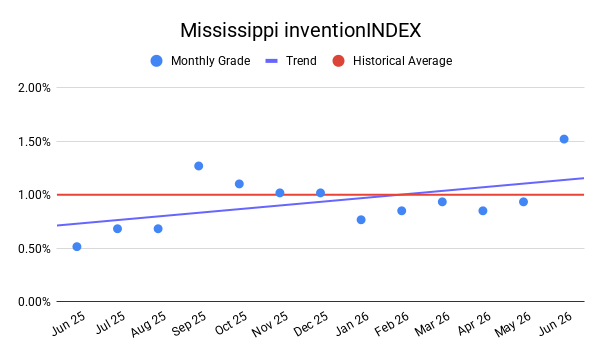
An eligible business within the Mississippi Research and Development (R&D) framework is a qualified commercial enterprise, such as a manufacturer or technology-intensive firm, that maintains inventory or employs high-skill researchers. This designation allows entities to access specific income tax credits, ad valorem offsets, and investment rebates based on their innovative activities and labor force requirements.
Theoretical and Statutory Foundations of the Eligible Business
The legal landscape governing the definition of an eligible business in Mississippi is not a singular, unified concept but rather a mosaic of statutes, administrative codes, and revenue guidance that cater to different stages of the research and development lifecycle. To understand the “Eligible Business” in the context of the Mississippi R&D tax credit, one must distinguish between the primary incentives: the Research and Development Skills Tax Credit, the Strengthening Mississippi Academic Research Through Business (SMART) Act, and the Ad Valorem tax credits provided under Section 27-7-22.5 of the Mississippi Code. Each program maintains a distinct set of criteria for what constitutes a qualifying entity, often overlapping in their goals of stimulating high-tech job growth and capital investment.
Under the broadest interpretation of Mississippi tax law, a business enterprise is generally defined as any entity engaged in commercial, industrial, or professional activities, including corporations, limited liability companies (LLCs), partnerships, or sole proprietorships. However, for the specific purposes of R&D-related incentives, the definition narrows significantly to ensure that the state’s foregone revenue is directed toward industries with high economic multipliers. This narrow focus is reflective of a broader economic development strategy employed by the Mississippi Development Authority (MDA) and the Mississippi Department of Revenue (MDOR) to recruit new businesses while helping existing employers grow their operations.
The Ad Valorem Context: Section 27-7-22.5
The user’s query highlights Section 27-7-22.5, which provides an income tax credit for ad valorem taxes paid on specific types of inventory. While this is not a traditional R&D credit in the sense of rewarding experimental laboratory expenditures, it is functionally critical for R&D-intensive businesses that maintain significant stocks of raw materials, works-in-process (WIP), and commodities used for prototype development. In this context, an eligible business includes manufacturers, distributors, and wholesale or retail merchants.
For a business to be considered eligible under this specific section, it must satisfy the following criteria:
- It must pay ad valorem taxes to a county, municipality, school district, levee district, or any other taxing authority of the state.
- The taxes must be imposed on commodities, raw materials, works-in-process, products, goods, wares, and merchandise held for resale.
- The business cannot be a medical cannabis establishment as defined in the Mississippi Medical Cannabis Act.
The nuance here is that for an R&D firm, the commodities and raw materials being taxed are often the very inputs for experimental business components. By providing a credit for these property taxes, Mississippi lowers the carrying cost of maintaining an innovation-heavy supply chain.
The historical evolution of the credit limits under Section 27-7-22.5 demonstrates the state’s increasing commitment to this incentive. The table below outlines the maximum credit allowed per location of the taxpayer over time:
| Taxable Year | Maximum Credit per Location | Statutory Basis |
|---|---|---|
| 1994 | Lesser of $2,000 or Mississippi Income Tax Due | Code Sec. 27-7-22.5 |
| 1995 | Lesser of $3,000 or Mississippi Income Tax Due | Code Sec. 27-7-22.5 |
| 1996 | Lesser of $4,000 or Mississippi Income Tax Due | Code Sec. 27-7-22.5 |
| 1997 – 2013 | Lesser of $5,000 or Mississippi Income Tax Due | Code Sec. 27-7-22.5 |
| 2014 | Lesser of $10,000 or Mississippi Income Tax Due | Code Sec. 27-7-22.5 |
| 2015 | Lesser of $15,000 or Mississippi Income Tax Due | Code Sec. 27-7-22.5 |
| 2016 and Thereafter | Lesser of All Eligible Ad Valorem Paid or Income Tax Due | Code Sec. 27-7-22.5 |
This progression culminates in the 2016 taxable year, where the cap was effectively removed, allowing businesses to offset their entire state income tax liability with eligible inventory taxes paid. However, for taxpayers structured as partnerships, LLCs, or S corporations, the credit is strictly limited to the tax attributable to the income derived from the taxpayer’s entity.
The Research and Development Skills Tax Credit (Section 57-73-21)
The most direct “R&D tax credit” available in Mississippi is the Research and Development Skills Tax Credit. This program shifts the focus from the nature of the business entity to the nature of the labor force it employs. It is designed to reward the creation of high-value, high-skill positions rather than simple headcount increases.
Statutory Eligibility for Business Enterprises
To qualify for the Research and Development Skills Tax Credit, a business must be a permanent business enterprise primarily engaged in manufacturing, processing, distribution, wholesaling, or research and development. Additionally, eligibility extends to technology-intensive facilities or enterprises as designated by the Mississippi Development Authority (MDA). These include air transportation and maintenance facilities, telecommunication enterprises, data or information processing enterprises, and computer software development enterprises.
A critical regulatory exclusion applies: any business involved in the transportation, handling, storage, processing, or disposal of hazardous waste is strictly ineligible for the credit. This exclusion reflects a policy priority to incentivize “clean” high-tech growth and avoid subsidizing industries with high environmental remediation risks.
Qualifying the Employee: The “Human Capital” Definition
In the context of the Skills Credit, the eligibility of the business is contingent upon the eligibility of the position created. The Mississippi Department of Revenue (MDOR) provides specific guidance under Title 35, Part X, Chapter 03 of the Mississippi Administrative Code. To be a qualifying “Research and Development Skill” position, the job must meet four cumulative criteria:
- Educational Requirement: The employee must hold, at a minimum, a bachelor’s degree in a scientific or technical field from an accredited four-year college or university.
- Professional Alignment: The employee must be employed in their area of expertise. For example, an engineer must be performing engineering tasks, not administrative or sales roles.
- Experience Level: The position must require at least two years of prior job-related experience. Examples provided in state guidance include chemists and engineers.
- Compensation and Hours: The position must be full-time (minimum 35 hours per week) and compensated at a professional level.
The credit itself is valued at $1,000 per net new full-time employee, per year, for a five-year period. The credit is claimed beginning in Year 2 through Year 6 following the creation of the job.
| Skill Credit Feature | Detail | Reference Code |
|---|---|---|
| Annual Credit Amount | $1,000 per qualified position | Miss. Code § 57-73-21 |
| Duration of Benefit | 5 consecutive years | Miss. Code § 57-73-21 |
| Utilization Cap | 50% of Mississippi income tax liability | Miss. Code § 57-73-21 |
| Carryforward | 5 years from the original year | Miss. Code § 57-73-21 |
| Full-Time Requirement | 35 hours per week | Miss. Admin Code |
The total credit for a taxpayer—combining the Jobs Tax Credit, the Headquarters Credit, and the R&D Skills Credit—cannot exceed 50% of the company’s Mississippi income tax liability in a given year.
The SMART Act: University-Partnered Research Rebates
The Strengthening Mississippi Academic Research Through Business (SMART) Act provides a different mechanism for eligible businesses to offset innovation costs. Instead of a tax credit, the SMART Act offers a cash rebate to businesses that partner with Mississippi public universities or research corporations.
Eligible Applicants and Investors
The definition of an “Eligible Business” under the SMART Act is intentionally broad to capture a wide range of investors. Eligible entities include natural persons, partnerships, LLCs, associations, corporations, business trusts, or other business entities. The primary prerequisite is that the entity must be subject to Mississippi income or franchise tax.
There is a specific anti-abuse provision: an entity is not eligible if it was formed for the specific purpose of acquiring the rebate offered. This ensures that the incentive goes to legitimate operating businesses rather than special-purpose vehicles designed solely for tax harvesting.
The Mechanism of the Rebate
The SMART Act provides a 25% rebate on “qualified research costs” paid to a Mississippi public university or research corporation. Unlike the Skills Credit, which is a reduction in tax liability, the SMART rebate is a direct payment, making it highly attractive for startups and companies with low current tax liability.
Qualified research is defined as a systematic investigative process undertaken for the purpose of discovering information. However, there are strict limitations:
- The research cannot be conducted outside the State of Mississippi.
- The research cannot be funded by any other grant, contract, or governmental entity.
- The company name on the research agreement must match exactly the name on the payment check and the application form.
The fiscal structure of the SMART Act is summarized below:
| Feature | Limit / Specification | Reference |
|---|---|---|
| Rebate Percentage | 25% of qualified research costs | SMART Act Guidelines |
| Annual Investor Cap | $1,000,000 per fiscal year | SMART Act Guidelines |
| Annual Program Cap | $5,000,000 total for all investors | SMART Act Guidelines |
| Eligibility Window | New agreements only; no retroactive research | SMART Act Guidelines |
HB 1733: The 2023 Decoupling and Immediate Expensing
A pivotal change in Mississippi tax law occurred on April 3, 2023, when Governor Tate Reeves signed House Bill 1733. This legislation represents a significant departure from federal tax policy and creates a highly favorable environment for “Eligible Businesses” engaged in R&D.
Immediate Deduction of R&E Expenditures
Starting in the 2023 tax year, for tax years beginning after December 31, 2022, Mississippi allows businesses to elect a full and immediate deduction for specified research or experimental (R&E) expenditures. These must be:
- Paid or incurred by the taxpayer during the tax year.
- In connection with the taxpayer’s trade or business.
- Expenses that are not properly chargeable to a capital account.
This change is critical because it decouples Mississippi from the federal requirement under the Tax Cuts and Jobs Act (TCJA), which mandates that R&D expenses be amortized over five years for domestic research and fifteen years for foreign research. By allowing an immediate 100% deduction, Mississippi provides a powerful cash-flow incentive for innovative firms.
100% Bonus Depreciation
In addition to the immediate expensing of R&E costs, HB 1733 authorized 100% bonus depreciation for qualified property or qualified improvement property placed in service starting in the 2023 tax year. This allows an eligible business to deduct the entire cost of laboratory equipment, specialized machinery, or research facility improvements in the year they are placed in service.
Comparative Analysis: Mississippi vs. Other State R&D Frameworks
To contextualize the “Eligible Business” requirements in Mississippi, it is useful to compare them with the R&D credit structures of other states. Many states use the federal definition of “qualified research expenses” (QREs) under IRC Section 41, while Mississippi focuses more on skills-based and investment-based incentives.
| State | Credit Rate / Method | Eligible Business Specifics | Reference |
|---|---|---|---|
| Mississippi | $1,000 per skill-based job; 25% SMART rebate | Manufacturers, R&D labs, and IHL partners | State Code |
| Alaska | 18% of federal R&D Credit | Definitions same as IRC § 41 | State Code |
| Florida | 10% of excess QREs | Manufacturing, Life Sciences, IT only | State Code |
| Indiana | 15% up to $1M; 10% on excess | Focus on QREs over base amount | State Code |
| Maryland | 3% Basic; 10% Growth | Must not exceed MD Base Amount | State Code |
| Minnesota | 10% of first $2M; 4% on excess | Does not conform to ASC method | State Code |
Mississippi’s framework is unique in that it offers a combination of job-based credits (Skills Credit), research-based rebates (SMART Act), and inventory-based credits (27-7-22.5), rather than a single percentage-based credit on total R&D spend. This “multi-layered” approach allows an eligible business to tailor its tax strategy based on its specific operational model—whether it is labor-heavy, research-heavy, or inventory-heavy.
Administrative Guidance: The “Letter of Authorization” Process
One of the most critical aspects of state revenue office guidance is the requirement for formal certification. Unlike many federal credits that are “self-certified” on a tax return, the Mississippi R&D Skills Tax Credit requires a proactive application process.
The Request for Credit
To claim the R&D Skills Tax Credit, a business must first send a letter to the Mississippi Department of Revenue requesting the credit. This letter must include specific, verifiable information for each employee and position:
- Job title and a detailed description of the R&D purpose of the role.
- Educational requirements, including proof of a scientific or technical degree.
- Experience requirements (minimum 2 years).
- Specific salary and hire date for each individual.
A business is strictly prohibited from taking the credit until it has received a formal letter of authorization from the Department of Revenue. Failure to obtain this letter can result in the disallowance of the credit and potential penalties.
Compliance for Pass-Through Entities
For partnerships, S corporations, and LLCs, the credit is “generated” at the entity level but “passed through” to the individual owners, members, or shareholders. However, the limitations applicable to the credit—such as the 50% income tax liability cap—apply at the individual owner level. This means that while the business entity performs the R&D and pays the ad valorem taxes, the individual taxpayers are the ones who ultimately realize the tax savings on their personal income tax returns.
Regional and Geographic Incentives: The GAP Program
The definition of an eligible business also takes on a geographic dimension through the Growth and Prosperity (GAP) program. This initiative is designed to encourage R&D investment in specifically designated “distressed” counties.
Sector-Specific Eligibility
To qualify for the 10-year income and franchise tax exemptions provided by the GAP program, a business must be a certified enterprise. The following sectors are explicitly listed as eligible:
- Research and development enterprises, including scientific laboratories.
- Manufacturers and processors.
- Data and information processing companies.
- Technology-intensive facilities as designated by the MDA.
Tier-Based Thresholds
The amount of credit and the number of jobs required to be “eligible” often depend on the county’s developmental tier. Counties are ranked Tier 1 (Developed), Tier 2 (Moderately Developed), or Tier 3 (Less Developed) based on unemployment rates and per capita income over the most recent 36-month period.
| County Tier | Minimum Jobs Created | Jobs Tax Credit % of Payroll |
|---|---|---|
| Tier 1 (More Developed) | 20 New Jobs | 2.5% |
| Tier 2 (Moderately Developed) | 15 New Jobs | 5.0% |
| Tier 3 (Less Developed) | 10 New Jobs | 10.0% |
Businesses interested in GAP incentives must apply to and be certified by the Mississippi Development Authority (MDA) before receiving benefits. Once certified, the business enters into an agreement that can provide exemptions from state income and franchise taxes for up to 10 years.
The 2026 Transition: From Credit to Exemption
Legislative developments in 2024 and 2025 indicate a major shift in the administration of ad valorem tax relief. Senate Bill 2994 and related measures are moving toward a full property tax exemption for “eligible personal property” and inventory.
Repeal of Section 27-7-22.5
The income tax credit that previously allowed manufacturers and merchants to receive credits for ad valorem taxes paid on inventory is scheduled for repeal effective January 1, 2026. This represents a fundamental shift in the state’s tax philosophy:
- Pre-2026: Businesses pay property tax and claim a credit on their income tax return to recover the cost.
- Post-2026: Eligible personal property (furniture, fixtures, equipment, and inventory) used solely on the premises is fully exempt from ad valorem taxation.
This change is designed to simplify the tax rules and provide more direct relief. By eliminating the tax at the source (the local property assessment), Mississippi removes the administrative burden of tracking inventory tax payments for income tax credit purposes.
Practical Example: Case Study of a Biotechnology Firm in Mississippi
To illustrate how these complex definitions apply in practice, consider the hypothetical case of “Magnolia Bio-Tech,” a company specializing in genomic research and medical equipment production.
Year 1: Startup and Capital Investment
Magnolia Bio-Tech decides to establish a facility in a Tier 3 (Less Developed) county in 2023. The company invests $10 million in building a state-of-the-art laboratory and manufacturing plant.
- HB 1733 Impact: Under the new law, Magnolia Bio-Tech elects to take a 100% deduction on its R&E expenditures incurred during the construction phase. It also claims 100% bonus depreciation on its $2 million laboratory equipment purchase, immediately reducing its taxable income by $2 million.
- Sales Tax: Because it is a new facility, it receives a sales and use tax exemption on all component building materials and equipment purchased during the initial construction.
Year 2: Hiring and Certification
Magnolia Bio-Tech hires 10 research scientists, each holding a bachelor’s degree in Biology or Biochemistry and having at least 2 years of experience. The company submits its request letter to the MDOR for the R&D Skills Tax Credit.
- Credit Value: 10 scientists × $1,000 = $10,000 annual credit.
- Utilization: If the company’s Mississippi income tax liability is $30,000, it can use the full $10,000 credit because it does not exceed the 50% liability cap ($15,000 limit).
- Jobs Tax Credit: As a Tier 3 manufacturer creating 10 jobs, it also earns a Jobs Tax Credit equal to 10% of its payroll.
Year 3: University Partnership
To advance a specific drug trial, Magnolia Bio-Tech enters into a $400,000 research agreement with the University of Mississippi Medical Center.
- SMART Rebate: The company applies for the SMART Act rebate. It receives a cash payment from the state equal to 25% of the research cost: Rebate = $400,000 × 0.25 = $100,000
- Result: This cash payment is issued directly to Magnolia Bio-Tech, providing immediate liquidity for further research operations.
Year 4: The 2026 Transition
By 2026, Magnolia Bio-Tech holds a $1 million inventory of medical equipment and raw materials. Under the old system (Section 27-7-22.5), it would pay property tax and claim an income tax credit. Under the new law:
- Exemption: The $1 million inventory is fully exempt from ad valorem taxes at the local level.
- Benefit: The company no longer has to pay the tax upfront, and the administrative burden of filing for the 27-7-22.5 credit is eliminated.
Statistics: The Macro-Impact of Mississippi’s R&D Incentives
The fiscal impact and success of these programs are monitored by the Mississippi Institutions of Higher Learning (IHL) and the MDA. The 2024 and 2025 reports highlight significant milestones in the state’s high-tech recruitment efforts.
Corporate Investment Milestones
In Fiscal Year 2024, the MDA assisted with projects that generated a total of $12.63 billion in corporate investment and created over 5,000 jobs. Two remarkable examples include:
- Amazon Web Services (AWS): A $10 billion investment in data center operations in Madison County, positioning Mississippi as a leader in cloud computing and machine learning.
- Amplify Cell Technologies: A nearly $2 billion investment in electric vehicle battery cell production in Marshall County.
These projects fall under the “technology-intensive” and “manufacturing” definitions of an eligible business, allowing them to leverage the full suite of R&D and jobs-based incentives.
Fiscal Forecasting and Foregone Revenue
The Annual Tax Expenditure Report provides an estimate of the revenue foregone by the state due to these incentives. While individual tax returns are confidential, the 2024 study estimates the impact of several similar provisions:
- The R&D Skills Tax Credit continues to be a targeted, high-value incentive with a fiscal impact estimated between $64,000 and $100,000 annually for smaller clusters, though the impact scales significantly with major projects like AWS.
- The SMART Act program has a statutory cap of $5 million per year, ensuring the state’s fiscal exposure is controlled while providing maximum benefit to the most innovative firms.
The Role of the Mississippi Development Authority (MDA)
While the Department of Revenue handles the tax filings, the Mississippi Development Authority (MDA) serves as the primary gateway for many R&D-related programs. The MDA’s role is to ensure that grants, loans, and tax exemptions are “wisely awarded to qualifying industries that can produce a return for the state’s taxpayers”.
Certification and Fiduciary Responsibility
For many incentives, such as the GAP program or the Clean Energy Initiative, an eligible business must be certified by the MDA. This involves a clear understanding of the company’s business model, financial status, and key decision drivers. The MDA also takes into account the level of commitment from the local community and the infrastructure needs of the site when deciding upon the type and amount of assistance provided.
Coordination with Other Agencies
The incentive programs in Mississippi are administered by several different agencies. For example:
- MDOR: Administers income tax credits, ad valorem credits, and sales tax exemptions.
- MDA: Certifies eligible businesses and administers grants and loans for infrastructure.
- IHL: Manages the SMART Act and university research partnerships.
- Local Authorities: Approve property tax exemptions and negotiate “fee-in-lieu” agreements for projects exceeding $60 million to $100 million in capital investment.
Final Thoughts: Navigating the “Eligible Business” Landscape
The definition of an “Eligible Business” in the context of the Mississippi R&D tax credit framework is a dynamic and multi-faceted concept. It is not enough for a business to simply engage in “research”; it must demonstrate a commitment to high-skill employment, university partnership, or significant capital investment in specific sectors.
The primary takeaway for business leaders and tax professionals is the importance of proactive compliance. Whether it is obtaining the necessary letter of authorization for the Skills Credit, ensuring the “exact match” of company names for the SMART Act rebate, or electing the immediate expensing of R&E costs under HB 1733, the administrative details are just as important as the underlying research activity.
As Mississippi moves toward the 2026 transition—replacing the 27-7-22.5 income tax credit with a full ad valorem exemption—the landscape will become simpler for inventory-heavy firms. However, for those engaged in true scientific innovation, the Skills Credit and the SMART Act remain the gold standards for reducing the cost of discovery in the Magnolia State. By weaving together these various statutory benefits, an eligible business can effectively reduce its state tax burden while contributing to the high-tech future of the Mississippi economy.
This page is provided for information purposes only and may contain errors. Please contact your local Swanson Reed representative to determine if the topics discussed in this page applies to your specific circumstances.
Who We Are:
Swanson Reed is one of the largest Specialist R&D Tax Credit advisory firm in the United States. With offices nationwide, we are one of the only firms globally to exclusively provide R&D Tax Credit consulting services to our clients. We have been exclusively providing R&D Tax Credit claim preparation and audit compliance solutions for over 30 years. Swanson Reed hosts daily free webinars and provides free IRS CE and CPE credits for CPAs.
Are you eligible?

Why choose us?

Pass an Audit?

What is the R&D Tax Credit?
The Research & Experimentation Tax Credit (or R&D Tax Credit), is a general business tax credit under Internal Revenue Code section 41 for companies that incur research and development (R&D) costs in the United States. The credits are a tax incentive for performing qualified research in the United States, resulting in a credit to a tax return. For the first three years of R&D claims, 6% of the total qualified research expenses (QRE) form the gross credit. In the 4th year of claims and beyond, a base amount is calculated, and an adjusted expense line is multiplied times 14%. Click here to learn more.
Never miss a deadline again

Stay up to date on IRS processes

Discover R&D in your industry

R&D Tax Credit Preparation Services
Swanson Reed is one of the only companies in the United States to exclusively focus on R&D tax credit preparation. Swanson Reed provides state and federal R&D tax credit preparation and audit services to all 50 states.
If you have any questions or need further assistance, please call or email our CEO, Damian Smyth on (800) 986-4725.
Feel free to book a quick teleconference with one of our national R&D tax credit specialists at a time that is convenient for you.
R&D Tax Credit Audit Advisory Services
creditARMOR is a sophisticated R&D tax credit insurance and AI-driven risk management platform. It mitigates audit exposure by covering defense expenses, including CPA, tax attorney, and specialist consultant fees—delivering robust, compliant support for R&D credit claims. Click here for more information about R&D tax credit management and implementation.
Our Fees
Swanson Reed offers R&D tax credit preparation and audit services at our hourly rates of between $195 – $395 per hour. We are also able offer fixed fees and success fees in special circumstances. Learn more athttps://www.swansonreed.com/services/our-fees/