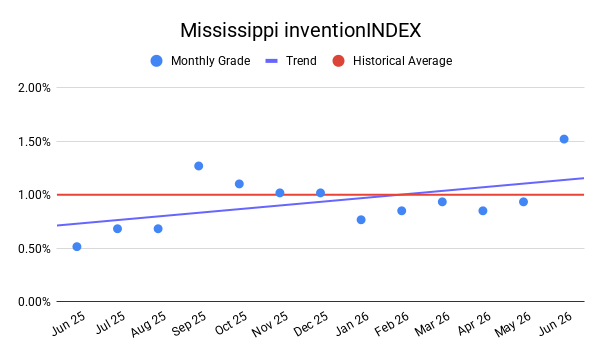
In the context of Mississippi’s research and development tax incentives, an investor is defined as any natural person or business entity, subject to state income or franchise tax, that incurs qualified research costs through a formal agreement with a Mississippi public university. More broadly, the term encompasses permanent business enterprises that invest in the state’s human capital and infrastructure by creating high-skill positions or expanding labor forces within specialized technological sectors.
The Mississippi legislative framework does not offer a single, monolithic research and development (R&D) tax credit that mirrors the federal incremental credit found in Internal Revenue Code (IRC) Section 41. Instead, the state utilizes a decentralized approach comprised of several targeted incentives, primarily the Research and Development Skills Tax Credit and the Academic Research Investor Rebate under the Strengthening Mississippi Academic Research Through Business (SMART) Act. For a business operating within this jurisdiction, understanding the term “investor” requires a nuanced analysis of whether the entity is investing in academic partnerships, internal workforce development, or capital expansion. The legal definition of an investor is most strictly codified under the SMART Business Act, where it refers to a natural person, partnership, limited liability company (LLC), association, corporation, business trust, or other business entity that is not formed for the specific purpose of acquiring the rebate and remains subject to Mississippi income or franchise tax. This definition serves as the gatekeeper for participation in the state’s most aggressive R&D incentive—a 25% rebate on qualified research expenses. Beyond the academic rebate, the concept of the investor extends to the “permanent business enterprise” engaged in manufacturing, processing, or wholesaling, which qualifies for job-based credits by establishing a physical and economic presence in designated county tiers. Consequently, the identity of the investor is intrinsically linked to the nature of the expenditure, ranging from the payment of professional-level salaries to chemists and engineers to the direct funding of university-led investigative processes.
Statutory Foundations and the Definition of the Investor
The legal identity of an investor in Mississippi is bifurcated between two primary statutory engines: the Strengthening Mississippi Academic Research Through Business Act and the broader economic development provisions of the Mississippi Code of 1972. Each statute imposes distinct requirements on what constitutes a qualifying entity and how that entity must interact with the state’s revenue and educational infrastructure. This bifurcated system reflects the state’s dual goal of fostering internal corporate innovation while simultaneously leveraging the intellectual capital of its public university system.
The SMART Business Act: The Academic Investor
Under Mississippi Code Annotated Section 37-148-1 through 37-148-9, the state establishes a framework intended to stimulate private investment in R&D through partnerships with public institutions of higher learning. For the purposes of the SMART Business Act, the term “investor” is defined with high specificity to ensure that the economic benefit reaches established taxpayers rather than shell entities created solely to harvest rebates. The investor must be a person or entity subject to Mississippi income tax or franchise tax. This requirement ensures that the state receives a baseline level of economic activity from the entity before granting a rebate. Furthermore, the statute includes an anti-abuse provision stating that the entity cannot be formed for the specific purpose of acquiring the offered rebate. This necessitates that the investor has a legitimate trade or business purpose within the state.
The investor’s role is primarily defined by the act of entering into a “research agreement” with a Mississippi college or research corporation. This agreement must be a new written contract or grant for the performance of “qualified research,” which the law defines as a systematic investigative process undertaken to discover information. Crucially, the investor must be the same entity that pays the university; the name on the research agreement must match the name on the payment check and the name on the application submitted to the Mississippi Department of Revenue (DOR).
The Permanent Business Enterprise: The Workforce Investor
While the SMART Act uses the term “investor” explicitly, Mississippi Code Section 57-73-21 addresses the “permanent business enterprise” as the primary vehicle for R&D-related job tax credits. In this context, the investment is not necessarily a direct cash payment to a university, but rather a capital and operational investment in the state’s workforce and industrial base. To qualify as an investor under Section 57-73-21, the business must be primarily engaged in manufacturing, processing, warehousing, distribution, wholesaling, or research and development. The state classifies these enterprises based on their commitment to long-term operations. The law recognizes that an R&D facility is a “permanent business enterprise” if it creates a specific number of new full-time jobs, which vary based on the economic tier of the county where the investment is located.
| Category of Entity | Legal Definition/Criteria | Statutory Reference |
|---|---|---|
| SMART Investor | Natural person or business entity subject to MS tax, not formed solely for rebate. | Miss. Code § 37-148-3 |
| R&D Enterprise | Permanent business primarily engaged in research and development activities. | Miss. Code § 57-73-21 |
| Qualified Business | Industry creating 10+ jobs or investing $2.5M+ paying 75% of average wage. | Miss. Code § 57-114-3 |
The Academic Research Investor Rebate Mechanism
The Academic Research Investor Rebate is a critical component of Mississippi’s strategy to bridge the gap between private sector innovation and academic expertise. As an “investor-centric” program, it provides a direct financial incentive rather than a traditional tax credit, making it particularly attractive for entities that may have high R&D expenses but low immediate tax liability. This program serves as a reimbursement for costs incurred by investors who partner with Mississippi’s Institutions of Higher Learning (IHL).
Calculation and Financial Limitations
The rebate is calculated as 25% of the investor’s qualified research costs incurred through an approved agreement. “Qualified research costs” are defined as the costs paid or incurred by the investor to a college or research corporation for research undertaken according to the agreement. These costs must be spent by the academic institution on the research itself rather than on administrative overhead or unrelated expenses.
The program is subject to strict fiscal caps designed to manage the state’s budget. For instance, an investor may not claim more than $1,000,000 in rebates in any single fiscal year. Furthermore, the total amount of rebates issued by the state is capped at $5,000,000 per fiscal year for all combined investors, though some legislative records indicate this may be adjusted to $3,500,000 depending on specific budget cycles. Research expenses that are already funded by any other grant, contract, or governmental entity are disqualified. Additionally, any research conducted outside the state of Mississippi is ineligible for the rebate.
Eligibility and Application Logic
The investor must navigate a dual-agency approval process involving the Mississippi Institutions of Higher Learning (IHL) and the Department of Revenue (DOR). The IHL acts as the technical evaluator, ensuring the research meets the statutory definition of being “systematic” and “investigative”. Investors are required to submit an electronic application to the IHL, which must include a description of the research, a proposed budget, and a signed research agreement. A critical procedural hurdle is the requirement that the application must be submitted before the research begins. Agreements that were active prior to the application date are categorically ineligible. This highlights the investor’s role as a proactive planner rather than a retrospective claimant.
The Research and Development Skills Tax Credit
While the SMART Act focuses on academic collaboration, the Research and Development Skills Tax Credit targets the investor’s internal operations. This credit incentivizes the “investment” in highly specialized human capital. It is specifically designed to encourage businesses to create and maintain full-time positions that require research and development skills within the state.
Qualifying as an R&D Employer
The credit is not available to every business; it is restricted to employers engaged in research and development activities. Unlike the Jobs Tax Credit, the Skills Credit does not require a minimum number of new positions to be created for a business to initially qualify. Instead, the credit is awarded for each qualifying position, reflecting an investment in quality over quantity.
To be considered a qualifying position for the investor, several specific criteria must be met. The employee must be primarily engaged in R&D activities. The position must require, at a minimum, a bachelor’s degree in a scientific or technical field from an accredited four-year institution. Furthermore, the employee must have at least two years of related job experience and be compensated at a professional level in their area of expertise. Finally, the position must be full-time (minimum 35 hours per week) and the employee must be subject to Mississippi withholding tax.
Financial Valuation and Credit Utilization
The Skills Tax Credit provides a $1,000 annual credit per qualifying employee for a period of five years. This credit is nonrefundable but carries a five-year carryforward period for any unused portions. For the investor, this serves as a dollar-for-dollar reduction in income tax liability, limited to 50% of the total tax due in any given year.
| Financial Parameter | Details and Constraints |
|---|---|
| Credit Amount | $1,000 per full-time employee per year |
| Maximum Duration | 5 years per job created |
| Liability Limit | Cannot exceed 50% of total state income tax liability |
| Carryforward | Unused credits can be carried forward for 5 years |
| Combinability | Can be used in conjunction with Jobs and Headquarters credits |
Administrative Guidance from the Department of Revenue (DOR)
The Mississippi Department of Revenue provides administrative rules under Title 35, Part 10 of the Mississippi Administrative Code, which clarify how the investor must interact with the state’s tax system. These guidelines are essential for maintaining compliance and successfully claiming the incentives provided by law.
Application Procedures for the Skills Credit
The DOR requires investors to follow a specific “request and approval” sequence for the R&D Skills Credit. The investor should not claim the credit on a tax return until they have received a formal letter of authorization from the Department. The process involves several steps:
- Initial Letter of Request: The investor must send a detailed letter to the DOR describing the position and the employee. This letter must include the job title, the purpose of the role, education and experience requirements, salary details, and the hire date.
- Supporting Documentation: The investor may be required to provide evidence of the employee’s qualifications, such as a copy of their bachelor’s degree.
- Authorization Letter: Upon approval, the DOR issues an authorization letter. This letter must be attached to the tax return in every year the credit is claimed.
- Computation Schedule: A schedule showing the calculation of the credit must also be attached to the return.
Rebate Redemption and the SMART Business Form
For the Academic Research Investor Rebate, the DOR provides a specialized form, Form 50-124-14. To redeem the rebate, the investor must submit a rebate allocation claim that includes several attachments. These include a brief description of the qualified research costs, proof of payment made to the college or research corporation, a copy of the SMART Business certificate issued by the IHL, a copy of the formal research agreement, and the investor’s W-9. The DOR allocates these rebates in the order that the SMART certificates are issued by the IHL. Because the total state funding is capped, the investor’s timing in filing is a critical factor in successfully obtaining funds.
Comparative Context: Jobs Tax Credit Tiers
The definition of the investor as a “permanent business enterprise” is most clearly seen in the Jobs Tax Credit, which often overlaps with R&D activities. In this context, the state’s economic tiers determine the level of investment required and the resulting tax benefit. The “investor” here is rewarded for choosing to locate in less developed areas of the state.
| County Classification | Minimum Job Creation | Credit Amount (Percentage of Payroll) |
|---|---|---|
| Tier Three (Less Developed) | 10 New Jobs | 10.0% of Payroll |
| Tier Two (Moderately Developed) | 15 New Jobs | 5.0% of Payroll |
| Tier One (Developed) | 20 New Jobs | 2.5% of Payroll |
The minimum increase in jobs necessary to qualify for these credits must occur within a single year. The credit is allowed each year for five years, specifically beginning in years two through six after the creation of the job. If an employer sells a facility to an unrelated third party, the new owner does not automatically inherit the old owner’s credit status; rather, the new owner must exceed the old owner’s peak employment by a qualifying increase to receive any new credits.
Pass-Through Entities and Equity Investors
In modern business structures, the “investor” is frequently a pass-through entity (PTE) such as an S-corporation, a partnership, or an LLC. Mississippi law provides specific guidance on how R&D-related credits flow through to the individual owners of these entities.
Credit Flow-Through Mechanics
Under Mississippi Administrative Code 35.10.03.107 and 35.10.01.112, credits received by a partnership, LLC, or S-corporation may be passed through to offset the tax due from the specific activity that created the credit. The pass-through is subject to the same limitations that the entity would have faced, meaning the credit cannot exceed 50% of the individual’s tax liability derived from that specific activity. Notably, the tax due on salaries or wages paid by an S-corporation and guaranteed payments to partners by a partnership cannot be offset by the credit. This ensures the incentive is focused on net tax liability from business profits rather than personal compensation.
The Electing Pass-Through Entity (PTE) Provision
Recent legislation (effective after January 1, 2023) introduced the concept of an “Electing Pass-Through Entity”. This allows the entity to file and pay taxes at the entity level rather than passing the income through to the owners’ individual returns. For an R&D investor, this election can simplify the application of credits. If the entity elects to be a PTE, any additional income tax credits generated are passed through to the owners. If an owner’s aggregate credits exceed their income tax liability, the excess may be carried forward or refunded at the owner’s election.
The Mississippi Flexible Tax Incentive (mFLEX)
A significant evolution in Mississippi’s incentive landscape is the Mississippi Flexible Tax Incentive, or mFLEX. This program streamlines the incentive process for new and expanding industries, including R&D enterprises. It replaces the need for multiple applications for separate incentive programs with a single, streamlined process.
To qualify as an mFLEX investor in the R&D sector, the business must be a research or research and development enterprise. The applicant must commit to creating a minimum of 10 new full-time jobs paying at least 75% of the average state or county wage, or investing a minimum of $2,500,000. The mFLEX credit is calculated based on a formula that includes a percentage of equipment expenditures, construction contracts, and wages.
| Investment Component | mFLEX Calculation Formula |
|---|---|
| Manufacturing Equipment | 1.5% of capitalized expenditures |
| Non-Manufacturing Equipment | 7.0% of capitalized expenditures |
| Construction Contracts | 2.0% of total contract value |
| Wages and Payroll | 15.0% of (Wages x Number of Jobs) |
For an R&D investor, the 15% wage component is particularly significant, as R&D roles typically command higher salaries than standard industrial roles. Furthermore, if the applicant creates 25 jobs and pays an average salary of 125% of the average state or county wage, the credit is increased by a premium for high-paying jobs. The credit can be used to offset income, franchise, sales, use, and even payroll withholding taxes of the industry and its identified affiliates.
Case Study: Practical Example of an R&D Investor
To illustrate the application of these laws, consider a hypothetical scenario involving “Apex Aerospace Research,” a startup specializing in lightweight composite materials for satellite deployment.
Scenario Background
Apex Aerospace decides to establish a primary research facility in a Tier Three county (less developed) in Mississippi. The project involves:
- Hiring 12 specialized research engineers, each with a Master’s degree and 3 years of experience.
- Investing $1,500,000 in specialized testing equipment and facility renovation.
- Entering into a $200,000 research agreement with the University of Southern Mississippi (USM) to conduct stress-testing on a new polymer.
Application of the R&D Skills Tax Credit
Apex applies for the R&D Skills Tax Credit for its 12 engineers. Each engineer has the required technical degree, area of expertise, and professional salary.
- Credit Calculation: 12 employees x $1,000 = $12,000 per year.
- Five-Year Total: $60,000.
- Compliance Requirement: Apex sends a letter to the DOR for each engineer with their academic credentials and job description before claiming the $12,000 on their annual return.
Application of the Academic Research Investor Rebate
Apex enters into the $200,000 agreement with USM.
- Rebate Calculation: $200,000 x 25% = $50,000.
- Compliance Requirement: Apex submits an application to the IHL prior to USM beginning the research. Once the IHL issues a SMART certificate and the work is completed and paid for, Apex files Form 50-124-14 with the DOR, attaching the certificate and the proof of payment.
- Result: Apex receives a $50,000 cash rebate from the state, effectively reducing their research cost with USM to $150,000.
Interaction with the Jobs Tax Credit
Since Apex is located in a Tier Three county and hired 12 employees (above the minimum of 10), they also qualify for the Jobs Tax Credit.
- Jobs Credit Calculation: 10.0% of the payroll for the 12 new jobs.
- Aggregate Limitation: The total of the Jobs Tax Credit and the R&D Skills Tax Credit is limited to 50% of Apex’s Mississippi income tax liability for the year.
Compliance, Audit Risks, and Best Practices
Investing in R&D in Mississippi carries a set of administrative responsibilities. Failure to maintain the standards set by the DOR and IHL can result in the loss of credits or even the recapture of previously claimed benefits.
Maintaining Job Levels and “Net” Increases
For any credit based on employment (Jobs Tax Credit or Skills Credit), the investor must maintain the required headcount. If the net employment increase falls below the minimum required for qualification (e.g., falling below 10 in a Tier Three county), the credit is disallowed for that specific year. Recapture of credit taken in previous years is not required if the employment level drops, but the original five-year period for the credit is not extended. If the taxpayer’s employment level later increases back above the minimum, they may use the credit for the remainder of the original period.
Audit Procedures and Documentation
The Mississippi DOR conducts field audits to inspect financial records, generally covering a three-year period. For R&D investors, the audit will focus on several critical areas. First, substantiation of skill is necessary to prove that employees in “Skills Credit” roles possess the required scientific or technical degrees and are performing actual R&D work. Second, full-time status must be verified through payroll records to ensure employees worked at least 35 hours per week. Third, payment verification for the SMART rebate ensures that payments were made directly from the entity name on the agreement to the university. Finally, investors must ensure that expenses claimed for the Skills Training Credit (a separate 50% credit for retraining) are net of any reimbursements or paybacks to the employer.
Strategic Best Practices
To maximize the value of these credits while minimizing risk, investors should adopt a proactive compliance strategy. This includes:
- Pre-Approval Communication: Engaging with the IHL and DOR before initiating research or hiring for key roles to ensure all agreements and job descriptions meet current regulatory standards.
- Contemporaneous Recordkeeping: Maintaining project-level logs that track the activities of R&D personnel, their time allocations, and the specific technical uncertainties they are attempting to resolve.
- Tier Optimization: When planning new facilities, investors should consider the Tier rankings of Mississippi counties, as the payroll percentage credit in a Tier Three county (10.0%) is four times higher than in a Tier One county (2.5%).
Economic Impact and Future Outlook
Mississippi’s investment in R&D is reflected in the diversity of projects funded through these incentives. The SMART Business Act has seen substantial activity in sectors that leverage the state’s existing university strengths. In 2024 alone, the IHL awarded more than $1.1 million in research grants to fund 17 projects at four universities and the University of Mississippi Medical Center.
| University/Institution | Examples of Funded R&D Projects (2024) |
|---|---|
| Jackson State University | Magnetic particle imaging for safe medical imaging ($150,000). |
| University of Mississippi | Biodegradable microdosing implants for treatment-resistant depression ($149,996). |
| Miss. State University | AI and smartphone cardiovascular imaging; Drone-based biomechanical tracking. |
| Univ. of Southern Miss. | Precise measurements of thin films; Special polymers for skin regeneration. |
These academic partnerships are complemented by massive corporate investments. For example, Amazon Web Services is investing $10 billion in Madison County to establish data center operations, creating at least 1,000 high-tech jobs. Similarly, Amplify Cell Technologies is investing nearly $2 billion in Marshall County for electric vehicle battery production, creating 2,000 jobs. These projects underscore the scale at which the “investor” now operates within the state’s high-tech ecosystem.
Legislative Evolution
The state’s tax environment is undergoing a broader transformation that will impact the relative value of these credits. Mississippi is currently phasing out its individual income tax, with the 4.4% rate set to reduce to 3.0% by 2030, with a long-term goal of reaching zero. Furthermore, the franchise tax is scheduled to be eliminated by 2028. As these broad-based taxes decrease, the relative importance of specific R&D incentives may change, but the foundational goal of attracting and retaining high-skill labor remains a cornerstone of the state’s economic strategy.
Final Thoughts and Strategic Recommendations
The role of the “investor” in Mississippi’s R&D tax credit environment is defined by a commitment to the state’s long-term economic modernization. By bridging the gap between legislative intent and administrative execution, the state has created a system that rewards both the hiring of highly skilled professionals and the direct funding of academic inquiry. For the business entity, the path to maximizing these benefits lies in proactive engagement—applying for rebates before research begins, maintaining meticulous documentation for skilled roles, and understanding the nuances of how credits flow through complex corporate structures.
The state’s transition toward the mFLEX program indicates a future where incentives are more flexible and easier to administer for large-scale projects. However, for smaller startups and mid-market firms, the targeted R&D Skills Tax Credit and the SMART Business Rebate remain the primary mechanisms for offsetting the high costs of innovation. Investors who successfully navigate the dual-gatekeeper system of the Institutions of Higher Learning and the Department of Revenue will find themselves well-positioned to leverage one of the most unique R&D incentive packages in the Southeast. As the technological landscape evolves toward AI, advanced manufacturing, and biotechnology, the “Mississippi Investor” will increasingly be defined not just by the capital they bring, but by the intellectual and scientific progress they catalyze within the state’s academic and industrial borders.
This page is provided for information purposes only and may contain errors. Please contact your local Swanson Reed representative to determine if the topics discussed in this page applies to your specific circumstances.