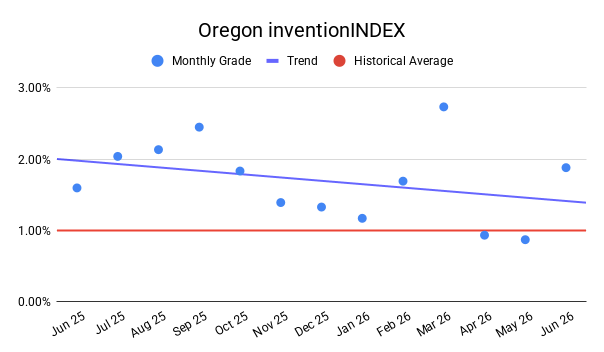
What is the Oregon R&D Credit Prior Credit Method?
Oregon Sales (Prior Credit Method) represents a tax calculation whereby research credits are predicated on qualified expenses exceeding a ten percent threshold of a taxpayer’s Oregon-sourced sales factor numerator. Within the current semiconductor tax credit framework, this historical methodology provides the foundational definition for state-specific gross receipts used to establish base amounts for incentivizing localized industrial innovation. The method historically targeted firms with high R&D intensity relative to their local revenue footprint and now underpins the modern ORS 315.518 semiconductor credit calculations.
Oregon Sales (Prior Credit Method) represents a tax calculation whereby research credits are predicated on qualified expenses exceeding a ten percent threshold of a taxpayer’s Oregon-sourced sales factor numerator. Within the current semiconductor tax credit framework, this historical methodology provides the foundational definition for state-specific gross receipts used to establish base amounts for incentivizing localized industrial innovation.
The evolution of Oregon’s fiscal policy concerning research and development (R&D) reflects a deliberate transition from broad corporate incentives to highly specialized, industry-specific strategic investments. Between 1989 and 2017, Oregon maintained a dual-track corporate tax credit system for research activities, categorized under Oregon Revised Statutes (ORS) 317.152 and 317.154. While the primary credit followed the federal regular method, the “alternative” credit—specifically the one utilizing Oregon sales—offered a distinct state-centric hurdle that targeted firms with high R&D intensity relative to their local revenue footprint. Following the sunset of these provisions on December 31, 2017, the state entered a period of incentivized stagnation that was only rectified with the passage of the Research and Development Tax Credit for Semiconductors in 2023. This new legislation, codified in ORS 315.518, does not merely reinstate the old credits but synthesizes the historical “Oregon Sales” concept with modern requirements for refundability and industry-specific qualification, creating a more robust fiscal tool for the state’s technological infrastructure.
Historical Statutory Framework and the Prior Credit Method
The “Prior Credit Method” is a term frequently used by practitioners to describe the calculation methodology established under ORS 317.154, formerly known as the Alternative Qualified Research Activities Credit. Unlike the standard credit which relied on a historical base period of spending, the alternative method was tied directly to the taxpayer’s current-year performance within Oregon. This method was designed to benefit companies that might not have the long-term historical data required by the federal regular method or those whose research expenditures were disproportionately high compared to their local sales.
Under ORS 317.154, the credit was calculated as five percent of the amount by which qualified research expenses (QREs) exceeded ten percent of “Oregon Sales”. This ten percent figure acted as a “hurdle” or a floor; if a company’s Oregon-based research spending did not reach this decile of its local sales, it was ineligible for the credit under this specific method. Furthermore, the statute imposed a secondary limitation: the credit could not exceed $10,000 multiplied by the number of percentage points by which the QREs exceeded the ten percent sales threshold. This dual-limitation structure ensured that the credit amount was scaled not only to the volume of spending but also to the intensity of the research relative to the company’s economic size in the state.
The administrative guidance provided in OAR 150-317-0290 allowed taxpayers to elect between the standard method and the alternative sales-based method on their original return, with the ability to change this election on an amended return within the statutory period of limitations. Historically, the efficacy of these credits was hampered by their non-refundable nature. Legislative analysis from 2017 indicated that out of approximately $143 million in credits claimed by taxpayers, only $21 million was actually used to reduce tax liability, representing a significant “overhang” of unused credits that many corporations could not utilize due to insufficient state tax liability. This lack of efficiency was a primary driver for the structural changes introduced in the 2023 semiconductor-focused legislation.
The Definitional Nexus of Oregon Sales under ORS 314.665
A critical component of both the historical and modern research credits is the definition of “Oregon Sales.” Oregon law deviates from the federal Internal Revenue Code (IRC) §41 by replacing the concept of “gross receipts” with the “Oregon sales factor numerator”. This distinction is vital for multi-state and multinational corporations, as it isolates the company’s Oregon-specific revenue from its global operations.
Statutory Construction of the Sales Factor
According to ORS 314.665, the sales factor is a fraction where the numerator consists of the taxpayer’s total sales in Oregon during the tax period, and the denominator is the total sales of the taxpayer everywhere during the same period. For the purposes of the R&D credit, “Oregon Sales” refers exclusively to that numerator. This ensures that the credit calculation is purely “in-state” in both its numerator (Oregon QREs) and its denominator (Oregon Sales).
| Revenue Type | Sourcing Rule for “Oregon Sales” (ORS 314.665) |
|---|---|
| Tangible Personal Property | Sourced to Oregon if the property is delivered or shipped to a purchaser within the state, regardless of the f.o.b. point or other conditions of sale. |
| Services | Sourced to Oregon if the service is delivered to a location in the state. |
| Intangible Property (Licensing/Royalties) | Sourced to Oregon if and to the extent the intangible property is used in the state. |
| Intangible Property (Sales) | Sourced to Oregon if the property is used in the state; for contract rights or similar items, sourcing is based on the location of the customer. |
The application of these sourcing rules has profound implications for semiconductor companies. A firm that designs chips in Oregon but sells them to a customer in Singapore would not include those Singaporean sales in its “Oregon Sales” numerator. Consequently, this reduces the “base amount” or the “hurdle” for the R&D credit, making it substantially easier for export-oriented technology firms to qualify for and maximize their state tax incentives.
The Impact of Market-Based Sourcing
Oregon’s transition to market-based sourcing for services and intangibles further complicates the “Oregon Sales” calculation. In the semiconductor industry, significant revenue is derived from intellectual property (IP) cores and electronic design automation (EDA) software. Under administrative rules, if a company licenses semiconductor IP to an Oregon-based manufacturer, those receipts are included in the Oregon Sales numerator. However, if that same IP is licensed to a manufacturer in another state, it is excluded. Taxpayers must therefore maintain rigorous documentation to track the “market” for their intangibles to accurately report the figures required for R&D tax certification.
The 2023 Legislative Pivot: ORS 315.518
The Research and Development Tax Credit for Semiconductors, enacted via House Bill 2009 in the 2023 session, represents a strategic narrowing of the state’s R&D policy. While the prior credit was available to any corporation conducting qualified research, the current credit is restricted to “qualified semiconductor companies”. This specialized credit provides a 15 percent rate—triple the five percent rate of the prior method—reflecting the state’s urgent desire to support its “Silicon Forest” hub.
Qualification Criteria for Semiconductor Entities
To be eligible for the credit under ORS 315.518, a taxpayer must meet the definition of a “qualified semiconductor company.” This includes entities whose primary business is the research, design, development, fabrication, assembly, testing, packaging, or validation of semiconductors. The definition also extends to companies creating semiconductor manufacturing equipment, semiconductor core IP, or EDA software. This industry-specific focus ensures that the state’s fiscal resources are directed toward the most capital-intensive and technologically significant segment of its economy.
Qualified activities must meet the federal “Four-Part Test” under IRC §41(d), which stipulates that the research must be technological in nature, intended to eliminate uncertainty, involve a process of experimentation, and be directed toward a new or improved business component. In the semiconductor context, this often involves:
- Developing new architectures for integrated circuits or microprocessors.
- Innovating in materials science for wafer fabrication (e.g., transition from Silicon to Gallium Nitride).
- Improving photolithography processes or chemical vapor deposition techniques.
- Designing advanced packaging solutions like 2.5D or 3D heterogenous integration.
Integration of the Prior Credit Concepts
While ORS 315.518 is a new statute, it heavily borrows from the “Oregon Sales” concept established under the prior credit. Specifically, OAR 150-315-0195 mandates that “gross receipts” as used in IRC §41(c) for the calculation of the Oregon credit must mean the total sales of the taxpayer in Oregon as calculated under ORS 314.665. This ensures continuity in how taxpayers identify their local revenue base.
Advanced Calculation Methodologies and the Regular Method
Taxpayers claiming the semiconductor R&D credit have two primary calculation options: the Regular Method and the Alternative Simplified Credit (ASC) method. Both methods utilize Oregon-specific data but differ in their historical baseline requirements.
The Regular Method Calculation
The Regular Method is designed to reward companies that increase their research spending relative to their historical intensity. The credit is calculated as follows:
Credit = 15% × (Oregon QREs – Base Amount)
The “Base Amount” is the product of the taxpayer’s “Fixed-Base Percentage” and its average “Oregon Sales” for the four preceding tax years. For established firms, the fixed-base percentage is determined by the ratio of QREs to gross receipts during a historical period (often 1984-1988), though Oregon’s specific application requires these to be Oregon-sourced figures where available. For startups, a statutory fixed-base percentage of three percent is used for the first five years, gradually transitioning to a historical percentage by the tenth year.
The use of “Oregon Sales” in this denominator is a double-edged sword. For a company growing its Oregon-based sales rapidly, the base amount will increase over time, potentially reducing the credit unless R&D spending keeps pace with revenue growth. Conversely, a company that maintains steady R&D spending while its Oregon sales remain flat or decline (perhaps due to increased international exports) will see its base amount stabilize, making a larger portion of its R&D spending eligible for the 15 percent credit.
The Percentage Point Limitation and Historical Caps
It is important to note that while the modern credit has a higher percentage (15%), it maintains some of the philosophy of the prior method’s caps. The prior method under ORS 317.154 had a ceiling of $1 million per taxpayer. The current semiconductor credit increases this cap to $4 million per taxpayer per year. This quadrupling of the individual cap acknowledges the massive scale of modern semiconductor R&D, where a single tape-out for a new chip architecture can cost tens of millions of dollars.
The Alternative Simplified Credit (ASC) Method
Recognizing that many modern semiconductor firms—particularly startups and those involved in mergers and acquisitions—lack the historical data required for the Regular Method, Oregon law allows for the election of the Alternative Simplified Credit (ASC) method. This election is made on the Oregon return and is generally irrevocable without Department of Revenue approval.
The ASC calculation is significantly simpler and does not rely on “Oregon Sales” for the base calculation, though it still requires the identification of Oregon-sourced QREs.
- Base Calculation: The base is 50 percent of the average Oregon QREs for the three preceding tax years.
- Credit Rate: 14 percent of the amount by which current-year Oregon QREs exceed the base.
- Special Rule for No Prior QREs: If the taxpayer has no qualified expenses in any of the three preceding years, the credit is six percent of the current year’s Oregon QREs.
The ASC method is particularly advantageous for companies with high revenue (which would lead to a high base amount under the regular method) but relatively low or recently established R&D activities. By removing the “Oregon Sales” component from the base calculation, the ASC ensures that even massive corporations can qualify for the credit if they can demonstrate a recent increase in their Oregon research footprint.
Local State Revenue Office Guidance and Certification
Unlike the general corporate credits of the past, the semiconductor R&D credit is subject to a rigorous, multi-agency oversight process involving both the Oregon Department of Revenue (DOR) and the Oregon Business Development Department (Business Oregon).
The Mandatory Certification Process
A taxpayer cannot claim the R&D credit on a tax return without first obtaining a certificate from Business Oregon. This process is governed by OAR 123-401-0400 and requires an annual application.
- Application Deadline: For tax years 2025 through 2029, the deadline is October 15 of the calendar year in which the tax year begins.
- Application Requirements: Taxpayers must provide a description of how their research supports the semiconductor industry, an attestation of expected Oregon QREs, and a report of QREs and basic research payments from the three preceding years.
- Application Fee: A non-refundable fee of $3,000 is required with each application.
The certification serves two purposes: it verifies the technical eligibility of the taxpayer and the research activities, and it allows the state to manage its fiscal exposure through statewide caps.
Statewide Credit Caps and Proration
To prevent the credit from causing an unmanageable drain on the state’s General Fund, the legislature established annual statewide caps. For the 2025 tax year, the total amount of credits that may be certified across all taxpayers is capped at $38.25 million.
| Tax Year | Statewide Aggregate Credit Cap |
|---|---|
| 2024 | $35,000,000 |
| 2025 | $38,250,000 |
| 2025-2027 Biennium Total | $80,000,000 |
If the total amount of potential tax credits sought in a given year exceeds these caps, Business Oregon is authorized to reduce certified amounts. According to OAR 123-401-0400, the department will first approve credits up to $200,000 in full. Any requested amounts above $200,000 will be reduced by a ratio necessary to keep the total within the statewide limit. This creates a “competitive” element to the credit, where late applicants or those in years of high demand may receive a certificate for less than their actual calculated eligibility.
Refundability and the Employee Tier Mechanism
The most significant departure from the “Prior Credit Method” is the introduction of tiered refundability under ORS 315.519. This mechanism directly addresses the “18 percent efficiency” problem of the previous credit by ensuring that companies can access the cash value of their credits even if they are in a loss position or have no tax liability.
The refundable portion of the credit is determined by the taxpayer’s average number of employees in Oregon during the tax year. This “jobs-linked” refundability ensures that the most liquid benefits are directed toward smaller, growing firms and those with significant local workforces.
| Oregon Employee Threshold | Refundable Percentage of Certified Credit |
|---|---|
| Fewer than 150 employees | 75% |
| 150 to 499 employees | 50% |
| 500 to 2,999 employees | 25% |
| 3,000 or more employees | 0% (Carryforward only) |
The non-refundable portion of the credit is applied first to the taxpayer’s corporate excise tax liability. Any remaining non-refundable amount can be carried forward for up to five succeeding tax years. Importantly, while the non-refundable portion cannot be used to offset the Oregon corporate minimum tax (ORS 317.090), the refundable portion can be used to reduce the minimum tax to zero, providing an additional layer of relief for firms with low taxable income.
The “Prior Credit Method” Example: A Comparative Case Study
To fully grasp the meaning of “Oregon Sales (Prior Credit Method)” and its current application, one must observe how different variables interact in a practical scenario. Consider “Cascadia Silicon Corp,” a mid-sized semiconductor design firm.
Case Data for Cascadia Silicon Corp (2024)
- Current Year Oregon QREs: $5,000,000
- Current Year Oregon Sales: $30,000,000
- Average Oregon Sales (2020-2023): $25,000,000
- Fixed-Base Percentage: 5.00%
- Oregon Employees: 80
- Oregon Tax Liability (before credits): $150,000
Calculation 1: Historical “Prior Credit Method” (ORS 317.154)
If Cascadia Silicon were using the historical method where credits are based on expenses exceeding 10% of Oregon sales:
- Determine Sales Threshold: 10% × $30,000,000 = $3,000,000.
- Calculate Excess QREs: $5,000,000 – $3,000,000 = $2,000,000.
- Preliminary Credit (5% rate): 5% × $2,000,000 = $100,000.
- Check Percentage Point Limitation:
- QRE as % of Sales: $5M / $30M = 16.67%
- Percentage Points over 10%: 6.67 points
- Limitation: 6.67 × $10,000 = $66,700.
- Final Historical Credit: $66,700 (Lesser of $100k or $66.7k).
- Utilization: Cascadia pays $83,300 in tax ($150k – $66.7k). $0 refund.
Calculation 2: Modern Semiconductor Credit (ORS 315.518 – Regular Method)
Using the current law with a 15% rate and a base amount determined by average prior sales:
- Calculate Base Amount: 5% (Fixed Base) × $25,000,000 (Avg Sales) = $1,250,000.
- Calculate Excess QREs: $5,000,000 – $1,250,000 = $3,750,000.
- Total Credit (15% rate): 15% × $3,750,000 = $562,500.
- Refundability Analysis (80 employees = 75% tier):
- Refundable portion: 75% × $562,500 = $421,875.
- Non-refundable portion: 25% × $562,500 = $140,625.
- Tax Utilization:
- The non-refundable portion ($140,625) is applied to the $150,000 liability first, reducing tax to $9,375.
- The refundable portion ($421,875) is then applied. It covers the remaining $9,375 and results in a cash refund check of $412,500.
The transition from Calculation 1 to Calculation 2 demonstrates the “meaning” of the change in Oregon’s approach. Under the prior credit method, the company received a modest $66,700 benefit and still had a significant tax bill. Under the modern application of “Oregon Sales” within the semiconductor credit, the same company receives over $500,000 in total value and a large cash refund, drastically improving its cash flow for reinvestment.
Administrative Compliance: Filings and Audits
The successful claiming of an R&D credit involves rigorous post-certification compliance with the Department of Revenue. Taxpayers must include the certificate from Business Oregon and the completed Schedule OR-RESEARCH with their corporate excise tax return (Form OR-20).
Documentation of Qualified Research Expenses
The DOR’s audit focus remains centered on the substantiation of QREs. Following the 2023 legislation, auditors are instructed to apply federal IRC §41 standards while ensuring that all expenses are strictly limited to activities conducted within Oregon.
- Wage Nexus: For an employee’s wages to qualify, the individual must be performing, supervising, or supporting research in Oregon. For employees working across state lines, wages must be prorated based on the actual time spent on qualified activities within Oregon borders.
- Supply Sourcing: Supplies must be consumed in Oregon during the research process.
- Contract Research: For contract research payments to qualify, the research must be performed in Oregon. Payments to an out-of-state lab are generally ineligible for the Oregon credit even if the taxpayer is an Oregon corporation.
Sourcing of Basic Research Payments
A unique provision of ORS 315.518 is the credit for basic research payments. Companies can claim 15 percent of payments made to Oregon institutions of higher education or certain non-profits for fundamental research. These payments must exceed a “qualified organization base period amount” as defined in IRC §41(e). The guidance from the DOR emphasizes that these payments must be for the advancement of scientific knowledge without specific commercial objectives, and the research must be performed at an Oregon facility.
Theoretical Underpinnings: Why “Oregon Sales” Matters
The legislative decision to retain the “Oregon Sales” concept, despite its complexity, is rooted in economic theory. In a single-sales-factor state like Oregon, the tax system is designed to incentivize firms to locate their production (and research) in the state while selling to external markets.
Reducing the Hurdle for Exporters
By using the Oregon sales factor numerator as the “gross receipts” base, the state effectively lowers the R&D hurdle for companies that export their products. A semiconductor fabrication facility (Fab) in Hillsboro that ships 95 percent of its wafers to customers in Taiwan or California will have an “Oregon Sales” figure that is only 5 percent of its total global revenue. This results in an exceptionally low base amount in the Regular Method calculation, allowing nearly all of the company’s Oregon-based R&D spending to qualify for the 15 percent credit.
Protecting the General Fund from Local Conglomerates
Conversely, for a company that sells primarily to the Oregon market (such as a local utility or a retail-heavy technology provider), the “Oregon Sales” figure will be high. This creates a higher hurdle for the R&D credit, which is appropriate from a policy perspective; the state wants to provide the most aggressive incentives to “tradable sector” firms that bring outside capital into the state, rather than firms that are merely serving the existing local population.
Navigating the Sunset and Future Outlook
The Research and Development Tax Credit for Semiconductors is currently scheduled to sunset for tax years beginning on or after January 1, 2030. This expiration date creates a “planning horizon” for semiconductor firms.
Carryforward Strategy
For larger firms with more than 3,000 employees, the lack of refundability means that credits must be carefully managed. The five-year carryforward provision allows these firms to bank credits during high-R&D/low-profit years (such as when a new Fab is being commissioned) and utilize them once the facility becomes profitable. However, the 2030 sunset applies to the generation of new credits; the law generally allows for the continued use of carryforwards generated prior to the sunset, provided they are used within their five-year window.
Potential for Legislative Extension
There is significant political pressure to expand or extend the R&D credit beyond its current semiconductor limitations. Legislative testimony from the 2023 session included recommendations to extend the credit to other business structures, such as partnerships and LLCs, and to allow for the transferability of credits. Transferability, in particular, would allow companies without tax liability to “sell” their credits to other taxpayers, providing immediate cash even if they do not meet the employee thresholds for refundability. While these provisions were not included in the final version of HB 2009, they remain central to the ongoing debate about Oregon’s competitiveness in the global technology market.
Final Thoughts and Strategic Recommendations
The “Oregon Sales (Prior Credit Method)” is more than a historical footnote; it is the conceptual engine that drives the state’s current semiconductor tax strategy. By tying research incentives to the localized sales factor numerator, Oregon has created a highly targeted fiscal environment that disproportionately rewards export-oriented technology innovation.
For professional practitioners and corporate tax directors, navigating this landscape requires a three-pronged strategy:
- Rigorous Sourcing Documentation: Taxpayers must be prepared to defend their “Oregon Sales” figure under audit. This involves meticulous tracking of product delivery locations and the “market” for licensed IP to ensure the numerator of the sales factor is accurately stated.
- Early Certification Filing: Given the statewide aggregate caps and the potential for proration, semiconductor firms should prioritize the October 15 Business Oregon application. Waiting until the last minute may result in a certified credit amount that is lower than the taxpayer’s actual eligibility if the program is oversubscribed.
- Quantitative Method Comparison: The choice between the Regular Method (sales-based) and the ASC Method (expense-based) should not be made based on simplicity alone. Firms with high local sales may find the ASC method more lucrative, while export-heavy manufacturers will almost certainly benefit more from the Regular Method’s reliance on the Oregon sales numerator.
Ultimately, the Research and Development Tax Credit for Semiconductors represents a sophisticated evolution of Oregon’s tax code. It acknowledges the failures of the “Prior Credit Method”—specifically its lack of efficiency and refundability—while retaining the “Oregon Sales” definition that ensures the state’s incentives are aligned with its broader economic goals of localized manufacturing and global export leadership. In the competitive landscape of the 21st-century semiconductor industry, understanding these nuances is essential for any firm seeking to leverage the “Silicon Forest” as a base for global innovation.
Who We Are:
Swanson Reed is one of the largest Specialist R&D Tax Credit advisory firm in the United States. With offices nationwide, we are one of the only firms globally to exclusively provide R&D Tax Credit consulting services to our clients. We have been exclusively providing R&D Tax Credit claim preparation and audit compliance solutions for over 30 years. Swanson Reed hosts daily free webinars and provides free IRS CE and CPE credits for CPAs.
Are you eligible?

Why choose us?

Pass an Audit?

What is the R&D Tax Credit?
The Research & Experimentation Tax Credit (or R&D Tax Credit), is a general business tax credit under Internal Revenue Code section 41 for companies that incur research and development (R&D) costs in the United States. The credits are a tax incentive for performing qualified research in the United States, resulting in a credit to a tax return. For the first three years of R&D claims, 6% of the total qualified research expenses (QRE) form the gross credit. In the 4th year of claims and beyond, a base amount is calculated, and an adjusted expense line is multiplied times 14%. Click here to learn more.
Never miss a deadline again

Stay up to date on IRS processes

Discover R&D in your industry

R&D Tax Credit Preparation Services
Swanson Reed is one of the only companies in the United States to exclusively focus on R&D tax credit preparation. Swanson Reed provides state and federal R&D tax credit preparation and audit services to all 50 states.
If you have any questions or need further assistance, please call or email our CEO, Damian Smyth on (800) 986-4725.
Feel free to book a quick teleconference with one of our national R&D tax credit specialists at a time that is convenient for you.
R&D Tax Credit Audit Advisory Services
creditARMOR is a sophisticated R&D tax credit insurance and AI-driven risk management platform. It mitigates audit exposure by covering defense expenses, including CPA, tax attorney, and specialist consultant fees—delivering robust, compliant support for R&D credit claims. Click here for more information about R&D tax credit management and implementation.
Our Fees
Swanson Reed offers R&D tax credit preparation and audit services at our hourly rates of between $195 – $395 per hour. We are also able offer fixed fees and success fees in special circumstances. Learn more at https://www.swansonreed.com/about-us/research-tax-credit-consulting/our-fees/