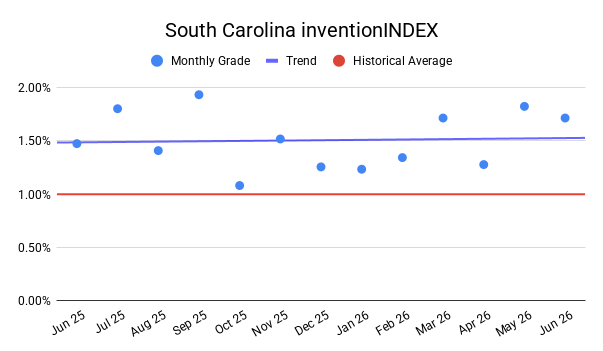
In Rock Hill, South Carolina, businesses can leverage both the federal IRC Section 41 credit and the South Carolina Research Expenses Credit (S.C. Code Section 12-6-3415). The state offers a flat 5% credit on localized qualified research expenses (QREs) without a base-amount requirement. Recent 2025 legislation (OBBBA) has restored immediate expensing for domestic research, significantly improving cash flow for innovative sectors like additive manufacturing, aerospace, and medical device production.
The United States federal and South Carolina state research and development tax credit frameworks provide substantial financial incentives for industrial innovation, heavily influencing the economic landscape of Rock Hill, South Carolina. This study details the historical industrial development, statutory requirements, and specific application of these vital tax credits across five prominent regional business sectors through an exhaustive analytical framework.
Industry Case Studies in Rock Hill, South Carolina
The economic history of Rock Hill is characterized by a profound metamorphosis from a traditional textile manufacturing hub into a highly diversified epicenter for advanced manufacturing, precision engineering, and the knowledge economy. Located in York County along the Interstate 77 corridor, approximately twenty-five miles south of Charlotte, North Carolina, the city originally established its industrial baseline in 1881 with the opening of the Rock Hill Cotton Factory, the first steam-driven textile mill in South Carolina. This early adoption of industrial technology culminated in the 1929 establishment of the Rock Hill Printing and Finishing Company, colloquially known as “The Bleachery,” which expanded to encompass over 2.5 million square feet and employed nearly 4,800 workers at its peak.
When global macroeconomic shifts precipitated the decline of the domestic textile industry in the late twentieth century, resulting in the closure of The Bleachery in 1998, municipal and commercial leaders orchestrated a strategic pivot. By leveraging the region’s robust infrastructure, highly trainable mechanical workforce, and specialized educational institutions like York Technical College, Rock Hill initiated the Knowledge Park Action Plan. This redevelopment strategy actively courted technology leaders and advanced manufacturers, transitioning the regional economy from cotton weaving to complex polymer synthesis, 3D printing, and aerospace engineering. The following five case studies illustrate how these specific industries took root in Rock Hill and how they navigate the complex interplay of federal and state Research and Development (R&D) tax credits to subsidize their continuous innovation.
Case Study 1: Additive Manufacturing and 3D Printing
The additive manufacturing industry in Rock Hill is anchored by the presence of 3D Systems Corporation. The integration of this industry into the local economy represents a cornerstone of the city’s modern technological renaissance.
Historical Development in Rock Hill Founded in 1986 by Chuck Hull, the inventor of Stereolithography (SLA), 3D Systems initially operated in Valencia, California. In 2005, the corporation made the strategic decision to relocate its global headquarters to the Waterford Business Park in Rock Hill. This relocation was driven by Rock Hill’s highly favorable business climate, a sustained lower cost of operations, targeted municipal business incentives, and significant tax benefits available within South Carolina. The region provided an ideal environment for advanced technological growth, further supported by the subsequent rollout of the Knowledge Park initiative and Zipstream Gigabit Internet services. In February 2021, 3D Systems announced a massive 100,000-square-foot expansion of its Rock Hill campus to consolidate materials manufacturing, quality control, logistics, and highly advanced materials development laboratories, signaling a long-term commitment to the local ecosystem.
Federal R&D Tax Credit Eligibility Analysis Additive manufacturing necessitates continuous, high-capital research across hardware mechanics, proprietary software algorithms, and complex polymer and metal powder materials. To qualify for the federal R&D tax credit under Internal Revenue Code (IRC) Section 41, the company’s activities must satisfy the rigorous four-part test. For example, when 3D Systems engineers attempt to develop a novel high-throughput industrial printer utilizing an industrial-scale rotating build platform (such as the technology acquired through dp polar GmbH), they must first demonstrate the intent to create a new or improved business component. Secondly, they must seek to eliminate technical uncertainty regarding the optimal deposition rate of photopolymer resins on a continuously rotating polar coordinate axis without inducing vibrational inaccuracies (the Section 174 test). Thirdly, the research must be fundamentally technological in nature, relying on the principles of mechanical engineering, computer science, and fluid dynamics. Finally, the engineers must engage in a structured process of experimentation, systematically evaluating alternative print head configurations, evaluating thermal curing rates through simulation, and executing iterative physical prototype trials.
Relevant Case Law and Administrative Guidance A primary legal challenge in additive manufacturing involves the integration of proprietary software with physical hardware. Case law, such as Apple Computer, Inc. v. Commissioner, has historically addressed the parameters of qualified research expenses (QREs) concerning software development. Furthermore, the Treasury Regulations mandate strict adherence to rules governing internal-use software (IUS). However, software that is developed to be embedded within a 3D printer sold to third parties is generally excepted from the heightened “high threshold of innovation” test required for purely internal administrative software. With the implementation of the revised IRS Form 6765 (Credit for Increasing Research Activities) for tax years 2024 and 2025, the company must provide granular qualitative data in Section G, distinctly separating the hardware business components from the software business components and explicitly detailing the specific experimental activities undertaken for each.
South Carolina State R&D Tax Credit Eligibility Under S.C. Code Section 12-6-3415, the expenses incurred at the Rock Hill headquarters—including the wages of mechanical engineers and software developers, as well as the cost of raw resins and titanium powders consumed during prototype testing—qualify for the state R&D tax credit. Because South Carolina perfectly mirrors the federal definition of QREs under IRC Section 41, the 5 percent state credit applies directly to these expenditures without the requirement of a complex historical base amount calculation. The credit generated from these massive R&D outlays can offset up to 50 percent of the corporation’s South Carolina income tax or corporate license fee liabilities, with any excess credit carrying forward for ten taxable years, providing a durable financial buffer against localized expansion costs.
Case Study 2: Advanced Materials and Composites
The advanced materials industry in Rock Hill is a direct evolutionary descendant of the city’s historical dominance in textile manufacturing, effectively transferring traditional weaving and bleaching competencies into twenty-first-century chemical and polymer processing.
Historical Development in Rock Hill As traditional cotton milling became economically unviable, the Rock Hill workforce retained a deep, multi-generational aptitude for operating complex looms, extrusion machinery, and large-scale chemical finishing processes. This specialized labor pool, combined with the city’s robust industrial utilities, attracted a dense cluster of advanced materials manufacturers. Companies such as Cytec Solvay Group, which manufactures advanced carbon and graphite products, and Composite Resources, which specializes in the design and production of laminated plastics, Kevlar, and fiberglass shapes, established significant operations within the city. The sector’s growth is heavily supported by regional academic partnerships, including Clemson University’s Advanced Materials Research Laboratory and the University of South Carolina’s McNair Center for Aerospace Innovation and Research, which provide localized private-industry access to premier electron microscopy and optoelectronics testing.
Federal R&D Tax Credit Eligibility Analysis Developing advanced composites requires intensive experimentation to achieve mandated strength-to-weight ratios, thermal resistance, and structural longevity, particularly for aerospace or motorsport applications. When a firm like Composite Resources attempts to develop a new steered fiber nonconventional laminate, it must satisfy the federal four-part test. The new laminate formulation represents the business component. Technical uncertainty exists at the project’s inception regarding the exact ratio of epoxy matrix to carbon fiber required to prevent delamination under extreme atmospheric stress. The research is technological, relying entirely on chemical engineering and materials science. The process of experimentation involves compounding multiple resin variants, curing them at different autoclave pressures, and subjecting the prototypes to destructive tensile and thermal testing until the technical uncertainty is resolved.
Relevant Case Law and Administrative Guidance A critical area of tax controversy for advanced materials manufacturers is the classification of supply costs during experimental production runs. In Union Carbide Corp. v. Commissioner, the United States Tax Court, later affirmed by the Second Circuit Court of Appeals, heavily scrutinized supply costs claimed as QREs during routine process testing. The court emphasized that supplies must be utilized strictly within a genuine process of experimentation, rather than for general production or quality control of existing commercial products. Therefore, advanced materials manufacturers in Rock Hill must establish contemporaneous documentation protocols proving that experimental composite batches were produced solely for evaluating alternatives to eliminate design uncertainty, and not as trial production runs meant for ultimate commercial sale to a customer.
South Carolina State R&D Tax Credit Eligibility The localized wages paid to materials scientists and the cost of experimental carbon fibers consumed in Rock Hill directly translate to the S.C. Code Section 12-6-3415 tax credit. Furthermore, South Carolina provides complementary incentives for this sector. Under S.C. Code Section 12-36-2120(56) and SC Revenue Procedure #05-2, the gross proceeds of sales of machines used in research and development are exempt from state sales and use taxes, provided that more than 50 percent of the machine’s total use is devoted directly to research and development in the experimental or laboratory sense. Additionally, S.C. Code Section 12-37-220(B)(34) provides a five-year exemption from county property taxes for the facilities of new enterprises engaged primarily in research and development activities. This multi-tiered incentive structure significantly lowers the capital barrier for acquiring the expensive autoclaves and testing equipment required for composite R&D in Rock Hill.
Case Study 3: Medical Device Manufacturing
The medical device manufacturing sector has expanded rapidly in Rock Hill, driven by the city’s strategic investments in high-precision technical training and its proximity to major healthcare networks in the Charlotte metropolitan area.
Historical Development in Rock Hill Medical device production requires pristine regulatory compliance, precision machining, and specialized clean-room infrastructure. Rock Hill successfully attracted this highly regulated industry by developing premium industrial sites like the Riverwalk Business Park and leveraging the Okuma Technology Institute at York Technical College, which trains technicians in advanced Computer Numerically Controlled (CNC) machining. Atlas Copco relocated its Medical Gas Solutions Division to a $20 million, 180,000-square-foot LEED-certified manufacturing facility in Riverwalk to handle expanded operations. Similarly, Cirtec Medical established operations to manufacture precision rubber and silicone products for the medical industry. Most recently, in 2025, Switzerland-based SCHNEEBERGER announced a $3.2 million investment to establish its first United States-based mineral cast production facility in Rock Hill, specifically citing the area’s robust technical training infrastructure as the catalyst for serving its medical device and electronics customer base.
Federal R&D Tax Credit Eligibility Analysis R&D in the medical device sector frequently involves prototyping surgical implants, designing complex pneumatic delivery systems, and navigating stringent United States Food and Drug Administration (FDA) safety tolerances. For instance, if SCHNEEBERGER undertakes the development of a novel, ultra-precise linear bearing specifically designed for an advanced MRI machine, the project constitutes a new business component. The engineering team faces initial capability and method uncertainty regarding the specific mineral casting composite required to eliminate microscopic vibrations during operation. The work relies on the principles of mechanical engineering and metallurgy (technological in nature). The process of experimentation requires the systematic evaluation of different cold-casting techniques and alloy coatings, followed by rigorous friction and load-bearing tolerance testing.
Relevant Case Law and Administrative Guidance Medical device manufacturers often operate as contract manufacturers, conducting R&D on behalf of larger, global healthcare conglomerates. This business model triggers intense IRS scrutiny under the “funded research” exclusion defined in IRC Section 41(d)(4)(H). According to this provision, and as thoroughly examined in the 2024 Eighth Circuit decision Meyer, Borgman & Johnson, Inc. v. Commissioner and the 2025 Tax Court decision Smith v. Commissioner, research is considered funded (and thus ineligible for the credit) if the taxpayer does not bear the economic risk of failure or does not retain substantial rights to the intellectual property generated by the research. To claim QREs, a Rock Hill medical device contractor must demonstrably prove through its master service agreements and statements of work that its payment is strictly contingent upon successfully designing a device that meets the client’s technical specifications (economic risk), and that it retains the right to use the underlying engineering knowledge in its broader business operations.
South Carolina State R&D Tax Credit Eligibility If the medical device R&D is deemed unfunded at the federal level, the localized wages paid to CNC programmers and biomedical engineers in Rock Hill generate the 5 percent state credit under S.C. Code Section 12-6-3415. A critical mechanical strategy for these fast-growing manufacturers is the interplay of state credits. South Carolina limits the R&D credit to 50 percent of the taxpayer’s remaining liability after all other credits have been applied. Because expanding companies like SCHNEEBERGER and Atlas Copco create substantial local employment, they simultaneously generate massive South Carolina Job Tax Credits under S.C. Code Section 12-6-3360. Fortunately, S.C. Code Section 12-6-3480(3) provides taxpayers the flexibility to apply Chapter 6 credits in any order they elect. A medical manufacturer can strategically utilize its Job Tax Credits (which have a 15-year carryforward limit) to drastically reduce corporate income tax, and then deploy the R&D Tax Credit against its corporate license fee liabilities, optimizing its total financial relief.
Case Study 4: Aerospace Components and Advanced Engineering
The aerospace sector in Rock Hill has developed into a critical node within the broader Southeastern United States aviation supply chain, specializing in hyper-precision component manufacturing.
Historical Development in Rock Hill The aerospace cluster in South Carolina experienced rapid, catalytic growth following Boeing’s 2009 decision to locate a commercial aircraft final assembly plant in North Charleston. This generated a vast network of tier-two and tier-three suppliers across the state. Rock Hill, positioned strategically along the I-77 corridor and possessing proximity to the Charlotte logistical hub, became highly attractive for specialized aerospace engineering. The city’s aviation commitment is physically embodied by the Rock Hill/York County Airport (UZA), which originated in 1959 and has continuously expanded, currently featuring a 5,500-foot runway capable of accommodating transcontinental corporate jets and housing the second-largest number of aircraft in the state. Companies such as Winbro Group Technologies, which specializes in high-speed Electrical Discharge Machining (EDM) and laser drilling for aircraft engine parts, and specialized contractors like 3D Systems (which secured a $7.65 million contract with the Air Force Research Laboratory for high-speed flight applications) anchor this highly technical sector in Rock Hill.
Federal R&D Tax Credit Eligibility Analysis Aerospace R&D is characterized by extreme tolerances, rigid weight-reduction mandates, and complex geometric machining intended to withstand extreme atmospheric and thermal environments. Should a Rock Hill aerospace supplier attempt to develop a novel laser drilling methodology to execute complex cooling holes in a proprietary titanium alloy turbine blade, the project unequivocally constitutes a new process business component. The engineers face immense capability and method uncertainty regarding the exact laser focal length, pulse duration, and cooling fluid flow rates required to penetrate the alloy without inducing microscopic thermal cracking. The process of experimentation involves repeatedly adjusting laser parameters, executing test drills on scrap titanium billets, and conducting rigorous non-destructive x-ray inspections of the resulting apertures to evaluate success against alternative configurations.
Relevant Case Law and Administrative Guidance The Internal Revenue Service rigidly enforces the “substantially all” rule for the process of experimentation, which dictates that 80 percent or more of the research activities for a specific business component must involve structured experimental elements rather than routine engineering or fabrication. In the landmark 2021 Tax Court case Little Sandy Coal Co., Inc. v. Commissioner, the court denied significant R&D credits because the taxpayer failed to definitively prove that 80 percent of the labor applied to building a prototype involved a systematic process of experimentation. For aerospace manufacturers in Rock Hill, this necessitates maintaining exhaustive, contemporaneous logs of all CNC and laser test runs, scrap rates, and iterative design alterations. If a larger turbine assembly fails the 80 percent test because much of the construction utilizes known methods, the manufacturer must deploy the “shrink-back” rule defined in Treas. Reg. Section 1.41-4(b)(2). This rule allows the taxpayer to shrink the definition of the business component down to the most significant subset of elements—in this case, focusing the R&D claim solely on the experimental laser-drilled cooling holes rather than the entire turbine engine—thereby preserving the credit for the truly innovative activities.
South Carolina State R&D Tax Credit Eligibility Aerospace manufacturing is highly cyclical, often dictated by long-term defense appropriations or decadal commercial aviation contracts. The statutory framework of S.C. Code Section 12-6-3415 is particularly beneficial for this economic reality. The 10-year carryforward provision allows an aerospace engineering firm in Rock Hill to generate substantial QREs during prolonged, multi-year design and testing phases. When the research concludes and the long-term manufacturing contracts are finally fulfilled and recognized as taxable revenue, the accumulated R&D credit carryforwards can be deployed to offset the resulting spikes in corporate income tax.
Case Study 5: Automotive Engineering and Manufacturing
Rock Hill maintains a deep, historical connection to the automotive industry, an economic thread that continues to sustain high-technology component suppliers today.
Historical Development in Rock Hill The city’s automotive legacy originated in the early twentieth century. In 1915, anticipating the obsolescence of horse-drawn transport, local industrialist John Gary Anderson converted his highly successful Rock Hill Buggy Company into the Anderson Motor Company. Attempting to transform Rock Hill into the “Detroit of the South,” Anderson manufactured luxury automobiles featuring innovations such as the first headlight foot dimmers and powered convertible tops, utilizing Continental 7R flathead six engines. Although the company eventually ceased operations in 1925 due to supply chain pricing pressures from Ford and engine warping issues, it permanently established a culture of advanced mechanical engineering in the city. Today, that legacy is carried forward by specialized tier-one and tier-two automotive suppliers operating in Rock Hill’s industrial parks, such as Transaxle Manufacturing of America (producing transaxles for utility vehicles) and Coroplast (engineering advanced adhesive tapes for automotive wire harnesses).
Federal R&D Tax Credit Eligibility Analysis Modern automotive R&D is intensely focused on systems integration, vehicle electrification, and the development of advanced polymer materials for high-heat engine compartment environments. For example, when Coroplast chemists attempt to formulate a new, proprietary adhesive tape designed to secure wire harnesses within the battery compartment of a next-generation electric vehicle, they must overcome specific chemical uncertainties. The uncertainty lies in identifying an adhesive compound that can withstand rapid thermal cycling and chemical degradation without losing tensile strength over a ten-year lifespan. Relying heavily on the hard sciences of organic chemistry and thermodynamics, the research team engages in a structured process of experimentation by synthesizing various polymer blends, applying them to experimental backing substrates, and subjecting the prototypes to accelerated environmental stress testing in temperature chambers.
Relevant Case Law and Administrative Guidance A critical vulnerability in claiming the R&D credit for engineering design work is the failure to properly document the exact nature of the uncertainty at the beginning of the project. In the 2024 case Phoenix Design Group, Inc. v. Commissioner, the Tax Court ruled in favor of the IRS and denied the research credits of an engineering firm because the taxpayer relied on general, industry-wide design challenges rather than identifying specific, objective scientific uncertainties prior to commencing their design work. To survive IRS examination, automotive engineers and component manufacturers in Rock Hill must implement rigorous documentation protocols that explicitly state the technical capability or methodology gaps at a project’s inception, rather than attempting to retroactively justify the engineering labor as experimental. The documentation must clearly articulate what specific variable was unknown before the first prototype was built.
South Carolina State R&D Tax Credit Eligibility The wages paid to mechanical engineers designing transaxles, or to chemists formulating advanced adhesives, qualify as localized South Carolina QREs, generating the 5 percent credit under S.C. Code Section 12-6-3415. Because South Carolina is a major national hub for automotive final assembly (e.g., BMW in Spartanburg), the state aggressively supports its supply chain. Automotive suppliers in Rock Hill can utilize the R&D credit in conjunction with the state’s Investment Tax Credit, which provides a credit against income tax for placing qualified manufacturing and productive equipment into service. As clarified by the South Carolina Court of Appeals in recent rulings, the Investment Tax Credit limit operates as an annual cap rather than a lifetime cap, allowing automotive manufacturers to continuously subsidize both the experimental labor (via the R&D credit) and the physical manufacturing infrastructure (via the Investment Tax Credit) required to bring automotive innovations to market.
| Industry Case Study | Primary Federal/State Tax Considerations | Relevant Case Law & Guidance |
|---|---|---|
| Additive Mfg. (3D Printing) | Software/Hardware integration, Multi-component systems | Apple Computer, ASC 730 Directive, Internal-Use Software rules |
| Advanced Materials | Supply costs vs. routine production, SC Machinery Exemption | Union Carbide (Supplies), S.C. Code § 12-36-2120(56) |
| Medical Devices | Funded research exclusions, Contract manufacturing IP rights | Meyer, Borgman & Johnson, Smith v. Commissioner |
| Aerospace Components | “Substantially All” rule (80%), Shrink-back application | Little Sandy Coal, Treas. Reg. § 1.41-4(b) (2) |
| Automotive Engineering | Identifying specific uncertainty at project inception | Phoenix Design Group |
Detailed Analysis: United States Federal R&D Tax Credit Framework
The statutory and administrative landscape of the federal R&D tax credit is characterized by extreme technical complexity and a perpetually shifting regulatory environment. Enacted initially in 1981 to reverse a perceived decline in domestic innovation, IRC Section 41 has evolved into one of the most scrutinized provisions of the tax code.
The Foundational Four-Part Test
The IRS mandates that all claimed research activities must pass a rigorous four-part test, applied systematically at the lowest logical business component level.
- The Section 174 Test: Expenditures must qualify as research and experimental costs under IRC Section 174. The research must be undertaken to eliminate objective uncertainty concerning the capability, methodology, or appropriate design of a business component.
- The Discovering Technological Information Test: The investigative process must fundamentally rely on the principles of the hard sciences—engineering, computer science, biological sciences, or physical sciences. Economic, sociological, or psychological research is strictly prohibited.
- The Business Component Test: The research must be applied to develop a new or improved product, process, software, technique, formula, or invention intended to be held for sale, lease, license, or used by the taxpayer in their trade or business. Research directed at stylistic, cosmetic, or seasonal design factors fails this test immediately.
- The Process of Experimentation Test: Substantially all (80 percent or more) of the activities must constitute elements of a structured evaluative process. The taxpayer must identify the specific uncertainty, formulate one or more hypotheses or alternatives to eliminate it, and conduct a process of evaluating those alternatives through modeling, simulation, or systematic trial and error.
Qualified Research Expenses and Statutory Exclusions
Under IRC Section 41(b), taxpayers may only claim three specific categories of expenses as QREs:
- Wages: W-2 taxable wages paid to employees who perform, directly supervise, or directly support the qualified research.
- Supplies: Tangible property consumed directly in the conduct of qualified research. This explicitly excludes land, land improvements, and depreciable property (such as the testing machines themselves).
- Contract Research: A statutory 65 percent of amounts paid to third-party contractors for performing qualified research on the taxpayer’s behalf, acknowledging that contractors bear their own overhead costs.
Furthermore, IRC Section 41(d)(4) codifies strict exclusions. Research is disqualified if it occurs after the beginning of commercial production, involves the mere adaptation of an existing product to a specific customer’s needs, constitutes reverse engineering, or involves routine quality control testing.
The 2025 Legislative Paradigm Shift: The OBBBA and Section 174A
The financial viability of conducting R&D faced a severe threat following the implementation of the Tax Cuts and Jobs Act (TCJA) of 2017. Beginning in the 2022 tax year, the TCJA mandated that all IRC Section 174 research and experimental expenditures could no longer be immediately deducted; instead, they had to be capitalized and amortized over a five-year period for domestic research, and a fifteen-year period for foreign research. This severely strained the cash flow of highly innovative companies, artificially inflating their taxable income by spreading the cost recovery across multiple years.
However, the legislative environment shifted dramatically with the passage of the “One Big Beautiful Bill Act” (OBBBA), signed into law on July 4, 2025. The OBBBA added the new IRC Section 174A, which effectively reversed the capitalization mandate for domestic research. For tax years beginning after December 31, 2024, taxpayers are once again permitted to fully deduct domestic R&D expenses in the year they are incurred. Foreign research remains subject to the fifteen-year amortization requirement, demonstrating a clear legislative intent to repatriate research activities to locations like Rock Hill. Additionally, pursuant to Revenue Procedure 2025-08 and related guidance, taxpayers are provided transition mechanisms to recover unamortized amounts paid between 2022 and 2024, alleviating the temporary timing differences created by the TCJA.
| Federal R&D Expense Treatment | TCJA Era (2022 – 2024) | Post-OBBBA Era (2025 Onward) |
|---|---|---|
| Domestic R&D Expenses | Mandatory 5-year capitalization & amortization | Immediate deduction allowed (IRC § 174A) |
| Foreign R&D Expenses | Mandatory 15-year capitalization & amortization | Mandatory 15-year capitalization & amortization |
| Software Development | Subject to mandatory 5-year amortization | Explicitly defined as eligible for immediate deduction |
| Cash Flow Impact | Severe reduction due to delayed tax cost recovery | Immediate improvement; costs reduce taxable income in same year |
The Escalation of Administrative Scrutiny: Form 6765 Section G
While the legislative branch eased the financial burden of R&D via the OBBBA, the administrative branch (the IRS) has drastically escalated its evidentiary demands. Historically, taxpayers claimed the federal credit by submitting Form 6765 with summarized, quantitative data, retaining detailed project narratives in their files in the event of an audit. Following the issuance of Chief Counsel Memorandum (CCM) 20214101F, which mandated exhaustive qualitative documentation for refund claims, the IRS fundamentally redesigned Form 6765 for tax years 2024 and 2025.
The revised form includes the highly controversial Section G, which requires taxpayers to submit granular, qualitative business component information directly on their originally filed tax return. Taxpayers must identify the total number of business components generating QREs, explicitly report the amount of officers’ wages included as QREs, and confirm the inclusion of any new categories of expenditures. The IRS demands that taxpayers specifically identify all individuals who performed the research and the exact technical information they sought to discover for each individual business component. In light of recent Tax Court rulings such as George v. Commissioner (2026), which reinforced that the four-part test must be proven through contemporaneous records rather than reconstructed narratives assembled years later, Rock Hill companies must entirely overhaul their time-tracking and project management software to capture this data in real-time.
Detailed Analysis: South Carolina State R&D Tax Credit Framework
The State of South Carolina strategically aligns its tax code to capture the economic momentum generated by federal incentives, while maintaining specific localized requirements designed to ensure that the economic benefits of research remain within its borders.
Statutory Mechanics of S.C. Code Section 12-6-3415
The South Carolina Research Expenses Credit is codified under S.C. Code Section 12-6-3415. The statute dictates that a taxpayer claiming the federal income tax credit pursuant to IRC Section 41 for increasing research activities is allowed a state credit equal to five percent of the taxpayer’s qualified research expenses made explicitly within South Carolina.
The structural simplicity of the South Carolina credit is its most advantageous feature. The federal R&D credit requires taxpayers to calculate a “base amount” using either the Regular Research Credit (RRC) method, which involves historical gross receipts and a fixed-base percentage dating back to the 1980s, or the Alternative Simplified Credit (ASC) method, which relies on a three-year rolling average of QREs. South Carolina explicitly rejects this methodology; it does not utilize a base amount, fixed-base percentage, or gross receipts adjustment. The 5 percent credit applies directly and entirely to all qualified South Carolina-sourced QREs from the first dollar spent, eliminating the mathematical suppression inherent in the federal calculation.
However, the state credit is inextricably linked to the federal statute. South Carolina conforms to the IRC definition of “qualified research expenses,” meaning that all state claims must pass the same four-part test and survive the same statutory exclusions (such as funded research or commercial production) as the federal claim. Furthermore, a taxpayer is legally required to claim the federal R&D credit in the same taxable year to be eligible for the South Carolina state benefit.
Utilization, Limitations, and Interplay with Other State Credits
The South Carolina R&D credit is nonrefundable and is applied against a taxpayer’s corporate or individual income tax liability under Chapter 6, or against corporate license fees under S.C. Code Section 12-20-50 (which imposes an annual fee based on the capital and paid-in surplus of a corporation).
The primary limitation of the credit is that the amount utilized in any single taxable year cannot exceed 50 percent of the taxpayer’s remaining tax liability after all other credits have been applied. Any unused credit may be carried forward for up to ten consecutive taxable years.
This 50 percent limitation necessitates highly sophisticated tax planning for companies operating in Rock Hill. South Carolina offers a vast array of economic development incentives, including the Job Tax Credit (S.C. Code § 12-6-3360), the Investment Tax Credit, and the Corporate Headquarters Credit. S.C. Code Section 12-6-3480(3) explicitly provides that taxpayers may apply credits arising under Chapter 6 in any order they elect. Therefore, a Rock Hill advanced manufacturer should computationally model its tax liability, prioritizing the application of credits that have shorter carryforward periods or those that lack percentage caps, before applying the R&D credit.
| South Carolina R&D Credit (S.C. Code § 12-6-3415) Characteristic | Detail |
|---|---|
| Credit Rate | 5% flat rate on all localized QREs |
| Base Amount Requirement | None (No historical gross receipts calculation required) |
| Federal Linkage | Must concurrently claim the federal IRC § 41 credit |
| Eligible Tax Offsets | Income Tax (Chapter 6) and Corporate License Fees (§ 12-20-50) |
| Annual Utilization Limit | 50% of the remaining tax liability after all other credits |
| Carryforward Period | 10 consecutive taxable years |
Certification and Administrative Procedures
To claim the credit, taxpayers must file Form SC SCH.TC-18 alongside their state tax return, detailing the name and Federal Employer Identification Number (FEIN) of the entity that generated the expenses. Historically, the statute (S.C. Code § 12-6-3415) mandated a strict certification process requiring taxpayers to submit a formal request for credit to the South Carolina Department of Revenue by January 31st for qualifying expenses incurred in the previous calendar year. The SCDOR, in consultation with other state entities, would then certify the expenditures and notify the taxpayer of the approved credit amount. Taxpayers in Rock Hill must ensure strict adherence to all SCDOR procedural deadlines and form requirements to prevent the procedural invalidation of substantive research claims.
Final Thoughts
The transformation of Rock Hill, South Carolina, from a legacy textile manufacturing center into a highly advanced node of the technological and engineering economy demonstrates the profound impact of targeted industrial strategy. The evolution of industries such as 3D printing, advanced composite materials, medical device manufacturing, aerospace engineering, and automotive systems relies heavily on continuous, high-risk capital investment.
The United States federal R&D tax credit (IRC Section 41) and the South Carolina Research Expenses Credit (S.C. Code Section 12-6-3415) provide the essential financial architecture to underwrite these costs. With the passage of the 2025 One Big Beautiful Bill Act restoring immediate expensing for domestic research, the economic viability of operating in Rock Hill has been significantly strengthened. However, as demonstrated by aggressive IRS audit campaigns and recent Tax Court rulings, the compliance environment has reached unprecedented levels of stringency. To secure these vital financial incentives, Rock Hill enterprises must seamlessly integrate their engineering operations with rigorous, contemporaneous tax documentation protocols, ensuring that every dollar claimed can definitively prove the elimination of technical uncertainty within a structured process of experimentation.
The information in this study is current as of the date of publication, and is provided for information purposes only. Although we do our absolute best in our attempts to avoid errors, we cannot guarantee that errors are not present in this study. Please contact a Swanson Reed member of staff, or seek independent legal advice to further understand how this information applies to your circumstances.