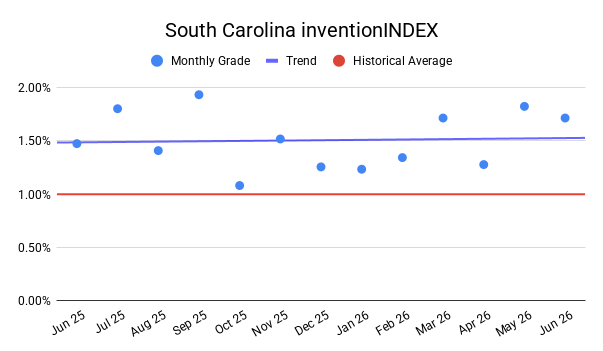
This study provides an exhaustive analysis of the United States federal and South Carolina state Research and Development (R&D) tax credit frameworks, specifically evaluating their application within Sumter, South Carolina. Key industry case studies—including Becton, Dickinson and Company (BD), Continental Tire, Caterpillar, Pilgrim’s Pride, and SKF—illustrate how businesses leverage these incentives to offset the costs of continuous technological innovation, advanced manufacturing process improvements, and the resolution of engineering uncertainties.
This study provides an exhaustive analysis of the United States federal and South Carolina state Research and Development (R&D) tax credit frameworks, evaluating their application within Sumter, South Carolina. Through detailed industry case studies, statutory reviews, and tax administration case law, it serves as a definitive guide for leveraging R&D incentives to foster continuous industrial innovation.
Industry Case Studies and R&D Applications in Sumter, South Carolina
The successful application of the United States federal and South Carolina state R&D tax credits requires a nuanced understanding of how high-level statutory definitions translate to actual operations on the factory floor. The following five case studies examine prominent industries that have developed in Sumter, South Carolina, detailing their historical regional integration, their operational engineering challenges, and the precise mechanisms by which they qualify for innovation incentives under the law.
Case Study 1: Medical Device Manufacturing – Becton, Dickinson and Company (BD)
The medical device manufacturing sector in Sumter is anchored by Becton, Dickinson and Company (BD), a global medical technology titan that established its presence in the region in 1970. BD originally selected Sumter due to the availability of large tracts of affordable industrial land, proximity to major logistics arteries for national distribution, and a supportive local municipal structure willing to invest in infrastructure. Beginning operations with merely 25 employees producing simple glass syringe barrels, the Sumter facility has undergone a massive evolution over the past 55 years. Today, the plant encompasses over 600,000 square feet and employs approximately 900 associates, rendering it one of BD’s largest and most strategically critical manufacturing sites in the United States. The facility produces billions of BD Vacutainer® blood collection products annually, requiring an extraordinarily high level of precision, quality control, and automated manufacturing. The company’s enduring commitment to the region is evidenced by continuous capital infusions, including a $150 million investment announced in 2018, and more than $90 million invested since fiscal year 2021 to grow operations and implement advanced robotics.
Under the United States federal R&D tax credit framework outlined in Internal Revenue Code (IRC) Section 41, the scale and precision of producing billions of Class II medical devices require continuous, highly technical process improvements that perfectly align with the definition of qualified research. The “business component” being improved is the manufacturing process itself, aimed at increasing yield, reducing defect rates, or enhancing the speed of automated assembly lines. For example, as BD Sumter engineers seek to implement new robotic quality-inspection systems on the Vacutainer assembly line to detect microscopic fractures in plastic resin tubes at speeds exceeding 1,000 units per minute, they encounter profound technological uncertainty. The engineering teams must determine the optimal camera frame rates, lighting angles, and machine-learning algorithmic thresholds required to detect defects without triggering false positives at high speeds. The engineers engage in a rigorous process of experimentation by designing multiple prototype optical arrays, coding different iterations of image-recognition software, running batches of sample tubes through the prototypes, and analyzing statistical capture rates. This work fundamentally relies on the principles of optical engineering, computer science, and mechanical engineering, satisfying the “technological in nature” requirement.
From a financial allocation perspective, the W-2 wages of the mechanical engineers, software developers, and quality assurance metallurgists designing and testing these systems in Sumter qualify for the federal credit, as well as the 5% South Carolina state credit under S.C. Code Section 12-6-3415. Furthermore, the costs of the specialized prototype cameras, automated robotic arms, and the tens of thousands of scrapped test tubes consumed during the calibration and testing phases represent highly lucrative qualifying supply expenses. Because all these complex engineering activities occur exclusively within the physical footprint of the Sumter facility, they perfectly satisfy the strict geographic nexus requirement mandated by the South Carolina Department of Revenue.
Case Study 2: Automotive Tire Manufacturing – Continental Tire
In October 2011, Continental Tire the Americas announced a monumental economic development initiative, committing $500 million to construct a greenfield tire manufacturing plant on a 500-acre tract in Sumter County. This represented one of the largest economic development and job creation initiatives in the area’s history. The decision to locate in Sumter was driven by several convergent strategic factors. First, South Carolina had aggressively positioned itself as a global automotive manufacturing powerhouse, anchored by the massive BMW assembly plant in Greer and followed by a dense network of Tier 1 and Tier 2 suppliers. Continental required a location proximate to these original equipment manufacturers (OEMs) while maintaining a strategic, respectful distance from competing tire manufacturers like Michelin and Bridgestone operating in other parts of the state. Furthermore, Sumter offered a technologically adaptable labor pool, drawing on individuals with technical backgrounds from the broader region, including the Savannah River Site, supplemented by highly customized training programs provided by readySC and Central Carolina Technical College. Construction commenced in 2012, requiring 60,000 cubic yards of concrete and 30,000 tons of steel, with production beginning ahead of schedule in October 2013. The facility now employs over 1,600 personnel and boasts an annual production capacity capable of meeting immense North American demand.
Automotive tire manufacturing is an intensely complex discipline bridging chemical engineering, thermodynamics, and mechanical design. The continuous development of new tire compounds to meet increasingly stringent global fuel efficiency, rolling resistance, and safety standards requires exhaustive laboratory and factory-floor research. For instance, if Continental’s Sumter facility is tasked with scaling up the production of a newly formulated silica-infused rubber compound designed specifically to extend the battery range of electric vehicles (EVs), the facility engages in massive R&D activities. While the baseline chemical formulation may have been conceptualized at a global headquarters, the scale-up of that formula into a mass-manufacturing environment presents profound, localized uncertainties. The Sumter process engineers face technical uncertainty regarding the precise temperature profiles, mixing durations, and extrusion pressures required to vulcanize the new silica compound without causing premature curing, material separation, or thermal degradation at industrial volumes.
The required process of experimentation involves running iterative test batches through commercial-scale mixers, adjusting thermal and pressure variables, extracting core samples, and subjecting the cured rubber to rigorous stress, abrasion, and dynamic thermal mechanical analysis. This work relies strictly on the hard sciences of chemical engineering and materials science. Under the federal and state tax codes, the wages of the chemical process engineers, as well as the floor technicians operating the machinery during the experimental test runs (classified as direct support of research), constitute Qualified Research Expenses. Crucially, the massive quantities of raw materials—including synthetic rubber, silica, carbon black, and chemical accelerators—that are consumed, cured, and ultimately scrapped during the failed test batches constitute highly lucrative supply QREs. In South Carolina, these supply costs, incurred entirely within the state, directly generate credits under S.C. Code 12-6-3415 at the flat 5% rate. Additionally, Continental can leverage SC Revenue Procedure #05-2, which exempts machines used directly in research and development from the state sales and use tax, further reducing the capital expenditure required to outfit testing laboratories.
Case Study 3: Advanced Heavy Machinery and Hydraulics – Caterpillar
Caterpillar Inc., the iconic global manufacturer of heavy construction and mining equipment, has historically maintained a significant, highly specialized footprint in Sumter’s advanced manufacturing sector. In 2012, Caterpillar announced a strategic $20 million expansion of its existing facility located in Sumter’s Black River Airport Industrial Park. The expansion was explicitly designed to nearly triple the physical size of the plant to accommodate the manufacturing of large hydraulic cylinders, shifting critical production lines away from facilities in Joliet, Illinois. This geographic shift was driven by Sumter’s growing reputation as a hub for advanced manufacturing, its lower operational cost structures, and the availability of a workforce capable of executing high-tolerance, heavy-industrial metalworking. Although broader corporate strategic realignments and global macroeconomic dynamics led to announcements in late 2023 regarding the consolidation of these specific operations into other locations, the decade-long development and operation of this facility perfectly exemplifies Sumter’s capacity to support world-class, heavy-industrial engineering.
The engineering and production of massive hydraulic cylinders for earth-moving equipment require unparalleled precision, as these components dictate the lifting capacity of the machinery and must operate continuously under extreme fluid pressures, abrasive dust, and harsh thermal environments. Research and development in this sector is heavily focused on mechanical redesigns and metallurgical enhancements. Consider a scenario where the Sumter engineering team is tasked with redesigning the internal sealing mechanism and piston rod coating of a large-bore hydraulic cylinder to prevent microscopic fluid leakage under extreme operational load cycles, aiming to extend the component’s operational lifespan by 20% in severe mining conditions. Technological uncertainty exists because the engineering team cannot predict whether a newly sourced polyurethane composite seal, combined with a novel laser-cladding surface treatment on the rod, can withstand the immense friction and thermal expansion dynamics of the hydraulic fluid under peak loads without premature catastrophic failure.
The process of experimentation is highly systematic. It begins in the digital realm, utilizing advanced Computer-Aided Design (CAD) and Finite Element Analysis (FEA) software to model fluid dynamics, thermal gradients, and stress concentrations. Following digital simulation, physical prototypes of the massive cylinders are machined, assembled, and installed into specialized testing rigs within the Sumter facility. These rigs subject the prototypes to hundreds of thousands of simulated load cycles, pushing the components to their absolute mechanical limits. The cylinders are subsequently disassembled, and the seals and rods are analyzed under high magnification for micro-abrasions and structural fatigue. This exhaustive research is deeply rooted in mechanical engineering, fluid dynamics, and metallurgy. The wages of the mechanical engineers conducting the CAD modeling and the technicians operating the physical test rigs qualify as QREs. Furthermore, under IRC Section 41(b)(2), amounts paid for the right to use computers in the conduct of qualified research—such as leased cloud computing time required to run complex, processing-heavy FEA simulations—also qualify as eligible R&D expenditures.
Case Study 4: Agribusiness and Food Processing – Pilgrim’s Pride
Sumter’s modern economic landscape is deeply intertwined with its historical foundation in agriculture. Pilgrim’s Pride, one of the largest global poultry and prepared foods producers, represents the highly industrialized, technologically advanced evolution of this agrarian heritage. Founded in 1946 by Aubrey and Lonnie “Bo” Pilgrim as a tiny feed and seed store in Texas, the company revolutionized the industry by pioneering the vertically integrated poultry production model—controlling and optimizing every phase of the supply chain from the hatchery and feed mills to processing, packaging, and international distribution. In Sumter, Pilgrim’s Pride operates as a massive employer and a cornerstone of the regional food processing sector. The facility strategically leverages the region’s abundant agricultural output, favorable climate, and extensive logistics networks to process, package, and distribute vast quantities of fresh and value-added protein products.
The food and beverage sector is frequently, and erroneously, overlooked as a beneficiary of the R&D tax credit. The Internal Revenue Service explicitly recognizes food science, microbiology, and organic chemistry as hard sciences, rendering the development of new food products, novel preservation techniques, and automated processing lines fully eligible under IRC Section 41. For instance, Pilgrim’s Pride engineers and food scientists in Sumter may seek to develop a new line of fully cooked, flash-frozen chicken products utilizing a modified breading formulation specifically designed to retain crispness and structural integrity when subjected to microwave reheating by the end consumer. Concurrently, the facility’s mechanical engineers may be designing an automated, machine-vision-guided robotic deboning arm to process raw poultry with higher throughput and less usable meat waste than manual labor.
Both initiatives face severe technological uncertainty. For the food product, there is uncertainty regarding the exact ratio of starches, proteins, and lipid barriers in the breading matrix that will effectively prevent moisture migration from the protein core to the crust during the cryogenic freezing and subsequent reheating phases. Food scientists experiment by creating multiple batter formulations, applying them to the product, flash-freezing them using varying cryogenic temperature curves, reheating them, and conducting rigorous sensory, shear-force, and moisture-content analyses. For the robotic deboning machinery, mechanical engineers face profound uncertainty in programming the robotic arm’s tactile sensors and visual algorithms to distinguish seamlessly between bone, cartilage, and muscle tissue across anatomically varied birds without damaging the high-value meat. They engage in iterative coding, sensor calibration, and physical trial-and-error testing on the processing line. The formulation research relies on organic chemistry and food science, while the robotic development relies on mechanical engineering and software development. The wages of the food scientists, process engineers, and automation programmers are fully eligible. Most significantly, the massive quantities of ingredients used in the test batches and the raw poultry destroyed or rendered unsalable during the robotic calibration phase qualify as supply QREs. The 5% South Carolina state credit heavily subsidizes these high-volume, supply-intensive test runs conducted within the state’s borders.
Case Study 5: Precision Engineering and Bearings – SKF
The presence of SKF in Sumter highlights the region’s capability to support ultra-precision advanced manufacturing. SKF, a Swedish multinational corporation founded in 1907 following Sven Wingquist’s invention of the revolutionary double-row self-aligning ball bearing, is globally recognized as the premier manufacturer of bearings, seals, mechatronics, and complex lubrication systems. Operating two major facilities in Sumter County on Corporate Circle, SKF manufactures precision bearings for critical, high-stress applications ranging from aerospace and military hardware to medical devices and the semiconductor industry. In late 2019, SKF announced a $26 million capital expansion in Sumter, specifically aimed at implementing “Industry 4.0” orientation activities. This initiative established entirely new line designs featuring state-of-the-art automated equipment and robotic handling systems optimized for “XXL machining”—the production of massive, highly engineered bearing rings. The Sumter site was strategically chosen for this advanced robotic integration due to the local workforce’s rapidly growing competency in mechatronics, supported by local technical colleges, and a highly collaborative, business-centric local government that facilitated rapid expansion.
Bearing manufacturing is a masterclass in extreme precision, often requiring engineers to machine exotic metals to tolerances measured in microns. It is heavily dependent on tribology—the science and engineering of interacting surfaces in relative motion, encompassing the principles of friction, wear, and lubrication. Consider an R&D scenario where the SKF Sumter facility is contracted by a major aerospace OEM to design and produce a specialized, lightweight, double-row self-aligning bearing for a next-generation commercial aircraft jet engine. The bearing must withstand sustained rotational speeds and operating temperatures 15% higher than previous iterations while simultaneously reducing overall weight by 10% through the utilization of a novel, untested ceramic-hybrid metallic compound.
The engineering team faces immediate technological uncertainty regarding manufacturability and performance. They are uncertain if the existing robotic Computer Numerical Control (CNC) machining centers can precisely mill the brittle new ceramic-hybrid material without inducing microscopic sub-surface fractures that would lead to catastrophic failure under engine loads. Furthermore, they are uncertain about the specific thermal expansion coefficients of the disparate materials within the bearing assembly at peak operating temperatures. The process of experimentation involves aggressively reprogramming the CNC multi-axis tool paths, testing various exotic diamond-tipped cutting tools, precisely adjusting coolant flow rates and pressures, and subsequently conducting destructive metallurgical testing on the milled prototypes using scanning electron microscopes to verify structural integrity at the atomic level. This systematic trial and error relies on the deepest applications of materials science, metallurgy, tribology, and software engineering (CNC programming). Consequently, the wages of the metallurgists, CNC programmers, and quality testing engineers qualify as QREs. The exorbitant costs of the specialized ceramic raw materials and the rapid consumption of diamond cutting tools during the experimental milling runs represent highly valuable supply QREs. This highly technical engineering directly anchors Sumter’s growing aerospace cluster while simultaneously generating substantial federal and SC R&D tax credits to offset the high costs of innovation.
The Economic Evolution and Industrial Infrastructure of Sumter, South Carolina
To fully comprehend why global industrial titans such as BD, Continental Tire, Caterpillar, Pilgrim’s Pride, and SKF have established massive, R&D-intensive operations in Sumter, South Carolina, one must analyze the region’s historical economic trajectory and strategic infrastructure development. Located centrally in the midlands of the state, Sumter County’s economic history vividly reflects the broader transition of the American South from a completely agrarian society to a highly sophisticated hub of advanced manufacturing.
From Agrarian Roots to the Textile Era
In the colonial and early antebellum periods, South Carolina’s economy was dominated almost exclusively by staple crops, relying heavily on agrarian systems to cultivate indigo, rice, and eventually cotton. While early industrialization in the form of small, water-powered textile mills took root in the upcountry districts—such as Spartanburg, Greenville, and Pendleton—by the mid-19th century, Sumter maintained a robust, traditional agricultural base. The region’s fertile soil supported abundant cash crops, a legacy that continues to support the modern agribusiness sector.
Following the Civil War, South Carolina underwent a massive structural transformation with the explosive rise of the commercial textile industry. Driven by visionary industrialists like William Gregg, who established the Graniteville Manufacturing Company modeled after the integrated operations of New England, the state saw the proliferation of massive textile mills. These mills became the dominant manufacturing sector through the late 19th and the majority of the 20th centuries, transforming the socio-economic fabric of the state and establishing a deep culture of factory labor. Sumter actively participated in this industrial era, with local populations transitioning from farm labor to mill work. However, as the 20th century closed, the global economy violently shifted. The late 20th and early 21st centuries saw a devastating decline in domestic textile manufacturing as production moved to lower-cost overseas markets. South Carolina was faced with a stark reality: an abundance of semi-skilled labor facing mass unemployment and millions of square feet of abandoned industrial real estate.
The Strategic Pivot to Advanced Manufacturing
Rather than succumb to the total collapse of the textile industry, South Carolina—and Sumter specifically—executed an aggressive, highly coordinated pivot toward advanced manufacturing. State and local economic development entities recognized that surviving in the globalized 21st-century economy required moving up the manufacturing value chain. The strategy was to attract industries that produced complex, high-margin products requiring precision engineering, such as automobiles, aerospace components, medical devices, and specialty chemicals.
Sumter’s successful transition into a premier destination for these industries was driven by three deliberate strategic advantages:
First, Sumter’s geographic location and logistical infrastructure serve as a massive strategic asset. The region is highly accessible via the I-95 corridor, the primary north-south transportation artery of the United States East Coast, providing manufacturers with rapid, unimpeded freight movement to massive consumer markets from Florida to New England. Additionally, the US-378 highway connects Sumter directly to the state capital, Columbia, and crucially, to the deep-water ports of Charleston, which are essential for the import of raw materials and the export of finished global goods. To support heavy industry, Sumter is serviced by robust Class I and Class III (Short Line) rail infrastructure, providing a low-cost, high-capacity landside solution for moving massive quantities of goods with a minimal environmental footprint.
Second, the presence of Shaw Air Force Base provides an unparalleled economic and demographic advantage. Shaw is a critical economic engine for the midlands, hosting the 20th Fighter Wing (the Air Force’s largest combat F-16 wing), U.S. Army Central, and the Ninth Air Force. With over 7,200 active-duty military personnel, 1,000 civilian employees, and a staggering $2.1 billion annual direct and indirect economic impact, the base stabilizes the local economy. Beyond direct capital expenditures, the base provides a continuous, highly predictable stream of highly disciplined, technically trained military veterans who transition directly into the local civilian workforce. The continuous operation and maintenance of advanced F-16 fighter jets also naturally anchors the region’s burgeoning aerospace and defense cluster, attracting contractors and component manufacturers.
Third, Sumter proactively addressed the most significant barrier to advanced manufacturing: the availability of highly skilled technical labor. This was achieved through extremely tight integration between private industry and the state’s technical education apparatus. Central Carolina Technical College (CCTC), located in Sumter, operates the South Carolina Environmental Training Center and provides highly customized, site-specific training courses for local manufacturers. Anticipating the needs of companies like SKF, BD, and Continental, CCTC developed specialized credit programs and youth apprenticeships in robotics, mechatronics (the complex integration of mechanical systems, electronics, and software), precision welding technology, and industrial maintenance. This dedicated pipeline of highly skilled technicians ensures that companies locating in Sumter have the human capital necessary to operate, maintain, and innovate upon complex automated machinery, directly fueling the region’s R&D capabilities.
| Top Individual Employers in Sumter, SC | Industry Sector | Economic Footprint / Notes |
|---|---|---|
| Shaw Air Force Base | Military / Department of Defense | ~7,200 active duty; $2.1 Billion Annual Impact. |
| Prisma Health Tuomey | Healthcare | Major regional medical provider. |
| Continental Tire of the Americas | Advanced Manufacturing (Tires) | $500M investment; ~1,600 employees. |
| Pilgrim’s Pride | Agribusiness / Food Processing | Major processor of protein products. |
| Becton, Dickinson & Co. (BD) | Medical Device Manufacturing | 600,000 sq ft facility; ~900 employees. |
| Eaton Electrical / SKF | Precision Manufacturing | Advanced electrical components and bearings. |
Detailed Analysis of United States Federal R&D Tax Credit Requirements
The United States federal Research and Development Tax Credit, originally introduced in the Economic Recovery Tax Act of 1981, was specifically designed by Congress to incentivize businesses to retain highly technical jobs, expand domestic engineering capabilities, and conduct innovative research activities within the borders of the United States. Codified under Section 41 of the Internal Revenue Code (IRC), the credit has transitioned over the decades from a series of temporary legislative extensions to a permanent, foundational fixture of the US corporate tax code. A masterful understanding of the federal framework is absolutely critical, not only for claiming federal benefits but because the South Carolina state-level R&D credit is statutorily bound to federal definitions and eligibility criteria.
The Four-Part Test for Qualified Research Activities
To qualify for the federal R&D tax credit, a taxpayer’s research activities must satisfy a rigorous, multi-pronged legal standard known as the “Four-Part Test,” strictly outlined in IRC Section 41(d). The legal burden of proof rests entirely on the taxpayer to meticulously substantiate that the activities being claimed meet all four requirements concurrently. Failure to satisfy even a single element disqualifies the activity in its entirety.
| Statutory Requirement | IRC Section 41 Legal Definition and Application |
|---|---|
| Permitted Purpose (Section 174 Test) | The expenditures must be eligible for treatment as expenses under IRC Section 174. They must be incurred in connection with the taxpayer’s trade or business and represent R&D costs in the experimental or laboratory sense. The intent must be to develop or improve the functionality, performance, reliability, or quality of a “business component” (a product, process, software, technique, formula, or invention held for sale, lease, or used in the business). Routine aesthetic upgrades are excluded. |
| Elimination of Technological Uncertainty | The research must be undertaken specifically to discover information that would eliminate uncertainty concerning the development or improvement of the business component. Uncertainty exists if the information available to the taxpayer does not establish the capability or method for developing or improving the component, or its appropriate design. If the outcome is predictable using established methods, it fails this test. |
| Process of Experimentation | Substantially all (defined as 80% or more) of the activities must constitute elements of a process of experimentation. This involves evaluating one or more alternatives to achieve a result where the capability, method, or design is uncertain. It requires formulating hypotheses, designing experiments, conducting systematic trial and error, modeling, simulating, and refining hypotheses based on empirical results. |
| Technological in Nature | The process of experimentation must fundamentally rely on principles of the hard sciences: physical sciences, biological sciences, engineering, or computer science. Research relying on soft sciences, such as economics, psychology, sociology, or market research, is explicitly excluded by statute. |
Qualified Research Expenses (QREs)
Under IRC Section 41(b)(1), Qualified Research Expenses (QREs) are strictly defined and limited to three primary categories of expenditures incurred directly in the performance of qualified research.
First, Wages constitute the largest category of QREs for most claimants. The statute allows amounts paid or incurred to an employee for “qualified services” performed by such employee to be captured. Qualified services are not limited to the scientists and engineers directly conducting the experiments; the statute explicitly includes the “direct supervision” of research (e.g., an engineering manager reviewing CAD models) and the “direct support” of research (e.g., a line technician operating a CNC machine to mill a prototype, or a machinist cleaning a test apparatus).
Second, Supplies represent a massive opportunity for manufacturers. The statute defines supplies as any tangible property used in the conduct of qualified research. Crucially, this excludes land, improvements to land, and depreciable property (equipment). However, raw materials that are consumed, destroyed, or heavily degraded during the experimental testing process—such as the silica rubber used in Continental’s test batches, or the ceramic materials milled by SKF—are fully eligible.
Third, Contract Research Expenses capture amounts paid or incurred to third-party individuals or entities for the performance of qualified research on behalf of the taxpayer. To qualify, the taxpayer must retain substantial rights to the research results and must bear the economic risk of the research’s failure (i.e., the contractor is paid for their time and materials regardless of whether the research succeeds, rather than being paid a fixed fee only upon successful delivery). Typically, only 65% of contract research expenses are eligible to be included in the QRE pool.
Computational Methodologies
The calculation of the federal R&D tax credit is mathematically complex, requiring the determination of an incremental increase in R&D spending over a historical baseline. Taxpayers generally elect between two primary computational methodologies, depending on their historical data availability and strategic growth profile:
The Regular Research Credit (RRC): This traditional calculation method yields a credit equal to 20% of the QREs for the current taxable year that exceed a “base amount”. The base amount is calculated by multiplying the taxpayer’s “fixed-base percentage” by their average annual gross receipts for the four preceding taxable years. The fixed-base percentage is determined by the ratio of the taxpayer’s total QREs to total gross receipts during a specific historical base period (often 1984-1988 for established companies, with specific statutory rules for start-ups). Congress included a floor ensuring the base amount cannot be less than 50% of the current year QREs, preventing companies from claiming a credit on all their spending.
The Alternative Simplified Credit (ASC): Recognizing that the RRC penalized companies whose gross receipts were growing vastly out of proportion to their R&D spending, or companies that lacked pristine financial records from the 1980s, Congress introduced the ASC. The ASC provides a significantly simpler calculation, equal to 14% of the QREs for the taxable year that exceed 50% of the average QREs for the three preceding taxable years. If the taxpayer has no QREs in any one of the three preceding taxable years, the ASC rate is adjusted to 6% of the current year’s QREs.
Substantiation and Recordkeeping Requirements
Treasury Regulation 1.41-4(d) issues a strict mandate regarding recordkeeping: a taxpayer claiming the credit under Section 41 must retain records in sufficiently usable forms and detail to substantiate that all expenditures claimed are fully eligible for the credit. While the regulation purposefully does not prescribe a specific, rigid format, this lack of specific guidance often creates immense vulnerability during aggressive IRS audits. Taxpayers are strongly encouraged by tax practitioners to maintain contemporaneous documentation. Acceptable substantiation includes project charters, detailed laboratory notebooks, engineering meeting minutes, iterations of CAD designs, testing protocols and results, versions of software source code, and internal email correspondence demonstrating the specific technological challenges faced and the iterative, trial-and-error steps taken to overcome them. Post-hoc estimations created years after the research was completed are heavily scrutinized and frequently disallowed by examining agents.
Detailed Analysis of South Carolina State R&D Tax Credit Laws
The State of South Carolina aggressively competes for domestic and international corporate investment by offering a robust, highly competitive portfolio of statutory tax incentives. Chief among these for innovation-driven enterprises operating in the manufacturing and technology sectors is the South Carolina Research and Development Tax Credit, codified under S.C. Code Section 12-6-3415.
Statutory Framework of S.C. Code Section 12-6-3415
The South Carolina R&D credit is intentionally designed to mirror the federal statute regarding the definition of what constitutes qualified research. S.C. Code Section 12-6-3415(A) explicitly states that “qualified research expenses has the same meaning as provided for in Section 41 of the Internal Revenue Code”. Therefore, all state claims must pass the rigorous Four-Part Test. However, the state credit introduces unique calculation mechanisms, liability limitations, and strict geographic nexus requirements that significantly alter how the credit is monetized.
Strict Geographic Nexus: The absolute paramount requirement for the South Carolina credit is that the research must be conducted entirely within the state’s physical borders. S.C. Code Section 12-6-3415(A) limits the credit to “qualified research expenses made in South Carolina”. This requires meticulous geographical allocation by the taxpayer. For example, if a multinational corporation like Continental Tire has an engineering manager residing and working remotely in North Carolina who oversees a testing protocol executed by technicians on the floor of the Sumter facility, the manager’s wages may qualify for the federal credit, but they must be strictly excluded from the South Carolina state QRE pool.
Flat Credit Rate and Non-Incremental Calculation: Unlike the highly complex federal credit, which requires historical baseline calculations (RRC or ASC) to determine an incremental increase in spending, South Carolina applies a remarkably straightforward, non-incremental flat rate. The state credit is equal to exactly 5% of all qualified research expenses incurred within South Carolina during the taxable year. There is no state base amount, no fixed-base percentage calculation, and no gross receipts adjustment required. The credit applies directly to dollar one of qualified spending.
The Federal Claim Prerequisite: A unique and strict statutory hurdle within S.C. Code Section 12-6-3415(A) is that a taxpayer must actively claim a federal income tax credit pursuant to IRC Section 41 for increasing research activities for the identical taxable year to be eligible for the South Carolina credit. If a taxpayer elects to simply deduct all R&D expenses under IRC Section 174 at the federal level without formally electing and calculating the Section 41 credit, they automatically forfeit all eligibility for the state credit.
Liability Limitations and Carryforwards: The credit generated is nonrefundable. It can be utilized to offset corporate income tax, corporate license fees, or, in the case of pass-through entities (LLCs, S-Corporations), individual income tax liabilities under Chapter 6. However, the state imposes a strict utilization cap: the credit applied in any single taxable year may not exceed 50% of the taxpayer’s remaining tax liability after all other state credits have been applied. To mitigate the impact of this 50% limitation, particularly for start-ups or companies with massive QREs but low immediate tax liability, the statute permits a highly generous 10-year carryforward period for any unused credit.
Complementary State Tax Incentives Intersecting with R&D
While the R&D credit directly offsets income and license taxes, South Carolina provides a suite of complementary incentives that drastically reduce the capital costs of building and staffing research facilities.
Sales Tax Exemption for R&D Machinery: Code Section 12-36-2120(56) completely exempts the gross proceeds of sales, or the sales price, of machines used in research and development from the state sales and use tax. SC Revenue Procedure #05-2 clarifies the threshold for this exemption: for a machine to qualify, more than 50% of its total operational use must be devoted directly to research and development in the experimental or laboratory sense. Administrative uses, teaching, or non-experimental quality control are considered non-qualifying uses. For companies like SKF purchasing multi-million dollar XXL CNC machines for prototyping in Sumter, this exemption represents massive upfront capital savings.
Job Tax Credit and Corporate Headquarters Credit: The South Carolina Job Tax Credit (Code Section 12-6-3360) and the Corporate Headquarters Tax Credit (Code Section 12-6-3410) frequently intersect with expanding R&D operations. A business constructing a new R&D facility in Sumter may claim the Job Tax Credit for creating new engineering positions, provided the average cash compensation of those jobs exceeds certain per capita income thresholds for the county. Furthermore, recent sweeping legislative amendments enacted in 2024 to the Corporate Headquarters Credit reduced the new job creation requirement from 75 to just 40 full-time jobs, and allowed the inclusion of remote hybrid employees residing in the state, making it significantly easier for companies to consolidate high-paying corporate R&D and executive functions within South Carolina.
Government Tax Administration Guidance, Case Law, and Compliance Protocol
The successful monetization of these lucrative incentives requires navigating the complex administrative apparatus of the South Carolina Department of Revenue (SCDOR). The Department aggressively audits R&D credit claims, focusing heavily on statutory compliance, geographic nexus, and economic substance.
The Architecture of SCDOR Advisory Opinions
To guide taxpayers, the SCDOR’s Tax Policy Services Division issues four distinct types of advisory opinions, each carrying different weights of binding authority.
| Advisory Opinion Type | Scope and Binding Authority |
|---|---|
| Revenue Ruling (RR) | The Department’s official advisory opinion on how laws apply to a specific issue or set of facts. It is binding on agency personnel and serves as official guidance for the public until superseded by statute or court decision. |
| Revenue Procedure (RP) | Provides procedural guidance to assist in the administration of laws. It is advisory, binding on agency personnel, but does not have the force of law. |
| Private Letter Ruling (PLR) | An advisory opinion issued to a specific taxpayer applying law to their specific facts. It is binding only with respect to the person to whom it was issued, assuming facts were accurately represented. |
| Information Letter (IL) | A document issued to disseminate general information or announce administrative pronouncements (e.g., changes in effective dates). |
Appellate Case Law: Interpreting the Statutes
Case law from the South Carolina Administrative Law Court (ALC) and the Court of Appeals underscores the judiciary’s approach to tax incentives, emphasizing strict statutory construction and the requirement of genuine economic substance.
In the highly consequential case Duke Energy Corp. v. S.C. Dep’t of Rev. (2025), the South Carolina Court of Appeals overturned an ALC ruling and invalidated the SCDOR’s restrictive interpretation of the state’s Investment Tax Credit. The Department had interpreted a $5 million statutory limitation as a lifetime cap, resulting in the disallowance of $19,850,727 in tax credits during an audit covering the years 1996 to 2014. The Court of Appeals found that the plain language of the statute unambiguously indicated an annual cap, not a lifetime cap. This landmark ruling demonstrates the appellate courts’ willingness to strictly interpret the plain text of tax statutes in favor of the taxpayer, overriding the Department’s internal policy preferences and historical deference.
Conversely, the necessity of economic substance was brutally affirmed in Tractor Supply Co. v. S.C. Dep’t of Revenue. In this case, a judge invalidated a complex corporate tax restructuring and transfer pricing scheme designed by a global accounting firm to shift $300 million of taxable income to a Texas procurement subsidiary. The court found the scheme lacked any genuine economic substance or real business purpose beyond state tax avoidance, noting the Texas entity incurred only $13 million in costs to generate the massive income shift. The ruling resulted in $1.6 million in additional taxes, interest, and penalties. For R&D credit claimants, this case serves as a severe warning: aggressive, purely tax-motivated allocations of QREs—such as artificially inflating supply costs or shifting wages without a genuine nexus to the experimental work—will face intense, unforgiving judicial scrutiny.
Audit Triggers and Compliance Mechanisms
SCDOR examiners are highly trained to identify specific red flags during R&D audits. A primary trigger is a discrepancy between the federal and state claims. If an IRS audit results in a reduction of the federal R&D credit, the taxpayer is legally obligated to amend their South Carolina return accordingly; failure to do so guarantees an audit adjustment. Furthermore, examiners heavily scrutinize the “technological in nature” requirement, frequently challenging claims that rely on routine, high-end engineering rather than genuine scientific experimentation.
Taxpayers claim the SC R&D credit using Form SC SCH.TC-18. The form requires the disclosure of the federal credit claimed, the precise calculation of the 5% state QRE base, and the mathematical application of the 50% liability limitation. Failure to properly file, or aggressive calculations leading to a substantial understatement of tax liability, can trigger severe statutory penalties. Under S.C. Code Section 12-54-155, a substantial understatement penalty applies if the understatement exceeds the greater of 10% of the tax required to be shown on the return, or $5,000 (which is elevated to $10,000 for standard C-Corporations). Additionally, S.C. Code Section 12-54-40 imposes penalties for failure to file (5% per month, up to 25%) and failure to pay (0.5% per month, up to 25%). To defend against understatement penalties, taxpayers must demonstrate “substantial authority” for their tax position, relying on statutes, regulations, court cases, or official revenue rulings.
To survive this rigorous audit landscape, companies in Sumter must implement robust, proactive tax compliance protocols. Internal tracking systems should require engineers and scientists to allocate their time to specific R&D projects continuously, rather than relying on flawed year-end estimations. Project managers must maintain pristine records that explicitly outline the technological uncertainties faced at the onset of a project and meticulously document the iterative testing phases, directly satisfying the documentation requirements of Treas. Reg. 1.41-4(d) and establishing an impenetrable defense of the credit’s validity.
The information in this study is current as of the date of publication, and is provided for information purposes only. Although we do our absolute best in our attempts to avoid errors, we cannot guarantee that errors are not present in this study. Please contact a Swanson Reed member of staff, or seek independent legal advice to further understand how this information applies to your circumstances.