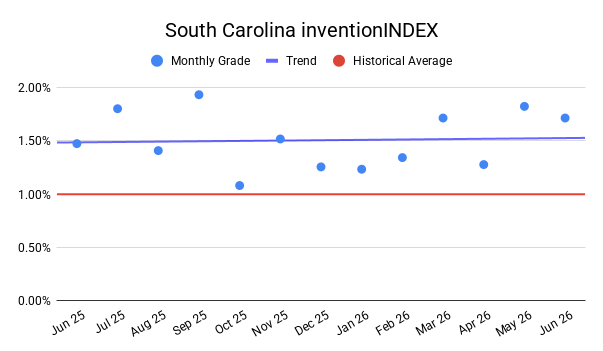
This comprehensive study details the intertwined federal and state-level Research and Development (R&D) Tax Credit requirements, specifically tailored for corporations in Columbia, South Carolina. It explores the foundational four-part statutory test under IRC § 41, the massive structural changes brought by the 2025 One Big Beautiful Bill Act (OBBBA) regarding immediate deductibility of domestic R&E expenditures under IRC § 174A, and South Carolina’s distinct 5% R&D credit. Five specialized industry case studies—Life Sciences, InsureTech, Nuclear Energy, Advanced Materials, and Electric Vehicle Manufacturing—demonstrate practical applications, evidentiary requirements, and strategic tax planning within Columbia’s localized technological ecosystem.
The optimization of corporate tax liabilities through research and experimental (R&E) expenditures requires a highly nuanced understanding of intertwined federal statutes, state-level conformity rules, and evolving judicial doctrines. The United States federal government and the State of South Carolina concurrently incentivize domestic innovation, albeit through fundamentally differing statutory mechanics, accounting prerequisites, and regulatory frameworks. For corporations situated within the rapidly expanding technological ecosystem of Columbia, South Carolina, navigating these concurrent tax codes presents an opportunity to significantly reduce capital expenditure burdens while advancing domestic intellectual property. This analysis provides an exhaustive examination of the applicable tax laws, recent legislative overhauls, the adversarial judicial climate, and the specific application of these principles across five distinct industrial sectors localized within the Columbia metropolitan area.
The United States Federal R&D Tax Credit Statutory Framework
The primary federal incentives for commercial and industrial innovation are governed by Internal Revenue Code (IRC) § 41, which establishes the Credit for Increasing Research Activities, and IRC § 174 and the newly minted § 174A, which dictate the Amortization and Expensing of Research and Experimental Expenditures. The synchronization of these code sections forms the bedrock of federal R&D tax planning.
The Statutory Four-Part Test
To qualify for the federal R&D tax credit, all claimed expenditures must satisfy the statutory “Four-Part Test” delineated meticulously within IRC § 41(d). Failure to substantiate any single prong of this test results in the complete disallowance of the associated expenses.
First, the expenditures must satisfy the Section 174 Purpose test, requiring that costs be incurred in connection with the taxpayer’s active trade or business and represent research and development costs in the experimental or laboratory sense. Second, the activities must be Technological in Nature, meaning the research must fundamentally rely upon the established principles of the physical sciences, biological sciences, engineering, or computer science. Research based on the social sciences, economics, or psychology is strictly excluded.
Third, the activity must be intended to discover information that would result in the Elimination of Uncertainty concerning the development or improvement of a business component. A business component is statutorily defined as a product, process, computer software, technique, formula, or invention held for sale, lease, or license, or used by the taxpayer in their trade or business. Uncertainty exists if the capability, method, or appropriate design of the business component is unknown at the onset of the research initiative. Finally, the taxpayer must engage in a Process of Experimentation, which requires a systematic evaluation of one or more alternatives to achieve a result where the capability or method is uncertain. This process typically involves modeling, simulation, or systematic trial and error.
The One Big Beautiful Bill Act (OBBBA) of 2025
A monumental and highly disruptive shift in federal tax planning occurred with the enactment of the One Big Beautiful Bill Act (OBBBA) on July 4, 2025. Reversing the punitive capitalization mandates established by the 2017 Tax Cuts and Jobs Act (TCJA), the OBBBA fundamentally restructured the immediate deductibility of domestic R&E expenses.
The TCJA previously required that all R&E expenditures incurred in tax years beginning after December 31, 2021, be capitalized and amortized over a five-year period for domestic research and a fifteen-year period for foreign research. The OBBBA intervened by introducing the new IRC § 174A. Under Section 174A, taxpayers are permitted to immediately deduct 100% of domestic R&E expenditures in the tax year incurred, applicable for tax years beginning after December 31, 2024. Alternatively, taxpayers who wish to manage their net operating losses may elect under § 174A(c) to capitalize and amortize these domestic costs ratably over a period of not less than 60 months.
Crucially, the OBBBA preserved the TCJA’s strict treatment of foreign research. Under the retained rules of IRC § 174, foreign R&E costs must continue to be capitalized and amortized over a 15-year period, establishing a massive geographic tax advantage for domestic innovation centers like Columbia, South Carolina. To address the transition period, the Internal Revenue Service (IRS) issued Revenue Procedure 2025-28, providing procedural guidance for businesses to recover unamortized amounts capitalized between 2022 and 2024. Taxpayers can elect to deduct the remaining unamortized balance entirely in 2025, spread it across the 2025 and 2026 tax years, or, if they qualify as eligible small businesses, retroactively amend prior returns to apply full expensing to the years the costs were initially incurred.
Administrative Compliance: The Redesign of IRS Form 6765
In conjunction with these legislative changes, the IRS has aggressively tightened substantiation and reporting requirements to combat perceived abuses of the credit. The redesigned Form 6765 (Credit for Increasing Research Activities) now requires taxpayers to meticulously detail their Qualified Research Expenses (QREs)—which consist of wages, supplies, and contract research expenses—by specific category in Section F.
More critically, Section G of the revised form mandates exhaustive qualitative reporting on individual business components associated with the claim. Taxpayers must identify the number of business components evaluated, report the specific amount of officer wages included as QREs, confirm if any major portion of a trade or business was acquired or disposed of, and detail any entirely new categories of expenditures incurred. Furthermore, taxpayers utilizing audited financial statements must declare whether any of the QREs were determined under the ASC 730 Directive, a safe harbor provision aligning tax reporting with generally accepted accounting principles for R&D. While Section G is optional for the 2024 tax year, it becomes strictly mandatory for tax years beginning in 2025 for all entities that do not meet the definition of a Qualified Small Business (QSB).
The Federal Judicial Climate and Evidentiary Standards
The current judicial climate surrounding IRC § 41 claims is highly adversarial, placing an immense burden of proof upon the taxpayer. Since 2019, the federal government has maintained a dominant win-loss record of 13-1 in contested R&D tax controversies. This trendline has made it exceedingly difficult to resolve R&D cases in IRS Appeals, as the IRS has been highly strategic in selecting cases to litigate through trial to establish pro-government precedents.
| Year | Case Name | Adjudicating Court | Primary Legal Issues Contested | Verdict |
|---|---|---|---|---|
| 2019 | Siemens Milling | Tax Court (TC) | Process of Experimentation (POE) in agricultural wheat milling | Taxpayer Loss |
| 2019 | Populous Holdings | Tax Court (TC) | Funded research exclusion and financial risk allocation | Taxpayer Win |
| 2021 | Little Sandy Coal | Tax Court (TC) | § 174 applicability, pilot models, engineering substantiation | Taxpayer Loss |
| 2023 | Moore | 7th Circuit Court of Appeals | Substantiation of qualified services, software development | Taxpayer Loss |
| 2024 | Meyer, Borgman & Johnson | 8th Circuit Court of Appeals | Funded research exclusion, fixed-price vs. hourly contracts | Taxpayer Loss |
| 2024 | Phoenix Design Group | Tax Court (TC) | POE in mechanical engineering; rigorous penalty enforcement | Taxpayer Loss |
The appellate affirmation in Little Sandy Coal (7th Circuit, 2023) established an exceptionally high evidentiary bar for taxpayers attempting to substantiate “pilot models” and proving that substantially all activities constituted a valid process of experimentation. The court ruled that building a vessel for commercial use does not inherently qualify as a pilot model unless the primary purpose of the construction is to evaluate technical capability. Similarly, the Moore decision reinforced that taxpayers cannot rely on high-level managerial estimates to allocate QREs; they must provide granular, employee-level documentation linking specific W-2 wages directly to specific qualified technological tasks. Furthermore, the Meyer, Borgman & Johnson case clarified the “funded research” exclusion, ruling that taxpayers performing R&D under contract must bear the ultimate financial risk of failure to claim the credit, a precedent that heavily impacts contract manufacturing organizations.
The South Carolina State R&D Tax Credit Framework
Complementing the federal statute, the South Carolina Research Expenses Credit operates as a powerful localized incentive, administered by the South Carolina Department of Revenue (SCDOR).
Statutory Mechanics of S.C. Code § 12-6-3415
Pursuant to S.C. Code § 12-6-3415, South Carolina offers a nonrefundable tax credit equal to a flat 5% of Qualified Research Expenditures incurred exclusively within the geographic boundaries of the state. This credit may be utilized to offset corporate income tax, corporate license fees, and individual income tax liabilities for pass-through entities.
A defining advantage of the South Carolina R&D credit is the absence of a base calculation requirement. Unlike the highly complex federal calculation, which requires taxpayers to establish a fixed-base percentage and calculate a gross receipts adjustment to determine incremental R&D spending, South Carolina applies the 5% rate directly to the gross amount of SC-sourced QREs. The state does not require a minimum base floor or a startup phase-in metric, establishing a highly favorable environment for both legacy manufacturers with fluctuating revenues and newly established technology startups.
However, eligibility for the state credit is strictly predicated on federal compliance. Taxpayers must concurrently elect and claim the federal research credit under IRC § 41 for the exact same taxable year to be eligible for the South Carolina state benefits. If the IRS disallows a federal claim upon audit, the corresponding South Carolina claim is inherently invalidated. Furthermore, the state credit is subject to a strict liability limitation: the R&D Tax Credit taken in any single taxable year cannot exceed 50% of the taxpayer’s remaining state tax liability after all other statutory credits have been applied. To mitigate this limitation, South Carolina allows a generous 10-year carryforward period for any unused R&D tax credits.
Overlapping Economic Development Credits
In South Carolina, the R&D credit does not exist in a vacuum; it interacts directly with a suite of aggressive economic development incentives administered by the SCDOR. Because the R&D credit is limited to 50% of the remaining liability after other credits are applied, taxpayers must strategically sequence their claims.
| South Carolina Statutory Credit | Code Section | Primary Mechanism & Benefit |
|---|---|---|
| Credit for Investing in Property | § 12-14-60 | Up to 2.5% credit based on the recovery period of qualified manufacturing and productive equipment placed in service in SC. |
| Job Tax Credit | § 12-6-3360 | Substantial credits for creating a minimum of 10 new full-time jobs at a manufacturing, R&D, or corporate office facility. |
| Headquarters Credit | § 12-6-3410 | 20% credit on qualifying costs of establishing or expanding a corporate headquarters, requiring $50k in real property and 40 new jobs. |
| Textile Communities Revitalization | § 12-65-30 | 25% credit against income/license or property tax for eligible rehabilitation expenses incurred on abandoned textile mill sites. |
A corporation establishing a new advanced manufacturing facility in Columbia might simultaneously qualify for Job Tax Credits, Capital Investment Credits, and the R&D credit. If the foundational Job and Investment credits reduce the taxpayer’s liability near zero, the 50% limitation on the R&D credit will severely restrict its current-year utilization, forcing the taxpayer to rely entirely on the 10-year carryforward.
State Conformity and the OBBBA Disconnect
A critical complication for tax administration in 2025 and 2026 is South Carolina’s policy of “static conformity” with the Internal Revenue Code. As a static conformity state, the South Carolina General Assembly must affirmatively vote to update its statutory reference point to the federal code. As of January 30, 2026, SCDOR Information Letter #26-4 confirmed that South Carolina only conforms to the IRC as amended through December 31, 2024.
Consequently, South Carolina currently does not conform to the OBBBA amendments enacted in July 2025. For corporate tax planning in Columbia, this creates a profound administrative bifurcation. A corporation may immediately expense 100% of its domestic R&E on its federal return under the new IRC § 174A, yielding massive federal tax savings. However, when calculating South Carolina state taxable income, the corporation must perform a state-level add-back adjustment, forcing them to continue capitalizing and amortizing those exact same expenses over 5 years under the old IRC § 174 rules until the South Carolina legislature formally adopts the OBBBA provisions.
Columbia, South Carolina: The Economic and Geographic Catalyst
The efficacy of the aforementioned federal and state tax incentives is entirely dependent upon the presence of a localized, highly skilled industrial ecosystem. In this regard, the historical and economic development of Columbia, South Carolina, presents a quintessential environment for subsidized innovation.
Situated directly in the center of the state, Columbia historically developed due to the convergence of three major rivers: the Broad, the Saluda, and the Congaree. More than 100 miles inland from the Atlantic coast, the Congaree River connected Columbia to the port of Charleston, establishing the city as a powerful inland port capable of moving massive quantities of raw materials and agricultural goods. As the agrarian economy shifted during the late 19th and 20th centuries, this robust logistics infrastructure allowed Columbia to transition into a massive textile manufacturing hub. When the American textile industry entered a long decline due to globalization, the physical infrastructure—massive abandoned mill sites, abundant industrial water supply, and vast rail networks—remained intact.
The modern transformation of Columbia into an advanced manufacturing and technology epicenter was a deliberate act of public policy and academic investment. As the state capital, the city benefits from the immense stability of state government employment, which anchors the local economy and provides a deep regulatory infrastructure. However, the true heartbeat of regional innovation is the University of South Carolina (USC). As the state’s flagship, 200-year-old institution, USC introduces a talent pipeline of nearly 50,000 college students annually. The university’s specialized branches, including the College of Engineering and Computing, the School of Medicine, the College of Pharmacy, and the internationally top-ranked Darla Moore School of Business, directly supply the trained scientists, engineers, and analysts required to drive corporate R&D.
This academic output is synergized with aggressive state-sponsored commercialization efforts. The South Carolina Research Authority (SCRA) actively connects academic startups and legacy manufacturers with critical resources, providing grant matching, wet lab spaces, and high-quality administrative workspaces in Columbia. Furthermore, the city heavily utilizes Opportunity Zones—offering eight designated tracts that provide massive capital gains tax deferrals and exemptions for long-term investors—to incentivize the construction of new research facilities directly adjacent to university campuses and hospital networks. Today, the Columbia metropolitan area (encompassing Richland, Lexington, and surrounding counties) supports a diverse $58 billion economy characterized by advanced materials, bio-sciences, insuretech, and electric vehicle production.
Industry Case Studies and Technical Tax Analysis
To thoroughly contextualize the statutory requirements of the United States federal government and South Carolina, the following five case studies examine specific industries deeply rooted in Columbia, South Carolina. Each study analyzes the historical factors driving the industry’s local development, the precise nature of their technological R&D, and their explicit eligibility under IRC § 41 and S.C. Code § 12-6-3415.
Case Study 1: Life Sciences and Pharmaceutical CDMOs (Blow-Fill-Seal Technology)
Historical Development in Columbia: The bio/life science sector is one of Columbia’s fastest-growing and most heavily incentivized industrial clusters, comprising over 35 advanced facilities. Columbia successfully captured this industry by pairing the formidable intellectual capital of the USC School of Medicine and the Kennedy Pharmacy Innovation Center with aggressive state infrastructure support. The local ecosystem produces over 2,500 health-related graduates annually, providing an immediate workforce for pharmaceutical scaling. Furthermore, organizations like SC BIO act as an advocacy and workforce pipeline arm, while the SCRA provides the necessary localized wet lab infrastructure. This unique convergence of academic medicine and state-sponsored real estate enabled The Ritedose Corporation (TRC), headquartered in Columbia, to expand from a minor startup into the nation’s leading Contract Development and Manufacturing Organization (CDMO) specializing in sterile unit-dose delivery, boasting an annual capacity of 1.7 billion units.
R&D Activities: TRC specializes in Blow-Fill-Seal (BFS) technology, a highly complex manufacturing process utilized for ophthalmic and respiratory medications. BFS is an automated, completely closed aseptic system. In this process, a low-density polyethylene (LDPE) polymer is melted and extruded into a parison (a tubular shape). Sterile nitrogen gas is used to blow and inflate the parison into a specialized mold. While remaining inside the mold, the container is instantly filled with a sterile liquid drug formulation and hermetically sealed, all in a continuous motion spanning seconds without any human intervention. The R&D activities at TRC involve extensive chemical and mechanical engineering to scale up new drug profiles. Engineers must validate new polymer flow rates to prevent microscopic ruptures, calculate thermodynamic cooling times, and customize high-speed filling matrices for complex, highly viscous drug suspensions and emulsions.
Statutory Eligibility and Case Law Application:
- Applying the Four-Part Test: The engineering required to adapt the BFS process to an entirely new biological liquid formulation strictly meets the federal four-part test. Uncertainty exists regarding whether the specific LDPE polymer blend will maintain absolute sterility without chemically degrading the active pharmaceutical ingredients of the new drug. The process of experimentation involves iteratively testing mold temperatures, nitrogen gas inflation pressures, and fill speeds to discover the optimal parameters. The W-2 wages of the mechanical engineers and microbiologists performing these iterations, along with the raw polymer and chemical supplies consumed and destroyed during test batches, represent eligible QREs under IRC § 41(b) and S.C. Code § 12-6-3415.
- Legal Nuance – The Funded Research Exclusion: Because TRC operates as a CDMO performing manufacturing on behalf of other pharmaceutical companies, the IRS will heavily scrutinize their R&D to determine if it is “funded” under IRC § 41(d)(4)(H). To legally claim the credit, TRC must retain substantial rights to the research results and bear the economic risk of development failure. Based on the precedent set in Populous Holdings (2019, Tax Court), TRC can successfully claim the credit if their client contracts are structured as fixed-price agreements where payment is strictly contingent upon the successful delivery of an FDA-approved, sterile batch. In this scenario, TRC bears the financial risk of engineering failure. Conversely, if TRC engages in time-and-materials contracts where the client pays for engineering hours regardless of the outcome, the IRS would disallow the claim entirely, citing the appellate ruling in Meyer, Borgman & Johnson.
Case Study 2: InsureTech and Automated Claims Processing
Historical Development in Columbia: The healthcare and social assistance sector, fundamentally interlinked with the insurance apparatus, is the largest economic driver in the Columbia metro area, constituting 14% of the regional economy. BlueCross BlueShield of South Carolina (BCBSSC) is the apex institution in this space, functioning as the region’s top private employer with over 10,000 personnel based in Columbia. The insurance industry anchored in Columbia because, as the state capital, the city provides the dense regulatory and legislative proximity required for health insurers to operate efficiently. Concurrently, the USC Darla Moore School of Business provides the advanced actuarial and data analytics talent required for modern insurance, while massive local healthcare conglomerates like Prisma Health Midlands provide the localized, real-world patient datasets necessary to train and build next-generation InsureTech architectures.
R&D Activities: The insurance industry is currently undergoing a massive technological paradigm shift away from manual adjudication and toward AI-driven automated claims processing. Instead of relying on human adjusters to read medical codes, software engineers and data scientists in Columbia are developing complex algorithmic business rules engines, integrating machine learning (ML) models, and utilizing natural language processing (NLP) to ingest highly unstructured medical data. These automated systems are designed to assess policyholder eligibility in milliseconds, cross-reference historical data to trigger automated fraud alerts, and process the settlement of simple claims without human intervention, thereby drastically reducing operational leakage.
Statutory Eligibility and Case Law Application:
- Applying the Four-Part Test: The development of generative AI agents and complex ML algorithms to parse non-standardized medical billing codes falls squarely under the discipline of computer science. The technical uncertainty lies in the algorithmic capability to achieve an exceptionally high accuracy rate (e.g., 99.9%) across a vast spectrum of unstructured data without generating false-positive fraud flags. The experimentation process involves training neural networks, back-testing the models against millions of rows of historical databases, tuning hyperparameters, and refactoring code to optimize processing speed.
- Legal Nuance – Internal Use Software (IUS) & Substantiation: Because this claims processing software is developed strictly for internal operational use by the insurer, rather than for commercial sale or license to third parties, it is subject to the exceptionally stringent Internal Use Software (IUS) regulations under the IRC. To qualify, the software development must pass the “High Threshold of Innovation” test, proving that the software is highly innovative, involves significant economic risk, and results in a reduction in cost or improvement in speed that is substantial and economically significant. Furthermore, adhering strictly to the 7th Circuit’s ruling in Moore (2023), InsureTech companies operating in Columbia cannot rely on high-level executive estimates or broad percentage allocations to claim QREs. They must establish rigorous contemporaneous documentation—providing detailed project tracking data, user stories via platforms like JIRA, and repository commits via GitHub—to legally substantiate the specific technical tasks performed by each individual software developer whose W-2 wages are being claimed.
Case Study 3: Nuclear Energy and Fuel Assembly Manufacturing
Historical Development in Columbia: The heavy energy manufacturing sector in Columbia is anchored by the Westinghouse Electric Company, which operates the massive Columbia Fuel Fabrication Facility (CFFF) in Hopkins, a direct suburb of the city. Operating continuously since 1969 on a 1,151-acre site, the facility is a pillar of national security and energy infrastructure, producing approximately 10% of all nuclear fuel utilized to generate electricity in the United States. Heavy nuclear manufacturing established itself in the Columbia region due to the convergence of ideal geographic and political factors. The proximity to the Broad and Saluda rivers provided the massive quantities of industrial cooling water and logical transport routes required for chemical processing. Decades later, the sustained presence of Westinghouse is further guaranteed by the state’s fiercely pro-business climate, evidenced by $131 million in recent capital investment upgrades facilitated by the South Carolina Department of Commerce and Richland County.
R&D Activities: The Westinghouse CFFF manufactures modern pressurized water reactor (PWR) components, including the highly advanced AP1000 fuel assemblies. Beyond standard production, the facility engages in continuous R&D driven by criticality safety and environmental engineering imperatives. Following an incident in 2016 where abnormal accumulations of uranium-bearing material were discovered in a ventilation scrubber system, the Nuclear Regulatory Commission (NRC) issued strict Confirmatory Orders. In response, Westinghouse engineers initiated highly complex design changes to reduce uranium carryover in calciner scrubbers and optimize the thermodynamic flow of process off-gas filtration systems. This involves developing new algorithms to monitor system parameters for early indicators of process upsets that challenge criticality safety mass limits.
Statutory Eligibility and Case Law Application:
- Applying the Four-Part Test: Developing new filtration system algorithms and redesigning the thermodynamic architecture of calciner scrubbers relies heavily on the physical sciences, fluid dynamics, and mechanical engineering. The uncertainty involves determining the exact thermal thresholds, pressure variances, and geometric baffle designs required to definitively prevent microscopic uranium accumulation. Building physical prototypes to test these fluid dynamics satisfies the process of experimentation.
- Legal Nuance – Pilot Models and Routine Maintenance: The IRS frequently challenges whether manufacturing process improvements are merely routine maintenance (which is strictly excluded from R&D) or genuine experimental engineering. Under the harsh precedent set in Little Sandy Coal (7th Circuit, 2023), Westinghouse must definitively prove that the construction of any new scrubber “pilot model” is primarily utilized to evaluate technical capability and resolve uncertainty, not simply to replace a broken commercial part to resume standard operations. To successfully defend their claim, Westinghouse can utilize their rigorous regulatory documentation. The engineering data required by the NRC regarding “Items Relied on for Safety” (IROFS) and detailed corrective action reports serve as exceptional, contemporaneous documentation to substantiate that the activities constituted a rigorous process of experimentation aimed at eliminating fundamental design uncertainties under IRC § 41.
Case Study 4: Advanced Materials and Chemical Polymerization
Historical Development in Columbia: The state of South Carolina has successfully transitioned the remnants of its legacy textile manufacturing industry into a highly advanced materials and chemical polymer sector. A paramount example in the Columbia region is DAK Americas (which operates under the global conglomerate Alpek Polyester), a massive integrated producer of polyethylene terephthalate (PET) resins and polyester staple fibers. The chemical and advanced materials industry localized in Columbia specifically to exploit the region’s historical supply chain dominance. The extensive rail networks and the Congaree River inland port system allow heavy chemical manufacturers to efficiently import bulk raw materials, such as purified terephthalic acid (PTA), and export finished, extruded resin pellets rapidly across the North American continent.
R&D Activities: DAK Americas engages in highly sophisticated chemical engineering, primarily to support the global transition toward a circular recycling economy. A primary focus of their R&D is the development and optimization of “Single Pellet Technology” (SPT). SPT is an advanced manufacturing process that mechanically combines recycled PET flake (derived from post-consumer waste) with virgin PET at an exact molecular level to create a unified, single pellet with predetermined, guaranteed percentages of recycled content. Additional R&D efforts at the Columbia site include complex engineering initiatives to “debottleneck” existing polymerization production units to increase thermal throughput and yield efficiency.
Statutory Eligibility and Case Law Application:
- Applying the Four-Part Test: The development of SPT requires intense, iterative chemical experimentation. The engineers face profound technical uncertainty in attempting to maintain the mandatory tensile strength, optical clarity, and melt-viscosity of the final polymer when introducing variable-grade, contaminated recycled flakes into the pure virgin matrix. The systematic testing of various heat thresholds, extrusion pressures, and chemical binding agents strictly adheres to the four-part test. The massive quantities of chemical supplies consumed, altered, and destroyed during these non-commercial test batches constitute highly lucrative, eligible supply QREs under IRC § 41(b)(2)(C).
- Legal Nuance – Process Debottlenecking: In the Siemer Milling (2019) Tax Court case, the taxpayer lost their R&D claim because the court deemed their production line “debottlenecking” efforts to be standard, routine engineering rather than an experimentation process designed to eliminate technical uncertainty. To successfully claim QREs for the debottlenecking of their Columbia polymerization plant, DAK Americas cannot simply document that they swapped out a smaller thermal pipe for a larger one to increase volume. They must rigorously document that altering the flow dynamics created unforeseen chemical reactions, crystallization issues, or thermal instabilities within the polymer chain that required a distinct, systematic process of chemical experimentation to resolve.
Case Study 5: Automotive and Electric Vehicle (EV) Manufacturing
Historical Development in Columbia: South Carolina has established itself as a global heavyweight in automotive manufacturing and advanced tire production. In the Columbia metro area (specifically Lexington), the French conglomerate Michelin has operated a massive passenger tire plant since 1981, successfully producing over 240 million original equipment and replacement tires. More recently, Scout Motors (a subsidiary of the Volkswagen Group) initiated the construction of a sprawling 1.3-million-square-foot, $2 billion facility in Blythewood (a Columbia suburb) specifically designed to produce next-generation electric off-road vehicles. Michelin originally anchored in the region to leverage the state’s aggressive corporate tax incentives and its historically non-unionized labor force, finding a culture that aligned with their corporate objectives. Today, the region’s massive appeal to entities like Scout Motors is bolstered by the specialized mechatronics and electronics engineering technology scholar programs at Midlands Technical College and USC, which provide the highly skilled technical workforce fundamentally necessary for advanced robotics programming and EV integration.
R&D Activities: Automotive R&D in Columbia represents a profound intersection of chemical engineering (for advanced tires) and electro-mechanical engineering (for EVs). Michelin continually engages in formulating entirely new synthetic rubber compounds designed specifically to decrease rolling resistance (to extend EV battery range) while simultaneously increasing the structural load-bearing capacity required to support the massive weight of EV battery banks. Concurrently, engineers at Scout Motors are actively engaged in the critical design phase of battery chassis integration, designing complex drivetrain thermal management systems, and establishing highly automated, robotic assembly line prototypes prior to commercial vehicle launch.
Statutory Eligibility and Case Law Application:
- Applying the Four-Part Test: Designing a completely new EV platform and automated assembly line from the ground up generates massive QREs. The process involves extensive design engineering, finite element analysis (FEA) testing for crash safety, battery thermal runaway simulations, and the physical fabrication of pre-production prototypes, all of which definitively meet the four-part test.
- Legal Nuance – Product vs. Process and § 174A Expensing: The IRS frequently challenges manufacturers on the vital distinction between aesthetic design and functional technical engineering. As established in the Leon Max (2021) case, purely aesthetic modifications do not qualify for the credit. Scout Motors and Michelin must meticulously isolate costs related to functional performance (e.g., aerodynamic drag coefficients, heat dissipation metrics) from the costs associated with aesthetic vehicle styling or tread patterns. Furthermore, for the massive capital investments currently happening at the Scout Motors plant, the OBBBA’s new IRC § 174A is critically important. By permanently allowing 100% immediate expensing of domestic R&E, Scout Motors can immediately deduct the massive upfront engineering, software, and architectural costs required to design the technological layout of their new Columbia assembly line in the 2025 tax year, rather than being forced to slowly amortize those massive capital costs over a 5-year period.
Strategic Tax Administration and State-Level Interplay
The convergence of the United States federal tax code and South Carolina’s distinct statutory environment necessitates sophisticated, forward-looking tax architecture for businesses operating in Columbia.
Navigating the S.C. Code Limitation Mechanics
While the federal research credit under IRC § 41 is often subject to the limitations of the General Business Credit, the South Carolina Research Expenses Credit under S.C. Code § 12-6-3415 operates under a unique and strict hard cap: the credit utilized in any given year cannot exceed 50% of the taxpayer’s remaining state tax liability after all other state credits have been applied.
Because the City of Columbia and Richland County aggressively utilize economic development credits to lure mega-projects, corporate taxpayers often generate multiple, overlapping credits. For example, a corporation establishing a new EV battery facility in Columbia might simultaneously claim Job Tax Credits for hiring hundreds of workers, Capital Investment Credits for purchasing robotics, and Textile Communities Revitalization Act Credits if they repurposed an abandoned mill site to build their R&D lab.
Taxpayers must carefully and mathematically sequence these credits. The S.C. R&D tax credit is statutorily applied after these primary economic development credits. If the powerful combination of Job Tax Credits and Capital Investment Credits suppresses the corporation’s South Carolina state income tax liability to near zero, the application of the R&D credit will be highly restricted in the current year. Consequently, the corporation must possess the internal accounting mechanisms to meticulously track the R&D credits and rely on the state’s 10-year carryforward provision to realize the cash benefit in future, highly profitable years.
The Section 280C(c) Election and Conformity Disconnect
Under federal law, taxpayers claiming the full (gross) research credit must reduce their deductible R&E expenses by the exact dollar amount of the credit generated, preventing a double tax benefit. Alternatively, taxpayers may check the “Yes” box on Form 6765, Item A, to elect the reduced credit under IRC § 280C(c), which lowers the amount of the credit but preserves the full, unreduced R&E deduction.
Because South Carolina has deliberately decoupled from recent federal tax acts (retaining strict conformity to the IRC as it existed on December 31, 2024), any Section 280C federal election made in relation to the new 2025 OBBBA changes will require careful state-level reconciliation on the corporate tax return. South Carolina’s computation of the 5% QRE credit remains wholly independent of the federal base period mechanics and the federal 280C deduction reduction. Therefore, a corporation in Columbia must essentially maintain two entirely separate sets of R&D accounting books for the 2025 tax year: one optimizing the immediate expensing of the OBBBA for the IRS, and a second maintaining the 5-year amortization schedules and distinct 5% gross calculation required by the SCDOR.
Final Thoughts
The United States federal and South Carolina state Research and Development tax credit frameworks present a highly lucrative, albeit legally complex, avenue for capital preservation and the subsidization of technological growth. As demonstrated by the robust, deeply integrated industrial ecosystem in Columbia, South Carolina, local industries ranging from Blow-Fill-Seal pharmaceutical manufacturing and automated InsureTech algorithms to nuclear engineering and electric vehicle chassis design are actively engaged in qualifying processes of experimentation.
The passage of the One Big Beautiful Bill Act (OBBBA) in 2025 has supercharged the federal incentive by restoring the immediate expensing of domestic R&E under the new IRC § 174A, heavily favoring domestic hubs like Columbia over foreign research centers. However, the aggressively litigious posture of the IRS—evidenced by recent sweeping Tax Court rulings demanding exhaustive, employee-level substantiation—coupled with South Carolina’s current delayed conformity to the federal code, requires meticulous, contemporaneous technical documentation. By tightly aligning their daily engineering activities with the statutory four-part test, isolating functional design from aesthetic modification, and expertly navigating the state’s 50% liability limitation, innovative enterprises in Columbia can sustainably fund their technological evolution and maintain a dominant position within the global industrial landscape.
The information in this study is current as of the date of publication, and is provided for information purposes only. Although we do our absolute best in our attempts to avoid errors, we cannot guarantee that errors are not present in this study. Please contact a Swanson Reed member of staff, or seek independent legal advice to further understand how this information applies to your circumstances.