In an exciting development for medical and wellness technology, Kaczkowski, Inc. has officially secured a groundbreaking new patent that is poised to transform the landscape of inhalation therapies. The company, renowned for its advanced research into specialized sensory and aroma delivery systems, has introduced an inventive approach to targeted substance administration. This new development marks a significant milestone for both the organization and the broader medical device industry.
The newly issued patent, titled “Fluid inhalation device” (U.S. Patent No. 12,642,926), covers a sophisticated apparatus designed to optimize the delivery and containment of inhalable liquids. Featuring an innovative casing structure equipped with a fluid reservoir and an advanced fluid-air outlet system, this device enhances the safety, efficiency, and repeatability of therapeutic aerosol delivery. The design stands out as a remarkable technological advancement, addressing longstanding limitations found in traditional nebulizers and standard inhaler models.
Why the Fluid Inhalation Device is Highly Innovative
The core innovation of this fluid inhalation device lies in its specialized structural design, which optimizes the fluid-air dynamic within a self-contained unit. Traditional inhalation systems often rely on intricate electronic circuitry, high-heat vaporization elements, or complex pressurized propellants. These mechanisms not only increase production costs but also introduce risks of material degradation and inconsistent dosing. By contrast, the device developed by the engineering team solves these issues through mechanical ingenuity.
Key innovative aspects of the patent include:
- Advanced Casing and Reservoir Alignment: The precise connection between the fluid-air outlet and the top end of the internal fluid reservoir maximizes natural airflow mechanics, ensuring smooth aerosolization.
- Non-Electronic Optimization: The device can efficiently deliver volatile therapeutic liquids, botanical extracts, or essential compounds without requiring heavy batteries or heating components.
- Leakage and Clogging Prevention: The layout of the casing actively mitigates fluid backflow and clogging, which have historically plagued standard nebulizers and metered-dose inhalers.
Arkansas State Patent of the Month: July 2026
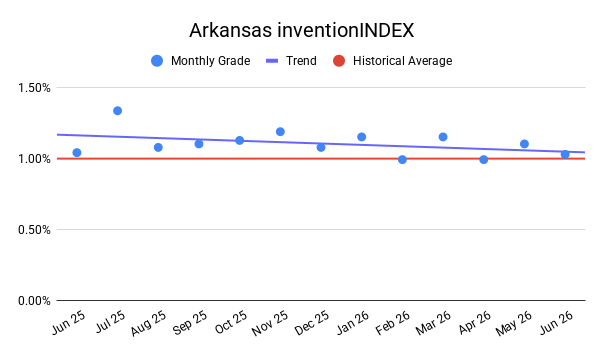
Recognizing its profound potential to disrupt the healthcare and wellness sectors, the invention was proudly awarded the Patent of the Month for the state of Arkansas for the month of July 2026. This prestigious regional honor highlights intellectual property that demonstrates exceptional engineering brilliance alongside high commercial and manufacturing viability within the state.
The selection committee chose this device because of its highly scalable manufacturing profile and its immediate utility in modern therapeutic applications. As Arkansas continues to expand its biotechnology and medical manufacturing footprint, the streamlined, cost-effective design of this patent offers local facilities a lucrative opportunity for high-volume production. By delivering a safer, more reliable user experience without the burden of expensive electronics, this invention perfectly embodies the spirit of practical, impactful innovation celebrated by the state.
Practical Applications and Eligibility for the U.S. R&D Tax Credit
To successfully leverage the practical applications of this patent for the United States Research and Development (R&D) tax credit under Internal Revenue Code Section 41, the development process must satisfy a strict four-part test. First, the project must possess a permitted purpose, meaning the engineering efforts were specifically directed toward creating or improving the functionality, reliability, or quality of a commercial business component, such as the device’s internal fluid reservoir or aerodynamic casing. Second, the development work must eliminate technological uncertainty regarding the optimal structural layout required to achieve consistent aerosolization without active heating. Third, the company must demonstrate a systematic process of experimentation, which involves designing, prototyping, and evaluating multiple mechanical configurations or fluid simulation models to determine the most effective design. Finally, the research must be technological in nature, relying fundamentally on principles of mechanical engineering, aerodynamics, and materials science. By thoroughly documenting the design iterations, fluid flow testing data, and prototype evaluations necessary to perfect this fluid inhalation device, the company can legitimately qualify its research expenses, including engineer wages, specialized testing supplies, and contract research costs, to claim this valuable tax credit.