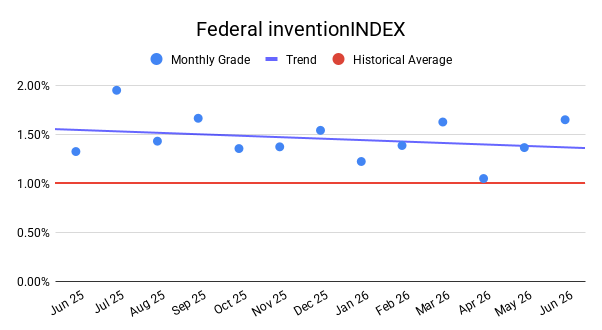
The self-driving industry has reached a major milestone this month with a groundbreaking technological advancement that ensures the safety and reliability of autonomous vehicles on our roads. The latest patent titled “Testing autonomous vehicle control performance based on dynamic input data,” recently awarded to Zoox, Inc., aims to solve one of the most persistent software challenges in complex automotive networks.
When engineers update instructions for one vehicle component, it can unexpectedly cause performance degradation in another system. By implementing a sophisticated testing component that uses heuristics and machine learned models, Zoox, Inc. can rigorously validate whether an instruction update improves a vehicle controller without negatively impacting other critical systems prior to a real-world deployment.
Why This Invention is Highly Innovative
The innovation lies in its ability to handle dynamic input data that changes constantly as a robotic device operates in its environment. Traditional testing mechanisms often rely on static baselines that fail to accurately capture complex, real-world conditions. This invention dynamically assesses the cascading effects of a software change across multiple interdependent machine learning models. By bridging the gap between simulated results and real-world unpredictability, this system allows engineers to push over-the-air updates with unprecedented confidence.
Patent of the Month: July 2026
For the month of July 2026, the automotive-battery-self-driving industry proudly awarded this invention the “Patent of the Month.” The reasoning behind this accolade is clear: as electric and autonomous fleets scale globally, the complexity of power management and self-driving algorithms increases exponentially. This patent provides a vital safety net. It guarantees that software updates aimed at improving battery efficiency or navigation do not compromise passenger safety or other vehicle operations. This proactive approach to software validation is exactly the kind of breakthrough the industry needs to achieve fully autonomous, zero-emission transportation safely.
Eligibility for USA R&D Tax Credits
The practical applications of this patent present a textbook case for Research and Development (R&D) tax credit eligibility in the USA. Under IRC Section 41, businesses can claim tax credits for activities that resolve technological uncertainty through a systematic process of experimentation. Developing and refining the testing algorithms described in this patent requires substantial engineering effort, computer science application, and simulated testing to eliminate uncertainties regarding software performance. Companies that invest resources into creating similar machine learning models to validate autonomous behavior against dynamic input data are directly engaging in qualified research activities. The wages, supplies, and cloud computing costs associated with developing these advanced testing frameworks can be applied toward substantial R&D tax credits, providing significant financial relief for continuous innovation.