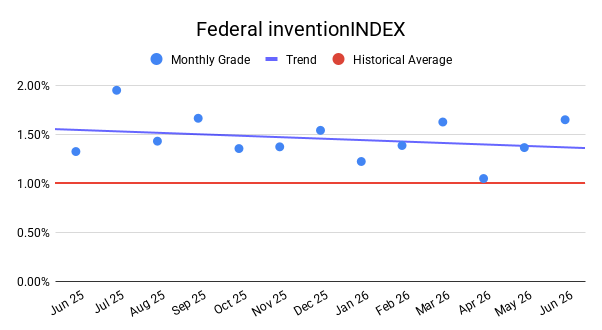
Welcome to our July 2026 spotlight for the aviation-aerospace-space industry. This month, we are thrilled to feature a truly groundbreaking leap in orbital logistics: the Method of space transportation using a distributed network of space tugs (Patent US 12643684).
This innovative patent was filed by MONTERO USA INCORPORATED. Their visionary approach to satellite deployment has fundamentally changed the conversation around ride-share missions and in-space transportation networks.
Why This Invention is Highly Innovative
Modern space launches frequently rely on massive rockets that possess excess capacity, making them highly efficient for primary missions but leaving room for secondary payloads. This encourages small satellite operators to book ride-shares. However, these shared launches often force smaller payloads into compromise orbits that do not perfectly align with their mission goals because the primary rocket cannot perform dozens of complex orbital insertions. This patented system resolves the issue by creating a distributed space transportation network. Instead of relying on the main launch vehicle for final placement, a specialized fleet of space tugs intercepts the smaller satellites at an initial arrival zone. These tugs autonomously dock with the satellites and transport them to their precise final destinations. Furthermore, the system includes orbiting satellite depots where the tugs can refuel and undergo repairs, ensuring long-term sustainability and efficiency in space.
Why It Won Patent of the Month for July 2026
We selected this invention as the Patent of the Month for the aviation-aerospace-space industry because it effectively decouples the heavy-lift launch phase from the precision orbital insertion phase. As orbital congestion and the demand for small satellite constellations reach all-time highs in 2026, efficient space logistics are more critical than ever. This distributed network maximizes the utility of large launch vehicles while offering bespoke delivery services for small payloads. It represents a paradigm shift in space infrastructure that lowers the barrier to entry for space exploration, making it a well-deserved winner for this month’s industry spotlight.
Eligibility for the R&D Tax Credit in the USA
For organizations looking to bring this distributed space network to life, the practical applications of this patent present significant opportunities to claim the Research and Development (R&D) tax credit in the United States. Developing the physical space tugs, advanced docking mechanisms, or the sophisticated software layers required for autonomous orbital maneuvering involves substantial technical uncertainty. Under Section 41 of the Internal Revenue Code, US-based companies that invest in iterative testing, physics modeling, and engineering to solve these aerospace challenges can qualify for federal R&D tax credits. By claiming the qualifying research expenses associated with these technological advancements, firms can heavily offset the massive financial costs of commercializing next-generation space logistics systems.