Sipple Care, Inc. has officially secured a groundbreaking patent from the United States Patent and Trademark Office for its new technology titled “Dynamic infant oral-motor assessment and feedback.” Registered under Patent No. 12,642,480, this innovative system introduces a specialized baby bottle attachment equipped with integrated sensors and machine learning capabilities to monitor infant feeding skills. The technology provides an accessible solution to a long-standing challenge in neonatal and pediatric care by tracking how an infant sucks, swallows, and breathes during feeds.
The innovation developed by Sipple Care, Inc. addresses a massive gap in early childhood development, as conventional tracking methods are often subjective or require specialized hospital visits. By embedding an array of sensors directly within a standard baby bottle housing, the system captures real-time data and delivers immediate feedback to parents and healthcare providers. This objective approach ensures that feeding difficulties, which can often be early warning signs of complex neurological or aerodigestive disorders, are detected well before they manifest into severe long-term health complications.
Why the Invention is So Innovative
What makes this invention exceptionally innovative is its transition from passive monitoring to dynamic, real-time feedback within an everyday household item. Traditionally, diagnosing oropharyngeal dysphagia or suck-swallow-breathe coordination issues in infants required highly invasive, radiation-heavy procedures such as videofluoroscopic swallow studies. Sipple Care, Inc. bypasses these hurdles by engineering a non-invasive housing containing a sophisticated suite of sensors, including microphones, barometric pressure sensors, accelerometers, and time-of-flight technology.
As the infant feeds, the device captures the acoustic signatures and physical mechanics of the feeding cycle. These data streams are processed using advanced time-series analysis and pretrained predictive models to evaluate coordination maturity. Crucially, the system does not simply log data for later review; it provides real-time adjustments. It can dynamically instruct a parent to pause the feeding, alter the feeding angle, or transition to a different nipple or bottle size, bringing neonatal intensive care unit level insights directly to the family kitchen.
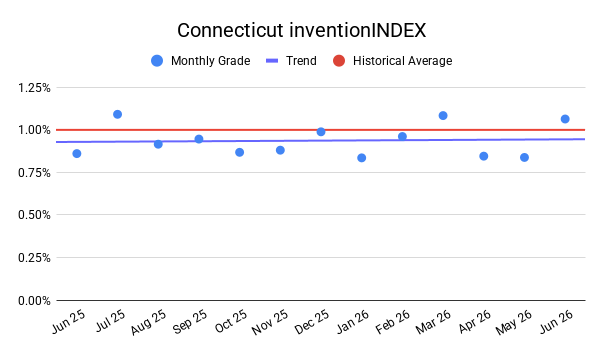
Winner of the Connecticut State Patent of the Month July 2026
Recognizing the profound societal and medical implications of this technology, the state of Connecticut honored Sipple Care, Inc. with the prestigious Patent of the Month award for July 2026. Based out of Riverside, Connecticut, the startup stands as a shining example of regional biomedical engineering excellence. The award committee highlighted the patent’s potential to dramatically reduce the strain on local healthcare systems and lower costs for families navigating infant feeding disorders.
By empowering parents with a ubiquitous, reliable gauge for feeding metrics, the invention ensures that high-risk infants, such as those recently discharged from neonatal units, receive continuous, high-quality monitoring. Connecticut’s recognition underscores the importance of local technology hubs driving advancements that combine artificial intelligence, hardware engineering, and compassionate clinical research to protect the state’s most vulnerable population.
Eligibility for the U.S. R&D Tax Credit
The practical applications and ongoing development of this patent are highly eligible for the United States Research and Development Tax Credit under Internal Revenue Code Section 41. To qualify, the company’s activities must pass a rigorous four-part test. First, the project exhibits a permissible purpose by aiming to create a fundamentally improved commercial product and software application to detect infant feeding disorders. Second, Sipple Care, Inc. faces substantial technical uncertainty regarding how to accurately isolate subtle feeding sounds from ambient background noise and how to minimize false-positive diagnostic readings across diverse home settings. Third, the company engages in a systematic process of experimentation through iterative prototyping, sensor alignment, and the training of machine learning algorithms based on extensive field data. Finally, the research is strictly technological in nature because it relies fundamentally on hard sciences, including acoustics, digital signal processing, computer science, and biomedical engineering. Consequently, qualified research expenses such as employee wages, prototype supply costs, and third-party developer fees are fully eligible to be claimed, providing the company with valuable capital to reinvest into further lifesaving healthcare solutions.