The United States Patent and Trademark Office recently published a major advancement in laboratory animal husbandry and veterinary care with the issuance of a new patent for an Animal Drinking Valve. This innovative technology was developed and patented by ClearH2O, Inc., a leading life sciences company headquartered in Westbrook, Maine. Designed to address the critical challenges of automated, pouch-based, and container-delivered animal hydration, this invention represents a major leap forward in research facility efficiency and animal welfare.
The patent, indexed under publication records like those found on Freepatentsonline as number 12660795, showcases a highly sophisticated mechanism tailored for rodents and other laboratory animals. By visiting the company’s official platform at https://www.clearh2o.com, industry professionals can explore how ClearH2O, Inc. continues to pioneer solutions that optimize nutrition, therapeutics, and hydration delivery. This specific patent focuses on a dual-material construction that ensures long-term operational reliability in demanding vivarium and agricultural environments.
Why the Animal Drinking Valve Is So Innovative
The innovation behind this animal drinking valve lies in its unique mechanical layout and dual-material architecture. Traditional watering valves often suffer from mechanical failure, clogging, or leakage when animals chew on them or when bedding materials become lodged in the opening. ClearH2O, Inc. solved these pervasive issues by engineering a valve body with a durable metal actuator member encased within a specialized plastic housing. This hybrid construction delivers maximum resistance to physical degradation and animal chewing while keeping manufacturing highly efficient and cost-effective.
Furthermore, the valve incorporates a revolutionary two-way actuation system. It is uniquely configured to open and allow liquid flow regardless of whether the force applied by the animal is perpendicular or parallel to the distal end of the actuator member. This omnidirectional responsiveness ensures that even smaller, vulnerable weanling animals can easily activate the valve to obtain water on demand, effectively preventing dehydration. Additionally, the exterior features specialized fin-like projections that facilitate flawless installation into host platforms and penetrable liquid containers, minimizing setup errors and eliminating costly cage spillage that can threaten animal health.
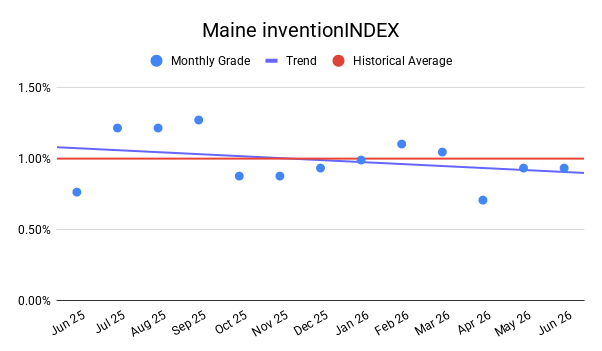
Maine Patent of the Month for July 2026
Recognizing its profound impact on biotechnology and life science infrastructure, this animal drinking valve has been awarded the prestigious title of Patent of the Month for the State of Maine for July 2026. This monthly honor highlights exceptional local inventions that drive significant industry evolution. ClearH2O, Inc. secured this recognition due to the valve’s immediate practical utility in global research environments and its contribution to laboratory animal welfare standards. By minimizing water waste and eliminating dry bedding contamination, this Westbrook-based company has reinforced Maine’s reputation as a growing hub for high-impact biotechnology and advanced agricultural product design.
U.S. R&D Tax Credit Eligibility for Practical Applications
To qualify for the federal Research and Development (R&D) tax credit in the United States under Internal Revenue Code Section 41, a company must satisfy a strict four-part test, which the practical applications of this patent perfectly demonstrate. First, the development of the drinking valve serves a permitted purpose, focusing on creating an improved, commercialized product that enhances fluid delivery reliability. Second, ClearH2O, Inc. actively worked to eliminate technical uncertainty regarding how to balance dual-material interfaces and internal spring tensions to prevent leaks while remaining easily operable by weanlings. Third, the engineering journey inherently required a process of experimentation, involving rigorous physical prototyping, fluid dynamics modeling, and iterative testing of the two-way actuator under varied pressure conditions. Finally, the research relies firmly on the principles of hard science, incorporating advanced elements of mechanical engineering, materials science, and fluid physics. Consequently, the qualified employee wages, supply costs, and third-party testing expenditures accumulated during the engineering and validation phases of this patent are highly eligible for substantial R&D tax credits.