The United States Patent and Trademark Office recently issued US Patent Number 12616216 for a pioneering “Poultry deboning device and method” developed by Blexley Holdings LLC. This highly automated mechanical system represents a monumental leap forward in industrial food processing technology, introducing unprecedented precision to high-volume assembly lines. Because a specific public website for Blexley Holdings LLC could not be retrieved during technical indexing, the company is listed directly by its legal corporate registration text as the sole owner and assignee of this proprietary hardware innovation.
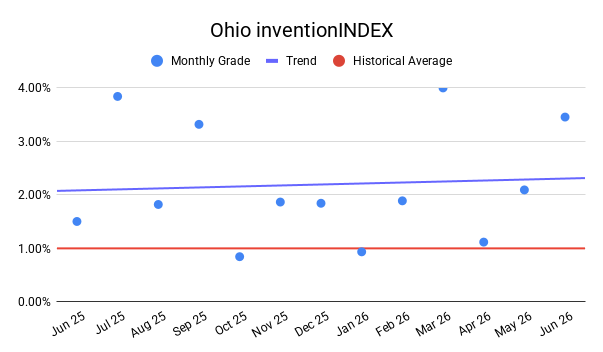
In recognition of this engineering breakthrough, the state of Ohio has honored this technology as its official “Patent of the Month” for June 2026. This award highlights exceptional regional developments within agricultural manufacturing that resolve long-standing operational bottlenecks. By providing a reliable mechanical solution to a traditionally manual task, this patented invention reinforces Ohio’s status as a leading hub for advanced agricultural engineering and automated systems development during the current 2026 calendar year.
Why the Poultry Deboning Device is So Innovative
Traditional poultry deboning processes rely heavily on intensive manual labor or crude, heavy-handed machinery that frequently compromises meat yield, fractures bones, and increases contamination risks. The system designed by Blexley Holdings LLC solves these pervasive industry issues through a meticulously synchronized dual-chuck assembly. The device incorporates a holder mechanism featuring a specialized holder chuck that receives and secures a first portion of the poultry product using internal blades. Concurrently, a companion grabber mechanism uses a distinct grabber chuck to firmly grasp a second portion of the poultry product. Once both components are engaged, the grabber mechanism moves physically away from the holder chuck, creating a controlled, high-efficiency pull sequence that cleanly extracts the bone without damaging the surrounding tissue.
The core innovation resides within the selective engagement of the specialized blades integrated directly into the openings of both the holder and grabber chucks. Rather than haphazardly slicing the meat, these blades engage the exact anatomical boundaries between muscle tissue and bone. By automating the extraction sequence with precise mechanical tension, the apparatus dramatically optimizes raw product throughput while minimizing meat wastage. Furthermore, substituting manual bone-pulling with an automated mechanical process reduces worker fatigue, protects plant personnel from repetitive strain injuries, and elevates overall hygienic standards across global food supply chains.
U.S. R&D Tax Credit Eligibility for Practical Applications
From a commercial perspective, food manufacturing facilities and equipment developers adapting this patented technology for practical plant applications may qualify for the U.S. Research and Development (R&D) Tax Credit under Internal Revenue Code Section 41. To satisfy eligibility requirements, engineering teams must fulfill a strict four-part test proving that their work involves a permitted purpose, technological reliance, elimination of uncertainty, and a process of experimentation. Facilities seeking to integrate this deboning method into custom production environments engage in qualifying activities when they design unique blade geometries, program automated robotic interfaces, or scale the holder chuck dimensions to accommodate varying poultry sizes. The extensive prototyping, computer modeling, and systematic trial-and-error testing necessary to refine meat-separation yields and sync the chuck mechanisms constitute qualified research expenses (QREs), allowing businesses to claim significant tax savings on their engineering labor and materials.