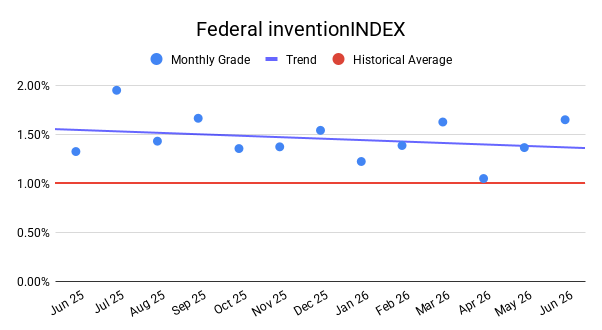
The energy sector continues to see rapid technological advancements aimed at improving efficiency and reducing costs. This month, we are focusing on an exceptional piece of intellectual property patented by Chevron U.S.A. Inc., officially titled “System and method for uncertainty calculation in unconventional hydrocarbon reservoirs” under US Patent No. 12655748. This technology marks a significant milestone in reservoir engineering by bringing cutting edge artificial intelligence to the oil and gas industry.
This newly patented system utilizes a physics guided convolutional neural network to accurately estimate uncertainties in reservoir parameters. By generating a plurality of reservoir models through an efficient data analysis and uncertainty step, Chevron U.S.A. Inc. has developed a powerful tool for navigating the complexities of unconventional resource extraction. Traditional modeling is often heavily resource intensive, but this modern approach successfully merges physical constraints with the speed of machine learning.
Why This Invention is Highly Innovative
Unconventional hydrocarbon reservoirs are notably complex to model because of their highly heterogeneous nature and unpredictable fluid dynamics. Traditional physics based models can be incredibly computationally intensive, requiring large amounts of time and processing power to simulate. This invention is highly innovative because it directly embeds physical laws into a machine learning framework. By deploying a physics guided neural network, the system successfully bridges the gap between purely data driven AI models and traditional reservoir simulations. This drastically reduces the computational time required while ensuring that the output models remain physically realistic and reliable for field engineers.
July 2026 Patent of the Month for the Oil-Gas-Nonrenewables Industry
This invention proudly won the patent of the month for the oil-gas-nonrenewables industry for the month of July 2026 because it perfectly aligns with the sector’s current critical push toward digital transformation. In the global energy landscape of 2026, maximizing extraction efficiency while keeping operational costs low is an absolute necessity. By accelerating how quickly operators can assess uncertainty in complex reservoirs, this technology allows companies to optimize well placement and hydraulic fracturing strategies much faster than before. It provides an immediate and distinct competitive advantage in managing the unique challenges associated with unconventional resource development.
Applying Practical Applications for US R&D Tax Credits
The practical applications of this patent are highly relevant for organizations seeking to claim the Research and Development Tax Credit under IRC Section 41 in the USA. To qualify for this R&D tax credit, activities must meet a four part test involving a permitted purpose, the elimination of technological uncertainty, a process of experimentation, and reliance on hard sciences. When energy or software companies adapt these physics guided neural networks to their own proprietary field data, they are actively engaging in qualified research. The iterative process of testing new machine learning architectures, writing custom software algorithms, and calibrating the artificial intelligence systems for specific geologic formations involves directly eliminating technical uncertainties. Therefore, the wages for data scientists and petroleum engineers, as well as the cloud computing costs required to run these intensive models, can directly qualify as research expenses. This offers significant financial relief for organizations that are actively innovating their reservoir management and modeling capabilities.