The United States Patent and Trademark Office recently issued US Patent Number 12618293 for a pioneering “PDC bit element with retention feature” developed by Taurex Drill Bits, LLC (https://taurexbits.com/). This specialized mechanical advancement introduces a highly reliable structural engineering solution to downhole drilling tools, providing advanced stability for high-stress energy exploration. By integrating a dedicated mechanical locking component directly onto the cutter assembly, this proprietary hardware configuration protects expensive drilling bits from premature degradation and mechanical separation during intensive subterranean operations.
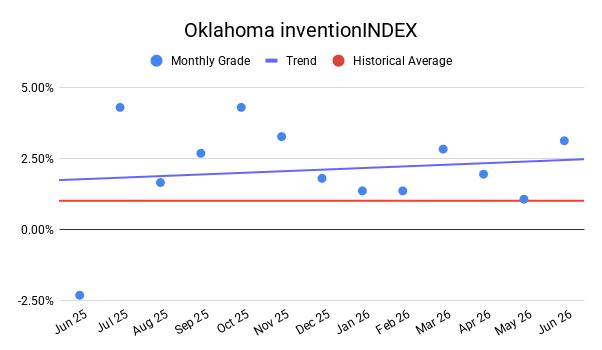
In recognition of this engineering breakthrough, the state of Oklahoma has honored this technology as its official “Patent of the Month” for June 2026. This prestigious regional award celebrates exceptional industrial design and manufacturing milestones that drive operational efficiency inside the energy sector. By providing a rugged alternative to traditional tool retention methods, this newly patented invention emphasizes Oklahoma’s critical position as an influential epicenter for specialized oilfield equipment development and advanced mechanical engineering throughout the current 2026 calendar year.
Why the PDC Bit Element with Retention Feature is So Innovative
Traditional Polycrystalline Diamond Compact (PDC) cutters are typically secured inside a drill bit pocket using specialized brazing or high-pressure interference fitting techniques. However, during high-velocity drilling operations through ultra-hard or abrasive geological formations, these traditional cutters encounter immense torque, extreme thermal cycles, and erratic vibrational loads. Under these severe downhole stresses, standard brazed joints frequently fail, leading to cutter delamination, rotation, or complete detachment from the bit body. Lost cutters not only ruin the drill bit but also leave hard debris in the wellbore, triggering catastrophic tool damage and requiring operators to perform expensive, time-consuming operations to fish out the fragmented parts.
The solution engineered by Taurex Drill Bits, LLC introduces a transformative mechanical safeguard that directly targets this vulnerability. The patented system features a drill bit body equipped with a series of specialized cutter pockets, where each individual pocket includes a floor and a custom-machined internal orifice. Every matching PDC cutter is built with a resilient diamond table integrated onto a sturdy substrate, but it uniquely features a proprietary retention element projecting directly from the bottom surface of that substrate. This protruding retention feature is meticulously sized to slot tightly into the base orifice of the cutter pocket, offering a robust mechanical interlock that absorbs multi-directional sheer forces. By providing this physical anchor alongside conventional bonding methods, the design restricts micro-movements, optimizes stress distribution across the pocket interface, and substantially drops the risk of downhole cutter loss.
U.S. R&D Tax Credit Eligibility for Practical Applications
From a commercial and technical perspective, oilfield tool manufacturing companies and engineering service providers modifying this patented retention architecture for commercial applications can qualify for the U.S. Research and Development (R&D) Tax Credit under Internal Revenue Code Section 41. To secure eligibility, businesses must satisfy a rigorous four-part framework showing that their operational adjustments resolve technical uncertainties through an iterative process of experimentation. Qualifying industrial activities occur when design teams develop alternative geometric variations of the base retention peg (such as tapered, threaded, or multi-faceted locking profiles) or formulate specialized metallurgical compositions to enhance thermal durability at the substrate interface. The extensive modeling, finite element analysis (FEA) testing to observe torsional load distributions, and sacrificial field prototyping necessary to ensure the structural longevity of these customized cutter pocket configurations all constitute Qualified Research Expenses (QREs), allowing energy technology companies to successfully claim substantial tax credits against their technical payroll and prototyping material costs.