The pet technology industry has achieved a significant milestone with the official publication of a groundbreaking new patent. This innovation, titled “Pet toilet,” was officially assigned to PetPivot Inc., an engineering-driven company based out of Portland, Oregon.
Registered under U.S. Patent Number 12,616,163, this newly issued patent outlines a sophisticated automatic cleaning system designed to drastically improve the domestic management of pet waste. By focusing heavily on physical safety mechanisms and robust structural components, the invention establishes a new benchmark for automated pet care appliances.
Unmatched Safety and Mechanical Innovation
What makes this pet toilet exceptionally innovative is its revolutionary shift from purely digital safety dependencies to a fail-safe mechanical architecture. While traditional automatic litter boxes rely heavily on cloud-connected sensors and software code that can glitch, PetPivot’s patented design integrates a physical safety notch and a unique half-gear structure. When the cleaning drum rotates on its base, if a pet enters the safety space between the components, the specialized safety notch provides an immediate escape path. Reinforced by a 30-degree mechanical safety limiter, this structural framework physically prevents the pet from being pinched or trapped. This offline reliability ensures complete animal protection regardless of internet connectivity, power flickers, or firmware status.
Why It Won Oregon’s Patent of the Month for June 2026
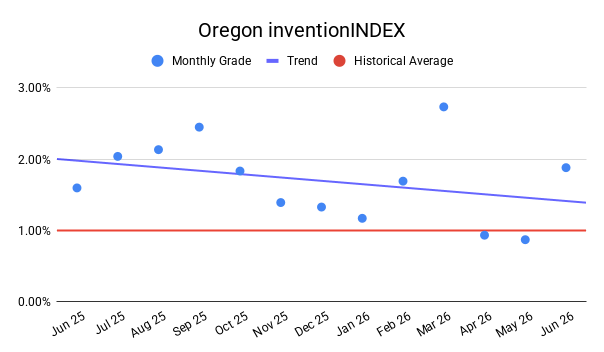
Recognizing outstanding local ingenuity, the state review panel named this invention the Oregon State Patent of the Month for June 2026. Headquartered in Portland, PetPivot Inc. has demonstrated how regional manufacturing and engineering can solve widespread consumer safety dilemmas. The award honors the patent for addressing a critical vulnerability in the smart appliance market: the historical risk of pet injury from automated rotating devices. By delivering a privacy-first, app-free device that works entirely out of the box, PetPivot has shown that sustainable, safe, and highly reliable consumer tech can thrive without the need for predatory subscription models or invasive data tracking.
U.S. R&D Tax Credit Eligibility and Practical Applications
The practical development and engineering applications of this patent serve as an excellent case study for claiming the U.S. Research and Development (R&D) Tax Credit under Internal Revenue Code Section 41. To qualify, a company must satisfy a strict four-part test: the research must have a permitted purpose to improve a product’s functionality, it must eliminate technological uncertainty, it must involve a systematic process of experimentation, and it must be technological in nature. PetPivot Inc. met these criteria by dedicating substantial engineering hours to resolving the technical uncertainties surrounding pet entrapment in mechanical rotating assemblies. Their iterative process of prototyping, evaluating multi-sensor infrared matrices, and testing the physical load tolerances of the 30-degree mechanical limiter constitutes qualified research activities (QRAs). Consequently, the wages paid to the engineers, the costs of testing supplies, and the expenses incurred during the development of these safety structures are fully eligible to be applied toward substantial R&D tax credits in the United States.