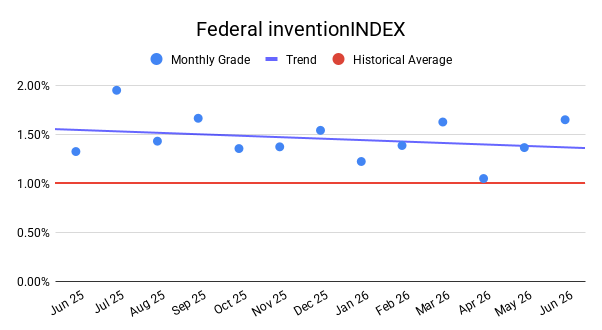
The July 2026 Patent of the Month for the real-estate-development industry goes to First American Title Company for their groundbreaking invention, “Systems and methods for performing a real property transaction” (US Patent 12664533).
Why This Invention is Innovative
This patented technology solves a critical vulnerability in standard blockchain implementations which is the risk of lost or compromised private keys. First American Title Company engineered a novel solution where the original private key is stored in the property owner’s digital wallet, while a duplicate copy is securely maintained in a private key data store within a digital rights management system. When a property transaction occurs, a smart contract is executed using these dual safeguards to mint a new token representing the property rights. This dual-key mechanism makes the network exponentially more secure than typical peer-to-peer blockchains, practically eliminating malicious activity, unauthorized transfers, and title fraud.
Why It Won Patent of the Month for July 2026
The real-estate-development industry selected this invention as the July 2026 Patent of the Month because it provides the exact missing link needed to fully transition real property transactions into the digital age. As developers and buyers demand faster closing times and impenetrable title security, First American Title Company has delivered a commercial-ready framework. This invention drastically cuts down the time required for title searches and ownership verification, allowing developers to expedite project timelines, secure financing quicker, and transfer parcels of land with absolute cryptographic certainty.
Practical Applications and the R&D Tax Credit in the USA
For software developers and real estate technology firms, practically applying this patent presents excellent opportunities to claim the Research and Development (R&D) tax credit in the USA. Building a proprietary digital rights management system that interfaces with a private blockchain to duplicate and store private keys involves significant technological uncertainty. Engineering teams must conduct iterative testing to ensure smart contracts execute flawlessly when transferring property rights such as easements, mineral rights, or possession rights without exposing the duplicate private keys to cyber threats. The process of experimenting with custom blockchain architectures, developing novel security protocols for key storage, and integrating these systems with local municipal recorder data stores directly qualifies as qualified research activities under Section 41 of the Internal Revenue Code. Companies investing in this level of software development can leverage the R&D tax credit to offset the high costs of pioneering next-generation real estate platforms.