The United States Patent and Trademark Office has officially granted Patent No. 12,617,093 to Intrinsic Innovation LLC for their cutting-edge invention titled “Real-time robotic control using digital twin models.” This newly issued patent marks a major milestone in advanced robotic automation and artificial intelligence software, offering industrial software developers, automation engineers, and system integrators a highly responsive, flexible, and accurate control platform designed to safely orchestrate complex manufacturing tasks.
According to the official patent documentation, the robotic control system features a digital twin modeling workspace, an execution engine processing custom real-time actions, a high-frequency communication layer, and an integrated telemetry feedback loop. The foundational breakthrough of this system rests on its ability to execute custom control definitions at each precise tick of a real-time control cycle, allowing the digital twin model to dynamically direct physical hardware trajectories without introducing structural latency or safety-critical data desynchronization.
Why the Invention Is Truly Innovative
Traditional industrial robotic setups rely on highly rigid, pre-programmed path trajectories that operate in static, isolated environments. When manufacturers want to integrate a “digital twin” (a virtual replica of the physical environment), the virtual model is almost exclusively limited to passive monitoring or offline simulations. This limitation exists because hard real-time robotic systems operate on incredibly strict timing cycles, often requiring command updates every single millisecond. Infusing a complex virtual simulation directly into this live execution loop has historically been impossible due to data latency spikes, which can cause a physical robot to jitter, fail to meet its deadline, or violently collide with a human worker or nearby machinery.
The architecture engineered by Intrinsic Innovation LLC completely eliminates this operational boundary. By separating the framework into an adaptive non-real-time abstraction layer and a hard real-time execution layer, the system enables complex AI-driven digital twins to communicate safely with physical hardware. At every individual tick of the robotic control cycle, the software evaluates custom actions based on live sensor feedback and the digital twin’s state. This means the robot can perceive unexpected changes in its physical environment, compute a collision-free alternative path via the digital twin, and instantly alter its course mid-motion. This level of dynamic control transforms heavy industrial arms from blind, repetitive machines into intelligent, self-correcting collaborators.
Recognized as June 2026 Patent of the Month
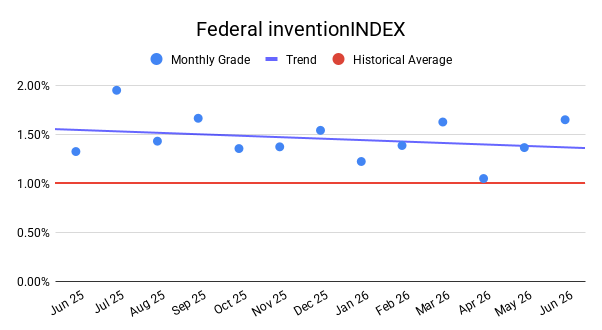
This remarkable breakthrough in intelligent automation has proudly secured the “Patent of the Month” distinction for June 2026 within the robotics-computer-engineering industry. The selection committee focused heavily on the profound computer engineering achievements necessary to achieve deterministic execution using abstract virtual modeling. Overcoming the software bottlenecks that have plagued real-time digital twin integrations for decades represents a monumental milestone in industrial software architecture. The committee lauded Intrinsic for translating intricate AI logic into dependable, safe, and deployable factory-floor solutions.
Furthermore, the industry wide economic and operational implications played a decisive role in securing this award. By allowing robots to safely adjust to variations on the assembly line in real time, this system drastically lowers the specialized manual programming hours traditionally required to configure robotic workcells. Manufacturers can test, optimize, and deploy software updates completely in a virtual sandbox before pushing them live to physical machinery, reducing production downtime from weeks to mere minutes. This standard of flexibility provides logistics centers, aerospace assembly lines, and automotive manufacturers with an ultra-efficient tool to scale up highly customized, low-volume production runs with unprecedented cost efficiency.
U.S. R&D Tax Credit Eligibility and Practical Applications
From an enterprise and product development perspective, the practical applications and rigorous engineering required to implement this real-time digital twin framework provide an excellent pathway for companies looking to claim the United States Research and Development (R&D) Tax Credit under Internal Revenue Code Section 41. To secure these valuable federal tax incentives, a company’s development activities must satisfy a strict four-part statutory test: the work must be technological in nature, target the functional improvement of a business component, eliminate engineering uncertainty, and incorporate a systematic process of experimentation. Automation firms, manufacturing facilities, and software development teams can capture substantial qualified research expenses (QREs) by meticulously documenting their technical customization cycles. Eligible qualifying activities encompass the custom software engineering required to interface proprietary robotic hardware with the real-time control ticks, the development of low-latency networking protocols to avoid telemetry packet loss, and the algorithmic optimization of multi-robot collision-avoidance routines. Additionally, building physical test workcells to eliminate technical uncertainty regarding exact hardware latency thresholds or executing iterative trial cycles to validate the digital twin’s accuracy under unpredictable physical interferences represent classic examples of qualified research and development work that directly reinforces a successful R&D tax credit claim.