The United States Patent and Trademark Office has officially issued a groundbreaking new patent, Patent No. 12,629,909, for a novel Cannabis foot press. This newly patented technology was assigned to Sunsoil PBC, an innovative organic hemp and CBD manufacturing company based in Vermont.
The invention represents a significant advancement in the field of botanical extraction, specifically focusing on a mechanical foot-operated system designed to safely and efficiently extract solventless rosin from cannabis plant materials. By introducing enhanced structural stability and precise mechanical control, this apparatus overcomes several long-standing limitations associated with conventional manual extraction presses.
Why the Cannabis Foot Press is Highly Innovative
Sunsoil PBC’s patented design addresses a critical challenge in solventless extraction: maintaining uniform pressure and absolute mechanical safety without relying on heavy, expensive, or chemical-dependent machinery. The system features a unique baseplate that is specifically configured to releasably attach to a standard heat press unit. This unit consists of a top section with a first heat plate and a bottom section with a second heat plate, closing downwardly to compress the cannabis material.
The core innovation lies within the baseplate assembly itself. It utilizes a multi-sided substrate where the first side rests flat on a work surface, while the second side securely accepts the bottom of the heat press unit. Crucially, the apparatus incorporates a pair of lateral stabilizer guides coupled directly to the substrate. These guides are engineered to maintain the top section in a perfectly stable lateral position as it descends. Under intense mechanical pressure, standard manual presses frequently suffer from shifting, tilting, or uneven torque, which can ruin the extraction yield or create workplace hazards. By completely eliminating lateral play, this invention ensures a perfectly uniform distribution of heat and force, maximizing pure rosin output while protecting the operator.
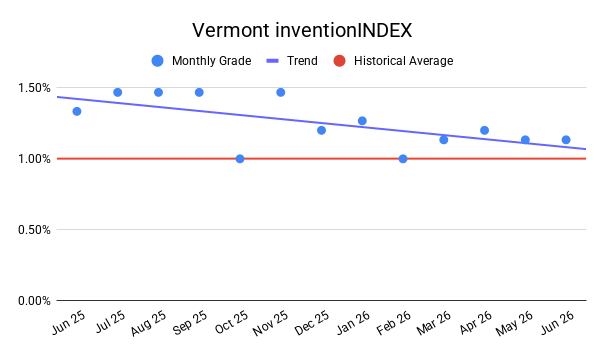
Winner of the Vermont State Patent of the Month (June 2026)
The state of Vermont has recognized this invention as its prestigious Patent of the Month for June 2026 due to its exceptional contribution to sustainable, localized agricultural technology. Vermont has long been a hub for high-quality, craft cannabis cultivation and ecological farming practices. Sunsoil PBC, known for its grassroots commitment to affordable and clean CBD production, embodies this ethos perfectly through this patent.
Rather than pushing small-scale producers toward industrial-scale, chemical-heavy extraction setups that require hazardous organic solvents, Sunsoil’s foot press empowers local artisans. The foot-operated mechanism leverages human mechanical advantage safely, making high-fidelity solventless rosin extraction accessible and cost-effective. June 2026 marks a milestone for the local industry as this patent highlights how smart, mechanical engineering can elevate local craft production, aligning perfectly with Vermont’s dedication to sustainable innovation and safety standards.
Eligibility for the U.S. R&D Tax Credit
To leverage the practical applications of this patent for the United States Research and Development (R&D) tax credit under IRS Section 41, a company must demonstrate that the development of the system satisfies the statutory four-part test. First, the work must satisfy the permitted purpose test by aiming to create a new or improved product or process, which is exemplified by inventing a safer, more efficient extraction apparatus. Second, the development must resolve technological uncertainty, specifically regarding how to design a baseplate and a pair of lateral stabilizer guides capable of maintaining lateral alignment under intense mechanical compression and high heat. Third, the company must engage in a process of experimentation, which involves modeling, prototyping, and testing various physical geometries and stabilizer tracking mechanisms to evaluate their effectiveness at preventing mechanical shifting. Finally, the research must be technological in nature, relying directly on the principles of mechanical engineering and physics. By documenting the hours spent by engineers, the costs of fabrication materials for prototypes, and the expenses incurred during iterative physical testing, the practical application of this patented technology generates eligible Qualified Research Expenses (QREs) to secure the federal R&D tax credit.