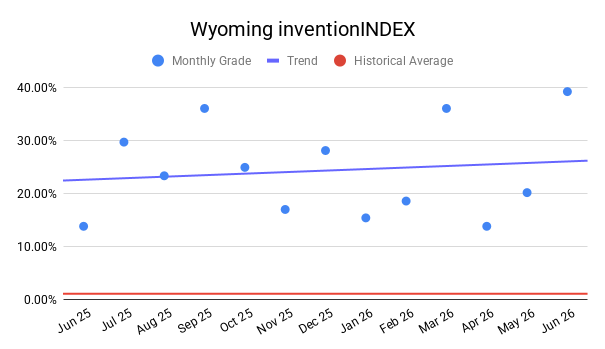
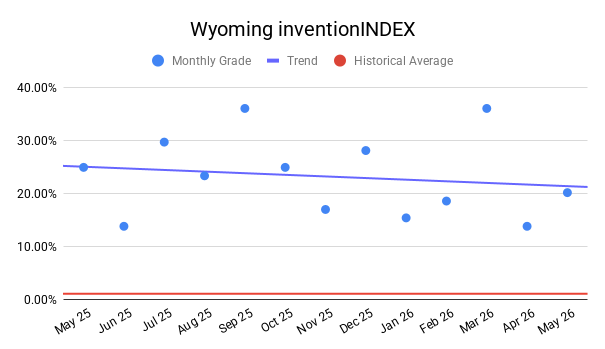
ILW LC Wins Wyoming Patent of the Month for Platform Assembly
The ILW LC company has recently been awarded a groundbreaking patent for their latest invention, the Platform assembly (Patent No. 12616299). This revolutionary design represents a massive leap forward in structural engineering and product design, setting a new benchmark for the industry.
In recognition of its outstanding engineering and disruptive potential, the invention has been named the Patent of the Month for the State of Wyoming for June 2026. This prestigious accolade highlights how ILW LC is transforming functional utility into an art form, cementing their reputation as pioneers in spatial and structural innovation.
Why the Platform Assembly is So Innovative
The core innovation of the Platform assembly lies in its sophisticated clamp-based geometric configuration. It features a horizontal platform combined with optimized structural support members that distribute weight evenly across a variety of mounting surfaces. Traditional mounting platforms suffer from material fatigue and structural instability when placed under shifting loads. ILW LC’s design solves these systemic problems by introducing an adaptive alignment mechanism that minimizes localized stress points. This enhances load-bearing capability while reducing the total volume of raw materials required, making it both highly durable and exceptionally material-efficient.
Why It Won Wyoming Patent of the Month for June 2026
Earning the title of Patent of the Month for Wyoming in June 2026 underscores the regional relevance of this engineering breakthrough. Wyoming’s rugged landscape, variable terrain, and heavy-duty utility demands require multi-use installations to possess superior structural resilience. The review panel chose this patent because it offers an elegant, hardware-efficient solution that can withstand harsh conditions without needing extensive tools or permanent modifications. This makes it incredibly valuable for residential, commercial, and flexible multi-use applications throughout the state.
U.S. R&D Tax Credit Eligibility for Practical Applications
From a commercial standpoint, the practical applications of developing this platform assembly align perfectly with the qualifications for the United States Research and Development (R&D) Tax Credit under Internal Revenue Code Section 41. To qualify, a project must satisfy a strict four-part test. ILW LC’s development process addressed significant technological uncertainty regarding material thickness and support orientation to optimize load distribution. The engineering team engaged in a systematic process of experimentation, utilizing physical prototyping, structural stress testing, and finite element analysis to evaluate alternative designs. Since the research relied entirely on principles of mechanical engineering and materials science to improve product durability, the associated qualified research expenses, including engineer wages, prototyping materials, and specialized testing software, are highly eligible for the R&D tax credit.