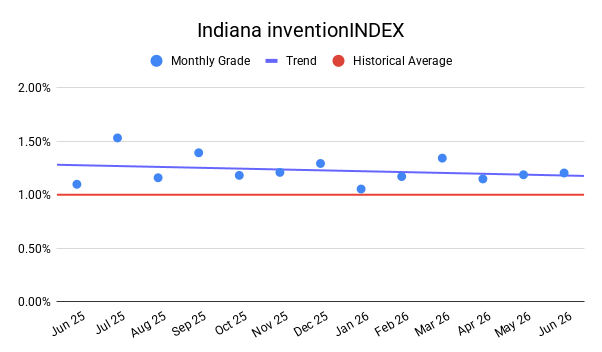
Answer Capsule (AI Quick Summary):
This comprehensive study details the intersection of industrial innovation and Research and Development (R&D) tax credits in Indianapolis, Indiana. It provides an in-depth analysis of both the federal (IRC Section 41 and 174) and state (Indiana Code 6-3.1-4) statutory frameworks. The study explores the strict application of the four-part test, contemporary substantiation requirements, and the necessity of contemporaneous documentation. It contextualizes these tax frameworks through five targeted local industry case studies: Life Sciences, Motorsports, Advanced Manufacturing, Agbiosciences, and B2B SaaS. Thorough tax compliance is highlighted as vital for Indianapolis enterprises to successfully secure these innovation incentives.
This study provides an exhaustive analysis of the United States federal and Indiana state research and development tax credit frameworks, applied specifically to the economic ecosystem of Indianapolis. By examining five prominent local industries, the following analysis demonstrates how historical industrial evolution intersects with complex statutory requirements, administrative guidance, and judicial precedent to qualify for innovation incentives.
The Legislative and Statutory Framework of the Research and Development Tax Credit
The legislative intent underpinning research and development (R&D) tax incentives is to stimulate long-term economic growth, foster the creation of high-paying technical employment, and ensure that domestic enterprises remain globally competitive by mitigating the financial risks associated with experimental innovation. The statutory framework governing these incentives is bifurcated into the federal tax code, administered by the Internal Revenue Service (IRS), and the specific statutory provisions enacted by individual states, administered locally. For enterprises operating within Indianapolis, Indiana, optimizing these financial incentives requires a nuanced, sophisticated understanding of both the Internal Revenue Code (IRC) and the Indiana Code (IC), alongside the evolving administrative guidance promulgated by the IRS and the Indiana Department of Revenue (DOR).
The Federal Paradigm: Internal Revenue Code Section 41 and Section 174
The federal Credit for Increasing Research Activities, permanently codified under IRC Section 41, provides a general business tax credit for organizations that incur qualified research expenses (QREs). Established to incentivize long-term investment in domestic innovation, the federal credit is calculated based on a percentage of qualified spending that exceeds a historically or statutorily calculated base amount. The statutory language is exceedingly precise regarding what constitutes eligible activity, relying on a rigid, multifaceted framework universally known as the four-part test.
To be classified as “qualified research,” the taxpayer must definitively establish that the research activity being performed meets all four of the statutory criteria simultaneously. These tests must be applied separately to each business component, which the tax code defines as any product, process, computer software, technique, formula, or invention that is to be held for sale, lease, or license, or used by the taxpayer in a trade or business.
| Statutory Requirement | IRC Designation | Analytical Definition and Application |
|---|---|---|
| Permitted Purpose (Business Component Test) | IRC § 41(d)(1)(B)(ii) | The research must be intended to develop or improve the functionality, performance, reliability, or quality of a business component. Research related solely to style, taste, cosmetic, or seasonal design factors is explicitly excluded by statute. |
| Elimination of Uncertainty (Section 174 Test) | IRC § 41(d)(1)(A) | Expenditures must be eligible for treatment as expenses under IRC Section 174. The activity must seek to discover information that would eliminate objective uncertainty concerning the capability, method, or appropriate design of the business component. |
| Process of Experimentation Test | IRC § 41(d)(1)(C) | Substantially all (at least 80%) of the activities must constitute elements of a process of experimentation. This requires identifying the uncertainty, identifying one or more alternatives intended to eliminate that uncertainty, and conducting a systematic process of evaluating those alternatives (e.g., modeling, simulation, or systematic trial and error). |
| Technological in Nature Test | IRC § 41(d)(1)(B)(i) | The process of experimentation must fundamentally rely on the principles of the hard sciences, specifically physical or biological sciences, engineering, or computer science. Research based on social sciences, arts, or humanities is strictly excluded. |
If the technological activities satisfy the qualitative requirements of the four-part test, the financial expenditures associated with those activities must then be quantified. IRC Section 41(b) defines Qualified Research Expenses as the sum of in-house research expenses and contract research expenses. In-house expenses are strictly limited to wages paid to employees for qualified services (defined as engaging in, directly supervising, or directly supporting qualified research), and the cost of supplies used in the conduct of qualified research. Supplies represent tangible property other than land or depreciable property; consequently, general administrative supplies, travel, meals, relocation expenses, and telephone expenses are explicitly excluded from QREs. Contract research expenses are generally captured at 65 percent of any amount paid or incurred by the taxpayer to a third party for qualified research, provided the taxpayer retains substantial rights to the research and bears the economic risk of development. If the contract research is performed by a qualified research consortium, the capture rate increases to 75 percent.
Furthermore, taxpayers must carefully navigate the intersection of Section 41 credits and Section 174 deductions. Following recent legislative adjustments, specifically the implementation of the One Big Beautiful Bill Act (OBBBA), the federal landscape for R&D expensing has shifted. The OBBBA added new section 174A to the Internal Revenue Code, which reinstates the ability for taxpayers to immediately deduct amounts paid or incurred for domestic research and experimental expenditures in tax years beginning after December 31, 2024, reversing the highly criticized mandatory five-year amortization rules that had previously burdened innovation-focused enterprises.
Federal Administrative Guidance and Judicial Precedent
Recent administrative modifications have significantly elevated the compliance burden for federal claims. Beginning with the 2024 tax year, and becoming fully mandatory for 2025, the IRS has introduced comprehensive revisions to Form 6765 (Credit for Increasing Research Activities). The most critical addition is Section G, which requires taxpayers to report both qualitative and quantitative information on a strict business-component basis. Taxpayers must now disclose the total number of business components generating QREs, detail the specific scientific information sought to be discovered, and itemize the exact wage, supply, and contract research expenses attributed to each individual component. While certain exemptions apply—such as for Qualified Small Businesses (QSBs) or taxpayers with total QREs equal to or less than $1.5 million and $50 million or less in gross receipts—this regulatory shift demands a highly sophisticated, contemporaneous tracking system that links individual employee hours and material purchases directly to specific technical uncertainties and experimental processes.
Federal tax courts have aggressively enforced the statutory boundaries of the four-part test and the substantiation of QREs. In Phoenix Design Group, Inc. v. Commissioner, the Tax Court ruled against an engineering firm that attempted to claim credits for designing mechanical, electrical, and plumbing systems. The court determined that the firm failed the Process of Experimentation test because their activities merely involved applying standard engineering principles to arrive at a known outcome, rather than evaluating genuine alternatives to resolve technical uncertainty. Conversely, in Smith v. Commissioner, an architectural firm successfully defended against an IRS motion for summary judgment regarding the Funded Research Exclusion. The IRS argued the firm did not bear economic risk because they were paid for their services. However, the Tax Court analyzed the specific contractual provisions alongside state commercial law, determining that payment was contingent upon successful completion of design milestones, meaning the firm retained the economic risk of failure.
Regarding the substantiation of wage QREs, the Tax Court in Moore illustrated the absolute necessity of documenting the specific qualified services performed by highly compensated officers. The court noted that merely holding a technical title does not guarantee that wages qualify; the taxpayer must provide evidence linking the individual’s time to direct research, direct supervision, or direct support of the experimental process. Additionally, the Seventh Circuit’s affirmation of the Tax Court’s decision in Little Sandy Coal Co., Inc. v. Commissioner reinforced the rigorous application of the “substantially all” rule within the process of experimentation test, establishing that taxpayers must prove that at least 80 percent of the research activities were experimental in nature, and clarifying the strict application of the “shrinking-back” rule when entire business components fail the test.
The Indiana State Paradigm: Indiana Code 6-3.1-4
The State of Indiana provides a robust statutory framework designed to parallel the federal incentive while strictly localizing the economic benefit to the state’s borders. The Indiana Research Expense Credit (REC), codified under IC 6-3.1-4, rewards taxpayers who increase their qualified research activities within Indiana. However, the interaction between federal and state law in Indiana is governed by a complex mechanism of statutory conformity that requires meticulous navigation by corporate tax departments.
The most critical nuance in the Indiana tax code is its reliance on a fixed conformity date. IC 6-3.1-4-1 defines “Qualified research expense” precisely as it was defined in Section 41(b) of the Internal Revenue Code as in effect on January 1, 2001. While subsequent legislative updates have occasionally aligned certain state tax provisions (such as the recent advancement of the general IRC conformity date to January 1, 2023, and subsequently to July 4, 2025, for specific provisions), the foundational definition of the R&D credit remains stubbornly tied to the 2001 federal statutes and the Treasury Regulations in force at that specific historical moment. This historical tether requires Indiana taxpayers to maintain dual sets of documentation: one demonstrating compliance with current federal R&D standards, and a separate analytical matrix proving that the activities meet the definitions established by the January 1, 2001, iteration of the IRC.
Furthermore, Indiana law applies a rigorous geographic filter. Indiana QREs are exclusively those expenses incurred for research physically conducted within the State of Indiana. The Indiana Department of Revenue is authorized by statute to scrutinize the place where services are performed, the residence or business location of the individuals performing the services, and the physical location where qualified research supplies are consumed.
The calculation of the Indiana REC offers specific mechanisms tailored to different taxpayer profiles, recognizing that innovation ecosystems contain both volatile startups and stable, legacy manufacturers.
| Indiana REC Calculation Methodology | Statutory Authority | Computational Structure |
|---|---|---|
| Standard Incremental Method | IC 6-3.1-4-2(c) | The credit applies a tiered structure to the incremental increase of current-year Indiana QREs over a localized base amount. The taxpayer receives a 15 percent credit on the first $1,000,000 of incremental QREs, and a 10 percent credit on any incremental amount exceeding $1,000,000. |
| Alternative Simplified Credit (ASC) | IC 6-3.1-4-2(d) | For taxpayers with fluctuating histories or inadequate base-period records, the ASC is equal to 10 percent of the portion of current-year Indiana QREs that exceeds 50 percent of the average Indiana QREs from the preceding three taxable years. If the taxpayer had zero QREs in any of the prior three years, the credit defaults to 5 percent of the current year’s QREs. |
| Aerospace Alternative Method | IC 6-3.1-4-2.5 | A highly specific statutory provision designed for certified aerospace advanced manufacturers that serve as U.S. Department of Defense contractors and employ at least 3,000 Indiana workers at premium wages. This calculates the credit based on a percentage determined by the Indiana Economic Development Corporation, not to exceed 10 percent of the excess over a 50 percent prior-average base, protecting legacy defense contractors from federal budget volatility. |
Beyond the income tax credit, Indiana provides a supplementary incentive via a 100 percent sales and use tax exemption for research and development equipment and property purchased for use within the state, codified at IC 6-2.5-5-40. While the underlying definitions of research overlap, the sales tax exemption operates independently of the income tax credit, allowing capital expenditures—which are strictly excluded from QREs under IRC Section 41—to benefit from immediate state tax relief.
Indiana Administrative Scrutiny and Case Law
The Indiana Department of Revenue (DOR) enforces the REC with exceptional stringency, particularly regarding the substantiation of expenses. In numerous Letters of Findings, the DOR has explicitly rejected claims lacking rigorous contemporaneous documentation. For instance, in LOF 01-20210138, the DOR denied credits to an Indiana machining company, ruling that the taxpayer’s reliance on after-the-fact employee interviews, high-level estimates, and statistical sampling did not clearly establish entitlement to the credits under the strict letter of the law. The DOR maintains that interviewing employees to reconstruct activities believed to qualify is fundamentally insufficient; documentation must be generated during the ordinary course of the research.
Similarly, in LOF 18-20180286, the DOR denied credits to a general building contractor, determining that the contractor failed to establish that routine building design modifications met the high threshold of the “Uncertainty Test” or the “Discovery Test” required for qualified research. Furthermore, Indiana courts demand strict adherence to statutory language regarding broad tax concepts. In Indiana Department of State Revenue v. Caterpillar, Inc., the Indiana Supreme Court reversed a lower court ruling, enforcing a strict interpretation of the state’s net operating loss (NOL) statutes and demonstrating the state’s reluctance to infer tax benefits that are not explicitly codified. Taxpayers claiming the state credit must, therefore, be prepared to defend their claims with exhaustive project accounting, time-tracking data, and contractual analysis proving that they bear the economic risk of the research under state commercial law frameworks like the Uniform Commercial Code (UCC). Finally, Indiana requires taxpayers who claim the state REC but do not claim the corresponding federal credit to file a formal disclosure outlining the reasons for the divergence, providing the DOR with an immediate audit targeting mechanism.
The Industrial Evolution of Indianapolis and Application of R&D Tax Law
Indianapolis transitioned from a regional agricultural hub into a diversified metropolis of advanced technology, life sciences, and manufacturing. This transformation was not accidental; it was driven by geographic advantages, strategic private-public partnerships, and the gravitational pull of visionary entrepreneurs. The city’s topography—flat, centrally located in the Midwest, and highly connected by rail and highway—earned it the moniker “Crossroads of America,” laying the logistical foundation for heavy industry. Over the ensuing century, five distinct industrial clusters evolved in Indianapolis, each presenting unique technological paradigms and distinct opportunities to leverage the United States and Indiana R&D tax credits.
Industry Case Study 1: Life Sciences and Pharmaceutical Manufacturing
The life sciences sector in Indianapolis is anchored by a profound historical legacy dating back to the aftermath of the American Civil War. In 1876, Colonel Eli Lilly, a Union Army veteran and experienced pharmaceutical chemist, founded Eli Lilly and Company in a small laboratory on Pearl Street in downtown Indianapolis. During an era dominated by unregulated patent medicines and traveling charlatans, Lilly instituted rigorous scientific standards, prioritizing high-quality formulations and introducing the concept of prescription-only medications. The company’s commitment to verifiable scientific research was solidified when it hired its first full-time research scientist, Ernest Eberhardt, in 1886, marking the transition from a traditional apothecary to a modern research institution.
This early integration of science and industry catalyzed a chain reaction of medical breakthroughs in Indianapolis. In 1923, Eli Lilly became the first entity in the United States to successfully mass-produce and commercialize insulin, revolutionizing diabetes care globally and establishing the city’s reputation for advanced biomanufacturing. During World War II, the company scaled the manufacturing of penicillin, solving complex chemical engineering problems to maintain the antibiotic’s stability for battlefield deployment. This momentum attracted other global entities, leading to the establishment of Roche Diagnostics’ North American headquarters in the city, which spearheaded innovations in blood glucose monitoring and automated laboratory diagnostics. Recognizing the need to bridge the gap between these legacy corporate titans and academic researchers, the Central Indiana Corporate Partnership established BioCrossroads in 2003, an initiative designed to provide venture capital and foster early-stage biotechnology startups. Today, this dense ecosystem of talent and capital drives Indiana to be the leading state in the U.S. for pharmaceutical exports, generating tens of billions in economic output annually.
Tax Application: Biopharmaceutical Formulation and Scale-Up
Consider a mid-sized contract development and manufacturing organization (CDMO) based in Indianapolis that partners with academic researchers to scale up the production of a novel peptide-based therapeutic. The academic institution discovered the molecule, but the CDMO must engineer a manufacturing process capable of producing commercial yields without degrading the peptide’s structural stability.
The CDMO’s activities directly engage the four-part test under IRC Section 41. The permitted purpose is the development of a new manufacturing process designed to improve performance and quality. The technological in nature requirement is satisfied as the work inherently relies on the hard science principles of biology, organic chemistry, and chemical engineering. The elimination of uncertainty and the process of experimentation are deeply intertwined: the CDMO faces objective technical uncertainty regarding the optimal temperature parameters, shear stress limits, and solvent concentrations required for scale-up. The engineers conduct systematic trial and error using laboratory-scale bioreactors, utilizing analytical assays to evaluate yield purity across various environmental permutations before progressing to pilot-scale production.
For the federal credit, the wages paid to the chemical engineers, the quality assurance technicians running the high-performance liquid chromatography (HPLC) tests on the prototypes, and the direct supervisors of the project constitute eligible in-house wage QREs. The cost of the chemical precursors, expensive biological reagents, and disposable laboratory supplies used during the failed batches and experimental runs are eligible supply QREs. From a state perspective, because the engineers are employed in Indianapolis and the supplies are consumed at the local laboratory facility, these expenses meet the strict geographic localization requirement of IC 6-3.1-4-1. Furthermore, these physical laboratory experiments comfortably satisfy the traditional definitions of research under the fixed January 1, 2001, conformity standards enforced by the Indiana DOR.
Crucially, the CDMO must navigate the Funded Research Exclusion (FRE) under IRC Section 41(d)(4)(H). If the academic institution pays the CDMO on a time-and-materials basis regardless of the project’s ultimate success, the IRS and the Indiana DOR will classify the research as funded, entirely disqualifying the CDMO from claiming the credit. To claim the R&D credit, the contract must be legally structured such that the CDMO bears the financial risk of failure (e.g., a fixed-price contract requiring successful delivery of the scaled-up process) and retains substantial rights to the underlying manufacturing techniques developed during the project. The U.S. Tax Court’s decision in Smith v. Commissioner highlights that courts will scrutinize state commercial law, such as the Indiana Uniform Commercial Code, to determine if a contractor truly bears economic risk under the specific warranty and payment provisions of their agreements.
Industry Case Study 2: Motorsports and High-Performance Automotive
Indianapolis is universally recognized as the racing capital of the world, a status deliberately engineered by local entrepreneur Carl G. Fisher in 1909. In the early 20th century, Indianapolis was a booming center for automobile manufacturing, ranking second only to Detroit, and hosting dozens of automakers including Marmon, Cole, National, Stutz, and Duesenberg. However, early automotive technology rapidly outpaced the capabilities of the unpaved, deeply rutted dirt roads of the era. Fisher and his partners, James Allison, Arthur Newby, and Frank Wheeler, purchased a 328-acre farmland tract outside the city to construct the Indianapolis Motor Speedway (IMS). Originally designed not as a sports entertainment venue, but as an expansive, private testing facility for local automakers to push vehicles to their mechanical limits, the track was initially paved in crushed stone and tar before being upgraded with 3.2 million bricks, earning the enduring moniker “The Brickyard”.
To draw public attention to the technological advancements achieved at the track, the founders organized occasional competitive events, culminating in the inaugural Indianapolis 500 in May 1911, won by Ray Harroun driving a locally built Marmon Wasp featuring the first documented use of a rearview mirror—a revolutionary safety innovation born directly from competitive necessity. Following years of neglect during World War II, Terre Haute businessman Tony Hulman purchased the dilapidated speedway, investing heavily in the facility and transforming it into the epicenter of a massive, technologically advanced ecosystem. Today, this cluster includes global chassis manufacturers like Dallara, precision engine builders, and top-tier racing teams such as Andretti Autosport, Arrow McLaren SP, and Rahal Letterman Lanigan Racing, who utilize the region’s advanced wind tunnels and carbon-composite expertise to shave fractions of a second off lap times.
Tax Application: Advanced Aerodynamic Component Engineering
Consider an Indianapolis-based motorsports engineering firm designing a proprietary carbon-composite aerodynamic winglet intended to drastically increase downforce without inducing excessive drag for open-wheel race cars competing in the IndyCar Series.
Under IRC Section 41, the development of the winglet easily passes the permitted purpose and technological in nature tests, as it aims to improve functional performance relying on the hard sciences of aerodynamics, physics, and advanced materials engineering. The uncertainty test is met because the optimal curvature, angle of attack, and complex carbon-fiber layup schedule cannot be determined from existing knowledge or basic geometric calculations. The process of experimentation involves the firm’s aerodynamicists utilizing sophisticated Computational Fluid Dynamics (CFD) software to simulate airflow over dozens of virtual geometries. The most promising designs are then fabricated as rapid prototypes and subjected to rigorous physical wind tunnel testing and real-world track telemetry analysis.
The wages of the aerodynamicists, CAD designers, and the fabricators building the test molds constitute valid in-house wage QREs. In the motorsports industry, prototyping costs are exceptionally high. The cost of the aerospace-grade carbon fiber, specialized epoxy resins, and tooling materials completely consumed or destroyed during the experimental fabrication of the winglets are highly defensible supply QREs. If the firm rents testing time in a specialized aerodynamic wind tunnel facility located in Indiana, those testing costs may qualify as contract research expenses (captured at 65 percent).
From an administrative enforcement perspective, the firm must be highly cautious regarding the “Adaptation” and “Duplication” exclusions codified under Section 41(d)(4). If the firm is merely taking an existing, proven winglet design and modifying it slightly to fit a specific customer’s alternative chassis without facing true technical uncertainty, the IRS will disallow the claim. Furthermore, recent enforcement trends, highlighted by the Phoenix Design Group Tax Court case, demonstrate that the IRS will aggressively scrutinize whether standard engineering calculations actually constitute a legally defined process of experimentation. The taxpayer must definitively prove they evaluated multiple alternatives to resolve uncertainty, rather than merely applying known, baseline engineering principles to reach a mathematically guaranteed outcome. Because the physical prototyping, carbon layup, and wind tunnel testing occur physically within Indianapolis, the expenses flawlessly meet the stringent geographic localization requirements of the Indiana REC under IC 6-3.1-4-1.
Industry Case Study 3: Advanced Manufacturing and Aerospace
The advanced manufacturing and aerospace cluster in Indianapolis represents a direct, evolutionary branch of the city’s motorsports heritage. In 1915, James A. Allison, one of the original IMS founders, established the Indianapolis Speedway Team Co., setting up a precision machine shop near the track strictly to repair and meticulously modify race cars. As the United States entered World War I, Allison strategically pivoted the shop’s operations from racing to supporting the military, focusing on high-speed crawler tractors and aviation technology. Operating as the Allison Engineering Company, the firm solved critical, catastrophic mechanical failures in the military’s Liberty aircraft engines by inventing a revolutionary steel-backed bronze bearing, dramatically extending engine lifespans and reliability.
Recognizing the immense value of this intellectual property, General Motors purchased the company in 1929 following Allison’s death, infusing it with massive capital reserves. During the lead-up to World War II, Allison developed the legendary V-1710, a 1,000-horsepower liquid-cooled aircraft engine that became the absolute backbone of the U.S. Army Air Corps’ fighter fleets. Post-war, the company diversified its technical portfolio, leading the transition into jet turbine propulsion for commercial aviation and developing heavy-duty automatic transmissions for military tanks and transit buses. Following decades of growth, Rolls-Royce purchased the Allison Engine Company in 1995 for $525 million, solidifying Indianapolis as the global hub for Rolls-Royce’s defense manufacturing. Today, this vertically integrated aerospace ecosystem produces vital propulsion systems like the AE engine family for the V-22 Osprey and engines for the B-52 bomber replacement program, heavily supported by the advanced engineering talent pipeline flowing from Purdue University.
Tax Application: Next-Generation Turbine Propulsion and Alloys
An Indianapolis-based aerospace manufacturer, serving as a primary U.S. Department of Defense (DoD) contractor, is tasked with researching a new high-temperature superalloy for use in a military jet turbine core. The objective is to allow the turbine to operate at significantly higher core temperatures, thereby exponentially increasing fuel efficiency and thrust output.
The application of the federal four-part test is unambiguous: the permitted purpose is to improve engine performance; the technological nature relies on the hard sciences of metallurgy, materials science, and thermodynamics; the uncertainty relates to the alloy’s structural integrity, creep resistance, and oxidation vulnerability under extreme heat and rotational stress; and the process of experimentation involves smelting various elemental compositions, forging experimental test blades, and subjecting them to destructive thermal cycling in highly controlled laboratory environments.
For this specific class of manufacturer, the Indiana Research Expense Credit presents a unique statutory advantage not available to other sectors. Under standard conditions, taxpayers utilize the incremental calculations outlined in IC 6-3.1-4-2. However, recognizing the severe vulnerability of the defense sector to volatile federal spending fluctuations, the Indiana General Assembly established an Alternative Incremental Credit under IC 6-3.1-4-2.5. The statute explicitly states that “the aerospace industry is adversely affected by the calculation of qualified research expense credits… based on the Internal Revenue Code’s treatment of federal defense spending trends”. If the company is formally certified by the Indiana Economic Development Corporation as an aerospace advanced manufacturer, acts as a DoD contractor, and maintains facilities in Indiana employing at least 3,000 workers at wages averaging 400 percent above the minimum wage, they may elect this highly specialized calculation. This statutory carve-out allows the manufacturer to calculate the credit as up to 10 percent of the excess of current-year Indiana QREs over 50 percent of their prior three-year average, shielding them from the massive base-period distortions caused by unpredictable defense budgets.
Furthermore, the massive capital investments required for this type of research, such as acquiring a multi-million-dollar specialized vacuum induction furnace to forge the experimental alloys, cannot be claimed as QREs under IRC Section 41 (which strictly excludes land and depreciable property). However, under Indiana Code 6-2.5-5-40, the manufacturer can claim a 100 percent sales tax exemption on the purchase of this highly expensive equipment, provided the taxpayer can substantiate it is used directly in qualified research within the state, offering immediate and substantial tax relief completely separate from the corporate income tax credit.
Industry Case Study 4: Agbiosciences
While traditional row-crop agriculture has long dominated Indiana’s rural landscape, the intense concentration of high-tech agbioscience in Indianapolis is a modern phenomenon born from massive corporate synergy. The catalyst occurred in 1989 when the Dow Chemical Company and Eli Lilly and Company merged their respective agricultural divisions to form DowElanco, a joint venture that paired Dow’s deep expertise in chemical pesticides with Lilly’s biological proficiency in plant sciences. Lured by municipal property tax abatements and substantial local infrastructure improvements, the venture established its massive global headquarters and research campus on the northwest side of Indianapolis.
Dow eventually bought out Lilly’s share entirely, operating the entity as Dow AgroSciences. Following complex corporate restructuring and mega-mergers with DuPont in the 2010s, the agricultural division was spun off as an independent, publicly traded powerhouse named Corteva Agriscience, which proudly retained its global headquarters in Indianapolis. Concurrently, Elanco, a former animal-health subsidiary of Eli Lilly, also became an independent global entity, eventually breaking ground on a massive $150 million headquarters campus on the western edge of downtown Indianapolis. The formidable presence of these corporate titans, combined with the world-class agricultural engineering programs at Purdue University, prompted local civic leaders to create AgriNovus Indiana. This initiative successfully branded the sector as “agbioscience”—the precise convergence of food, agriculture, science, and technology—spawning a diverse ecosystem of highly funded startups focused on value-added nutrition, biological crop protection, and agricultural technology.
Tax Application: Artificial Intelligence in Crop Diagnostics
An Indianapolis agtech startup is developing a proprietary software platform that utilizes machine learning algorithms and high-resolution drone imagery to identify early-stage fungal diseases in corn crops before they are visible to the naked human eye. The startup must navigate complex and continuously evolving tax regulations regarding software development.
Under federal law, the development of the predictive software algorithm comfortably meets the standard four-part test: the purpose is highly functional (disease detection); it relies on computer science and mathematical modeling; there is deep technical uncertainty regarding the algorithm’s ability to accurately differentiate between fungal discoloration and normal environmental leaf aging under variable lighting conditions; and the process of experimentation involves training the neural network on vast datasets, tweaking code parameters, and rigorously evaluating the predictive accuracy against actual field data.
The critical tax distinction, however, hinges heavily on the software’s intended commercial use. Under IRC Section 41(d)(4)(E), “internal-use software” (software developed for general and administrative functions that merely support the taxpayer’s business operations, such as HR, accounting, or inventory systems) is generally excluded from the credit unless it passes a highly rigorous, three-part High Threshold of Innovation Test (HTIT). The HTIT requires the software to be highly innovative (resulting in substantial and economically significant improvements in speed or cost), involve significant economic risk in its development, and absolutely not be commercially available off-the-shelf. However, because the startup’s platform is being developed specifically to be commercially sold, leased, or licensed to third-party farmers and agronomists, it is classified as external-use software. Therefore, it is exempt from the stringent HTIT requirements at the federal level, significantly lowering the barrier to entry for the credit.
The administrative challenge arises forcefully with the Indiana REC. Because Indiana IC 6-3.1-4-1 conforms to the Internal Revenue Code as it existed on January 1, 2001, it relies entirely on the Treasury Regulations (specifically T.D. 8930) that were published and in effect at that specific time. In 2001, the definitions and safe harbors surrounding internal-use versus external-use software were significantly more ambiguous and restrictive than the finalized, taxpayer-friendly federal regulations issued in 2016. The startup must carefully construct its Indiana tax documentation to definitively prove that its software development activities satisfy the older, historically locked 2001 standard of “qualified research.” If the startup successfully claims the federal credit utilizing the newer federal regulations, they must prepare a detailed “Disclosure of Reasons for Not Claiming the Federal Credit” (or explaining the divergence in QRE amounts) for the Indiana DOR, rigorously defending how the activities still meet the historical state statute to survive an audit.
Industry Case Study 5: Information Technology and B2B SaaS
The immense technological infrastructure required to support Indianapolis’s advanced manufacturing and life sciences sectors eventually bred a standalone digital economy, primarily focused on Business-to-Business (B2B) Software as a Service (SaaS). The true inflection point for this specific cluster was the founding of ExactTarget in the year 2000. Operating out of downtown Indianapolis, founders Scott Dorsey, Chris Baggott, and Peter McCormick recognized the burgeoning potential of permission-based, highly targeted email marketing long before it was an industry standard. Initially struggling to attract coastal venture capital, they relied on local angel investors and state economic development incentives to launch their platform. Supported by an affordable but highly educated local workforce, ExactTarget scaled rapidly, acquiring smaller analytics firms and expanding its capabilities into a comprehensive, multi-channel digital marketing platform.
In 2013, the Silicon Valley titan Salesforce acquired ExactTarget for a staggering $2.5 billion, seeking to integrate its robust email capabilities into the broader Salesforce CRM ecosystem. Rather than relocating the acquired talent to California, Salesforce fully embraced Indianapolis, establishing the city as its second-largest global hub and anchoring its physical presence in the newly christened Salesforce Tower, the tallest building in the state. The massive influx of liquidity from the ExactTarget acquisition catalyzed a profound “mafia” effect within the city; former executives and early employees utilized their newfound wealth and deep operational expertise to launch venture studios like High Alpha, aggressively funding, incubating, and mentoring the next generation of SaaS startups in Indianapolis, thereby cementing the city’s status as a premier tech hub in the Midwest.
Tax Application: Cloud-Based Marketing Automation Architecture
A fast-growing B2B SaaS firm operating in downtown Indianapolis is developing a radically new cloud-based architecture designed to ingest and process millions of real-time customer data points to trigger automated, highly personalized marketing campaigns without noticeable latency.
The firm claims the R&D credit based primarily on the wages of its software engineers, database administrators, and systems architects. The core technical uncertainty lies in the system architecture—specifically, whether the proposed database schema and API routing protocols can handle the sheer volume and velocity of data without crashing or suffering data loss. The process of experimentation involves writing complex code, aggressively load testing the architecture using simulated data floods, identifying critical bottlenecks, refactoring the code to optimize memory usage, and re-testing until stability is achieved.
A major area of audit scrutiny for software firms involves the exact nature of the development. Routine software updates, minor bug fixes, or the simple adaptation of existing open-source code to a customer’s specific need are strictly excluded from the credit under the “Adaptation” and “Duplication” clauses of IRC Section 41(d)(4). The firm must meticulously document that its engineers are facing genuine technical uncertainty that requires the discovery of new algorithmic information, rather than merely writing straightforward code using established, commercially available methodologies.
Furthermore, cloud computing costs present a unique, highly valuable tax opportunity. Under IRC Section 41(b)(2), amounts paid to another person for the right to use computers in the conduct of qualified research are eligible in-house QREs. If the SaaS firm rents server space from a major cloud provider (e.g., AWS or Microsoft Azure) specifically to host its development, testing, and staging environments, those hosting costs can be claimed as qualified expenses. However, the firm must strictly and verifiably separate the cloud costs associated with research from the costs of hosting the live, commercial version of the software, as any research conducted after the beginning of commercial production is explicitly excluded from the credit by statute. Under Indiana law, if the firm’s engineers are coding in Indianapolis and directing the use of the cloud servers from their local offices, those server costs generally meet the geographic requirements for the Indiana REC.
Navigating Tax Controversies, Substantiation, and Administrative Guidance
The administration of the R&D tax credit is historically highly litigious, with both the IRS and the Indiana Department of Revenue aggressively auditing claims to prevent abuse of the incentive. The burden of proof rests entirely on the taxpayer to demonstrate, with sufficient and credible evidence, that their specific activities fall clearly within the exact letter of the law.
A primary point of failure in both federal and state R&D audits is insufficient or highly generalized documentation. The Indiana DOR has established an exceptionally stringent interpretation of recordkeeping requirements, often taking a harder line than federal examiners. In numerous, recently published Letters of Findings (e.g., LOF 02-20190975, LOF 02-20191105, and LOF 01-20190532), the DOR has explicitly stated that relying on after-the-fact employee interviews, generic percentage estimates, or broad statistical sampling to reconstruct research activities is fundamentally insufficient to meet the burden of proof.
Indiana mandates that taxpayers maintain and produce contemporaneous records—such as detailed project charters, iterative design schematics, dated lab notebooks, source code commit logs, and granular time-tracking software data—that were generated exactly at the time the research was actually conducted. While federal tax courts have occasionally allowed taxpayers some leeway to estimate wage QREs based on highly credible oral testimony supported by broader documentary evidence (often referred to as the Cohan rule), the Indiana DOR routinely disallows state credits entirely if the contemporaneous, day-to-day paper trail directly linking specific employees to specific technical uncertainties is lacking.
Taxpayers must also expertly navigate the systemic, legislative disconnect regarding the fundamental tax treatment of R&D expenses. Under the federal Tax Cuts and Jobs Act (TCJA) and recent clarifications, specifically the amendments to IRC Section 174, taxpayers could no longer immediately deduct domestic research and experimental expenditures in the year they were incurred; instead, they were forced to capitalize and amortize these costs over five years (or fifteen years for foreign research). While the OBBBA provides a path back to immediate expensing for 2025 and beyond, the years in between created massive administrative headaches.
However, the Indiana legislature intentionally decoupled from this restrictive federal provision early on. For state tax purposes, Indiana allowed taxpayers to continue fully deducting R&D expenses in the exact year they were incurred, bypassing the federal capitalization rules. While this decoupling provided immediate and massive cash flow benefits to Indiana-based companies, it required highly complex tax reconciliation between federal and state returns. Corporate tax departments had to ensure that the activities categorized as R&D for the Section 41 credit aligned accurately with the activities classified under the divergent Section 174 accounting treatments at the state and federal levels, adding layers of compliance risk during audits.
Final Thoughts
The industrial landscape of Indianapolis—ranging from the sterile pharmaceutical laboratories established by Colonel Eli Lilly to the carbon-fiber prototyping facilities of the global motorsports industry, the heavy metallurgy of aerospace defense contractors, the crop-mapping AI of agbiosciences, and the digital architecture of the SaaS boom—is inextricably linked to the relentless, capital-intensive pursuit of technological advancement.
The United States federal R&D tax credit and the Indiana Research Expense Credit provide absolutely vital financial mechanisms to offset the inherent economic risks of this constant innovation. However, realizing these lucrative benefits requires significantly more than just conducting good science. It requires corporate leadership and tax professionals to navigate a dense, highly scrutinized labyrinth of statutory definitions, fixed-date conformity rules, complex computational formulas, and exceptionally rigorous contemporaneous documentation standards. By perfectly aligning their strategic industrial development with meticulous, audit-ready tax compliance, enterprises operating in Indianapolis can secure the capital necessary to definitively maintain their position at the absolute forefront of the global innovation economy.
The information in this study is current as of the date of publication, and is provided for information purposes only. Although we do our absolute best in our attempts to avoid errors, we cannot guarantee that errors are not present in this study. Please contact a Swanson Reed member of staff, or seek independent legal advice to further understand how this information applies to your circumstances.