The Macroeconomic and Historical Foundations of Fort Wayne’s Industrial Base
To accurately assess the application of complex federal and state research and development tax credits within specific industries, it is essential to first understand the historical context that cultivated these industries. Fort Wayne’s economic evolution is a study in industrial adaptation, transitioning from a frontier trading post to a logistics hub, and ultimately transforming into a center for advanced manufacturing and applied engineering.
During the mid-nineteenth century, Fort Wayne leveraged its geographic location at the confluence of the St. Joseph, St. Marys, and Maumee rivers to become a vital node on the Wabash & Erie Canal. However, the city’s true industrialization was catalyzed by the advent of the railroad. The acquisition of the canal right-of-way by the New York, Chicago and Lake Erie Railway allowed for the construction of the Nickel Plate Road directly through the city center. Subsequently, in the early 1880s, the Pennsylvania Railroad selected Fort Wayne as its exclusive location for the construction of rail cars, driven by the city’s central geography and direct access to timber resources from Michigan. Between 1867 and 1917, the Pennsylvania Railroad shops in Fort Wayne manufactured over 12,000 freight cars, effectively anchoring the local economy. By 1913, these massive rail shops employed nearly 4,000 workers, creating a profound concentration of mechanical skill.
This concentration of skilled labor served as an incubator for specialized auxiliary industries. The mechanical competencies developed in the rail yards seamlessly transferred to precision engineering, transforming Fort Wayne into a national center for tool and die manufacturing, metallurgy, and foundries. Enterprises such as Bass Foundry, which manufactured rail wheels and locomotive parts, and Kunkle Valve, which produced safety valves, flourished. Furthermore, the city capitalized on the broader industrial momentum sweeping Indiana, which had seen manufacturing officially overtake agriculture as the state’s primary economic engine by 1920. The existence of this robust transportation infrastructure and a deeply skilled mechanical workforce were the material factors that convinced International Harvester to locate its massive commercial truck manufacturing operations in Fort Wayne in the 1920s.
Following the decline of traditional heavy manufacturing in the late twentieth century—a period locally characterized as the conclusion of the city’s “Act 3” economy, marked heavily by the devastating closure of the International Harvester plant in the 1980s—Fort Wayne was forced to pivot. The city embarked on a transition toward a knowledge-based economy, often referred to by regional economists as “Act 3.5”. This modern economic iteration relies heavily on advanced manufacturing, which requires unique engineering capabilities, rigorous technology application, and continuous research and development to remain globally competitive. Consequently, the modern Fort Wayne economy is heavily concentrated in defense contracting, specialty medical devices, automotive technology, specialized fluid dynamics, and advanced metallurgy. The survival and growth of these sectors are intrinsically linked to their ability to innovate, making the capitalization of R&D tax credits a critical strategic imperative.
Industry Case Studies and Application of R&D Tax Law
The following five case studies dissect the specific industries that define modern Fort Wayne. Each analysis details the historical origin of the industry within the city and provides a comprehensive examination of how specific operations within these sectors interact with the rigorous eligibility requirements of both the United States federal and Indiana state R&D tax credit laws.
The aerospace and defense sector represents a cornerstone of the Fort Wayne economy, characterized by the presence of global defense contractors and a high concentration of specialized engineering talent. The region’s military heritage is visually anchored by the Air National Guard 122nd Fighter Wing, but its technological legacy is rooted in the mid-twentieth-century operations of the Magnavox Company.
Historical Development in Fort Wayne
Magnavox, originally known for consumer electronics, established a massive presence in Fort Wayne, heavily utilizing the city’s established electrical manufacturing base. In 1957, the company designed its first all-translator radio, but its most profound impact came from its defense divisions. Magnavox engineers in Fort Wayne developed critical military communication and sensing technologies, most notably the AN/ARC-164 UHF radio and the highly successful AN/SSQ-53 series sonobuoys used extensively for anti-submarine warfare. This foundational intellectual property and the associated engineering talent pool proved immensely valuable. Through a series of corporate acquisitions and mergers beginning in the 1990s, the Fort Wayne operations were integrated into some of the world’s largest defense consortia. Raytheon formed Under Sea Systems Inc. in nearby Columbia City, later selling it to Ultra Electronics, which focuses on acoustic sensing. Concurrently, BAE Systems, a British multinational aerospace and arms company formed in 1999, heavily invested in the area, eventually moving into a state-of-the-art $39 million engineering and production facility near the Fort Wayne International Airport. Similarly, L3Harris Technologies operates a 95,000-square-foot, $125 million facility in Fort Wayne dedicated to missile defense and advanced weather satellite projects. This facility is notably home to the Philo T. Farnsworth Museum, paying homage to the inventor of electronic television who conducted pivotal research in Fort Wayne, underscoring the deep synergy and historical continuity of electrical engineering in the city. Today, the aerospace and defense sector in Fort Wayne employs over 2,000 individuals, supported by a regional workforce where the composition of engineers is 46 percent higher than the national average.
R&D Tax Credit Eligibility and Legal Nuances
Defense contractors in Fort Wayne engage in highly complex applied engineering that readily meets the core definitions of qualified research under Internal Revenue Code (IRC) Section 41. When L3Harris engineers architect next-generation weather satellite instruments designed to increase life-saving warning times for severe weather, they are inherently engaging in a process of experimentation. They must systematically resolve technical uncertainties regarding optical sensor sensitivity, thermal management in the vacuum of space, and data transmission telemetry. The wages of the engineers conducting this work, as well as the materials consumed in constructing testing prototypes, qualify as Qualified Research Expenses (QREs) under federal law.
However, the primary legal hurdle for Fort Wayne defense contractors is the strict “Funded Research” exclusion codified under IRC Section 41(d)(4)(H). Under both federal and Indiana law, expenditures do not qualify for the R&D credit if the research is funded by any grant, contract, or otherwise by another person or governmental entity. The Internal Revenue Service (IRS) Audit Techniques Guide dictates that research is only considered unfunded if the taxpayer retains substantial rights to the research results and if payment to the taxpayer is strictly contingent upon the success of the research. The IRS frequently challenges defense contractors operating under firm-fixed-price contracts, asserting that the government is essentially funding the development.
A highly relevant legal precedent for Fort Wayne contractors recently emerged from the courts regarding the interpretation of contract clauses under Indiana state law. The IRS had asserted that standard contract warranty provisions overrode the general remedies provided to buyers under Indiana law, thereby depriving the buyer of a cause of action to recover funds for non-delivery and rendering the research “funded”. The Tax Court, however, fundamentally disagreed with the IRS. The court found that the scope and effect of the warranty provisions did not foreclose other legal remedies in the event of a total breach of contract. Crucially, the court stated that if the research failed, Indiana state law provided a legal remedy inclusive of full refunds of payments made. Therefore, because the defense contractor was legally obligated under Indiana law to refund the money if the technological objectives were not met, the payments for the research were genuinely contingent on success, meaning the research was not funded and the expenses were fully eligible for the tax credit. Additionally, defense contractors in Fort Wayne benefit from a specific provision in the Indiana state tax code. Under Indiana Code (IC) 6-3.1-4, taxpayers certified by the Indiana Economic Development Corporation (IEDC) as aerospace advanced manufacturers or recognized as US Department of Defense contractors are eligible for an alternative calculation method, which can yield a highly lucrative credit of up to 10 percent of excess QREs, tailored specifically to sustain this vital industrial cluster.
The medical device manufacturing sector in Northeast Indiana is of global significance. While the nearby city of Warsaw, Indiana, has earned the title of “Orthopedic Capital of the World”—controlling nearly 40 percent of the worldwide orthopedic market and accounting for roughly $19 billion in revenue—Fort Wayne provides the critical, highly specialized materials and precision components that sustain this global dominance. Fort Wayne’s medical device ecosystem is a direct evolution of its historical strengths in toolmaking and metallurgy.
Historical Development in Fort Wayne
The genesis of the medical alloy industry in Fort Wayne is largely attributed to the founding of Fort Wayne Metals in 1946 by Ardelle Glaze. Originally a small operation focused on wire drawing, the company capitalized on the post-war industrial boom and gradually specialized its focus toward the medical sector. This evolution required mastering the transformation of highly complex materials, including stainless steel, cobalt-chrome, titanium, and eventually shape-memory alloys like nitinol, into fine-grade medical wire. The company’s growth has been exponential; today, Fort Wayne Metals operates a massive 32-acre campus, employs over 1,200 personnel globally, and supplies materials to the top original equipment manufacturers (OEMs) in the medical device industry. More than 90 percent of the materials manufactured by the company end up inside the human body, utilized in vascular therapy, cardiac rhythm management, endoscopy, and neurostimulation. The success of Fort Wayne Metals has anchored a broader industry cluster, attracting and growing other highly specialized firms such as Avalign, which manufactures high-quality orthopedic and spinal implants, and LH Medical, which produces precision medical components from a 72,000-square-foot facility in the city.
R&D Tax Credit Eligibility and Legal Nuances
The development of new biocompatible alloys and precision medical instruments demands a rigorous, scientifically driven process of experimentation. When metallurgists at Fort Wayne Metals attempt to draw a new grade of nitinol wire intended for a self-expanding cardiovascular stent, they face profound technological uncertainty. They must determine the precise atmospheric controls, drawing speeds, and thermal annealing profiles required to achieve the necessary phase-transformation temperatures without compromising the cyclic fatigue resistance of the wire.
This metallurgical research securely satisfies the federal four-part test. However, a significant area of tax controversy for medical device manufacturers involves the classification of Supply QREs. Under IRC Section 41(b)(2)(C), a qualifying supply is defined strictly as any tangible property—excluding land, improvements to land, and property subject to an allowance for depreciation—that is acquired by the taxpayer and used directly in the conduct of qualified research. Medical-grade titanium, cobalt-chrome, and nitinol are exceptionally expensive raw materials. When Fort Wayne companies consume these materials during the destructive testing phases required for FDA validation (e.g., pulling wires until they snap in tensile testing machines), these materials qualify as Supply QREs. This was solidified in the precedent established by Lockheed Martin Corp. v. United States, 87 A.F.T.R.2d, ¶ 2001 812 (Ct. Cl. 2001), which clarified that non-depreciable tangible property used during the performance of qualified services is eligible.
Furthermore, the “Shrink Back Rule” is of paramount importance to medical device developers. Often, a Fort Wayne manufacturer may be tasked with developing a specific sub-component (like a specialized titanium screw) for a broader orthopedic knee replacement system designed by an OEM in Warsaw. If the overall knee system relies on established, non-experimental mechanics and thus fails the federal four-part test, the IRS regulations mandate that the test be applied to the next most significant subset of elements. The test “shrinks back” until it reaches the specific titanium screw being developed in Fort Wayne. Because the geometry, thread pitch, and alloy composition of that specific screw required a process of experimentation to resolve technical uncertainty, the wages and supply costs associated with developing that specific sub-component remain eligible for both the federal credit and the Indiana state credit, shielding the manufacturer from losing the tax incentive due to the broader product’s lack of innovation.
| Medical Device R&D Application | Federal & Indiana Statutory Alignment | Practical Implication for Fort Wayne Firms |
|---|---|---|
| Material Consumption | IRC § 41(b)(2)(C) defines supplies as tangible, non-depreciable property used directly in research. | Scrap titanium and nitinol destroyed during cyclic fatigue testing are fully eligible Supply QREs, generating significant tax savings. |
| Sub-Component Engineering | The “Shrink Back Rule” dictates applying the 4-part test to the most basic element if the broader system fails. | Engineering wages for designing a specific orthopedic bone screw qualify, even if the larger joint replacement system is not considered highly innovative. |
| State Localization | Indiana IC 6-3.1-4 requires all activities and expenses to occur within Indiana borders. | Wages paid to metallurgists working physically at the Fort Wayne campuses qualify for the 15% state base tier. |
The automotive industry has been a primary economic engine for the state of Indiana since the early twentieth century, when manufacturing officially eclipsed agriculture in 1920. While towns like Auburn and Kendallville contributed to early automotive assembly, Fort Wayne established itself as a critical center for heavy-duty drivetrain engineering.
Historical Development in Fort Wayne
The lineage of automotive technology in Fort Wayne is deeply tied to the innovations of Clarence W. Spicer and the business acumen of Charles A. Dana. In 1904, Spicer patented the encased automotive universal joint, a revolutionary component that replaced inefficient chain and sprocket systems, effectively launching the Spicer Universal Joint Manufacturing Company. In 1914, Charles Dana, a lawyer who recognized the immense potential of the automotive supplier market, purchased a controlling interest in the company, freeing Spicer to focus entirely on engineering and invention. Under Dana’s leadership—a tenure spanning an astounding 52 years—the company grew into a global powerhouse. As the United States auto industry expanded massively to support military production during World War II, Spicer required significant operational expansion. In 1945, the company began constructing a new, massive facility in Fort Wayne to house its Salisbury Axle division. In 1946, the corporation was officially renamed Dana Corporation to honor its long-time leader.
Today, Dana Incorporated maintains a major presence in Fort Wayne, but the nature of its engineering has evolved drastically. Decades before the modern proliferation of electric vehicles, Dana was already conducting experiments on driveline concepts for electrical vehicles in 1967. In the twenty-first century, the company has aggressively expanded its e-Mobility offerings, focusing on high-voltage motor designs, thermal-management solutions, and fully integrated electrified axles (e-Axles) for commercial and off-highway vehicles.
R&D Tax Credit Eligibility and Legal Nuances
The transition from traditional internal combustion engine mechanical axles to advanced e-Mobility drivetrains represents a monumental shift requiring intense capital expenditure in research and development. When Dana engineers in Fort Wayne attempt to design a fully integrated e-Axle, they must combine the electric motor, power inverter, and mechanical gearing into a single, compact housing. This creates severe technical uncertainties regarding thermal thermodynamics; specifically, how to dissipate the immense heat generated by the high-voltage inverter to prevent thermal throttling while under heavy commercial loads.
This activity meets the Process of Experimentation test as engineers utilize complex Finite Element Analysis (FEA) software to simulate fluid dynamics for coolant routing, followed by the physical construction and dyno-testing of prototype housings. A crucial tax consideration for automotive suppliers involves the compensation structure of the highly specialized engineers recruited to perform this work. As established in the landmark federal cases Apple Computer, Inc. v. Commissioner, 98 T.C. 232 (1992) and Sun Microsystems v. Commissioner, T.C. Memo 1995-69, the definition of “wages” under IRC Section 3401(a) encompasses all taxable wages reported on Form W-2, explicitly including bonuses and the redemption of stock options. If Dana grants stock options to its lead electrical engineers in Fort Wayne to retain top talent, and those engineers are actively engaging in or directly supervising qualified research (such as designing the e-Axle inverter), the “spread” of those stock options upon exercise is fully includable in the R&D credit computation in the year of exercise. This represents a massive, often overlooked category of QREs.
Furthermore, R&D in the automotive sector is not limited to product design. Under the Business Component test, the development of a new or improved process is equally eligible. If manufacturing engineers at the Fort Wayne facility design a novel robotic welding technique to join dissimilar metals for the e-Axle housing to reduce vehicle weight, the wages of those manufacturing engineers, and the materials consumed during the trial-and-error phase of calibrating the robotic welders, qualify as QREs. Because this process engineering occurs entirely within Indiana, these expenses also qualify for the Indiana state R&D credit, actively incentivizing the retention of advanced manufacturing jobs within the state.
Fort Wayne possesses a deep, generational expertise in the management of electricity, electric motors, and the fluid dynamics associated with pumping systems. This expertise is a direct lineage of the city’s early industrial age and has successfully transitioned into modern luxury manufacturing.
Historical Development in Fort Wayne
The city’s electrical manufacturing legacy began in the 1880s with the establishment of the Fort Wayne Jenney Electric Company, which commercialized a pioneering outdoor lighting system known as the Jenney Arc Light. Recognizing the facility’s immense potential and the skill of the local workforce, General Electric (GE) acquired the company in 1898. GE transitioned the massive Fort Wayne plant away from lighting and into the mass production of fractional electrical motors and electrical transformers. For the next century, GE was the dominant force in Fort Wayne. The facility became a vital manufacturing hub during World War II, and at its absolute peak, the sprawling 39-acre campus employed roughly 40 percent of the entire city’s workforce. The plant was responsible for profound innovations, helping to create the first modern refrigerator and the electric garbage disposal. While GE eventually shuttered its Fort Wayne operations in 2015, a consortium of investors completed a nearly $300 million redevelopment project, transforming the historic complex into “Electric Works,” a vibrant hub designed to foster modern entrepreneurship and retain the city’s spirit of innovation.
Crucially, the specialized engineering talent pool cultivated by GE’s focus on electric motors and pumps remained in the region. In 1996, Bob Lauter and a group of investors acquired the spa division of Fort Wayne Pools to found Master Spas. Operating out of a state-of-the-art 614,000-square-foot facility on a 45-acre campus in Fort Wayne, Master Spas has grown into the largest swim spa manufacturer in the world, and the largest portable hot tub manufacturer to produce 100 percent of its products within the United States. The company’s premium product lines, particularly those developed in collaboration with Olympic champion Michael Phelps, require highly sophisticated integration of hydrotherapy pumps, advanced thermal dynamics, and complex electrical control systems.
R&D Tax Credit Eligibility and Legal Nuances
Developing a premium swim spa is a complex feat of fluid dynamics. To create a variable, smooth water current strong enough for athletic training while eliminating turbulence and air entrapment, Master Spas engineers must engage in rigorous experimentation. They utilize Computer-Aided Design (CAD) software to model custom impeller geometries and construct physical prototypes to test in water flumes, analyzing velocity vectors and flow characteristics.
While this work definitively qualifies under the federal Section 174 and Technological Information tests, claiming the credit—particularly at the state level—requires navigating severe administrative strictures regarding documentation. The Indiana Department of Revenue (DOR) enforces a standard of proof that is notably more rigid than federal guidelines. While federal examiners and courts have occasionally permitted the use of oral testimony and employee interviews to reconstruct R&D activities (the Cohan rule) if supported by some foundational evidence, the Indiana DOR explicitly rejects this practice.
In Indiana Department of Revenue Letters of Findings 02-20190975 and 02-20191105, the state uncompromisingly disallowed research expense credits due to insufficient documentation. The DOR stated unequivocally that “interviewing employees to reconstruct the activities believed to qualify (or not qualify) is insufficient in determining what employees did and whether such expenses qualify for the research credit”. The ruling mandates that documentation must be contemporaneous. Therefore, if Master Spas wishes to claim the lucrative 15 percent Indiana state credit for its fluid dynamic engineers, it cannot rely on year-end interviews to estimate their time. The company must implement systems to capture contemporaneous evidence—such as timestamped CAD file metadata, dated fluid simulation logs, physical test reports from the flume testing, and real-time project time-tracking software—generated exactly when the research was occurring.
Furthermore, under the federal consistency requirement detailed in IRC Section 41(c)(5)(A) and demonstrated in the case Research, Inc. v. United States, 95-1 USTC ¶ 50,407 (D. Minn. 1995), taxpayers must ensure that the methods used to calculate current year QREs are perfectly consistent with the methods used to determine base period QREs. In Research Inc., the taxpayer was denied the credit entirely because it had destroyed base period documentation, making it mathematically impossible to accurately measure the relative increase in research activities. A company with decades of history like Master Spas must maintain exhaustive historical archives to defend its fixed-base percentage against IRS scrutiny.
While the broader state of Indiana has a long history of traditional blast-furnace steelmaking clustered near Lake Michigan, Fort Wayne became the epicenter for a revolutionary, highly technological leap in metallurgical manufacturing.
Historical Development in Fort Wayne
In 1993, the American steel industry witnessed a paradigm shift with the founding of Steel Dynamics, Inc. (SDI) in Fort Wayne. The company was established by three former executives of the Nucor Corporation—Keith E. Busse, Mark D. Millett, and Richard P. Teets—who recognized the transformative potential of Electric Arc Furnace (EAF) technology. Armed with approximately $370 million in initial capital funding, the founders bypassed traditional, highly polluting blast furnaces and constructed a state-of-the-art greenfield EAF flat roll minimill in Butler, Indiana, just outside of Fort Wayne. Demonstrating immense engineering efficiency, the facility achieved commercial operation within a remarkable 14 months, pouring its first steel in 1996 and reporting its first annual profit by 1997.
Today, Steel Dynamics is a Fortune 500 company and the third-largest producer of carbon steel products in the United States, operating with some of the highest profit margins in the industry. The company’s defining characteristic is its commitment to a circular manufacturing model. Instead of mining iron ore, SDI utilizes highly advanced EAF technology to melt recycled ferrous scrap metal—collected through its own metals recycling segment, OmniSource—into lower-carbon-emission, premium-quality steel products, ranging from flat roll sheet to engineered special-bar-quality steel used in critical industrial applications.
R&D Tax Credit Eligibility and Legal Nuances
Manufacturing engineered special-bar-quality steel utilizing a 100 percent recycled scrap feed creates immense metallurgical complexities. Because the exact chemical composition of the incoming scrap metal fluctuates constantly (containing varying trace amounts of copper, tin, and other residual elements), producing a highly specific, high-strength low-alloy (HSLA) steel grade requires continuous, sophisticated research and development.
When metallurgists at the Butler mill attempt to develop a new proprietary steel grade for the automotive sector, they must rely fundamentally on the principles of chemistry and thermodynamics, satisfying the federal Technological Information test. They must evaluate alternatives to resolve technical uncertainty, satisfying the Section 174 test. This is achieved through a true Process of Experimentation, which involves conducting “trial heats.” A trial heat is a highly controlled batch of steel processed in the EAF where metallurgists deliberately alter the chemical flux additions (such as calcium oxide), adjust the massive electrical arc voltages, and modify the rapid thermal quenching parameters on the hot mill. They then extract core samples and subject them to intensive spectrographic analysis and Charpy impact testing to determine if the desired molecular microstructure was achieved.
From a tax perspective, the scale of R&D expenditures in EAF steelmaking is massive, particularly regarding Supply QREs. As defined by federal statute and affirmed in Lockheed Martin, the raw materials consumed directly in the conduct of qualified research are eligible expenses. For Steel Dynamics, this means the thousands of tons of ferrous scrap metal, the highly expensive alloy additives (like vanadium or niobium), and the massive volumes of argon gas and electricity consumed specifically during an experimental trial heat qualify as Supply QREs.
However, as dictated by the IRS Audit Techniques Guide, the taxpayer bears the rigorous burden of segregating these experimental supply costs from routine commercial production costs. Given that Steel Dynamics’ corporate headquarters and flagship facilities are located in Indiana, the aggregation of these massive supply QREs and metallurgical engineering wages provides a profound state tax benefit. Under the Indiana IC 6-3.1-4 calculation, the company can leverage a 15 percent credit on the first $1 million of excess Indiana QREs, and a 10 percent credit on all excess QREs above that threshold, resulting in millions of dollars in annual tax savings that can be reinvested directly back into the Fort Wayne economy.
Detailed Analysis of the United States Federal R&D Tax Credit Framework
The ability of Fort Wayne’s diverse industries to claim the R&D tax credit is contingent upon strict adherence to highly complex federal statutes. The Credit for Increasing Research Activities was originally enacted in 1981 to stimulate domestic innovation and deter the offshoring of highly technical jobs. Codified under Internal Revenue Code Section 41, the credit provides a dollar-for-dollar reduction in federal income tax liability. However, as the IRS and the United States Tax Court have explicitly noted, Section 41 is arguably one of the most intricate and litigated provisions within the entire Internal Revenue Code, characterized by highly technical definitions, multi-layered exclusions, and significant computational elements.
The Section 41(d) Four-Part Test
The foundational prerequisite for claiming the federal credit is satisfying the four-part test defined under IRC Section 41(d). A taxpayer’s activities must meet all four distinct criteria cumulatively. Crucially, these tests must be applied separately to each individual “business component” of the taxpayer.
The Section 174 Test (Elimination of Uncertainty): Expenditures must first qualify under IRC Section 174, meaning they must be incurred in connection with the taxpayer’s trade or business and represent research and development costs in the “experimental or laboratory sense”. The statutory definition requires that the activities be intended to discover information that eliminates technical uncertainty concerning the development or improvement of a product or process. Uncertainty legally exists if the information available to the taxpayer at the outset of the project does not establish the capability, the optimal method, or the appropriate design for the product. This test strictly excludes ordinary testing for quality control, management efficiency studies, consumer market surveys, and advertising campaigns.
The Discovering Technological Information Test: The research must be undertaken for the explicit purpose of discovering information that is technological in nature. The IRS guidance dictates that this requirement is satisfied only if the process of experimentation fundamentally relies on principles of the hard sciences: physical sciences, biological sciences, engineering, or computer science. Notably, the regulations contain a “patent safe-harbor” provision, which states that the issuance of a United States patent is conclusive evidence that a taxpayer has discovered information that is technological in nature (though the taxpayer must still independently prove the other three tests).
The Business Component Test: The taxpayer must demonstrate an intent to apply the newly discovered technological information to develop a new or improved “business component”. A business component is broadly defined by statute to include any product, manufacturing process, computer software, technique, formula, or invention that is held for sale, lease, license, or used internally in the taxpayer’s trade or business.
The Process of Experimentation Test: This is historically the most heavily scrutinized element. The statute requires that “substantially all” (defined administratively as 80 percent or more) of the research activities must constitute elements of a true process of experimentation. This is defined as a systematic process designed to evaluate one or more alternatives to achieve a result where the capability, method, or appropriate design is uncertain at the beginning of the research. The core legal elements include identifying the specific uncertainty, identifying multiple alternatives to eliminate it, and conducting a scientific process (modeling, simulation, physical prototyping, destructive testing) to evaluate those alternatives. Furthermore, this process must be undertaken for a “qualified purpose”—such as improving function, performance, reliability, or quality—and explicitly cannot relate to style, taste, or mere cosmetic factors.
The “Shrink Back” Rule and Qualified Research Expenses (QREs)
If a taxpayer attempts to apply the four-part test to a broad, complex business component (such as an entire commercial delivery truck) and the overall product fails the requirements because the majority of its components are standard, the taxpayer is not entirely disqualified. The Treasury Regulations provide the “Shrink Back Rule,” which dictates that the four-part test is iteratively applied to the next most significant subset of elements within the broader component. This process continues, shrinking back to smaller sub-assemblies, until a subset is found that satisfies all four requirements, or the most basic element is reached and fails. This allows taxpayers to claim credits for highly innovative subsystems housed within otherwise standard products.
Once qualified activities are identified, the taxpayer must isolate the Qualified Research Expenses (QREs) incurred. Section 41(b)(1) defines QREs strictly as the sum of “in-house research expenses” and “contract research expenses”.
Wages: As defined by Section 3401(a), wages encompass taxable compensation for employees engaging in, directly supervising, or directly supporting qualified research.
Supplies: As previously established via Lockheed Martin, supplies must be non-depreciable tangible property acquired and used directly in the conduct of the research. General overhead, software license fees, and facility leasing costs are statutorily excluded because they are not tangible property.
Contract Research Expenses: Payments made to third parties for performing research on behalf of the taxpayer are eligible, but the law imposes a statutory limitation, typically restricting the claimable amount to 65 percent of the actual cost paid. However, under Section 41(b)(3)(C), this limitation is increased to 75 percent if the amounts are paid to a “qualified research consortium,” defined as a tax-exempt organization organized primarily to conduct scientific research on behalf of the taxpayer and unrelated entities.
Federal Computation and Consistency Requirements
The monetary value of the federal credit is generated by determining the excess of current-year QREs over a historically calculated “base amount”. Under Section 41(c)(1), the base amount is the mathematical product of the taxpayer’s historical “fixed-base percentage” multiplied by their average annual gross receipts for the four taxable years preceding the credit year.
A paramount compliance hurdle is the “consistency requirement” embedded in Section 41(c)(5)(A). This law mandates that the QREs and gross receipts used to compute the fixed-base percentage from past years must be determined on a basis perfectly consistent with the determination of QREs for the current credit year. If a taxpayer includes a new category of engineering expenses in the current year, they must legally analyze their historical archives and inject that same category of expenses into their base period calculation, fundamentally altering the math. As demonstrated in the Research, Inc. decision, taxpayers may not rely on mathematical extrapolation; they must utilize actual base year records. Failure to maintain these decades-old documents can result in the complete disallowance of the modern credit.
Detailed Analysis of the Indiana State Research Expense Credit Framework
The State of Indiana provides a powerful parallel tax incentive intended specifically to anchor innovation and advanced manufacturing within the state’s borders. Established under Indiana Code (IC) 6-3.1-4, the Indiana Research Expense Credit (REC) legally leverages the federal IRC Section 41 definitions for qualified research and QREs, but introduces distinct state-level calculation methodologies, tiered rates, and highly stringent administrative enforcement standards. The fundamental prerequisite for the state credit is that all claimed research activities and associated expenses must physically occur within Indiana.
Indiana Statutory Calculation Methods and Aerospace Incentives
The primary structure of the Indiana REC operates on a tiered percentage system applied to the excess of current-year Indiana QREs over the calculated base amount.
The 15 Percent Tier: The state applies a generous 15 percent credit rate to the taxpayer’s excess qualified research expenses, up to the first $1 million of excess.
The 10 Percent Tier: For massive industrial operations (such as Steel Dynamics or Dana Corporation) whose excess QREs exceed the $1 million threshold, a 10 percent credit rate is applied to the remaining excess balance.
Recognizing the administrative burden of calculating a historical fixed-base percentage, Indiana offers an Alternative Method for calculating the R&D tax credit. For expenses incurred after December 31, 2009, taxpayers may elect to calculate their credit as equal to 10 percent of the portion of their current-year Indiana QREs that exceeds 50 percent of their average Indiana QREs for the three preceding taxable years. If the taxpayer is a start-up or simply had no Indiana QREs in any of those three prior years, the state allows a flat credit equal to 5 percent of the current year’s Indiana QREs. Credits awarded under these statutory provisions are nonrefundable but may be carried forward for up to ten taxable years to offset future state income tax liabilities.
Furthermore, the state legislature has crafted highly targeted provisions to protect specific industries vital to the regional economy. Under the alternative calculation methodologies of IC 6-3.1-4, taxpayers engaged in the production of civil and military jet propulsion systems, recognized US Department of Defense contractors, or taxpayers certified by the Indiana Economic Development Corporation (IEDC) as aerospace advanced manufacturers are subject to a specialized formula. For these entities, the IEDC determines a specific credit percentage (not to exceed 10 percent), which is then multiplied by the taxpayer’s Indiana QREs minus 50 percent of their average QREs from the previous three years. This provision directly benefits the massive aerospace communications cluster in Fort Wayne led by BAE, Raytheon, and L3Harris.
Indiana Tax Court Precedent: The Burden of Proof in Tell City Boatworks
While Indiana relies on federal definitions, the state judicial system independently interprets the application of the four-part test. The definitive case outlining the severe burden of proof required in Indiana is Tell City Boatworks, Inc., v. Indiana Department of State Revenue, 18T-TA-4.
In this case of first impression, a custom boat builder operating along the Ohio River filed an amended corporate income tax return seeking a refund for increased research activities related to the development of three specific vessels. The Indiana Department of State Revenue denied the claim, asserting the company failed to provide creditable evidence verifying the expenses. During a five-day trial before the Indiana Tax Court, the application of the four-part test was meticulously dissected.
The Tax Court agreed with the taxpayer that the three vessels cleared the Business Component test (they were new products held for sale) and the Technological Information test (the research relied on engineering principles). Furthermore, the court found the projects satisfied the Section 174 test, acknowledging that genuine technical uncertainty existed regarding the vessel designs. However, the taxpayer’s claim was entirely destroyed upon the Process of Experimentation test. The Indiana Tax Court affirmed the denial of the credit because the company could not definitively prove that substantially all (80 percent) of its research activities constituted a structured process of evaluating alternatives. The court drew a hard line distinguishing between mere trial-and-error tinkering on the shop floor and a true, scientifically sound process of experimentation, setting a high evidentiary bar for all Indiana taxpayers.
The Indiana DOR’s Strict Contemporaneous Documentation Standard
The primary differentiator between claiming the federal credit and the Indiana state credit lies in the administrative enforcement philosophy regarding documentation. Federal examiners, recognizing the fluid nature of industrial engineering, have historically allowed taxpayers some leeway in proving their activities. The federal Cohan rule occasionally permits taxpayers to utilize oral testimony, post-project employee interviews, and high-level estimations to reconstruct their R&D time allocation, provided there is some underlying documentary foundation to support the claims.
The Indiana Department of Revenue operates under a far more draconian standard. In Indiana Department of Revenue Letter of Findings 02-20190975 and 02-20191105, the DOR aggressively disallowed state research expense credits based entirely on the methodology used to gather documentation. The DOR acknowledged that the actual evidence strongly suggested the taxpayer was performing qualifying scientific activities. However, because the taxpayer relied on interviewing employees after the fact to reconstruct what they did, the state rejected the claim. The state ruled that “interviewing employees to reconstruct the activities believed to qualify (or not qualify) is insufficient”. To survive an Indiana audit, documentation must be strictly contemporaneous—generated and dated at the exact moment the research was occurring.
| Documentation Standard | Federal IRS Interpretation | Indiana DOR Interpretation | Risk Mitigation Strategy for Taxpayers |
|---|---|---|---|
| Oral Testimony / Interviews | May be accepted as supplementary evidence under the Cohan rule to estimate time allocation if foundational proof exists. | Explicitly rejected as insufficient for determining qualified activities or expense allocation. | Do not rely on year-end surveys. Implement weekly, task-based time tracking for all engineers. |
| Timing of Documentation | Preferred contemporaneous, but retrospective studies utilizing engineering estimates are commonly accepted during IRS exams. | Strictly demands contemporaneous records. Evidence created after the fact to justify a tax claim is highly vulnerable to disallowance. | Archive CAD file metadata, timestamped test logs, and physical prototype purchase orders as they occur. |
| Reporting Requirements | Standard Form 6765 inclusion on federal corporate return. | Under HEA 1001 (IC 6-3.1-4-8), taxpayers must explicitly disclose if they are claiming the state credit but NOT the federal credit, and provide reasons why. | Ensure perfect alignment between federal and state methodologies, or prepare a robust legal defense for any deviations. |
Finally, the Indiana legislature has recently increased statutory oversight. Under House Enrolled Act (HEA) 1001, amending IC 6-3.1-4-8, taxpayers are now subjected to a mandatory disclosure requirement. A taxpayer claiming the Indiana REC must explicitly report to the DOR whether they have also determined and claimed the corresponding federal credit under IRC Sec. 41(a)(1) or (c)(4). If an entity claims the state credit but refrains from claiming the federal credit, the taxpayer is legally required to proactively disclose the specific reasons for this discrepancy directly to the Department of Revenue. This ensures that the state can rapidly identify and audit taxpayers whose claims may be deemed too aggressive for federal standards.
Strategic Final Thoughts for Fort Wayne Industry
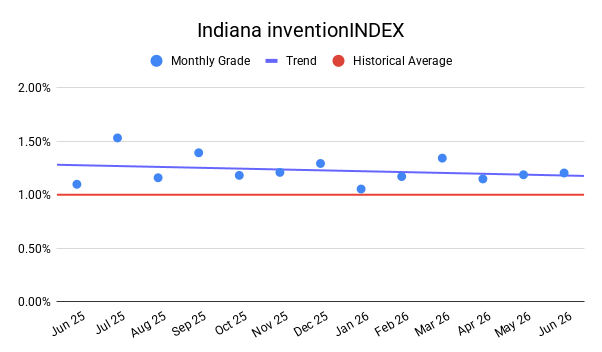
The economic trajectory of Fort Wayne—from canal logistics to heavy rail manufacturing, and ultimately to a diversified hub of advanced aerospace, medical, automotive, and metallurgical engineering—demonstrates a profound and persistent culture of industrial resilience. As highlighted by broader state-level economic indicators, the macro innovation climate of Indiana remains dynamic. Data measuring innovation output by comparing GDP growth with patent production indicates periods of highly robust technological generation, signaling to global markets that regions like Fort Wayne remain fertile ground for intellectual capital investment.
However, the translation of this profound engineering innovation into tangible financial capitalization requires meticulous navigation of overlapping and often divergent tax statutes. Taxpayers operating within Fort Wayne’s sophisticated industrial sectors must recognize that while the federal government and the State of Indiana share the foundational IRC Section 41 framework, their enforcement mechanisms are vastly different. The IRS’s complex mathematical rules regarding base period consistency, “shrink-back” test applications, and the strict definition of qualifying tangible supplies demand rigorous, historically deep financial accounting. Conversely, the Indiana Department of Revenue’s uncompromising stance on contemporaneous documentation—as evidenced by recent rulings and the Tell City Boatworks decision—means that even undeniable scientific innovation will be denied the state credit if the evidentiary trail is constructed retroactively. By establishing robust, real-time data capture systems for engineering hours, prototyping material costs, and experimental test logs, Fort Wayne businesses can fully and legally capitalize on both the federal R&D credit and Indiana’s highly lucrative state incentives, ensuring the region remains a dominant, competitive force in advanced manufacturing.
The information in this study is current as of the date of publication, and is provided for information purposes only. Although we do our absolute best in our attempts to avoid errors, we cannot guarantee that errors are not present in this study. Please contact a Swanson Reed member of staff, or seek independent legal advice to further understand how this information applies to your circumstances.