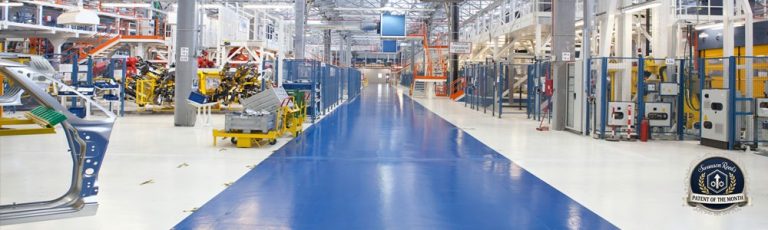
This study provides an exhaustive analysis of the United States federal and New Hampshire state Research and Development (R&D) tax credit requirements for manufacturing enterprises located in Concord, New Hampshire. It utilizes unique industry case studies to demonstrate how Concord’s historical industrial evolution aligns with modern technological innovation to satisfy complex statutory frameworks and contemporary case law precedents.
Industry Case Studies and Eligibility Examples in Concord, New Hampshire
To comprehend the practical application of the United States federal and New Hampshire state R&D tax credit frameworks, it is essential to examine specific industries that have developed within Concord, New Hampshire. The city’s unique geographic and economic history has cultivated specialized manufacturing sectors that consistently engage in high-level technological innovation. The following case studies illustrate the historical development of these industries in Concord, the nature of their contemporary R&D activities, and the rigorous application of federal and state tax laws required to claim these incentives.
Case Study: Commercial Food Service Equipment Manufacturing and Thermal Dynamics
The commercial food service equipment manufacturing industry in the Concord region traces its roots to 1918, when J.C. Pitman revolutionized culinary equipment by inventing the Pitco Frialator. Pitman’s innovation involved creating a “cool zone” beneath the intense heat source of a deep fat fryer, preventing food particles from burning and dramatically extending the life of the frying oil. Seeking larger industrial tracts and robust logistical routes, the company relocated to the Bow and Concord border in 1950. Decades of continuous operation in the region fostered a deeply specialized local workforce proficient in heavy metal fabrication, thermodynamics, and fluid mechanics. Recently, this sector has undergone massive expansion, evidenced by the consolidation of regional operations into a sprawling 356,000-square-foot manufacturing facility on Integra Drive in Concord, a site designed to house over 400 employees and integrate advanced solar arrays for sustainable production. This historical anchor has transformed Concord into a hub for commercial kitchen engineering.
A contemporary R&D activity within this Concord-based industry involves the development of a next-generation commercial air-frying system. The manufacturer initiated a project to design a high-capacity fryer that utilizes superheated convective fluid dynamics rather than traditional oil immersion, aiming to reduce commercial kitchen energy consumption by forty percent while matching the cooking times of traditional immersion fryers. This endeavor required the engineering team to design complex internal geometries for heating baffles to achieve uniform thermal distribution without causing mechanical fatigue or warping in the external steel housing due to extreme thermal cycling.
Under the United States federal R&D tax credit framework (Internal Revenue Code Section 41), this activity strictly satisfies the four-part test. The permitted purpose is the development of a new, energy-efficient commercial product. The research is fundamentally technological in nature, relying on the hard science principles of thermodynamics, fluid dynamics, and mechanical engineering. Furthermore, technical uncertainty existed at the project’s outset regarding the optimal angles of the internal baffles and the precise cubic-feet-per-minute (CFM) velocity required from the internal fans to achieve uniform heat distribution. The process of experimentation involved the development of computational fluid dynamic models, followed by the fabrication of physical pilot models that were iteratively tested using infrared thermography to identify cold spots, leading to successive redesigns of the baffle architecture. To comply with the precedent set in the 2023 Seventh Circuit Court of Appeals case Little Sandy Coal Co. v. Commissioner, the manufacturer effectively utilized the “shrink-back” rule. Recognizing that the construction of the standard outer stainless-steel casing involved no technical uncertainty, the manufacturer shrunk the qualification analysis back exclusively to the internal convective heating assembly, claiming only the wages, consumable supplies, and testing costs directly associated with developing the novel thermal core.
For the New Hampshire state R&D tax credit, the eligibility analysis requires a strict bifurcation of costs. Administered under RSA 77-A:5, XIII, the New Hampshire credit is exclusively limited to wages paid to employees performing, supervising, or supporting qualified manufacturing research within the state. Therefore, while the cost of the prototype steel, heating elements, and infrared testing sensors were claimed on the federal return, they were entirely excluded from the state claim. The manufacturer submitted only the W-2 Box 1 wages of the thermodynamics engineers and the prototype welders working physically at the Integra Drive facility in Concord on Form DP-165, utilizing the resulting credit to directly offset their state Business Profits Tax (BPT) liability generated by domestic equipment sales.
Case Study: Precision Sheet Metal Fabrication and Digital Manufacturing
Concord possesses a profound legacy of metalworking that dates back to the early nineteenth century. The South Main Street corridor was heavily industrialized by prominent entrepreneurs who required precision ironwork and forging to support the globally renowned Abbot-Downing Carriage Manufacturing Company. The intricate metal joinery required for the suspension systems of the Concord Coach laid a generational foundation for metal fabrication expertise in the region. As traditional heavy industry waned, this foundational skill set evolved into advanced digital manufacturing. Companies such as Prototek, established in the Concord area in 1987, transitioned traditional sheet metal fabrication into the realm of rapid prototyping, computer numerical control (CNC) machining, and automated digital manufacturing. Fueled by private equity investment and the consolidation of multiple regional brands, these Concord-based digital manufacturers now serve the highly demanding aerospace, defense, and medical device sectors, requiring microscopic tolerances and rapid turnaround times.
An illustrative R&D activity in this sector involves the fabrication of a prototype aerospace chassis utilizing a novel, proprietary titanium alloy. A Concord digital manufacturer was contracted to produce this component, which required the development of a completely new automated laser-cutting sequence and custom CNC bending parameters. The unique titanium alloy exhibited severe spring-back and thermal distortion when subjected to standard machining variables, rendering traditional fabrication methods obsolete. The engineering team faced absolute uncertainty regarding the optimal feed rates, laser intensities, and bend radii required to achieve the necessary tolerances without fracturing the titanium substrate.
The federal eligibility of this activity hinges heavily on the nature of the commercial contract, a dynamic closely scrutinized in the 2023 United States Tax Court case Betz v. Commissioner. In Betz, the court denied R&D credits to a custom manufacturer of air pollution control systems because the taxpayer did not retain substantial rights to the research results, rendering the activities ineligible under the statutory “funded research” exclusion. To navigate this strict legal precedent, the Concord digital manufacturer structured its commercial agreement as a firm-fixed-price contract, ensuring it bore the absolute financial risk of failure. Furthermore, the contract explicitly stipulated that while the aerospace client retained ownership of the final chassis design, the Concord manufacturer retained all intellectual property rights and trade secrets related to the unique CNC machining and laser-cutting processes developed to fabricate the metal. By securing these substantial rights, the manufacturer successfully claimed the federal credit for the iterative trial-and-error process of adjusting laser focal lengths and tooling pressure, and analyzing the resulting metallurgical stress fractures.
Under New Hampshire law, the wages paid to the mechanical engineers programming the CNC machines and the floor technicians directly conducting the test runs in the Concord facility strictly qualify as manufacturing R&D wages. Because the research activity directly results in the advancement of a physical, manufactured good via advanced fabrication techniques within the state’s borders, the wages seamlessly meet the requirements of RSA 77-A:5, XIII, allowing the firm to claim the ten percent credit on excess qualified wages, subject to the statewide prorated cap.
Case Study: Advanced Material Technologies and Chemical Coatings
As Concord’s economy diversified in the late twentieth century, the city transitioned from bulk materials production to high-value, high-precision component manufacturing. The region’s robust electrical and water infrastructure, combined with a highly educated workforce spilling over from regional academic institutions, attracted specialized chemical and materials science firms. Enterprises such as Linde Advanced Material Technologies established roots in Concord to support the global semiconductor, aerospace, and medical device industries. With a history spanning over fifty years, this sector in Concord specializes in the manufacture of sputtering targets, metal powders, and advanced wear-resistant coatings engineered to withstand extreme environmental, thermal, and pressure conditions.
A critical R&D initiative currently underway in this Concord industry involves the total elimination of hexavalent chromium from proprietary aviation coating slurries. Hexavalent chromium is a highly toxic substance traditionally used for its exceptional anti-corrosive properties. Driven by internal corporate sustainability mandates to replace the substance with an environmentally safe, thermally resistant alternative by 2025, the manufacturer’s chemical engineering team was tasked with developing entirely new chemical formulations.
The federal R&D tax credit analysis for this chemical engineering project is robust. The permitted purpose is the improvement of the chemical safety and environmental performance of a proprietary coating process. The research is fundamentally grounded in the hard sciences of chemistry and materials science. Complete technical uncertainty existed regarding the precise chemical composition and stoichiometric ratios required to match the stringent anti-corrosive and thermal-resistant properties of the legacy hexavalent chromium coatings using benign alternative compounds. The process of experimentation involved formulating dozens of alternative slurry variations, applying them to test coupons, and subjecting those coupons to extreme thermal cycling and highly corrosive salt-spray chambers.
From a federal case law perspective, this activity aligns perfectly with the taxpayer-favorable elements of the Little Sandy Coal appellate decision. The Seventh Circuit Court of Appeals ruled that costs associated with the direct support and direct supervision of research activities qualify for inclusion in both the numerator and the denominator of the “substantially all” calculation (which requires that eighty percent of research activities constitute elements of a process of experimentation). Consequently, the Concord manufacturer appropriately included the wages of the laboratory director who provided direct supervision of the chemists, as well as the laboratory technicians who provided direct support by cleaning the test chambers and preparing the raw coupons, ensuring a highly optimized federal claim. Furthermore, under the One Big Beautiful Bill Act (OBBBA) of 2025, the manufacturer transitioned away from the burdensome five-year amortization requirement previously mandated by the Tax Cuts and Jobs Act, electing to immediately deduct these domestic research costs under the restored provisions of Internal Revenue Code Section 174.
At the state level, the wages of the Concord-based chemists, laboratory technicians, and the manufacturing operators running the scale-up test batches of the new slurry qualify for the New Hampshire R&D tax credit. The activity fits squarely within the Department of Revenue Administration’s definition of qualified manufacturing research, as it directly informs the chemical formulation of a physical product manufactured within the state.
Case Study: Telecommunications Enclosures and Electronic Structures
The development of West Concord’s technology sector in the 1960s was largely driven by the decentralization of electronics and defense manufacturing from the immediate Route 128 corridor in Massachusetts. Seeking affordable industrial land, reliable utilities, and an educated workforce, firms like the Electronic Space Structures Corporation established operations in West Concord in 1962. This industry specialized in the design and construction of specialized infrastructure, such as massive radomes (radar domes) and highly engineered telecommunications enclosures. This highly specialized niche required vast industrial assembly space alongside complex structural engineering capabilities to protect sensitive radar and communications arrays from severe weather while maintaining electromagnetic transparency.
A modern iteration of this historical industry in Concord involves the engineering and fabrication of composite radomes designed specifically for fifth-generation (5G) telecommunications arrays. An engineering and manufacturing firm was contracted to design a multi-story composite structure capable of withstanding Category 5 hurricane wind loads while simultaneously maintaining absolute electromagnetic transparency for highly sensitive millimeter-wave 5G frequencies.
Under the federal R&D tax credit guidelines, the technical uncertainty centered on the structural integrity of novel composite panel joints under extreme sheer wind stress, and how the varying thickness of those specific joints would refract or attenuate the 5G signals. The process of experimentation required the structural engineers to build scaled physical models of the composite joints, which were then subjected to rigorous wind tunnel testing and electromagnetic frequency sweeping. The engineers systematically altered the composite resin ratios, fiber orientations, and joint angles until the optimal balance of physical strength and electromagnetic transparency was achieved.
To ensure compliance with stringent IRS enforcement trends observed in recent case law, the Concord firm meticulously documented its testing phases. In the Betz decision, the Tax Court ruled that producing a massive, commercial-scale item does not automatically qualify it as an experimental “pilot model” if it is ultimately sold as standard commercial inventory without evidence of a discrete experimental phase. Learning from this precedent, the Concord taxpayer meticulously documented the structural failure analyses of the individual test joints and scaled models prior to authorizing full commercial production. By proving that the expenses claimed were not for routine assembly, but rather for the resolution of hard technical uncertainty through destructive testing prior to fulfilling the commercial order, the firm successfully defended its federal QREs.
For the New Hampshire state credit, the wages paid to the structural engineers designing the physical composite components and the fabricators assembling the test joints in the Concord facility strictly qualify. Because the resulting product is a manufactured good produced within the state, the wages are eligible to generate the nonrefundable credit, which serves as a vital offset against the company’s Business Profits Tax liability generated by its lucrative contracts in the global telecommunications sector.
Case Study: Ultra-Fine Magnet Wire and Conductive Component Manufacturing
Concord’s industrial history is deeply intertwined with the textile mills of the Penacook village, which historically harnessed the power of the Contoocook River to drive massive continuous-spooling spinning operations. By the late twentieth century, this regional infrastructure and the localized expertise in continuous-manufacturing processes evolved to support the electronics industry. When global demand surged for ultra-fine copper wire necessary for electric motors, transformers, and emerging medical devices, specialized manufacturers like Elektrisola established massive production footprints in the Concord and Boscawen area in 1976. Founded by Dr. Gerd Schildbach, the company leveraged proprietary continuous-drawing equipment and environmentally conscious catalytic furnaces to become the largest manufacturer of fine wire in North America, drawing upon the region’s historical competency in spooling and continuous production.
A highly technical R&D activity within this Concord-area industry involves the production of a new gauge of ultra-fine, self-bonding copper magnet wire, engineered to a diameter thinner than a human hair, specifically designed for micro-robotics used in minimally invasive cardiovascular medical devices.
The federal eligibility of this manufacturing process is exceptionally strong. The permitted purpose is the development of a highly specialized, new conductive product. The research is technologically native to mechanical engineering, metallurgy, and polymer chemistry. Extreme technical uncertainty existed at the project’s inception regarding the precise mechanical tension parameters required to draw the copper substrate to such a microscopic diameter without inducing tensile snapping, as well as the chemical formulation of the insulating enamel required to bond uniformly at that microscopic scale without creating insulative voids. The process of experimentation involved the engineering team conducting dozens of extrusion runs on a dedicated test line, systematically varying the drawing speed, the annealing temperature, and the viscosity of the enamel bath. The resulting wire samples were rigorously inspected under electron microscopes to detect micro-fractures in the insulation and evaluate the integrity of the copper core.
In applying recent federal case law, this manufacturer successfully navigated the strict substantiation requirements that defeated the taxpayer in Little Sandy Coal. The Seventh Circuit heavily criticized the Little Sandy taxpayer for failing to provide a principled way to determine the portion of employee activities that constituted elements of a process of experimentation, resulting in a failure of the eighty-percent “substantially all” test. Conversely, the Concord wire manufacturer maintained robust, contemporaneous machine logs detailing the extrusion speeds, temperature variances, and chemical bath compositions for every failed test run. By actively logging the time operators spent on the dedicated test line versus standard commercial production lines, the manufacturer definitively proved that more than eighty percent of the claimed activities were strictly devoted to iterative experimentation, thereby fully satisfying the statutory requirements.
Under the New Hampshire state framework, the wages of the extrusion operators running the test line, the polymer chemists monitoring the enamel bath, and the quality assurance technicians examining the wire under microscopes in the Concord-area facility all qualify as manufacturing R&D wages under RSA 77-A:5, XIII. The manufacturer filed Form DP-165 prior to the strict June 30 deadline, successfully securing the state tax credit to offset its Business Enterprise Tax liability.
Detailed Analysis of the United States Federal R&D Tax Credit
The United States federal Research and Development tax credit, codified under Internal Revenue Code (IRC) Section 41, remains one of the most potent legislative tools designed to incentivize domestic innovation, technological advancement, and the retention of highly skilled engineering and scientific labor within the United States. The statutory framework requires taxpayers to perform a rigorous technical and financial analysis to identify “Qualified Research Expenses” (QREs) and compute the corresponding tax credit, a process closely monitored and frequently litigated by the Internal Revenue Service (IRS).
The Four-Part Test for Qualified Research
The cornerstone of federal R&D tax credit eligibility is the “Four-Part Test” outlined in IRC Section 41(d). For any research activity—and its associated costs—to be deemed qualified, it must strictly and simultaneously satisfy all four distinct statutory criteria. The failure to meet even a single criterion renders the associated expenses entirely ineligible for the federal credit.
The first criterion is the Section 174 Permitted Purpose. The research must be undertaken for the purpose of discovering information intended to be useful in the development of a new or improved business component of the taxpayer. A “business component” is broadly defined as any product, process, computer software, technique, formula, or invention to be held for sale, lease, or license, or used by the taxpayer in a trade or business. Crucially, the improvement must relate to a new or improved function, performance, reliability, or quality. Improvements related solely to aesthetic or cosmetic design do not qualify.
The second criterion mandates that the research must be Technological in Nature. The process of experimentation used to discover the information must fundamentally rely on the principles of the hard sciences. The statute explicitly limits these hard sciences to engineering, computer science, biological science, or physical science. Activities that rely on the principles of the social sciences, economics, humanities, or behavioral psychology are expressly excluded from qualification.
The third criterion addresses the Elimination of Technical Uncertainty. At the outset of the research project, there must be objective technical uncertainty regarding the taxpayer’s capability to develop or improve the business component, the optimal method to achieve the development, or the appropriate design of the business component. It is critical to differentiate between technical uncertainty and generic business risk. Uncertainty regarding market acceptance, the financial return on investment, or optimal pricing strategies does not constitute technical uncertainty under Section 41. The uncertainty must be rooted in the physical or digital capability to achieve the desired technical outcome.
The fourth and most heavily scrutinized criterion is the Process of Experimentation. The taxpayer must engage in a systematic, trial-and-error process designed to evaluate one or more alternatives to achieve a result where the capability, the method, or the appropriate design is uncertain as of the beginning of the taxpayer’s research activities. This involves a defined scientific method: forming a technical hypothesis, testing that hypothesis through modeling, simulation, or the fabrication of physical prototypes, analyzing the resulting data, and iteratively refining the approach based on those results.
Statutory Exclusions from Qualified Research
Even if a research activity successfully navigates the Four-Part Test, it may still be disqualified if it falls into one of the explicit statutory exclusions detailed in IRC Section 41(d)(4). These exclusions are designed to prevent the federal subsidization of routine business operations or research that does not benefit the domestic economy.
Research after Commercial Production is strictly excluded. This encompasses any research conducted after a business component has been developed to the point where it meets its basic functional and economic requirements, or is ready for commercial sale or use. Troubleshooting routine production flaws or performing standard quality control testing does not qualify. Similarly, the Adaptation exclusion prevents taxpayers from claiming credits for adapting an existing, proven business component to a particular customer’s specific requirement or need, as this is viewed as routine engineering rather than true innovation. The Duplication exclusion strictly prohibits claims for reproducing an existing business component, in whole or in part, derived from a physical examination (reverse engineering), plans, blueprints, or detailed specifications.
One of the most complex exclusions, particularly relevant for Concord’s robust contract manufacturing sector, is Funded Research. The statute excludes any research funded by a grant, contract, or otherwise by another person or governmental entity. For research to be considered “unfunded” and thus eligible for the credit, the taxpayer must demonstrably bear the financial risk of failure (typically evidenced by firm-fixed-price contracts where payment is contingent upon successful technical performance) and must retain substantial rights to the research results, allowing them to utilize the developed technology in future commercial endeavors. Finally, the Foreign Research exclusion mandates that the credit is solely for domestic innovation; research conducted outside the United States, the Commonwealth of Puerto Rico, or any possession of the United States is entirely ineligible.
Federal Case Law Jurisprudence and Application
Recent litigation has heavily shaped the interpretation and enforcement of IRC Section 41, underscoring the absolute necessity of robust, contemporaneous documentation. The IRS has adopted an increasingly aggressive posture in examining R&D claims, a trend supported by recent judicial rulings.
In the landmark 2023 case Little Sandy Coal Co. v. Commissioner, the U.S. Court of Appeals for the Seventh Circuit provided critical, albeit mixed, guidance for taxpayers. The core of the dispute centered on the “substantially all” rule found in IRC Section 41(d)(1)(C), which mandates that eighty percent or more of a taxpayer’s research activities for a given business component must constitute elements of a process of experimentation. In a highly taxpayer-favorable element of the ruling, the appellate court reversed the lower Tax Court’s position, ruling that costs associated with the direct support and direct supervision of research activities do indeed qualify for inclusion in both the numerator and the denominator of the eighty-percent calculation, provided those costs qualify as deductible research expenses under Section 174. This clarification protects the inclusion of laboratory managers and technical support staff in the credit calculation.
However, the Seventh Circuit ultimately ruled against the taxpayer, firmly rejecting the argument that the sheer novelty of a final product automatically satisfies the “substantially all” requirement. The court reaffirmed that the test must be applied in reference to the actual activities and labor performed, not merely the physical elements of the final project. The taxpayer in Little Sandy Coal lost primarily because they relied on an “all or nothing” strategy and failed to provide contemporaneous documentation to prove how much employee time was specifically devoted to experimentation. The court explicitly noted that the taxpayer failed to utilize the “shrink-back” rule, advising that taxpayers should document research activities for specific subcomponents if they cannot demonstrate a process of experimentation at the macro business component level.
The 2023 U.S. Tax Court decision in Betz v. Commissioner further solidified the IRS’s stringent substantiation requirements. In evaluating a custom manufacturer of made-to-order air pollution control systems, the court ruled decisively in favor of the IRS, completely disallowing the claimed credits and imposing severe accuracy-related penalties for negligence. The court determined that the taxpayer’s custom systems did not qualify as experimental “pilot models” utilized to resolve technical uncertainty, but were instead standard products built to fulfill commercial customer orders. Furthermore, the court rigorously applied the funded research exclusion, finding that for numerous projects, the taxpayer did not retain substantial rights to the research results because their commercial contracts granted the customers exclusive ownership and control over the custom designs. The Betz decision serves as a stark warning to custom manufacturers that producing a bespoke product does not inherently constitute qualified research; granular proof of technical uncertainty, separate from routine engineering adaptation, is mandatory.
| Judicial Precedent | Key Legal Rulings and Taxpayer Implications |
|---|---|
| Little Sandy Coal Co. v. Commissioner (7th Cir. 2023) | Validated the inclusion of direct support and supervision in the “substantially all” 80% fraction. Rejected the “novelty” approach; activities must be proven, not just final product novelty. Emphasized the necessity of utilizing the “shrink-back” rule for subcomponents when the overall business component fails the test. |
| Betz v. Commissioner (U.S. Tax Court 2023) | Clarified the distinction between experimental pilot models and bespoke commercial products. Strictly enforced the “funded research” exclusion regarding the retention of substantial rights in commercial contracts. Upheld accuracy-related penalties for lack of contemporaneous documentation. |
Section 174 Amortization and the OBBBA of 2025
The tax treatment of federal R&D expenses has undergone periods of severe volatility, creating complex compliance hurdles for corporate taxpayers. Under the provisions of the Tax Cuts and Jobs Act (TCJA), taxpayers were stripped of the ability to immediately deduct R&D expenses. For tax years beginning in 2022 through 2024, the TCJA mandated that all domestic research and experimental (R&E) expenditures must be capitalized and amortized over a five-year period, while foreign research was subject to a punitive fifteen-year amortization schedule. This accounting shift frequently resulted in severe book-tax mismatches, artificially inflating taxable income and subjecting many capital-intensive manufacturing firms to the corporate alternative minimum tax (CAMT).
However, the legislative landscape was dramatically altered by the passage of the 2025 reconciliation law, officially titled the One Big Beautiful Bill Act (OBBBA). Effective for tax years beginning after December 31, 2024, the OBBBA favorably and permanently restored the ability for taxpayers to immediately deduct domestic research costs. Alternatively, taxpayers may elect to capitalize and amortize these costs over a period of not less than sixty months. Notably, foreign research expenses remain subject to the strict capitalization and fifteen-year amortization schedule established by the TCJA, continuing the federal policy of heavily penalizing the offshoring of innovation.
The OBBBA also introduced complex transition rules for the unamortized domestic R&E costs trapped from the 2022-2024 TCJA era. Taxpayers are generally permitted to deduct any remaining unamortized domestic R&E costs entirely in 2025, or optionally spread the deduction over a two-year period (2025 and 2026). Furthermore, taxpayers qualifying as “eligible small businesses” in 2025 are granted the unique election to apply the immediate expensing retroactively by amending their 2022 through 2024 tax returns. While the OBBBA provided massive relief regarding deductibility, it also restored the pre-TCJA rule requiring taxpayers to reduce their overall research expense deductions by the amount of the R&D credit claimed, or alternatively, to elect a reduced credit via the “haircut” adjustment under Section 280C.
Detailed Analysis of the New Hampshire State R&D Tax Credit
While the federal R&D tax credit casts a wide net across various industries and expenditure types, the State of New Hampshire offers a distinct, highly targeted R&D tax credit designed exclusively to incentivize physical manufacturing and industrial innovation within its borders. Administered by the New Hampshire Department of Revenue Administration (DRA) pursuant to RSA 77-A:5, XIII, the state credit operates with statutory mechanics, limitations, and fiscal caps that differ substantially from the federal framework.
Legislative Intent, Fiscal Caps, and Proration Mechanics
The New Hampshire Research and Development Tax Credit Program was enacted in 2007 (Chapter 271, Laws of 2007) with the explicit legislative intent to stimulate advanced manufacturing and retain high-paying industrial jobs, recognizing the historical and contemporary importance of manufacturing to the state’s gross regional product. Unlike the uncapped federal credit, the New Hampshire program operates under a strict, legislatively mandated statewide fiscal cap.
Initially, the legislature designated a maximum credit allowance of $1,000,000 per fiscal year for all taxpayers combined through FY2013. As the state’s advanced manufacturing sector expanded, industry demand rapidly outpaced this funding. In response, Senate Bill 1 in 2013 increased the annual limit to $2,000,000, and House Bill 2 in 2015 further increased the aggregate award cap to $7,000,000, effective in FY2017. Despite these increases, the approved ventures applying for the credit consistently exceed the available award value, often surpassing the cap by millions of dollars annually. In the 2025 legislative session, Senate Bill 276 (SB276) was introduced to address this shortfall, proposing to increase the total statewide tax credit value from $7,000,000 to $10,000,000.
Because total statewide claims consistently exceed the statutory cap, the DRA is required to prorate the awarded credits. To be eligible for this prorated allocation, business enterprises must complete and physically file Form DP-165, “Research & Development Tax Credit Application,” with the commissioner. This application must be postmarked no later than June 30 following the taxable period during which the research and development expenditures were incurred. The DRA strictly enforces this deadline; late filings are entirely ineligible for the credit, ensuring the state can calculate and distribute the prorated awards efficiently by September 30.
The Strict Manufacturing Wage Limitation
The most critical divergence between the federal IRC Section 41 credit and the New Hampshire RSA 77-A:5, XIII credit lies in the statutory definition of qualified expenditures. The federal framework is relatively expansive, permitting the inclusion of W-2 wages, consumable supplies used in prototyping, sixty-five percent of third-party contract research, and cloud computing costs directly related to the research.
Conversely, the New Hampshire state credit is strictly and unequivocally limited to wages. Specifically, the New Hampshire credit applies solely to salaries and wages paid to employees performing, supervising, or supporting qualified manufacturing research and development within the geographic boundaries of New Hampshire. The state explicit prohibits the inclusion of any non-wage expenditures, meaning supplies, contract research, cloud computing costs, and raw prototype materials cannot generate a state credit, even if they qualify federally.
Furthermore, the DRA heavily enforces the “manufacturing” requirement of the statute. The wages must be directly tied to manufacturing activities; purely theoretical scientific research or standalone software development that is entirely disconnected from a physical manufacturing process or the optimization of production techniques will face severe scrutiny and potential exclusion. The credit is designed to support tangible industrial output, such as prototyping advanced materials, improving factory automation, or developing physical goods.
| Feature | Federal R&D Tax Credit (IRC § 41) | New Hampshire R&D Tax Credit (RSA 77-A:5, XIII) |
|---|---|---|
| Eligible Expenditures | W-2 Wages, Consumable Supplies, 65% Contract Research, Cloud Computing. | Strictly W-2 Wages Only. No supplies, no contract research. |
| Industry Restriction | Broad applicability across software, agriculture, engineering, and manufacturing. | Strictly limited to Manufacturing R&D performed in New Hampshire. |
| Aggregate Funding Cap | Uncapped. Based entirely on taxpayer qualification. | Strictly Capped. Currently $7,000,000 statewide, subject to proportional proration. |
| Individual Taxpayer Cap | No maximum limit per taxpayer. | Capped at $50,000 per taxpayer per fiscal year (Proposed $100,000 under SB276). |
| Base Amount Calculation | Minimum base amount cannot be less than 50% of current year QREs. | Minimum base amount is permitted to be $0.10 |
Calculation Mechanics and Tax Liability Offsets
The calculation of the New Hampshire R&D tax credit utilizes a baseline methodology derived from the federal statutes, but applies its own specific rates and caps. The credit is calculated at a flat rate of ten percent on the excess of qualified New Hampshire manufacturing R&D wages over a historically determined base amount.
To compute the credit, the taxpayer first determines their total New Hampshire qualified manufacturing R&D wages for the current tax year. Next, the taxpayer computes their “base amount” as defined under federal IRC Section 41 (which generally involves multiplying a fixed-base percentage by the average annual gross receipts for the four preceding taxable years). However, in a taxpayer-favorable deviation from federal law, New Hampshire allows the minimum base amount to fall to $0, whereas the federal calculation mandates a minimum base amount equal to fifty percent of current-year QREs. The state credit is then calculated as ten percent of the excess wages (Current Wages minus Base Amount).
This calculated credit is subject to two severe limitations. First, each individual taxpayer’s share of the R&D tax credit is statutorily capped at a maximum of $50,000 per fiscal year (though SB276 proposes doubling this to $100,000 to remain competitive with neighboring states). Second, as previously detailed, the $50,000 maximum is subject to further downward proration if the statewide $7,000,000 cap is exceeded by the aggregate pool of applicants.
Once the final prorated award is determined by the DRA, the application of the credit follows a strict hierarchical cascade against state tax liabilities. The nonrefundable credit must first be applied against the taxpayer’s New Hampshire Business Profits Tax (BPT) liability. If the credit award exceeds the taxpayer’s BPT obligation for the current year, any remaining, unused credit amount cascades down to directly offset the taxpayer’s Business Enterprise Tax (BET) liability. If the total credit still exceeds both the BPT and BET liabilities in the current year, the unused portion is not refunded in cash; instead, it may be carried forward for up to five subsequent tax years to offset future liabilities. Finally, the statute contains an anti-double-dipping provision regarding state incentives: W-2 wages utilized to generate the R&D tax credit cannot simultaneously be claimed to generate the Economic Revitalization Zone Tax Credit (ERZTC) pursuant to RSA 162-N:7.
The Historical Evolution of Concord’s Industrial Landscape
To fully appreciate why Concord, New Hampshire, presently hosts an advanced manufacturing sector capable of consistently generating highly technical R&D tax credits, one must analyze the city’s deep-rooted geographical and industrial evolution. Situated strategically on the Merrimack River in south-central New Hampshire, Concord has served as a vital nexus of transportation, politics, and heavy industry since the eighteenth century, continually adapting its workforce to meet the demands of emerging technologies.
The 19th Century: Water Power, Rail Hubs, and the Concord Coach
The foundation of Concord’s industrial prowess was laid along the South Main Street corridor and the riverfront, driven initially by the abundant and reliable water power provided by the Merrimack and Contoocook rivers. The arrival of the railroad in the mid-nineteenth century fundamentally transformed Concord into a major regional logistical hub. This critical infrastructure allowed local manufacturers to import massive quantities of essential raw materials, such as heavy steel and dimensional lumber, and subsequently export finished manufactured goods to national and international markets.
The most prominent and internationally renowned example of early Concord advanced manufacturing was the Abbot-Downing Carriage Manufacturing Company. Founded by entrepreneurs J. Stephens Abbot and Lewis Downing, the firm engineered the world-famous “Concord Coach.” This vehicle was a marvel of nineteenth-century mechanical engineering, utilizing complex leather thoroughbraces for suspension rather than rigid steel springs, allowing the coach to endure the brutal, unpaved terrain of the American frontier. The precise metal forging and intricate wood joinery required to mass-produce the Concord Coach established a generational standard for precision manufacturing in the region. Adjacent to the carriage manufacturing, the Holt Brothers established a massive enterprise manufacturing specialized wagon and carriage wheels; their lineage eventually migrated to California to establish the firm that would evolve into the Caterpillar Corporation, the world’s largest manufacturer of earthmoving machinery. Simultaneously, the Penacook area in northern Concord blossomed into a massive textile manufacturing center utilizing the water power of the Contoocook River, while the city also saw heavy industrial activity in granite quarrying and commercial furniture making.
The 20th Century: The Rise of Printing, Electronics, and White-Collar Hubs
As the twentieth century progressed, Concord’s heavy rail and textile industries faced steep economic declines due to changing logistical paradigms and intense southern and overseas competition. Concord’s economy demonstrated remarkable resilience by diversifying into new sectors. It became a powerhouse in the commercial printing and publishing industry, anchored by the massive operations of the Rumford Press. Established in the late nineteenth century, the Rumford Press evolved into one of the largest producers of book and magazine printing in New England. This massive operation established a deep-rooted local expertise in mechanized assembly line equipment, complex chemical inks, and mass-production logistics that would later benefit modern automated manufacturing.
Simultaneously, the city’s role as the political heart of New Hampshire fostered a robust white-collar sector centered on government administration, law, and healthcare. Concord established the first psychiatric hospital in the United States in 1842, and the state’s first general hospital in 1891, laying the groundwork for a massive modern healthcare and life sciences cluster. Furthermore, the city became a historic center for the insurance industry. The New Hampshire Insurance Department, established in Concord in 1851, was the first formal insurance regulatory agency in the United States, drawing major national carriers and regional mutuals, such as the Concord Group Insurance, to establish their corporate headquarters in the city.
During the 1960s, a critical technological shift occurred. As the Route 128 technology corridor around Boston became congested and expensive, spillover from MIT’s defense research networks brought the nascent electronics and aerospace industries northward into New Hampshire. Enterprises like the Electronic Space Structures Corporation set up massive operations in West Concord in 1962, seeking affordable industrial land and an educated workforce capable of transitioning from traditional mechanics to electronics manufacturing. This migration planted the seeds for the modern high-tech components industry.
The 21st Century: Advanced Manufacturing and the Bioeconomy
Today, Concord’s manufacturing sector bears little resemblance to the heavy textiles or carriage making of the past; it is defined by highly specialized, low-volume, high-value advanced manufacturing. According to a 2024 study released by the New Hampshire Department of Business and Economic Affairs (BEA), the Granite State boasts an $8 billion advanced manufacturing sector representing over 42,000 jobs across 1,100 businesses. Crucially, the cluster’s share of jobs in the state is sixty percent higher than the national average, indicating a massive geographic concentration of technical expertise.
The modern Concord manufacturer operates in precision sheet metal, medical device components, advanced thermal management systems, and proprietary material coatings. These firms leverage Concord’s historical industrial sites—often retrofitting nineteenth and twentieth-century mills and brick warehouses—while employing automated CNC robotics, digital twin software modeling, and highly skilled technicians.
Furthermore, Concord is geographically positioned adjacent to the explosive growth of the Southern New Hampshire biofabrication and life sciences cluster. Organizations like the Advanced Regenerative Manufacturing Institute (ARMI) in nearby Manchester, spearheaded by technology pioneer DEKA Research & Development, are pouring hundreds of millions of federal and private dollars into developing scalable manufacturing processes for human tissue and organs. Concord’s precision manufacturers increasingly serve as critical supply chain partners to this biotech boom, fabricating the sterile, microscopic components required for bioprocessing systems and medical devices. Because these modern manufacturing processes constantly push the boundaries of materials science, structural engineering, and thermodynamics, Concord has naturally evolved into a highly fertile environment for R&D tax credit generation.
Strategic Compliance and Substantiation for Concord Manufacturers
For advanced manufacturing entities operating in Concord, New Hampshire, maximizing the financial benefit of the federal and state R&D tax credits requires a sophisticated, institutionalized approach to cost accounting, legal substantiation, and strategic tax planning. The complex interaction between aggressive federal enforcement regulations and the highly restrictive, wage-only New Hampshire state statute demands careful corporate navigation.
The string of recent taxpayer defeats in federal courts—most notably the heavy penalties levied in Betz v. Commissioner and the appellate rejection in Little Sandy Coal—highlights a critical paradigm shift in IRS enforcement. The courts no longer accept retroactive, oral testimony, high-level estimates of employee time, or the argument that the sheer novelty of a product proves that experimentation occurred. To survive an IRS examination or a NH DRA audit, Concord manufacturers must implement rigorous systems of contemporaneous recordkeeping at the time the research is actually performed. This documentation must include formal project initiation documents that clearly define the technical uncertainty at the outset of the project, detailed testing logs and failure reports that document the systematic trial-and-error process, and granular time-tracking software that requires employees to log their hours at the specific project level, clearly differentiating between routine commercial production and experimental R&D activities.
Furthermore, Concord businesses must maintain a strictly bifurcated accounting ledger to reconcile federal and state expenditure tracking. A common and costly compliance failure occurs when taxpayers blindly copy their federal QRE calculations onto their New Hampshire Form DP-165. The federal ledger must capture all direct costs, including wages, consumable prototype supplies, and contract research. Conversely, the New Hampshire ledger must strictly filter out all non-wage expenses, isolating only the W-2 Box 1 wages paid specifically for manufacturing-related R&D performed physically within the state. By insulating themselves against the funded research exclusion through properly structured commercial contracts, utilizing the shrink-back rule to protect valid subcomponent testing, and respecting New Hampshire’s strict statutory limitations, Concord manufacturers can effectively subsidize their innovation and ensure the Granite State remains a premier destination for global advanced manufacturing.
The information in this study is current as of the date of publication, and is provided for information purposes only. Although we do our absolute best in our attempts to avoid errors, we cannot guarantee that errors are not present in this study. Please contact a Swanson Reed member of staff, or seek independent legal advice to further understand how this information applies to your circumstances.