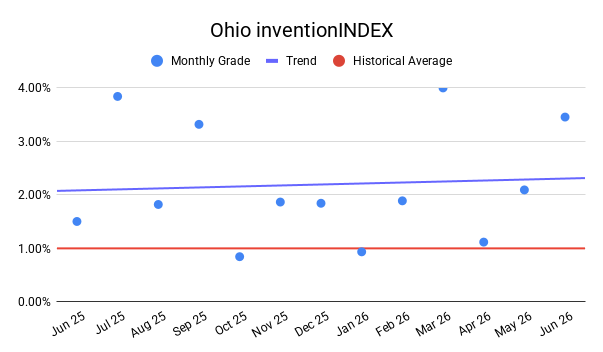
This study provides a comprehensive analysis of the United States federal and Ohio state Research and Development (R&D) tax credit requirements, focusing on the specific economic and industrial landscape of Akron, Ohio. It evaluates the historical development of five unique regional industries and their eligibility under complex statutory frameworks, administrative guidance, and recent case law.
Akron Industry Case Studies: Historical Development and R&D Tax Credit Eligibility
The contemporary economic geography of Akron, Ohio, is the result of a deliberate, decades-long metamorphosis from a monolithic manufacturing hub into a highly diversified ecosystem of advanced technologies. To understand how federal and state R&D tax credits apply to this region, it is essential to first analyze the specific industries that dominate the local economy, tracing their origins and detailing how their modern operations intersect with the stringent requirements of tax law.
Polymers, Elastomers, and Advanced Materials
Historical Context and Development Akron’s industrial identity is inextricably linked to the commercialization of rubber and polymers. The city’s geographic location at the summit of the Ohio and Erie Canal, founded in 1825, provided the necessary water resources and transportation infrastructure to support early industrial mills and stoneware production. However, the critical inflection point occurred in 1870 when Dr. Benjamin Franklin Goodrich, enticed by the Akron Board of Trade and the availability of a skilled manufacturing labor force, established the first rubber manufacturing company west of the Appalachian Mountains. This was soon followed by the founding of the Goodyear Tire & Rubber Company by Frank Seiberling in 1898, as well as the establishment of Firestone, General Tire, and others. By 1920, the explosive growth of the global automotive industry had transformed Akron into the “Rubber Capital of the World,” driving its population from roughly 70,000 to over 200,000 in a single decade.
During World War II, when the United States’ supply of natural rubber from Asia was severed, Akron’s rubber conglomerates and the University of Akron collaborated with the federal government to rapidly develop and mass-produce synthetic rubber, firmly establishing the region’s expertise in deep chemical engineering. In the 1970s and 1980s, the domestic tire manufacturing industry collapsed under the weight of foreign competition and the transition to radial tires, leading to the exodus of tens of thousands of manufacturing jobs. In response, Akron’s leadership executed a masterful economic pivot: rather than abandoning the rubber industry entirely, they leaned into the fundamental science behind it. The University of Akron established the world’s first College of Polymer Science and Polymer Engineering in 1988. Today, Northeast Ohio is recognized globally as “Polymer Valley,” home to thousands of polymer-related establishments and the newly designated “Greater Akron Polymer Innovation Hub,” which recently secured $31.25 million in state funding to advance research in sustainable plastics and semiconductor materials.
R&D Tax Credit Eligibility and Application A modern Akron-based polymer compounding firm engaged in translating captured carbon dioxide into high-value, sustainable butadiene (a synthetic rubber precursor) serves as a prime example of R&D tax credit eligibility.
Under the United States federal framework, this firm seamlessly satisfies the Internal Revenue Code (IRC) Section 41 Four-Part Test. The Business Component is the novel bio-based polymer formulation itself. The Elimination of Uncertainty involves determining the precise temperatures, atmospheric pressures, and proprietary catalyst ratios required to achieve a tensile strength equivalent to traditional fossil-derived polymers. The Technological Information relies fundamentally on the hard sciences of organic chemistry and physics. Finally, the Process of Experimentation is clearly demonstrated through the creation of numerous lab-scale batches, the analysis of molecular structures via spectroscopy, and the iterative adjustment of the chemical compound based on failure points.
Under the Ohio State framework, authorized by Ohio Revised Code (ORC) Section 5751.51, the firm can claim a 7% nonrefundable credit against its Commercial Activity Tax (CAT) liability. Because the experimentation takes place within a laboratory located in Akron, the wages of the chemical engineers and the cost of the raw chemical supplies consumed in the test batches are strictly eligible. However, the taxpayer must be acutely aware of federal and state case law nuances, particularly the precedent established in Union Carbide Corp. v. Commissioner. In that case, the court disallowed supply costs because the materials were used in routine production runs rather than genuine experimental trials. The Akron firm must maintain contemporaneous documentation proving that the test batches were solely for prototype validation and were not intended for immediate commercial sale.
Aerospace, Aviation, and Lighter-Than-Air Systems
Historical Context and Development Akron’s aerospace heritage developed in parallel with its rubber dominance. Recognizing the utility of rubberized fabrics for lighter-than-air flight, Goodyear established its Aeronautics Department in 1910. This strategic interest culminated in 1929 with the completion of the Goodyear Airdock by the Goodyear Zeppelin Corporation. At 1,175 feet long, 325 feet wide, and 211 feet high, it was the largest building in the world without interior supports, designed specifically to manufacture massive Navy dirigibles such as the USS Akron and the USS Macon. During World War II, the facility and surrounding factories were repurposed by the Goodyear Aircraft Corporation to produce over 4,000 FG-1D Corsair fighter planes, cementing Akron’s role in the defense aerospace supply chain.
While Goodyear Aerospace was eventually acquired by Loral Corporation and subsequently Lockheed Martin in the late 20th century, the specialized infrastructure and localized aerospace engineering talent persisted. Today, Akron is experiencing an aerospace renaissance. The historic Airdock is now utilized by LTA (Lighter Than Air) Research, an aerospace company backed by Google co-founder Sergey Brin. LTA is engineering the next generation of massive, zero-emission airships—such as the Pathfinder series—designed for humanitarian aid, disaster relief, and sustainable cargo transport, utilizing advanced carbon-fiber structures and electric propulsion systems.
R&D Tax Credit Eligibility and Application
An aerospace engineering team operating within the Airdock to develop a new electric motor nacelle for a semi-rigid airship generates substantial Qualified Research Expenses (QREs).
Federally, the design of a highly customized electric propulsion system involves profound engineering uncertainties regarding thermal management, aerodynamic drag reduction, and thrust-to-weight optimization. The iterative process of designing the motor housing using computer-aided design (CAD), conducting simulated wind-tunnel testing, and physically testing scaled prototypes constitutes a highly defensible Process of Experimentation under IRC Section 41.
At the state level, the firm can capture the wages of the engineering graduates it employs from the University of Akron as eligible Ohio QREs. However, the primary legal hurdle for aerospace contractors is the “Funded Research” exclusion under IRC Section 41(d)(4)(H). The tax code strictly prohibits taxpayers from claiming credits for research funded by another entity, such as the Department of Defense. To avoid this exclusion, the Akron aerospace firm must prove two elements: it must bear the financial risk of the research’s failure, and it must retain substantial rights to the resulting intellectual property. As demonstrated in the landmark case Fairchild Industries, Inc. v. United States, operating under a fixed-price contract generally allows the taxpayer to claim the credit because payment is contingent upon successfully delivering the product. Conversely, operating under a time-and-materials contract, where the government pays regardless of the research’s success, will result in the IRS disallowing the claim. Taxpayers must structure their contracts meticulously, akin to the victorious architectural firm in Smith v. Commissioner (2024), which successfully argued that milestone-based payments and retained copyright protections negated the IRS’s funded research arguments.
Biomedical Devices and Healthcare Innovation
Historical Context and Development Unlike polymers and aerospace, which grew organically from 19th-century manufacturing, Akron’s biomedical cluster is largely the result of deliberate, strategic civic planning designed to transition the city into a knowledge-based economy. Recognizing that the city’s three major hospital systems—Akron Children’s Hospital, Cleveland Clinic Akron General, and Summa Health—represented a massive concentration of clinical expertise and economic stability, civic leaders sought to integrate this clinical foundation with the region’s historic dominance in materials science.
This effort materialized in 2008 with the creation of the Austen BioInnovation Institute in Akron (ABIA), supported by a coalition of the hospital systems, the University of Akron, Northeast Ohio Medical University, and the Knight Foundation. ABIA was established to focus specifically on patient-centered innovation at the intersection of biomaterials and medicine. The establishment of the “Akron Biomedical Corridor” spurred the development of specialized prototyping facilities and incubators. Today, the region supports a robust ecosystem of biomedical startups and established medical device manufacturers producing orthopedics, titanium joint implants, and advanced wound care solutions.
R&D Tax Credit Eligibility and Application A biomedical startup located in the Akron Biomedical Corridor developing a novel biomimetic polymer wound dressing designed to actively monitor tissue and prevent bacterial biofilms engages in highly technical, eligible research.
Under federal requirements, the Business Component is the new medical device. The research relies heavily on the biological sciences and polymer chemistry. The Process of Experimentation is rigorous, involving the formulation of various extracellular matrix compounds, in vitro testing to observe bacterial resistance, and pre-clinical trials to validate safety and efficacy.
For Ohio state credit purposes, medical R&D often requires exceedingly expensive biological reagents, specialized testing supplies, and sterilization chemicals. Assuming these materials are consumed within an Akron-based laboratory, they qualify as Ohio supply QREs, significantly boosting the ORC 5751.51 credit calculation. However, the firm must carefully navigate the definition of qualified supplies. Under IRC Section 41(b)(2)(C), which Ohio adopts, land, improvements to land, and property subject to an allowance for depreciation (such as expensive MRI machines or permanent lab equipment) are strictly excluded from supply QREs.
Furthermore, the biomedical firm must monitor the “Research After Commercial Production” exclusion. Once the wound dressing receives approval from the U.S. Food and Drug Administration (FDA) and transitions into standard manufacturing, routine quality assurance testing and post-market clinical surveillance no longer qualify as R&D. The legal demarcation line between late-stage prototype validation and early-stage commercial production is frequently litigated by the IRS, requiring the firm to maintain clear project accounting.
Advanced and Additive Manufacturing
Historical Context and Development Akron possesses a deep heritage in traditional manufacturing, originally scaled to support the immense tooling, molding, and machinery requirements of the global tire industry. The city features a dense ecosystem of metal fabrication, machining, and industrial equipment firms. As global competition intensified, these legacy manufacturers were forced to adapt, integrating automation, robotics, and smart manufacturing technologies to maintain their competitive edge.
This evolution naturally progressed into Additive Manufacturing (3D Printing). Because Akron was already a center for polymer research and complex tooling, the leap to utilizing advanced polymers for industrial 3D printing was a logical progression. Companies such as Akron-based Additive Engineering Solutions (AES) pioneered the contract manufacturing model for large-scale additive manufacturing. By adopting Big Area Additive Manufacturing (BAAM) technology, the local industry moved beyond printing small, shoebox-sized prototypes and began printing massive structures, including aerospace components, marine equipment, and automotive chassis.
R&D Tax Credit Eligibility and Application A precision metal components and additive manufacturing firm in Akron undertaking a project to print a 10-foot industrial tool using a novel, untested thermoplastic composite is conducting qualified research.
Federally, the sheer scale of the project introduces profound technical uncertainties. The firm cannot simply scale up standard 3D printing parameters. They must resolve uncertainties regarding the cooling rate of the massive thermoplastic layers, the risk of thermal warping, and the ultimate structural integrity of the part. The iterative adjustment of CAD models, the modulation of extruder temperatures, and the analysis of failed structural prints satisfy the Process of Experimentation requirement.
To claim the state and federal credits effectively, this manufacturer must heed the legal precedent established in Phoenix Design Group, Inc. v. Commissioner (2024). In that case, the U.S. Tax Court denied R&D credits to an engineering firm, ruling that standard design processes—gathering requirements, creating block diagrams, and selecting equipment—did not constitute true experimentation, but rather the routine application of known engineering principles. To avoid a similar fate, the Akron manufacturer cannot simply claim that designing the tool was “difficult.” They must contemporaneously document the specific technical failures encountered during the BAAM printing process and record the precise variables that were systematically altered to achieve the final, successful print.
Logistics, Distribution, and Transportation Technologies
Historical Context and Development The establishment of Akron was entirely predicated on logistics. The construction of the Ohio and Erie Canal in the 1820s provided the foundational water transport necessary to move goods from Lake Erie to the Ohio River. As water power gave way to steam and rail in the 1850s, Akron transitioned into a critical railroad hub. In the modern era, the development of the interstate highway system solidified the region’s logistical dominance. Today, Summit County is positioned within an eight-hour drive of approximately half the United States population, over half of the country’s buying power, and nearly two-thirds of the Canadian economy.
This unparalleled geographic advantage has resulted in the establishment of over 420 trucking firms and massive distribution centers throughout the region, including major facilities for Amazon, O’Reilly Auto Parts, and FedEx Custom Critical. FedEx Custom Critical, headquartered in the city of Green (within Summit County), specializes in highly complex logistics, including expedited surface transport and the management of a temperature-controlled network for transporting sensitive biological and pharmaceutical products.
R&D Tax Credit Eligibility and Application
When a large logistics firm in Summit County develops proprietary, AI-driven routing algorithms to optimize the transit of temperature-sensitive biological goods across rapidly changing climate zones, they are engaging in software development R&D.
Federally, software developed solely to support a firm’s internal logistical operations—rather than being sold, leased, or licensed to third parties—is classified as “Internal Use Software” (IUS). The IRS subjects IUS to a significantly higher standard of scrutiny. Under the Treasury Regulations for IRC Section 41, IUS must pass the standard Four-Part Test, plus an additional three-part “High Threshold of Innovation” test. The software must be highly innovative (resulting in a substantial reduction in cost or improvement in speed), its development must involve significant economic risk due to technical challenges, and the software cannot be commercially available off-the-shelf.
From an Ohio state perspective, optimizing the R&D credit is a financial imperative for logistics companies due to the structure of the Commercial Activity Tax (CAT). In recent decisions such as VVF Intervest, LLC v. Harris (2025) and Jones Apparel Group v. Harris (2026), the Ohio Supreme Court ruled that products shipped to an Ohio distribution center are sitused to Ohio for CAT purposes, regardless of whether the purchaser subsequently ships those goods to retail locations outside the state. This broad interpretation of “ultimate destination” massively expands the CAT tax base for distribution centers in Akron. Consequently, aggressively identifying the eligible wages of the software engineers coding the logistics algorithms in Ohio is critical to generating ORC 5751.51 credits to offset this substantial gross receipts tax liability.
United States Federal R&D Tax Credit Framework and Jurisprudence
The federal Credit for Increasing Research Activities, codified under Internal Revenue Code (IRC) Section 41, is the primary fiscal mechanism utilized by the U.S. government to subsidize corporate innovation. Enacted initially under the Economic Recovery Tax Act of 1981, the credit provides a direct, dollar-for-dollar reduction in a company’s federal income tax liability based on the amount of Qualified Research Expenses (QREs) incurred during the tax year. Understanding the statutory architecture and the evolving landscape of IRS enforcement is paramount for Akron businesses seeking to leverage this incentive.
The Statutory Architecture of IRC Section 41
To generate a federal R&D tax credit, a taxpayer must capture and quantify eligible expenses. IRC Section 41 defines Qualified Research Expenses (QREs) as the sum of in-house research expenses and contract research expenses paid or incurred in carrying on a trade or business.
| Category of QRE | Definition and Application Parameters | Source |
|---|---|---|
| Wages | Remuneration paid to an employee for engaging in qualified research, or the direct supervision or direct support of such research. Uses a “substantially all” rule: if 80% of an employee’s time is qualified, 100% of their wages may be captured. | |
| Supplies | Tangible property used directly in the conduct of qualified research. Excludes land, improvements to land, and property subject to an allowance for depreciation (e.g., capital assets, heavy machinery). | |
| Contract Research | Generally, 65% of amounts paid to an unrelated third party to perform qualified research on behalf of the taxpayer. (Increases to 75% for qualified research consortiums). | |
| Computer Rentals | Costs for leased computers or cloud computing services utilized exclusively to host or conduct qualified research activities. |
The Four-Part Test for Qualified Research
Capturing QREs is only permissible if the underlying activity satisfies the statutory definition of “Qualified Research.” IRC Section 41(d) establishes a rigorous, cumulative framework known as the “Four-Part Test.” Crucially, this test must be applied separately to each individual “business component” (defined as any product, process, computer software, technique, formula, or invention).
The Section 174 Test (Elimination of Uncertainty) The expenditures must be eligible for treatment as research and experimental expenditures under IRC Section 174. This objective test requires that the activity be undertaken to eliminate technical uncertainty concerning the development or improvement of a business component. Uncertainty exists if the information available to the taxpayer does not establish the capability or method for developing or improving the component, or the appropriate design of the component.
The Technological Information Test The research must be undertaken for the purpose of discovering information that is “technological in nature”. This requires that the process of experimentation fundamentally relies on principles of the “hard sciences,” specifically physical sciences, biological sciences, engineering, or computer science. Research rooted in the social sciences, economics, or humanities is expressly excluded.
The Business Component Test (Permitted Purpose) The application of the discovered technological information must be intended to be useful in the development of a new or improved business component. Furthermore, the research must relate to a permitted purpose: achieving new or improved function, performance, reliability, or quality. Research aimed solely at modifying the aesthetic appearance or style of a product fails this test.
The Process of Experimentation Test Substantially all (defined as 80% or more) of the research activities must constitute elements of a process of experimentation. The Treasury Regulations strictly define this process. The taxpayer must: (a) systematically identify the uncertainty, (b) identify one or more alternatives intended to eliminate that uncertainty, and (c) conduct a process of evaluating the alternatives through modeling, simulation, or systematic trial and error.
Statutory Exclusions and Limitations
Even if an R&D activity perfectly satisfies the Four-Part Test, it may be rendered ineligible by several strict statutory exclusions detailed in IRC Section 41(d)(4).
- Research After Commercial Production: Qualified research definitively ends when a business component is ready for commercial release. Activities such as pre-production planning for a finished product, tooling-up for production, trial production runs, and routine troubleshooting of production flaws do not qualify.
- Adaptation and Duplication: Reverse-engineering an existing product (duplication) or modifying an existing business component to meet a specific customer’s routine requirements (adaptation) is excluded, as it lacks the requisite technical uncertainty.
- Funded Research: To claim the credit, the taxpayer must bear the financial risk of the research and retain substantial rights to the resulting intellectual property. Research funded by grants, government contracts (where payment is guaranteed regardless of success), or third-party entities is disqualified.
- Foreign Research: The credit is strictly designed to subsidize domestic innovation. Any research conducted outside the United States, the Commonwealth of Puerto Rico, or any U.S. possession is entirely excluded from the credit calculation.
Legislative Paradigms (2024-2026): Section 174 and The OBBBA
The intersection of R&D tax credits and R&D expense deductions has undergone massive legislative turbulence in recent years, creating a highly complex compliance environment for corporate taxpayers.
Historically, under IRC Section 174, businesses could immediately deduct 100% of their R&D expenses in the year they were incurred. However, the Tax Cuts and Jobs Act (TCJA) of 2017 mandated a severe change: beginning in tax year 2022, taxpayers were required to capitalize and amortize domestic R&E expenses over a five-year period (and 15 years for foreign research). This drastically reduced the immediate cash-flow benefit of conducting R&D.
In a major reversal, the One Big Beautiful Bill Act (OBBBA), passed in 2025, created a new IRC Section 174A. This legislation restores the ability of taxpayers to immediately expense domestic research and experimental expenditures for tax years beginning after December 31, 2024. Foreign R&D must still be amortized over 15 years. Furthermore, the OBBBA provides critical retroactive relief: small businesses with average receipts of $31 million or less can amend returns for the 2022–2024 period to claim immediate deductions, while larger businesses can recover unamortized balances from those years.
However, taxpayers must carefully navigate the coordination rules under IRC Section 280C. To prevent a “double tax benefit,” a business cannot simultaneously claim the full IRC Section 41 tax credit and deduct the entirety of those same expenses under Section 174A. Taxpayers must elect either to reduce their Section 174A deduction by the exact amount of the R&D credit claimed, or take a mathematically reduced R&D credit (calculated by multiplying the gross credit by the corporate tax rate) while maintaining their full deduction. This Section 280C election must be made on a timely filed original return and is irrevocable.
Administrative Disclosure Transformations: Form 6765 Section G
Mirroring legislative shifts, the Internal Revenue Service has aggressively escalated its disclosure requirements for taxpayers claiming the research credit, transitioning from broad quantitative reporting to highly granular, qualitative substantiation.
Historically, taxpayers reported aggregate QREs on Form 6765, maintaining the detailed qualitative documentation proving the Four-Part Test in their internal files for use only during an audit. In 2021, the IRS issued a Chief Counsel memorandum requiring massive evidentiary disclosure for any amended return refund claims, demanding that taxpayers identify every business component, all research activities performed, the specific individuals performing them, and the exact information sought to be discovered.
The IRS has now formalized this standard for original returns. Following draft releases in 2024, the IRS finalized sweeping changes to Form 6765 for tax years 2025 and 2026. The revised form introduces a mandatory “Section G,” which fundamentally alters R&D compliance. Starting optionally in 2025 and becoming mandatory for most taxpayers in 2026, Section G requires organizations to segment their R&D work strictly by Business Component. For each component, the taxpayer must list the associated scientists’ wages, designate salaries specifically for direct research versus direct supervision, and explicitly document the alignment with the Four-Part Test. (Note: Qualified Small Businesses claiming the payroll tax offset and certain mid-sized taxpayers under $50 million in gross receipts may be exempt from Section G reporting).
Landmark Federal Case Law Influencing R&D Claims
The federal courts have been highly active in adjudicating R&D credit disputes, generally reflecting the IRS’s increasingly stringent enforcement posture. Understanding these precedents is critical for defensive tax planning.
| Year | Case Title | Court | Primary Issue Adjudicated | Result | Source |
|---|---|---|---|---|---|
| 2021 | Little Sandy Coal Co. v. Comm’r | U.S. Tax Court | Application of the “Substantially All” rule and Process of Experimentation to prototype development; emphasized the necessity of rigorous, contemporaneous documentation. | Taxpayer Loss | |
| 2023 | Grigsby v. United States | 5th Cir. Court of Appeals | Defined the parameters of the Business Component test. The court ruled that vague assertions of “engineering analyses” for construction methods lacked the specificity required to define a new product or process. | Taxpayer Loss | |
| 2024 | Phoenix Design Group, Inc. v. Comm’r | U.S. Tax Court | Addressed the Process of Experimentation in MEP engineering. The court ruled that applying standard engineering design principles to create building plans does not constitute resolving technical uncertainty through experimentation. | Taxpayer Loss | |
| 2024 | Smith v. Comm’r | U.S. Tax Court | Examined the Funded Research exclusion in architectural design. Denied IRS summary judgment, finding that milestone-based payments and retained copyright IP rights suggested the taxpayer maintained financial risk. | Taxpayer Win | |
| Pending | Park-Ohio Holdings Corp. v. United States | Federal Court | A major challenge to the IRS’s 2021 Chief Counsel memo regarding amended return disclosure requirements. The taxpayer argues the IRS violated the Administrative Procedure Act (APA) by imposing unreasonable recordkeeping standards not supported by Treasury Regulations. | Pending |
The Ohio State R&D Investment Tax Credit and Commercial Activity Tax (CAT)
While the federal R&D credit offsets corporate income tax, the State of Ohio utilizes its localized incentive to counteract a completely different type of liability: a gross receipts tax. Established in 2008, the Ohio Research and Development Investment Tax Credit (authorized under ORC Section 5751.51) functions as a nonrefundable offset against the state’s Commercial Activity Tax (CAT). The administration of this credit by the Ohio Department of Taxation (ODT) involves unique geographic limitations, distinct base period calculations, and strict entity-level tracking rules.
Mechanics of ORC Section 5751.51
The Ohio R&D credit is intentionally designed to reward incremental investment in innovation within the state’s borders.
Calculation: The credit is calculated as a flat 7% of the taxpayer’s excess Qualified Research Expenses incurred in the current calendar year over a historical base amount. Ohio simplifies the federal calculation methodology by exclusively utilizing a variation of the Alternative Simplified Credit (ASC) logic. The base amount is defined straightforwardly as the taxpayer’s average annual Ohio-based QREs incurred during the three preceding calendar years. If a business lacks a three-year history in Ohio, the base is proportionally adjusted or set to zero.
Carryforward Provisions: Because the credit is nonrefundable against the CAT, a taxpayer whose generated credit exceeds their current CAT liability cannot receive a cash refund. However, ORC 5751.51 permits any unused excess credit to be carried forward for up to seven consecutive tax years. This carryforward provision acts as a vital financial reservoir for rapidly scaling startups that may be generating massive R&D expenses while experiencing minimal early-stage sales revenue.
Geographic Nexus and the Doctrine of Strict Construction
The most profound distinction between the federal and Ohio R&D credits is the strict imposition of geographic boundaries. While Ohio law explicitly adopts the IRC Section 41 definitions of wages, supplies, and contract research, the Ohio Department of Taxation enforces a strict jurisdictional mandate: the specific expenses must be physically incurred within the state of Ohio. A multinational aerospace firm headquartered in Akron may conduct testing in Nevada and California; however, only the wages of the engineers physically working in the Akron Airdock, and the supplies consumed in that specific Ohio facility, can be included in the ORC 5751.51 calculation.
When adjudicating claims, the Ohio Department of Taxation operates under the legal doctrine of “strict construction”. As affirmed by the Ohio Supreme Court in cases such as Anderson/Maltbie Partnership v. Levin and Dana Corp. v. Testa, any statute granting a tax reduction or exemption must be strictly construed against the taxpayer. Consequently, the evidentiary burden rests entirely upon the taxpayer to prove a clear, unambiguous entitlement to the credit. ODT auditors are notoriously rigorous, often demanding documentation that exceeds typical IRS standards, particularly regarding the geographic origin of contract research payments and the direct, experimental utilization of material supplies.
The Commercial Activity Tax (CAT) Paradigm and HB 33 Reforms
To accurately value the Ohio R&D credit, one must understand the tax it offsets. The Commercial Activity Tax (CAT) is an annual tax imposed on the privilege of doing business in Ohio, measured by the taxpayer’s taxable gross receipts sitused to the state. It is crucial to note that the CAT is assessed on gross revenue, not net income; therefore, businesses operating on razor-thin profit margins, or even those operating at a massive net loss, remain liable for the CAT if their Ohio-sourced sales exceed statutory thresholds.
The landscape of the CAT was radically altered by the passage of Am. Sub. House Bill 33 (HB 33) in 2023, which provided massive tax relief for small-to-medium enterprises while shifting reporting dynamics for large conglomerates.
| CAT Tax Year | Annual Gross Receipts Exclusion Threshold | Filing Frequency Requirement | Tax Rate on Excess Receipts | Annual Minimum Tax | Source |
|---|---|---|---|---|---|
| Pre-2024 | $150,000 | Annual (if <$1M) or Quarterly | 0.26% | $150 to $2,600 (Tiered) | |
| 2024 | $3,000,000 | Quarterly Only | 0.26% | Eliminated | |
| 2025+ | $6,000,000 | Quarterly Only | 0.26% | Eliminated |
As detailed above, HB 33 skyrocketed the baseline exclusion amount from $150,000 to $3 million in 2024, and to $6 million in 2025 and beyond. Furthermore, the Annual Minimum Tax (AMT), which previously ranged from $150 to $2,600 based on revenue tiers, was entirely eliminated. Consequently, any business with Ohio-sourced gross receipts below $6 million in 2025 is completely exempt from the CAT and no longer required to file returns. For early-stage tech startups in Akron’s Bounce Innovation Hub, the R&D tax credit is mathematically irrelevant against current state tax liability, as they owe no CAT. However, these firms should strategically accumulate and carry forward these credits for the 7-year period, deploying them once commercialization scales their revenue beyond the $6 million threshold.
Member-by-Member R&D Credit Calculation
For large, multi-entity corporations, HB 33 introduced a highly restrictive administrative change regarding how R&D credits are utilized across affiliated groups. Historically, CAT reporting groups (combined or elective consolidated filers) were treated as a single taxpayer. A parent corporation could generate massive R&D credits in a heavily experimental, pre-revenue subsidiary and immediately apply those credits to offset the CAT liability of a highly profitable, non-researching sales subsidiary within the same group.
Under the new provisions of HB 33, this free sharing of credits is prohibited. The law now mandates that research and development credits must be calculated and applied on a strict “member-by-member” basis across an affiliated group. A taxpayer consisting of multiple legal persons must compute the credit separately for each entity. This legislative shift significantly increases the compliance burden, requiring Akron conglomerates to implement rigorous intercompany accounting protocols. They must trace every dollar of Ohio-based scientists’ wages and laboratory supplies to the specific legal entity (LLC or C-Corp) that incurred the expense, as only that specific entity may utilize the resulting 7% CAT offset.
Ohio Supreme Court Jurisprudence on CAT Situsing
For advanced manufacturing and logistics firms operating in Akron, determining exactly which gross receipts are subject to the CAT—and therefore necessitate R&D credits for mitigation—is a complex legal exercise. Under ORC 5751.033, receipts from the sale of tangible personal property are sitused to Ohio if the property is “ultimately received” in Ohio by the purchaser.
The Ohio Supreme Court recently provided definitive, taxpayer-adverse guidance on this statute in a pair of landmark decisions: VVF Intervest, LLC v. Harris (2025) and Jones Apparel Group v. Harris (2026). In both cases, the taxpayers manufactured goods out-of-state and shipped them to centralized distribution centers located within Ohio. The purchasing retailers then subsequently transported those goods from the Ohio distribution centers to their final retail store locations, many of which were outside of Ohio.
The taxpayers argued for a refund, claiming the “ultimate destination” of the goods was the out-of-state retail stores. The Ohio Supreme Court firmly rejected this argument, ruling that the situsing inquiry focuses strictly on where the initial purchaser takes possession “after all transportation has been completed” from the original seller. Because the initial delivery concluded at the Ohio distribution center, the entirety of those gross receipts was sitused to Ohio and subject to the 0.26% CAT, regardless of the goods’ subsequent journey. For the massive logistics and distribution network anchored in Summit County, this ruling broadens the taxable base exponentially, making the aggressive identification and application of ORC 5751.51 R&D credits an indispensable tool for corporate tax minimization.
Final Thoughts
The industrial evolution of Akron, Ohio, presents a blueprint for rust-belt economic revival. By harnessing its foundational legacy as the global epicenter of rubber manufacturing, the region successfully pivoted to establish world-class, high-technology clusters in polymer chemistry, aerospace, advanced additive manufacturing, and biomedical devices. However, maintaining the velocity of this innovation requires massive capital investment fraught with technical risk.
The United States federal R&D tax credit (IRC Section 41) and the Ohio Research and Development Investment Tax Credit (ORC Section 5751.51) serve as the primary fiscal safety nets undergirding this regional economy. As this analysis demonstrates, navigating these incentives is an increasingly treacherous legal exercise. At the federal level, taxpayers face a volatile legislative landscape—marked by the whiplash between Section 174 amortization and OBBBA expensing—coupled with an aggressive IRS audit posture that demands granular, component-level substantiation via the new Form 6765 Section G. Simultaneously, at the state level, the Ohio Department of Taxation enforces the doctrine of strict construction, while the recent HB 33 reforms mandate highly complex, member-by-member tracking of credits against the Commercial Activity Tax.
For Akron-based enterprises, the days of treating R&D tax credit compliance as a post-facto accounting exercise are over. To successfully secure these vital financial offsets, corporations must integrate rigorous tax-law awareness into the very genesis of their engineering and scientific processes, maintaining contemporaneous, qualitative documentation that unambiguously bridges the gap between commercial innovation and statutory requirements.
The information in this study is current as of the date of publication, and is provided for information purposes only. Although we do our absolute best in our attempts to avoid errors, we cannot guarantee that errors are not present in this study. Please contact a Swanson Reed member of staff, or seek independent legal advice to further understand how this information applies to your circumstances.