

The Vermont Research and Development Tax Credit is a nonrefundable fiscal incentive defined under 32 V.S.A. § 5930ii. It provides a reduction in tax liability equal to 27 percent of the federal research credit attributable to qualified expenditures made specifically within the state of Vermont. The credit applies to personal, business, or corporate income tax and includes a 10-year carryforward provision for unused credits. Eligibility relies on meeting the federal “Four-Part Test” (IRC § 41) and performing the research activities physically within Vermont.
The Vermont Research and Development Tax Credit is a nonrefundable fiscal incentive that provides a reduction in tax liability equal to 27 percent of the federal research credit attributable to qualified expenditures made within the state. This credit incentivizes innovation by directly subsidizing the technical risks associated with developing new or improved products, processes, and software in Vermont.
Conceptual Foundation and Statutory Evolution
The structural integrity of Vermont’s research incentive is predicated on its deep integration with federal tax standards. While many state-level tax provisions diverge from the Internal Revenue Code (IRC), Vermont has opted for a “piggyback” model that leverages the robust definitions and computational methodologies of federal law, specifically IRC § 41. This approach simplifies compliance for multi-state entities while ensuring that the state’s limited administrative resources are focused on verifying the geographic nexus of the innovation rather than redefining the nature of “research” itself.
The credit is currently authorized under 32 V.S.A. § 5930ii, a section that reflects a refined legislative intent to support high-growth sectors like biotechnology, aerospace, and software engineering. Historically, the state maintained a research credit under 32 V.S.A. § 5930, which was repealed in 2006, and later introduced § 5930z, which evolved into the current § 5930ii. For tax years beginning on or after January 1, 2014, the credit rate was established at 27 percent of the federal credit allowed for Vermont-based expenditures, a slight reduction from the previous 30 percent rate. This adjustment was part of a broader fiscal balancing act that maintained Vermont’s position as a high-incentive jurisdiction while introducing more stringent reporting and transparency requirements.
Statutory authority under § 5930ii mandates that the credit be applied against the tax imposed on personal income, business income, or corporate income. This broad applicability ensures that the incentive is available to a diverse range of business structures, from individual sole proprietorships to complex unitary corporate groups. The nonrefundable nature of the credit means it can reduce a taxpayer’s liability to zero but cannot result in a cash payment from the state treasury. However, the inclusion of a 10-year carryforward provision mitigates the risk for startups that may incur massive research expenses years before achieving profitability.
The Federal-State Interface: Internal Revenue Code Section 41
To comprehend the Vermont credit, one must first master the federal “Four-Part Test” codified under IRC § 41(d). Vermont law effectively adopts these standards in their entirety to define “qualified research”. The state revenue office guidance clarifies that if an activity does not qualify for the federal credit, it is per se ineligible for the Vermont credit.
The Four-Part Test of Qualified Research
The first pillar is the Permitted Purpose Test. The research must relate to a new or improved function, performance, reliability, or quality of a “business component,” which is any product, process, computer software, technique, formula, or invention held for sale, lease, or use in a trade or business. Activities focused on style, taste, or cosmetic design are explicitly excluded.
The second pillar is the Elimination of Uncertainty Test. At the outset, there must be a technical uncertainty regarding the capability or method for developing the component, or the appropriateness of its design. If the outcome is predictable through routine engineering, the activity fails this test.
The third pillar is the Process of Experimentation Test. This requires that substantially all activities constitute a process designed to evaluate alternatives through modeling, simulation, or systematic trial and error. The goal is to resolve the technical uncertainty through scientific iterations.
The fourth pillar is the Technological in Nature Test. The research must fundamentally rely on the principles of hard science, such as physical or biological sciences, engineering, or computer science. This excludes social sciences, management studies, or market research.
| Test Category | Statutory Requirement (IRC § 41) | Practical Vermont Application |
|---|---|---|
| Permitted Purpose | New/Improved Business Component | Developing a new medical device in a Burlington lab. |
| Uncertainty | Technical Unknowns at Inception | Determining if a new alloy can withstand specific pressures. |
| Experimentation | Evaluation of Alternatives | Iterative prototype testing and data analysis. |
| Technological | Reliance on Hard Sciences | Use of engineering and physics principles. |
Qualified Research Expenditures (QREs)
Vermont mirrors the federal definition of Qualified Research Expenditures (QREs), which are limited to direct costs and exclude overhead or capital investments.
Wages represent the primary component of most claims. These include taxable wages paid to employees for “qualified services,” defined as performing, supervising, or directly supporting qualified research. For Vermont purposes, only the portion of the wage attributable to services performed within the state is eligible. This requires a rigorous time-allocation analysis for employees who may work across state lines or on non-qualified projects.
Supplies encompass tangible property, other than land or depreciable property, used in the conduct of research. This typically includes chemicals, prototype materials, and laboratory utilities consumed during experimentation.
Contract research expenses are eligible at 65 percent of the amount paid to third parties for research conducted on the taxpayer’s behalf. If the contractor is a qualified research consortium (such as a university lab), the inclusion rate increases to 75 percent. Critically, the research itself must be performed in Vermont to be included in the Vermont credit calculation.
Computer leasing and cloud computing costs incurred exclusively for research activities are also includable. In the contemporary digital economy, this often includes dedicated server space for simulations or high-performance computing clusters used in data analysis.
The Geographic Nexus and Recomputation Requirement
The most complex administrative aspect of the Vermont R&D credit is the requirement to “recompute” the federal credit based solely on Vermont-sourced expenditures. Vermont does not simply take a percentage of the total federal credit; it calculates a “hypothetical” federal credit as if the taxpayer’s only research activities were those occurring in Vermont.
The Prorated Calculation Methodology
Taxpayers must first determine their total QREs nationwide and then isolate the subset of QREs attributable to Vermont. The state allows the use of either the Regular Credit method or the Alternative Simplified Credit (ASC) method, provided it matches the method chosen on the federal Form 6765.
In the Regular Method, the credit is 20 percent of the QREs exceeding a base amount. When recomputing for Vermont, the taxpayer must use Vermont-only QREs and Vermont-apportioned gross receipts to determine the “fixed-base percentage” and the resulting base amount. If the taxpayer is a startup or lacks prior data, the base defaults to 50 percent of the current year’s Vermont QREs.
The ASC Method calculates the credit as 14 percent of the current-year QREs exceeding 50 percent of the average QREs from the preceding three years. For the Vermont credit, these prior three years of QRE data must also be isolated to include only Vermont-sourced expenses.
Once the hypothetical federal credit is calculated using these Vermont-specific inputs, the taxpayer applies the 27 percent state rate to determine the final credit amount.
| Calculation Variable | Federal Context (IRC § 41) | Vermont Recomputation Requirement |
|---|---|---|
| Qualified Wages | All US-based R&D wages. | Only wages for work performed in Vermont. |
| Supplies | All consumed materials. | Only materials used in Vermont facilities. |
| Contract Research | All domestic contracts. | Only for research performed within Vermont. |
| Gross Receipts | Total company receipts. | Apportioned receipts (state-sourced). |
| Historical Base | Total US historical R&D spend. | Vermont-only historical R&D spend. |
Administrative Procedures and Filing Compliance
The Vermont Department of Taxes provides explicit guidance on how the credit must be documented and filed. Failure to adhere to these procedural requirements can lead to the summary disallowance of the credit.
Primary Filing Vehicle: Form BA-404
All entities claiming the R&D credit—whether C-Corporations, S-Corporations, Partnerships, or LLCs—must complete Schedule BA-404, “Tax Credits Earned, Applied, and Carried Forward”. This form acts as a ledger for the credit’s lifecycle.
Column B of Schedule BA-404 reports the amount of credit earned in the current year. Column C tracks the amount applied to the current year’s tax liability, while Column D records the unused balance to be carried forward for up to 10 years. Taxpayers are mandated to attach a copy of their federal Form 6765 to the Vermont return. If the credit involves expenditures from multiple states, the taxpayer must also provide a detailed recomputation schedule showing how the Vermont-only hypothetical credit was derived.
Unitary Groups and Schedule BA-402
For unitary business groups filing a combined Vermont corporate income tax return, additional complexity arises. Schedule BA-402, the “Apportionment and Allocation Schedule,” is required for any entity with activity both inside and outside Vermont.
In a unitary context, the R&D credit is generally earned by a specific member of the group. While Vermont allows for combined reporting, the Department of Taxes requires that credits only offset the tax liability attributable to the specific entity that performed the research. Unitary filers must submit a statement breaking down the total credit by entity to ensure compliance with this limitation. This prevents a profitable member of a group from using R&D credits earned by a separate, research-heavy subsidiary to shelter unrelated income, unless the two entities are part of the same authorized tax group structure.
Pass-Through Entities and Schedule K-1VT
For pass-through entities (S-Corps, LLCs, Partnerships), the R&D credit flows through to the individual owners in the same proportion as income or loss. The entity calculates the total credit on Schedule BA-404 and then reports each owner’s share on Schedule K-1VT.
Individual taxpayers then report their share of the credit on their personal income tax return, Form IN-111, specifically using Schedule IN-112 or IN-119. The 10-year carryforward remains available at the individual level. If a pass-through entity pays composite tax on behalf of its non-resident owners, the credit is applied on Form BI-471 (or BI-473) to reduce the composite liability.
The Enterprise Zone (EZ) Program R&D Credit
While the primary R&D credit is available statewide, Vermont offers a secondary, location-based research incentive through its Enterprise Zone Program. This program targets 16 designated zones characterized by economic distress.
The EZ R&D credit is conceptually different from the statewide credit. It offers a 3 percent income tax credit based on the increase in annual R&D expenses compared to the average of the previous two years. Unlike the statewide credit, which is claimed in full in the year earned, the EZ credit must be claimed in equal installments of 25 percent over a four-year period.
Eligibility for the EZ credit requires a three-year presence within the designated zone. The application process is also more rigorous, requiring a pre-certification application to the local enterprise zone administrator. Once approved, the business receives a tax credit certificate that must be submitted with its tax return. This program is particularly useful for manufacturers and laboratories that have high capital intensity and are committed to long-term operations in specific Vermont communities.
Documentation Standards and Audit Vulnerability
The subjective nature of research activities makes the R&D credit a high-priority item for tax examiners. Both federal and Vermont audits focus on “substantiation,” requiring taxpayers to prove that their activities met the Four-Part Test and that their expenses were accurately captured.
The “Contemporaneous” Documentation Requirement
The legal standard for documentation is that it must be contemporaneous, meaning it was created at the time the research was conducted. Reconstructing research narratives years after the fact is often viewed as “non-contemporaneous” and is frequently disallowed by courts.
Essential qualitative documentation includes:
- Project Narratives: Descriptions of the technical objectives and specific uncertainties faced during development.
- Design Logs and Test Results: Lab notebooks, error logs, and prototype iteration data that demonstrate a systematic process of experimentation.
- Technical Emails and Meeting Minutes: Internal communications between engineers and research staff discussing technical challenges and solutions.
Essential quantitative documentation includes:
- Time Tracking Logs: Detailed records of employee time spent on specific research projects. The “Kyocera” case highlights the severe consequences of using “estimates” or “surveys” rather than actual time-tracking data, which led to the total denial of the credit.
- Detailed General Ledger Extracts: Records linking specific supply purchases to research projects.
- Third-Party Contracts: Agreements that specify the research nature of the work and confirm the taxpayer retains the intellectual property rights and bears the financial risk.
Record Retention Policy
Because Vermont allows a 10-year carryforward, the standard three-year statute of limitations for tax audits is effectively extended. The Department of Taxes has the authority to examine the records of the year in which the credit was earned, even if that year is technically closed, if the credit is being applied to a current open tax year. Consequently, taxpayers should maintain R&D documentation for at least 13 to 15 years (the 10-year carryforward plus the typical 3-to-5-year audit window).
Transparency and Public Reporting
Unique among many state incentives, the Vermont R&D credit is subject to a strict public transparency mandate. Under 32 V.S.A. § 5930ii(c), the Department of Taxes must publish an annual report containing the names of all taxpayers who claimed the credit during the most recent calendar year.
These reports, such as RP-1298, list the corporate and individual claimants and provide a public record of the state’s investment in private innovation. This requirement serves as a powerful deterrent against frivolous claims, as companies must be prepared for their tax incentive utilization to be scrutinized by the public and competitors.
Comprehensive Example: The “Green Mountain Biotech” Scenario
To illustrate the practical application of the laws and revenue office guidance, consider the fictional case of “Green Mountain Biotech” (GMB), an S-Corporation based in Winooski, Vermont, with a satellite lab in Boston, Massachusetts.
Step 1: Identifying Qualified Activities and QREs
In 2024, GMB develops a new biodegradable polymer for drug delivery. They face uncertainty regarding the polymer’s stability in human tissue. They conduct iterative testing using engineering principles. This meets the federal Four-Part Test.
Their expenditures for the year are:
- Total Nationwide Wages: $2,000,000.
- Vermont-Based Wages: $1,200,000 (Researchers in Winooski).
- Supplies: $300,000 (All used in Vermont).
- Contract Research: $100,000 paid to a Vermont university lab (75% inclusion rate).
Step 2: Recomputing the Federal Credit (ASC Method)
GMB uses the Alternative Simplified Credit (ASC) method on its federal Form 6765. To calculate the Vermont credit, they must recompute the hypothetical federal credit using only Vermont QREs.
Vermont QREs for 2024:
$Wages\ ($1,200,000) + Supplies\ ($300,000) + Contract\ ($75,000) = $1,575,000$
Assume their average Vermont-only QREs for the prior three years were $1,000,000.
Hypothetical Federal Base Amount:
$50%\ of\ $1,000,000 = $500,000$
Hypothetical Federal Credit:
$($1,575,000 – $500,000) \times 14% = $150,500$
Step 3: Calculating the Vermont Credit
Vermont R&D Tax Credit:
$27%\ of\ $150,500 = $40,635$
Step 4: Filing and Flow-Through
GMB completes Schedule BA-404, entering $40,635 in Column B. They attach their federal Form 6765 and a recomputation worksheet showing the Vermont-only math.
The credit is then divided among the three equal shareholders of GMB. Each receives a Schedule K-1VT reflecting $13,545 of credit. Each shareholder then reports this on their individual Form IN-111, Schedule IN-119. If a shareholder only owes $10,000 in Vermont tax, they use $10,000 of the credit and carry forward the remaining $3,545 to 2025.
Comparative Analysis: Vermont vs. Other Jurisdictions
Vermont’s 27 percent rate is high compared to other states that use the prorated federal model. However, the state’s rigorous recomputation and non-refundability distinguish it from states like Arizona or Minnesota.
| Feature | Vermont | Minnesota | Arizona |
|---|---|---|---|
| Credit Rate | 27% of Federal | Tiered (10% first $2M) | 24% of first $2.5M |
| Refundability | Non-refundable | Partial (19.2% in 2025) | Refundable for small firms |
| Carryforward | 10 Years | 15 Years | 10 or 15 Years |
| Prorated Method | Yes (Federal %) | No (Independent) | No (Independent) |
The Vermont model is designed for simplicity in definition (by using the federal code) but complexity in geography (by requiring the recomputation). This prevents the “leakage” of state tax dollars to research activities conducted in lower-cost states or international hubs.
Future Outlook and Strategic Considerations
The landscape of research incentives is currently experiencing significant turbulence due to changes in the federal treatment of R&E expenses. The shift from immediate expensing under IRC § 174 to mandatory five-year amortization has increased the “net” value of the R&D credit, as businesses seek any available mechanism to offset the loss of immediate deductions.
For Vermont businesses, this underscores the importance of the 10-year carryforward. As federal tax burdens increase due to § 174 capitalization, the ability to bank Vermont R&D credits for future years becomes a vital component of cash-flow management. Furthermore, as more states move toward refundable credits to attract mobile tech talent, Vermont’s high 27 percent rate may face legislative pressure to evolve—either toward refundability or toward a higher percentage—to maintain regional competitiveness.
Finally, the increasing reliance on cloud computing and remote work introduces new challenges for the “within the state” requirement. The Vermont Department of Taxes has yet to issue a formal technical bulletin addressing the apportionment of research wages for employees who work remotely from Vermont for out-of-state firms, or vice versa. Until such guidance is issued, taxpayers must rely on a “fact and circumstances” approach, documenting the physical location where the research activity—the actual thinking, testing, and iterating—physically occurs.
In conclusion, the Vermont Research and Development Tax Credit is a robust but demanding incentive. Its 27 percent rate offers one of the strongest state-level returns on research investment in the country, provided the taxpayer is prepared to meet the high bar of contemporaneous documentation and geographic recomputation required by the state revenue office. For the modern innovator, it represents not just a tax break, but a strategic partnership with the State of Vermont in the pursuit of technical advancement.
Who We Are:
Swanson Reed is one of the largest Specialist R&D Tax Credit advisory firm in the United States. With offices nationwide, we are one of the only firms globally to exclusively provide R&D Tax Credit consulting services to our clients. We have been exclusively providing R&D Tax Credit claim preparation and audit compliance solutions for over 30 years. Swanson Reed hosts daily free webinars and provides free IRS CE and CPE credits for CPAs.
Are you eligible?

Why choose us?

Pass an Audit?

What is the R&D Tax Credit?
The Research & Experimentation Tax Credit (or R&D Tax Credit), is a general business tax credit under Internal Revenue Code section 41 for companies that incur research and development (R&D) costs in the United States. The credits are a tax incentive for performing qualified research in the United States, resulting in a credit to a tax return. For the first three years of R&D claims, 6% of the total qualified research expenses (QRE) form the gross credit. In the 4th year of claims and beyond, a base amount is calculated, and an adjusted expense line is multiplied times 14%. Click here to learn more.
Never miss a deadline again

Stay up to date on IRS processes

Discover R&D in your industry

R&D Tax Credit Preparation Services
Swanson Reed is one of the only companies in the United States to exclusively focus on R&D tax credit preparation. Swanson Reed provides state and federal R&D tax credit preparation and audit services to all 50 states.
If you have any questions or need further assistance, please call or email our CEO, Damian Smyth on (800) 986-4725.
Feel free to book a quick teleconference with one of our national R&D tax credit specialists at a time that is convenient for you.
R&D Tax Credit Audit Advisory Services
creditARMOR is a sophisticated R&D tax credit insurance and AI-driven risk management platform. It mitigates audit exposure by covering defense expenses, including CPA, tax attorney, and specialist consultant fees—delivering robust, compliant support for R&D credit claims. Click here for more information about R&D tax credit management and implementation.
Our Fees
Swanson Reed offers R&D tax credit preparation and audit services at our hourly rates of between $195 – $395 per hour. We are also able offer fixed fees and success fees in special circumstances. Learn more at https://www.swansonreed.com/about-us/research-tax-credit-consulting/our-fees/



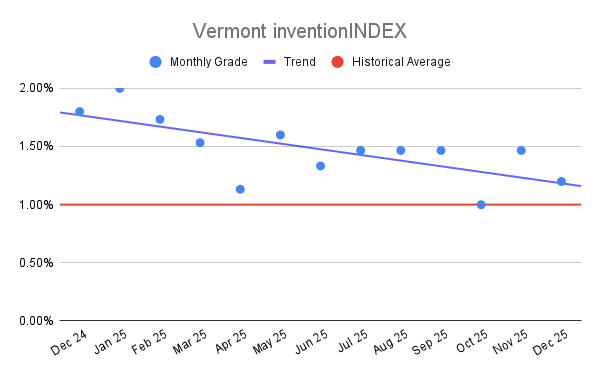 Vermont inventionINDEX December 2025:
  Vermont inventionINDEX November
