

The Vermont Research and Development Tax Credit (32 V.S.A. § 5930ii) offers businesses a nonrefundable tax credit equal to 27 percent of the federal R&D credit for qualified expenditures incurred within Vermont. It is designed to incentivize local innovation and job retention. Key features include a ten-year carryforward for unused credits and a requirement to conform to the federal “Four-Part Test” for qualified research. Taxpayers must file Schedule BA-404 to claim the credit.
V.S.A. Title 32, § 5930ii provides a nonrefundable tax credit equal to 27 percent of the federal credit for research activities conducted specifically within the state of Vermont. This statute serves to incentivize intellectual property development and high-wage job retention by allowing taxpayers to offset income tax liabilities with a ten-year carryforward for unused credit amounts.
Detailed Analysis of the Statutory Construction and Legislative Origin
The Vermont Research and Development (R&D) Tax Credit is a critical component of the state’s fiscal strategy to support innovation-driven enterprises. Codified under Title 32, Chapter 151, Section 5930ii, the credit represents a significant investment by the state in its technological and manufacturing sectors. The statute was originally introduced in 2009 during a special legislative session and became effective for tax years beginning on or after January 1, 2011. Its primary objective is to lower the after-tax cost of innovation, thereby encouraging companies to conduct their research and development activities within Vermont borders rather than in neighboring jurisdictions.
At its inception, the credit was set at 30 percent of the federal credit amount attributable to Vermont expenditures. However, as part of a broader revenue-balancing act in 2013, the Vermont General Assembly amended the statute to reduce the credit rate to 27 percent, effective for tax years beginning on January 1, 2014. This 27 percent rate remains one of the most competitive state-level R&D incentives in the nation, particularly because it leverages the robust federal definition of qualified research.
The statute is organized into three distinct subsections that govern its administration. Subsection (a) establishes the core eligibility criteria and the percentage of the credit. Subsection (b) addresses the longevity of the credit, granting taxpayers a ten-year window to apply any unused portion against future tax liabilities, which is essential for pre-revenue startups and companies in cyclical industries. Subsection (c) introduces a transparency mechanism unique to this credit, requiring the Department of Taxes to publish an annual list of all taxpayers who have claimed the credit. This public disclosure requirement serves as a check on corporate tax expenditures and provides the legislature with data to assess the program’s efficacy.
Integration with the Internal Revenue Code and the Four-Part Test
The administrative efficacy of 32 V.S.A. § 5930ii stems from its direct alignment with federal law. By referencing 26 U.S.C. § 41(a), Vermont effectively adopts the federal definition of “qualified research” and “qualified research expenditures” (QREs). This conformity reduces the compliance burden on taxpayers, as they can largely use the data collected for their federal tax returns to satisfy state requirements, provided they can isolate the Vermont-specific costs.
To qualify for the Vermont credit, an activity must satisfy the federal “Four-Part Test” established by the IRS. This test ensures that the credit is directed toward genuine technological advancement rather than routine product development or aesthetic improvements.
Permitted Purpose
The research must be conducted with the intent to develop a new or improved business component. In the context of Vermont’s economy, this often applies to software development, advanced manufacturing processes, and biotechnology. A business component is defined as any product, process, computer software, technique, formula, or invention which is to be held for sale, lease, or license, or used by the taxpayer in a trade or business.
Elimination of Uncertainty
The activity must seek to discover information that would eliminate uncertainty regarding the capability or method for developing or improving a business component, or the appropriate design of that component. Technical uncertainty exists when the information available to the taxpayer does not establish how the project’s requirements can be met.
Process of Experimentation
Substantially all of the activities must constitute a process of experimentation. This requires a systematic evaluation of one or more alternatives to achieve a result. Common methodologies included in this process are trial and error, modeling, computer simulation, and the evaluation of alternative designs.
Technological in Nature
The process of experimentation must fundamentally rely on the principles of “hard science,” such as physical or biological sciences, engineering, or computer science. This requirement excludes research based on social sciences, arts, humanities, or management studies.
Qualified Research Expenditures in the Vermont Context
Vermont guidance mirrors the federal categories of expenditures that are eligible for inclusion in the credit calculation, with the strict caveat that these costs must be “made within this State.” This geographical limitation is the primary point of divergence from the federal return and requires a meticulous breakdown of costs on Schedule BA-404.
| Expenditure Category | Federal Definition (IRC § 41) | Vermont Application (§ 5930ii) |
|---|---|---|
| Wages | Salaries for employees performing, supervising, or supporting research. | Only wages paid to employees for research performed physically in Vermont. |
| Supplies | Tangible property consumed during the research process. | Supplies used in Vermont-based laboratories or facilities. |
| Contract Research | 65% of payments to third parties for research. | 65% of payments for research services conducted within Vermont. |
| Leased Computers | Costs for computer use in research activities. | Computers or server capacity used by researchers in Vermont. |
The requirement that expenditures be “made within this State” means that for a multi-state corporation, only the portion of the federal credit attributable to Vermont activities is eligible for the 27 percent multiplier. This involves a recomputed calculation, a process that is often the focus of Department of Taxes audits.
Administrative Guidance: The Recomputed Credit Calculation
The Vermont Department of Taxes provides explicit instructions on how to handle the interaction between federal and state credits. If a company performs research in multiple states, it cannot simply multiply its total federal credit by its Vermont apportionment percentage. Instead, the taxpayer must perform a “hypothetical federal credit” calculation as if all research activities occurred only in Vermont.
This recomputation requires the taxpayer to:
- Isolate all Vermont-sourced QREs.
- Identify Vermont-specific gross receipts for the prior four tax years to establish the fixed-base percentage under federal rules.
- Apply the federal credit formula (either the Regular Method or the Alternative Simplified Credit method) to these Vermont-only figures.
- Multiply the resulting hypothetical federal credit by the Vermont statutory rate of 27 percent.
This process ensures that Vermont is only subsidizing the incremental increase in research occurring within its own borders. The Department requires taxpayers to submit a copy of their Federal Form 6765 alongside Vermont Schedule BA-404 to verify these calculations.
Local State Revenue Office Guidance and Compliance
The Vermont Department of Taxes issues guidance through various channels, including official instructions for corporate and individual tax forms, technical bulletins, and the “Compliance Corner.” Understanding this guidance is essential for avoiding the disallowance of credits during a state examination.
Form BA-404: The Primary Credit Reporting Mechanism
Schedule BA-404 is the mandatory form for claiming the R&D credit. It serves as a tracking ledger for the credit’s lifecycle, recording the amount earned in the current year, any carryforwards from the prior ten years, and the amount applied against current year tax.
One significant administrative nuance found in the BA-404 instructions relates to grants and public assistance. If a taxpayer receives a grant or other financial assistance for their research projects from any public or private source, the basis expenditure amount must be adjusted downward to account for that assistance. This prevents the taxpayer from claiming a credit on research that was effectively funded by a third party.
Apportionment and Form BA-402
For corporations having activity outside of Vermont, Schedule BA-402 (Apportionment & Allocation Schedule) is required. While the R&D credit itself is calculated based on specific expenditures (a “direct” method), the ability to use that credit depends on the taxpayer having a Vermont tax liability. The BA-402 determines the portion of the corporation’s income that is taxable by Vermont, thereby setting the ceiling for how much credit can be applied in a given year.
Recordkeeping and Audit Standards
The Commissioner of Taxes has the authority under 32 V.S.A. § 3201(4) to examine any books, papers, or records bearing upon matters required to be included in a return. Guidance in the “Compliance Corner” archive stresses that taxpayers must maintain receipts and vendor invoices for a minimum of three years. However, because the R&D credit has a ten-year carryforward, the effective record-retention period is much longer. Taxpayers are advised to retain research documentation for as long as the credit remains on their books, plus three years after the last portion is claimed.
Specific documentation for an R&D audit should include:
- Project narratives describing the technical challenges faced.
- Employee lists with titles and descriptions of their research duties.
- Payroll records mapping wages to research projects.
- General ledger detail for supplies and contract research.
Comparison with the Enterprise Zone Research and Development Credit
A frequent point of confusion for Vermont taxpayers is the distinction between the 27 percent R&D credit under § 5930ii and the 3 percent R&D credit available through the Enterprise Zone (EZ) program. These are distinct legal provisions with different eligibility and calculation rules.
| Feature | § 5930ii R&D Credit | Enterprise Zone (EZ) R&D Credit |
|---|---|---|
| Credit Rate | 27% of the federal credit amount. | 3% of the increase in total research expenses. |
| Geographic Scope | Anywhere in Vermont. | Only in 16 designated Enterprise Zones. |
| Claiming Method | Fully in the year earned (or carried forward). | Must be claimed 25% each year for four years. |
| Prerequisites | Must qualify for federal credit under § 41. | Requires pre-certification and 3-year presence. |
The § 5930ii credit is generally considered more lucrative and easier to administer because it aligns with federal standards and applies statewide. The EZ credit, while providing a baseline for companies in economically distressed areas, requires a separate application process and a staggered claiming schedule that can be burdensome for smaller firms.
Pass-Through Entities and Fiduciary Obligations
Vermont’s R&D tax credit is available to all entity types, including C-corporations, S-corporations, Partnerships, and Limited Liability Companies (LLCs). For pass-through entities, the credit is not applied at the entity level but is instead distributed to the owners (shareholders, partners, or members) in the same proportion as income or loss.
Owners then claim their portion of the credit on their individual Vermont returns (Form IN-111). This makes the credit a valuable tool for Vermont-based entrepreneurs who may be taxed at the individual level. The Department of Taxes provides Schedule K-1VT to communicate these credit amounts to the owners. If an entity files a composite return for its non-resident owners, it must attach Schedule BA-406 to report the allocation of credits among the participants.
Transparency and the Annual Claimant Report
A unique feature of 32 V.S.A. § 5930ii(c) is the mandatory annual report. Every year, on or before January 15, the Department of Taxes publishes a list of the names of all taxpayers who claimed the credit in the previous calendar year. These reports, such as the RP-1298 series, are available on the Department’s website and provide a high-level view of who is benefiting from the state’s innovation policy.
This transparency is a key differentiator for the R&D credit compared to other business incentives. While the dollar amounts of the individual credits are not disclosed (to protect taxpayer confidentiality), the names of the claimants are public. This data allows economic researchers to track the “stickiness” of tech companies in Vermont, observing whether they continue to claim the credit year over year or if they depart the state after their initial research phase.
Practical Application: A Multi-Year Calculation Example
To illustrate the mechanics of 32 V.S.A. § 5930ii, consider “Green Mountain Robotics,” a fictional manufacturing and software firm based in Winooski, Vermont. The firm also has a sales office in New York.
Step 1: Identify Qualified Research Expenditures
In 2024, Green Mountain Robotics identifies the following expenditures:
- Wages for Vermont-based software engineers: $800,000.
- Wages for New York-based sales staff: $200,000 (Excluded from R&D).
- Research supplies used in the Winooski lab: $50,000.
- Payments to a Vermont-based testing lab (Contract Research): $100,000.
- Total Vermont QREs: $800,000 + $50,000 + ($100,000 \times 0.65) = $915,000.
Step 2: Establish the Hypothetical Federal Base
The firm determines its Vermont-specific gross receipts for the previous four years:
- 2020: $2,000,000
- 2021: $2,200,000
- 2022: $2,500,000
- 2023: $2,800,000
- Average VT Gross Receipts: $2,375,000.
Using the federal “Regular Method,” the firm calculates its fixed-base percentage. For this example, assume a fixed-base percentage of 10 percent.
- Base Amount: $2,375,000 \times 0.10 = $237,500.
- Minimum Base Rule: The base must be at least 50% of current year QREs ($915,000 \times 0.50 = $457,500).
- Effective Base: $457,500.
Step 3: Compute Hypothetical Federal Credit
- Excess QREs: $915,000 – $457,500 = $457,500.
- Hypothetical Federal Credit: $457,500 \times 0.20 = $91,500.
Step 4: Calculate the Vermont § 5930ii Credit
- Vermont Credit: $91,500 \times 0.27 = $24,705.
Green Mountain Robotics enters $24,705 on Line 1 of their 2024 Schedule BA-404. If their 2024 Vermont corporate tax liability is only $10,000, they will apply $10,000 of the credit and carry forward the remaining $14,705 to the 2025 tax year. This carryforward remains available until 2034.
Second-Order Insights: Economic Impact and Audit Risk
The Vermont R&D credit does more than just lower taxes; it fundamentally shifts the cost-benefit analysis for research-intensive firms. At 27 percent of the federal amount, the state is effectively covering roughly 2.7 percent of the company’s total qualifying research payroll (assuming a 10 percent federal credit rate). This “extra” incentive can be the deciding factor for a company choosing between expanding in Vermont or in a state like New Hampshire, which offers no such income tax credit.
However, the high value of the credit also makes it a “high-risk” item for audits. The Department of Taxes frequently scrutinizes the proration of wages for employees who split their time between research and non-research functions. If an engineer spends 20 percent of their time on customer support (a non-qualified activity), but the company claims 100 percent of their wages as QREs, the Department will disallow the 20 percent and potentially assess penalties.
Furthermore, the “hypothetical federal credit” recomputation is a common source of error. Taxpayers often fail to re-calculate their base amount using Vermont-only gross receipts, leading to an overstatement of the credit. Accurate documentation that tracks Vermont-specific sales is just as critical as tracking Vermont-specific research time.
Interaction with Other Vermont Tax Policies
The R&D credit does not exist in a vacuum. Its utility is often impacted by other aspects of Vermont tax law, such as conformity to the Internal Revenue Code and the treatment of depreciation.
Bonus Depreciation Disallowance (Technical Bulletin 44)
Vermont law generally follows the IRC, but with specific exceptions. One significant exception is “bonus depreciation.” Under Technical Bulletin 44, Vermont disallows the federal bonus depreciation provisions. While this primarily impacts capital assets, it can affect the overall tax liability of a research firm, potentially limiting the amount of R&D credit they can “absorb” in a single year and forcing more into a carryforward position.
Unitary Filing and Combined Groups
Vermont requires unitary businesses to file combined reports using Form CO-411. If multiple entities within a unitary group are reporting R&D credits, they must complete a single Schedule BA-404 for the entire group. A separate statement must be attached to break down the total credit by entity. This ensures that the credit is appropriately attributed to the entity that actually performed the research in Vermont, preventing companies from “shifting” credits to profitable but non-research affiliates.
Future Outlook: Legislative and Administrative Trends
The R&D tax credit remains a staple of the Vermont tax landscape, with its “indefinite” expiration date providing long-term certainty for businesses. However, recent shifts in federal law, such as the requirement to amortize research expenses under Section 174 rather than deducting them immediately, have indirect effects on how the Vermont credit is perceived. While the 27 percent multiplier remains constant, the underlying federal calculation has become more complex, making the “recomputed calculation” for Vermont more technically challenging.
The Department of Taxes continues to modernize its reporting systems through myVTax, facilitating electronic filing and more robust tracking of carryforward balances. As Vermont seeks to attract more “climate-tech” and “green-energy” firms, the R&D credit will likely serve as the primary fiscal bridge between early-stage innovation and mature manufacturing.
Final Thoughts: Summary of Statutory Rights and Responsibilities
32 V.S.A. § 5930ii provides a robust incentive for companies to anchor their intellectual property development in Vermont. By offering a 27 percent credit with a generous ten-year carryforward, the state effectively subsidizes the risky and expensive process of discovery. However, this benefit comes with strict compliance responsibilities. Taxpayers must master the art of the “hypothetical federal recomputation,” maintain exhaustive records of Vermont-specific expenditures, and accept a level of public transparency through the annual claimant list. For the diligent taxpayer, § 5930ii is not just a tax reduction; it is a vital support mechanism for long-term growth and competitiveness in the Vermont technology sector.
Who We Are:
Swanson Reed is one of the largest Specialist R&D Tax Credit advisory firm in the United States. With offices nationwide, we are one of the only firms globally to exclusively provide R&D Tax Credit consulting services to our clients. We have been exclusively providing R&D Tax Credit claim preparation and audit compliance solutions for over 30 years. Swanson Reed hosts daily free webinars and provides free IRS CE and CPE credits for CPAs.
Are you eligible?

Why choose us?

Pass an Audit?

What is the R&D Tax Credit?
The Research & Experimentation Tax Credit (or R&D Tax Credit), is a general business tax credit under Internal Revenue Code section 41 for companies that incur research and development (R&D) costs in the United States. The credits are a tax incentive for performing qualified research in the United States, resulting in a credit to a tax return. For the first three years of R&D claims, 6% of the total qualified research expenses (QRE) form the gross credit. In the 4th year of claims and beyond, a base amount is calculated, and an adjusted expense line is multiplied times 14%. Click here to learn more.
Never miss a deadline again

Stay up to date on IRS processes

Discover R&D in your industry

R&D Tax Credit Preparation Services
Swanson Reed is one of the only companies in the United States to exclusively focus on R&D tax credit preparation. Swanson Reed provides state and federal R&D tax credit preparation and audit services to all 50 states.
If you have any questions or need further assistance, please call or email our CEO, Damian Smyth on (800) 986-4725.
Feel free to book a quick teleconference with one of our national R&D tax credit specialists at a time that is convenient for you.
R&D Tax Credit Audit Advisory Services
creditARMOR is a sophisticated R&D tax credit insurance and AI-driven risk management platform. It mitigates audit exposure by covering defense expenses, including CPA, tax attorney, and specialist consultant fees—delivering robust, compliant support for R&D credit claims. Click here for more information about R&D tax credit management and implementation.
Our Fees
Swanson Reed offers R&D tax credit preparation and audit services at our hourly rates of between $195 – $395 per hour. We are also able offer fixed fees and success fees in special circumstances. Learn more at https://www.swansonreed.com/about-us/research-tax-credit-consulting/our-fees/



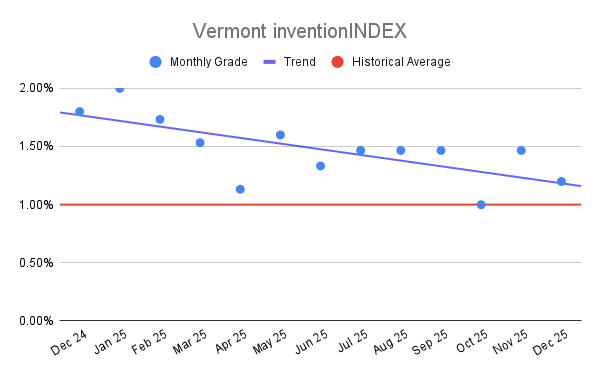 Vermont inventionINDEX December 2025:
  Vermont inventionINDEX November
