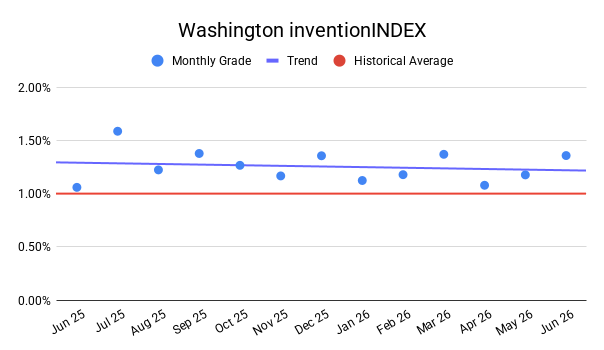
This study provides an exhaustive analysis of the United States federal and Washington State Research and Development (R&D) tax credit frameworks, specifically tailored to the economic landscape of Spokane, Washington. It presents a detailed examination of five unique regional industries, detailing their historical development, current technological operations, and precise eligibility under prevailing federal and state tax statutes.
Case Study: Aerospace and Advanced Materials Manufacturing
The aerospace manufacturing sector represents a foundational pillar of the Spokane, Washington, regional economy, boasting an industrial legacy that spans over seven decades and currently encompasses nearly one hundred aerospace suppliers. Understanding why and how this industry developed in the Inland Northwest requires examining the region’s geographical advantages and mid-twentieth-century federal interventions. Spokane’s initial growth was driven by the extraction of natural resources following the 1883 discovery of gold, silver, and lead in the nearby Coeur d’Alene mining district, which transformed the city into a crucial rail and shipping center. However, as the mining rushes subsided, the regional economy faced periods of stagnation and capital flight. The critical pivot toward advanced manufacturing occurred during World War II when the federal government deliberately sited two massive aluminum plants and a magnesium plant in the Spokane area. These facilities were established to capitalize on the region’s abundant, low-cost hydroelectric power and were positioned inland to protect critical war infrastructure from potential coastal attacks by Japanese forces. Simultaneously, the government established the Velox Naval Depot in the Spokane Valley to leverage the extensive pre-existing railroad networks. By 1950, Washington State accounted for half of all aluminum production in the United States, providing the essential metallurgical infrastructure and skilled workforce that would eventually support the commercial aviation boom led by Boeing in the Pacific Northwest.
Today, Spokane generates approximately one billion dollars in aerospace revenue annually, employing over seven thousand workers across Tier 2, Tier 3, and Tier 4 manufacturing operations focused on airframes, machined components, and aircraft interiors. The region’s aerospace trajectory was profoundly elevated in October 2023 when the federal Economic Development Administration designated the American Aerospace Materials Manufacturing Center (AAMMC) in Spokane as one of the inaugural thirty-one United States Tech Hubs. Driven by a consortium led by Gonzaga University and supported by a forty-eight million dollar federal grant from the CHIPS and Science Act, this hub focuses on the high-rate production of advanced thermoplastic composites for next-generation commercial and defense aircraft. The AAMMC serves as an advanced testbed, housing the largest composites press in the world, allowing industry engineers to prove new production capabilities at Technology Readiness Levels 6 through 9.
From a federal tax administration perspective, the experimental activities conducted by aerospace suppliers utilizing the AAMMC testbed present a textbook application of the Section 41 Credit for Increasing Research Activities. When engineers engage in determining the optimal curing temperatures, evaluating pressure parameters within the massive composite presses, or developing automated fiber placement techniques for novel thermoplastic polymers, they are fundamentally relying on the principles of materials science and mechanical engineering, thereby satisfying the “Technological in Nature” requirement of the federal four-part test. Furthermore, resolving the inherent technical uncertainties associated with scaling thermoplastic composites from bench-top models to high-rate production systems constitutes a rigorous process of experimentation. However, following the stringent precedents established by the Seventh Circuit Court of Appeals in Little Sandy Coal Co. v. Commissioner, Spokane aerospace suppliers must maintain meticulous, contemporaneous engineering documentation to prove that substantially all of their claimed activities involve a systematic evaluation of alternatives rather than merely relying on the general “newness” of the aircraft components being manufactured. Under Washington State law, these aerospace companies can also leverage the state’s highly favorable Machinery and Equipment (M&E) sales and use tax exemption. Based on the landmark Washington State Board of Tax Appeals decision in Terrapower, LLC v. Department of Revenue, manufacturers utilizing heavy machinery, such as the AAMMC composite presses, exclusively for research and development operations qualify for the retail sales tax exemption even if the resulting prototypes are not manufactured for commercial sale. This judicial interpretation provides massive upfront capital expenditure savings, effectively eliminating the combined state and local sales tax burden on experimental testing rigs and fabrication equipment. Furthermore, under specific Washington State aerospace tax incentives, these firms are eligible for the Business and Occupation (B&O) credit for preproduction development expenditures, which provides a reduced B&O tax rate for the research, design, and engineering activities dedicated to developing commercial airplanes or component parts.
Case Study: Life Sciences and Biotechnology
The emergence of a robust life sciences and biotechnology cluster in Spokane is a testament to deliberate civic planning and urban renewal over the past half-century. Historically, the fifty acres situated a few blocks east of downtown Spokane were dominated by sprawling, heavily polluted rail yards. By the 1960s, community leaders recognized that this industrial infrastructure had become a severe environmental and economic blight. The initial catalyst for transformation was the hiring of King Cole as the community development director, which culminated in Spokane hosting the environmentally themed Expo ’74. This international event facilitated the environmental remediation of the Spokane River and the revitalization of the downtown core. Following another economic downturn in the 1980s caused by declining timber and mining revenues, a coalition of local business leaders—including Paul Redmond, Bill Cowles, Mike Murphy, and Dave Clack—launched the “Momentum ’87” strategy. This initiative specifically targeted the expansion of higher education and the establishment of a robust medical and health sciences education system to combat a growing shortage of primary care physicians in the rural Intermountain Northwest. This vision ultimately transformed the formerly blighted rail yards into the modern Washington State University (WSU) Health Sciences campus, an integrated hub that now houses a College of Pharmacy and Pharmaceutical Sciences, a College of Nursing, and the Elson S. Floyd College of Medicine.
This dense concentration of academic and clinical infrastructure within the Spokane University District spawned a highly specialized private-sector biotechnology ecosystem. Led by organizations such as Evergreen Bioscience Innovation, Spokane has become a magnet for contract research organizations (CROs) and contract manufacturing organizations (CMOs) focusing on pharmaceuticals and medical devices. The region offers an interconnected supply chain for expert life and health science services, enabling early-stage biopharmaceutical companies to conduct rigorous clinical trials and medical device prototyping.
The tax implications for the life sciences sector in Spokane are highly favorable, particularly following the recent enactment of the federal “One Big Beautiful Bill Act” (OBBBA) of 2025. Biotechnology firms and contract research organizations routinely incur massive domestic research and experimental (R&E) expenditures. Under the newly established Internal Revenue Code Section 174A, these businesses are permanently allowed to fully and immediately expense their domestic R&E expenditures in the year they are incurred, reversing the punitive five-year capitalization requirement previously mandated by the Tax Cuts and Jobs Act. Furthermore, the retroactive provisions of the OBBBA allow these life science companies to accelerate unamortized domestic R&E costs from the 2022 through 2024 tax years, providing a massive influx of liquidity that can be reinvested directly into local clinical trials and laboratory expansions. When applying the federal Section 41 R&D tax credit, the development of targeted drug delivery systems, novel pharmaceutical formulations, or advanced surgical devices perfectly aligns with the statutory definition of a business component. The iterative phases of clinical trials—where researchers systematically evaluate different active pharmaceutical ingredient concentrations or measure adverse toxicity events against varied demographic datasets—represent a textbook execution of a process of experimentation. For state-level tax planning, the Terrapower doctrine is equally vital for life science startups. Laboratory instruments, mass spectrometers, cleanroom environmental controls, and high-performance computing clusters purchased by Evergreen Bioscience partners qualify for the Washington State Machinery and Equipment sales tax exemption, provided they have a useful life exceeding one year and are used directly in a qualifying research and development operation, irrespective of whether the experimental drugs are ever sold commercially.
Case Study: Clean Energy and Smart Grid Technology
The Inland Northwest’s integration with energy management and smart grid technology is deeply rooted in its geographical history. The Spokane Falls provided the raw kinetic power that made Spokane an early pioneer in electrification, allowing the city to implement electric streetlights by 1886, famously beating both Portland and San Francisco to the adoption of this technology. This legacy of abundant, renewable hydroelectric power created an ecosystem inextricably linked to energy distribution and utility management. Over the decades, as the national electric grid aged and faced increasing demands, Spokane-based entities such as the utility provider Avista and the global smart metering manufacturer Itron (headquartered in nearby Liberty Lake) recognized the urgent necessity of modernizing grid infrastructure. The modern United States electric grid, comprising over nine thousand generating units and six hundred thousand miles of transmission lines, requires advanced two-way communication technologies, digital meters, and computer processing to maintain stability and integrate intermittent renewable energy sources.
To pioneer these solutions, Spokane established “Urbanova,” an urban renewal and smart city initiative located within the 770-acre University District. This initiative features the “Eco-District,” an active real-world testbed comprising networked streetlights, air quality sensors, two hundred kilowatts of solar arrays, 2.5 megawatt-hours of battery storage, and advanced building energy management systems interconnected through a centralized microgrid. Researchers from the United States Department of Energy’s Pacific Northwest National Laboratory (PNNL) utilize the Eco-District to deploy and test novel building technologies and algorithms designed to facilitate “transactive energy”. Transactive energy is a cutting-edge economic and control mechanism where distributed energy resources dynamically negotiate and trade energy load based on real-time grid demands, fundamentally altering how utilities monetize and manage decentralized power.
The software and hardware development required to facilitate this level of grid modernization triggers specific and rigorous scrutiny under the federal R&D tax credit framework. For companies like Itron developing advanced metering infrastructure and the Riva technology platform, the integration of legacy grid equipment with advanced sensors known as Phasor Measurement Units involves immense technical uncertainty regarding data latency, cybersecurity, and algorithmic load balancing. Overcoming these challenges through systematic computational modeling satisfies the Section 41 process of experimentation requirement. However, if the software architecture developed by these utility partners is deemed primarily for internal utility management—such as internal data routing rather than external commercial sale—the software must pass the federal High Threshold of Innovation (HTI) test. This secondary test requires the taxpayer to prove that the software involves significant economic risk, is highly innovative, and cannot be purchased commercially without substantial modifications. In addition to the standard R&D tax credits, the clean energy sector in Spokane benefits profoundly from the elective pay provisions introduced by the federal Inflation Reduction Act and subsequently modified by the OBBBA. Historically, tax-exempt entities such as local municipal governments and state universities could not benefit from federal clean energy tax credits. The new elective pay provisions allow these local governments investing in the Urbanova Eco-District to file an annual tax return with the Internal Revenue Service to claim a direct cash refund for their investment tax credits, effectively subsidizing the deployment of experimental smart grid technologies without requiring an offsetting tax liability.
Case Study: Agricultural Technology (AgTech)
Agriculture is the foundational economic bedrock of Eastern Washington, and the development of Agricultural Technology (AgTech) in the Spokane region is the result of over a century of localized academic research and environmental adaptation. At the turn of the twentieth century, the fertile loess soils of the Palouse region—an area spanning south of Spokane into Whitman County—transformed the area into a premier wheat-producing domain. The institutionalization of agricultural science in the region began with the establishment of the Washington State Agricultural College (now WSU) in Pullman, funded through the federal Morrill Act of 1862 and the Hatch Act of 1887, which authorized the creation of agricultural experiment stations. For decades, university scientists partnered with local farmers to develop advanced crop rotation strategies, resilient seed breeding programs, and sophisticated irrigation technologies, particularly following the construction of the Grand Coulee Dam, which eventually provided irrigation water to over six hundred thousand acres of Central Washington farmland. Today, Washington agriculture contributes over ten billion dollars to the state’s economy, exporting vast quantities of apples, milk, potatoes, cattle, and wheat primarily to Asian markets.
Modern AgTech in the Spokane region builds upon this deep agrarian history through the lens of sustainability and circular economics. A prime example is Qualterra Inc., an agricultural technology company that recently expanded its operations from Pullman to a newly acquired seventy-seven-acre agricultural renewal center located twenty miles south of Spokane. Qualterra focuses on plant testing, molecular diagnostics, and the commercial production of biochar—a highly porous, carbon-rich soil amendment created through the pyrolysis of agricultural biomass waste such as wheat straw, nut shells, hops, and rice husks. By processing crop waste materials that would otherwise be burned off or left to decompose, Qualterra’s proprietary biomass processing units capture renewable energy while producing a pure form of carbon. The application of biochar to regional soils has been shown to improve pH levels, increase aeration, enhance nutrient availability, and dramatically boost water absorption, allowing crops to thrive even during periods of drought.
Qualterra’s ongoing development of proprietary biomass processing units and bespoke biochar formulations qualifies for substantial federal and state innovation incentives. To claim the federal Section 41 R&D tax credit, the research must fundamentally rely on the hard sciences; Qualterra’s operations are deeply rooted in organic chemistry, soil science, and thermodynamics, satisfying the “Technological in Nature” statutory requirement. Furthermore, the company engages in a continuous process of experimentation to determine the precise pyrolysis temperatures, residence times, and optimal biomass feedstock ratios required to produce a consistent biochar profile tailored to specific soil types. The iterative field trials measuring the growth density of apple trees in biochar-amended soils serve as empirical validation of the performance of their new business components. Following the judicial precedent of Little Sandy Coal, as Qualterra scales its biomass processing units from laboratory bench-top models to full-scale pilot plants, the direct labor costs associated with the engineering, supervision, and testing of the pilot facility are eligible for the federal credit, provided the taxpayer can systematically document that the primary purpose of the facility is to resolve technical uncertainties rather than to engage in standard commercial production. Furthermore, under the Washington State Business and Occupation tax framework, the heavy equipment, kilns, and filtration systems utilized in the biomass processing pilot plant qualify for the Machinery and Equipment sales tax exemption. By classifying the pilot plant as a research and development operation, Qualterra can shield its capital expenditures from the state sales tax, preserving vital working capital during the scaling phase.
Case Study: Advanced Manufacturing and Cybersecurity
The final case study examines the intersection of advanced component manufacturing and specialized information technology, a sector that arose as Spokane actively diversified its economy away from volatile natural resource markets into a knowledge-based service hub for the Intermountain Northwest. The presence of global industrial conglomerates and specialized cybersecurity firms highlights the region’s highly skilled workforce and attractive cost of doing business, which is reportedly eighteen percent below the national average.
A cornerstone of Spokane’s advanced manufacturing sector is Honeywell, a corporation with a sixty-year history of operating cutting-edge facilities in the Spokane Valley. The Honeywell facility in Spokane serves as the sole United States-based supplier of copper manganese sputtering targets. These highly specialized components are utilized globally in the production of advanced and leading-edge logic semiconductor chips, which are critical components in smartphones, high-performance military jets, and artificial intelligence systems. In parallel with this physical manufacturing, Spokane has cultivated a burgeoning software and cybersecurity sector designed to support the complex regulatory compliance and risk management demands of the regional healthcare and financial institutions. Local firms such as Medcurity have developed automated software platforms that streamline Health Insurance Portability and Accountability Act (HIPAA) compliance, automating rigorous risk assessments and audit procedures for healthcare providers. Similarly, RiskLens has pioneered an innovative quantitative cybersecurity platform that utilizes data analytics to measure cyber risk in precise financial terms, translating abstract network threats into quantifiable business metrics.
The federal and state tax frameworks provide critical support for these advanced operations, albeit with increasing state-level complexities. For a company like Honeywell, the metallurgical research required to refine the purity and crystalline structure of copper manganese sputtering targets to meet the exact tolerances of the global semiconductor industry easily satisfies the federal four-part test for qualified research under Section 41. For software firms like RiskLens and Medcurity, the development of proprietary algorithms for financial risk quantification or dynamic compliance mapping involves evaluating different computational architectures and machine learning models to achieve required processing speeds and cryptographic security, which constitutes a qualified process of experimentation.
However, these technology firms must aggressively utilize federal incentives, such as the Section 174A immediate expensing of domestic R&E costs, to offset aggressive new tax policies implemented by Washington State. Following the enactment of Engrossed Substitute House Bill 2081, sweeping B&O tax rate increases took effect. For firms engaged in “Service and Other Activities”—which captures most software and IT consulting revenue—the B&O tax rate increased to 2.1% for businesses generating over five million dollars in gross income, effective October 2025. Furthermore, an advanced computing surcharge was drastically increased from 1.22% to 7.5% of gross income for select high-grossing computing businesses, effective January 2026. Compounding this gross receipts tax burden, Washington State extended its 6.5% retail sales tax to encompass many professional services, including IT consulting, software development, and engineering services, fundamentally shifting the cost structure for outsourced research and development. If Spokane-based tech firms utilize third-party domestic engineering contractors, those expenses remain eligible as Contract Research Expenses (calculated at 65% of the invoiced amount) under the federal R&D credit, but the firms must now navigate the newly applied state sales tax on those business-to-business transactions. Maximizing the federal Section 41 credit and the Section 174A immediate deduction is therefore a strategic imperative to counterbalance the localized state-level tax burdens.
Detailed Analysis: Federal R&D Tax Credit Law and Administration
The United States federal government incentivizes technological innovation through a complex matrix of statutory deductions and credits, primarily governed by Internal Revenue Code Section 41 and the newly enacted Section 174A.
The Section 41 Four-Part Test and Base Amount Calculations
To qualify for the Section 41 Credit for Increasing Research Activities, a taxpayer’s activities must strictly adhere to the statutory requirements commonly referred to as the “four-part test.” This rigorous framework must be applied separately to each individual business component.
| Statutory Requirement | Legal Definition and Administrative Application |
|---|---|
| Section 174A Treatment | Expenditures must be eligible for treatment as domestic research or experimental expenditures under Section 174A. This requires the costs to be incurred in connection with the taxpayer’s active trade or business and represent research and development costs in the experimental or laboratory sense. |
| Technological in Nature | The research process must fundamentally rely on the principles of the hard sciences, such as physical sciences, biological sciences, computer science, or engineering. Research activities based in the social sciences, arts, economics, or humanities are explicitly excluded from eligibility. |
| Business Component Utility | The information discovered through the research must be intended to be useful in the development of a new or improved business component. A business component is statutorily defined as any product, process, computer software, technique, formula, or invention held for sale, lease, license, or used internally by the taxpayer in their trade or business. |
| Process of Experimentation | Substantially all of the activities must constitute elements of a process of experimentation designed to evaluate one or more alternatives to achieve a result where the capability, method, or appropriate design of that result is uncertain at the outset of the research. |
The credit is fundamentally designed to reward increasing research activities, meaning it is calculated based on expenditures that exceed a historical baseline. Under Section 41(c)(1), the “base amount” is defined as the product of the taxpayer’s fixed-base percentage and the average annual gross receipts of the taxpayer for the four taxable years preceding the credit year. For companies funding external research, the statutes provide varied incentive rates. While standard contract research expenses are generally limited to sixty-five percent of the incurred cost, Section 41(b)(3)(C) provides a highly favorable seventy-five percent inclusion rate for amounts paid to a “qualified research consortium”. A qualified research consortium is defined as a tax-exempt organization organized and operated primarily to conduct scientific research on behalf of the taxpayer and at least one other unrelated taxpayer, a provision highly relevant for industries partnering with academic institutions like Gonzaga University or Washington State University in the Spokane region. Furthermore, Section 41(b)(4) provides critical relief for startup ventures in the University District; it allows taxpayers to meet the trade or business requirement for in-house research expenses if the principal purpose of the expenditure is to use the results of the research in the active conduct of a future trade or business, ensuring that pre-revenue innovators are not locked out of the credit.
Section 174A and the “One Big Beautiful Bill Act” (OBBBA)
The legislative landscape governing the deductibility of research expenses underwent a seismic shift with the enactment of the “One Big Beautiful Bill Act” (OBBBA) of 2025 (P.L. 119-21). Historically, Section 174 allowed taxpayers to immediately deduct all R&E expenditures. However, the Tax Cuts and Jobs Act substantially amended this, requiring specified research or experimental expenditures paid or incurred after December 31, 2021, to be capitalized and amortized over five years for domestic research and fifteen years for foreign research.
The OBBBA rectified this burden by enacting the new Section 174A. For taxable years beginning after December 31, 2024, taxpayers are once again permanently permitted to fully and immediately expense domestic research or experimental expenditures in the year they are incurred. Crucially, the legislation includes retroactive transition rules allowing businesses to accelerate and deduct their unamortized domestic R&E costs lingering from the 2022 through 2024 tax years. Taxpayers have the option to take a large one-time deduction in 2025 or spread the deductions evenly over the 2025 and 2026 tax years to optimize their tax planning strategies. Internal Revenue Service Revenue Procedure 2025-28 provides the necessary procedural guidance for making these accounting method changes and elections. It is paramount to note that foreign research expenditures must still be capitalized and amortized over a fifteen-year period. This strict legislative dichotomy heavily penalizes the offshoring of intellectual property development, directly reinforcing the financial logic of conducting advanced manufacturing and software engineering domestically in regional hubs like Spokane.
Federal Judicial Precedent: Little Sandy Coal Co. v. Commissioner
The rigorous enforcement of the Section 41 four-part test, specifically the “process of experimentation” requirement, was recently affirmed in the landmark Seventh Circuit Court of Appeals decision, Little Sandy Coal Co. v. Commissioner (2023). The taxpayer, a shipbuilding company, claimed the R&D credit based on alleged qualified research expenses incurred during the design and construction of eleven first-in-class vessels. The Commissioner of Internal Revenue disallowed the credit, assessed a tax deficiency, and the United States Tax Court upheld the disallowance following a five-day bench trial.
Upon appeal, a panel comprising Judges Rovner, Hamilton, and Brennan affirmed the Tax Court’s ultimate conclusion that the taxpayer failed to meet its burden of proof. The appellate court determined that the taxpayer did not provide a principled way to determine what specific portion of the employee activities for each vessel constituted elements of a process of experimentation. The taxpayer erroneously relied on arbitrary heuristic estimates and the general “newness” of the vessels rather than demonstrating a systematic evaluation of design alternatives.
However, the Seventh Circuit provided a highly favorable correction to the Tax Court’s statutory interpretation. The Tax Court had previously established a mathematically impossible fraction for determining if “substantially all” (defined as eighty percent or more) of the activities were experimental, by excluding direct supervision and direct support personnel from the numerator while leaving them in the denominator. The Seventh Circuit explicitly rejected this erroneous construction, confirming that direct supervision and support of research can constitute elements of a process of experimentation and belong in both the numerator and denominator. The overarching warning for manufacturers in Spokane is clear: companies cannot rely on the sheer novelty of a final product to claim the credit. They must implement robust, contemporaneous time-tracking and engineering documentation that distinctly isolates the exact labor hours structured to resolve technological uncertainties.
Detailed Analysis: Washington State Tax Law and Administration
Washington State operates under a unique tax structure; it does not levy a traditional corporate income tax, relying instead on a gross receipts tax known as the Business and Occupation (B&O) tax, supplemented by state and local retail sales and use taxes. To remain competitive, the state legislature has enacted a variety of targeted incentives and exemptions to encourage advanced manufacturing and high-technology research.
The Business and Occupation (B&O) Tax Overhaul
In 2025, the Washington State legislature passed a sweeping series of tax increases under Engrossed Substitute House Bill 2081, fundamentally reshaping the B&O tax landscape. The changes reflect a governmental effort to address projected budget shortfalls while attempting to insulate the core physical manufacturing base.
| B&O Tax Classification | Effective Date | Previous Rate | New Rate / Adjustment |
|---|---|---|---|
| Service and Other Activities (Gross Income < $1M) | October 1, 2025 | 1.5% | Remains 1.5% |
| Service and Other Activities (Gross Income $1M – $4.99M) | October 1, 2025 | 1.5% – 1.75% | Increases to 1.75% |
| Service and Other Activities (Gross Income > $5M) | October 1, 2025 | 1.5% – 1.75% | Increases to 2.1% |
| Manufacturing, Retailing, Wholesaling | January 1, 2027 | 0.484% / 0.471% | Standardized to 0.5% |
| Large Business Surcharge (Gross Receipts > $250M) | January 1, 2026 | N/A | New 0.5% surcharge (Manufacturers of goods are exempt) |
| Advanced Computing Surcharge | January 1, 2026 | 1.22% | Increases to 7.5% for select high-grossing businesses |
Additionally, a significant structural shift occurred with the expansion of the Washington sales tax to professional services. Historically, services were subject only to the B&O tax. Effective October 1, 2025, professional services provided to Washington clients—including IT consulting, software development, engineering, and architectural design—are now subject to the state’s 6.5% retail sales tax, plus applicable local jurisdictional taxes, which can push the combined rate above ten percent. Washington enforces strict economic nexus standards, meaning out-of-state service providers generating one hundred thousand dollars or more in annual receipts from Washington-based clients must collect and remit this tax. For manufacturers and extractors who sell products at retail or wholesale within the state and are thus subject to multiple B&O classifications, the state provides the Multiple Activities Tax Credit (MATC) to prevent double taxation on the gross receipts of the same product.
The Machinery and Equipment (M&E) Exemption and Terrapower
To mitigate the burden of the state retail sales tax on capital-intensive industries, Washington provides the Manufacturer’s Machinery and Equipment (M&E) Sales and Use Tax Exemption under RCW 82.08.02565. This statute exempts the purchase of qualifying machinery and equipment that has a useful life of more than one year and is used directly in a qualifying manufacturing or research and development operation.
The administrative interpretation of this statute underwent a massive, taxpayer-favorable paradigm shift following the Washington State Board of Tax Appeals decision in Terrapower, LLC v. Department of Revenue, BTA Docket 19-065 (2022). Historically, the Department of Revenue strictly interpreted the definition of a manufacturer, taking the position that taxpayers who only manufactured items for internal commercial or industrial use—such as prototypes—did not qualify for the M&E exemption; the department argued that a taxpayer must manufacture tangible personal property for external sale to qualify.
In Terrapower, the taxpayer utilized highly specialized machinery exclusively for an internal research and development operation and did not manufacture any items for commercial sale. The Board of Tax Appeals agreed with the taxpayer, ruling that the plain language of the M&E exemption statutes explicitly applies to R&D operations, even if the manufacturer is not producing items for external sale. The BTA determined that the definition of a Washington manufacturer inherently includes businesses that manufacture goods for their own internal commercial or industrial use. Following the ruling, the Washington Department of Revenue issued a Special Notice formally accepting the decision and confirming it would not appeal, acknowledging that the ruling is consistent with the legislative intent to incentivize businesses to perform R&D activities within the state. For aerospace firms, life science startups, and agricultural technology companies operating in Spokane, this decision creates immediate opportunities to review past capital expenditure purchases for substantial tax refunds and allows for the tax-free procurement of millions of dollars in future laboratory and pilot-plant equipment.
Aerospace Specific Tax Incentives and Legacy Programs
Washington State also offers highly specific tax incentive programs tailored to industry clusters vital to the Spokane economy.
| Aerospace Tax Incentive Program | Eligibility and Qualifying Activity |
|---|---|
| B&O Credit for Preproduction Development Expenditures | Available to aerospace manufacturers and tooling designers. Qualifies research, design, and engineering activities specifically dedicated to developing commercial airplanes or component parts. |
| B&O Credit for Property/Leasehold Taxes | Provides a credit for the payment of property or leasehold taxes on new buildings, land, and the increased value of renovated buildings used exclusively in manufacturing commercial airplanes, components, or specialized tooling. |
| Sales and Use Tax Exemption for Computer Hardware/Software | Exempts the purchase of computer hardware, software, peripherals, and the associated labor charges for installation when purchased by qualifying aerospace businesses. |
Furthermore, while the broad Washington High Technology Sales and Use Tax Deferral Program (Chapter 82.63 RCW) formally expired for new applications on January 1, 2015, its structural legacy continues to dictate compliance for facilities built in the Spokane University District. Businesses that secured approved certificates under this program were required to commence “meaningful construction”—defined as active building site excavation or laying a foundation—no later than December 31, 2019. If the economic benefits were secured, the deferred sales and use tax on qualified buildings and machinery is not required to be repaid, provided the facility continues to be used for pilot-scale manufacturing or qualified research and development in the fields of advanced computing, advanced materials, biotechnology, electronic device technology, or environmental technology for an eight-year period following the operational completion of the project. The deferral effectively transitions into an outright exemption, significantly lowering the capital barriers for establishing the advanced laboratories that now define the Spokane innovation ecosystem.
Final Thoughts, Spokane, Washington, leverages a unique convergence of historical industrial capacity, cheap renewable energy, and aggressive urban renewal to support a diverse array of advanced industries. By meticulously aligning their engineering operations with the stringent documentation requirements of the federal Section 41 and 174A tax statutes, and aggressively utilizing Washington State’s favorable Machinery and Equipment sales tax exemptions, innovative companies in the Inland Northwest can effectively optimize their capital structures and sustainably finance the next generation of technological development.
The information in this study is current as of the date of publication, and is provided for information purposes only. Although we do our absolute best in our attempts to avoid errors, we cannot guarantee that errors are not present in this study. Please contact a Swanson Reed member of staff, or seek independent legal advice to further understand how this information applies to your circumstances.