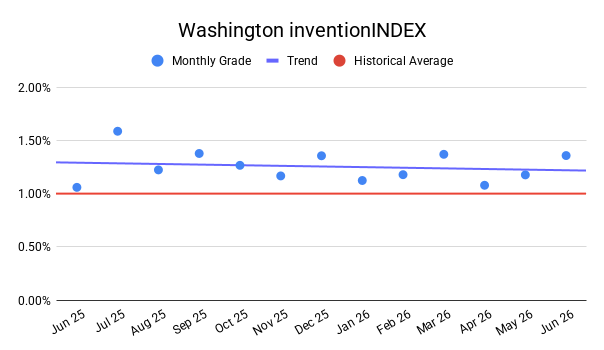
This comprehensive study analyzes the research and development (R&D) tax credit requirements of the United States and the State of Washington, specifically tailored to the industrial ecosystem of Vancouver, Washington. It evaluates the statutory frameworks and recent jurisprudence governing these incentives while examining their direct application across five unique regional industries.
Vancouver, Washington, situated on the northern bank of the Columbia River, serves as a critical industrial and technological anchor within the greater Portland-Vancouver metropolitan area. Historically characterized by natural resource extraction, heavy timber processing, and aluminum smelting, the regional economy has undergone a deliberate and profound transformation over the past five decades. This evolution into a high-technology and advanced manufacturing hub—often referred to as the northern expansion of the “Silicon Forest”—was catalyzed by a confluence of geographic advantages, strategic infrastructure investments, and favorable tax policies. The availability of abundant, low-cost hydroelectric power from the Bonneville Dam, managed locally by Clark Public Utilities, provided the necessary energy infrastructure for power-intensive manufacturing and semiconductor fabrication. Concurrently, the Port of Vancouver USA evolved into a premier logistics hub, supporting complex global supply chains and generating billions in regional economic impact.
Crucially, the geopolitical and tax environment of the Pacific Northwest played a pivotal role in shaping Vancouver’s industrial base. The State of Washington does not levy a corporate or personal income tax, relying instead on a Business and Occupation (B&O) gross receipts tax. In 1984, the neighboring State of Oregon abolished its unitary tax, which had previously levied taxes on the worldwide profits of multinational corporations operating within its borders. This legislative shift, combined with Washington’s lack of income tax and competitive property costs, triggered a massive influx of foreign and domestic high-technology firms into Clark County, Washington. Today, Vancouver supports a highly diversified innovation economy encompassing semiconductor manufacturing, biotechnology, aerospace and defense electronics, advanced heavy machinery, and clean technology. For these industries to sustain their competitive advantage and underwrite the immense capital expenditures required for continuous innovation, the strategic application of United States federal and Washington State R&D tax incentives is paramount.
Case Study: Semiconductor and High-Tech Electronics
The Pacific Northwest’s semiconductor industry traces its origins to the 1940s with the founding of Tektronix in Portland, eventually accelerating with Intel’s establishment of its first Oregon plant in 1974. Drawn by the region’s inexpensive land, abundant clean water necessary for silicon wafer fabrication, and low-cost electricity, the industry rapidly expanded across the Columbia River into Vancouver, Washington. In 1979, Hewlett-Packard established a massive inkjet printer development campus in Vancouver, concurrently joined by Shin-Etsu Handotai, which founded its SEH America silicon wafer fabrication plant in the city. SEH America became a foundational pillar of Vancouver’s economy, supplying critical semiconductor materials to global entities like Intel and Texas Instruments. The ecosystem was further solidified in 1996 with the establishment of WaferTech (now a wholly-owned subsidiary of TSMC) in nearby Camas, creating the first dedicated semiconductor foundry in the United States. The sector continues to experience aggressive growth; in 2025, YST Semiconductor Technology Corporation leased 150,000 square feet at the Vancouver Innovation Center to manufacture advanced opto-electronic chips for telecommunications, bringing a $100 million capital investment to the region. Furthermore, supported by the federal CHIPS and Science Act, lawmakers secured a $105 million investment for Analog Devices in 2025, dedicating $80 million to modernize and expand fabrication facilities in the Camas and Vancouver area.
To offset the extraordinary costs associated with semiconductor fabrication, companies in Vancouver heavily rely on the United States federal R&D tax credit codified under Internal Revenue Code (IRC) Section 41. Under the federal framework, semiconductor companies must demonstrate that their engineering activities meet the statutory four-part test. For an entity like SEH America or TSMC Washington, the development of novel photolithography techniques, the testing of new etching chemicals to achieve smaller transistor nodes, or the engineering of vacuum-compatible extreme environment components fundamentally rely on the principles of physical sciences and engineering, satisfying the technological information requirement. Furthermore, the iterative testing of different silicon crystal growth parameters or thermal cycling processes constitutes a qualified process of experimentation. The expenses incurred during this experimentation—specifically the wages of process engineers, the cost of raw silicon and specialty chemicals consumed during testing, and the payments to third-party testing laboratories—are eligible as Qualified Research Expenses (QREs). However, federal examiners heavily scrutinize these claims to ensure that routine quality control testing of mass-produced wafers is explicitly excluded from the credit computation.
At the state level, the Washington Department of Revenue provides a highly targeted, lucrative framework of incentives specifically designed to retain and expand semiconductor manufacturing. Effective April 1, 2024, the state legislature extended the preferential Business and Occupation (B&O) tax rate for manufacturers and processors for hire of semiconductor materials. This reduced B&O rate of 0.275% applies directly to the gross receipts derived from manufacturing semiconductor microchips and materials, representing a significant reduction from standard manufacturing tax rates. This preferential rate is statutorily extended through December 31, 2033. In addition to the B&O reduction, semiconductor firms in Vancouver benefit from a specific sales and use tax exemption on the purchase of gases and chemicals used directly in the production of semiconductor materials. This exemption substantially lowers the operational expenditures of operating cleanrooms and fabrication facilities. To maintain eligibility for these state incentives, semiconductor manufacturers must meticulously comply with reporting mandates, specifically the electronic filing of the Annual Tax Performance Report by May 31 of each year following the claim. Failure to execute this compliance requirement results in an immediate statutory penalty, wherein 35 percent to 50 percent of the claimed incentive becomes instantly due and payable to the Department of Revenue.
| Semiconductor Industry Tax Incentive | Jurisdiction | Mechanism and Statutory Rate | Expiration Date |
|---|---|---|---|
| Credit for Increasing Research Activities | U.S. Federal | Incremental credit based on 20% of QREs exceeding a base amount, or the Alternative Simplified Credit mechanism. | Permanent |
| Preferential B&O Tax Rate | Washington State | Reduced B&O gross receipts tax rate of 0.275% for manufacturing semiconductor materials. | December 31, 2033 |
| Gases and Chemicals Exemption | Washington State | Sales and use tax exemption on gases and chemicals consumed in semiconductor production. | December 31, 2033 |
| M&E Sales and Use Tax Exemption | Washington State | Complete sales tax exemption on machinery and equipment used primarily for manufacturing or R&D. | Permanent |
Case Study: Biotechnology and Life Sciences
The emergence of a robust biotechnology and life sciences cluster in Southwest Washington represents a strategic triumph for regional economic planners. Historically overshadowed by the immense life sciences ecosystem in Seattle—which houses the University of Washington and the Fred Hutchinson Cancer Research Center—Vancouver systematically cultivated its own distinct identity within the tech bio and computational biology sectors. The Columbia River Economic Development Council (CREDC) formally identified life sciences as one of five strategic sectors targeted for aggressive expansion in its comprehensive economic development plan. This growth was heavily supported by targeted investments in educational infrastructure, notably the construction of a state-of-the-art Life Sciences Building at Washington State University Vancouver (WSU-V) and the establishment of the Henrietta Lacks Health & Bioscience High School, which together ensure a steady pipeline of highly specialized STEM talent. The sector provides exceptional economic benefits, with life science jobs paying an average salary of $123,108, significantly exceeding the state’s average private-sector wage, and demonstrating high gender parity, with women comprising 44 percent of the workforce.
The defining catalyst for Vancouver’s ascension in the biotech space was the relocation and massive expansion of Absci. Founded in 2011 with a team of six employees operating out of a shared incubator in Portland, Oregon, Absci outgrew its initial footprint and sought expansive, customizable laboratory space. The Port of Vancouver facilitated this transition by converting former hotel rooms at Terminal 1 into affordable, state-of-the-art wet labs. The CREDC further incentivized the move by securing $200,000 in seed funding from Washington State’s Economic Development Strategic Reserve Fund (SRF). Following its relocation, Absci went public in 2022 and currently employs hundreds of personnel in Vancouver, utilizing a generative artificial intelligence platform to design therapeutic antibodies. The company screens billions of cells weekly, allowing it to transition from AI-designed antibodies to wet-lab-validated candidates in a matter of weeks, leading to monumental industry collaborations, including a $247 million agreement with AstraZeneca and strategic partnerships with Almirall and Invetx.
For life science firms like Absci, Molecular Testing Labs, and CytoDyn operating in Vancouver, federal R&D tax credit optimization requires navigating the intersection of biological science and advanced computer science. When an entity develops proprietary artificial intelligence algorithms to predict protein folding and design novel monoclonal antibodies, the labor expenses of software engineers and computational biologists represent highly lucrative QREs. However, because this AI software is generally developed for internal use to facilitate drug discovery rather than being sold commercially as a standalone software product, it falls under the purview of the Internal Use Software (IUS) regulations. To qualify under federal law, IUS must meet a high threshold of innovation, demonstrating that the software is highly innovative, involves significant economic risk, and is not commercially available. Once the AI-generated antibodies transition to wet-lab validation, the wages of laboratory technicians and the cost of biological supplies consumed during continuous feedback loop testing unequivocally satisfy the four-part test, as the process inherently relies on biological sciences to eliminate pharmacological uncertainty.
Within the Washington State tax framework, the expiration of the state’s broad high-technology R&D B&O credit in 2014 requires biotechnology firms to leverage alternative statutory exemptions. The most critical of these is the Manufacturers’ Sales and Use Tax Exemption for Machinery and Equipment (M&E exemption). Under Revised Code of Washington (RCW) 82.08.02565 and Washington Administrative Code (WAC) 458-20-13601, the purchase of machinery, equipment, and structural components used directly in a research and development operation is entirely exempt from retail sales and use tax. As clarified by Excise Tax Advisory (ETA) 3127.2009, this exemption broadly covers essential biotech infrastructure, including laboratory tables, sophisticated data processing equipment, computer servers, and even specialized chairs used in laboratory workstations, provided these items are integral to the R&D operation and satisfy the majority use requirement (utilized more than 50 percent of the time for qualifying R&D). By aggressively identifying and exempting these capital expenditures, Vancouver life science firms can reinvest millions of dollars back into clinical research.
Case Study: Aerospace and Defense Electronics
The aerospace and aviation industry is intricately woven into the historical fabric of Vancouver, Washington. The city is home to Pearson Field, established as an Army airfield in 1923 and recognized as one of the oldest continuously operating airfields in the United States. The site hosted the first transpolar flight and operates uniquely within the boundaries of the Fort Vancouver National Historic Reserve. Beyond this local heritage, Washington State is globally recognized as the capital of aerospace manufacturing, anchored by the historical dominance of the Boeing Company. In 2023, the Washington aerospace sector generated over $71 billion in business revenues and supported 194,000 jobs, fostering an extensive network of highly specialized tier-one and tier-two suppliers. Within Clark County, this ecosystem manifests in advanced aerospace and defense electronics manufacturing, supporting both commercial aviation and mission-critical Department of Defense operations.
A premier example of this regional capability is Silicon Forest Electronics, currently operating as Impact Electronic Solutions (Impact ES) in Vancouver. The facility specializes in full-turnkey electronics manufacturing, providing highly complex Printed Circuit Board Assembly (PCBA), cable and wire harness assembly, and specialized fiber optic solutions for the aerospace, defense, and unmanned autonomous systems sectors. The aerospace and defense industries demand absolute precision; electronics must be engineered to withstand catastrophic thermal fluctuations, extreme atmospheric pressure changes, intense vibrations, and corrosive environments. Impact ES designs and manufactures lightweight PCBs for space flight, radio signal shielding for avionics, and complex Full-Authority Digital Engine Control (FADEC) systems. Similarly, Vancouver-based companies like UPC manufacture built-to-specification military and defense parts engineered by highly qualified technical teams.
When Vancouver aerospace suppliers engage in the custom design, engineering, and prototype assembly of these complex electronic systems, they generate substantial federal R&D tax credits. The engineering process to develop a vacuum-compatible fiber optic cable or a ruggedized LiDAR assembly for a military drone involves identifying significant material and design uncertainties, which are subsequently resolved through exhaustive thermal cycling and environmental testing. These activities perfectly align with the federal process of experimentation requirement. However, defense contractors must navigate a critical regulatory hurdle: the “funded research” exclusion under IRC Section 41(d)(4)(H). The federal tax code strictly prohibits claiming R&D credits for research funded by any grant, contract, or another person. To claim the credit, a Vancouver defense manufacturer must carefully structure its contracts to ensure that payment is contingent upon the success of the research (placing the economic risk on the manufacturer) and that the manufacturer retains substantial rights to the intellectual property developed, rather than merely performing engineering services for the government on a time-and-materials basis.
The State of Washington heavily subsidizes aerospace innovation through dedicated structural tax incentives designed to maintain global competitiveness. The foremost incentive is the Aerospace Preproduction Development B&O Tax Credit. Available to both manufacturers of commercial airplanes and non-manufacturing aerospace product developers, this credit allows businesses to claim a B&O tax offset equal to 1.5 percent of their qualified preproduction development expenditures. Qualified activities include research, design, and engineering performed specifically within Washington to develop an aerospace product or product line, encompassing commercial airplanes, component parts, and specialized aerospace tooling. Furthermore, aerospace manufacturers in Vancouver benefit from a preferential B&O tax rate of 0.484 percent, while non-manufacturers performing aerospace product development for third parties enjoy a preferential rate of 0.9 percent. Finally, the state provides a specialized retail sales and use tax exemption on the purchase of computer hardware, software, and peripherals used primarily in the development, design, and engineering of aerospace products, further reducing the capital friction of digital innovation.
| Aerospace Tax Incentive Criteria | Federal Framework (IRC Sec 41) | Washington State Framework |
|---|---|---|
| Eligible Activities | Engineering, design, and physical testing to resolve technological uncertainty. | Preproduction design, research, and engineering of aerospace products. |
| Exclusions | Funded research (risk not borne by taxpayer); reverse engineering; foreign research. | Activities performed outside of Washington State. |
| Credit Calculation | Percentage of incremental QREs over a historically established base amount. | 1.5% of total qualified preproduction development expenditures. |
| Compliance Requirement | Contemporaneous documentation per Section G of Form 6765. | Annual Tax Performance Report filed electronically by May 31. |
Case Study: Advanced Manufacturing, Metals, and Machinery
Before the strategic pivot toward high-technology and electronics, the economy of Clark County was fundamentally rooted in heavy manufacturing, metals, and industrial machinery. In the early 1980s, the region’s largest employers included the Boise Cascade paper mill, the massive Alcoa aluminum smelter near the Port of Vancouver, and the Crown Zellerbach paper mill in nearby Camas. While the broader United States has experienced a decades-long decline in traditional manufacturing employment, the Portland-Vancouver metropolitan area has successfully preserved its industrial base by transitioning toward highly sophisticated, technology-enhanced advanced manufacturing. This sector, representing almost 30 percent of the region’s GDP, relies heavily on automation, robotics, and advanced metallurgical engineering, supported by a skilled local workforce trained at institutions like the Clark College Advanced Manufacturing Center in Ridgefield.
A defining historical anchor of this sector is Columbia Machine, founded in Vancouver in 1937 by Fred Neth, Sr., as a small machine shop. Initially repairing primitive concrete block equipment, the company revolutionized the global construction materials industry in 1945 by engineering and building the world’s first semi-automatic, hydraulically operated block machine. This relentless pursuit of innovation continued into the 1960s when a request from the Vancouver-based Lucky Brewery challenged Columbia Machine to adapt its concrete stacking technology for beverage cases. This engineering challenge led to the invention of the industry’s first floor-level case palletizer. Today, Columbia Machine is a global leader, operating in over 100 countries and manufacturing advanced robotic palletizers, high-speed load transfer stations, and automated concrete batching systems. Concurrently, the Port of Vancouver hosts major heavy manufacturing operations, most notably Vigor Marine. In 2017, Vigor secured a nearly $1 billion contract from the U.S. Army to build the next generation of landing craft, the Maneuver Support Vessel (Light) or MSV(L). Operating out of the Columbia Business Park, Vigor’s engineers executed complex hydrodynamic modeling, prototype fabrication, and extensive sea trials, successfully completing the DD 250 handoff of the prototype vessel in 2024 before moving into full-scale production.
For advanced manufacturers like Columbia Machine and Vigor Marine, the federal R&D tax credit is a vital financial mechanism. Designing a customized robotic palletizer or engineering the hull of a military landing craft inherently involves technical uncertainty regarding structural integrity, fluid dynamics, and automated systems integration. The engineering hours spent utilizing Computer-Aided Design (CAD) software, testing physical prototypes, and developing custom Programmable Logic Controller (PLC) code to automate machinery directly satisfy the Section 174 test and the process of experimentation test. Crucially, the materials and supplies consumed during the construction of a prototype—such as specialized steel alloys, hydraulic actuators, and electronic sensors—are fully includable as QREs, provided the prototype is utilized strictly for experimental validation and is not subject to an allowance for depreciation. In the context of large-scale manufacturing, if the entire industrial system does not meet the four-part test, the IRS applies the “shrink-back rule,” applying the test to the most significant subset of elements (e.g., a specific robotic arm or a novel hydraulic valve) until a qualifying sub-component is identified.
Within Washington State, advanced manufacturers derive massive tax savings through the M&E sales and use tax exemption. Because Washington does not levy an income tax, the immediate waiver of sales tax on multi-million dollar capital equipment purchases provides instant liquidity. This exemption covers machinery and equipment used directly in a manufacturing operation, encompassing CNC machines, industrial robotics, and automated assembly lines. Furthermore, manufacturers expanding operations may explore the Rural County B&O Tax Credit for New Employees. While Clark County’s population density generally classifies it as an urban county, thereby disqualifying general businesses from the rural credit, Vancouver maintains specific Community Empowerment Zones (CEZs) and Opportunity Zones. Manufacturing and R&D facilities located within these highly targeted geographic zones that increase their workforce by 15 percent over a four-quarter period may claim a B&O credit of $2,000 to $4,000 per new employee, provided the employees reside within the CEZ at the time of hire.
Case Study: Clean Technology and Photonics
Washington State’s aggressive legislative push toward environmental sustainability has catalyzed a burgeoning clean technology and renewable energy sector. Supported by the Washington State Energy Strategy, which mandates the elimination of coal-fired electric generation by 2025 and requires utilities to maintain a greenhouse gas-neutral portfolio by 2030, the region has become a magnet for green innovation. Vancouver’s foundational infrastructure—powered by the Bonneville Dam and Clark Public Utilities—already provides the region with some of the lowest-cost, cleanest hydroelectric power in the nation, making it an ideal testing ground for energy-intensive clean tech development.
This ecosystem supports companies like SunModo, a Vancouver-based manufacturer of innovative solar panel mounting and racking systems. By collaborating with regional entities like Impact Washington, SunModo aggressively optimized its supply chain and product engineering to deliver scalable solar infrastructure solutions worldwide. Operating parallel to the clean energy hardware sector is the region’s advanced photonics industry. Founded in Vancouver in 2000, nLIGHT emerged as a global leader in high-power semiconductor and continuous wave fiber lasers. Securing $7 million in initial venture capital, nLIGHT engaged in exhaustive R&D to launch its Pearl product family in 2010, ultimately going public on the NASDAQ in 2018. The company’s engineering breakthroughs directly support advanced manufacturing and clean technology supply chains. For example, their Corona CFX-5000 programmable fiber laser allows industrial operators to dynamically change the size and shape of the laser’s output beam. This disruptive technology optimizes metal cutting speeds and edge quality in thick plates while significantly reducing the power consumption and complexity associated with legacy CO2 lasers.
From a federal tax perspective, the R&D activities conducted by photonics and clean tech firms are highly eligible. Developing semiconductor lasers capable of operating at unique wavelengths and extreme power combinations involves navigating profound uncertainties in optical physics and thermodynamics. The engineering required to mitigate thermal distortion in a 10kW fiber laser relies fundamentally on the physical sciences, seamlessly passing the technological information test. The iterative design, fabrication, and testing of specialized optical fibers and beam-shaping algorithms constitute a highly structured process of experimentation. The salaries of optical engineers, physicists, and software developers engaged in these projects, alongside the raw materials utilized to build test lasers, are core QREs.
At the state level, Washington provides specific incentives to accelerate clean energy adoption and development. The Clean Technology Investment Project sales and use tax deferral targets businesses making significant capital investments in green infrastructure. Facilities that invest at least $2 million in qualified buildings or machinery dedicated to clean technology manufacturing, the production of clean alternative fuels, or renewable energy storage are eligible to defer state and local sales taxes. Provided the operational parameters are maintained over a statutory period, these deferred taxes may ultimately be waived entirely, effectively functioning as an exemption. Additionally, the state provides expansive sales tax exemptions for the purchase and installation of solar energy systems, ensuring a robust local market for Vancouver-based innovators like SunModo to deploy and refine their prototypes.
Analysis of Recent Tax Administration Guidance and Jurisprudence
The regulatory landscape governing R&D tax incentives is highly dynamic, shaped continuously by administrative guidance from the IRS, rulings from the Washington State Department of Revenue, and binding judicial precedents. For businesses in Vancouver, navigating this evolving framework requires rigorous documentation and strategic foresight.
Federal Case Law and IRS Administrative GuidanceRecent decisions by the United States Tax Court have signaled a profound shift toward stricter substantiation requirements for the federal R&D tax credit. Federal examiners increasingly challenge the qualitative nature of research, demanding granular, quantitative documentation.
The interpretation of the process of experimentation test was severely tightened following the 2021 ruling in Little Sandy Coal Co., Inc. v. Commissioner. In this case, the Tax Court denied significant R&D credits because the taxpayer failed to substantiate that at least 80 percent of their research activities followed a structured, scientific process of experimentation. The Court emphasized that general trial-and-error engineering or undocumented tinkering does not qualify; taxpayers must maintain contemporaneous documentation detailing specific design iterations, the exact technological uncertainties faced, and the systematic methodologies used to evaluate alternatives. This standard was further refined in the 2024 case Phoenix Design Group, Inc. v. Commissioner, where the Tax Court ruled against an engineering firm that failed to identify specific scientific uncertainties before commencing their projects. The IRS now requires explicit documentation defining the technological questions a project seeks to answer at the outset, preventing taxpayers from retroactively classifying standard engineering challenges as qualified research.
Furthermore, the IRS has escalated its scrutiny of refund claims, as validated by the 2024 decision in Meyer, Borgman & Johnson, Inc. v. Commissioner. The IRS increasingly utilizes its Classifier review system to outright deny deficient R&D refund claims before they even reach a field examiner. In response to these judicial mandates, the IRS has fundamentally altered the compliance reporting mechanism by introducing Section G to Form 6765 (Credit for Increasing Research Activities). Effective for future tax years, taxpayers are strictly prohibited from using high-level entity estimates to calculate QREs. Instead, businesses must segment and document their research on a strict business component basis. Taxpayers must list their significant business components, detail the specific scientific uncertainties associated with each, and precisely allocate the W-2 wages of direct research, supervision, and support staff to each specific product or software iteration. For a company like nLIGHT, this means segregating the engineering wages spent on the Corona CFX-5000 laser from the wages spent on legacy products, maintaining rigorous, contemporaneous timesheets to withstand IRS audit.
Washington State Jurisprudence and Legislative ActionsWithin Washington State, tax litigation heavily influences the application of exemptions and B&O tax classifications. Two recent cases highlight the critical nature of judicial interpretation for the technology sector.
In 2022, the Washington State Board of Tax Appeals issued a landmark ruling in Terrapower LLC v. Dep’t of Revenue. The central issue was whether machinery and equipment used in an R&D operation qualified for the state’s M&E sales tax exemption if the resulting prototypes were never intended for commercial sale. Historically, the Department of Revenue aggressively interpreted the statute to mean that taxpayers who only manufactured items for internal industrial use or experimental testing did not qualify as a “manufacturer” for the purposes of the exemption. The Board of Tax Appeals rejected this narrow interpretation, ruling that the plain language of the statute applies the M&E exemption to R&D operations regardless of whether the manufacturer is producing items for commercial sale. The Department of Revenue accepted this ruling and declined to appeal, issuing a Special Notice that effectively opens significant refund opportunities for Vancouver-based biotechnology and advanced manufacturing firms that purchased costly laboratory or prototyping equipment strictly for internal R&D purposes.
Conversely, the state tax environment became significantly more restrictive for venture-backed R&D firms following the 2023 Washington State Supreme Court decision in Antio, LLC v. Washington. The case centered on the B&O tax deduction for investment income. Many pre-revenue R&D startups, such as early-stage biotech or software firms, rely on venture capital funding, parking these massive cash reserves in interest-bearing accounts or short-term investments to fund their cash burn. For decades, taxpayers relied on Revised Code of Washington (RCW) 82.04.4281 to deduct this investment income from their B&O taxable gross receipts. However, the Supreme Court, relying on a narrow 1986 precedent, ruled that investment income is only deductible if the investments are purely “incidental” to the taxpayer’s main business purpose.
This judicial restriction was subsequently codified by the Washington legislature through Senate Bill 5814 and House Bill 2081, signed into law by Governor Bob Ferguson in 2025. The new legislation explicitly defines “incidental” investments as those where the total worldwide gross income derived from the investments is less than 5 percent of the total worldwide gross income of the business annually. Effective January 1, 2026, any R&D firm whose investment yields exceed this 5 percent threshold will face B&O taxation on that income. This represents a significant new tax liability for well-funded startups in Vancouver that lack commercial revenue but generate substantial treasury yields. Furthermore, this broad legislative package increases standard B&O tax rates across multiple classifications, expands the taxation of digital automated services and IT training, and imposes new surcharges on large businesses and advanced computing firms, fundamentally tightening the state’s tax environment.
| Judicial / Legislative Action | Jurisdiction | Core Ruling or Statutory Change | Impact on R&D Tax Strategy |
|---|---|---|---|
| Little Sandy Coal Co. (2021) | U.S. Federal | Taxpayer must prove 80% of research followed a structured process of experimentation. | Mandates rigorous, contemporaneous scientific documentation; generalized engineering is excluded. |
| Phoenix Design Group (2024) | U.S. Federal | Technological uncertainty must be explicitly identified prior to beginning research. | Precludes retroactive qualification of R&D projects; requires upfront project scoping. |
| Terrapower LLC (2022) | Washington | M&E sales tax exemption applies to R&D even if prototypes are not manufactured for sale. | Expands M&E exemption utility for internal biotech labs and pre-revenue hardware startups. |
| Antio, LLC (2023) / HB 2081 | Washington | Limits B&O deduction for investment income to “incidental” yields (under 5% of gross income). | Increases B&O tax burden on pre-revenue startups relying on venture capital treasury yields. |
The City of Vancouver Local Business & Occupation Tax (2026)Adding to the complexity of the federal and state tax landscape, the City of Vancouver is introducing its own municipal tax framework. Effective January 1, 2026, the City will implement a local Business & Occupation (B&O) tax. Designed specifically to fund the construction and operation of a new bridge shelter to address homelessness, this tax leverages a 0.1 percent rate on the gross receipts of retail sales and retail services operating within the city limits.
While purely wholesale manufacturing or dedicated business-to-business R&D firms may avoid this specific retail classification, the tax introduces severe compliance complexities for hybrid business models. Software developers offering direct-to-consumer digital services, or clean technology firms executing retail installations of solar panels, must implement new accounting structures to segregate wholesale and retail revenue streams. The ordinance dictates that any retail business generating more than $50,000 annually, or $12,500 in any given quarter, is required to file a quarterly return and remit the 0.1 percent tax. Crucially, even businesses falling below this revenue threshold are mandated to file a zero-liability return, imposing an administrative burden on nascent startups operating out of Vancouver incubators. This localized tax, operating independently of the state B&O system, requires Vancouver innovators to manage a tri-level tax compliance strategy spanning municipal, state, and federal jurisdictions.
Final Thoughts
The industrial landscape of Vancouver, Washington, represents a highly sophisticated ecosystem where legacy manufacturing infrastructure has seamlessly integrated with bleeding-edge technological innovation. The transition from timber and aluminum to a diversified economy driven by semiconductor fabrication, generative AI drug discovery, aerospace electronics, automated machinery, and programmable photonics was not accidental; it was the result of strategic regional planning, favorable geographic resources, and a highly competitive tax environment.
To offset the immense capital and operational expenditures required to drive this innovation, businesses in Vancouver must aggressively leverage the United States federal R&D tax credit and Washington State’s targeted structural exemptions. However, the regulatory environment is increasingly hostile to poorly substantiated claims. At the federal level, the IRS’s implementation of Form 6765 Section G and the strict judicial interpretations in Little Sandy Coal and Phoenix Design demand flawless, contemporaneous, component-level engineering documentation. Within Washington State, the expiration of the general high-tech R&D credit requires firms to meticulously navigate alternative statutory mechanisms, such as the aerospace preproduction B&O credit, the semiconductor tax rate reductions, and the Terrapower-backed M&E sales tax exemption. Concurrently, state legislative changes limiting investment deductions and the introduction of a new municipal B&O tax in 2026 require agile corporate structuring. By integrating rigorous scientific recordkeeping with proactive tax planning, Vancouver’s technology sector can continue to utilize these vital statutory incentives to mitigate financial risk and sustain global technological leadership.
The information in this study is current as of the date of publication, and is provided for information purposes only. Although we do our absolute best in our attempts to avoid errors, we cannot guarantee that errors are not present in this study. Please contact a Swanson Reed member of staff, or seek independent legal advice to further understand how this information applies to your circumstances.