

Wisconsin Research Tax Credit Overview
The Wisconsin Research Tax Credit incentivizes businesses to invest in innovation within the state.
Governed by Wis. Stat. § 71.28(4) and aligned with IRC Section 41,
this credit allows eligible claimants—including corporations, individuals, and pass-through entities—to claim
a percentage of their Qualified Research Expenses (QREs). Key provisions include a
5.75% credit rate on excess expenses, enhanced incentives for internal combustion engine
and energy-efficient product research, and a 15-year carryforward period for unused credits.
| Glossary Term | Definition |
|---|---|
| Research Credit for Increasing Research Activities | A tax incentive for businesses increasing qualified research spending within Wisconsin compared to a base period. |
| Wis. Stat. § 71.28(4) (Corporate Franchise/Income Tax) | The specific Wisconsin statute authorizing the research credit against corporate franchise or income tax liabilities. |
| Wis. Stat. § 71.07(4k) (Individual Income Tax) | Wisconsin statute section detailing the research credit application for individual income tax purposes and filers. |
| Qualified Research Expenses (QREs) | Eligible costs including wages, supplies, and contract research incurred for qualified research activities in Wisconsin. |
| Expenses Incurred for Research Conducted in This State | Only research expenses directly attributable to activities physically performed within Wisconsin boundaries are eligible. |
| Internal Revenue Code (IRC) Section 41 (Reference) | The federal tax code section used as the definition basis for qualified research in Wisconsin. |
| Average Qualified Research Expenses (Base Amount Calculation) | The average of gross receipts or QREs from previous years used to calculate the credit. |
| Taxable Year | The fiscal or calendar year period for which the tax return is filed and credit claimed. |
| Three Taxable Years Immediately Preceding | The specific prior timeframe used to establish the baseline for calculating the incremental research credit. |
| Credit Rate (5.75% of Excess QREs) | The standard percentage applied to qualified research expenses that exceed the calculated base amount. |
| Credit Rate (2.875% of QREs for New Claimants) | Reduced rate applied to total QREs for companies without prior expenses to establish a base. |
| Claimant (Person Who Files a Claim) | The entity or individual formally filing the tax return to request the research tax credit. |
| Nonrefundable Credit | A credit that can reduce tax liability to zero but cannot generate a cash refund excess. |
| Refundable Portion of the Credit | The percentage of the unused credit amount that may be returned as a cash payment. |
| Refundable Percentage (25% for Tax Years > 12/31/2023) | Increased refundable rate for unused credits applicable to tax years starting post-2023. |
| Refundable Percentage (15% for Tax Years 2021-2023) | The specific refundable rate for unused research credits during the 2021 to 2023 tax period. |
| Current Year Research Credit | The total research credit amount generated based on expenses incurred during the current tax year. |
| Unused Research Credit Carryforward | The portion of the credit exceeding tax liability that is saved for future tax years. |
| Credit Carryforward Period (15 Years) | The maximum duration, fifteen years, that unused research credits can be applied to future liabilities. |
| Corporation | A legal business entity separate from its owners, eligible to claim the corporate research credit. |
| Individual | A natural person who may claim the credit via flow-through entities or sole proprietorships. |
| Partner of a Partnership | A member of a partnership who claims their allocated share of the entity’s research credits. |
| Shareholder of a Tax-option Corporation | An owner of an S-Corporation who reports their pro-rata share of the research credit. |
| Member of a Limited Liability Company (LLC) | An owner in an LLC treated as a partnership, claiming credits passed through the entity. |
| Tax-option (S) Corporation | A corporation electing to pass corporate income, losses, and credits directly to its shareholders. |
| Partnership | A business arrangement where partners share liabilities and profits, passing credits to individual returns. |
| Limited Liability Company (LLC) | A business structure combining pass-through taxation with limited liability protection for its members. |
| Compensation Used in Computing Development Zones Credit | Wages used for Development Zones credits cannot be double-counted for the research tax credit. |
| Schedule R (Research Credits Form) | The specific Wisconsin tax form filed to calculate and claim the research expense credit. |
| Research Credit for Internal Combustion Engines | Specific incentives for research improving efficiency or performance of internal combustion engines in vehicles. |
| Credit Rate for Internal Combustion Engines (11.5%) | An enhanced credit percentage applied to excess qualified expenses for internal combustion engine research. |
| Credit Rate for Internal Combustion Engines (5.75% New) | The specific startup rate for new claimants conducting internal combustion engine related research. |
| Internal Combustion Engine (Includes Substitutes) | Defines the scope of engine research to include alternatives like electric or hybrid power systems. |
| Substitute Products (Fuel Cell, Electric, Hybrid) | Technologies like batteries and fuel cells that replace standard engines, eligible for enhanced credits. |
| Vehicle (Includes Truck, Tractor, Motorcycle) | Statutory definition of vehicles eligible for engine research credits, covering road and non-road types. |
| Frame (Definition related to Vehicle/Engine Research) | The structural chassis of a vehicle, relevant for defining the scope of automotive research. |
| Research Credit for Energy Efficient Products | Tax incentives targeting research into products that significantly reduce energy consumption or waste. |
| Energy Efficient Lighting Systems | Lighting technologies meeting specific efficiency standards eligible for specialized research tax credit categories. |
| Building Automation and Control Systems | Automated systems managing building environments, qualified under energy-efficient product research incentives. |
| Automotive Batteries for Hybrid-Electric Vehicles | Research expenses related to developing high-performance batteries for hybrid and electric vehicle propulsion. |
| Research Facilities Credit (Carryforward only) | A legacy credit for building research facilities, now only applicable as a carryforward amount. |
| Tax Commission | The administrative body responsible for adjudicating disputes regarding Wisconsin tax credit claims. |
| Combined Group | Affiliated corporations filing a single unitary tax return, aggregating QREs and credit calculations. |
| Sharable Credits (Combined Group Provision) | Research credits earned by one group member that can offset the tax liability of others. |
| Non-sharable Credits (Combined Group Provision) | Certain credit components that must be used by the specific entity that generated them. |
| Intercorporate Funding of Research | Rules governing how research funded between members of a combined group is treated. |
| Qualified Research Consortium | Specific entities where payments for research are eligible for a higher inclusion rate. |
| Contract Research Expenses (65% Rate) | The statutory rule allowing 65% of payments to third parties to count as QREs. |
| Qualified Research Expenses (No Prior QREs) | Treatment of research expenses for companies without a spending history in the lookback period. |
| Amortization of R&E Costs (5-year/15-year) | The requirement to spread research deduction deductions over five or fifteen years for tax purposes. |
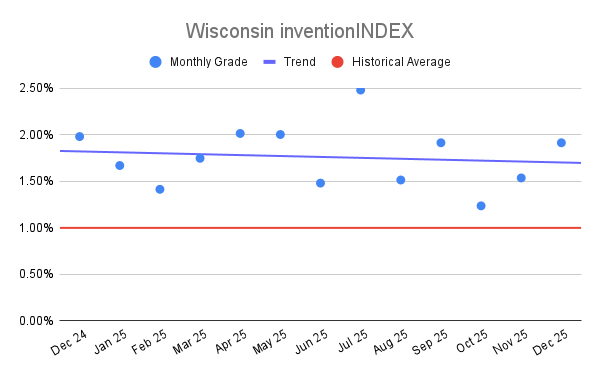 Wisconsin inventionINDEX December 2025
  Wisconsin inventionINDEX Novem
