

In the context of the Wisconsin Research and Development tax credit, the "Tax Commission" refers to the Wisconsin Tax Appeals Commission, an independent quasi-judicial body responsible for adjudicating disputes regarding credit eligibility and interpretation. Historically originating as the Wisconsin Tax Commission, it now serves as the final administrative authority for determining questions of law and fact arising from Department of Revenue audits of research expenditures.
The structural evolution of the Wisconsin Tax Commission provides the necessary foundation for understanding how the Research and Development (R&D) tax credit is administered and contested today. Originally established in the late nineteenth century as a temporary investigative body, the commission was the state’s response to a rapidly industrializing economy that exposed the limitations of a purely property-based tax system. In 1897, the state legislature recognized that the existing tax architecture placed a disproportionate burden on the agricultural sector while allowing emerging industries to escape significant taxation through the utilization of non-tangible financial instruments. This led to the creation of the first Tax Commission, which was initially a short-term study group charged with proposing systematic reforms. By 1899, the legislature had transformed this investigative body into a permanent three-member commission with a mandate to supervise the state’s taxation system and oversee local assessors to ensure uniformity and equalization. The progressive era under Governor Robert M. La Follette further expanded these powers, granting the commission the authority to enjoin local tax officials and oversee tax equalization across the state.
A pivotal shift occurred in 1939 during a comprehensive reorganization of state government. The dual responsibilities of tax administration and judicial review, which had previously been housed within the singular Tax Commission, were bifurcated. The administrative and collection duties were transferred to the newly formed Department of Taxation—the predecessor to the modern Department of Revenue (DOR)—while the quasi-judicial functions were vested in the Wisconsin Board of Tax Appeals. This separation was critical for the integrity of the state’s tax system, as it ensured that the body collecting the revenue was not also the final judge of the legality of its own collections. In 1967, under the Kellett Commission’s reorganization plan, the Board of Tax Appeals was renamed the Wisconsin Tax Appeals Commission (TAC) and attached to the Department of Administration for management and budgeting, though it retained its functional independence to decide disputes between taxpayers and the state.
The Role of the Tax Appeals Commission in Modern R&D Litigation
The Tax Appeals Commission serves as the "final authority" for hearing and determining all questions of law and fact arising under the state’s tax statutes, including Wis. Stat. § 71.28(4), which governs the research credit for corporations. When a taxpayer claims a credit for increasing research activities, the Department of Revenue may conduct an audit to verify that the expenditures meet both the federal standards adopted by reference and the specific Wisconsin nexus requirements. If the DOR issues a notice of deficiency or denies a refund claim based on these R&D credits, the taxpayer’s primary recourse is to petition the TAC for a redetermination.
The proceedings before the TAC are formal and involve the submission of evidence, the examination of witnesses, and the application of statutory law and judicial precedents. The commission has the power to administer oaths, issue subpoenas, and require the production of returns, books, and documents relevant to the research activities in question. Cases involving substantial amounts of money or complex legal issues are typically decided by the full commission, which consists of three full-time commissioners appointed by the Governor to staggered six-year terms. For smaller disputes, generally those where the amount in controversy is less than $2,500, a Small Claims division exists to provide a more streamlined and cost-effective resolution process.
| Era | Governing Body | Primary Administrative Structure |
|---|---|---|
| 1897–1898 | Temporary Tax Commission | Short-term investigative study group. |
| 1899–1938 | Wisconsin Tax Commission | Single entity for administration and adjudication. |
| 1939–1967 | Board of Tax Appeals | Independent body separated from the Department of Taxation. |
| 1967–Present | Tax Appeals Commission | Independent agency attached to Department of Administration. |
Statutory Framework of the Wisconsin Research Credit
The Wisconsin Research Credit is defined through a series of interlocking statutes that reference federal law while maintaining distinct state-level modifications. For corporations, the primary authority is Wis. Stat. § 71.28(4), whereas individuals and fiduciaries look to § 71.07(4k), and insurance companies follow § 71.47(4). The credit is an incremental incentive, meaning it is calculated based on the increase in research spending compared to a historical base period.
Wisconsin’s definition of "qualified research expenses" (QREs) is anchored in Section 41 of the Internal Revenue Code (IRC). However, the state’s conformity to the IRC is not "rolling"; instead, it adopts the code as it existed on a specific date, currently December 31, 2021. This leads to significant decoupling from federal law, most notably regarding the treatment of research and experimental expenditures under Section 174. While federal law now requires the capitalization and five-year amortization of these domestic expenses, Wisconsin continues to allow for immediate expensing, providing a substantial cash flow advantage to businesses conducting research within the state.
The Four-Part Test and Wisconsin NexusTo qualify for the credit under Wisconsin law, an activity must satisfy the same four-part test used by the Internal Revenue Service (IRS), but with the strict requirement that all qualified activities and expenditures must occur within Wisconsin. The Department of Revenue’s Publication 131 and various TAC rulings emphasize that the burden of proof rests with the taxpayer to demonstrate that each of the following criteria is met:
The research must be intended to develop a new or improved business component, focusing on the functionality, performance, reliability, or quality of the product or process. The state guidance clarifies that purely aesthetic improvements or routine data collection do not meet this standard. Furthermore, the research must be "technological in nature," meaning it relies on the principles of physical or biological sciences, engineering, or computer science. This excludes research in the social sciences, arts, or humanities.
The taxpayer must also demonstrate that the research was undertaken to "eliminate uncertainty" regarding the capability or method for achieving the desired result, or the appropriate design of the business component. Finally, the activities must involve a "process of experimentation," which is defined as a systematic evaluation of alternatives through modeling, simulation, or trial and error. In the eyes of the Tax Appeals Commission, a process that is "frivolous or groundless" or primarily intended for delay will not only result in the denial of the credit but may also subject the taxpayer to penalties.
| Credit Tier | Applicable Rate | Statutory Reference |
|---|---|---|
| General Research | 5.75% of excess QREs | Wis. Stat. § 71.28(4)(ad)4. |
| General (Startups) | 2.875% of current QREs | Wis. Stat. § 71.28(4)(ad)4. |
| Internal Combustion Engines | 11.5% of excess QREs | Wis. Stat. § 71.28(4)(ad)5. |
| Energy Efficient Products | 11.5% of excess QREs | Wis. Stat. § 71.28(4)(ad)6. |
| Specialized (Startups) | 5.75% of current QREs | Wis. Stat. § 71.28(4)(ad)5-6. |
Department of Revenue Guidance and Administrative Rules
The Wisconsin Department of Revenue provides detailed interpretive guidance through its Tax Bulletins and Publications. Publication 131 serves as the definitive manual for taxpayers, outlining the specific types of expenses that qualify for the credit. Under DOR guidance, QREs are the sum of in-house research expenses and contract research expenses.
In-house expenses are further categorized into wages, supplies, and computer use. Wages must be paid to employees for "qualified services," which include direct participation in research, direct supervision of research, or direct support of research. The DOR strictly defines wages by referencing the amounts reported in Box 1 of Form W-2, which include bonuses and stock option redemptions but exclude non-taxable fringe benefits and deferred compensation. Supplies are defined as tangible property used in research, excluding land or depreciable property. Contract research expenses are generally limited to 65% of the amounts paid to third parties for qualified research conducted on the taxpayer's behalf, although this can increase to 75% for payments to certain research consortia or 100% for specific small business or university contracts.
The Evolution of Refundability MechanismsOne of the most significant recent legislative changes in Wisconsin tax law is the increase in the refundable portion of the research credit. Historically, the credit was entirely nonrefundable, and any unused portion could be carried forward for 15 years. However, starting with tax years beginning after December 31, 2017, the legislature introduced a refundable component to provide more immediate financial relief to startups and innovative firms that may not yet have a significant tax liability.
The refundable portion has increased over three distinct phases. For the 2018 through 2020 tax years, 10% of the credit was refundable. This increased to 15% for the 2021 through 2023 tax years. Effective for tax years beginning on or after January 1, 2024, the refundable portion has been raised to 25%. The Department of Revenue clarifies that the maximum refundable portion is calculated by multiplying the current year’s research credit by the applicable percentage (e.g., 25%). The actual refund is the lesser of this calculated amount or the remaining credit after it has been used to offset the current year's tax liability.
| Tax Year Period | Refundability Percentage | Legislative Authority |
|---|---|---|
| 2018–2020 | 10% | Wis. Stat. § 71.28(4)(k) |
| 2021–2023 | 15% | Wis. Stat. § 71.28(4)(k) |
| 2024–Present | 25% | 2023 Wis. Act 19 |
Adjudicative Precedents and the Doctrine of Equitable Recoupment
The Tax Appeals Commission’s decisions provide critical insight into how the research credit law is applied in practice, particularly when the plain language of the statute appears to conflict with broader legal principles. A seminal case in this area is Oshkosh Truck Corp. v. Wisconsin Department of Revenue (2003), which addressed the interaction between the statute of limitations for claiming research credits and the doctrine of equitable recoupment.
In this case, the Department of Revenue assessed additional franchise taxes against Oshkosh Truck for the 1996 and 1997 tax years. The taxpayer sought to offset this new assessment with research credits that were earned in those same years but had not been claimed within the four-year statute of limitations provided in Wis. Stat. § 71.75(2) and § 71.28(4)(h). The DOR argued that the specific language in the research credit statute, which states that "no credit may be allowed... unless it is claimed within the period specified," acted as an absolute bar to any stale claims. However, the TAC ruled that the doctrine of equitable recoupment allowed the taxpayer to use the barred credits as a defensive offset. The commission reasoned that because the credits and the new tax assessment arose from the same period, allowing the state to collect more tax while ignoring valid but stale credits would be inequitable. This decision established that while a taxpayer cannot receive a cash refund for stale credits, they can use them to reduce or eliminate a new tax assessment for the same year.
Another important case, C.A. Lawton Co. v. Wisconsin Department of Revenue (2017), clarified the procedural requirements for carrying forward research credits. The DOR had denied carry-forward claims from 2002 through 2006 on the taxpayer’s 2011 and 2012 returns, arguing that the credits were never properly "computed and claimed" on the original returns within the four-year window. The taxpayer argued that the 15-year carryforward provision was independent of the four-year refund claim limit. The TAC’s analysis in such cases reinforces the necessity of contemporaneous recordkeeping and proactive reporting. If a taxpayer fails to document and report R&D expenses in the year they are incurred, they risk losing the ability to use those credits in future profitable years.
Specialized Research Credits for Engines and Energy Efficiency
Wisconsin law provides enhanced credit rates of 11.5% for two specific industrial niches: the design of internal combustion engines and the development of energy-efficient products. These enhanced tiers reflect the state’s industrial heritage in heavy manufacturing and its modern focus on green technology.
The definition of "internal combustion engine" research is surprisingly broad. Under Wis. Stat. § 71.28(4)(ab), it includes research related to designing engines for "vehicles," which are defined to include trucks, tractors, motorcycles, generators, construction equipment, and even aircraft. For a truck, the "frame" that qualifies for the enhanced credit includes the control system, the fuel train, and the drive train, though it excludes comfort features in the cab. For motorcycles, the frame encompasses every part except the tires. This detailed statutory parsing allows manufacturers of heavy machinery and specialized vehicles to claim significant credits for engineering work that goes beyond the engine block itself.
Similarly, the credit for energy-efficient products targets the design and manufacturing of systems that reduce the demand for natural gas or electricity or improve the efficiency of its use. This includes energy-efficient lighting systems, building automation and control systems, and automotive batteries for hybrid-electric vehicles. The Department of Revenue’s instructions for Schedule R require taxpayers to complete separate schedules for each type of research to ensure that the 11.5% rate is not misapplied to general research activities that only qualify for the 5.75% rate.
| Product Category | Included Components/Examples | Statutory Definition |
|---|---|---|
| Internal Combustion Engine | Control systems, fuel trains, drive trains. | Includes substitute products like fuel cells and electric drives. |
| Vehicle Frame (Truck) | Control system, fuel train, drive train. | Excludes comfort features in the cab. |
| Vehicle Frame (Motorcycle) | Every part except the tires. | Broad definition including accessories. |
| Energy Efficient Products | Lighting, building automation, hybrid batteries. | Focuses on reducing demand for gas/electricity. |
Procedural Adjudication: From Audit to the Commission
The journey of a contested research credit claim follows a specific administrative path defined by Wisconsin Chapter 71 and Chapter 73. When the Department of Revenue concludes an audit and disagrees with a taxpayer's claimed R&D credits, it issues a "Notice of Amount Due" or a "Notice of Refund Denial". The taxpayer then has 60 days to file a "Petition for Redetermination" with the DOR, which is a formal request for the department to reconsider its position.
If the DOR denies the petition for redetermination, it issues a "Notice of Action". At this point, the dispute leaves the jurisdiction of the Department of Revenue and enters the jurisdiction of the Tax Appeals Commission. The taxpayer must file a "Petition for Review" with the TAC within 60 days of receiving the Notice of Action. Unlike many other state agencies, the TAC is an independent body; its commissioners are not employees of the DOR, and its mission is to provide an impartial venue for resolving tax conflicts.
Once a case is before the TAC, it may be resolved through various means, including summary judgment on questions of law or a full evidentiary hearing. The commission’s reports, decisions, and opinions are published to provide guidance to the public. However, the DOR possesses a unique power known as "non-acquiescence". If the TAC issues a decision that the DOR disagrees with, the department can file a notice of non-acquiescence, which means the decision is binding for that specific taxpayer in that specific case, but the DOR does not accept the legal rationale and will not follow it for other taxpayers. This creates a complex landscape for tax planners, as a "victory" at the TAC may not always lead to a change in the DOR’s official policy.
Comparative Analysis of Wisconsin’s Credit Against Other Jurisdictions
Wisconsin’s research credit is often compared to those of neighboring states and other industrial hubs to evaluate its competitive positioning. For instance, Indiana offers a credit equal to 15% of the increase in qualified research expenses over a base amount for the first $1 million in QREs. Minnesota, by contrast, provides a credit of 10% on the first $2 million of qualifying expenses over the base amount, but it does not conform to the federal "Alternative Simplified Method".
Wisconsin’s credit is unique in its tiered approach and its recent aggressive move toward refundability. While Connecticut allows for the exchange of tax credits for refunds only for qualified small businesses with no tax liability, Wisconsin’s 25% refund is available to a much broader range of entities, including large corporations and combined reporting groups. Furthermore, Wisconsin’s specific focus on internal combustion engines and energy efficiency provides a higher effective credit rate (11.5%) than the general rates found in most other states, which typically hover around 5% to 7%.
Practical Application: A Multi-Year R&D Credit Scenario
To understand the interaction of these rules, consider the case of "Great Lakes Power Systems," a Wisconsin-based manufacturer specializing in hybrid-electric construction equipment. This example illustrates the tiered rates, the calculation of the base amount, and the application of the new 25% refundability rules.
In 2024, Great Lakes Power Systems (GLPS) incurred $1,000,000 in qualified research expenses related to the design of high-efficiency electric drive trains for excavators. Under Wis. Stat. § 71.28(4)(ab)2, "internal combustion engine" research includes substitute products like electric and hybrid drives. Therefore, GLPS is eligible for the enhanced 11.5% rate.
First, the company must determine its base amount. The base amount is 50% of the average QREs for the three preceding taxable years (2021, 2022, and 2023).
- 2021 QREs: $600,000
- 2022 QREs: $800,000
- 2023 QREs: $700,000
- Average: $700,000
- Base Amount (50% of average): $350,000.
The credit is then calculated on the "excess" QREs:
- Current Year QREs ($1,000,000) - Base Amount ($350,000) = $650,000 Excess.
- Total Credit: $650,000 x 11.5% = $74,750.
Next, the company applies the credit to its 2024 Wisconsin tax liability. Suppose the liability is $20,000.
- Tax Liability Offset: $20,000 (Tax is now $0).
- Remaining Unused Credit: $74,750 - $20,000 = $54,750.
Finally, the refundable portion is calculated based on the 25% rule effective for 2024:
- Maximum Refund Amount: 25% of the total current year credit ($74,750) = $18,687.50.
- Actual Refund: The lesser of the maximum refund ($18,687.50) or the remaining unused credit ($54,750).
- Refund Check Received: $18,687.50.
The remaining balance ($54,750 - $18,687.50 = $36,062.50) is carried forward for up to 15 years to offset future tax liabilities, though it cannot be used to calculate a refund in those future years.
Compliance Challenges and Combined Reporting
For large corporate taxpayers, the research credit becomes even more complex due to Wisconsin’s combined reporting requirements. Under Wis. Stat. § 71.255(6)(c), credits are generally considered attributes of the individual corporation that generated them, not the entire group. However, the law allows for the sharing of nonrefundable research credits among members of a unitary combined group, provided certain conditions are met.
A corporation must first use its research credits to offset its own tax liability before it can share the remainder with other group members. Furthermore, a corporation can generally only share its credits with the group if it was a member of that same combined group in the year the credit originated. These rules are designed to prevent "credit shopping," where a group acquires a distressed company solely to utilize its accumulated R&D carryforwards. The Department of Revenue’s Form 6CS is used to track and report this sharing of credits among group members.
Interestingly, the refundable portion of the credit cannot be shared in the same manner as the nonrefundable portion. Refundable credits computed by a member of a combined group must be claimed on the combined return and are refunded to the designated agent of the group, but the calculation is strictly limited to the individual member’s current year R&D activity.
Nexus and the Implications of the ASAP Cruises Decision
While not an R&D case, the recent decision in ASAP Cruises, Inc. v. Wisconsin Department of Revenue (2025) by the Wisconsin Court of Appeals has significant implications for the "conducted in this state" requirement of the research credit. The court clarified that the protections of Public Law 86-272, which limit a state's ability to tax out-of-state businesses, apply only to the solicitation of orders for tangible personal property, not services.
For technology companies claiming R&D credits for software development, this decision reinforces the Department of Revenue’s position that any activity conducted online or via digital services creates a taxable nexus. Consequently, if a company claims that its research activities are conducted in Wisconsin to qualify for the R&D credit, it is simultaneously establishing that its income from those activities is subject to Wisconsin’s franchise tax. The Tax Appeals Commission often looks at this interplay to ensure that taxpayers are not claiming the "benefit" of the credit in Wisconsin while attempting to "apportion" their income elsewhere to avoid tax.
Substantiation and the Importance of Contemporaneous Documentation
Both the Department of Revenue and the Tax Appeals Commission have grown increasingly rigorous regarding the substantiation of research credits. The DOR’s Publication 131 emphasizes that taxpayers must maintain contemporaneous records prepared at the time the research was performed. This requirement is often the primary point of contention in TAC cases, as many taxpayers attempt to reconstruct their R&D activities years later during an audit.
Acceptable documentation, as identified by practitioners and through commission rulings, includes innovation logs, bug-tracking records, testing protocols, trial-run results, and detailed labor time sheets. For manufacturers claiming the enhanced engine or energy rates, it is crucial to segregate the costs related to those specific business components from more general R&D activities. The use of "project-based" accounting, rather than "department-based" accounting, is highly recommended to withstand a DOR audit and eventual review by the Tax Commission.
Final Thoughts: Strategic Navigation of the Tax Commission’s Jurisprudence
The Wisconsin Tax Appeals Commission remains a vital institution in the state's fiscal architecture, providing a necessary check on the Department of Revenue's administrative power while ensuring the research and development tax credit is used as the legislature intended. As the credit has evolved—from its origins as a nonrefundable incentive for heavy industry to a 25% refundable tool for modern innovation—the TAC has provided the legal clarity necessary for businesses to invest with confidence.
Taxpayers must view the "Tax Commission" not merely as a hurdle to be cleared, but as a sophisticated adjudicative body that values technical accuracy and rigorous documentation. By understanding the historical transition from the original Tax Commission to the modern bifurcation of DOR and TAC, and by adhering to the strict "conducted in Wisconsin" nexus requirements, businesses can successfully leverage the R&D credit to drive growth. As the state continues to decouple from federal Section 174 rules and expand the definition of internal combustion and energy-efficient research, the role of the Tax Appeals Commission as the final arbiter of these complex incentives will only grow in importance. For the professional tax community, success in Wisconsin R&D claims requires a dual mastery of the statutory rates found in Wis. Stat. § 71.28(4) and the procedural jurisprudence established by the Tax Appeals Commission over nearly a century of state tax history.





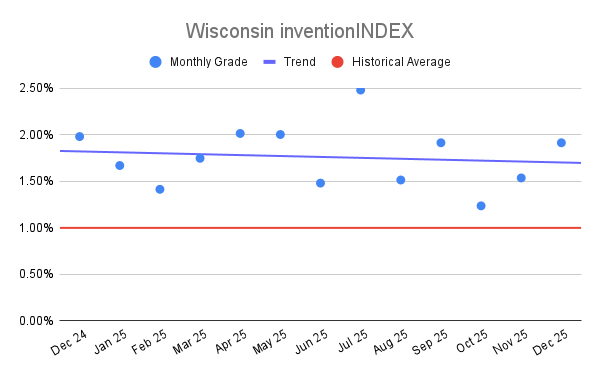 Wisconsin inventionINDEX December 2025
  Wisconsin inventionINDEX Novem
