

Building Automation and Control Systems refer to the technological frameworks used to regulate and monitor facility environments through integrated hardware and software. In the context of the Wisconsin Research and Development tax credit, these systems are identified as targeted business components eligible for an enhanced 11.5 percent credit rate when innovation results in measurable energy efficiency gains.
Legislative Foundations and the Evolution of Wisconsin Research Incentives
The Wisconsin Research and Development (R&D) tax credit is established under Sections 71.28(4) and 71.47(4) of the Wisconsin Statutes, providing a fiscal mechanism to incentivize domestic innovation. Since its inception in 1984, the state has utilized these credits to attract and retain high-growth industries, specifically targeting sectors where technological advancement yields significant social and economic externalities. The statutory framework distinguishes between general research and specialized categories, with Building Automation and Control Systems (BACS) falling into a high-tier incentive bracket designed to promote energy independence and environmental sustainability.
Wisconsin law adopts the federal definition of qualified research found in Section 41 of the Internal Revenue Code (IRC), but introduces critical state-level modifications regarding the location of expenditures and the specific rates applied to different activities. While the federal government provides a broad incentive for all technological innovation, Wisconsin selectively doubles the credit rate for research related to the design and manufacturing of BACS that reduce the demand for natural gas or electricity. This policy recognizes that the accumulation of knowledge in the smart-building sector generates spillover effects, where the innovations of one firm reduce the research costs for others and contribute to the broader goal of statewide energy efficiency.
The fiscal impact of these credits has grown substantially over recent decades. For instance, new and carried-forward research expense credit claims increased by over 360 percent between 2009 and 2018. This growth reflects the increasing complexity of building systems and the shift toward integrated IoT (Internet of Things) solutions. To maintain competitiveness with other states and ensure that innovators have the liquidity to reinvest, the Wisconsin Legislature has progressively modified the credit from a strictly nonrefundable benefit to one that is partially refundable, providing immediate cash flow to firms even when they lack current tax liability.
Definitive Meaning and Technical Scope of Building Automation and Control Systems
Within the administrative and legal parameters of the Wisconsin Department of Revenue, Building Automation and Control Systems are characterized as automated systems that converge, integrate, and connect facility technologies through information flow. These systems are modular and architectural in nature, comprising devices, equipment, and communication platform networks that utilize open protocols to facilitate automated decision-making. The contextual meaning of BACS under the tax law is inextricably linked to their function as a business component intended for a qualified purpose—namely, the improvement of functionality, reliability, and energy performance.
The technical architecture of BACS is divided into three primary levels: the management level, the automation level, and the field device level. Each level represents a different stratum of engineering and software development, and the classification of research activities often depends on which level of the architecture is being improved. The management level involves the human interface and data analytics residing on enterprise networks; the automation level consists of primary control devices and networked controllers; and the field device level includes physical sensors and activators that monitor and control the environment.
| BACS Architectural Level | Technical Components | Qualifying R&D Activity Context |
|---|---|---|
| Management Level | HMI Platforms, Cloud Servers, Analytics Software | Development of AI models for predictive energy management and IUS high-threshold innovation. |
| Automation Level | Networked Controllers, Firmware, Gateways | Innovation in communication protocols, system security, and real-time logic processing. |
| Field Device Level | Sensors (Temp, CO2, Occupancy), Actuators, Valves | Design of high-precision hardware and low-power sensory components for environmental regulation. |
For a project to be recognized as BACS research for the purpose of the 11.5 percent credit, it must go beyond standard installation. The research must be undertaken for the purpose of discovering information that is technological in nature and intended to develop a new or improved system. This includes efforts to integrate lighting controls with HVAC and security systems, the implementation of AI to predict changing weather patterns, or the creation of advanced biometric authentication within a building’s access control framework.
The Enhanced Credit Rate: Design and Manufacturing Requirements
The Wisconsin Statutes provide a super research credit for activities specifically related to certain energy-efficient products. Section 71.28(4)(ad)6. specifies that a corporation may claim a credit equal to 11.5 percent of the amount by which its qualified research expenses exceed 50 percent of the average of the prior three years. This higher rate is explicitly reserved for research related to the design and manufacturing of BACS that improve energy efficiency.
A critical legal nuance exists in the conjunction design and manufacturing. While general engineering firms may qualify for the standard 5.75 percent credit by designing a system, the 11.5 percent rate is often interpreted as targeting entities that are involved in the development of the product as a whole. This implies that the research must be related to the creation of a tangible product or a proprietary system that is manufactured in a repeatable sense, rather than site-specific civil or mechanical engineering that applies known principles to a particular construction project.
Furthermore, the statute requires the research to be related to BACS that reduce the demand for natural gas or electricity or improve the efficiency of its use. This outcome-based requirement places the burden of proof on the taxpayer to demonstrate that the intent of the research was energy conservation. Documentation must support the claim that the technological advancements—such as new thermal modeling, airflow simulation, or occupancy-based algorithms—were designed to achieve measurable reductions in energy footprint.
State Revenue Office Guidance and the Application of Law
The Wisconsin Department of Revenue (DOR) provides administrative clarity through Publication 131, which details the incentives for conducting qualified research in the state. The DOR emphasizes that Wisconsin statutes define eligible expenses by referencing the definition of qualified research in Section 41 of the IRC and its related federal regulations. However, the DOR enforces a strict Wisconsin-only rule: only expenses incurred for research conducted within the state qualify for the credit.
Qualified Research Activities (QRA) and the Four-Part Test
To apply the law, the DOR requires that every BACS project meet a four-part test derived from federal standards. This involves proving that the activity has a permitted purpose, is technological in nature, intends to eliminate technical uncertainty, and follows a process of experimentation. In the context of BACS, technical uncertainty often arises when attempting to achieve interoperability between different building systems or when developing new algorithms that can reliably manage occupancy levels in real time.
The DOR guidance clarifies that a process of experimentation is not merely trial and error. It must involve a systematic evaluation of alternatives, such as using modeling and simulation files, prototype results, and technical reports to refine the design. For BACS firms, this might include testing new piping layouts, pressure calculations, or software protocols to ensure that a building’s fire suppression and HVAC systems can operate in harmony without system failure.
Qualified Research Expenses (QRE) and In-State Allocation
Under Section 71.28(4)(b) and (d), QREs consist of wages, supplies, and contract research costs.
- Wages: Only the portion of an employee’s wages attributable to research activities performed in Wisconsin may be claimed. This includes the salaries of engineers, software developers, and trial coordinators directly involved in BACS development.
- Supplies: This covers tangible personal property consumed during the research process, such as prototype sensor modules or automation hardware. Capital assets, such as the building itself or heavy equipment, are excluded.
- Contract Research: A claimant may include 65 percent of payments made to third parties for research conducted in Wisconsin. For BACS, this often includes third-party robotics integrators or cybersecurity firms performing penetration testing on the control network.
The DOR specifies that if research is conducted partly within and partly outside Wisconsin, and the amount cannot be accurately determined, the expenses must be reasonably allocated based on factors like duty days or the location where supplies are consumed.
Internal Use Software (IUS) and the High Threshold of Innovation
A significant portion of BACS innovation occurs in the software layer. The DOR follows federal rules regarding Internal Use Software (IUS), which exclude development activities unless the software satisfies a three-part high-threshold of innovation (HTI) test. IUS is defined as software developed to support general and administrative functions of the business, such as facilities services or customer service.
However, BACS software is frequently exempt from the IUS exclusion. Software is not considered IUS if it is developed to be sold, leased, licensed, or marketed to third parties, or if it is part of a hardware-software package sold as a single product. Because most BACS firms are developing software to be used by building owners and managers rather than for their own internal administration, they often qualify for the credit under the less stringent non-IUS standards.
If a BACS system is developed for a company’s own facilities, it must pass the HTI test by being highly innovative (substantial cost reduction or speed improvement), involving significant economic risk, and not being commercially available without substantial modification. The intent of the taxpayer at the beginning of the project is the primary factor in determining whether software is IUS or non-internal.
Refundability and the Transition to 2024 Standards
One of the most impactful components of the Wisconsin R&D credit is its refundability mechanism, which has undergone substantial legislative changes. Originally, the research credit was strictly nonrefundable, meaning it could only be used to offset current tax liability, with any excess carried forward for up to 15 years.
Following a series of legislative acts, the refundable portion has increased significantly to provide greater liquidity to research-heavy firms that may not yet be profitable.
| Taxable Year Starting | Refundable Portion Percentage | Nonrefundable Carryforward |
|---|---|---|
| Before January 1, 2018 | 0% | 15 Years |
| After Dec. 31, 2017 (2017 Act 59) | Up to 10% | 15 Years |
| After Dec. 31, 2020 (2021 Act 58) | Up to 15% | 15 Years |
| After Dec. 31, 2023 (2023 Act 19) | Up to 25% | 15 Years |
The calculation for the refundable portion is determined by taking the lesser of:
- The specified percentage (e.g., 25 percent for 2024) of the total research credit computed for the current year.
- The amount of the current-year credit that remains after subtracting the amount used to offset the current year’s tax liability.
This structure ensures that the state first uses the credit to offset the taxpayer’s existing obligations before issuing a direct payment. Furthermore, unused nonrefundable credits carried forward from prior years do not count toward the computation of the refundable portion in the current year.
Compliance Procedures and Filing Requirements
The DOR requires rigorous documentation and specific tax forms for BACS-related research claims.
Schedule R and Activity-Based Segregation
Claimants must file Schedule R to compute the research credit. Because different activities earn different rates, a taxpayer may need to file multiple versions of Schedule R.
- One Schedule R is used for general research (5.75 percent).
- A separate Schedule R is used for BACS and energy-efficient product research (11.5 percent).
The corporation or individual must maintain an Innovation Log or similar evidence that tracks project timelines, technical challenges, and results. This is vital because the credit is an attribute of the taxpayer who incurred the expense, though it can be passed through to partners, members, or shareholders of pass-through entities (S-Corps, LLCs, and Partnerships).
Pass-Through Entity Treatment
While the entity itself (such as a partnership) may not claim the credit against its own tax, it computes the credit based on its Wisconsin QREs and provides that information to its owners via Schedule 3K-1 or 5K-1. The owners then claim their pro-rata share of the credit on their individual returns. For taxable years beginning after December 31, 2020, certain pass-through entities can elect to pay tax at the entity level and claim the credit directly if they have a pre-existing contract with the Wisconsin Economic Development Corporation (WEDC).
Mathematical Framework: Calculating the BACS Research Credit
The calculation of the research credit is inherently incremental, rewarding companies that increase their research intensity over time. The core calculation follows a specific formula defined by the statute.
The Incremental Formula
The credit is typically applied to the amount by which current-year QREs exceed the base amount. The base amount is established as 50 percent of the average QREs from the three preceding taxable years.
Let Q_curr represent the current year’s qualified research expenses and Q_n represent the QREs for the n-th preceding year. The average QRE is calculated as the sum of the QREs for the prior three years divided by 3.
The base amount (B) is then the Average QRE multiplied by 0.50.
The credit (C) for BACS is then calculated at the 11.5 percent rate: C = (Q_curr – B) * 0.115.
If a corporation had no qualified research expenses in any of the three preceding years (such as a new startup), a special provision allows them to claim the credit at half the normal rate on the entirety of their current QREs: C_startup = Q_curr * 0.0575.
Interaction with the Manufacturing and Agriculture Credit (MAC)
Wisconsin also offers the Manufacturing and Agriculture Credit (MAC), which equals 7.5 percent of qualified production activities income. Because the MAC can reduce a manufacturing firm’s tax liability to nearly zero, many firms find themselves with excess research credits. This interaction makes the refundable portion of the research credit particularly valuable, as it allows firms to receive a cash benefit for their R&D even when their income tax is already eliminated by the MAC.
Detailed Implementation Example: Green-Tech Solutions, LLC
To provide a concrete illustration of these rules, we examine the case of Green-Tech Solutions, LLC, a Milwaukee-based engineering and manufacturing firm specializing in smart-building controllers.
Operational Context
In the 2024 tax year, Green-Tech Solutions develops a new BACS platform that uses IoT sensors and machine learning to optimize HVAC and lighting in large-scale warehouses. The project involves designing a new proprietary hardware controller (the GT-Alpha) and a software suite that integrates with the building’s legacy power grid.
Identification of QREs
The firm identifies the following Wisconsin-based expenses:
- Engineering Wages: $800,000 for automation engineers and firmware developers.
- Prototypes and Supplies: $150,000 for GT-Alpha circuit boards and sensor housings.
- Contract Research: $100,000 paid to a Wisconsin university for airflow simulation studies.
The total current-year QRE is: $800,000 + $150,000 + ($100,000 * 0.65) = $1,015,000.
Base Period Data
The firm’s QREs for the three preceding years were:
- 2023: $900,000
- 2022: $800,000
- 2021: $700,000
The average QRE is $800,000. The base amount is $800,000 * 0.50 = $400,000.
Credit Calculation and Refundability
Since the research is related to the design and manufacturing of BACS for energy efficiency, the 11.5 percent rate applies.
- Total Credit: ($1,015,000 – $400,000) * 0.115 = $70,725.
- Tax Liability: Assume the firm’s Wisconsin tax liability is $20,000.
- Nonrefundable Offset: The credit first reduces the tax liability to $0.
- Remaining Credit: $70,725 – $20,000 = $50,725.
- Refund Calculation: The firm calculates the maximum refundable portion (25 percent of the total credit computed). 25% of $70,725 = $17,681.25.
- Final Refund: The firm receives a refund of $17,681.25 (the lesser of the remaining credit or the 25 percent cap).
- Carryforward: The remaining unused and non-refunded portion ($50,725 – $17,681.25 = $33,043.75) is carried forward for up to 15 years.
Risk Mitigation and Audit Defense Strategies
Given the enhanced 11.5 percent rate, BACS claims are often subject to high levels of scrutiny by the Department of Revenue. Successful audit defense requires maintaining a robust nexus between the physical engineering activities and the statutory requirements for energy efficiency.
Contemporaneous Documentation
The DOR emphasizes that records must be kept documenting the qualified research activities being conducted. For BACS, this should include more than just payroll data.
- Project Approval Documents: Evidence that projects were selected based on technical uncertainty and the intent to improve energy efficiency.
- Modeling and Simulation Outputs: Records of CAD/BIM simulations used to test energy performance.
- Testing Protocols and Results: Detailed logs of sensor calibration, logic iteration, and pilot runs that show the process of experimentation.
Distinguishing from Standard Installation
A common audit pitfall is the inclusion of costs related to the standard installation of existing BACS components. The credit applies only to research expenditures incurred in an experimental or laboratory sense. If an engineering firm is simply configuring a commercially available system (like a standard Johnson Controls or Siemens installation) for a specific building without developing new software or hardware components, the activity may not qualify as research. The claimant must prove they are discovering information which is technological in nature that was not previously available.
Strategic Implications and Future Outlook for BACS in Wisconsin
The Wisconsin R&D tax credit serves as a vital component of the state’s economic development strategy, particularly as the built environment moves toward carbon neutrality. By providing a higher credit rate for BACS, the state encourages the development of grid-interactive efficient buildings (GEBs), which can communicate with the electric grid to manage energy costs and facilitate the transition to cleaner energy.
Legislative trends suggest a continued commitment to these incentives. The recent expansion of the refundable portion to 25 percent in 2024 demonstrates a desire to provide immediate capital to innovators, regardless of their current profitability. Furthermore, the state’s focus on energy efficient lighting and automotive batteries alongside BACS indicates a holistic approach to technological synergy, where advancements in one area (like battery storage) can be integrated into the control systems of modern facilities.
For professional engineers, manufacturers, and tax consultants, the BACS context within the Wisconsin R&D credit represents a high-value opportunity. It requires a multidisciplinary approach that combines the technical language of automation engineering with the rigorous legal and administrative requirements of the tax code. Those who can successfully bridge these domains—by documenting the technical uncertainties of smart-system integration and the resulting energy efficiencies—stand to realize significant fiscal benefits while contributing to the state’s technological and environmental leadership.





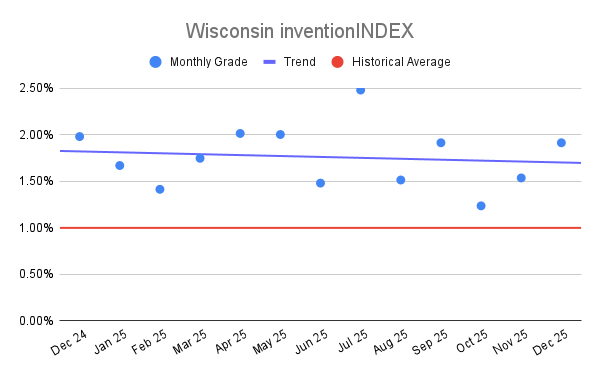 Wisconsin inventionINDEX December 2025
  Wisconsin inventionINDEX Novem
