

In the context of the Wisconsin research credit, “internal combustion engine” is defined as a propulsion or power system that includes not only traditional fossil-fuel engines but also substitute products such as fuel cell, electric, and hybrid drives. This specialized classification allows qualifying taxpayers to claim an enhanced credit rate of 11.5 percent for research expenses related to the design and production of these engines and their associated vehicle platforms.
The regulatory and statutory environment surrounding the Wisconsin Research and Development (R&D) tax credit represents one of the most targeted industrial incentive programs in the United States. Unlike the federal research credit, which maintains a relatively uniform application across industries, Wisconsin law has bifurcated its R&D incentives to provide substantial “Super R&D” benefits to sectors deemed vital to the state’s economic future, specifically the power-generation and transportation-manufacturing industries. Central to this strategy is the legal treatment of the Internal Combustion Engine (ICE). By utilizing a definition that transcends mechanical thermodynamics to encompass emerging technologies, the Wisconsin Legislature has created a flexible framework that supports the transition from traditional diesel and gasoline power to electrification and hydrogen-based systems. This report provides an exhaustive analysis of the statutory definitions, administrative guidance from the Wisconsin Department of Revenue (DOR), the computational mechanics of the credit, and the judicial precedents that define the boundaries of these tax benefits.
Statutory Authority and the Definition of Substitute Products
The foundational authority for the internal combustion engine research credit is distributed across three primary sections of the Wisconsin Statutes, ensuring coverage for all corporate and individual taxpayers. These include Section 71.07(4n) for individuals and fiduciaries, Section 71.28(4) for corporations, and Section 71.47(4) for insurance companies. The definitions provided in these statutes are nearly identical, creating a unified standard for what constitutes an internal combustion engine and, crucially, what constitutes a “substitute product”.
Under Wisconsin Stat. § 71.28(4)(ab)2, the law explicitly states that “internal combustion engine” includes substitute products such as fuel cell, electric, and hybrid drives. This inclusion is a significant departure from common parlance, where an internal combustion engine is strictly a heat engine where the combustion of a fuel occurs with an oxidizer in a combustion chamber. By legally redefining ICE to include non-combustion substitutes, the state ensures that the 11.5 percent enhanced credit rate remains available to firms regardless of whether they are improving a diesel piston engine or developing a solid-state battery-electric powertrain. This statutory construction suggests a legislative intent to focus on the function of the business component—providing motive or stationary power—rather than the specific physics of the power source.
The implications for “substitute products” are vast. The term “includes” in the statute indicates that the list (fuel cell, electric, hybrid drives) is illustrative rather than exhaustive. Consequently, other emerging technologies that serve as functional replacements for traditional internal combustion engines, such as advanced turbines or hydrogen-burning engines that do not follow a traditional ICE cycle, may reasonably fall within this definition. This forward-looking language protects the state’s manufacturing base from technological obsolescence, allowing legacy manufacturers to pivot their R&D departments to new energy platforms without losing the tax parity they enjoyed under the traditional ICE regime.
Vehicle and Frame Classifications: Expanding the Scope of Research
A critical nuance of the Wisconsin ICE credit is that the qualified research does not need to be restricted to the engine itself. The statute allows for the enhanced rate to be applied to research related to “designing internal combustion engines for vehicles, including expenses related to designing vehicles that are powered by such engines”. This creates a “halo effect” where the research into the vehicle platform, the chassis, and the integration systems also qualifies for the 11.5 percent rate, provided those vehicles are powered by an ICE or its defined substitutes.
To clarify the boundaries of what constitutes a “vehicle,” Wisconsin Stat. § 71.28(4)(ab)3 provides an expansive list of qualifying platforms. A “vehicle” means any vehicle or frame, including parts, accessories, and component technologies, in which or on which an engine is mounted for use in mobile or stationary applications.
| Statutory Vehicle Categories | Inclusions and Specific Components | Application Scope |
|---|---|---|
| Mobile Vehicles | Trucks, tractors, motorcycles, snowmobiles, all-terrain vehicles, boats, personal watercraft, automobiles, vans, SUVs, motor homes, buses, and aircraft. | Includes both consumer and commercial transportation. |
| Stationary Applications | Generators and construction equipment that may be fixed or semi-mobile. | Focuses on industrial and backup power systems. |
| Heavy Machinery | Construction equipment and lawn/garden maintenance equipment. | Broadens the scope to include off-road industrial R&D. |
The definition of a “frame” is equally precise, ensuring that component manufacturers can accurately determine which parts of their research qualify for the enhanced credit. For a motorcycle, the frame includes every part except the tires. For a truck, it includes the control system, the fuel train, and the drive train, specifically excluding “comfort features” located in the cab. This distinction is vital for auditors; while research into a more efficient transmission for a truck would qualify for the 11.5 percent ICE rate, research into an ergonomic seat or an infotainment system would only qualify for the general 5.75 percent research credit rate.
One of the most distinctive features of the Wisconsin definition is the treatment of generators. Under § 71.28(4)(ab)1.c, the “frame” for a generator includes control modules, fuel trains, fuel scrubbing processes, mixers, the generator itself, heat exchangers, and exhaust trains. This means that nearly every core component of a modern industrial generator—from the software that manages the load to the hardware that reduces emissions—is considered part of the “engine/vehicle” complex for the purpose of the enhanced R&D credit.
Department of Revenue (DOR) Guidance and Regulatory Implementation
The Wisconsin Department of Revenue provides administrative clarity through various publications, most notably Publication 131, “Tax Incentives for Conducting Qualified Research in Wisconsin,” and the instructions for Schedule R. The DOR’s interpretation of the law emphasizes that while Wisconsin follows the federal definition of “qualified research” under Internal Revenue Code Section 41, it deviates in several critical areas related to the calculation and reporting of the credit.
The Qualified Research Expense (QRE) Standard
To qualify for any research credit in Wisconsin, the expenses must first meet the federal “Four-Part Test” established under IRC § 41(d). The research must be technological in nature, relate to a new or improved business component, be intended to eliminate uncertainty, and involve a process of experimentation. However, Wisconsin adds a geographical nexus: the research must be conducted specifically in the state of Wisconsin.
| Expense Category | Wisconsin Eligibility Requirement | Statutory Limitation |
|---|---|---|
| Wages | Must be paid for work performed in Wisconsin, including direct research, supervision, or support. | Excludes wages used for the development zones jobs credit. |
| Supplies | Tangible property (non-capital) used in Wisconsin research. | Does not include land or improvements to real property. |
| Computer Rental | Payments for leasing computer time or space for research in Wisconsin. | Must be for computers owned and operated by another person. |
| Contract Research | 65% of amounts paid to non-employees for Wisconsin-based research. | Increased to 75% for qualified research consortia. |
The DOR has made it clear that Wisconsin does not adopt the federal requirement under the Tax Cuts and Jobs Act (TCJA) to amortize R&D expenses over five years. For Wisconsin tax purposes, companies continue to follow the pre-2022 federal rules, allowing for the full expensing of R&D costs in the year they are incurred. This creates a significant timing benefit for Wisconsin taxpayers compared to their federal returns, providing immediate liquidity for ongoing innovation.
Administrative Reporting: Schedule R and the “Separation of Credits”
A common point of confusion for taxpayers is the method of claiming multiple research credits. The DOR guidance for Schedule R specifies that a separate Schedule R must be completed for each type of research credit. A corporation engaged in general manufacturing R&D (5.75% rate) and internal combustion engine R&D (11.5% rate) cannot aggregate these on a single form. They must bifurcate the expenses and file two distinct schedules to ensure that the different credit rates and base amounts are applied correctly.
When filing for the ICE credit, the claimant must check the box on Line 12 of Schedule R. This box acts as a formal election to use the enhanced rate. If the firm is a startup or had no qualified expenses in the three preceding years, they must instead check the box on Line 13. This administrative step is crucial; failure to check the correct box or filing a combined schedule can lead to a summary denial of the enhanced portion of the credit or a more rigorous audit.
Computational Mechanics: Incremental Growth and the Base Amount
The Wisconsin research credit is calculated using a single regular incremental method. Unlike the federal system, which allows for an Alternative Simplified Credit (ASC), Wisconsin requires all taxpayers to establish a historical base based on their prior three years of R&D spending.
The Regular Incremental Formula
For an established business, the credit is equal to the applicable percentage (11.5% for ICE) of the amount by which the current year’s qualified research expenses exceed a “base amount”. The base amount is defined as 50 percent of the average qualified research expenses for the three taxable years immediately preceding the year in which the credit is claimed.
The equation for the ICE credit is expressed as:
$$Credit = 0.115 \times ( QRE_{current} – ( 0.50 \times \overline{QRE}_{prior3} ) )$$
This formula incentivizes growth in R&D spending. Because the base is only 50 percent of the average, even a company with flat spending will still qualify for a credit on half of its current expenditures. For companies that are rapidly scaling their research into substitute products—such as a generator company transitioning from diesel to hydrogen—the incremental nature of the credit provides a massive reward for that increased investment.
The Startup Provision
The legislature recognized that new companies or those entering the ICE field for the first time would not have a three-year history to establish a base. For these “startups,” the credit is calculated as 5.75 percent of the current year’s qualified research expenses. While this is half the rate of the incremental credit, it is applied to the entirety of the current year’s QREs because there is no base amount to subtract. Once a company has established a three-year spending history, it must transition to the 11.5 percent incremental calculation.
Evolution of Refundability (2018–2025)
Historically, the Wisconsin research credit was entirely nonrefundable, meaning it could only be used to reduce a taxpayer’s liability to zero. Any excess credit was carried forward for up to 15 years. However, this structure favored established, profitable companies and provided little immediate benefit to R&D-heavy firms that were in a loss position, a common occurrence for innovators in the “substitute product” space like electric vehicle startups.
Beginning in 2018, the Wisconsin Legislature began a phased introduction of refundability for the research credit. This transition represents a shift from a “tax reduction” philosophy to an “innovation subsidy” model.
| Tax Years Beginning | Refundable Portion of Current Year Credit | Relevant Legislation |
|---|---|---|
| After Dec. 31, 2017 | Up to 10% | 2017 Wisconsin Act 59 |
| After Dec. 31, 2020 | Up to 15% | 2021 Wisconsin Act 58 |
| After Dec. 31, 2023 | Up to 25% | Current Statutory Standard |
The refundable portion is calculated as the lesser of:
The statutory percentage (now 25%) of the total current year research credit.
The unused portion of the current year credit after all tax liability has been offset.
This refundability only applies to the credit computed for the current year. Any credits being carried forward from prior years remain nonrefundable and cannot be converted into cash. This distinction is critical for long-term tax planning; companies should prioritize using their oldest carryforwards to offset tax liability while leaving current-year credits available for the refund.
Pass-Through Entities and the 2013 Act 20 Expansion
For much of its history, the enhanced 10 percent (now 11.5 percent) credit for ICE research was a benefit exclusive to C-corporations. Small-to-medium-sized engineering firms organized as S-corporations or LLCs were only eligible for the general research credit rate, creating a competitive disadvantage for local innovators.
This changed with the enactment of 2013 Wisconsin Act 20. Act 20 expanded the ICE and energy-efficient product credits to pass-through entities by incorporating the definitions into Section 71.07(4k), which governs the individual income tax. This allowed partnerships, LLCs, and S-corporations to compute the enhanced credit at the entity level and pass it through to their owners based on their ownership interest.
The flow-through mechanics are as follows:
Entity Computation: The partnership or S-corp identifies its Wisconsin-based ICE R&D expenses and computes the 11.5 percent credit on Schedule R.
Allocation: The credit is allocated to partners or shareholders in proportion to their ownership.
Owner Claim: The individual owners report their share of the credit on their Form 1 or Form 1NPR, using the data provided on their Schedule 3K-1 or 5K-1.
Refundability at the Owner Level: Individual owners are eligible for the 25 percent refundable portion just as C-corporations are.
This expansion was a recognition of the shifting landscape of American manufacturing, where specialized “boutique” engineering firms often provide the most significant breakthroughs in substitute product technologies like fuel cell membranes or electric motor controllers.
Judicial Precedents and the Tax Appeals Commission
The boundaries of the Wisconsin research credit have been shaped by significant litigation before the Wisconsin Tax Appeals Commission and the state’s appellate courts. These cases provide essential guidance on the statute of limitations and the “equitable” rights of taxpayers during audits.
Equitable Recoupment: The Oshkosh Truck Precedent
The case of Oshkosh Truck Corp. v. Wisconsin Department of Revenue is perhaps the most significant judicial interpretation of the R&D credit. In this case, Oshkosh Truck had been assessed additional franchise tax by the DOR following an audit. To offset this new tax, the company attempted to claim research credits from 1996 and 1997 that it had failed to claim on its original returns. The DOR argued that because the four-year statute of limitations for filing a refund claim had passed, the company was barred from using those credits for any purpose.
The Tax Appeals Commission disagreed, invoking the doctrine of “equitable recoupment”. The Commission ruled that while the company could not receive a cash refund for the stale credits, it could use them as a “defense” to offset the new tax assessment arising from the same years. This ruling establishes that the research credit, while subject to a four-year claiming period for refunds, serves as a powerful equitable tool for taxpayers facing unexpected audit liabilities.
The Requirement for Timely Computation: CA Lawton Co.
In contrast, the more recent case of CA Lawton Co. v. Wisconsin Department of Revenue clarifies the limits of carryforwards. In this matter, the taxpayer had incurred research expenses in 2002–2006 but did not report them on tax returns until 2011 and 2012, attempting to use them as carry-forward credits. The DOR argued that a research credit cannot be carried forward at all unless it is first “computed and claimed” on a tax return filed within four years of the original year the expense was incurred.
The Commission sided with the DOR, emphasizing that taxpayers cannot wait 15 years to “discover” an old credit and start using it. To preserve the 15-year carryforward period, the taxpayer must affirmatively report the R&D activity within the initial four-year window provided by the statute of limitations under Section 71.75(2). This case reinforces the necessity of contemporaneous R&D studies and the filing of “protective” or original claims for all eligible ICE and substitute product research.
Detailed Case Study: Transitioning to Zero-Emission Platforms
To illustrate the interplay of these laws and DOR guidance, consider the example of “Badger Propulsion Group” (BPG), a fictional Wisconsin S-corporation that specializes in heavy-duty powertrain systems.
The R&D Scenario
For years, BPG focused on improving the fuel-scrubbing systems of diesel engines for tractors. In 2024, BPG launched two major new projects:
Project Volt: Designing a fully electric drive system for a municipal bus (a “substitute product” under § 71.28(4)(ab)2).
Project Aero: Improving the aerodynamics of the bus body to increase the range of the electric drive (research related to a “vehicle” powered by a substitute product).
Financial Data for 2024
Current Year (2024) Wisconsin QREs: $4,000,000
Prior Year 1 (2023) Wisconsin QREs: $3,000,000
Prior Year 2 (2022) Wisconsin QREs: $2,500,000
Prior Year 3 (2021) Wisconsin QREs: $2,000,000
Wisconsin Tax Liability (for the sole shareholder): $150,000
Step 1: Calculate the Average QREs and the Base Amount
The average of the prior three years is calculated first:
$$\overline{QRE}_{prior3} = \frac{\$3,000,000 + \$2,500,000 + \$2,000,000}{3} = \$2,500,000$$
The base amount is 50 percent of this average:
$$Base = 0.50 \times \$2,500,000 = \$1,250,000$$
Step 2: Calculate the Excess QREs
The excess is the current year spend minus the base:
$$Excess = \$4,000,000 – \$1,250,000 = \$2,750,000$$
Step 3: Apply the Enhanced ICE Rate
Because the research relates to electric drives and vehicles powered by them, BPG qualifies for the 11.5 percent rate.
$$Credit = 0.115 \times \$2,750,000 = \$316,250$$
Step 4: Refundability and Offset Calculation
The sole shareholder of BPG uses the credit to offset their $150,000 Wisconsin tax liability.
Remaining Credit After Offset: $\$316,250 – \$150,000 = \$166,250$
For 2024, the refundable portion is 25 percent of the total current year credit.
Max Refundable Amount: $0.25 \times \$316,250 = \$79,062.50$
Final Refund to Shareholder: $\$79,062.50$ (since this is less than the $166,250 remaining balance).
Step 5: Carryforward
The non-refundable, non-offset portion is carried forward for 15 years.
Carryforward Amount: $\$166,250 – \$79,062.50 = \$87,187.50$
This example showcases how the enhanced rate and the 25 percent refundability work together to provide nearly $230,000 in immediate tax relief and cash flow ($150,000 offset + $79,062.50 refund) for a $4 million investment in Wisconsin-based innovation.
Inter-Sectoral Overlap: Energy Efficient Products
It is important to note that many “substitute products” for internal combustion engines also fall under a second category of enhanced credit: “Activities Related to Certain Energy Efficient Products”. Under Stat. § 71.28(4)(ad)6, this includes the design and manufacturing of energy-efficient lighting, building automation, and automotive batteries for use in hybrid-electric vehicles.
While both categories (ICE and Energy Efficient Products) share the same 11.5 percent rate, the statutory definition for energy-efficient products specifically targets components that “reduce the demand for natural gas or electricity or improve the efficiency of its use”. A manufacturer of advanced EV batteries might technically qualify under both definitions. However, per the DOR’s “Separation of Credits” rule, the taxpayer should choose the classification that most accurately describes the core business component to avoid double-counting or administrative errors on Schedule R.
Economic and Strategic Implications of the ICE Credit
The Wisconsin ICE research credit is more than a tax provision; it is a vital instrument of industrial policy. The “substitute product” clause acknowledges the existential threat that the global shift toward electrification poses to a state whose economy has long been defined by the roar of the internal combustion engine—from the motorcycles of Milwaukee to the diesel-powered trucks of Oshkosh and the generators of Waukesha.
By providing an 11.5 percent credit rate that covers electric drives and fuel cells, Wisconsin is actively subsidizing the cost of the technological pivot required for these firms to survive. The high refundability rate (25%) further signals that Wisconsin is an attractive destination for venture-backed clean-tech firms that may not have tax liability for years but require immediate capital to sustain their R&D operations.
Furthermore, the broad definition of “frame” for generators ensures that Wisconsin remains the global hub for power systems. By including the entire fuel train and control modules in the definition, the law incentivizes the development of the complex software and hardware integration necessary for modern microgrids and smart-energy storage systems—technologies that are functionally substituting for traditional backup generators.
Compliance Best Practices for Multistate Corporations
For corporations operating in multiple states, Wisconsin’s R&D credit requires careful apportionment. Only the QREs physically conducted in Wisconsin are eligible. This means that if a company has an engine design center in Wisconsin but performs its testing in Michigan, the testing expenses must be excluded from the Wisconsin credit calculation.
Moreover, because Wisconsin uses a three-year average for its base amount, multistate corporations must maintain a “Wisconsin-only” R&D ledger. This ledger must track Wisconsin-specific wages, supplies, and contract research for at least four years (the current year plus the three base years) to defend the credit in an audit. The DOR has the authority to review the base years even if they are outside the normal statute of limitations for assessing tax, as the accuracy of the base directly affects the validity of the current year’s credit.
Final Thoughts: A Multi-Generational Incentive
The Wisconsin research credit for internal combustion engines and substitute products is a robust and sophisticated piece of tax legislation. It successfully bridges the gap between the mechanical past and the electric future by utilizing a statutory definition that prioritizes functional utility over specific technology. Through its tiered rate structure, expansive vehicle classifications, and the evolution toward high refundability, the state provides a world-class incentive for manufacturers to anchor their most valuable R&D activities in Wisconsin.
For practitioners, the key to maximizing this benefit lies in understanding the granular distinctions between “frames” and “comfort features,” the administrative necessity of separate Schedule R filings, and the strategic value of the 25 percent refundable portion. As the energy transition accelerates, the “substitute products” provision will likely become the dominant pathway for claiming the 11.5 percent credit, ensuring that Wisconsin remains at the forefront of the global power and propulsion industry for generations to come.
Who We Are:
Swanson Reed is one of the largest Specialist R&D Tax Credit advisory firm in the United States. With offices nationwide, we are one of the only firms globally to exclusively provide R&D Tax Credit consulting services to our clients. We have been exclusively providing R&D Tax Credit claim preparation and audit compliance solutions for over 30 years. Swanson Reed hosts daily free webinars and provides free IRS CE and CPE credits for CPAs.
Are you eligible?

Why choose us?

Pass an Audit?

What is the R&D Tax Credit?
The Research & Experimentation Tax Credit (or R&D Tax Credit), is a general business tax credit under Internal Revenue Code section 41 for companies that incur research and development (R&D) costs in the United States. The credits are a tax incentive for performing qualified research in the United States, resulting in a credit to a tax return. For the first three years of R&D claims, 6% of the total qualified research expenses (QRE) form the gross credit. In the 4th year of claims and beyond, a base amount is calculated, and an adjusted expense line is multiplied times 14%. Click here to learn more.
Never miss a deadline again

Stay up to date on IRS processes

Discover R&D in your industry

R&D Tax Credit Preparation Services
Swanson Reed is one of the only companies in the United States to exclusively focus on R&D tax credit preparation. Swanson Reed provides state and federal R&D tax credit preparation and audit services to all 50 states.
If you have any questions or need further assistance, please call or email our CEO, Damian Smyth on (800) 986-4725.
Feel free to book a quick teleconference with one of our national R&D tax credit specialists at a time that is convenient for you.
R&D Tax Credit Audit Advisory Services
creditARMOR is a sophisticated R&D tax credit insurance and AI-driven risk management platform. It mitigates audit exposure by covering defense expenses, including CPA, tax attorney, and specialist consultant fees—delivering robust, compliant support for R&D credit claims. Click here for more information about R&D tax credit management and implementation.
Our Fees
Swanson Reed offers R&D tax credit preparation and audit services at our hourly rates of between $195 – $395 per hour. We are also able offer fixed fees and success fees in special circumstances. Learn more at https://www.swansonreed.com/about-us/research-tax-credit-consulting/our-fees/



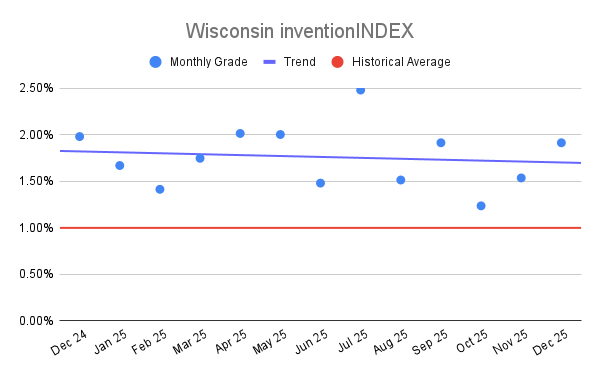 Wisconsin inventionINDEX December 2025
  Wisconsin inventionINDEX Novem
