

The Wisconsin Qualified Research Consortium (QRC) designation allows businesses to claim a 75% inclusion rate for contract research expenses, significantly higher than the standard 65% rate. To qualify, the research partner must be a tax-exempt organization (such as a 501(c)(3) university or 501(c)(6) business league) primarily engaged in scientific research. This incentive encourages collaboration between private enterprise and non-profit scientific institutions within Wisconsin.
A Qualified Research Consortium constitutes a tax-exempt organization primarily engaged in scientific research that operates on behalf of multiple unrelated taxpayers, qualifying for a preferential 75% inclusion rate. Within the Wisconsin tax system, this designation allows businesses to elevate their qualified research expenses beyond the standard 65% contract rate, provided the activities occur within the state.
Theoretical Foundations of Wisconsin Innovation Policy and Taxation
The Wisconsin Research Expense Credit represents a cornerstone of the state’s fiscal strategy to promote high-value economic growth and technological leadership in the Great Lakes region. Unlike many other state-level credits that merely mirror federal incentives, the Wisconsin framework is characterized by a deliberate blend of federal conformity and strategic decoupling. This dual nature is designed to anchor research activities within Wisconsin's borders while providing a more favorable immediate tax environment than currently exists at the federal level. The core objective of the credit is to lower the marginal cost of innovation, particularly for capital-intensive industries such as manufacturing, biotechnology, and power systems. By offering tiered inclusion rates for contract research, the state encourages not just internal experimentation but also a collaborative ecosystem where private enterprises partner with non-profit scientific organizations.
The legal architecture of this incentive is rooted in Wisconsin Statutes Chapter 71, specifically within sections 71.07, 71.28, and 71.47, which correspond to individuals, corporations, and insurance companies, respectively. These statutes provide the authority for the Wisconsin Department of Revenue to administer the credit, while simultaneously referencing Section 41 of the Internal Revenue Code (IRC) to define the technical parameters of what constitutes "qualified research". This reliance on federal standards ensures a degree of consistency for multi-state taxpayers while allowing Wisconsin to impose its own geographic nexus requirements. For an expense to be eligible for the Wisconsin credit, the research must be conducted "in this state," a mandate that distinguishes it from the federal credit which covers research across the entire United States.
A critical element of the current innovation landscape in Wisconsin is the state’s reaction to the federal Tax Cuts and Jobs Act (TCJA) of 2017. While the federal government moved toward a capitalization and amortization requirement for research expenditures under Section 174 starting in 2022, Wisconsin explicitly decoupled from these changes. Through legislative action and administrative guidance, Wisconsin maintained the "pre-2022" federal provisions. This decision has profound implications for the Research Expense Credit, as it allows Wisconsin taxpayers to continue deducting research costs immediately or amortizing them over a 60-month period, rather than the five-year (domestic) or fifteen-year (foreign) schedules mandated federally. Consequently, the base of expenditures used to calculate the Wisconsin credit remains robust and more closely aligned with immediate cash-flow needs, making the 75% consortium rate even more valuable in real terms.
The Statutory Definition and Mechanics of the Qualified Research Consortium
The "Qualified Research Consortium" (QRC) is a specialized legal entity defined by its organizational structure and its collaborative function. Under IRC § 41(b)(3)(C)(ii), as adopted for Wisconsin purposes, a QRC must fulfill several strict criteria to allow a taxpayer to claim the elevated 75% contract research rate. These requirements are designed to ensure that the higher tax subsidy is directed toward organizations that serve a broader scientific purpose rather than merely acting as proprietary vendors for single clients.
Organizational Qualification CriteriaTo be recognized as a QRC, an entity must first be a tax-exempt organization described in either Section 501(c)(3) or 501(c)(6) of the Internal Revenue Code. This includes traditional charitable and educational institutions, as well as business leagues and chambers of commerce that may operate research divisions. Furthermore, the organization must be "organized and operated primarily to conduct scientific research". This "primary purpose" test is a qualitative assessment of the entity's mission and daily operations. If an organization primarily focuses on advocacy or trade promotion and only conducts research incidentally, it may fail this test and be relegated to the standard 65% contract research rate. Finally, the organization must not be a private foundation. This restriction ensures that the consortium is publicly supported and accountable, aligning with the legislative intent of fostering open, collaborative innovation.
| QRC Requirement | Legal Reference | Functional Description |
|---|---|---|
| Tax-Exempt Status | IRC § 501(c)(3) or (6) | Must be a recognized non-profit charity, school, or business league. |
| Scientific Focus | IRC § 41(b)(3)(C)(ii)(II) | Primary operation must be the conduct of scientific research. |
| Public Support | IRC § 41(b)(3)(C)(ii)(III) | Entity cannot be classified as a private foundation. |
| Collaborative Scope | IRC § 41(b)(3)(C)(i) | Must conduct research for the taxpayer and at least one unrelated party. |
The most significant operational hurdle for claiming the 75% rate is the requirement that the research be conducted on behalf of the taxpayer and "one or more unrelated taxpayers". This collaborative element is the raison d'être for the preferential rate. The law seeks to reward taxpayers who participate in research pools, which are often used to solve industry-wide technical challenges or to develop pre-competitive technologies. For the purposes of this determination, "unrelated taxpayers" are defined by the exclusion of companies within a controlled group. All persons treated as a single employer under Section 52(a) or (b) of the Internal Revenue Code are considered a single taxpayer. Therefore, a consortium formed solely by a parent company and its various subsidiaries would not qualify for the 75% rate, as the participants are legally related. The presence of at least one truly independent, third-party participant is necessary to trigger the higher inclusion percentage.
Comparative Analysis of Contract Research Inclusion Rates
Wisconsin law establishes a hierarchy of "applicable percentages" that determine how much of a gross payment to a third party can be included in the calculation of Qualified Research Expenses (QREs). This tiered system reflects the state's prioritization of different types of research partnerships and its desire to account for the overhead and profit margins inherent in outsourced work.
Standard Contract Research at 65%For the vast majority of outsourced R&D, the inclusion rate is 65%. This applies when a taxpayer hires a for-profit laboratory, an independent engineering consultant, or a private software development firm to perform research on their behalf. The 35% "haircut" applied to these payments serves as a statutory proxy for the vendor’s non-research costs, such as administrative profit, facility rent, and non-technical staff wages. For the expense to qualify even at this base level, the taxpayer must maintain the financial risk of the research failure and retain substantial rights to the results. If a contract is structured such that the taxpayer only pays upon the successful delivery of a product (a "contingent" or "success-based" contract), the vendor is deemed to bear the risk, and the taxpayer may be barred from claiming any portion of the payment as a QRE.
The Qualified Research Consortium at 75%The transition from a 65% to a 75% rate represents a 15.3% increase in the value of the QRE for that specific contract. This premium is intended to offset the perceived disadvantages of collaborative research, such as the potential sharing of intellectual property or the lack of exclusive control over the research agenda. In the Wisconsin context, the Department of Revenue strictly enforces the definition of a QRC found in the Schedule R instructions, which explicitly references the tax-exempt status and the collaborative nature of the work. For many Wisconsin manufacturers, this 75% rate is most frequently utilized through industry-specific research centers at institutions like the University of Wisconsin-Madison or the Milwaukee School of Engineering, provided these centers operate as distinct consortia for multiple industry partners.
Specialized 100% Inclusion RatesWhile the primary guidance for the Wisconsin Research Expense Credit focuses on the 65% and 75% rates, federal law (and by extension, the Wisconsin code that references Section 41) allows for a 100% inclusion rate in very narrow circumstances. This typically applies to payments made to an "eligible small business," an institution of higher education (university), or a federal laboratory, but primarily within the context of specific energy research initiatives. However, Wisconsin's administrative instructions for general research credits (Line 4 of Schedule R) consistently highlight the 65% and 75% rates as the standard operational percentages for most claimants. Taxpayers attempting to claim a 100% rate for university research must ensure they meet the specific criteria of Section 41(b)(3)(D), which requires the university to be an institution of higher education as defined by federal law.
Wisconsin-Specific Credit Calculations and Rates
The value of the research credit is not merely a function of the inclusion rates (65%, 75%, or 100%) but also depends on the specific credit tier and the incremental increase in research spending over a historical base. Wisconsin offers two primary tiers of credits designed to support both general innovation and specific strategic industries.
The General Research Credit (5.75%)For most business activities in Wisconsin, the research credit is calculated as 5.75% of the current-year QREs that exceed a "base amount". The base amount is generally defined as 50% of the average Wisconsin QREs for the three preceding taxable years. This incremental structure ensures that the credit rewards companies for increasing their investment in Wisconsin-based research rather than simply maintaining a steady state. If a taxpayer has no history of research in Wisconsin (a "start-up" or new entrant), the law provides a reduced credit rate of 2.875% applied to the total current-year QREs, as there is no historical base to exceed.
The Enhanced Research Credit (11.5%)Wisconsin incentivizes two specific high-value industrial sectors by doubling the credit rate to 11.5%. This "super credit" is available for research related to:
1. Internal Combustion Engines: This includes the design of engines and vehicles powered by such engines, as well as improvements to the production processes used in their manufacture.
2. Energy Efficient Products: This category encompasses the design and manufacturing of energy-efficient lighting systems, building automation and control systems, and automotive batteries for hybrid-electric vehicles.
For these industries, the use of a Qualified Research Consortium is particularly potent. A manufacturer of hybrid vehicle batteries that partners with a university-led consortium would not only benefit from the 75% contract inclusion rate but would also apply the 11.5% credit rate to those elevated QREs, resulting in a significant reduction in state tax liability.
Credit Calculation Comparison| Credit Category | General Rate (on excess) | Startup/No History Rate (on total) |
|---|---|---|
| Standard Research | 5.75% | 2.875% |
| Engine Research | 11.5% | 5.75% |
| Energy Efficient Research | 11.5% | 5.75% |
Administrative Guidance from the Wisconsin Department of Revenue
The Wisconsin Department of Revenue (DOR) provides rigorous oversight of the Research Expense Credit through its publications and form instructions. Understanding this guidance is essential for maintaining compliance and defending a claim during an audit.
Publication 131: Tax Incentives for Conducting Qualified ResearchPublication 131 is the primary administrative resource for taxpayers seeking to understand the Wisconsin credit. It confirms that Wisconsin generally follows the federal definition of "qualified research" while strictly enforcing the requirement that expenses be incurred for research conducted "in this state". The publication explicitly details the three-year averaging method used to determine the base amount and clarifies that credits constitute income to the claimant, which must be reported on the Wisconsin return in the year computed.
Schedule R and Line-by-Line ReportingSchedule R, "Wisconsin Research Credits," is the vehicle through which all research credits are claimed. Line 4 of this schedule is the specific location for reporting contract research.
- Line 4 Entry Requirements: The instructions specify that the taxpayer must enter 65% of standard contract research and 75% of payments to a qualified research consortium.
- Geographic Attribution: If research is conducted partly inside and partly outside Wisconsin and the exact amounts cannot be determined, the DOR permits a "reasonable allocation". This is typically performed using labor ratios or project-specific cost tracking.
- Nexus with Other Credits: Expenses used to calculate the Research Expense Credit cannot be used to compute other credits, such as the Wisconsin development zones credit.
Wisconsin’s administrative guidance emphasizes the state’s decision not to adopt federal changes related to the capitalization of research expenses. Consequently, for Wisconsin purposes, taxpayers do not need to follow the federal Section 280C election to reduce the credit in exchange for a full deduction, as Wisconsin maintains the pre-2022 rules which allow for both the credit and the deduction in a different manner than the modern federal code. This creates a critical "tax difference" that must be managed through addition and subtraction modifications on the Wisconsin corporate income tax return (Form 4 or 6).
Refundability and the 2024 Legislative Expansion
A major hurdle for research-intensive firms, particularly startups that have yet to achieve profitability, is the inability to utilize nonrefundable tax credits. Wisconsin has addressed this through a graduated increase in the refundable portion of the research credit.
The 25% Refundable ThresholdFor taxable years beginning on or after January 1, 2024, the refundable portion of the Wisconsin research credit has increased to 25%. This is a significant increase from the 15% rate that applied between 2021 and 2023, and the 10% rate that applied previously. The refundable amount is determined as the lesser of:
1. 25% of the current-year credit computed on Schedule R.
2. The amount of the current-year credit that remains after offsetting the taxpayer’s actual tax liability.
Any portion of the credit that is not refunded and not used to offset tax may be carried forward for a period of 15 years. This carryforward provision ensures that even if a company cannot immediately monetize the full value of its R&D investment, the credit remains an asset on its balance sheet for future use.
Refundability for Pass-Through EntitiesFor partnerships, limited liability companies (LLCs) treated as partnerships, and tax-option (S) corporations, the credit is computed at the entity level but "flows through" to the partners, members, or shareholders. The entity reports the credit on its information return (Form 3 or 5S) and provides a Schedule 3K-1 or 5K-1 to each owner. These owners then claim their pro-rata share of the credit on their individual returns, where they may also benefit from the 25% refundability if their share of the credit exceeds their individual tax liability.
Detailed Example: Application of the QRC Rate in Wisconsin
To demonstrate the practical application of the Qualified Research Consortium rate, consider a hypothetical Wisconsin technology company, "Superior BioSystems," located in Madison.
The 2025 Research ProfileSuperior BioSystems is developing a new automated diagnostic tool, which qualifies as research related to "energy efficient products" because it incorporates high-efficiency building automation and control sensors for laboratory environments. In 2025, the company incurs the following expenses:
1. In-House Wages: $400,000 for its own research team based in Madison.
2. Contract Research A: $100,000 paid to "Milwaukee Micro-Labs," a for-profit laboratory, for component testing.
3. Contract Research B: $200,000 paid to the "Midwest Scientific Innovation Consortium," a 501(c)(3) organization that is conducting a shared study for Superior BioSystems and two other unrelated medical device firms. All research for this consortium is conducted at a facility in Waukesha, Wisconsin.
Historical Spending and Base AmountOver the previous three years (2022-2024), Superior BioSystems had an average Wisconsin QRE of $500,000.
| Year | Wisconsin QREs |
|---|---|
| 2022 | $450,000 |
| 2023 | $500,000 |
| 2024 | $550,000 |
| 3-Year Average | $500,000 |
The base amount for the 2025 credit calculation is 50% of this average:
Base = $500,000 x 0.50 = $250,000
Step 1: Calculate 2025 QREsSuperior BioSystems must apply the correct inclusion rates to its 2025 expenditures:
| Expense Category | Gross Amount | Inclusion % | Wisconsin QRE |
|---|---|---|---|
| In-House Wages | $400,000 | 100% | $400,000 |
| Contract A (For-Profit) | $100,000 | 65% | $65,000 |
| Contract B (QRC) | $200,000 | 75% | $150,000 |
| Total 2025 QREs | $615,000 |
Note: If the $200,000 payment to the consortium had been treated as standard contract research, the QRE would have been only $130,000 (65%). The QRC status adds $20,000 to the company's QRE base.
Step 2: Determine the Incremental CreditThe incremental increase in QREs is:
$615,000 (current) - $250,000 (base) = $365,000
As a developer of building automation systems, Superior BioSystems qualifies for the 11.5% enhanced rate.
Total Credit = $365,000 x 11.5% = $41,975
Step 3: Application of RefundabilityIf Superior BioSystems has a 2025 Wisconsin tax liability of $5,000:
1. Offset Tax: $5,000 of the credit is used to reduce the tax to zero.
2. Remaining Credit: $41,975 - $5,000 = $36,975.
3. Refundable Portion: The company can receive a refund for the lesser of 25% of the total credit ($41,975 x 0.25 = $10,493.75) or the remaining credit ($36,975).
4. Monetized Benefit: The company receives a cash refund of $10,493.75.
5. Carryforward: The remaining $26,481.25 ($36,975 - $10,493.75) is carried forward for up to 15 years to offset future Wisconsin taxes.
Strategic and Legal Considerations for the QRC Rate
The implementation of the 75% Qualified Research Consortium rate requires more than just filling out tax forms; it necessitates a proactive legal and operational strategy to ensure that partnerships are structured correctly and that documentation is sufficient to withstand audit.
Intellectual Property and Substantial RightsA common pitfall in consortium agreements is the failure to grant "substantial rights" to the contributing taxpayers. Treasury Regulation § 1.41-2(e), which Wisconsin follows, requires that the taxpayer retain the right to use the research results in its own business without paying an additional fee or royalty to the performer. While the consortium may retain the underlying patents or the right to license the technology to others, the taxpayer must have a persistent right to the knowledge gained. If a consortium agreement mandates that the taxpayer must pay a licensing fee to use the results they helped fund, the DOR may disqualify the expense as a QRE.
The Financial Risk DoctrineThe taxpayer must also bear the financial risk of the research. In the context of a consortium, this means that the taxpayer’s contribution must be at risk regardless of the research outcome. If a consortium guarantees a specific technological result or offers a refund if research objectives are not met, the "risk" has been shifted back to the consortium, potentially disqualifying the taxpayer's payments. Most 501(c)(3) research agreements are structured as "best efforts," which inherently places the financial risk on the funding parties and thus aligns with tax credit requirements.
Combined Group Sharing and Intercompany ResearchFor larger enterprises operating as a combined group in Wisconsin, the sharing of research credits adds a layer of complexity. Under Wisconsin Stat. § 71.255(6)(c), a corporation can share its nonrefundable research credits with other members of the combined group, but it is not required to do so. This sharing is limited to corporations that were members of the same combined group during the year the credit was generated. In situations where one member of the group pays another member to perform research, the credit belongs to the performing member, and the reimbursement is treated as funded research which is excluded from the funding member’s QREs. This prevents the artificial inflation of credits through intra-group transactions.
Final Thoughts and Future Outlook for Wisconsin Innovation Credits
The Qualified Research Consortium (Contract Research Rate) remains one of the most effective but under-utilized levers in the Wisconsin tax code. By providing a 10% inclusion premium (75% vs. 65%) for collaborative research, the state incentivizes a model of innovation that bridges the gap between private enterprise and non-profit scientific expertise. This model is particularly well-suited for Wisconsin’s economic profile, which is dominated by sophisticated manufacturing and biotech sectors that require continuous, high-level scientific input.
The recent expansion of refundability to 25% for tax years beginning in 2024 underscores the state’s commitment to providing immediate liquidity for innovators, regardless of their current profitability. This change, combined with Wisconsin's continued decoupling from federal Section 174 amortization rules, makes the state's R&D environment one of the most competitive in the nation. For taxpayers, the primary challenge lies in the meticulous documentation of their research partnerships—ensuring that their consortium partners meet the technical definition of a QRC and that their contracts properly allocate risk and rights. As the state moves toward a more digital and audit-intensive compliance environment, those who can demonstrate a clear, geographic, and scientific link between their expenditures and Wisconsin-based innovation will be best positioned to maximize their return on investment.
Looking forward, the persistence of the 11.5% enhanced rate for engines and energy systems suggests that Wisconsin will continue to double down on its industrial strengths. Businesses that align their research agendas with these targeted sectors, while leveraging the collaborative power of Qualified Research Consortia, will find the Wisconsin tax code to be a powerful engine for their technological and economic growth. The convergence of high inclusion rates, doubled credit percentages, and expanded refundability creates a "triple benefit" that few other states can match, securing Wisconsin's place as a premier destination for the next generation of industrial innovation.
Who We Are:
Swanson Reed is one of the largest Specialist R&D Tax Credit advisory firm in the United States. With offices nationwide, we are one of the only firms globally to exclusively provide R&D Tax Credit consulting services to our clients. We have been exclusively providing R&D Tax Credit claim preparation and audit compliance solutions for over 30 years. Swanson Reed hosts daily free webinars and provides free IRS CE and CPE credits for CPAs.
Are you eligible?

Why choose us?

Pass an Audit?

What is the R&D Tax Credit?
The Research & Experimentation Tax Credit (or R&D Tax Credit), is a general business tax credit under Internal Revenue Code section 41 for companies that incur research and development (R&D) costs in the United States. The credits are a tax incentive for performing qualified research in the United States, resulting in a credit to a tax return. For the first three years of R&D claims, 6% of the total qualified research expenses (QRE) form the gross credit. In the 4th year of claims and beyond, a base amount is calculated, and an adjusted expense line is multiplied times 14%. Click here to learn more.
Never miss a deadline again

Stay up to date on IRS processes

Discover R&D in your industry

R&D Tax Credit Preparation Services
Swanson Reed is one of the only companies in the United States to exclusively focus on R&D tax credit preparation. Swanson Reed provides state and federal R&D tax credit preparation and audit services to all 50 states.
If you have any questions or need further assistance, please call or email our CEO, Damian Smyth on (800) 986-4725.
Feel free to book a quick teleconference with one of our national R&D tax credit specialists at a time that is convenient for you.
R&D Tax Credit Audit Advisory Services
creditARMOR is a sophisticated R&D tax credit insurance and AI-driven risk management platform. It mitigates audit exposure by covering defense expenses, including CPA, tax attorney, and specialist consultant fees—delivering robust, compliant support for R&D credit claims. Click here for more information about R&D tax credit management and implementation.
Our Fees
Swanson Reed offers R&D tax credit preparation and audit services at our hourly rates of between $195 – $395 per hour. We are also able offer fixed fees and success fees in special circumstances. Learn more at https://www.swansonreed.com/about-us/research-tax-credit-consulting/our-fees/



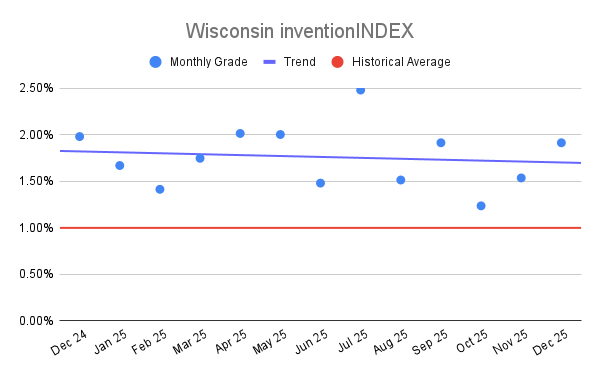 Wisconsin inventionINDEX December 2025
  Wisconsin inventionINDEX Novem
