

Quick Answer: The Wisconsin Research Credit for Activities Related to Internal Combustion Engines (ICE) offers an enhanced 11.5% tax credit for qualified research expenses, specifically targeting the development of engines, vehicles, and substitute products like electric and fuel cell drives. To qualify, activities must satisfy the federal Four-Part Test and expenses must be incurred within Wisconsin. This incentive significantly exceeds the standard 5.75% research credit rate to support the state’s evolving manufacturing and propulsion sectors.
Comprehensive Analysis of the Wisconsin Research Credit for Activities Related to Internal Combustion Engines
The Research Credit for Activities Related to Internal Combustion Engines is a specialized Wisconsin tax incentive providing a premium 11.5% credit for expenses incurred while developing engines or vehicles, including electric and fuel cell alternatives. This incentive significantly doubles the standard research credit rate to bolster Wisconsin’s historical manufacturing base and support the technological transition toward modern, energy-efficient propulsion systems.
The Evolution and Statutory Basis of Wisconsin Research Incentives
The fiscal landscape of Wisconsin has long been characterized by a robust commitment to its manufacturing and industrial core. Central to this commitment is the Research and Development (R&D) Tax Credit framework, primarily codified under Wisconsin Statutes Section 71.28(4) for corporations, with analogous provisions in Section 71.07(4k) for individuals and Section 71.47(4) for insurance companies. While the state’s research credit is fundamentally modeled after the federal research credit defined in Section 41 of the Internal Revenue Code (IRC), Wisconsin has carved out unique, sector-specific enhancements that provide a higher rate of return for industries deemed critical to the state’s economic identity, most notably the internal combustion engine (ICE) sector.
Historically, the Wisconsin research credit was a uniform incentive. However, legislative interventions in the mid-2000s, specifically Assembly Bill 243 and subsequent biennial budget acts, introduced a tiered architecture. This shift recognized that the high capital intensity and long development cycles associated with engine design required a more aggressive stimulus than general software development or generic product improvement. Consequently, what is colloquially known as the “Super R&D Credit” was established, offering an 11.5 percent rate for qualified research expenses (QREs) related to internal combustion engines and certain energy-efficient products, compared to the 5.75 percent rate for general research activities.
The administrative prerogative over these credits rests with the Wisconsin Department of Revenue (DOR), which interprets the statutory mandates through formal publications and annual tax instructions. Guidance such as Publication 131, “Tax Incentives for Conducting Qualified Research in Wisconsin,” serves as the authoritative manual for taxpayers navigating the intersection of federal definitions and state-specific modifications. One of the most significant points of divergence from federal law is Wisconsin’s selective adoption of the IRC. For taxable years beginning after December 31, 2022, Wisconsin has notably decoupled from federal changes introduced by the Tax Cuts and Jobs Act (TCJA) regarding the amortization of research expenditures. While federal law now requires the mandatory five-year amortization of R&D costs, Wisconsin permits the full deduction of these expenses in the year incurred, provided they meet the criteria of IRC Section 174, while simultaneously allowing the credit to be claimed.
Definitional Scope and the “Substitute Products” Clause
The legal utility of the ICE research credit is governed by highly specific definitions found in Wis. Stat. § 71.28(4)(ab). These definitions are intentionally broad, reflecting a policy goal of supporting the entire propulsion technology pipeline, from traditional fossil fuel engines to cutting-edge zero-emission drives.
Internal Combustion Engine: A Technological Spectrum
Under the Wisconsin tax code, the term “internal combustion engine” is a term of art that extends well beyond its classical engineering definition. Specifically, for the purpose of the 11.5 percent credit, the term includes “substitute products such as fuel cell, electric, and hybrid drives”. This inclusion is a critical strategic element of Wisconsin law, ensuring that legacy manufacturers transitioning their product lines to electric motors or hydrogen fuel cells do not lose their “enhanced” credit status.
The DOR also recognizes specific stationary applications, such as “stationary unconventional natural gas–powered piston engines,” as qualifying under the ICE umbrella. This breadth ensures that Wisconsin’s significant power generation and stationary engine industry is supported alongside the mobile automotive sector.
Vehicles and Frames: The Boundary of Eligibility
The credit is not merely limited to the power plant itself but extends to the design of the “vehicle” and its “frame”. A “vehicle” is defined as any vehicle or frame, including parts, accessories, and component technologies, in which an engine is mounted for mobile or stationary use. This includes motor vehicles, unmanned aerial vehicles (UAVs), and aircraft.
The statutory definition of “frame” provides the most granular level of detail regarding which mechanical components are eligible for the enhanced credit. The legislature has established distinct boundaries for different vehicle types to prevent the credit from being applied to non-functional or purely aesthetic research.
| Vehicle Category | Statutory Definition of “Frame” | Excluded Components |
|---|---|---|
| Motorcycle | Includes every part of the motorcycle. | Tires. |
| Truck | Includes the control system, the fuel train, and the drive train. | Comfort features in the cab and tires. |
| Generator | Includes control modules, fuel train, fuel scrubbing process, fuel mixers, generator, heat exchangers, and exhaust train. | Standard housing or non-functional enclosures. |
This structure incentivizes the deep mechanical and electronic integration required for modern propulsion. For example, research into the control modules and heat exchangers of a generator is eligible for the 11.5 percent rate because those components are explicitly part of the “frame” for that vehicle type. Conversely, research into the ergonomic design of a truck cab’s seating or climate control is excluded, as these are classified as “comfort features”.
Computational Mechanics of the Wisconsin Research Credit
The Wisconsin research credit is calculated on an incremental basis, rewarding taxpayers who increase their investment in qualified research relative to a historical baseline. The methodology is consistent across the different tiers of the credit, but the applicable rates vary significantly depending on the nature of the research and the taxpayer’s history of research expenditures.
The Tiered Rate Structure
The Department of Revenue applies a tiered rate system that distinguishes between general research, internal combustion engine research, and energy-efficient product research.
| Credit Category | Standard Rate (Expenses > 50% of 3-Year Average) | Startup Rate (No prior 3-year QREs) |
|---|---|---|
| General Research Activities | 5.75% | 2.875% |
| Internal Combustion Engines | 11.5% | 5.75% |
| Energy-Efficient Products | 11.5% | 5.75% |
The formula for calculating the credit for an established taxpayer (one with research expenses in the three preceding years) is as follows:
Credit = Rate × (QRE_current – (0.50 × Average QRE_prior 3 years))
If a taxpayer had no qualified research expenses in any of the three taxable years immediately preceding the current year, the calculation simplifies to a direct percentage of the current year’s QREs. This “startup rate” is exactly half of the standard rate, providing an entry-level incentive for new innovators while reserving the full incentive for those demonstrating sustained growth.
Comparison with Federal Methodology
A notable feature of the Wisconsin credit is the “50 percent rule” for the base amount. Unlike the federal “Regular Credit,” which uses a complex “fixed-base percentage” involving gross receipts, or the federal “Alternative Simplified Credit” (ASC), which uses 50 percent of the average of the three prior years, Wisconsin utilizes a hybridized approach that applies a 50 percent reduction to the average of the three prior years’ Wisconsin-only QREs. This makes the Wisconsin credit inherently more accessible than the federal regular credit for companies with high revenue but moderate research intensity, as it focuses purely on the research spend itself rather than its ratio to gross receipts.
Qualified Research Activities (QRAs) and the Four-Part Test
Eligibility for the 11.5 percent ICE credit is not automatic; the activities must first qualify as “research” under the standards of Section 41 of the Internal Revenue Code. The Department of Revenue rigorously applies the “Four-Part Test” to evaluate whether a project qualifies.
The Four-Part Test in Engine Research
- Permitted Purpose: The research must be undertaken for the purpose of discovering information that is technological in nature and intended for use in developing a new or improved “business component”. In the ICE context, the business component is typically the engine, the vehicle, or the production process. The research must relate to a new or improved function, performance, reliability, or quality.
- Elimination of Uncertainty: The taxpayer must encounter technological uncertainty at the outset of the project. This uncertainty can relate to the capability of achieving a result, the method of achieving it, or the optimal design. For instance, a manufacturer attempting to integrate a new lightweight alloy into a turbocharger housing must resolve uncertainty regarding the material’s thermal fatigue life.
- Process of Experimentation: The activities must involve a systematic process of experimentation, such as modeling, simulation, or physical testing of prototypes. Substantially all of the activities must constitute such a process. A series of “trial and error” tests to find the optimal fuel-injection timing is a classic example of this process.
- Technological in Nature: The research must fundamentally rely on the principles of physical science, biological science, engineering, or computer science. This excludes projects based on soft sciences, market research, or purely aesthetic design.
Specific Qualified Activities for the ICE Credit
DOR guidance specifies that the 11.5 percent rate applies specifically to research related to:
- Designing Internal Combustion Engines: This involves the fundamental architecture of the power plant, including thermodynamics, fluid dynamics of fuel systems, and electronic control unit (ECU) calibration.
- Designing Vehicles Powered by ICE: This covers the integration of the engine into the frame, including drive train engineering, fuel storage systems, and the control systems that manage power delivery.
- Improving Production Processes: This includes the development of new manufacturing techniques, such as laser welding for engine blocks or automated assembly sequences specifically designed for ICE components.
Qualified Research Expenses (QREs)
The credit is calculated based on three primary categories of expenses: wages, supplies, and contract research. A foundational requirement for all Wisconsin research credits is that the expenses must be incurred for research conducted within the state. Expenses incurred outside Wisconsin, even if for the benefit of a Wisconsin-based project, cannot be included.
Wage Expenses
Wages paid to employees for “qualified services” constitute the largest portion of most R&D claims. The Department of Revenue defines qualified services in three categories:
- Engaging in Research: The actual conduct of experimentation (e.g., an engineer running a dynamometer test).
- Direct Supervision: The immediate management of the research project (e.g., a lead engineer overseeing a team of technicians).
- Direct Support: Activities that facilitate the research, such as a machinist fabricating a one-off prototype part or a clerk compiling and cleaning data generated during testing.
Importantly, wages used to calculate the Wisconsin Development Zones Credit cannot be included in the calculation of the research credit to prevent the “double-dipping” of state incentives.
Supplies and Computer Rental
The cost of tangible property (other than land or depreciable property) used in the research process is eligible. This includes fuel used during engine testing, raw materials for prototypes, and specialized chemical reagents. Additionally, amounts paid for the rental or lease of computers used in qualified research are qualifying expenses.
Contract Research Expenses
When a taxpayer hires a third party to perform research on their behalf in Wisconsin, they can typically include 65 percent of the amount paid as a qualifying expense. This percentage is increased to 75 percent if the payments are made to a qualified research consortium, such as a university or a collaborative industry research group.
The Research Facilities Credit
Distinct from the credit for research expenses, Wisconsin also offers a credit for the construction or expansion of research facilities. For the internal combustion engine sector, this facility credit is also set at an enhanced rate of 10 percent of qualifying expenditures.
The facility credit applies to amounts paid to construct and equip new facilities or expand existing facilities in Wisconsin for the purpose of conducting qualified ICE research. Eligible costs are limited to tangible, depreciable property and specifically exclude the cost of “replacement property”. This credit is a powerful tool for manufacturers establishing new battery laboratories for hybrid vehicles or high-tech engine testing centers.
Refundability and the Liquidity Benefit
One of the most attractive features of the Wisconsin research credit is its partial refundability. This mechanism allows companies with little to no tax liability—often the case for high-growth startups or companies in a cyclical downturn—to receive a direct cash payment from the state.
The Progressive Increase in Refundability
The refundable portion of the credit has been increased by the legislature over several years to ensure that the incentive remains a powerful tool for attracting and retaining businesses.
| Tax Year Start Date | Maximum Refundable Percentage of Current Year Credit |
|---|---|
| 2018 through 2020 | 10% |
| 2021 through 2023 | 15% |
| 2024 and Later | 25% |
The calculation for the refundable portion is strictly defined. The refundable amount is the lesser of:
- The specified percentage (e.g., 25%) of the total current year research credit.
- The current year research credit remaining after subtracting the amount of credit used to offset the taxpayer’s current year tax liability.
This structure ensures that the primary function of the credit remains the offsetting of tax, but it provides a meaningful liquidity backstop for companies that are reinvesting all their capital into R&D rather than generating immediate taxable profits.
Carryforward and Legislative Outlook (2025–2026)
Any portion of the research credit that is not used to offset tax and is not refunded can be carried forward to subsequent taxable years. Under current law, the carryforward period is 15 years. However, the Wisconsin legislature is currently considering a transformative extension of this period.
The 50-Year Carryforward Proposal (SB 482 / AB 494)
During the 2025–2026 regular session, companion bills SB 482 and AB 494 were introduced to increase the research credit carryover period from 15 years to 50 years. The impetus for this bill is the recognition that many innovative companies, particularly in the manufacturing and aerospace sectors, may operate for decades before reaching full commercial scale and taxability.
If enacted, this legislation would make Wisconsin’s R&D tax environment the most enduring in the United States. Industry advocates, such as the Association of Equipment Manufacturers (AEM), have testified that this extension provides the “flexibility and certainty” required for multi-year capital investments in engine technology. As of January 2026, the proposal has received favorable reports from committees and remains a key legislative item for the session.
Compliance, Reporting, and the Schedule R Interface
Claiming the 11.5 percent ICE research credit requires meticulous adherence to Department of Revenue filing protocols. The centerpiece of this compliance is Wisconsin Schedule R, “Wisconsin Research Credits”.
The Multi-Schedule Requirement
A critical administrative rule is that only one type of research credit may be included on a single Schedule R. If a corporation is claiming both the general research credit (5.75%) and the internal combustion engine credit (11.5%), it must complete and file two separate Schedule Rs. Each schedule must clearly identify the credit being claimed by checking the appropriate box on Line 12 or Line 13.
Income Treatment of Credits
Wisconsin law dictates that the amount of the research credit computed is considered taxable income and must be added back to the taxpayer’s Wisconsin income in the year computed. This applies regardless of whether the credit is used to offset tax, refunded, or carried forward. This requirement often necessitates a state-specific modification to the federal taxable income starting point.
Pass-Through Entity Compliance
While partnerships, LLCs treated as partnerships, and S-corporations cannot use the credit to offset their own tax liability, they are responsible for the computation of the credit at the entity level. The entity calculates the credit on Schedule R and then passes the pro-rata share of the credit to its owners via the Schedule K-1. The individual owners then claim their share of the credit on their own Wisconsin returns.
Detailed Example: Precision Power Systems, LLC
To illustrate the interplay of these complex rules, consider the case of Precision Power Systems, LLC (PPS), a Wisconsin-based manufacturer specializing in hydrogen-electric hybrid engines for heavy-duty generator sets. PPS is treated as a partnership for tax purposes.
Historical QRE Data and Current Year Activities
In the 2025 taxable year, PPS conducted significant research into the thermal management of hydrogen fuel cells and the integration of these cells into a modular generator frame. Their historical Wisconsin QREs are as follows:
- 2024 (1st Prior Year): $3,000,000
- 2023 (2nd Prior Year): $2,500,000
- 2022 (3rd Prior Year): $2,000,000
- 2025 (Current Year): $4,500,000
Step 1: Verification of Activity Status
PPS’s research qualifies for the “Internal Combustion Engine” credit because the statutory definition explicitly includes “fuel cell” and “hybrid” drives. Furthermore, since the research targets generator components like fuel mixers and heat exchangers, it falls within the definition of a “frame” for a generator.
Step 2: Calculation of the Base Amount
The base amount is 50 percent of the average QREs from the preceding three years.
Average QREs = ($3,000,000 + $2,500,000 + $2,000,000) / 3 = $2,500,000
Base Amount = $2,500,000 × 0.50 = $1,250,000
Step 3: Calculation of Eligible QREs
Eligible QREs = $4,500,000 (Current) – $1,250,000 (Base) = $3,250,000
Step 4: Application of the Enhanced Credit Rate
As an ICE-related activity for an established firm, the 11.5 percent rate is applied.
Total Credit Computed = $3,250,000 × 0.115 = $373,750
Step 5: Distribution and Refundability for Owners
The $373,750 credit is distributed to the partners of PPS according to their ownership interests. Consider Partner A, who owns 50 percent of PPS and has a 2025 Wisconsin tax liability of $100,000.
- Partner A’s Share of Credit: $186,875.
- Offsetting Tax: Partner A uses $100,000 of the credit to reduce their Wisconsin tax to zero.
- Remaining Credit: $86,875.
- Maximum Refundable Portion: 25% × $186,875 = $46,719.
- Refund Payment: Partner A receives a refund of $46,719, as it is the lesser of the percentage limit or the remaining credit.
- Carryforward: The remaining $40,156 ($86,875 – 46,719) is carried forward to 2026.
Documentation and Audit Preparedness
Given the high value of the 11.5 percent credit, it is a frequent subject of Department of Revenue audits. Taxpayers must maintain a robust documentation trail that links every dollar of expense to a specific, qualified activity.
Recommended Record-Keeping Practices
The Department of Revenue suggests that taxpayers retain the following evidence for the duration of the statute of limitations, which can extend significantly if carryforwards are used:
- Innovation Logs: Detailed technical journals describing the uncertainties encountered and the experimental steps taken to resolve them.
- Testing Protocols and Results: Formal documents outlining the parameters of tests (e.g., thermal cycles, stress tests) and the resulting data analysis.
- Labor Documentation: Timesheets or project tracking data that clearly allocate employee hours to qualified research activities versus standard production or administrative work.
- Financial Records: Invoices for supplies and contract research payments, ensuring they explicitly identify the work was performed in Wisconsin.
Strategic Implications of the Wisconsin Framework
The Wisconsin Research Credit for Activities Related to Internal Combustion Engines is more than a simple tax reduction; it is a sophisticated economic development tool. By defining “engines” to include electric and fuel cell drives, the state has effectively harmonized its industrial past with its technological future. This allows traditional mechanical engineering firms to evolve into electromechanical powerhouses without losing the significant tax advantages that have historically supported the ICE industry in the state.
The decoupling from federal Section 174 amortization further enhances Wisconsin’s competitiveness. In an era where the federal government has made R&D more “expensive” by deferring deductions, Wisconsin has maintained a “cash-friendly” posture that prioritizes immediate reinvestment. When combined with the 25 percent refundability and the impending 50-year carryforward, Wisconsin presents one of the most compelling geographic value propositions for engine and vehicle research in the world.
For the taxpayer, success in claiming this credit requires a dual focus: first, on the rigorous engineering that meets the federal “Four-Part Test,” and second, on the precise mechanical and statutory alignment that qualifies for the enhanced 11.5 percent Wisconsin rate. As the state continues to refine its definitions and expand its refundability, the ICE research credit will remain a cornerstone of Wisconsin’s innovation economy.
Who We Are:
Swanson Reed is one of the largest Specialist R&D Tax Credit advisory firm in the United States. With offices nationwide, we are one of the only firms globally to exclusively provide R&D Tax Credit consulting services to our clients. We have been exclusively providing R&D Tax Credit claim preparation and audit compliance solutions for over 30 years. Swanson Reed hosts daily free webinars and provides free IRS CE and CPE credits for CPAs.
Are you eligible?

Why choose us?

Pass an Audit?

What is the R&D Tax Credit?
The Research & Experimentation Tax Credit (or R&D Tax Credit), is a general business tax credit under Internal Revenue Code section 41 for companies that incur research and development (R&D) costs in the United States. The credits are a tax incentive for performing qualified research in the United States, resulting in a credit to a tax return. For the first three years of R&D claims, 6% of the total qualified research expenses (QRE) form the gross credit. In the 4th year of claims and beyond, a base amount is calculated, and an adjusted expense line is multiplied times 14%. Click here to learn more.
Never miss a deadline again

Stay up to date on IRS processes

Discover R&D in your industry

R&D Tax Credit Preparation Services
Swanson Reed is one of the only companies in the United States to exclusively focus on R&D tax credit preparation. Swanson Reed provides state and federal R&D tax credit preparation and audit services to all 50 states.
If you have any questions or need further assistance, please call or email our CEO, Damian Smyth on (800) 986-4725.
Feel free to book a quick teleconference with one of our national R&D tax credit specialists at a time that is convenient for you.
R&D Tax Credit Audit Advisory Services
creditARMOR is a sophisticated R&D tax credit insurance and AI-driven risk management platform. It mitigates audit exposure by covering defense expenses, including CPA, tax attorney, and specialist consultant fees—delivering robust, compliant support for R&D credit claims. Click here for more information about R&D tax credit management and implementation.
Our Fees
Swanson Reed offers R&D tax credit preparation and audit services at our hourly rates of between $195 – $395 per hour. We are also able offer fixed fees and success fees in special circumstances. Learn more at https://www.swansonreed.com/about-us/research-tax-credit-consulting/our-fees/



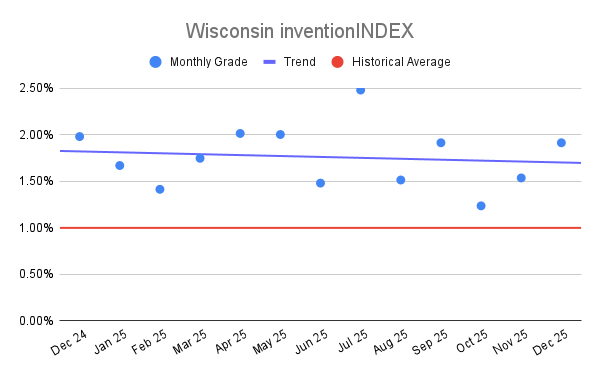 Wisconsin inventionINDEX December 2025
  Wisconsin inventionINDEX Novem
