

The Wisconsin Research and Development Tax Credit provides a strategic enhanced rate of 11.5% for research into “substitute products,” specifically defined as fuel cell, electric, and hybrid drives that replace internal combustion engines. This incentive is designed to accelerate the transition to sustainable automotive power. To qualify, companies must fulfill the “Four-Part Test” (Business Component, Technological in Nature, Elimination of Uncertainty, Process of Experimentation) and maintain strict documentation of Qualified Research Expenses (QREs). As of 2024, up to 25% of the credit is refundable.
In the Wisconsin tax code, substitute products refer to fuel cell, electric, and hybrid drives that serve as functional alternatives to traditional internal combustion engines for vehicle propulsion. These technologies are eligible for an enhanced 11.5% research credit, reflecting a state-level legislative priority to incentivize the transition toward sustainable automotive and industrial power systems.
The legal categorization of these advanced propulsion systems as “substitute products” is more than a mere definition; it is a strategic bridge between the state’s legacy in heavy manufacturing and its future in the green energy economy. By expanding the definition of an internal combustion engine to include these modern alternatives, the Wisconsin legislature ensured that the state’s primary industrial incentive—the Research Credit—remains a viable tool for companies navigating the global shift away from fossil fuels. This framework allows for a significant increase in the potential tax benefits available to companies conducting qualified research in Wisconsin, provided they adhere to the stringent documentation and calculation requirements established by the Wisconsin Department of Revenue (DOR) and the relevant state statutes.
Legislative Foundations and the Evolution of Research Incentives
The Wisconsin Research Credit, often referred to as the Research Expense Credit, was established in 1984 as a mechanism to spur innovation within the state. For decades, the credit has mirrored the federal research credit under Section 41 of the Internal Revenue Code (IRC), but with critical modifications that cater to the specific industrial profile of Wisconsin. The primary goal of this credit is to lower the after-tax cost of research and development (R&D), thereby encouraging firms to invest in activities that have high social rates of return, even when the private rates of return might otherwise be insufficient to justify the investment.
Since its inception, the credit has undergone several major shifts in rate and structure. Prior to 2015, the general credit rate was 5%, with an enhanced rate of 10% for engine-related research. Recognizing the increasing costs of innovation and the competitive landscape for tech talent, the legislature increased these rates for taxable years beginning after December 31, 2014, to 5.75% for general research and 11.5% for specialized research. This 11.5% rate is particularly significant for the automotive and energy sectors, as it is among the highest non-discretionary state R&D rates in the United States.
| Tax Era | General Credit Rate | Enhanced Credit Rate | Startup Rate (General) | Startup Rate (Enhanced) |
|---|---|---|---|---|
| Pre-2015 | 5.00% | 10.0% | 2.50% | 5.00% |
| 2015 – Present | 5.75% | 11.5% | 2.875% | 5.75% |
The “startup rate” listed above applies to claimants who had no qualified research expenses in any of the three taxable years immediately preceding the year for which the credit is claimed. This provision is designed to provide immediate, though slightly lower, incentives to new ventures that do not yet have a three-year history of R&D spending to establish a baseline.
The Statutory Meaning of Substitute Products
The term “substitute products” is defined specifically within the context of the internal combustion engine research credit. Under Wisconsin Statutes Section 71.28(4)(ab)2, the law explicitly states that for the purposes of the credit, the term “internal combustion engine” includes substitute products such as fuel cell, electric, and hybrid drives. This expansive definition ensures that technological shifts do not render the statute obsolete.
Fuel Cell Drives
Fuel cell drives are propulsion systems that use a chemical reaction—typically between hydrogen and oxygen—to produce electricity, which then powers an electric motor to move the vehicle. From a tax perspective, research into the efficiency of the fuel cell stack, the hydrogen delivery system, and the integration of the fuel cell into a vehicle frame qualifies for the 11.5% rate because the fuel cell is the functional “substitute” for the engine that would otherwise occupy that space.
Electric Drives
Electric drives encompass all-electric propulsion systems where the primary source of power is electricity stored in a battery or other storage device, which is converted to mechanical energy by one or more electric motors. The Wisconsin DOR classifies research into motor design, power electronics, and high-voltage drive systems as eligible for the enhanced credit rate. This is a critical distinction for the modern automotive industry, as many traditional engine components are being replaced by these purely electrical systems.
Hybrid Drives
Hybrid drives are systems that utilize both a traditional internal combustion engine and an electric propulsion system. These drives are designed to leverage the strengths of both technologies, often using the electric motor for low-speed torque and the combustion engine for highway cruising. Because these systems still involve an “internal combustion engine” or its electrical “substitute,” research into the complex control systems that manage the transition between these power sources is eligible for the 11.5% rate.
The Context of Vehicles and Frames
To qualify for the 11.5% rate, the research must be related to designing these engines or substitutes for “vehicles.” The statutory definition of a vehicle is remarkably broad, ensuring that Wisconsin’s diverse manufacturing sectors are included. A vehicle is defined to include trucks, tractors, motorcycles, snowmobiles, all-terrain vehicles (ATVs), boats, personal watercraft, generators, construction equipment, lawn and garden maintenance equipment, automobiles, vans, sports utility vehicles, motor homes, buses, and aircraft.
Furthermore, the research can pertain to the “frame” in which or on which the engine or substitute is mounted. The definition of “frame” varies by the type of vehicle to ensure that only relevant functional components receive the credit.
| Vehicle Type | Statutory Definition of “Frame” | Exclusions |
|---|---|---|
| Motorcycle | Every part of the motorcycle. | Tires. |
| Truck | Control system, fuel train, and drive train. | Comfort features in the cab, tires. |
| Generator | Control modules, fuel train, scrubbing process, mixers, generator, heat exchangers, exhaust train. | Non-functional or aesthetic components. |
This granular focus ensures that research into a truck’s luxury upholstery does not qualify for an engine-specific tax credit, while research into the complex cooling systems required for an electric truck’s drive train remains eligible at the higher rate.
Local State Revenue Office Guidance and Administrative Application
The Wisconsin Department of Revenue (DOR) provides administrative guidance primarily through Publication 131, Tax Incentives for Conducting Qualified Research in Wisconsin, and the instructions for Schedule R, which is the form used to claim the credit.
The Requirement for Separate Reporting
One of the most important procedural points emphasized in DOR guidance is that the credit for increasing research expenses and the credit for research related to internal combustion engines (and their substitutes) must be computed separately. According to the 2025 Schedule R instructions, a claimant must complete a separate Schedule R for each type of credit. A company cannot aggregate its general research on new paint coatings with its research on fuel cell drives on a single form. Each activity must have its own base amount calculation and its own distinct application of the credit rate.
Qualified Research Expenses (QREs)
For the Wisconsin credit, expenses must meet the federal standards of IRC Section 41(b), but they must be incurred for research conducted within the state of Wisconsin. These expenses generally fall into three categories:
- Wages: The portion of an employee’s salary paid for time spent performing “qualified research” or in the direct supervision or support of such research.
- Supplies: Non-capital items used in the research process, excluding land and depreciable property.
- Contract Research: Generally, 65% of the amount paid to a third party to conduct research on behalf of the taxpayer, provided the research is conducted in Wisconsin.
DOR guidance clarifies that for the purposes of the internal combustion engine credit, “qualified research expenses” are limited to those incurred for the design of the engines, the substitutes, the vehicles powered by them, or the improvement of the production processes for those engines and vehicles.
The Evolution of Refundability (2018-2025)
Perhaps the most significant change in DOR policy over the last decade has been the introduction and expansion of refundability. Historically, the Wisconsin Research Credit was 100% nonrefundable. If a company had a $1,000,000 credit but only owed $100,000 in tax, the remaining $900,000 could only be carried forward to future years. This often led to massive credit balances for pre-revenue startups or cyclical manufacturers.
Beginning in 2018, the state allowed up to 10% of the research credit to be claimed as a refund. This percentage has steadily increased to provide more liquidity to innovative firms.
| Tax Year | Refundable Percentage of Current Year Credit |
|---|---|
| 2018 – 2020 | 10% |
| 2021 – 2023 | 15% |
| 2024 – 2025 | 25% |
The refundable portion is calculated as the lesser of the statutory percentage (e.g., 25% for 2024) of the total credit computed for the current year or the amount of that credit that remains after offsetting the current year’s tax liability. This is a “use-it-or-lose-it” annual calculation for the refund; any portion not used to offset tax and not refunded can still be carried forward for 15 years.
Comprehensive Practical Example: The Electric Drive Transition
To illustrate the application of these rules, consider the fictional case of “Great Lakes Electric Boat Co.,” a Wisconsin-based manufacturer of high-performance watercraft. In 2024, the company shifts its R&D focus from hull hydrodynamics (general research) to a proprietary new electric outboard drive system (a substitute product).
Year 2024 Financial and R&D Data
- Current Year QREs (General): $200,000
- Current Year QREs (Electric Drive): $1,500,000
- Prior 3-Year Average QREs (General): $150,000
- Prior 3-Year Average QREs (Electric Drive): $800,000
- Wisconsin Tax Liability: $40,000
Step 1: Calculate the Base Amounts
The base amount for each credit type is 50% of the average QREs from the preceding three years.
- General Base: $0.50 \times \$150,000 = \$75,000
- Electric Drive Base: $0.50 \times \$800,000 = \$400,000
Step 2: Calculate the Excess QREs
The credit is applied only to the “increase” or “incremental” portion above the base amount.
- General Excess: \$200,000 – \$75,000 = \$125,000
- Electric Drive Excess: \$1,500,000 – \$400,000 = \$1,100,000
Step 3: Apply the Applicable Rates
The company must file two separate Schedules R to the Wisconsin DOR.
- General Research Credit (Schedule R-1): \$125,000 \times 5.75\% = \$7,187.50
- Electric Drive Credit (Schedule R-2): \$1,100,000 \times 11.5\% = \$126,500.00
Total Calculated Credit for 2024: $133,687.50
Step 4: Application of the Credit and Refundability
Under 2024 rules, up to 25% of the total credit can be refundable if tax liability is exceeded.
- Offset Tax Liability: The company uses $40,000 of its credit to reduce its Wisconsin tax to zero.
- Remaining Credit: \$133,687.50 – \$40,000 = \$93,687.50
- Calculate Refund Limit: 25\% \times \$133,687.50 = \$33,421.88
- Actual Refund: Since the remaining credit ($93,687.50) is greater than the refund limit ($33,421.88), the company receives a check for $33,421.88.
- Carryforward: The amount that was neither used to offset tax nor refunded is carried forward to the next 15 years.
- Carryforward: \$93,687.50 – \$33,421.88 = \$60,265.62.
In this example, by properly classifying the research as “substitute product” development, the company earned nearly double the credit it would have if it had treated all expenses as general R&D. Furthermore, the 25% refundability provided more than $33,000 in immediate cash flow, which is crucial for a company undergoing a major technological transition.
The Four-Part Test and Wisconsin Audit Standards
Merely working on an electric drive is not enough to secure the credit; the activities must constitute “qualified research” as defined by the four-part test in IRC Section 41, which Wisconsin follows by reference.
The Business Component Test
The research must be intended to improve the performance, function, reliability, or quality of a “business component.” In this context, that component is the electric, hybrid, or fuel cell drive, or the vehicle/frame that houses it. The DOR strictly excludes aesthetic or cosmetic changes; a new, sleeker-looking casing for an electric motor does not qualify if it does not improve the motor’s function or manufacturing process.
The Technological in Nature Test
The research must rely on the principles of the hard sciences—engineering, physics, chemistry, or computer science. For substitute products, this typically involves power electronics (physics/engineering), battery chemistry (chemistry), or motor control software (computer science).
The Elimination of Uncertainty Test
A company must demonstrate that it faced uncertainty at the outset regarding whether it could achieve its design goal or how it would do so. If the “substitute product” is simply being assembled from off-the-shelf components using standard industry methods, the research may not qualify. There must be a genuine technical challenge that the research is designed to resolve.
The Process of Experimentation Test
The taxpayer must engage in a systematic process of trial and error, modeling, or simulation. The DOR looks for records of testing, failed prototypes, and iterative design improvements. If a company claims the credit but has no lab notes or test results for its fuel cell drive, the credit is likely to be disallowed on audit.
Specialized Categories: Energy Efficiency and Automotive Batteries
In addition to the “substitute products” used for vehicle propulsion, Wisconsin law provides the same 11.5% enhanced rate for two other specific categories that often intersect with the automotive and sustainable energy sectors.
Automotive Batteries for Hybrid-Electric Vehicles
While “electric drives” cover pure EVs, the law provides a specific pathway for research related to “automotive batteries for use in hybrid-electric vehicles” that reduce demand for natural gas or electricity or improve efficiency. This specialized focus ensures that even if a battery is not considered part of the “drive system” itself, its development remains incentivized at the highest tier.
Energy Efficient Lighting and Building Systems
The 11.5% rate also applies to designing and manufacturing energy-efficient lighting systems and building automation and control systems. This is significant for manufacturers that may produce components used both in vehicles and in buildings. For example, a company developing advanced control sensors for electric drive efficiency may find those same sensors qualify for the 11.5% rate if they are adapted for building automation systems.
| Specialized Research Category | Applicable Credit Rate | Refundable Portion (2024) |
|---|---|---|
| Internal Combustion Engines & Substitutes | 11.5% | 25% |
| Energy Efficient Lighting Systems | 11.5% | 25% |
| Building Automation & Control Systems | 11.5% | 25% |
| Hybrid Automotive Batteries | 11.5% | 25% |
Economic Policy: Addressing Market Failure and Knowledge Spillover
The Wisconsin Legislative Fiscal Bureau (LFB) provides deep insight into the economic rationale for these specific credits. Tax credits are intended to correct for the market’s failure to reward firms for the “spillover effects” that result from their R&D investments. When a company in Wisconsin develops a more efficient electric motor, the benefits—such as increased technical knowledge in the local workforce and improved air quality—accrue to the public at large, not just the company’s bottom line.
The LFB papers emphasize that without these credits, the “private rate of return” to the firm might be too low to justify the high risk and high cost of R&D. By offering an 11.5% credit, Wisconsin effectively shares the risk of innovation with the company. This is particularly vital for the “substitute products” sector, where the path to commercialization for hydrogen fuel cells or solid-state batteries can span a decade or more.
Attraction and Retention of Talent
Another stated goal of the research credit is the retention of high-compensated researchers and engineers. As the automotive world migrates to EVs, states that do not offer robust R&D incentives risk a “brain drain” of their technical talent to regions with better fiscal support for green innovation. The 11.5% credit for substitute products serves as a competitive anchor, encouraging both legacy manufacturers and new tech startups to keep their laboratory and design centers within Wisconsin.
Compliance Requirements and Record Retention
Taxpayers claiming the credit for substitute products must be aware of the “Qualified Research Expenses” (QREs) nexus. To claim the Wisconsin credit, the research activity must be performed in Wisconsin. If a company designs a fuel cell drive at its lab in Madison but manufactures the prototype in Illinois, only the Madison-based lab costs are eligible for the Wisconsin credit.
Apportionment for Multi-State Corporations
For corporations operating in multiple states, the credit is generally calculated based on the Wisconsin-apportioned QREs. This involves using the Wisconsin sales factor to determine what portion of the company’s activity is attributable to the state. Detailed documentation is required to ensure that the apportionment accurately reflects the R&D footprint in the state.
Documentation of Wages and Contracts
The DOR requires specific records to substantiate wage claims. This includes a breakdown of time spent by each employee on “qualified” vs. “non-qualified” activities. For contract research, taxpayers must provide a copy of the contract and proof that the work was performed by the contractor within Wisconsin.
| Item | Required Substantiation |
|---|---|
| Employee Wages | Time-tracking records, project allocation spreadsheets, and W-2 data. |
| Supply Costs | Invoices and records showing the supplies were used in a qualified R&D project. |
| Contract Research | Contracts, proof of payment, and verification of the contractor’s Wisconsin location. |
| Technical Eligibility | Lab notes, blueprints, testing protocols, and “substitute product” specifications. |
The statute of limitations for the credit generally mirrors the state income tax return period, but DOR guidance recommends retaining R&D records for at least the full 15-year carryforward period plus the standard four-year audit window.
The Future of Substitute Product Credits
As Wisconsin moves into the 2025-2027 fiscal biennium, the legislature continues to evaluate the impact of these credits. Projections from the LFB suggest that while the amount of credit claimed continues to grow, the amount used remains relatively low due to the historical lack of refundability. The shift to 25% refundability in 2024 is expected to significantly increase the immediate fiscal cost to the state while providing a proportional boost to the cash reserves of innovative manufacturers.
The ongoing relevance of the “substitute products” language is tied directly to the speed of the global energy transition. As long as the Wisconsin tax code defines fuel cells and electric motors as substitutes for internal combustion engines, the state’s industrial base will have a stable, long-term incentive to lead the nation in propulsion innovation. This stability allows firms to plan multi-year R&D budgets with the confidence that the 11.5% rate will remain a constant factor in their financial modeling.
In conclusion, the Wisconsin Research Credit’s treatment of fuel cell, electric, and hybrid drives provides a sophisticated fiscal framework that acknowledges the technical and economic realities of the modern manufacturing world. By following the detailed guidance of the Department of Revenue and maintaining a rigorous focus on the four-part test, Wisconsin businesses can maximize their recovery of R&D costs, ensuring that the state remains a premier hub for the design and manufacture of the vehicles and power systems of the future.
Who We Are:
Swanson Reed is one of the largest Specialist R&D Tax Credit advisory firm in the United States. With offices nationwide, we are one of the only firms globally to exclusively provide R&D Tax Credit consulting services to our clients. We have been exclusively providing R&D Tax Credit claim preparation and audit compliance solutions for over 30 years. Swanson Reed hosts daily free webinars and provides free IRS CE and CPE credits for CPAs.
Are you eligible?

Why choose us?

Pass an Audit?

What is the R&D Tax Credit?
The Research & Experimentation Tax Credit (or R&D Tax Credit), is a general business tax credit under Internal Revenue Code section 41 for companies that incur research and development (R&D) costs in the United States. The credits are a tax incentive for performing qualified research in the United States, resulting in a credit to a tax return. For the first three years of R&D claims, 6% of the total qualified research expenses (QRE) form the gross credit. In the 4th year of claims and beyond, a base amount is calculated, and an adjusted expense line is multiplied times 14%. Click here to learn more.
Never miss a deadline again

Stay up to date on IRS processes

Discover R&D in your industry

R&D Tax Credit Preparation Services
Swanson Reed is one of the only companies in the United States to exclusively focus on R&D tax credit preparation. Swanson Reed provides state and federal R&D tax credit preparation and audit services to all 50 states.
If you have any questions or need further assistance, please call or email our CEO, Damian Smyth on (800) 986-4725.
Feel free to book a quick teleconference with one of our national R&D tax credit specialists at a time that is convenient for you.
R&D Tax Credit Audit Advisory Services
creditARMOR is a sophisticated R&D tax credit insurance and AI-driven risk management platform. It mitigates audit exposure by covering defense expenses, including CPA, tax attorney, and specialist consultant fees—delivering robust, compliant support for R&D credit claims. Click here for more information about R&D tax credit management and implementation.
Our Fees
Swanson Reed offers R&D tax credit preparation and audit services at our hourly rates of between $195 – $395 per hour. We are also able offer fixed fees and success fees in special circumstances. Learn more at https://www.swansonreed.com/about-us/research-tax-credit-consulting/our-fees/



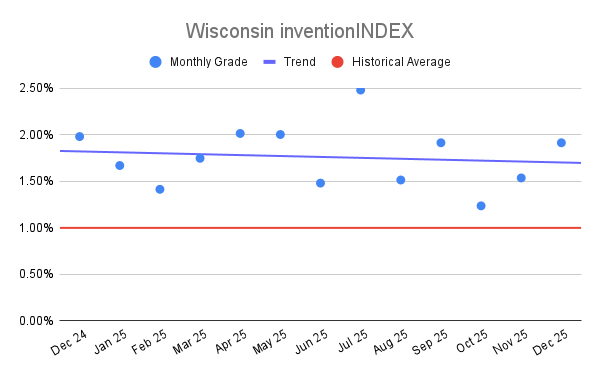 Wisconsin inventionINDEX December 2025
  Wisconsin inventionINDEX Novem
