

Yes. Under Wisconsin Statutes Section 71.28(4)(ad)6, the design and manufacturing of energy efficient lighting systems—including luminaires and building automation controls—qualify for an enhanced credit rate of 11.5%. This is double the standard 5.75% rate for general research. To qualify, projects must pass the federal Four-Part Test, demonstrating that the work involves technical uncertainty and a process of experimentation regarding the system’s design, rather than routine installation.
In the regulatory environment of Wisconsin, energy efficient lighting systems are defined as advanced technological components, including luminaires and building automation controls, that measurably reduce the consumption of electricity or natural gas.
Under Wisconsin Statutes Section 71.28(4)(ad)6, the design and manufacturing of these systems qualify for an enhanced research credit rate of 11.5 percent, providing a robust incentive for high-tech industrial innovation within the state.
The Statutory Architecture of the Wisconsin Research Credit
The Wisconsin research credit is a sophisticated tax incentive designed to foster technological advancement and high-value job creation within the state’s borders. Primarily codified in Wisconsin Statutes Section 71.28(4) for corporations and mirrored in sections 71.07(4k) for individuals and 71.47(4) for insurance companies, the credit leverages federal definitions while maintaining distinct state-level modifications. At its core, the legislation distinguishes between general research activities and specific “enhanced” activities that the Wisconsin legislature has deemed critical to the state’s economic future, most notably the design and manufacturing of energy efficient lighting systems.
For taxable years beginning after December 31, 2014, the general research credit is calculated at 5.75 percent of the excess qualified research expenses (QREs) over a base amount. However, the statute specifically elevates the credit for research related to energy efficient lighting systems, building automation and control systems, and internal combustion engines to 11.5 percent. This doubling of the credit rate serves as a targeted “super credit” aimed at manufacturers and engineering firms that contribute to the state’s green energy infrastructure and industrial efficiency.
The origin of this enhanced credit reflects a legislative intent to position Wisconsin as a leader in the “clean tech” sector. By offering an 11.5 percent rate, the state effectively offsets a significant portion of the risk associated with developing nascent lighting technologies. This mechanism does not merely reward large corporations; it is equally accessible to sole proprietorships and pass-through entities such as S-corporations and Limited Liability Companies (LLCs), where the credit is computed at the entity level and passed through to owners in proportion to their ownership interests.
Defining Energy Efficient Lighting Systems in a Legal and Technical Context
A critical requirement for claiming the 11.5 percent rate is ensuring the research falls squarely within the definition of “design and manufacturing of energy efficient lighting systems”. The Department of Revenue (DOR) and the underlying statutes clarify that this definition is functional rather than purely descriptive. The systems must be intended to reduce the demand for natural gas or electricity or improve the efficiency of its use.
Technical components that typically constitute such a system include luminaires (lamps, ballasts, and housings), integrated sensors, and sophisticated wiring or wireless protocols. Furthermore, the statute extends this definition to “building automation and control systems” when they are integral to managing energy consumption. This includes the software and hardware used to orchestrate complex lighting environments, such as occupancy sensing, daylight harvesting, and bi-level switching.
A vital distinction emphasized by the DOR is the difference between “design and manufacturing” and “installation” or “construction”. The enhanced 11.5 percent credit is reserved for the creation of the technology. An electrical contractor who replaces incandescent bulbs with off-the-shelf LED fixtures is engaged in installation, not the design and manufacturing of the system. However, if that contractor develops a proprietary, custom-engineered control module that integrates various building systems to maximize energy savings, the expenses related to that design phase may qualify for the credit.
| Technology Category | Wisconsin Credit Rate | Primary Statutory Goal |
|---|---|---|
| General Research | 5.75% | General innovation and product improvement |
| Energy Efficient Lighting | 11.5% | Reduction of electricity/natural gas demand |
| Internal Combustion Engines | 11.5% | Vehicle efficiency and production improvement |
| Building Automation | 11.5% | Efficient use of building resources |
Application of the Federal Four-Part Test to Wisconsin Lighting R&D
Wisconsin law expressly adopts the standards set forth in Section 41 of the Internal Revenue Code (IRC) to define what constitutes “qualified research”. For a lighting project to be eligible, it must satisfy a rigorous four-part test, which distinguishes genuine research from routine engineering or aesthetic design.
Part I: The Permitted Purpose Test
The research must be undertaken for the purpose of discovering information that is technological in nature, and the application of that information must be intended for use in developing a new or improved “business component” of the taxpayer. For a lighting firm, the business component is typically a product held for sale or lease, such as a high-performance industrial luminaire or a specialized control system. The improvement must relate to function, performance, reliability, or quality. Research focused on the aesthetic appearance of a light fixture or market research into consumer color preferences does not satisfy this test.
Part II: The Elimination of Uncertainty Test
The taxpayer must demonstrate that they encountered a technical uncertainty at the project’s inception. Uncertainty exists if the information available to the taxpayer does not establish the capability or methodology for developing the component, or the appropriate design of the component. In the development of energy efficient lighting, this might involve uncertainty regarding how to effectively dissipate heat in a high-wattage LED fixture without compromising its 100,000-hour lifespan, or how to program a control algorithm to respond to fluctuating natural light levels without causing flickering or user discomfort.
Part III: The Process of Experimentation Test
Substantially all of the activities must constitute a process of experimentation. This requires a systematic evaluation of one or more alternatives to achieve the desired result. Documentation of trial and error, modeling, simulation, and prototyping is essential to prove this part of the test. For instance, a manufacturer might test five different optic lens materials to determine which provides the best light distribution with the least energy loss. Simply following established industry handbooks or using “best practices” is insufficient; there must be a scientific process of narrowing down potential solutions.
Part IV: The Technological in Nature Test
The process of experimentation must rely on the principles of “hard sciences,” such as physics, engineering, or computer science. Designing the thermal management system of a luminaire relies on the principles of thermodynamics (physics), while developing the software for a building management system relies on computer science. If the “uncertainty” of a project can be resolved through non-technological means, such as better management techniques or aesthetic changes, it fails this test.
Qualified Research Expenses (QREs) and the Wisconsin Boundary
One of the most significant restrictions on the Wisconsin research credit is the geographic requirement: all qualified research expenses must be incurred for research conducted in Wisconsin. This means that if a Wisconsin lighting company outsources its testing to a laboratory in Illinois, the costs associated with that out-of-state testing are generally ineligible for the Wisconsin credit, regardless of their eligibility for the federal credit.
Eligible QREs are categorized into four primary buckets, all of which must be meticulously documented to withstand a Department of Revenue audit.
- Wages: This includes the compensation (as defined by federal income tax withholding) paid to employees directly involved in the research, as well as those who directly supervise or directly support the research. For a lighting firm, this includes the salaries of the electrical engineers designing circuits, the lab technicians running thermal tests, and the project managers overseeing the experimental iterations.
- Supplies: Costs for any tangible property, other than land or depreciable property, used in the research process qualify. This includes the cost of materials used to build prototypes, circuit boards, and the electricity used directly in the lab (though plant lighting itself is excluded).
- Contract Research: A company may claim 65 percent of the amount paid to a third party to conduct research on its behalf, provided the research is conducted in Wisconsin. If the research is performed by a qualified research consortium, such as the University of Wisconsin System, the allowable percentage increases to 75 percent.
- Computer Rental and Cloud Costs: The rental or lease cost of computers used for research, including payments for cloud computing services utilized for modeling and simulation of lighting systems, is a qualifying expense.
Computational Mechanics: The Incremental Method and Base Amount
The Wisconsin research credit is an incremental credit, meaning it rewards businesses for increasing their R&D investment over time. The basic calculation for the enhanced 11.5 percent credit involves determining the excess of current year QREs over a “base amount”.
The base amount is generally calculated as 50 percent of the average qualified research expenses for the three taxable years immediately preceding the current year. This formula ensures that the state only provides a credit for R&D spending that exceeds a baseline level of activity.
The mathematical representation of the credit for energy efficient lighting is:
Credit = 0.115 × (QRE_current – 0.5 × ((QRE_n-1 + QRE_n-2 + QRE_n-3) / 3))
Where QRE_current is the qualifying spend in the year the credit is claimed, and QRE_n-1 through QRE_n-3 are the spends in the three prior years.
Special rules apply to “startup” companies—those that had no qualified research expenses in one or more of the three preceding years. For these entities, the credit is simplified. Instead of an incremental calculation, they can claim a flat 5.75 percent of their total current year QREs related to energy efficient lighting. This allows young companies to benefit from the credit even before they have a three-year historical baseline, though at a lower rate than the full 11.5 percent applied to incremental spending.
The Evolution of Refundability and Its Economic Impact
Historically, the Wisconsin research credit was 100 percent nonrefundable, meaning it could only be used to offset a company’s tax liability. If a company had no tax due—which is common for early-stage tech firms reinvesting all revenue into R&D—the credit could not be used immediately but could be carried forward for 15 years.
To stimulate immediate investment, the Wisconsin legislature introduced a refundable component, which has expanded significantly over the last decade. For tax years beginning after December 31, 2017, up to 10 percent of the credit became refundable. This was increased to 15 percent for tax years beginning on or after January 1, 2021. Most notably, for tax years beginning after December 31, 2023, the refundable portion increased to 25 percent.
The refundable portion is calculated as the lesser of:
- 25 percent of the current year’s research credit.
- The amount of the current year’s credit remaining after first offsetting any current year tax liability.
This change is transformative for the lighting sector. A company developing high-performance optics may incur millions in R&D costs long before they bring a product to market. The 25 percent refundability acts as a quasi-grant from the state, providing critical cash flow that can be reinvested into further innovation.
| Tax Period | Refundability Rate | Carryforward Period |
|---|---|---|
| Pre-2018 | 0% (Nonrefundable) | 15 Years |
| 2018 – 2020 | 10% | 15 Years |
| 2021 – 2023 | 15% | 15 Years |
| 2024 and Later | 25% | 15 Years |
Local Revenue Office Guidance and Administrative Compliance
The Wisconsin Department of Revenue (DOR) provides detailed administrative guidance through Publication 131 and the instructions for Schedule R. Taxpayers are required to use a separate Schedule R for each type of research credit they are claiming. For example, a company conducting general research and research into energy efficient lighting would file two Schedules R: one using the 5.75 percent rate and another using the 11.5 percent rate.
A crucial point of DOR guidance concerns the interaction between state and federal tax laws regarding R&D. While the federal Tax Cuts and Jobs Act (TCJA) of 2017 required companies to amortize R&D expenses over five years (starting in 2022) for income tax purposes, Wisconsin has not adopted this change for its research credit computation. For Wisconsin purposes, pre-2022 federal provisions apply, which typically allow for more favorable immediate expensing in the credit calculation, though taxpayers must ensure they follow the specific modifications listed in the Schedule R instructions.
Furthermore, the DOR emphasizes that the credit computed on Schedule R is itself considered “income” and must be reported on the Wisconsin return in the year it is computed, even if the credit is not fully used and is carried forward. This unique “add-back” requirement is a common trap for taxpayers who are accustomed to federal credits that do not increase taxable income.
Pass-Through Entities and Combined Reporting
For partnerships, LLCs, and S-corporations, the entities themselves do not claim the credit. Instead, the entity computes the credit and allocates it to its partners, members, or shareholders based on their ownership interests. The individual owners then claim the credit on their own tax returns using Schedule CR.
In the case of combined reporting groups (unitary businesses), special rules apply for “sharing” nonrefundable research credits among members. Generally, a corporation can only share its nonrefundable research credit with the group if it was a member of that same combined group during the year the credit originated. This prevents companies from “buying” credits by acquiring firms with large carryforwards, a restriction governed by Section 383 of the Internal Revenue Code.
The Audit Environment and Documentation Best Practices
The Wisconsin DOR has the authority to audit research credit claims, and given the high rate of the lighting credit, these claims are often scrutinized. The statute of limitations for the DOR to adjust a credit is generally four years after the unextended due date of the return. However, if a federal audit results in changes to the federal research credit, the taxpayer must report these changes to the Wisconsin DOR within 90 days, as federal adjustments often impact the state credit.
To mitigate audit risk, the DOR and professional consultants recommend maintaining a “contemporaneous” documentation package. This package should include:
- A Project Narrative: A detailed description of each project that explicitly addresses the four-part test, focusing on the technical uncertainties and the specific “hard science” principles applied.
- Nexus with Energy Efficiency: Clear documentation of how the project reduces energy demand, such as light modeling software reports or comparative energy consumption data.
- Time Tracking: Detailed payroll data showing the percentage of time each employee spent on qualifying versus non-qualifying activities.
- Experimental Evidence: Copies of lab notes, prototype designs (CAD files), and testing results that show the iterative process of experimentation.
Comprehensive Example: SolarBright Wisconsin, Inc.
To illustrate the financial impact and application of the law, consider SolarBright Wisconsin, Inc., a manufacturer based in Milwaukee that designs integrated solar-LED lighting systems for municipal parks.
Scenario Background
In 2024, SolarBright conducts research into a new intelligent power management system that allows their fixtures to communicate with each other to optimize light levels based on real-time pedestrian traffic, thereby reducing municipal grid demand by a projected 40 percent.
2024 Expenditure Data (All in Wisconsin):
- Internal Wages: $600,000 for electrical engineers and software developers.
- Materials for Prototyping: $80,000 (circuit boards, solar cells, specialized LED drivers).
- Contract Research: $100,000 paid to a Wisconsin-based engineering firm for thermal stress testing.
- Cloud Computing: $20,000 for running lighting distribution simulations.
Historical Data:
- Average QREs (2021-2023): $400,000.
Step 1: Calculate Total 2024 QREs
The total QREs for the current year are determined as follows:
- Wages: $600,000
- Supplies: $80,000
- Contract Research: $65,000 (65% of $100,000)
- Cloud Costs: $20,000
- Total 2024 QREs: $765,000
Step 2: Determine the Base Amount
The base amount is 50 percent of the 3-year average:
- $400,000 × 0.50 = $200,000
Step 3: Compute the Research Credit
Since the project relates to the design and manufacturing of energy efficient lighting and building control systems, the 11.5 percent rate applies:
- Excess QREs: $765,000 – $200,000 = $565,000
- Credit: $565,000 × 0.115 = $64,975
Step 4: Application of the Credit and Refundability
Assume SolarBright has a Wisconsin franchise tax liability of $15,000 for the 2024 tax year.
- Offset Tax: The first $15,000 of the $64,975 credit is used to eliminate the tax liability.
- Remaining Credit: $64,975 – $15,000 = $49,975.
- Maximum Refundable Amount: 25 percent of the current year credit ($64,975 × 0.25) = $16,243.75.
- Actual Refund: Since the remaining credit ($49,975) is greater than the 25 percent limit ($16,243.75), SolarBright receives a cash refund of $16,243.75.
- Carryforward: The remaining unused, nonrefundable portion ($49,975 – $16,243.75) = $33,731.25 is carried forward to offset future Wisconsin taxes for up to 15 years.
In this example, SolarBright realized a total immediate benefit of $31,243.75 ($15,000 in tax savings plus $16,243.75 in cash), while retaining over $33,000 in future tax assets. This significantly lowers the “after-tax” cost of their $765,000 investment in new lighting technology.
Broader Context: Energy Efficiency and Market Transformation
The Wisconsin research credit for lighting does not exist in a vacuum. It is part of a broader shift toward energy-efficient infrastructure driven by both environmental goals and economic necessity. Experts suggest that 30 to 40 percent improvement in building energy efficiency is possible by 2030, with lighting being one of the most cost-effective areas for intervention.
By providing a specialized tax incentive for the design and manufacturing of these systems, Wisconsin is targeting the high-value end of the supply chain. While standard LED technology has become a commodity, the “intelligence” of the lighting system—the sensors, the integrated controls, and the building automation software—remains a field of intense R&D. Wisconsin’s 11.5 percent credit ensures that the companies creating this intelligence have a competitive advantage when choosing to locate their engineering teams and labs within the state.
Final Thoughts and Actionable Recommendations
For companies operating in the Wisconsin lighting and energy sector, the research and development tax credit is a powerful tool for financial optimization. However, the complexity of the “enhanced” credit requires a proactive approach to compliance and planning.
- Technical Categorization: Companies must ensure that their R&D projects are specifically classified. General product improvements may only qualify for 5.75 percent, while those that can demonstrate a primary purpose of energy efficiency or demand reduction can double their credit to 11.5 percent.
- Boundary Management: Given the “Wisconsin-only” rule for expenses, firms should carefully evaluate their supply chain for R&D services. Moving testing or design work from an out-of-state vendor to a Wisconsin-based vendor can result in a significant tax benefit that may more than offset any price difference.
- Liquidity Planning: With the increase in refundability to 25 percent for 2024, startups and cash-strapped manufacturers should view the research credit as a source of working capital. Filing an accurate and timely Schedule R can provide a direct infusion of cash to support the next phase of prototype development.
- Documentation as Defense: The “design and manufacturing” versus “installation” distinction is a frequent focus of DOR audits. Firms should ensure their project files clearly delineate where installation ends and proprietary system design begins, using CAD drawings, software repositories, and engineering logs as evidence.
Ultimately, the Wisconsin research credit for energy efficient lighting systems is more than just a tax break; it is a strategic investment by the state in the future of sustainable technology. For the professional peer group of engineers, tax directors, and business owners, understanding the nuanced interplay between the statutory requirements, administrative guidance, and technical definitions is the key to maximizing the value of this incentive while maintaining a robust defense against regulatory scrutiny.
Who We Are:
Swanson Reed is one of the largest Specialist R&D Tax Credit advisory firm in the United States. With offices nationwide, we are one of the only firms globally to exclusively provide R&D Tax Credit consulting services to our clients. We have been exclusively providing R&D Tax Credit claim preparation and audit compliance solutions for over 30 years. Swanson Reed hosts daily free webinars and provides free IRS CE and CPE credits for CPAs.
Are you eligible?

Why choose us?

Pass an Audit?

What is the R&D Tax Credit?
The Research & Experimentation Tax Credit (or R&D Tax Credit), is a general business tax credit under Internal Revenue Code section 41 for companies that incur research and development (R&D) costs in the United States. The credits are a tax incentive for performing qualified research in the United States, resulting in a credit to a tax return. For the first three years of R&D claims, 6% of the total qualified research expenses (QRE) form the gross credit. In the 4th year of claims and beyond, a base amount is calculated, and an adjusted expense line is multiplied times 14%. Click here to learn more.
Never miss a deadline again

Stay up to date on IRS processes

Discover R&D in your industry

R&D Tax Credit Preparation Services
Swanson Reed is one of the only companies in the United States to exclusively focus on R&D tax credit preparation. Swanson Reed provides state and federal R&D tax credit preparation and audit services to all 50 states.
If you have any questions or need further assistance, please call or email our CEO, Damian Smyth on (800) 986-4725.
Feel free to book a quick teleconference with one of our national R&D tax credit specialists at a time that is convenient for you.
R&D Tax Credit Audit Advisory Services
creditARMOR is a sophisticated R&D tax credit insurance and AI-driven risk management platform. It mitigates audit exposure by covering defense expenses, including CPA, tax attorney, and specialist consultant fees—delivering robust, compliant support for R&D credit claims. Click here for more information about R&D tax credit management and implementation.
Our Fees
Swanson Reed offers R&D tax credit preparation and audit services at our hourly rates of between $195 – $395 per hour. We are also able offer fixed fees and success fees in special circumstances. Learn more at https://www.swansonreed.com/about-us/research-tax-credit-consulting/our-fees/



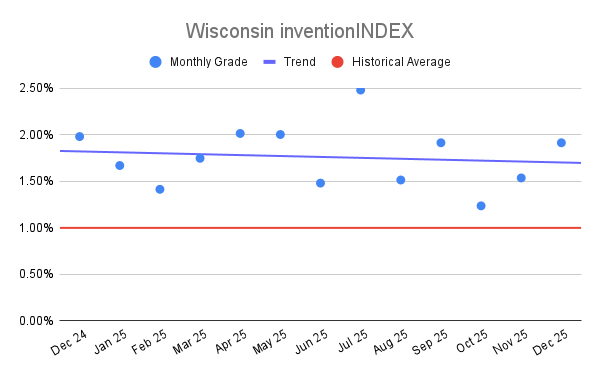 Wisconsin inventionINDEX December 2025
  Wisconsin inventionINDEX Novem
