

Answer Capsule: Wisconsin R&D Credit Base Period
Definition: The “three taxable years immediately preceding” serves as the mandatory look-back period for calculating the base amount (50% of average QREs) in the Wisconsin Research Expense Credit.
Key Statutory Rule: Wis. Stat. § 71.28(4)(ad)4.a. requires a consistent, rolling baseline of Wisconsin-sourced expenses.
Critical Adjustments:
- Short Years: Must be annualized to a 12-month equivalent.
- Acquisitions: Successor entities must inherit the predecessor’s research history (QREs).
- Consistency: Methodologies for tracking expenses in the current year must be retrospectively applied to the three preceding years.
The phrase three taxable years immediately preceding represents the three-year look-back period used to calculate a taxpayer’s average historical research spending, 50% of which serves as the base amount threshold for the Wisconsin research credit. In the current statutory framework, this period determines the incremental baseline that a claimant’s current-year qualified research expenses must exceed to trigger eligibility for the tax incentive.
The Evolution of the Temporal Baseline in Wisconsin Tax Law
The Wisconsin Research Expense Credit has undergone a significant architectural transformation since its inception in 1984, shifting from a complex calculation tied to historical gross receipts to a more streamlined incremental model based on the three taxable years immediately preceding the claim year. To understand the current meaning of this term, one must examine the legislative shift that occurred for taxable years beginning after December 31, 2014. Before this pivot, the “base amount” was often tethered to a fixed-base percentage derived from research conducted between 1984 and 1988, multiplied by average annual gross receipts. The modern interpretation, however, prioritizes the most recent three-year window to reflect a firm’s current research trajectory rather than its distant historical performance.
The current statutory language, found in Wisconsin Statutes Section 71.28(4)(ad)4.a., explicitly defines the credit as a percentage of the amount by which qualified research expenses (QREs) for the taxable year exceed 50% of the average QREs for the three taxable years immediately preceding. This shift was intended to align the state incentive with the federal Alternative Simplified Credit (ASC) logic, albeit with state-specific rates and sourcing requirements. The “three taxable years” requirement acts as a rolling baseline, ensuring that the tax benefit is only awarded for research activities that represent an expansion of the taxpayer’s Wisconsin-based innovation efforts.
Statutory Hierarchy and Definitions
The application of the three-year look-back period is governed by a tripartite statutory structure that addresses different classes of taxpayers. Section 71.07(4k) applies to individuals and fiduciaries, Section 71.28(4) governs corporations, and Section 71.47(4) dictates the credit for insurance companies. Despite the different sections, the definition of the “three taxable years immediately preceding” remains uniform across these provisions, emphasizing a consistent administrative approach by the Wisconsin Department of Revenue (DOR).
| Statute Section | Taxpayer Classification | Primary Credit Rate |
|---|---|---|
| § 71.07(4k) | Individuals, Partners, LLC Members | 5.75% |
| § 71.28(4) | C-Corporations | 5.75% |
| § 71.47(4) | Insurance Corporations | 5.75% |
The “taxable year” itself is defined by the taxpayer’s accounting period for federal income tax purposes. This means that for a calendar-year taxpayer, the “immediately preceding” years are the three completed 12-month cycles prior to the year of the claim. If a corporation is filing for the 2024 tax year, the base period is composed of the 2021, 2022, and 2023 taxable years. The continuity of these years is a strict requirement; the DOR does not allow for “cherry-picking” years of low research activity to artificially lower the base.
Local State Revenue Office Guidance and Administrative Interpretation
The Wisconsin Department of Revenue provides the primary interpretative guidance for the three-year look-back through Publication 131, “Tax Incentives for Conducting Qualified Research in Wisconsin,” and the annual instructions for Schedule R. These documents serve as the authoritative roadmap for how the “immediately preceding” years are quantified and reported.
The Mechanism of Calculation
According to Publication 131, the credit for increasing research activities is equal to 5.75% of the current year’s QREs that exceed 50% of the average QREs for the three taxable years immediately prior. The DOR instructions for Schedule R provide a step-by-step methodology for this calculation on Line 9, where taxpayers must enter the QREs for the first, second, and third preceding years.
The mathematical formula for the base amount is expressed as follows:
Base Amount = 0.50 × ((QRE n-1 + QRE n-2 + QRE n-3) / 3)
Where:
- QRE n-1 is the qualified research expense for the taxable year directly preceding the claim year.
- QRE n-2 is the expense for the second preceding year.
- QRE n-3 is the expense for the third preceding year.
If the claimant had no qualified research expenses in one or more of these three years, the DOR guidance shifts the taxpayer to a different calculation tier. In such cases, the claimant does not use the average-based calculation but instead claims a flat rate of 2.875% of the total qualified research expenses for the current taxable year. This “start-up” or “no-history” provision ensures that new businesses or those initiating research programs are not penalized by a lack of historical data, though they receive a lower percentage than the incremental rate applied to the excess.
Consistency and the Sourcing Rule
A paramount rule emphasized by the DOR is the requirement for consistency between the base period and the current year. Because the Wisconsin credit is only available for research conducted in this state, the “three taxable years immediately preceding” must only include expenses that were Wisconsin-sourced. Expenses incurred entirely outside Wisconsin cannot be allocated to the state, even if they were part of a federal research credit claim for those years.
If a taxpayer discovers that its method of identifying QREs was flawed in the base years, it must adjust the historical figures to match the current year’s methodology. This prevents taxpayers from claiming a credit that is the result of accounting changes rather than actual increases in research activity. For example, if a firm begins tracking research supplies more accurately in 2024, it must retrospectively apply that same tracking logic to 2021, 2022, and 2023 to ensure the 50% average is a true representation of the firm’s history.
| Calculation Component | Standard Incremental Method | No-History / Start-up Method |
|---|---|---|
| Look-back Requirement | Full 3-year Wisconsin QRE history | Missing 1 or more years of QRE data |
| Threshold | 50% of the 3-year average | No threshold (0 base) |
| Credit Rate | 5.75% of the excess | 2.875% of total current QREs |
Detailed Application to Business Reorganizations and Short Taxable Years
The meaning of “three taxable years immediately preceding” becomes particularly complex when a taxpayer’s corporate structure or accounting period changes. The DOR guidance explicitly incorporates federal rules under IRC Section 41(f)(3) to manage these transitions.
Short Taxable Years and Annualization
When a taxpayer has a taxable year of less than 12 months—often due to a change in fiscal year end or a mid-year merger—Wisconsin law requires that the QREs for that short year be annualized. The DOR instructions for Schedule R state that for any short taxable year, qualified research expenses must be annualized to represent a full 12-month equivalent.
The annualization process ensures that the “three taxable years” are comparable in duration. If a taxpayer had a six-month short year in 2022, they must essentially double the QREs from that period when calculating the three-year average for a 2024 claim. This prevents a short year from artificially depressing the three-year average and creating an unearned windfall in subsequent years.
Successor and Predecessor Adjustments
If a major portion of a trade or business is acquired or disposed of, adjustments must be made to the QREs for the three taxable years immediately preceding the transaction. Under successor rules, an acquiring company must “inherit” the Wisconsin research history of the acquired entity for the purposes of calculating the three-year average.
For example, if Company A acquires Company B in 2024, and both conducted research in Wisconsin, Company A’s 2024 credit calculation must include Company B’s QREs for 2021, 2022, and 2023 in its look-back period. This “acquisition adjustment” prevents companies from claiming a credit for an “increase” in research that was simply bought rather than generated organically. Conversely, if a company disposes of a research division, it must remove the QREs associated with that division from its base period years to reflect its current, smaller research footprint.
Sourcing and Qualification of Expenses within the Base Period
The integrity of the “three taxable years immediately preceding” depends entirely on the correct qualification of expenses during those look-back years. Wisconsin law adopts the federal definition of QREs from IRC Section 41(b), but with significant local limitations.
Wisconsin-Only Research Conducted
The most vital distinction is that the look-back must only include expenses for research “conducted in this state”. The DOR guidance in Publication 131 clarifies that expenses incurred entirely outside Wisconsin cannot be allocated to the state, even if they were for the benefit of Wisconsin-based research. If a firm has researchers in both Madison and Chicago, only the Madison-based wages and associated supplies for the 2021-2023 period are valid for the base period calculation.
The Exclusion of Government-Funded Research
Consistency also requires that “funded” research—research for which the taxpayer is reimbursed by a grant or contract—be excluded from both the current year and the base period. During the three taxable years immediately preceding, any expenses paid with forgivable Paycheck Protection Program (PPP) loan proceeds or other emergency grants must be backed out of the calculation. If a company improperly included PPP-funded wages in its 2021 or 2022 QREs, it would artificially inflate its three-year average, thereby reducing its 2024 credit.
| Expense Category | Sourcing Requirement | Base Period Treatment |
|---|---|---|
| Research Wages | Must be paid for services in WI | Included in 3-year average |
| Research Supplies | Must be used/consumed in WI | Included in 3-year average |
| Contract Research | 65% of amount for WI research | Included in 3-year average |
| Funded Research | N/A | Excluded from 3-year average |
Enhanced Credits and the Three-Year Look-back
Wisconsin provides enhanced credit rates for research related to internal combustion engines and certain energy-efficient products. These enhanced credits utilize the exact same “three taxable years immediately preceding” look-back mechanism, but they apply a higher rate to the incremental excess.
Internal Combustion Engines and Energy Efficiency
For research related to designing internal combustion engines for vehicles and energy-efficient products (such as lighting systems or automotive batteries for hybrid drives), the credit rate is 11.5% of the amount by which QREs exceed 50% of the three-year average. If a company lacks the three-year history for these specific activities, the “start-up” rate is 5.75%.
The DOR requires that if a company claims both the general research credit and an enhanced credit, it must file separate Schedule R forms for each. This implies that the company must maintain distinct “three taxable years immediately preceding” datasets—one for its general research expenses and one for its engine/energy-related expenses. This segregation of data is essential because the base period for general research may not overlap perfectly with the base period for specialized research.
Administrative Compliance and the Statute of Limitations
The determination of the “three taxable years immediately preceding” is often a point of contention during audits by the DOR Audit Bureau. The legal standing of these historical years is influenced by the statute of limitations for claiming credits versus the 15-year carryforward period.
The CA Lawton CO Precedent
In the significant Tax Appeals Commission case CA Lawton CO v. Wisconsin Department of Revenue, the dispute centered on whether a taxpayer could claim credits for years (2002-2006) that were beyond the 4-year statute of limitations for refunds. The Department argued that a research credit cannot be carried forward unless it is first “computed and claimed” on a return filed within 4 years of the original due date.
For the current calculation, this means that while a taxpayer must use the QREs from the three taxable years immediately preceding to establish a base, they cannot “resurrect” lost credits from those years to use as carryforwards if they were never originally reported. However, the expenses themselves must be accurately reported in the look-back calculation to ensure the current year’s credit is legally valid.
Audit Documentation Requirements
The DOR advises that taxpayers must maintain exhaustive records for the three taxable years immediately preceding any claim. This includes project notes, payroll registers, and supply invoices that prove the research met the IRC Section 41 four-part test during those historical years. If a firm claims a 2024 credit, a DOR auditor has the authority to examine the records from 2021, 2022, and 2023 to verify the base amount, even if those years are technically “closed” for further assessment of tax liability.
Integrated Example: Multistate Manufacturing Firm
To illustrate the application of these rules, consider the case of “Superior Systems Inc.,” a manufacturer of energy-efficient building controls with operations in Wisconsin and Illinois. The firm is calculating its 2024 Wisconsin research credit.
Step 1: Identify Wisconsin-Sourced QREs for the Base Period
Superior Systems must first isolate its Wisconsin-only QREs for the three taxable years immediately preceding 2024 (2021, 2022, and 2023).
| Year | Total QREs (All States) | Wisconsin-Sourced QREs | Notes |
|---|---|---|---|
| 2021 | $2,000,000 | $1,200,000 | Wisconsin facility research |
| 2022 | $2,500,000 | $1,300,000 | $100k of wages were PPP-funded |
| 2023 | $3,000,000 | $1,700,000 | Expanded Milwaukee lab |
| 2024 | $3,500,000 | $2,100,000 | Current Claim Year |
In 2022, the firm received a forgivable PPP loan. For the 2024 credit calculation, the DOR guidance requires the firm to reduce its 2022 Wisconsin QREs by the $100,000 in wages paid with those proceeds.
- 2021 Adjusted WI QRE: $1,200,000
- 2022 Adjusted WI QRE: $1,300,000 – $100,000 = $1,200,000
- 2023 Adjusted WI QRE: $1,700,000
Step 2: Calculate the 3-Year Average and Base Amount
The average is calculated using the adjusted Wisconsin-only figures:
Average QRE = ($1,200,000 + $1,200,000 + $1,700,000) / 3 = $1,366,667
The base amount is 50% of this average:
Base Amount = 0.50 × $1,366,667 = $683,334
Step 3: Compute the Credit for Increasing Research
The credit is applied to the excess of 2024 Wisconsin QREs over the base amount. Since the firm produces energy-efficient systems, it qualifies for the 11.5% rate.
Incremental Excess = $2,100,000 – $683,334 = $1,416,666
Credit Computed = $1,416,666 × 0.115 = $162,917
Step 4: Determine Refundability
For the 2024 tax year, up to 25% of the newly computed credit is refundable.
- Total Computed Credit: $162,917
- Company 2024 Tax Liability: $100,000
- Credit Used to Offset Tax: $100,000 (Tax liability reduced to $0)
- Remaining Credit: $162,917 – $100,000 = $62,917
- Maximum Refundable Limit (25% of total): $162,917 × 0.25 = $40,729
- Refundable Portion: The lesser of the remaining credit ($62,917) or the 25% limit ($40,729). The company receives a $40,729 refund.
- Carryforward: $62,917 – $40,729 = $22,188 is carried forward for 15 years.
Special Considerations for Combined Reporting Groups
For corporations that are part of a Wisconsin combined group, the meaning of “three taxable years immediately preceding” is refined by the requirements of Section 71.255, Wisconsin Statutes, and Administrative Code Tax 2.61.
Separate Entity Base Computation
In a combined group, each corporation must compute its own research credit based on its own “qualified research expenses” and its own historical three-year average. This is a “separate entity” approach to the base period. If Member X and Member Y are in a combined group, Member X’s 2024 credit is determined by Member X’s 2021-2023 research history, not the group’s aggregated history.
Sharing Rules and the Base Period
While the credit computation is separate, the “sharable” nature of nonrefundable credits allows members to use each other’s excess credits. However, a member can only share its nonrefundable research credits with the group if it was a member of that same combined group in the year the credit originated. The “three taxable years” calculation remains the bedrock upon which the sharable credit is built, ensuring that the group’s shared benefit is still rooted in individual member increases in research activity.
| Member | Current WI QRE | 3-Year Average | Base (50% of Avg) | Credit Computed |
|---|---|---|---|---|
| Member A | $500,000 | $400,000 | $200,000 | $17,250 |
| Member B | $200,000 | $600,000 | $300,000 | $0 |
| Group Total | $700,000 | N/A | N/A | $17,250 |
In the table above, Member B receives no credit because its 2024 research did not exceed 50% of its three-year average, even though the group’s total research might have increased. This highlights the importance of entity-level tracking within the three-year look-back.
Impact of Federal Non-Conformity (IRC 174)
A critical and ongoing challenge for Wisconsin taxpayers is the state’s non-conformity with recent federal changes to research expense treatment. Following the Tax Cuts and Jobs Act (TCJA), the federal government began requiring the capitalization and amortization of R&D expenses under IRC Section 174 starting in 2022.
Divergent Calculation Bases
Wisconsin has not adopted this capitalization requirement for the purposes of the research credit calculation. Consequently, the expenses used in the “three taxable years immediately preceding” and the current year must follow the pre-2022 federal rules, where expenses are fully deducted in the year incurred.
This creates a dual-tracking requirement for tax departments. For the 2024 Wisconsin credit, the firm must calculate its 2021, 2022, 2023, and 2024 expenses as if the federal amortization rules did not exist. This non-conformity ensures that the “three taxable years” look-back remains a true measure of cash-basis investment in Wisconsin-based innovation, rather than an accounting-basis amortization schedule.
Future Outlook and Legislative Trends
The role of the “three taxable years immediately preceding” continues to be central to Wisconsin’s economic development strategy. Legislative trends, such as the increase in the refundable portion from 10% to 25%, indicate a state government commitment to the R&D credit as a primary tool for talent attraction and long-term productivity.
The Move Toward Higher Refundability
By increasing the refundable portion, the state effectively lowers the barrier for high-growth firms that reinvest all profits into research and thus have little to no tax liability. For these firms, the precision of the three-year look-back is paramount, as a single error in the historical average can result in a significant loss of immediate cash flow through the refund mechanism.
Administrative Continuity
The DOR’s consistent referencing of the three-year period in Publication 131 and various Tax Bulletins suggests that the rolling average method (the 50% of 3-year QRE average) is a stable fixture of the Wisconsin tax code. While other states, like Illinois or Iowa, have different base period definitions (Illinois uses a 3-year QRE average without the 50% reduction; Iowa uses a complex fixed-base percentage), Wisconsin’s hybrid model offers a unique balance of accessibility for new firms and rewards for established ones.
Final Thoughts and Recommendations
The “three taxable years immediately preceding” are the fundamental building blocks of a valid Wisconsin research credit claim. This period defines the historical baseline that distinguishes between a firm’s routine operational research and the incremental innovation that the state seeks to incentivize. For professional practitioners and corporate tax departments, the management of this three-year window requires:
- Rigorous Wisconsin-specific sourcing of research expenses, excluding all out-of-state activity.
- Retrospective adjustments for business acquisitions or dispositions to ensure the base period reflects the current corporate structure.
- Careful annualization of any short taxable years to prevent base period distortion.
- The exclusion of government-funded expenses, such as PPP-funded wages, from both the current year and the look-back years.
- The maintenance of audit-ready documentation for the entire three-year period, recognizing that auditors have the authority to review these “closed” years to verify the current credit’s base amount.
As Wisconsin continues to expand the refundability of the research credit, the accuracy of the three-year look-back calculation will only grow in importance, serving as a critical determinant of a firm’s tax liability and its immediate liquidity through state refunds. Practitioners must remain vigilant in their adherence to DOR guidance, particularly as Wisconsin continues to decouple from federal amortization rules, ensuring that the “three taxable years immediately preceding” remain a robust and legally defensible baseline for Wisconsin innovation.
Who We Are:
Swanson Reed is one of the largest Specialist R&D Tax Credit advisory firm in the United States. With offices nationwide, we are one of the only firms globally to exclusively provide R&D Tax Credit consulting services to our clients. We have been exclusively providing R&D Tax Credit claim preparation and audit compliance solutions for over 30 years. Swanson Reed hosts daily free webinars and provides free IRS CE and CPE credits for CPAs.
Are you eligible?

Why choose us?

Pass an Audit?

What is the R&D Tax Credit?
The Research & Experimentation Tax Credit (or R&D Tax Credit), is a general business tax credit under Internal Revenue Code section 41 for companies that incur research and development (R&D) costs in the United States. The credits are a tax incentive for performing qualified research in the United States, resulting in a credit to a tax return. For the first three years of R&D claims, 6% of the total qualified research expenses (QRE) form the gross credit. In the 4th year of claims and beyond, a base amount is calculated, and an adjusted expense line is multiplied times 14%. Click here to learn more.
Never miss a deadline again

Stay up to date on IRS processes

Discover R&D in your industry

R&D Tax Credit Preparation Services
Swanson Reed is one of the only companies in the United States to exclusively focus on R&D tax credit preparation. Swanson Reed provides state and federal R&D tax credit preparation and audit services to all 50 states.
If you have any questions or need further assistance, please call or email our CEO, Damian Smyth on (800) 986-4725.
Feel free to book a quick teleconference with one of our national R&D tax credit specialists at a time that is convenient for you.
R&D Tax Credit Audit Advisory Services
creditARMOR is a sophisticated R&D tax credit insurance and AI-driven risk management platform. It mitigates audit exposure by covering defense expenses, including CPA, tax attorney, and specialist consultant fees—delivering robust, compliant support for R&D credit claims. Click here for more information about R&D tax credit management and implementation.
Our Fees
Swanson Reed offers R&D tax credit preparation and audit services at our hourly rates of between $195 – $395 per hour. We are also able offer fixed fees and success fees in special circumstances. Learn more at https://www.swansonreed.com/about-us/research-tax-credit-consulting/our-fees/



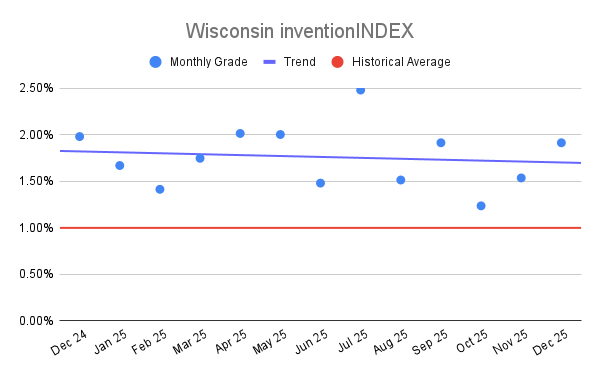 Wisconsin inventionINDEX December 2025
  Wisconsin inventionINDEX Novem
