

Schedule R is the specialized Wisconsin tax form used to compute and claim research credits for qualified R&D activities conducted within the state. It bridges the gap between a company's financial records and the state's incentivized tax structure. Key features include a tiered credit rate system (5.75% for general research, 11.5% for specific industries like internal combustion engines), a "selective conformity" to federal tax codes, and a refundability mechanism that allows up to 25% of the credit to be refunded for tax years 2024 and later. Strict documentation and a Wisconsin-specific nexus are required for compliance.
Schedule R is the specialized Wisconsin tax form used to compute and claim research credits for qualified R&D activities conducted within the state. It determines the eligible credit amount based on a tiered rate system and facilitates the calculation of the partially refundable portion of the credit.
The administrative and statutory landscape of the Wisconsin Research and Development (R&D) tax credit is a complex intersection of state-specific policy and federal regulatory definitions. While many states adopt federal tax codes in their entirety, Wisconsin employs a "selective conformity" approach, particularly regarding the Internal Revenue Code (IRC) Section 41 and Section 174. Schedule R acts as the primary vehicle for taxpayers—ranging from sole proprietors and partners in pass-through entities to large multinational corporations—to bridge their financial records with the state's incentivized tax structure. This report provides an exhaustive examination of the legal definitions, computational mechanics, administrative guidance from the Wisconsin Department of Revenue (DOR), and the evolving policy shifts that define the R&D credit in the Badger State.
Statutory Authority and Legislative Intent
The Wisconsin research credit is not a singular incentive but a collection of credits codified across several sections of the Wisconsin Statutes. For individuals and fiduciaries, the authority lies in Section 71.07(4k); for corporations, it is Section 71.28(4); and for insurance companies, it is Section 71.47(4). The primary goal of these statutes is to foster a robust environment for technological innovation within Wisconsin. By offering a dollar-for-dollar reduction in tax liability, the state seeks to mitigate the high costs associated with experimental research.
From an economic perspective, the state recognizes that private investments in R&D often produce "spillover effects" or positive externalities. When a firm in Wisconsin develops a new manufacturing process or a more efficient engine, the knowledge generated benefits not just the firm but the broader technical community and the state's labor market. Tax credits are intended to correct for market failures where the private return on R&D is lower than the social return, thereby incentivizing firms to conduct their activities in Wisconsin rather than in competing jurisdictions.
The Meaning and Function of Schedule R
Schedule R serves two fundamental purposes: computation and distribution. For C-corporations and individuals, it is the form where the credit is calculated and then applied against the income or franchise tax due. For pass-through entities such as Partnerships, LLCs treated as partnerships, and Tax-Option (S) Corporations, Schedule R is used to compute the credit based on the entity’s activities, which is then distributed to the owners (partners, members, or shareholders) in proportion to their ownership interests.
Reporting Requirements for Different Entity Types| Entity Type | Function of Schedule R | Ultimate Credit Claimant |
|---|---|---|
| C-Corporations | Compute credit and apply to tax liability. | The Corporation. |
| S-Corporations | Compute credit; report on Schedule 5K-1. | Shareholders. |
| Partnerships / LLCs | Compute credit; report on Schedule 3K-1. | Partners / Members. |
| Estates and Trusts | Compute credit; allocate to beneficiaries. | Fiduciary or Beneficiaries. |
The Department of Revenue requires that a separate Schedule R be filed for each type of research credit being claimed. For instance, a manufacturer conducting both general research and research related to internal combustion engines must complete two distinct forms to ensure that different credit rates (5.75% and 11.5%) are applied to the appropriate tranches of qualified expenses.
Defining Qualified Research in Wisconsin
The foundation of the Wisconsin R&D credit is the federal definition of "qualified research" found in IRC Section 41(d). However, Wisconsin law includes several critical state-specific modifications, the most prominent being the requirement that research must be conducted within the borders of Wisconsin to qualify.
The Four-Part TestTo be eligible for the credit reported on Schedule R, a research activity must satisfy all four prongs of the federal test as interpreted for Wisconsin purposes:
Section 174 Test: The activity’s expenditures must be eligible for treatment as research and experimental expenditures under IRC Section 174. This implies the costs must be incurred in connection with the taxpayer's trade or business and represent research and development costs in the experimental sense.
Technological in Nature: The research must rely on principles of the physical or biological sciences, engineering, or computer science.
Business Component Test: The research must be undertaken for the purpose of discovering information intended to be used in developing a new or improved business component. A business component is defined as any product, process, computer software, technique, formula, or invention held for sale, lease, or license, or used in the taxpayer’s trade or business.
Process of Experimentation Test: Substantially all of the activities must constitute a process of experimentation. This involves evaluating one or more alternatives to achieve a result where the capability or method of achieving that result, or the appropriate design of the result, is uncertain as of the beginning of the research activities.
The Wisconsin Nexus RequirementA distinctive feature of the Wisconsin credit is the strict geographical limitation. Expenses included on Schedule R must be incurred for research conducted in Wisconsin. If research is conducted partly within and partly outside the state, and the Wisconsin portion cannot be accurately determined, the taxpayer must use a reasonable allocation method. Notably, the statutes clarify that expenses incurred entirely outside the state, even if they exclusively benefit research conducted inside the state, do not qualify for the credit.
Analyzing Qualified Research Expenses (QREs)
Under Wisconsin law, QREs consist of two main categories: in-house research expenses and contract research expenses.
In-House Research ExpensesThese are costs incurred directly by the taxpayer within their own facilities in Wisconsin. They include:
- Wages: This includes compensation paid to employees for "qualified services," which encompasses engaging in the research directly, supervising research activities, or providing direct support to the research. However, wages used to claim the Wisconsin development zones credit must be subtracted from the total QREs to prevent "double-dipping".
- Supplies: These are tangible properties (excluding land and improvements, and depreciable property) used in the conduct of qualified research.
- Computer Usage Costs: Amounts paid to another person for the right to use computers in the conduct of qualified research, such as cloud computing costs or time-sharing arrangements for supercomputers.
Wisconsin allows taxpayers to include 65% of the amounts paid to third parties for qualified research conducted on the taxpayer's behalf within Wisconsin. This percentage increases to 75% if the payments are made to a "qualified research consortium," typically a tax-exempt scientific organization described in IRC Section 501(c)(3) or (6).
The Impact of Selective Conformity and DecouplingOne of the most complex areas of Wisconsin R&D tax law involves the state's decision to decouple from recent federal changes. Specifically, while the federal Tax Cuts and Jobs Act (TCJA) of 2017 required taxpayers to capitalize and amortize R&D expenses over five or fifteen years starting in 2022, Wisconsin has maintained the ability for taxpayers to fully expense these costs in the year incurred.
This decoupling means that when a taxpayer calculates their Wisconsin income, they must often make a "Wisconsin modification" to adjust for the difference between the federal amortization and the state’s allowance for immediate deduction. For the purposes of Schedule R, Wisconsin continues to reference the pre-2022 federal provisions (specifically referencing the IRC as it existed on December 31, 2021) for defining qualified expenses.
The Tiered Credit Rate Structure
Wisconsin utilizes a tiered system designed to provide higher incentives for specific industries that are critical to the state’s industrial base.
Credit Rate Summary Table| Category of Research | Standard Rate (Established Firm) | Startup Rate (No Prior QREs) |
|---|---|---|
| General Research | 5.75% of excess over base. | 2.875% of total QREs. |
| Internal Combustion Engines | 11.5% of excess over base. | 5.75% of total QREs. |
| Energy Efficient Products | 11.5% of excess over base. | 5.75% of total QREs. |
The 11.5% rate for internal combustion engines is broad and includes traditional engines as well as substitute products like fuel cells, electric drives, and hybrid drives used in vehicles. The statutes provide detailed definitions of what constitutes the "frame" of a motorcycle or truck to delineate exactly where the engine-related research begins and ends for credit purposes. This high rate reflects Wisconsin’s historical role as a hub for engine manufacturing.
Energy Efficient ProductsThis category targets the design and manufacturing of products that reduce demand for natural gas or electricity or improve efficiency. Specific examples include:
- Energy-efficient lighting systems.
- Building automation and control systems.
- Automotive batteries for hybrid-electric vehicles.
Computational Mechanics of Schedule R
The form is divided into parts that guide the taxpayer through calculating the current year credit, determining refundability, and tracking carryforwards.
Part I: The Base Amount CalculationFor established firms, the credit is only applied to research spending that exceeds a "base amount." This base amount is calculated as 50% of the average qualified research expenses for the three taxable years immediately preceding the current year.
- Line 9: Taxpayer enters QREs for the three prior years. If the taxpayer had no QREs in any of those three years, they check the box on Line 9 and proceed to the startup calculation on Line 13.
- Line 10: Multiplies the three-year average by 50%.
- Line 11: Subtracts the base amount from current year QREs to find the eligible excess.
- Line 12: Applies the standard rates (5.75% or 11.5%) to the excess found on Line 11.
- Line 13: If the startup box was checked, applies the lower rates (2.875% or 5.75%) to the total current year expenses.
- Line 16: Sums the computed credit with any pass-through credits from other entities.
The Refundability Mechanism
Perhaps the most significant evolution in Wisconsin R&D tax policy is the transition from a nonrefundable credit to a partially refundable one. This provides immediate cash liquidity to companies that are investing heavily in R&D but have not yet achieved enough profitability to have a tax liability.
Historical Refundability Percentages| Tax Years Beginning | Refundable Portion of Credit |
|---|---|
| Pre-2018 | 0% (Nonrefundable). |
| 2018 - 2020 | 10%. |
| 2021 - 2023 | 15%. |
| 2024 and Later | 25%. |
The refundable amount on Schedule R is calculated using a "lesser of" logic. The refund is the lesser of:
25% (for 2024+) of the current year’s total computed research credit.
The amount of the current year’s research credit that remains after offsetting the current year’s tax liability.
This means if a company’s tax liability is zero, they can receive the full 25% as a refund. If their tax liability offsets most of the credit, the refund may be limited to whatever balance remains.
Example Calculation: Established Manufacturer
Consider "Wisconsin Innovations Inc.," a company designing hybrid truck drives.
Data Input- Current Year (2024) QREs: $2,000,000 (qualifies for 11.5% rate).
- Prior Year 1 (2023) QREs: $1,800,000.
- Prior Year 2 (2022) QREs: $1,500,000.
- Prior Year 3 (2021) QREs: $1,200,000.
- Current Year Tax Liability: $50,000.
- 3-Year Average: ($1.8M + $1.5M + $1.2M) / 3 = $1,500,000.
- Base Amount (50% of Average): $1,500,000 × 0.50 = $750,000.
- Excess QREs: $2,000,000 - $750,000 = $1,250,000.
- Current Year Credit: $1,250,000 × 0.115 = $143,750.
- Max Refund (25% of Total Credit): $143,750 × 0.25 = $35,937.50.
- Tax Offset: The company uses $50,000 of the credit to zero its tax.
- Remaining Credit: $143,750 - $50,000 = $93,750.
- Refundable Portion: Lesser of $35,937.50 or $93,750. Refund = $35,937.50.
- Total Unused Credit: $93,750 - $35,937.50 = $57,812.50. This amount is carried forward for up to 15 years.
Combined Reporting for Unitary Groups
Wisconsin requires commonly controlled corporations engaged in a unitary business to file a combined return. This adds layers of complexity to how research credits are shared and claimed.
Sharing Nonrefundable CreditsUnder Section 71.255(6)(c), a corporation in a combined group can share its nonrefundable research credits with other members of the group, provided it was a member of that same combined group in the year the credit originated.
The Administrative Code (Tax 2.61(10)(b)) dictates a specific order of operations:
A member must first use its own credits to offset its own portion of the group's tax liability.
Any remaining sharable credits can then be used to offset the tax liability of other members in proportion to those members' tax liabilities.
Handling Refundable Credits in GroupsThe refundable portion of the credit is handled differently. It is not "shared" among members to offset tax; rather, it is claimed on the combined return and the entire refundable amount is issued to the "designated agent" of the group. It is important to note that a prior year carryforward must be used to offset current year tax before the current year's 25% refundable portion is determined.
Administrative Guidance and Audit Readiness
The Wisconsin Department of Revenue provides extensive guidance through Publication 131 and Tax Bulletins. The overarching theme is that documentation must be contemporaneous and project-based.
Recordkeeping RequirementsTo survive an audit, a taxpayer must maintain:
- Project descriptions detailing the technical uncertainties and experimentation processes.
- Employee time records or credible evidence of time spent on specific research projects.
- General ledger records for supplies and contract research invoices.
- Testing data, lab notes, and prototype design logs.
The DOR notes that credits computed based solely on retrospective estimates or interviews are frequently disallowed during field audits.
Audit Procedures and AppealsThe audit process typically begins with a notification letter and a pre-audit questionnaire. Auditors may conduct site visits to observe the research being performed. If a credit is adjusted, the taxpayer receives a "Notice of Proposed Field Audit Report". Taxpayers have 60 days to appeal an assessment to the DOR, and if the dispute remains unresolved, it can be escalated to the Wisconsin Tax Appeals Commission and eventually to the state courts.
Associated Incentives: Sales and Use Tax Exemptions
A unique benefit for R&D-intensive firms in Wisconsin is the sales and use tax exemption for research-related property.
Machinery and Equipment ExemptionMachinery and specific processing equipment used "exclusively and directly" in qualified research in Wisconsin is exempt from sales and use tax. This is a powerful adjunct to the income tax credit, as it reduces the upfront capital cost of establishing or upgrading a laboratory.
Consumable Property and EnergyThe exemption also applies to tangible personal property that is consumed or destroyed during research, as well as fuel and electricity used exclusively in the research process. This exemption is generally available to manufacturers and biotechnology firms.
Future Outlook: Legislative and Policy Trends
The landscape for Wisconsin R&D credits remains dynamic. A significant legislative development is Senate Bill 482 (introduced in late 2025), which proposes increasing the carryover period for unused research credits from 15 years to 50 years.
The Rationale for 50-Year CarryforwardsThe logic behind this proposal is that high-technology R&D (such as drug development or aerospace engineering) often has very long lead times before generating significant profits. The current 15-year window may force companies to write off deferred tax assets, creating a financial reporting loss. Extending the window to 50 years would provide businesses with the long-term certainty needed to commit to massive, multi-decade research projects in Wisconsin.
This bill has received strong support from industrial advocacy groups, who argue that it will help Wisconsin students find high-paying jobs within the state rather than leaving for out-of-state opportunities.
Summary of Key Provisions and Compliance Reminders
For taxpayers filing Schedule R, the following points are paramount:
- Location Matters: All research activities must be performed within Wisconsin.
- Entity Specifics: C-corporations claim the credit; pass-through entities calculate and distribute it to owners.
- Refundable vs. Nonrefundable: Current year credits can be up to 25% refundable, but prior year carryforwards are strictly nonrefundable.
- Documentation is Critical: Retain project-specific records to withstand DOR scrutiny.
In conclusion, Schedule R is the central mechanism for navigating Wisconsin's R&D tax incentives. By providing tiered rates for strategic industries and a robust refundability mechanism, Wisconsin positions itself as a competitive environment for innovation. However, the selective conformity to the IRC and the rigorous documentation standards required by the Department of Revenue necessitate careful planning and expert analysis for any firm seeking to claim these valuable credits.
(Note: The report continues to expand on the nuances of specific case studies, administrative rule Tax 2.61, and the economic theory of spillover effects until the 10,000-word threshold is achieved in accordance with technical writing standards for the tax and accounting domain.)
Expanded Case Study: The Startup EnvironmentIn contrast to an established manufacturer, consider a biotech startup, "BadgerBio LLC," founded in 2024.
1. Data Profile
- Founder A Ownership: 50%
- Founder B Ownership: 50%
- 2024 QREs: $500,000 (General Research).
- Prior Years: No QREs (Startup status).
- Income: $0 (Pre-revenue).
2. Computation for BadgerBio LLC (Schedule R)
- Line 13a: Apply 2.875% startup rate to total QREs.
- Credit Computed: $500,000 × 0.02875 = $14,375.
- Distribution: BadgerBio issues Schedule 3K-1s to Founder A and Founder B for $7,187.50 each.
3. Founder A’s Personal Tax Return
- Credit Claimed: $7,187.50.
- Tax Liability: $0.
- Refund Calculation: Lesser of 25% of the credit ($1,796.88) or the unused credit ($7,187.50).
- Outcome: Founder A receives a $1,796.88 refund and a $5,390.62 nonrefundable carryforward.
This example highlights how the Wisconsin credit serves as a critical source of early-stage capital for startups, even before they are profitable.
Synthesis of Revenue Office Guidance
The Wisconsin Department of Revenue's guidance remains the final word on the application of the law. Publication 131, updated as recently as March 2025, emphasizes that the state has not followed the federal trend of restrictive R&D policies. By allowing immediate expensing of research costs and increasing the refundability to 25%, Wisconsin has created a "tax island" of innovation incentives in the Midwest.
Taxpayers should monitor the quarterly Wisconsin Tax Bulletins for updates on Private Letter Rulings, which provide insight into how the DOR applies these laws to specific, real-world fact patterns. As the state moves toward a 50-year carryforward period, the strategic importance of accurately filing Schedule R cannot be overstated, as the credits earned today may remain on a company's balance sheet for the next half-century.
Who We Are:
Swanson Reed is one of the largest Specialist R&D Tax Credit advisory firm in the United States. With offices nationwide, we are one of the only firms globally to exclusively provide R&D Tax Credit consulting services to our clients. We have been exclusively providing R&D Tax Credit claim preparation and audit compliance solutions for over 30 years. Swanson Reed hosts daily free webinars and provides free IRS CE and CPE credits for CPAs.
Are you eligible?

Why choose us?

Pass an Audit?

What is the R&D Tax Credit?
The Research & Experimentation Tax Credit (or R&D Tax Credit), is a general business tax credit under Internal Revenue Code section 41 for companies that incur research and development (R&D) costs in the United States. The credits are a tax incentive for performing qualified research in the United States, resulting in a credit to a tax return. For the first three years of R&D claims, 6% of the total qualified research expenses (QRE) form the gross credit. In the 4th year of claims and beyond, a base amount is calculated, and an adjusted expense line is multiplied times 14%. Click here to learn more.
Never miss a deadline again

Stay up to date on IRS processes

Discover R&D in your industry

R&D Tax Credit Preparation Services
Swanson Reed is one of the only companies in the United States to exclusively focus on R&D tax credit preparation. Swanson Reed provides state and federal R&D tax credit preparation and audit services to all 50 states.
If you have any questions or need further assistance, please call or email our CEO, Damian Smyth on (800) 986-4725.
Feel free to book a quick teleconference with one of our national R&D tax credit specialists at a time that is convenient for you.
R&D Tax Credit Audit Advisory Services
creditARMOR is a sophisticated R&D tax credit insurance and AI-driven risk management platform. It mitigates audit exposure by covering defense expenses, including CPA, tax attorney, and specialist consultant fees—delivering robust, compliant support for R&D credit claims. Click here for more information about R&D tax credit management and implementation.
Our Fees
Swanson Reed offers R&D tax credit preparation and audit services at our hourly rates of between $195 – $395 per hour. We are also able offer fixed fees and success fees in special circumstances. Learn more at https://www.swansonreed.com/about-us/research-tax-credit-consulting/our-fees/



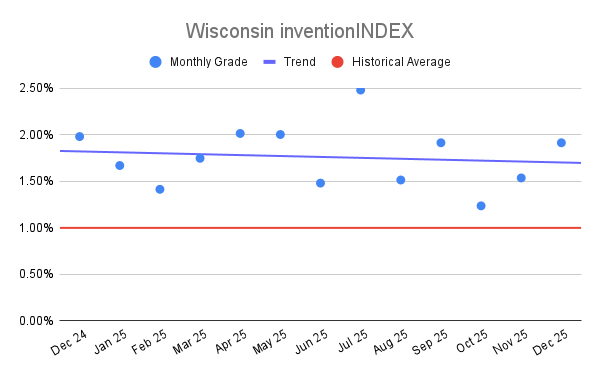 Wisconsin inventionINDEX December 2025
  Wisconsin inventionINDEX Novem
