

Quick Answer: Wisconsin R&D Tax Credit Overview
Wis. Stat. § 71.28(4) offers a corporate franchise and income tax credit for qualified research expenses incurred in Wisconsin. Key features include:
- Rates: Standard credit is 5.75% of incremental expenses. Enhanced rate is 11.5% for internal combustion engines and energy-efficient products.
- Refundability: Up to 25% of the credit is refundable for unused amounts (post-2023).
- IRC § 174 Decoupling: Wisconsin allows immediate expensing of R&D costs, rejecting the federal amortization requirement.
- Filing: Claimed via Schedule R; requires careful expense allocation for multi-state entities.
Wis. Stat. § 71.28(4) provides a corporate franchise and income tax credit for qualified research expenses incurred for activities conducted in Wisconsin, incentivizing incremental technological innovation. This statutory provision allows businesses to claim a percentage of their research spending above a historical base amount, with current law offering substantial refundability to support the state’s high-growth industries.
The Wisconsin research credit is a cornerstone of the state’s effort to foster a competitive environment for manufacturing, biotechnology, and energy innovation. By providing a direct offset against corporate franchise and income tax liabilities, the statute encourages firms to locate their research and development (R&D) facilities within the state’s borders. The provision is fundamentally structured to reward growth; the credit is calculated based on the increase in research expenditures over time, ensuring that tax benefits are directed toward expanding the state’s knowledge economy rather than merely subsidizing static operations.
The legal framework established by § 71.28(4) is complex, as it intricately weaves federal definitions from the Internal Revenue Code (IRC) with Wisconsin-specific modifications and geographic restrictions. For taxable years beginning after 2014, the credit rates were restructured to provide tiered incentives, with higher rates reserved for targeted sectors such as internal combustion engine design and energy-efficient product development. Furthermore, the administrative guidance provided by the Wisconsin Department of Revenue (DOR) through publications such as Publication 131 and the detailed instructions for Schedule R clarify the reporting obligations and the documentation standards required to withstand audit scrutiny.
Statutory Architecture and the Federal Nexus
The foundational definition of the Wisconsin research credit is established by referencing federal law, specifically Section 41 of the Internal Revenue Code. However, the state’s adoption of federal law is not absolute; it is “static” in nature, meaning it refers to the IRC as it existed on a specific date—currently December 31, 2021, for most research credit purposes. This static conformity is critical for tax professionals because it protects the Wisconsin credit from certain federal changes, such as the recent requirement under the federal Tax Cuts and Jobs Act (TCJA) to capitalize research expenses under IRC Section 174.
Under § 71.28(4), “qualified research” must meet the federal “four-part test.” This involves showing that the research expenditures are eligible under Section 174, the research is conducted to discover information that is technological in nature, the application of that information is intended for use in developing a new or improved business component, and substantially all of the activities constitute a process of experimentation. While federal law allows these credits for research anywhere in the United States, Wisconsin Stat. § 71.28(4)(ad)4.b. strictly limits “qualified research expenses” to those incurred by the claimant for research conducted within the state of Wisconsin.
| Feature | Federal IRC § 41 | Wisconsin Stat. § 71.28(4) |
|---|---|---|
| Geographic Scope | United States and U.S. Territories | Wisconsin Only |
| IRC Conformity Date | Current/Rolling | Static (12/31/2021) |
| Expense Treatment | Capitalize/Amortize (Post-2021) | Immediate Expensing Allowed |
| Standard Rate | 20% (Traditional) or 14% (ASC) | 5.75% (of Incremental Amount) |
| Enhanced Rate | None | 11.5% (Engines/Energy) |
This divergence in geographic scope requires meticulous accounting. For a corporation with a multi-state footprint, the DOR guidance specifies that if expenses are incurred both inside and outside the state and cannot be accurately determined, a reasonable allocation method must be used. However, expenses incurred entirely outside Wisconsin, even if for the benefit of research performed within the state, are explicitly excluded from the calculation.
Tiered Incentives and Industry Specialization
The Wisconsin legislature has identified specific industrial sectors as being of vital importance to the state’s long-term economic stability, leading to a tiered credit system under § 71.28(4)(ad). The standard credit for “increasing research activities” is set at 5.75% of the excess of current-year Wisconsin qualified research expenses over a base amount. However, the state doubles this incentive to 11.5% for two specific categories: internal combustion engine design and energy-efficient product development.
The “internal combustion engine” credit under § 71.28(4)(ad)5. is remarkably forward-looking. The statutory definition under § 71.28(4)(ab)2. explicitly includes “substitute products” such as fuel cells, electric drives, and hybrid drives. This technological neutrality allows Wisconsin’s robust engine-manufacturing sector to pivot toward green technologies without losing access to research incentives. The definition of “vehicle” in this context is equally broad, encompassing trucks, tractors, motorcycles, snowmobiles, all-terrain vehicles, boats, generators, and even construction or lawn maintenance equipment.
Similarly, the credit for energy-efficient products targets the design and manufacturing of lighting systems, building automation and control systems, and automotive batteries for hybrid vehicles that improve the efficiency of electricity or natural gas use. These specialized credits are not just for the final product but extend to the “frame” and component technologies. For instance, a motorcycle frame is defined as every part except the tires, and a truck frame includes the control system and drive train but excludes comfort features in the cab. By defining these boundaries, the statute ensures that research into core performance and efficiency—rather than aesthetic or luxury upgrades—receives the high-tier 11.5% incentive.
Calculation Mechanics and the Base Amount Hurdle
The Wisconsin research credit is inherently incremental, meaning it measures the current year’s R&D efforts against a historical benchmark. For established corporations, the “base amount” is defined as 50% of the average Wisconsin qualified research expenses for the three taxable years immediately preceding the year for which the credit is claimed. This formula provides a “floating” hurdle; if a company’s research spending is stagnant, the 50% average will eventually limit the credit’s value, whereas rapid increases in spending yield significant tax savings.
For companies that are in their infancy or are beginning research activities for the first time, § 71.28(4)(ad) provides a specialized “startup” rate. If a corporation had no qualified research expenses in any of the three preceding years, it may claim a credit equal to 2.875% of its total current-year Wisconsin qualified research expenses. For those in the high-tier sectors (engines and energy), the startup rate is increased to 5.75%. This simplified calculation removes the “incremental” requirement for the first few years of operation, providing critical cash flow for new ventures before they have established a spending history.
| Entity Status | General Research Rate | Enhanced Sector Rate |
|---|---|---|
| Standard (3-year history) | 5.75% of excess over base | 11.5% of excess over base |
| Startup (No 3-year history) | 2.875% of total QREs | 5.75% of total QREs |
The Department of Revenue requires that each type of research credit be computed on a separate Schedule R. If a corporation engages in both general software development and internal combustion engine design, it must isolate those expenses and file two distinct schedules to apply the 5.75% and 11.5% rates correctly. Furthermore, for combined group members, adjustments must be made if a major portion of a trade or business is acquired or disposed of, as these changes necessitate recalculating the base amount to ensure an “apples-to-apples” comparison between current and historical periods.
Administrative Guidance: Eligible Expenses and Reporting
The Wisconsin Department of Revenue provides granular detail on what constitutes an “eligible expense” through Publication 131 and the Schedule R instructions. These expenses are categorized into three primary buckets: wages, supplies, and contract research costs.
Qualified wages are defined by referencing IRC Section 3401(a) and generally include the amount reported on the employee’s federal Form W-2. To qualify, the wages must be paid for the actual conduct of qualified research, the direct supervision of research (first-line management), or the direct support of research (such as a laboratory assistant or a machinist building a prototype). Wisconsin specifically notes that wages used to compute the federal Work Opportunity Tax Credit can still be used for the Wisconsin research credit, but wages used for the Wisconsin Development Zones credit must be excluded to prevent a double state benefit.
Supplies include tangible property that is not land, improvements to land, or depreciable property. This often encompasses chemicals, prototype materials, and electricity or fuel consumed directly in the research process. Contract research expenses—those paid to third parties for research performed on the corporation’s behalf—are generally limited to 65% of the actual amount paid. However, a higher rate of 75% applies if the payment is made to a qualified research consortium, defined as a tax-exempt organization that is organized primarily to conduct scientific research.
One of the more unique administrative requirements in Wisconsin is that the research credit is considered “income” for state tax purposes. The amount of credit computed on Schedule R must be reported as an addition to federal income on the Wisconsin franchise or income tax return in the year it is computed. This ensures that the corporation does not receive a “double dip” by both deducting the full expense and receiving a tax credit without reflecting the credit’s value in its taxable income base.
The Refundability Evolution and immediate Liquidity
Perhaps the most dramatic shift in Wisconsin’s R&D tax policy over the last decade has been the introduction of refundability. Historically, research credits were non-refundable carryforwards, providing no value to companies without a current-year tax liability. Recognizing that many innovation-heavy firms, particularly in biotechnology, operate at a loss for years, the legislature introduced a mechanism to convert a portion of the credit into a cash refund.
The refundable portion of the credit has increased through several legislative acts:
- For tax years beginning after December 31, 2017, the refundable portion was 10%.
- For tax years beginning on or after January 1, 2021, the refundable portion increased to 15%.
- For tax years beginning after December 31, 2023, the refundable portion was further increased to 25% by Wisconsin Act 19.
The calculation of the refund is a multi-step process. First, the corporation must use the current-year research credit to offset its own tax liability. If any credit remains, the refundable amount is the lesser of 25% of the total current-year credit or the remaining unused current-year credit.
| Tax Year Start Date | Refundable Percentage |
|---|---|
| After 12/31/2017 | 10% |
| After 1/1/2021 | 15% |
| After 12/31/2023 | 25% |
Unused portions of the credit that are not refunded can be carried forward for up to 15 years. However, the DOR explicitly clarifies that a prior-year research credit carryforward cannot be used to compute a refund in the current year; only the credit earned in the current year is “eligible” for the 25% refundable calculation. This highlights the importance of the DOR’s “ordering rules,” which require that prior-year non-refundable carryforwards be used to offset current-year tax liability before the current-year credit is applied, thereby maximizing the amount of current-year credit available for a potential refund.
Decoupling from IRC Section 174 and State-Specific Modifications
In recent years, the divergence between federal and Wisconsin tax treatment of research expenditures has become a primary concern for corporate filers. The federal Tax Cuts and Jobs Act of 2017 amended IRC Section 174 to require that research and experimental expenditures be capitalized and amortized over five years (domestic) or 15 years (foreign) starting in 2022.
Wisconsin, however, has specifically decoupled from this provision. Because Wisconsin generally follows the IRC in effect on December 31, 2021, for these purposes, the state continues to allow the full, immediate expensing of research and experimentation costs. This decoupling results in a “Wisconsin modification” where the taxpayer must adjust their federal starting income to reflect the state-level deduction.
Specifically, when a corporation files its Wisconsin return, it must:
- Subtract from federal income the amount of Section 174 research expenses that were capitalized for federal purposes.
- Add back to federal income the amount of Section 174 amortization that was deducted on the federal return.
This treatment is highly advantageous for corporations with significant R&D spending in Wisconsin, as it provides an immediate 100% deduction against state income, whereas the federal deduction is spread over several years. This cash-flow advantage, combined with the 25% refundable credit, makes Wisconsin an exceptionally competitive environment for research-intensive industries compared to “rolling conformity” states that adopted the federal capitalization requirement.
Combined Reporting and Credit Sharing Rules
For corporations operating as part of a combined group, Wis. Admin. Code § Tax 2.61(10) establishes specific rules for how research credits may be utilized across the group. While credits are generally considered an attribute of the separate corporation that generated the expenses, Wisconsin law allows for the sharing of “sharable” non-refundable research credits among combined group members.
The sharing mechanism works as follows: a combined group member must first use its research credits (including carryforwards) against its own tax liability, including liability attributable to separate entity items and its share of the combined unitary income. If a credit remains, the member may elect to share the “sharable” amount with other group members. Generally, a credit is “sharable” only if the corporation was a member of the same combined group in the year the credit originated.
Importantly, the refundable portion of the research credit is not sharable. Each member of a combined group reports its own refundable tax credits on the combined return, and those credits are refunded to the group’s “designated agent” for the benefit of the specific member that earned them. If a member has both sharable (non-refundable) and non-sharable (refundable) credits and uses a portion against its own tax, the credits are applied on a pro-rata basis from both amounts.
| Sharing Category | Treatment under Tax 2.61(10) |
|---|---|
| Non-Refundable (Current Year) | Sharable with group if member during origin year |
| Non-Refundable (Carryforward) | Sharable with group if member during origin year |
| Refundable Portion | Not Sharable; refunded to designated agent |
| Pre-2009 Carryforwards | Sharable if unitary business relationship existed |
Pass-Through Entities and Flow-Through Mechanics
While § 71.28(4) is located in the corporate tax section, its impact extends to individuals, partners, and S-corporation shareholders. Partnerships, LLCs treated as partnerships, and tax-option (S) corporations cannot claim the research credit to offset their own tax liability; however, they are responsible for the initial computation of the credit.
The pass-through entity computes the research credit at the entity level based on the Wisconsin research activities it conducts. Once the total credit is determined on Schedule R, the entity must provide information to each partner, member, or shareholder regarding their proportionate share of the credit, typically via Schedule 3K-1 or 5K-1. The individual owners then claim the credit on their own Wisconsin income tax returns.
The refundable provisions apply to individual claimants just as they do to corporations. For an individual partner in a research-intensive firm, this means that even if they have no personal tax liability, they can receive a refund for up to 25% of their allocated current-year R&D credit. This flow-through mechanism is a vital tool for attracting individual investors and talent to Wisconsin’s startup ecosystem.
Practical Compliance: A Detailed Scenario
To understand the practical application of these rules, consider the 2024 tax filing for “Lakeside Propulsion Technologies, Inc.,” a Wisconsin C-corporation specializing in hybrid drone engines. Drones are defined as “vehicles” under the statute, and their propulsion systems qualify as “internal combustion engines” because they involve electric and fuel cell drives.
Step 1: Data Gathering for 2024
Lakeside incurs the following expenses in 2024:
- Wisconsin Research Wages: $2,000,000 (W-2 wages for engineers in Madison).
- Research Supplies: $500,000 (materials for prototype builds).
- Contract Research: $300,000 (paid to a Wisconsin-based testing lab).
- Excluded Items: $100,000 (wages used for a separate Development Zone credit).
Total Wisconsin QREs = $2,000,000 + $500,000 + ($300,000 × 0.65) – $100,000 = $2,595,000.
Step 2: Historical Base Computation
Lakeside’s Wisconsin QREs for the prior three years were:
- 2021: $1,800,000
- 2022: $2,000,000
- 2023: $2,200,000
Average = (1,800,000 + 2,000,000 + 2,200,000) / 3 = $2,000,000.
Base Amount = $2,000,000 × 0.50 = $1,000,000.
Step 3: Tiered Credit Calculation
Eligible Wisconsin QREs = $2,595,000 – $1,000,000 = $1,595,000.
Because this is research related to internal combustion engines (including hybrid/electric drives), the 11.5% rate applies.
Current Year Credit = $1,595,000 × 0.115 = $183,425.
Step 4: Refundability and Carryforward
Lakeside has a 2024 Wisconsin tax liability of $40,000 and zero prior-year carryforwards.
- Offset Tax: Lakeside uses $40,000 of its $183,425 credit to eliminate its current-year tax.
- Calculate Refundable Limit: Maximum refund = $183,425 × 0.25 = $45,856.
- Determine Actual Refund: Remaining current year credit = $183,425 – $40,000 = $143,425. The refund is the lesser of the remaining credit or the 25% cap, which is $45,856.
- Final Carryforward: The remaining non-refundable balance of $97,569 ($143,425 – $45,856) is carried forward to offset future Wisconsin taxes for 15 years.
Additionally, Lakeside must report the full $183,425 as an addition to its federal income on its Wisconsin tax return. For Section 174 purposes, if Lakeside capitalized $2,000,000 of these expenses federally, it would subtract $2,000,000 from its Wisconsin starting income and add back any 2024 federal amortization of those same costs.
Legal Challenges and Interpretive Disputes
The application of § 71.28(4) is not without conflict, and several notable cases before the Wisconsin Tax Appeals Commission (TAC) illustrate the boundaries of the law. In Skechers USA, Inc. v. Wisconsin Department of Revenue, although the case primarily concerned royalty deductions, the Commission’s focus on “economic substance” and “valid business purpose” informs how the DOR views R&D activity. The Commission upheld the disallowance of deductions where intercompany transactions were deemed “sham transactions” primarily for tax avoidance. For R&D credits, this underscores the necessity of proving that the research activity is fundamentally integrated into the claimant’s trade or business and is not merely an accounting construct to capture credits.
Another critical case is General Mills, Inc. v. Wisconsin Department of Revenue, which addressed the procedural hurdles of claiming credits after an audit has concluded. The Commission ruled that a taxpayer cannot file a refund claim for a credit (in that case, the manufacturing credit, though the logic applies to research credits) when that credit was not raised during the original return or the field audit, if the statute of limitations has expired. This highlights the importance of claiming the research credit on a timely filed original return or through a valid amended return within the four-year window provided by § 71.28(4)(c).
Future Outlook: Legislative Proposals and Economic Impact
The future of the Wisconsin research credit appears robust, with legislative efforts focusing on further expanding the incentive’s reach. One notable proposal, Senate Bill 482, seeks to increase the carryforward period for unused research credits from 15 years to 50 years. This proposal is designed to provide greater flexibility for businesses in long-cycle industries—such as pharmaceutical development or heavy industrial manufacturing—where the time from research to commercial profitability often exceeds 15 years.
Additionally, the continued growth in the total amount of research credits claimed reflects the success of the 2018 refundability pivot. According to Legislative Fiscal Bureau reports, research credit claims (including engine and energy research) grew significantly, from $129.8 million in 2009 to over $600.5 million in 2018—a 363% increase over nine years. This growth demonstrates that Wisconsin’s policy of layering tiered rates, refundability, and federal decoupling has successfully attracted research investment.
In summary, Wis. Stat. § 71.28(4) creates a sophisticated tax environment that prioritizes local technological advancement. By understanding the intricate rules surrounding IRC conformity, industry-specific enhanced rates, and the evolving 25% refundability mechanism, corporations can effectively manage their tax burden and secure immediate liquidity for their innovation projects. The state’s administrative framework, led by the DOR, demands rigorous documentation and precise allocation, but for corporations that comply, the Wisconsin research credit remains one of the most powerful economic development tools in the Midwestern United States.
Who We Are:
Swanson Reed is one of the largest Specialist R&D Tax Credit advisory firm in the United States. With offices nationwide, we are one of the only firms globally to exclusively provide R&D Tax Credit consulting services to our clients. We have been exclusively providing R&D Tax Credit claim preparation and audit compliance solutions for over 30 years. Swanson Reed hosts daily free webinars and provides free IRS CE and CPE credits for CPAs.
Are you eligible?

Why choose us?

Pass an Audit?

What is the R&D Tax Credit?
The Research & Experimentation Tax Credit (or R&D Tax Credit), is a general business tax credit under Internal Revenue Code section 41 for companies that incur research and development (R&D) costs in the United States. The credits are a tax incentive for performing qualified research in the United States, resulting in a credit to a tax return. For the first three years of R&D claims, 6% of the total qualified research expenses (QRE) form the gross credit. In the 4th year of claims and beyond, a base amount is calculated, and an adjusted expense line is multiplied times 14%. Click here to learn more.
Never miss a deadline again

Stay up to date on IRS processes

Discover R&D in your industry

R&D Tax Credit Preparation Services
Swanson Reed is one of the only companies in the United States to exclusively focus on R&D tax credit preparation. Swanson Reed provides state and federal R&D tax credit preparation and audit services to all 50 states.
If you have any questions or need further assistance, please call or email our CEO, Damian Smyth on (800) 986-4725.
Feel free to book a quick teleconference with one of our national R&D tax credit specialists at a time that is convenient for you.
R&D Tax Credit Audit Advisory Services
creditARMOR is a sophisticated R&D tax credit insurance and AI-driven risk management platform. It mitigates audit exposure by covering defense expenses, including CPA, tax attorney, and specialist consultant fees—delivering robust, compliant support for R&D credit claims. Click here for more information about R&D tax credit management and implementation.
Our Fees
Swanson Reed offers R&D tax credit preparation and audit services at our hourly rates of between $195 – $395 per hour. We are also able offer fixed fees and success fees in special circumstances. Learn more at https://www.swansonreed.com/about-us/research-tax-credit-consulting/our-fees/



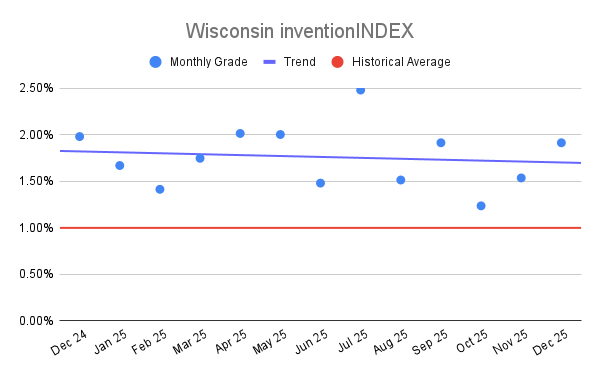 Wisconsin inventionINDEX December 2025
  Wisconsin inventionINDEX Novem
