

The Wisconsin Internal Combustion Engine Research Credit provides an enhanced 11.5% tax credit on qualified research expenses (QREs) that exceed 50% of the taxpayer’s average expenses from the prior three years. Unlike the standard credit, this incentive targets engine manufacturing, power generation, and automotive engineering. Crucially, the statutory definition of “internal combustion engine” is broad, explicitly including hybrid drives, electric drives, and fuel cells. The credit is refundable up to 25% for eligible claims, offering significant cash flow benefits for manufacturers and innovators in the state.
The Wisconsin research credit for internal combustion engines provides an 11.5% tax credit on qualified research expenses that exceed 50% of the taxpayer’s average expenses from the previous three years. For entities with no prior research history, the credit is calculated at a reduced rate of 5.75% of the total current year qualified expenses.
This specialized credit rate represents a significant departure from the standard Wisconsin research expense credit, which is generally set at 5.75% for established businesses and 2.875% for startups. By doubling the available credit percentage, the Wisconsin legislature has signaled a profound commitment to the state’s historical and future industrial base, particularly within the sectors of engine manufacturing, power generation, and automotive engineering. This “super credit” is not merely an across-the-board incentive for all research but is a targeted fiscal tool designed to reduce the after-tax cost of innovation for a very specific set of technological challenges: the design and production of internal combustion engines and their modern technological equivalents, such as fuel cells and electric drives.
Statutory Foundations and Regulatory Framework
The architecture of the Wisconsin Research Credit is built upon a complex interplay between state statutes and federal tax law. While the credit finds its administrative home in the guidance provided by the Wisconsin Department of Revenue (DOR), its legal authority is derived from Wisconsin Statutes §§ 71.07(4k), 71.28(4), and 71.47(4). These sections cater to different taxpayer categories—individuals and pass-through entities, corporations, and insurance companies, respectively—yet they maintain a consistent logic regarding the 11.5% enhanced rate.
The Role of Internal Revenue Code Section 41
Wisconsin law explicitly hitches its definition of “qualified research” to the federal standards established under Section 41 of the Internal Revenue Code (IRC). This means that for any expense to be eligible for the 11.5% credit, it must first pass the federal “Four-Part Test.” This test requires that the research be undertaken for a permitted purpose (improving a business component’s function, performance, or reliability), involve the elimination of technical uncertainty, be technological in nature, and follow a systematic process of experimentation.
However, Wisconsin has chosen to “decouple” from certain federal changes to maintain a more taxpayer-friendly environment for researchers. For instance, while the federal Tax Cuts and Jobs Act (TCJA) of 2017 eventually required companies to capitalize and amortize R&D expenses over five years under IRC Section 174, Wisconsin continues to allow the full expensing of these costs in the year they are incurred for state tax purposes. This decoupling is a critical component of the state’s value proposition, as it preserves immediate cash flow for manufacturers engaged in the capital-intensive work of engine design.
Defining the “Internal Combustion Engine” for Tax Purposes
A pivotal aspect of the 11.5% credit is the expansive statutory definition of what constitutes an “internal combustion engine.” Under Wis. Stat. § 71.07(4k)(a)2., the term is not limited to traditional gasoline or diesel piston engines. The statute explicitly includes “substitute products such as fuel cell, electric, and hybrid drives”. This inclusive language allows the state to support the transition from fossil fuels to sustainable propulsion without requiring frequent legislative updates.
| Statutory Term | Included Components and Technologies | Source Citation |
|---|---|---|
| Internal Combustion Engine | Traditional engines, fuel cells, electric drives, hybrid drives | 6 |
| Vehicle | Frames, parts, accessories, and component technologies | 6 |
| Generator Components | Control modules, fuel trains, scrubbing processes, fuel mixers, heat exchangers | 6 |
| Motorcycle Frame | Every part of the motorcycle except the tires | 6 |
The definition of a “vehicle” is equally broad, encompassing any frame in which or on which an engine is mounted for use in either mobile or stationary applications. This means that research on stationary generators used for backup power at industrial sites is eligible for the 11.5% rate just as much as research on heavy-duty truck engines.
Mechanics of the 11.5% Credit Calculation
The Wisconsin credit is primarily an incremental incentive. It does not reward the total amount spent on research, but rather the “excess” spending over a historical baseline. This ensures that the state’s tax dollars are being used to incentivize additional research activity rather than simply subsidizing existing operations.
The Standard Incremental Formula
For an established business with a history of research spending in Wisconsin, the calculation involves four distinct steps. First, the taxpayer must identify their total Wisconsin Qualified Research Expenses (QREs) for the three taxable years immediately preceding the current year. These three years are averaged. Second, the “base amount” is calculated by taking 50% of that three-year average. Third, the “excess QREs” are determined by subtracting this base amount from the current year’s Wisconsin QREs. Finally, the 11.5% rate is applied to those excess QREs.
In a formal mathematical notation, the credit (C) for a given year (y) is expressed as:
$$C\_y = 0.115 \times \left( QRE\_y – \left( 0.50 \times \frac{QRE\_{y-1} + QRE\_{y-2} + QRE\_{y-3}}{3} \right) \right)$$
This formula reveals a powerful incentive: for every dollar of research spending above the 50% threshold of the three-year average, the company receives an 11.5-cent credit against its Wisconsin tax liability. Because the base is only 50% of the average, even a company with flat spending year-over-year will still generate a significant credit.
The Startup Provision
Wisconsin provides a secondary calculation for “startups” or companies that did not have QREs in any of the three preceding years. In these instances, the incremental formula cannot be applied because the average would be zero. To ensure these new innovators still receive a benefit, the law allows them to claim 5.75% of their total current year QREs. This rate is exactly half of the enhanced rate, reflecting the lack of a “base amount” hurdle.
Qualified Research Expenses in the Engine Context
To properly populate the calculation, a firm must identify all eligible QREs. Following IRC Section 41, these expenses generally fall into three internal buckets and one external bucket:
- Wages: This includes salaries and bonuses paid to employees for “qualified services,” which includes not just the scientists and engineers designing the engine, but also those in direct supervision or direct support of the research.
- Supplies: These are tangible items used in the research process, such as prototype parts, fuel for test runs, and materials used in the construction of experimental models. Land and depreciable property are excluded.
- Computer Costs: Amounts paid for the right to use or share computers for research purposes, which is increasingly relevant in an era of advanced computational fluid dynamics (CFD) and engine simulation.
- Contract Research: 65% of the amounts paid to third-party consultants or testing labs for research conducted in Wisconsin on behalf of the taxpayer. This percentage increases to 75% for payments made to qualified research consortia.
A strict requirement for all these expenses is the “Wisconsin Nexus.” Any activity conducted outside the borders of the state, such as engine testing in a facility in Michigan or software development by a remote team in California, is ineligible for the Wisconsin credit, regardless of where the company is headquartered.
Department of Revenue Guidance and Administrative Practice
The Wisconsin Department of Revenue (DOR) manages the research credit through various publications, most notably Publication 131. This guidance clarifies that the 11.5% rate is not just a different line on a tax form; it requires distinct administrative handling to prevent the dilution of the incentive.
The Multi-Schedule R Requirement
A critical piece of guidance for taxpayers is the “separate schedule” rule. If a company performs both general R&D and research related to internal combustion engines, it cannot combine these on a single Schedule R. The DOR requires a separate Schedule R for each “type” of research credit being claimed.
This requirement serves an audit function. By forcing the segregation of expenses onto different forms, the DOR makes it easier to verify that the 11.5% rate is only applied to the activities that meet the statutory definition of engine or vehicle design. If a manufacturer of both engines and general industrial equipment were to mix their expenses, they would likely face a significant adjustment during a state audit.
Refundability: A Paradigm Shift in Cash Flow
Perhaps the most dramatic evolution in Wisconsin’s R&D tax policy is the shift toward refundability. For many years, the credit was entirely non-refundable, meaning it could only be used to reduce tax liability. This limited the value of the credit for pre-revenue startups or established companies during cyclical downturns.
Starting with tax years beginning after December 31, 2017, the state began allowing a portion of the credit to be refunded. The percentage of refundability has increased steadily through legislative action.
| Tax Years Beginning After | Refundable Percentage of Current Credit | Source |
|---|---|---|
| December 31, 2017 | 10% | 7 |
| December 31, 2020 | 15% | 2 |
| December 31, 2023 | 25% | 2 |
The calculation for the refund is specific: it is the lesser of 25% of the total credit generated in the current year, or the amount of the current year’s credit that remains after all tax liability has been offset. Any portion of the credit that is neither used nor refunded can be carried forward for 15 years to offset future Wisconsin tax liability. Importantly, prior year carryforwards do not factor into the refund calculation; only the credit earned in the “new” tax year is eligible for the cash refund.
Application to Pass-Through Entities and Combined Groups
Wisconsin’s industrial landscape is populated not only by large C-corporations but also by significant numbers of S-corporations and Limited Liability Companies (LLCs). The tax code provides specific mechanisms for these entities to utilize the 11.5% credit.
The Flow-Through Mechanism
Partnerships, LLCs treated as partnerships, and tax-option (S) corporations are generally not taxpayers themselves at the entity level. However, they are the entities that conduct the research and incur the QREs. These entities compute the 11.5% credit on Schedule R just as a C-corporation would, but the resulting credit amount is then “passed through” to the individual partners, members, or shareholders.
These individuals then claim their proportionate share of the credit on their own Wisconsin income tax returns. This structure ensures that the incentive reaches the ultimate owners of the business, providing them with the capital necessary to reinvest in further engine research.
Combined Reporting and Credit Sharing
For larger corporate groups that file a combined Wisconsin return, the rules regarding the 11.5% credit are more nuanced. Generally, research credits are considered an attribute of the specific legal entity that performed the research, rather than the combined group as a whole. However, Wisconsin Stat. § 71.255(6)(c) allows for the sharing of non-refundable research credits among members of the same combined group.
A corporation must first use its research credit to offset its own share of the group’s tax liability. If a surplus remains, it may share that non-refundable credit with other members on a proportionate basis, provided those members were part of the same unitary group in the year the credit was originally generated. Crucially, the refundable portion of the credit cannot be shared in this manner; it must be claimed on the combined return and refunded directly to the “designated agent” for the specific member that earned it.
Detailed Practical Example: “Great Lakes Drivetrain, Inc.”
To illustrate the full application of the 11.5% credit rate, consider Great Lakes Drivetrain, Inc. (GLD), a Wisconsin-based manufacturer specializing in hydrogen-powered internal combustion engines for agricultural machinery. In 2024, GLD is filing its taxes and must calculate its credit.
Step 1: Expense Identification and Nexus Verification
GLD’s tax department reviews its project logs for the 2024 fiscal year. They identify several projects:
- Project H2-Alpha: Developing a new fuel injection system for hydrogen engines. All work was performed at their Waukesha, Wisconsin facility. Total costs: $2,000,000 (Wages: $1,200,000; Supplies: $500,000; Contract Research in WI: $300,000).
- Project Efficiency-Beta: Improving the manufacturing line for existing diesel engines. All work was performed in Wisconsin. Total costs: $500,000 (Wages: $400,000; Supplies: $100,000).
- Project Gamma-Test: Emission testing performed by a lab in Illinois. Total cost: $200,000.
Under Wisconsin law, Project H2-Alpha and Project Efficiency-Beta are both eligible for the 11.5% rate because they involve engine design and production process improvement. However, Project Gamma-Test is entirely ineligible for the Wisconsin credit because the research nexus is in Illinois.
Total 2024 Wisconsin QREs = $2,500,000
Step 2: The Incremental Calculation
GLD examines its historical Wisconsin research expenses for the three prior years:
- 2021 QREs: $1,800,000
- 2022 QREs: $2,200,000
- 2023 QREs: $2,000,000
The three-year average is:
$$\frac{\$1,800,000 + \$2,200,000 + \$2,000,000}{3} = \$2,000,000$$
The base amount is 50% of the average:
$$\$2,000,000 \times 0.50 = \$1,000,000$$
The excess QREs for 2024 are:
$$\$2,500,000 (Current) – \$1,000,000 (Base) = \$1,500,000$$
The credit is then calculated using the enhanced rate:
$$\$1,500,000 \times 0.115 = \$172,500$$
Step 3: Application to Tax and Refundability
Suppose GLD has a Wisconsin corporate income tax liability of $50,000 for 2024.
- Offset Liability: The credit first reduces the $50,000 tax to $0.
- Calculate Remaining Credit: $\$172,500 – \$50,000 = \$122,500$.
- Determine Maximum Refundable Amount: For 2024, the refundable rate is 25% of the current year credit:
$$\$172,500 \times 0.25 = \$43,125$$
- Final Refund Determination: The refund is the lesser of the remaining credit ($122,500) or the maximum refundable amount ($43,125). GLD receives a cash refund of $43,125.
- Carryforward: The portion of the credit that was not used to offset tax and was not refunded remains as a non-refundable carryforward:
$$\$122,500 – \$43,125 = \$79,375$$
GLD can use this $79,375 to offset taxes in any of the next 15 years, though this carryforward amount will never be eligible for a refund in those future years.
Audit Defense and Documentation Strategies
The 11.5% internal combustion engine credit is a “high-profile” tax benefit. Because it effectively doubles the standard incentive, it is a primary target for Department of Revenue auditors. To successfully claim and keep the credit, companies must adopt a rigorous “audit-ready” posture.
The Contemporaneous Record Requirement
The single most common reason for credit denial is the lack of contemporaneous documentation. Auditors are typically skeptical of “estimates” or “interviews” conducted years after the research was performed. Instead, they look for records generated at the time of the activity:
- Project Narrative Documents: Clear descriptions of the technical goals of each engine project, specifically identifying the uncertainties being addressed (e.g., “Designing a piston crown to withstand 20% higher pressure without thermal fatigue”).
- Time Tracking: Detailed labor records that show exactly how many hours an employee spent on a specific qualifying engine project versus non-qualifying activities.
- Proof of Experimentation: Records of failed prototypes, “innovation logs,” and test results that prove a systematic process was followed rather than a simple “trial and error” or routine maintenance exercise.
- Financial Integrity: Receipts and invoices for supplies and contract research, clearly showing that the expenditures were for the research project in question.
Strategic Challenges in the Engine Sector
Engine manufacturers face unique documentation challenges. Often, research on a single engine component (like a turbocharger) might have applications across multiple products. If some of those products are “vehicles” (eligible for 11.5%) and some are not (e.g., small hand-held tools), the taxpayer must have a defensible method for apportioning the research expenses between the different credit rates.
Furthermore, the transition to electric and fuel cell drives requires a change in how “internal combustion” research is documented. While the statute explicitly includes these technologies, an auditor may still expect to see how these drives function as “substitute products” for traditional engines. This requires a narrative that bridges the gap between traditional mechanical engineering and modern electrical or electrochemical systems.
Comparative Analysis: Wisconsin vs. Other State Jurisdictions
To understand the value of the 11.5% rate, it is useful to look at how Wisconsin compares to other states that offer R&D incentives.
| State | General Credit Rate | Enhanced/Niche Rate | Refundability |
|---|---|---|---|
| Wisconsin | 5.75% of excess | 11.5% (Engines/Energy) | 25% Refundable |
| Florida | 10% of excess | N/A (Limited to Target Ind.) | Non-refundable |
| California | 15% of excess | 24% (Basic Research) | Non-refundable |
| Arizona | 24% (on first $2.5M) | N/A | Partial for startups |
| Delaware | Varies | N/A | Fully Refundable |
While California and Arizona appear to have higher headline rates (15% and 24% respectively), they lack the specific industry-focused “super credit” for engines and do not offer the same level of refundability for established manufacturers that Wisconsin does. Florida’s 10% credit is competitive, but it is limited by a $9 million statewide cap, often resulting in prorated credits that are significantly lower than what was originally claimed. Wisconsin’s credit has no annual cap, meaning a company that spends $100 million on engine research in the state will receive the full 11.5% credit on their qualifying excess, provided they meet the criteria.
Economic Policy Implications of the Enhanced Rate
The 11.5% credit for internal combustion engines is a centerpiece of Wisconsin’s industrial policy. It serves several strategic goals beyond simple tax relief.
Preserving the Industrial Core
Wisconsin has a deep history in engine manufacturing, with companies like Harley-Davidson, Kohler, Briggs & Stratton, and Mercury Marine calling the state home. These firms represent a massive portion of the state’s employment and export base. By offering a credit that is twice as valuable as the standard rate, Wisconsin makes it economically difficult for these companies to move their high-value research functions to other states.
Incentivizing the Green Transition
By explicitly including fuel cells and electric drives in the definition of internal combustion engines, the state is actively subsidizing the “greening” of its industrial base. This ensures that as the world moves away from traditional fossil fuels, Wisconsin’s manufacturers have the capital necessary to stay at the forefront of propulsion technology. The fact that this same 11.5% rate applies to “energy efficient lighting systems” and “building automation” further reinforces the state’s goal of becoming a hub for sustainable technology.
Counter-Cyclical Support
The move toward 25% refundability is a powerful counter-cyclical tool. During economic downturns, manufacturers often cut R&D budgets first to preserve cash. By providing a 25% refund, Wisconsin ensures that even in a loss year, a company’s research activity generates immediate cash flow. This helps maintain the “innovation pipeline” even when sales are soft, allowing Wisconsin firms to emerge from recessions with superior technology compared to competitors in states with non-refundable credits.
Final Thoughts
The 11.5% research credit for internal combustion engines is a sophisticated and highly effective fiscal instrument. It leverages the structure of IRC Section 41 to ensure technological rigor while adding state-specific definitions that encompass both the traditional and future engines of the global economy. For the Wisconsin manufacturer, the credit offers a significant reduction in the cost of innovation, provided they can navigate the administrative requirements of multi-schedule filing and rigorous contemporaneous documentation. As the state moves toward a 25% refundability model, the value of this credit will only increase, cementing Wisconsin’s status as a premier location for the design and production of the engines that power the world. Through the clear guidance of the Department of Revenue and the robust statutory framework of the Wisconsin legislature, the 11.5% rate remains a vital engine of economic growth for the state.
Who We Are:
Swanson Reed is one of the largest Specialist R&D Tax Credit advisory firm in the United States. With offices nationwide, we are one of the only firms globally to exclusively provide R&D Tax Credit consulting services to our clients. We have been exclusively providing R&D Tax Credit claim preparation and audit compliance solutions for over 30 years. Swanson Reed hosts daily free webinars and provides free IRS CE and CPE credits for CPAs.
Are you eligible?

Why choose us?

Pass an Audit?

What is the R&D Tax Credit?
The Research & Experimentation Tax Credit (or R&D Tax Credit), is a general business tax credit under Internal Revenue Code section 41 for companies that incur research and development (R&D) costs in the United States. The credits are a tax incentive for performing qualified research in the United States, resulting in a credit to a tax return. For the first three years of R&D claims, 6% of the total qualified research expenses (QRE) form the gross credit. In the 4th year of claims and beyond, a base amount is calculated, and an adjusted expense line is multiplied times 14%. Click here to learn more.
Never miss a deadline again

Stay up to date on IRS processes

Discover R&D in your industry

R&D Tax Credit Preparation Services
Swanson Reed is one of the only companies in the United States to exclusively focus on R&D tax credit preparation. Swanson Reed provides state and federal R&D tax credit preparation and audit services to all 50 states.
If you have any questions or need further assistance, please call or email our CEO, Damian Smyth on (800) 986-4725.
Feel free to book a quick teleconference with one of our national R&D tax credit specialists at a time that is convenient for you.
R&D Tax Credit Audit Advisory Services
creditARMOR is a sophisticated R&D tax credit insurance and AI-driven risk management platform. It mitigates audit exposure by covering defense expenses, including CPA, tax attorney, and specialist consultant fees—delivering robust, compliant support for R&D credit claims. Click here for more information about R&D tax credit management and implementation.
Our Fees
Swanson Reed offers R&D tax credit preparation and audit services at our hourly rates of between $195 – $395 per hour. We are also able offer fixed fees and success fees in special circumstances. Learn more at https://www.swansonreed.com/about-us/research-tax-credit-consulting/our-fees/



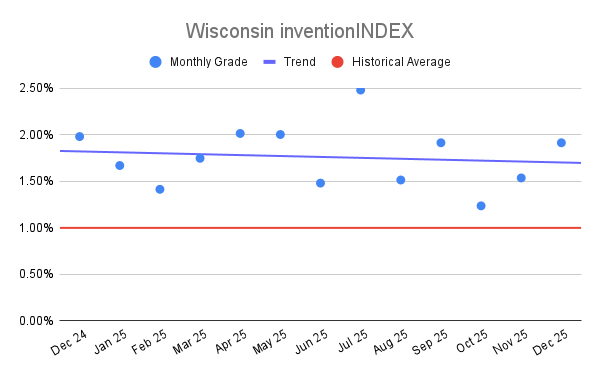 Wisconsin inventionINDEX December 2025
  Wisconsin inventionINDEX Novem
