

Quick Answer: Wisconsin LLC R&D Tax Credit
How does the R&D Tax Credit work for Wisconsin LLCs?
In Wisconsin, a Limited Liability Company (LLC) acts as a pass-through entity for the Research and Development (R&D) tax credit. The LLC itself does not typically pay income tax; instead, it calculates the credit on Schedule R based on qualified in-state expenditures. The resulting credit is then distributed to individual members via Schedule 3K-1. Members use this credit to offset their personal Wisconsin income tax liability. Key features include an incremental calculation method, specific "in-state" expense requirements, and recent provisions allowing for a portion of the credit to be refundable.
Technical Analysis of the Limited Liability Company within the Wisconsin Research Expense Credit Framework
In the context of the Wisconsin Research and Development (R&D) tax credit, a Limited Liability Company (LLC) is a pass-through entity that serves as the administrative vehicle for calculating qualified research expenditures while transferring the resulting tax offsets to its individual members. It functions as a jurisdictional conduit, ensuring that the financial incentives for innovation remain with the equity holders who bear the ultimate economic risk of the research activities conducted within the state.
The legal architecture of the Wisconsin Research Expense Credit, often colloquially termed the R&D credit, necessitates a nuanced understanding of how limited liability companies are perceived under Wisconsin Statutes Chapter 71. Unlike C-corporations, which may claim and use the credit to offset their own franchise tax liabilities, an LLC treated as a partnership or a disregarded entity does not technically "claim" the credit to reduce its own tax, as the entity itself is generally not subject to the income tax. Instead, the LLC acts as the primary locus of activity where the four-part test for qualified research is applied, the expenditures are aggregated, and the resulting credit is calculated on Schedule R. This computed value then flows through to the members—whether they be individuals, estates, trusts, or other corporations—based on their respective ownership percentages, appearing as a distributive share item on the member's Schedule 3K-1. This mechanism aligns with the broader economic theory of internalizing positive externalities; by allowing the credit to flow to the individual level, the state incentivizes private investment in high-risk technological development that might otherwise be underfunded due to the "spillover effect," where the societal gains from new knowledge exceed the private returns to the firm.
Statutory Origins and the Definition of Qualified Research in Wisconsin
The Wisconsin Research Expense Credit is codified across several sections of the Wisconsin Statutes, reflecting the different types of taxpayers who might eventually utilize the credit. For individuals and members of pass-through entities, the primary authority is section 71.07(4k), while for corporations, the credit is governed by section 71.28(4). These state statutes do not operate in a vacuum but are instead inextricably linked to federal law. Wisconsin law explicitly defines "qualified research expenses" by referencing Section 41 of the Internal Revenue Code (IRC), as amended to specific dates designated by the state legislature. This adoption of federal standards ensures a level of administrative consistency, yet it is tempered by a strict "in-state" requirement: only expenses incurred for research conducted within the geographical boundaries of Wisconsin are eligible for the state-level credit.
The determination of what constitutes "qualified research" is a rigorous technical process. To move beyond mere product development into the realm of qualified research for the purposes of the credit, an LLC’s activities must satisfy the federal four-part test. First, the research must be undertaken for the purpose of discovering information that is technological in nature, relying on principles of physical or biological sciences, engineering, or computer science. Second, the application of that information must be intended for use in developing a new or improved business component, which is defined as any product, process, software, technique, formula, or invention to be held for sale, lease, or license, or used by the taxpayer in their trade or business. Third, the research must be intended to eliminate uncertainty concerning the capability or method for developing the business component, or its appropriate design. Finally, substantially all of the activities must constitute a process of experimentation, involving the evaluation of alternatives through modeling, simulation, or systematic trial and error.
For the Wisconsin-based LLC, this means that routine data collection, market research, and aesthetic modifications to products do not qualify. The Department of Revenue (DOR) scrutinizes these claims to ensure there is a genuine technological hurdle being addressed. For instance, a biotech LLC developing a new enzyme-based manufacturing process must document the specific technical uncertainties encountered and the experimental protocols used to resolve them.
Classification of LLCs and Their Impact on Credit Reporting
The treatment of an LLC under Wisconsin tax law is a reflection of its federal classification. This creates several distinct paths for the R&D credit depending on how the LLC is structured and whether it has made specific elections.
Multi-Member LLCs and the Partnership ModelWhen an LLC has two or more members and has not elected to be taxed as a corporation, it is treated as a partnership for Wisconsin tax purposes. Under this model, the entity is the "claimant" in terms of computing the eligibility and amount of the credit, but it is not the "claimant" in terms of using the credit against a tax liability. The LLC must file a Form 3 (Partnership Return) and include Schedule R to detail the calculation of the credit. The total credit is then prorated among the members based on their ownership interest at the close of the taxable year.
| Form Type | Purpose in R&D Context | Responsibility |
|---|---|---|
| Form 3 | Partnership Return reporting entity-level income and credits | LLC Administrative |
| Schedule R | Computation of the total Research Expense Credit based on QREs | LLC Administrative |
| Schedule 3K-1 | Distribution of the member's share of the credit | LLC to Member |
| Form 1 / Form 1NPR | Claiming the credit against individual personal income tax | Individual Member |
| Schedule CR | Summary of all credits being claimed by the taxpayer | Individual Member |
The distributive share of the credit maintains its character as it passes to the member. If the LLC qualifies for an enhanced rate (such as the 11.5% rate for energy-efficient products), the member claims their share at that enhanced rate. The Department of Revenue guidance in Publication 131 emphasizes that even if the member does not have enough tax liability to use the credit in the current year, the credit must be reported on their return for that year to establish the 15-year carryforward period.
Single-Member LLCs and Disregarded Entity StatusFor an individual or corporation that is the sole owner of an LLC, the entity is typically "disregarded" as separate from its owner for income tax purposes unless it has elected corporate status. In this scenario, the distinction between the entity and the member effectively collapses for the purpose of the R&D credit. The individual owner reports the LLC’s research activities directly on their own return, as if the owner had conducted the research personally. However, the owner is still required to file Schedule DE to disclose the existence of the disregarded entity.
From a revenue office standpoint, the disregarded entity remains an "employer" for withholding tax purposes and must maintain its own Wisconsin employer identification number. This is a critical distinction for the R&D credit because the calculation of the credit relies heavily on "qualified wages". The DOR tracks these wages through the entity’s payroll records, even though the tax benefit ultimately resides with the single member. This "dual identity" of the SMLLC—disregarded for income tax but recognized for employment and withholding—requires precise accounting to ensure that wages reported on the LLC's payroll are correctly mapped to the owner's R&D credit claim.
LLCs Electing Corporate or S-Corp StatusIf an LLC elects to be taxed as a C-corporation, it departs from the pass-through model and claims the credit on Form 4 or Form 6 to offset its own franchise tax. If it elects S-corporation status (becoming a "tax-option corporation" in Wisconsin parlance), it follows a pass-through model similar to a partnership, but the credit is reported to shareholders on Schedule 5K-1 instead of 3K-1. The administrative burden on an S-corp LLC involves filing Form 5S and ensuring that the R&D credit is correctly identified as a non-passive or passive credit depending on the shareholder’s level of participation in the research activities.
Qualitative Analysis of Qualified Research Expenses (QREs)
The calculation of the credit is predicated on identifying four specific categories of expenses incurred in Wisconsin. The accuracy of the LLC’s claim depends on its ability to distinguish these costs from general operating expenses.
In-House Research Expenses: The Wage ComponentWages constitute the largest portion of most R&D claims. Under Wisconsin law, "wages" are defined by referencing the federal definition but are limited to those paid for services performed in Wisconsin. This includes not just the primary researchers but also those who provide direct supervision or direct support.
A second-order insight regarding wages for LLCs involves the treatment of "compensation used in other credits." Wisconsin law prevents the "stacking" of incentives; if a portion of an employee's wages is used to claim the Wisconsin Development Zones Jobs Credit, that same portion cannot be included in the R&D credit calculation. For an LLC operating in an economically distressed area, this necessitates a strategic choice: which credit provides the higher dollar-for-dollar value? Because the R&D credit is incremental (based on the increase in spending), whereas the jobs credit is often based on the total wage, the calculations can be complex.
Supplies and Tangible PropertyThe cost of supplies used in the conduct of qualified research is also eligible. However, Wisconsin strictly excludes land and depreciable property. This means that while the chemicals used in a lab or the prototypes destroyed during testing are QREs, the lab building itself and the expensive machinery used for testing are not. For a manufacturing LLC, this distinction is vital. The "items, property, and goods" described in section 77.52 might be exempt from sales tax if used in R&D, providing a different type of incentive, but they are generally excluded from the income tax credit’s QRE calculation if they are capitalized and depreciated.
Contract Research and ConsortiumsMany LLCs lack the internal infrastructure to perform all research in-house and must outsource specialized testing or development. Wisconsin follows the federal rule where only 65% of the amount paid to non-employees for qualified research is considered a QRE. However, there is a significant incentive for collaborative research: payments to a "qualified research consortium" (typically non-profit scientific organizations or universities) are eligible at a higher rate of 75%.
For a Wisconsin LLC, there is an additional "100% rule" for certain entities. If the contract research is performed by an "eligible small business," a university, or a federal laboratory, the general 65% limitation may be replaced by 100% of the expenditure, provided the research is conducted in Wisconsin. This reflects the state's goal of fostering partnerships between the private sector and academic institutions like the University of Wisconsin System.
The Incremental Computation Methodology
The Wisconsin Research Expense Credit is not a flat credit on all R&D spending; it is an incremental incentive designed to reward businesses that grow their research investment. The methodology for calculating this "increase" is the most complex aspect of the tax form.
The Standard Incremental MethodThe credit is generally equal to 5.75% of the amount by which the claimant's current year QREs exceed a "base amount". The base amount is defined as 50% of the average QREs for the three taxable years immediately preceding the current year.
The mathematical representation of the standard credit for an LLC is:
$$C = 0.0575 \times \left( QRE_{t} - 0.5 \times \bar{QRE}_{t-1, t-2, t-3} \right)$$
where $C$ is the credit and $QRE_{t}$ is the qualified research expense in the current year.
This "50% of the average" rule is a crucial component of the state's strategy. By setting the threshold at half of the historical average, Wisconsin makes the credit more accessible than the federal credit, which often uses a more rigorous "fixed-base percentage" calculation. It ensures that even a moderate increase in R&D spending can trigger a tax benefit.
The Startup ProvisionFor new LLCs or those that have not previously engaged in R&D, there is no historical data to calculate a three-year average. In these cases, the law allows for a "deemed" credit rate. If a claimant had no QREs in any of the three preceding years, the credit is equal to 2.875% of the total QREs for the current year.
This startup provision is an essential bridge for early-stage companies. It provides immediate tax attributes even before a baseline of activity has been established. For a new software LLC in its first year of operation, receiving a 2.875% credit on its entire engineering payroll provides a significant reduction in the cost of talent acquisition.
| Research History | Applicable Credit Rate | Calculation Base |
|---|---|---|
| 3+ Years of R&D | 5.75% | Current QREs minus 50% of 3-year average |
| 0 Years of R&D (Startup) | 2.875% | Total Current QREs |
| 1-2 Years of R&D | 2.875% | Total Current QREs (Special Rule) |
The DOR instructions clarify that if a company has some history but fewer than three years, the startup rate generally applies until a full three-year baseline is established.
Targeted Incentives: The Enhanced Rates for Critical Industries
Wisconsin has identified specific sectors where it seeks to be a global leader. For these activities, the standard 5.75% rate is doubled to 11.5% (and the startup rate increases from 2.875% to 5.75%).
Internal Combustion Engines and VehiclesThe "Internal Combustion Engine" credit is a legacy of Wisconsin's strong manufacturing history in motors and heavy machinery. However, the legal definition has evolved to remain technologically relevant. Under section 71.28(4)(ab), "internal combustion engine" specifically includes substitute products such as fuel cells, electric drives, and hybrid drives.
This means that an LLC developing a new battery-management system for electric tractors or a fuel-cell powertrain for a maritime vessel is eligible for the 11.5% credit. The research must relate to "designing" the engine or improving its production processes. The inclusion of electric and hybrid drives within the definition of "internal combustion" is a prime example of legislative drafting intended to preserve industrial incentives while the underlying technology shifts from fossil fuels to electrification.
Energy-Efficient ProductsThe second category for the 11.5% enhanced rate includes research related to the design and manufacturing of:
- Energy-efficient lighting systems.
- Building automation and control systems.
- Automotive batteries for hybrid-electric vehicles.
To qualify for this "Super Credit," the research must focus on reducing the demand for natural gas or electricity or improving the efficiency of its use. For an LLC in the "Internet of Things" (IoT) space developing smart-city lighting controls, the ability to claim an 11.5% credit provides a competitive advantage over firms in other states that only offer a single, lower rate for all R&D activities.
The Refundability Mechanism: A Lifeline for High-Growth LLCs
Historically, the Wisconsin Research Expense Credit was strictly nonrefundable, meaning it could only be used to reduce a tax liability to zero. Any excess was carried forward for 15 years. This posed a problem for capital-intensive startups that incur massive R&D costs years before they become profitable.
Transition to Refundability (2018–2024)Recognizing this liquidity gap, the Wisconsin Legislature introduced a refundable component. This allows a portion of the credit that cannot be used to offset tax to be paid directly to the taxpayer as a refund check.
The evolution of the refundable portion is as follows:
- Tax years 2018–2020: Up to 10% of the credit was refundable.
- Tax years 2021–2023: Up to 15% of the credit was refundable.
- Tax years beginning on or after Jan 1, 2024: Up to 25% of the credit is refundable.
The "up to 25%" phrasing in the statute is a maximum cap, not a guarantee. The refundable amount is calculated as the lesser of two figures:
- 25% of the total current-year research credit computed on Schedule R.
- The amount of the current-year credit that remains after offsetting the taxpayer's current-year tax liability.
This "lesser of" rule ensures that the state first requires the credit to be used against existing tax before issuing a cash refund. For an LLC member with $0 tax liability, the math is simple: they receive exactly 25% of their share of the credit as a refund, and the remaining 75% becomes a nonrefundable carryforward.
Importantly, prior-year carryforwards do not enter into the refund calculation. Only credits "originated" in the current year are eligible for the 25% refund. This prevents taxpayers from accumulating a massive bank of old credits and suddenly liquidating them when the refund rate increases.
The Conflict with Act 368: The Entity-Level Tax Election
In 2018, Wisconsin passed Act 368, creating a significant strategic crossroads for LLCs and their members. This law allows pass-through entities (PTEs) to elect to be taxed at the entity level at a flat rate of 7.9%. This election was intended to mitigate the federal $10,000 cap on State and Local Tax (SALT) deductions by allowing the entity to deduct the state tax as a business expense, thereby lowering the federal taxable income passed through to members.
The Credit Restriction TrapHowever, the Department of Revenue guidance clarifies a critical drawback: tax credits available to PTE owners, including the R&D credit, generally cannot be used to offset the 7.9% entity-level tax. If an LLC makes this election, the entity must pay the 7.9% tax on its Wisconsin income, and the members cannot use their distributive share of the R&D credit to reduce that specific tax liability.
The credit remains available to the partners to offset tax from other sources of income, or it can be carried forward. However, if the partnership makes the election, the partner no longer has income from that partnership reported on their individual return to offset with the credit. This effectively decouples the credit from the income that generated it.
For an LLC that is generating significant income but also conducting heavy R&D, the entity-level tax election might be a poor choice. The benefit of the SALT cap workaround may be outweighed by the inability to use the R&D credit to offset the 7.9% tax. Every LLC must conduct a multi-year analysis to determine if the election is beneficial or if it will lead to an accumulation of "trapped" R&D credits.
Administrative Compliance and the Schedule R Filing Process
The Department of Revenue (DOR) maintains strict filing requirements for both the LLC and its members. Failure to follow these procedures can lead to the disallowance of the credit at the member level, even if the research was validly conducted.
Schedule R (Research Credit)The LLC must complete a separate Schedule R for each type of research credit it is computing. For example, if an LLC is developing both a general software product and a new electric vehicle motor, it must file two Schedule Rs—one for the 5.75% activities and one for the 11.5% activities.
On the individual level, the member receives their share of the credit on Schedule 3K-1. When the member files their own tax return, they must include their own copy of Schedule R to "claim" the credit, using the figures provided by the LLC. This redundancy in filing is designed to provide the DOR with a clear audit trail from the individual's return back to the entity's records.
Schedule CR (Credit Summary)The individual member must also complete Schedule CR (Credit Summary). This form acts as a master list for all Wisconsin credits. The R&D credit is listed in Part I (for individuals and fiduciaries). The taxpayer must distinguish between the amount of credit available and the amount used to offset tax in the current year. Any refundable portion calculated on Schedule R is then transferred to a specific line on Form 1 (for individuals) or Form 2 (for fiduciaries) to be issued as a refund.
Schedule DE (Disregarded Entity)For owners of single-member LLCs, Schedule DE is mandatory. It requires the owner to list the name and Federal Employer Identification Number (FEIN) of the disregarded entity and the income reported from that entity. Without this form, the DOR may flag the R&D credit claim as inconsistent with the taxpayer's reported income sources.
Audit Protection: Documentation and Substantiation
The Wisconsin DOR has historically been active in auditing R&D credit claims, particularly those involving large payroll components. Because the credit is "self-certified" on the tax return, the burden of proof rests entirely on the taxpayer.
Project-Based Record KeepingLLCs should maintain documentation that ties every dollar of qualified expenditure to a specific research project. A "blended" approach where a percentage of all engineering time is claimed without supporting evidence is frequently rejected during audits. Documentation should include:
- Project Descriptions: Detailed narratives explaining the technical uncertainty and the process of experimentation.
- Innovation Logs: Real-time records of changes, bug fixes, and technical hurdles encountered during the year.
- Testing Protocols: Evidence of the systematic evaluation of alternatives, including failed experiments (which are often the best evidence of a process of experimentation).
For the wage component, time-tracking software is the gold standard. If an engineer spends 60% of their time on qualified research and 40% on routine maintenance, the LLC must have records supporting that split. In the absence of contemporary time records, "reconstructive" interviews or estimates may be used, but they are subject to higher levels of skepticism from DOR auditors.
Statute of LimitationsThe statute of limitations for the R&D credit is generally four years from the unextended due date of the return. However, if a credit is being carried forward, the DOR can often look back at the originating year of that credit to verify its validity, even if that year is technically closed for adjustments. Therefore, an LLC should retain its R&D documentation for as long as any portion of the credit or its carryforward remains active on any member’s return.
Comprehensive Case Study: Energetix Solutions LLC
To demonstrate the intersection of these various rules, consider Energetix Solutions LLC, a multi-member LLC based in Madison, Wisconsin. Energetix is owned by three partners: Alice (40%), Bob (40%), and Charlie (20%).
The Research ActivityIn 2024, Energetix begins a project to design a high-density battery module for hybrid-electric delivery vans. This activity meets the four-part test:
- Purpose: To improve the energy density and thermal stability of the battery module (a business component).
- Uncertainty: The optimal configuration of cooling fins and the chemical composition of the electrolyte to prevent thermal runaway were unknown at the start.
- Experimentation: The team uses computational fluid dynamics (CFD) modeling followed by physical prototyping and stress testing.
- Technology: The work relies on chemical engineering and thermodynamics.
Because the research relates to battery systems for hybrid vehicles, it qualifies for the enhanced 11.5% rate.
Qualified Research Expenses (2024)Energetix identifies the following in-state costs:
- Wages for R&D engineers: $600,000.
- Lab supplies and materials for prototypes: $100,000.
- Payments to a specialized testing lab in Wisconsin: $150,000 (Contract research).
- Note: Only 65% of the contract research is eligible: $150,000 x 0.65 = $97,500.
- Total 2024 QREs: $600,000 + $100,000 + $97,500 = $797,500.
Energetix is not a startup and has the following R&D history:
- 2021 QREs: $500,000
- 2022 QREs: $550,000
- 2023 QREs: $600,000
- Average QRE: ($500,000 + $550,000 + $600,000) / 3 = $550,000.
- Base Amount: 50% of Average = $275,000.
The LLC computes the credit on Schedule R:
- Excess QREs: $797,500 - $275,000 = $522,500.
- Total Credit: $522,500 x 0.115 = $60,087.50.
The credit is allocated on the partners' 3K-1s:
- Alice (40%): $24,035
- Bob (40%): $24,035
- Charlie (20%): $12,017.50.
Charlie has a Wisconsin personal income tax liability of $5,000 in 2024. He wants to know his refund.
- Step A: Offset Tax: Charlie uses $5,000 of his $12,017.50 credit to reduce his tax to zero.
- Step B: Remaining Credit: $12,017.50 - $5,000 = $7,017.50.
- Step C: Max Refund Limit: 25% of his total current year credit ($12,017.50) = $3,004.38.
- Step D: Actual Refund: The lesser of the remaining credit ($7,017.50) or the 25% limit ($3,004.38).
- Refund Check: $3,004.38.
- Step E: Carryforward: $7,017.50 - $3,004.38 = $4,013.12.
Charlie will receive a refund check for $3,004.38 and will have $4,013.12 available to carry forward for the next 15 years.
Synthesis of Economic Rationale and Regulatory Outlook
The integration of the Limited Liability Company into the Wisconsin Research Expense Credit framework reflects a deliberate policy choice to favor entrepreneurial flexibility while demanding rigorous technical substantiation. By aligning the state credit with federal IRC Section 41 definitions, Wisconsin offers a predictable environment for tax compliance. However, the unique "Wisconsin-only" expenditure requirement creates a protectionist wall around the state’s innovation ecosystem, ensuring that state tax subsidies are only provided for economic activity that directly benefits the local labor market and industrial base.
The current landscape for LLCs is defined by two competing trends: increasing liquidity through enhanced refundability and increasing complexity through entity-level tax elections. The move to a 25% refundable credit in 2024 is a clear signal that the state views R&D as a cornerstone of its future economic growth, particularly in "green" sectors like energy efficiency and electric propulsion. Conversely, the risks associated with the Act 368 entity-level tax election serve as a reminder that tax planning for pass-through entities requires a holistic view of both federal and state impacts.
For professional advisors and LLC managers, the "meaning" of the LLC in this context is its role as a high-fidelity data collector. The entity must not only drive technological discovery but also maintain the forensic financial records necessary to substantiate the credit through several layers of pass-through reporting. As the state moves further into the "digital and service sector" era, the Department of Revenue’s interpretation of what constitutes qualified "in-state" activity—especially for software developers working remotely—will likely become the next major frontier of R&D tax litigation in Wisconsin. LLCs that prioritize clear, project-based documentation and a deep understanding of the "lesser of" refundability math will be the best positioned to leverage these incentives into sustainable competitive advantages.
Who We Are:
Swanson Reed is one of the largest Specialist R&D Tax Credit advisory firm in the United States. With offices nationwide, we are one of the only firms globally to exclusively provide R&D Tax Credit consulting services to our clients. We have been exclusively providing R&D Tax Credit claim preparation and audit compliance solutions for over 30 years. Swanson Reed hosts daily free webinars and provides free IRS CE and CPE credits for CPAs.
Are you eligible?

Why choose us?

Pass an Audit?

What is the R&D Tax Credit?
The Research & Experimentation Tax Credit (or R&D Tax Credit), is a general business tax credit under Internal Revenue Code section 41 for companies that incur research and development (R&D) costs in the United States. The credits are a tax incentive for performing qualified research in the United States, resulting in a credit to a tax return. For the first three years of R&D claims, 6% of the total qualified research expenses (QRE) form the gross credit. In the 4th year of claims and beyond, a base amount is calculated, and an adjusted expense line is multiplied times 14%. Click here to learn more.
Never miss a deadline again

Stay up to date on IRS processes

Discover R&D in your industry

R&D Tax Credit Preparation Services
Swanson Reed is one of the only companies in the United States to exclusively focus on R&D tax credit preparation. Swanson Reed provides state and federal R&D tax credit preparation and audit services to all 50 states.
If you have any questions or need further assistance, please call or email our CEO, Damian Smyth on (800) 986-4725.
Feel free to book a quick teleconference with one of our national R&D tax credit specialists at a time that is convenient for you.
R&D Tax Credit Audit Advisory Services
creditARMOR is a sophisticated R&D tax credit insurance and AI-driven risk management platform. It mitigates audit exposure by covering defense expenses, including CPA, tax attorney, and specialist consultant fees—delivering robust, compliant support for R&D credit claims. Click here for more information about R&D tax credit management and implementation.
Our Fees
Swanson Reed offers R&D tax credit preparation and audit services at our hourly rates of between $195 – $395 per hour. We are also able offer fixed fees and success fees in special circumstances. Learn more at https://www.swansonreed.com/about-us/research-tax-credit-consulting/our-fees/



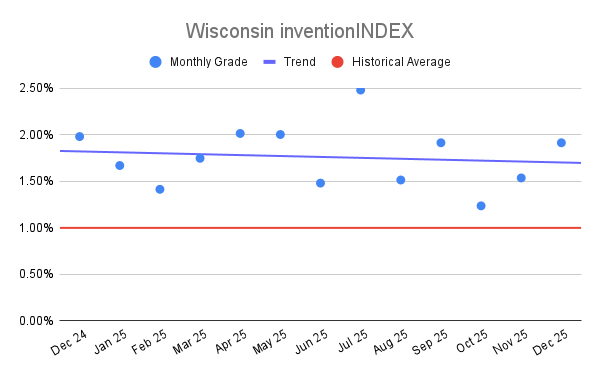 Wisconsin inventionINDEX December 2025
  Wisconsin inventionINDEX Novem
